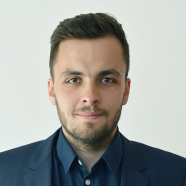
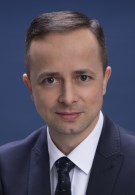
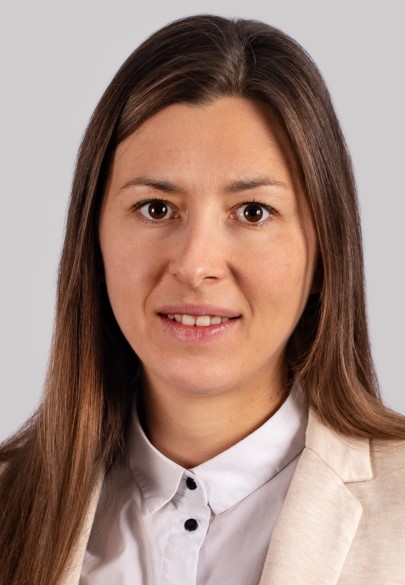
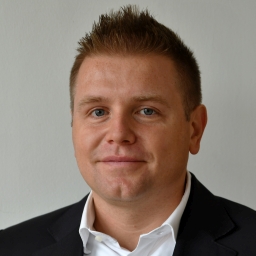
Andrzej Majkowski is an Associate Professor at the Institute of the Theory of Electrical Engineering, Measurement and Information Systems, Faculty of Electrical Engineering, Warsaw University of Technology. His career spans over two decades of research in biomedical engineering, focusing on brain-computer interfaces, signal processing, and emotion recognition. Active in both teaching and research, he contributes to advancing methodologies in electrophysiological signal analysis. Warsaw University of Technology Institute of the Theory of Electrical Engineering, Measurement and Information Systems Faculty of Electrical Engineering Specializing in biomedical engineering , Majkowski's research bridges control systems and information technologies with neuroscience applications. His work explores brain-computer interfaces , EEG/EMG signal processing , and emotion recognition using multimodal physiological data. Recent studies focus on deep learning architectures for artifact removal and classification tasks. Recent publications highlight trends in CNN-LSTM hybrid models for signal denoising, convolutional networks for seizure detection, and machine learning applications in visual evoked potential analysis. His work spans both clinical applications (epilepsy monitoring) and human-computer interaction (emotion recognition, sign language detection). With over 98 documented publications and significant bibliometric indicators (h-index 13 in Scopus), Majkowski has supervised 95 promoted theses. His research includes one funded project and collaborations in biomedical instrumentation, though specific award details remain unspecified in available records.
Magdalena Szymczyk is a Lecturer in the Department of Biocybernetics and Biomedical Engineering at AGH University of Science and Technology, Faculty of Electrical Engineering, Automatics, Computer Science and Biomedical Engineering. Her work bridges embedded systems, biomedical signal processing, and geophysical data analysis. Research focuses on energy-efficient sensor networks, neural networks for GPR data classification, and mathematical transforms in signal analysis Expertise in parallel computing, real-time systems, and biomedical engineering applications Her publications (2015–2025) demonstrate a trajectory from parallel neural networks and S-transform/GPR methodologies to recent work on MicroPython in embedded systems. Key themes include energy optimization in distributed architectures and AI-driven signal processing across biomedical and geophysical domains. She has authored works on deterministic chaos in simulations, GPU image processing, and cybersecurity in microcontroller systems. Her current research emphasizes embedded systems security, medical signal diagnostics, and computational methods for geological analysis. She utilizes tools like OpenCL for GPU acceleration and MATLAB for parallel computing implementations.
Ngoc Thanh Nguyen is a Full Professor at Wroclaw University of Science and Technology where he serves as Head of the Department of Applied Informatics. He holds the prestigious title of Professor granted by the President of Poland and has been recognized as a Distinguished Scientist of ACM since 2009. He serves as Editor-in-Chief of both the Journal of Information and Telecommunication (JIT) and the Vietnam Journal of Computer Science (VJCS), and chairs the IEEE SMC Technical Committee on Computational Collective Intelligence. His research spans computational collective intelligence, knowledge integration, data mining, social media analysis, and sentiment analysis. Professor Nguyen has pioneered significant methodologies in spatial data clustering within network space, inter-sequence pattern mining, and graph neural network applications. His work bridges theoretical computer science with practical applications in intelligent information systems, demonstrating particular expertise in handling complex spatial and sequential data structures. His research has evolved from foundational pattern mining techniques to sophisticated neural network approaches for geospatial and social data analysis. The analysis of his recent publications reveals a strong focus on spatial data analysis in network environments, with significant contributions to clustering algorithms, graph neural networks, and pattern mining. His work consistently addresses efficiency challenges in data processing while expanding into emerging areas like Vietnamese language processing and topological data analysis. The research demonstrates a clear trajectory from traditional data mining techniques toward more sophisticated AI-driven approaches that incorporate spatial relationships and network topologies. Distinguished Scientist of ACM (2009) ACM Distinguished Speaker (2009-2013) IEEE Distinguished Visitor (2009-2013) Title of Professor granted by the President of Poland Professor Nguyen has supervised over 20 PhD students to completion and currently mentors several ongoing doctoral candidates. His academic leadership extends to founding two major conference series: the Asian Conference on Intelligent Information and Database Systems (ACIIDS) and the International Conference on Computational Collective Intelligence (ICCCI), which have become significant venues in their respective fields. His collaborative network spans multiple institutions, particularly with Yeungnam University as evidenced by several co-supervised PhD projects. As founder and chair of the IEEE SMC Technical Committee on Computational Collective Intelligence, he leads an international community of researchers advancing this specialized field. His departmental leadership at Wroclaw University of Science and Technology positions him at the center of applied informatics research and education in Poland, with particular emphasis on computational intelligence applications.
Jan Cudzik is an Assistant professor at the Gdańsk University of Technology's Department of Urban Architecture and Waterscapes, Faculty of Architecture. He leads the Digital Technology Laboratory and focuses on integrating computational methods with architectural design and conservation. His research spans parametric design, generative systems, artificial intelligence, and sustainable construction practices. Education details are not explicitly provided in the texts, but his academic roles indicate advanced training in architecture and engineering. Research interests include: AI-driven design processes Generative design using swarm intelligence 3D printing in construction Energy-efficient building lifecycle assessment Traditional-conservation/digital-fabrication hybrids Key publication trends emphasize: Public space sustainability (lighting, greenery) Machine learning applications in architecture Historical structure preservation He contributes to projects like ENACT 15mC, focusing on urban community development. His work bridges digital innovation with ecological and cultural heritage concerns. Labs/Teams: Director of the Digital Technology Laboratory, active in architectural education reform using AI tools.
Dr hab. Krzysztof Węcel serves as Professor and current Head of the Department of Economic Informatics at Poznan University of Economics and Business (UEP), appointed on October 4, 2024. His primary affiliation spans over 25 years with UEP's Department of Economic Informatics, which maintains one of Poland's longest-running academic websites since 1998. He holds dual recognition through habilitation from University of Potsdam (2020) and professorship conferred by UEP (June 24, 2020). His academic milestones: Habilitation degree in Economic Informatics, University of Potsdam (2020) Professor title, Poznan University of Economics and Business (2020) Węcel's research centers on Semantic Technologies and data quality assessment across multilingual Wikipedia, with emphasis on company information verification, citation analysis, and open data applications. His work bridges Big Data analytics with practical business solutions, particularly in maritime logistics where he pioneered evolutionary algorithm-based AIS data processing. Current investigations focus on generative AI's dual role in creating and combating disinformation, including ChatGPT's impact on academic writing and fake news propagation. Recent publications (2022-2025) reveal three dominant trends: First, systematic analysis of Wikipedia's reliability across languages during crises like the pandemic and Ukraine war. Second, development of AI-driven fact-checking frameworks (e.g., OpenFact project's CLEF 2023 victory). Third, exploration of generative AI's societal impact ranging from student creativity to disinformation campaigns. Scientific awards received: Best Paper Award at ICIST 2017 Conference Award for most innovative article at NATCON 2018 conference Microsoft Azure for Research Award (2016) As academic advisor, he leads the 'Semantic Technologies' diploma seminar attracting high-achieving students, with participants winning the 29th UEP Foundation Competition (2025) and Eurostat's Web Intelligence Challenge (2024). His grant portfolio includes the 'Maritime Big Brother' project (2017) for ship voyage prediction using AIS data and Microsoft Azure funding for Wikipedia quality enhancement. Ongoing initiatives include OpenFact (fake news detection) and GOBLIN projects. He actively collaborates with SKN Data Science student circle (evidenced by 2024/2025 inaugural meeting) and international consortia like CLEF and QOD workshops. Departmental leadership involves managing the OpenFact research team that achieved top results in CheckThat! Lab competitions, alongside maritime data analytics groups applying evolutionary algorithms to shipping networks.
Dr. Andrzej Ożadowicz is a University Professor at the Department of Power Electronics and Automation of Energy Conversion Systems within the Faculty of Electrical Engineering, Automatics, Computer Science and Biomedical Engineering at AGH University of Science and Technology in Kraków, Poland. His office is located in room 510, building C-1, with contact details including phone +48 12 617 50 11 and email ozadow@agh.edu.pl. He holds PhD, DSc, and Engineering degrees, reflecting his dual expertise in academic research and practical engineering applications. His research spans Power Electronics, Building Automation, Smart Grids, and IoT-driven energy systems. Key interests include energy efficiency optimization through digital twins and BIM, distributed energy resource integration , and AI-enhanced demand management . Notably, he pioneers applications of deep reinforcement learning in home energy systems and develops frameworks for Smart Readiness Indicator implementation. His work bridges theoretical innovation with practical case studies in building thermal modeling and dynamic façade systems. Recent publications (2021-2025) reveal three dominant trends: (1) Convergence of digital twin technology with building automation for real-time energy management; (2) Critical analysis of IoT security and interoperability in smart infrastructure; (3) Pedagogical innovations in engineering education through blended learning methodologies post-COVID-19. His scholarly output demonstrates consistent focus on energy transition challenges and smart grid evolution. Professor Ożadowicz actively contributes to the Discipline Council for Automation, Electronics, Electrical Engineering and Space Technologies at AGH. He is instrumental in the AutBudNet initiative —a network of certified laboratories for energy efficiency assessment that implements "learning by doing" principles in building automation education. His work with this consortium emphasizes practical validation of smart grid technologies and demand response systems.
Rafał Biedrzycki is an Assistant Professor at The Institute of Computer Science within Warsaw University of Technology's Faculty of Electronics and Information Technology. His research focuses on optimization algorithms, evolutionary computation, and machine learning applications. He holds a PhD in Information Science (2009) and a D.Sc. (2024). Key research interests include evolutionary algorithms (e.g., Differential Evolution, CMA-ES), optimization techniques for real-world problems (e.g., compressor scheduling, optical networks), and algorithm benchmarking. He has contributed to improving constraint-handling methods and hybrid algorithm designs. Received team awards for scientific achievements from Warsaw University of Technology (2019, 2023) and teaching excellence (2021, 2024). Active in interdisciplinary projects, including the DAFNE initiative for data fusion systems (2010-2011). Supervises research in optimization, machine learning, and computational electromagnetics. His work bridges theoretical algorithm development with practical applications in engineering and data analysis. Recent efforts include analysis of CEC competition algorithms and parameter-tuning methodologies.
Filip Sondej is a Researcher at the Department of Cognitive Science within the Faculty of Philosophy at Jagiellonian University in Krakow, Poland. His work bridges cognitive science and artificial intelligence, focusing on critical safety aspects of modern language models and multi-agent systems. His primary research interests include AI safety, LLM unlearning techniques, Chain-of-Thought faithfulness, AI conflict resolution, and digital sentience. Sondej's work addresses fundamental challenges in ensuring that increasingly powerful language models behave safely and align with human values. Analysis of Sondej's publication record reveals a strong interdisciplinary focus combining cognitive neuroscience methodologies with AI safety research. His recent work demonstrates a clear trajectory from traditional cognitive neuroscience investigations toward cutting-edge AI safety mechanisms, particularly in developing methods for removing unsafe behaviors from language models while maintaining functionality. The publications show sophisticated integration of neural network analysis with human cognitive processes. Sondej collaborates extensively with researchers including Anna Grabowska and Magdalena Senderecka, appearing as co-author on multiple publications in high-impact journals such as NeuroImage, Cerebral Cortex, and Journal of Cognitive Neuroscience. His research program bridges theoretical cognitive science with practical AI safety applications.
Milena Stróżyna is an Assistant Professor at the Department of Economic Informatics in the University of Economics in Poznan , Poland. Her work focuses on data modeling, AI applications in disinformation detection, and maritime data analysis . Email: milena.strozyna@ue.poznan.pl Research interests span: Data Modeling & Analysis : Extracting insights from diverse data sources, ensuring quality, and implementing ERP systems Disinformation Studies : Developing AI tools for fake news detection and semantic mapping of misinformation topics Maritime Data Science : Crisis impact analysis in shipping, anomaly detection in maritime transport Scientific Contributions include: Pioneering OpenFact system for information verification Creating adversarial text detection methods Leading research on generative AI risks in information integrity Notable Awards : 2018: Most innovative article at NATCON conference Multiple first-place international competition wins with OpenFact system (2022-2024)
Michał Paweł Michalak is an Assistant Professor at AGH University of Science and Technology in Kraków, affiliated with the Faculty of Geology, Geophysics and Environmental Protection and Department of Geoinformatics and Applied Informatics. His research spans computational geometry in geological modeling, machine learning applications in Earth sciences, statistical epidemiology, and ecclesiological dynamics. Doctoral degree from University of Silesia in Katowice Developed GeoAnomalia software suite combining C++, R, and ParaView Created unbiased risk metrics (WCSIR) for infectious disease surveillance Research focuses on: Subsurface geological modeling using combinatorial algorithms and machine learning; Spatial epidemiology emphasizing testing heterogeneity bias; Ecclesiological dynamics analyzing factional theological interactions. His 2020/37/N/ST10/02504 grant project received 'very good' evaluation for developing angular distance metrics in geological contacts. Scientific contributions include: 2025 Solid Earth paper on fault-related structure detection 2025 Frontiers in Public Health work on global pandemic risk evaluation 2023 AGH Rector award recipient Developer of open-source geological analysis tools Collaboration network includes Harvard University, Technische Universität Freiberg, and University of Texas at Austin. Currently teaching GIS modeling, optimization methods, and geoinformatics systems. Maintains a personal website with open data access.
Konrad Kowalczyk is an Associate Professor at AGH University of Science and Technology in Krakow, Poland, where he heads the Signal Processing Group within the Faculty of Computer Science, Electronics and Telecommunications. With extensive international experience from institutions including Queen's University Belfast, Stanford University, and Fraunhofer Institute, he has established himself as a leading researcher in audio and speech signal processing. His academic journey includes B.Eng. and M.Sc. degrees from AGH University (2005), a Ph.D. from Queen's University Belfast (2009), and a Habilitation in ICT from AGH University (2020). B.Eng. and M.Sc. in Electronics and Telecommunications, AGH University of Krakow (2005) Ph.D. in Electronics, Queen's University Belfast, UK (2009) Habilitation (D.Sc.) in Information and Communication Technology, AGH University of Krakow (2020) Kowalczyk's research spans multiple cutting-edge areas in audio processing, with particular focus on speech and audio signal processing enhanced by machine learning techniques. His work integrates deep neural networks with traditional signal processing methods to address challenges in array signal processing , speech enhancement , and speaker recognition . The research group he leads explores innovative applications in distributed signal processing for IoT , acoustic event detection , and spatial audio rendering , bridging theoretical advances with practical implementations. His recent publications demonstrate a clear trend toward integrating deep learning with traditional signal processing techniques, particularly in speaker diarization, source separation, and robust speech recognition. The research increasingly focuses on real-world applications requiring reverberation-robust processing , distributed microphone array systems , and end-to-end neural architectures that can operate in challenging acoustic environments. There's a noticeable shift toward more complex, integrated systems that combine multiple signal processing tasks. Stanislaw Staszic Medal for best graduate of AGH (2005) IEEE Best Student Paper Contest finalist (2007) AES Student Technical Paper Award winner (2008) Best Student Paper Award at IWAENC conference (2014) Best Paper Awards at IEEE SPA conferences (2016, 2019) Polish Ministry of Science Scholarship for Distinguished Young Scientists (2016-2019) Prime Minister Award for outstanding scientific achievements (2020) As Principal Investigator, Kowalczyk leads multiple significant research projects including "Acoustic Intelligence" (2024-2028) funded by National Science Center, and "Deep extraction for robust speech recognition" (2023-2028). He has successfully secured funding from prestigious programs including First TEAM from the Foundation for Polish Science, and EU FP7 projects. His research group actively supervises Ph.D., M.Sc., and B.Eng. students, with strong connections to international institutions including Aalto University and IEEE Signal Processing Society. The research output includes numerous journal publications, conference papers, patents, and software implementations that have advanced the field of audio signal processing. Kowalczyk leads the Signal Processing Group at AGH University, which focuses on developing innovative solutions for speech and audio processing challenges. The group maintains strong collaborations with international institutions including Aalto University (Finland), and participates in European research initiatives. Their work spans theoretical development through practical implementation, with applications ranging from medical voice assistants to distributed acoustic sensor networks.
Włodzimierz Kasprzak is a Professor at the Institute of Control and Computation Engineering, Faculty of Electronics and Information Technology, Warsaw University of Technology. His research focuses on computer vision, robotics, human-computer interaction, and machine learning. He has contributed to advancements in human action classification, skeleton-based feature analysis, and multimodal interface design. Research Highlights: Development of lightweight classification models for human actions in video using skeleton-based features. Advances in multi-stream fusion techniques for image and video analysis. Design of embodied agent systems for cybersecurity event visualization and control. Awards and Recognition: 2024: Individual First Class Rector's Award for Scientific Achievements (2022-2023) 2021: Medal of the Commission of National Education 2011: Golden Cross of Merit His work integrates theoretical contributions with practical applications in robotics, surveillance systems, and human-centered technologies.
Bartosz Grzybowski serves as Distinguished Affiliate Professor at the Institute of Organic Chemistry, Polish Academy of Sciences (PAS), leading the Laboratory of Computer-Assisted Synthesis. His work bridges artificial intelligence and experimental organic chemistry to transform synthesis from trial-and-error into algorithmic science. His research focuses on AI-driven synthesis planning , reaction network analysis , and computational prediction of chemical properties . Key contributions include pioneering algorithms for multistep organic synthesis of complex targets, discovery of novel organic reactions through AI, and design of temporally/spatially synchronized reaction networks. His group develops methods for sustainable chemistry, drug analog design, and enzymatic process optimization. Analysis of his 2023-2025 publications reveals dominant trends in retrosynthetic AI (87% of articles), sustainable chemistry applications (63%), and integration of mechanistic understanding with machine learning. Work frequently appears in Nature , Science , and JACS , emphasizing experimental validation of computational predictions. Prof. Grzybowski currently advises three PhD students and collaborates with a multidisciplinary team: Core team : Assoc. Prof. Michał Michalak (Adjunct), Dr. Anna Żądło-Dobrowolska, Dr. Aleksei Koshevarnikov Active grant : NCN SONATA 2020/39/D/ST4/01890 on hazardous chemical degradation (PI: Żądło-Dobrowolska) The Laboratory of Computer-Assisted Synthesis operates as an integrated computational-experimental unit at IBS-IOC PAS. Current projects include blockchain-orchestrated reaction networks, AI-guided catalyst selection, and metabolic-cycle emulation. The group maintains strong industry/academic partnerships for validating algorithms in drug discovery and green chemistry applications.
Daria Hemmerling , PhD, Eng., is a Lecturer at the Department of Metrology and Electronics under the Faculty of Electrical Engineering, Automatics, Computer Science and Biomedical Engineering at AGH University of Science and Technology in Kraków. Her research focuses on the intersection of biomedical engineering, voice analysis, and artificial intelligence, particularly for neurological and cardiovascular disease diagnostics. Research Interests : Applying mixed reality and AI for Parkinson’s disease assessment Voice/speech biomarkers for heart failure and neurodegenerative disorders Deep learning techniques in medical imaging (e.g., skull segmentation/reconstruction) Haptic feedback systems for multisensory interaction Simulation training in electrophysiology education Unsupervised learning and modality translation in biomedical signal processing Scientific Trends : Her recent work emphasizes multimodal diagnostic systems integrating voice analysis, VR/MR visualization, and deep learning. She explores explainable AI for medical classification tasks, data augmentation strategies, and innovative haptic/gamification interfaces.
Marek Miśkowicz serves as a Professor at the Department of Metrology and Electronics within the Faculty of Electrical Engineering, Automatics, Computer Science and Biomedical Engineering at AGH University of Science and Technology in Kraków, Poland. His primary institutional contact is miskow@agh.edu.pl, with physical location in building B-1, room 212. His research spans signal processing, biomedical engineering, and electronics, specializing in event-based sampling methodologies, time-to-digital conversion techniques, and reconstruction of bandlimited signals from nonuniform samples. Key contributions include QRS detection algorithms for ECG monitoring, POCS-based reconstruction frameworks, and event-driven control systems for industrial IoT applications. His work emphasizes resource efficiency in embedded systems and mobile health monitoring through approximate computing and adaptive sampling strategies. Recent publications (2022-2025) demonstrate consistent focus on signal reconstruction from irregular samples, with growing emphasis on spiking neural networks for event classification and industrial IoT optimization. Biomedical applications (particularly ECG analysis) and industrial control systems represent dominant application domains, while methodological innovations center on iterative reconstruction algorithms and temporal accuracy evaluation in noisy environments. No scientific awards were referenced in the source materials. No information regarding student advising or research grants was available in the provided documentation. The source texts contained no details about laboratory facilities, research teams, or collaborative groups associated with Professor Miśkowicz.