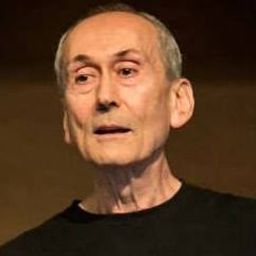
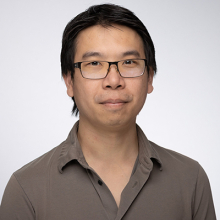
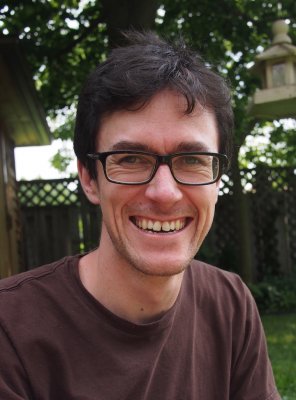
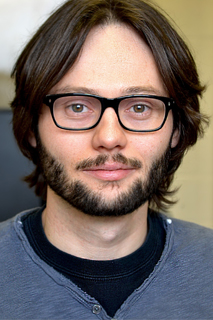
Stevan Harnad is a Professor of Cognitive Science at UQÀM, McGill University, and the University of Southampton. His research focuses on cognition, consciousness, and the symbolic grounding problem. He serves as Editor of Animal Sentience , a journal exploring sentience across species. Harnad is an advocate for open access publishing, emphasizing equitable scholarly communication. His work bridges cognitive science with interdisciplinary concerns, including AI ethics, animal welfare, and language structure. Key research interests include cognitive architecture, consciousness studies, and the implications of artificial intelligence. He has contributed to debates on open access policies, emphasizing mandates for self-archiving to reduce subscription costs. His interdisciplinary approach integrates neuroscience, philosophy, and linguistics to address foundational questions about mind and language. Recent scholarship explores the ethical dimensions of AI, the neurocognitive basis of categorization, and the latent structures of language. Harnad’s work demonstrates a commitment to both theoretical rigor and practical impact in academic publishing reform.
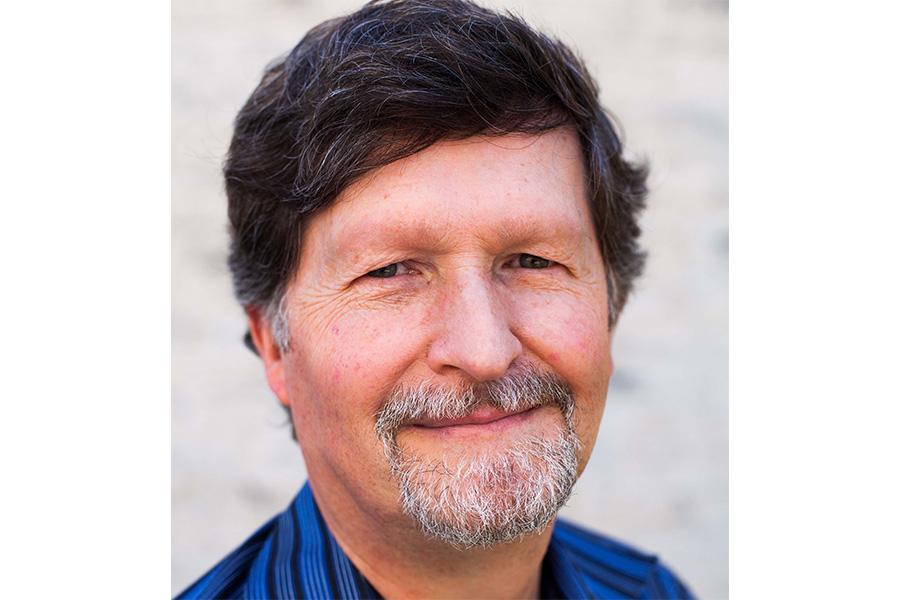
Stephen Pistorius is a Professor in the Department of Physics and Astronomy at the University of Manitoba's Faculty of Science. He serves as Associate Head and Director of the Medical Physics Program, focusing on interdisciplinary research at the intersection of medical physics, biomedical engineering, and artificial intelligence. Role : Professor, Associate Head, Director of Medical Physics Program Contact : Office 205 Allen Building, Stephen.Pistorius@umanitoba.ca , +1 204-474-6205 Research Interests Medical Imaging : Development and optimization of radar-based microwave sensing systems for breast cancer detection. Image Reconstruction : Innovation in computational algorithms for PET and microwave imaging. Artificial Intelligence : Application of machine learning to tumor detection and signal analysis. Publication Trends His recent work emphasizes microwave imaging hardware (antenna arrays, phantom materials), machine learning integration for tumor detection, and image quality metrics across modalities. Key subfields include radar systems , stochastic optimization , and clinical translation of microwave sensing . Additional Contributions He contributes to radiation oncology via EPID-based positioning automation and dose verification systems, while also addressing technical challenges in 3D-printed phantom modeling and microwave propagation in biological tissues.
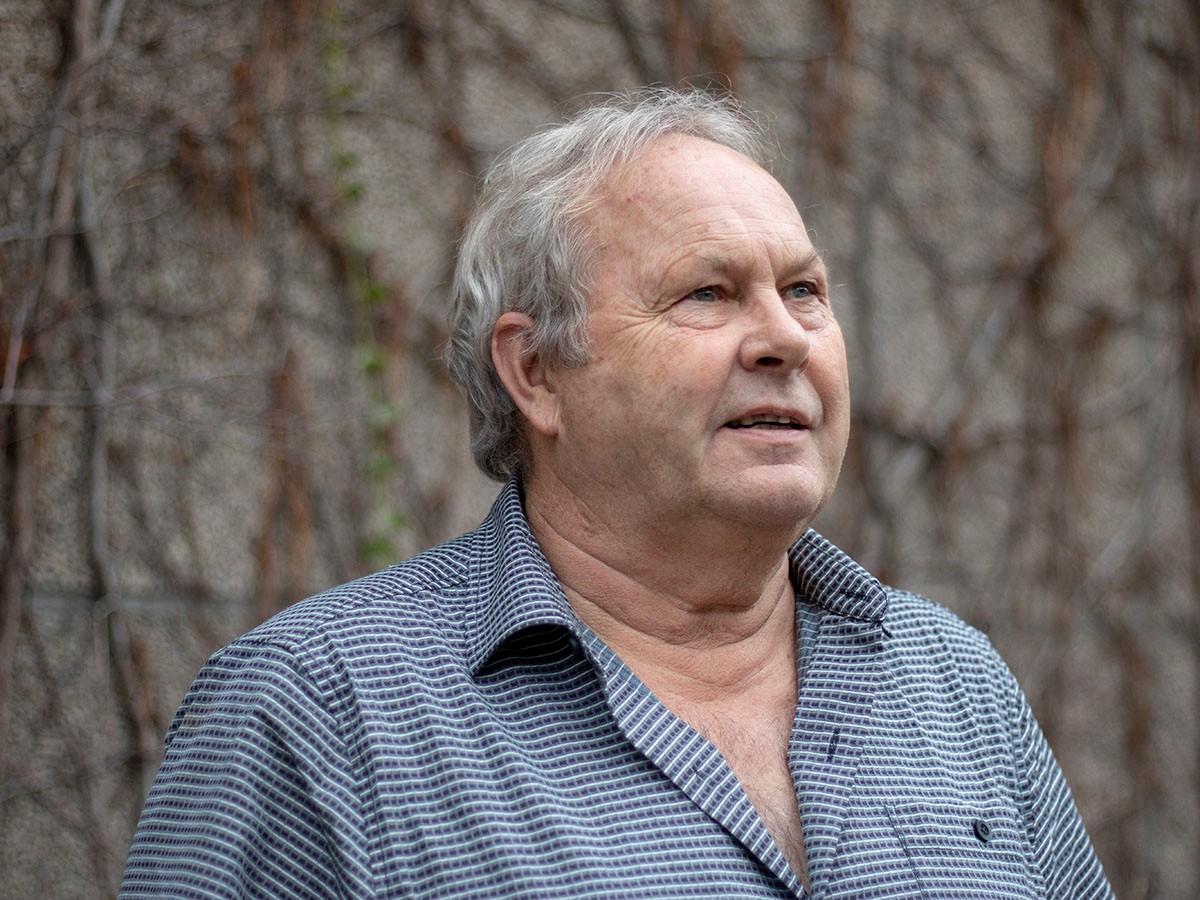
Dr. Michael A. Chapman serves as a Professor in the Department of Civil Engineering at Toronto Metropolitan University, specializing in image processing, deformation analysis, and sensor-integrated geospatial modeling for infrastructure applications. His work bridges civil engineering with advanced computational techniques for real-world problem solving. His academic credentials include a BT from Toronto Metropolitan University (1977), MSc from Ohio State University (1979), and PhD from Laval University (1989). BT: Toronto Metropolitan University (1977) MSc: Ohio State University (1979) PhD: Laval University (1989) Chapman's research centers on deformation monitoring of structures like the Rogers Centre roof, mobile mapping for road condition assessment, and sensor fusion for precision geospatial models. He pioneers applications in pavement deflection measurement using Doppler lasers and mobile laser scanning for infrastructure inspection, emphasizing practical engineering solutions derived from photogrammetry and image metrology. His methodology transforms mechanical observation into digital innovation for civil infrastructure management. His publication portfolio reveals a strong trajectory in merging deep learning with geospatial engineering, particularly in hyperspectral image classification and mobile mapping systems. These works consistently address civil infrastructure challenges through advanced computational approaches, demonstrating evolving sophistication from pavement crack extraction to sea ice mapping. His distinguished recognition includes: Wild Heerbrugg Photogrammetric Award - North America (1981) Chapman actively supervises graduate students and teaches core courses including CVL 207 (Graphics), CVL 352 (Geomatics Measurement Techniques), and CV8506 (Industrial Metrology). He emphasizes adaptive pedagogy to accommodate diverse learning styles, viewing teaching as both professional duty and personal passion. His industry-relevant research often involves partnerships with transportation authorities for real-time infrastructure assessment. His laboratory work focuses on mobile mapping systems and sensor integration platforms for deformation monitoring, particularly applied to large-scale structures and transportation networks. Current projects involve real-time pavement assessment technologies and 3D modeling of built environments using multi-sensor fusion approaches.
Alagan Anpalagan is a Full Professor in the ELCE Department at Toronto Metropolitan University, previously Ryerson University. He holds a PhD in Electrical Engineering from the University of Toronto. His research focuses on radio resource management (RRM), green communication, IoT networks, and wireless communication systems. He directs the WINCORE Lab, specializing in radio access & networking (RAN) and cross-layer design. Dr. Anpalagan has authored/co-edited multiple books and holds IEEE Fellow status (2024). He has received awards including the Ryerson Sarwan Sahota Distinguished Scholar Award (2022) and the IEEE Canada Outstanding Engineering Educator Medal (2018). He has served in editorial roles for IEEE Communications Surveys & Tutorials and led industry collaborations with companies like Bell Mobility and IBM. Education: B.A.Sc. in Electrical Engineering, University of Toronto M.A.Sc. in Electrical Engineering, University of Toronto Ph.D. in Electrical Engineering, University of Toronto Research Interests: His work spans RRM, energy-efficient networks, cognitive communication, and smart grid technologies. Recent projects include digital twin applications in IoT and 6G-based user localization for emergencies. Publications: His 15 most recent articles include studies on network routing protocols, IoT scheduling with digital twins, and AI-driven disaster response systems. These reflect his focus on integrating AI and edge computing into next-gen communication systems. Awards: Recognized for both research and teaching excellence, including IEEE Fellowships and institutional awards for graduate education and service. Labs/Teams: Lead researcher at the WINCORE Lab, collaborating with academia and industry on wireless resource management and heterogeneous networks. The lab’s alumni network includes over 100 researchers.
Warut Khern-am-nuai serves as Associate Professor of Information Systems at McGill University's Desautels Faculty of Management, where he directs the Analytics, AI and Advanced Digital Technologies Initiative and Business & Management Research Centre while co-directing the Retail Innovation Lab. His cross-disciplinary work bridges information systems, artificial intelligence, and business operations with significant industry impact. His educational credentials include a Ph.D. in Management (MIS) with Computer Science minor from Purdue University, M.S. in Economics from Purdue, MBA (Honors) from Thailand's National Institute of Development Administration, and B.Eng. in Computer Engineering (First-Class Honors) from King Mongkut Institute of Technology Ladkrabang. Dr. Khern-am-nuai's research centers on online marketplace dynamics , predictive analytics for business , and AI-driven platform design , with special focus on user behavior, security implications, and economic outcomes. His work employs rigorous experimental and data-driven methodologies to address real-world challenges in retail, e-commerce, and digital platforms. Analysis of his recent publications reveals a strong trajectory toward fairness in machine learning systems , behavioral impacts of platform design , and AI applications in post-pandemic retail . These studies consistently leverage large-scale user data and experimental approaches to generate actionable business insights across diverse contexts. His scientific recognition includes: AIS Early Career Award (2023) ISS Sandy Slaughter Early Career Award (2022) Invitational Fellowship from Japan Society for Promotion of Science (2023) Multiple teaching honors including Poets&Quants Top 50 Professor (2022) Dr. Khern-am-nuai has secured over $1.1 million in competitive research funding, including SSHRC Insight Grants for "AI Generated Content and the Future of Online Platforms" ($143,510) and NSERC Discovery Grants for "Helping Retail Industry Navigate the Post-Pandemic World with AI" ($155,000). His grant portfolio demonstrates exceptional success in translating theoretical research into practical business solutions through industry partnerships. As leader of the Retail Innovation Lab and Analytics Initiative, he drives collaborative research connecting academic rigor with industry challenges, particularly in applying AI to retail analytics, supply chain optimization, and consumer behavior prediction through interdisciplinary team structures.
Nancy Salay is an Associate Professor in the Department of Philosophy at Queen's University, with a cross-appointment in the School of Computing. She holds affiliations as Editor of Dialogue: Canadian Philosophical Review and founder of ESC (Embodiment, Systems, and Complexity). Her research focuses on philosophy of cognition, language, and metaphysics, informed by embodied cognitive science. She earned her PhD in philosophy of mind from Dalhousie University, followed by a research fellowship at Brandeis and work as a computational linguist at Cycorp. Her research explores how language expands cognitive capacities like reflective consciousness, challenging traditional computational models of cognition. Recent work critiques limitations of machine learning systems in understanding abstract representational properties. Nancy's interdisciplinary approach bridges philosophy with computational linguistics and cognitive science. Publications span analysis of knowledge systems' failures, non-universality in computation, and philosophical critiques of neural networks' representational paradigms. Her work emphasizes organism-level engagement over neural reductionism in grounding intentionality. Collaborations include projects like the Halo Pilot evaluating knowledge representation systems.
Dr. François Rivest is an Associate Professor at Queen’s University, affiliated with the Department of Biomedical and Molecular Sciences (School of Medicine, Faculty of Health Sciences). He also holds cross-appointments in the School of Computing (Faculty of Arts and Science) and is a member of the Centre for Neuroscience Studies. His research focuses on machine deep reinforcement learning and animal interval timing, aiming to bridge computational neuroscience insights with advanced AI systems. He leads the Natural and Artificial Adaptive Intelligent Systems Laboratory. Education: PhD in Computer Science (Computational Neuroscience/Machine Learning) – Université de Montréal (2010) MSc in Computer Science – McGill University (2002) BSc in Mathematics and Computer Science – McGill University (2000) Research Interests: Dr. Rivest’s work integrates principles of animal learning, particularly reward-based systems and temporal cognition, into machine learning algorithms. Key areas include: Reinforcement learning frameworks inspired by dopamine signaling Drift-diffusion models for interval timing Adaptive representation construction in real-time systems Applications in smart homes, robotics, and neuroscience Publications: Over 20 peer-reviewed articles (2001–2022) span computational neuroscience, reinforcement learning, and machine learning systems. Recent work includes modeling interval timing dynamics and applying reinforcement learning to smart home systems. Lab & Affiliations: As Principal Investigator of the Natural and Artificial Adaptive Intelligent Systems Lab, he explores interdisciplinary AI applications. Collaborations include the Royal Military College of Canada (2010–present) and Queen’s University’s Center for Neuroscience Studies (2011–present).
Tucker Carrington is a Full Professor in the Department of Chemistry at Queen's University, Kingston. He holds a cross-appointment in the Department of Physics, Engineering Physics and Astronomy within the Faculty of Arts and Science. His research focuses on developing computational methods for studying molecular vibrations and chemical reactions using quantum mechanics. Carrington earned his BSc from the University of Toronto (1981) and PhD from the University of California, Berkeley (1985). His research interests include quantum dynamics, potential energy surface construction, and applications of neural networks in chemistry. He leads projects on anharmonic vibrational spectra, van der Waals systems, and high-dimensional ab initio calculations. Current supervision includes postdoctoral researcher Robert Wodraszka. Key contributions involve iterative eigensolver methods, Smolyak interpolation, and rectangular collocation algorithms. His work bridges computational chemistry with experimental spectroscopy, addressing challenges in molecular energy levels and reaction dynamics. Affiliated with the Canada Research Chair in Computational Quantum Dynamics, he collaborates internationally and publishes in top journals like Journal of Chemical Physics and Physical Review . His research impacts drug design, energy storage, and climate science through advanced computational techniques.
Werner Dietl is an Associate Professor in the Department of Electrical and Computer Engineering at the University of Waterloo. His work focuses on programming languages, static analysis, software security, and formal verification techniques. He has contributed to type system design, low-power computing, and approximate data types through projects like EnerJ. His research also addresses challenges in compiler design, cryptographic protocol validation, and runtime enforcement mechanisms. Key research areas include: Type systems for imperative and domain-specific languages Static analysis of implicit control flow (e.g., Java reflection, Android intents) Approximate computing and energy-efficient computation Formal verification of security properties Publications span topics from unit measurement type inference to ownership-based security models, reflecting a focus on practical formal methods. His work emphasizes scalability and precision in type systems while addressing real-world software engineering challenges.
Lap Chi Lau is a Professor at the University of Waterloo's Cheriton School of Computer Science. His primary research explores algorithms, optimization, and spectral graph theory. His recent publications focus on graph algorithms, spectral methods, and combinatorial optimization, with consistent applications to network design and experimental methodologies. Publications demonstrate advanced techniques in graph sparsification, eigenvalue methods, and efficient algorithm design for complex computational problems. His work frequently intersects theoretical computer science and applied mathematics, contributing to foundational improvements in graph partitioning, spectral clustering, and randomized algorithms.
Mohammad Salahuddin is a Research Assistant Professor at the University of Waterloo. He holds a Ph.D. in Computer Science from Western Michigan University (2014), an M.Sc. from Western Michigan University (2003), another M.Sc. from Shaheed Zulfiqar Ali Bhutto Institute of Science and Technology (2001), and a B.Sc. from University of Karachi (FAST-ICS) (1999). His research focuses on machine/deep learning applications in networking, network security, encrypted traffic analysis, and cognitive management of wired/wireless networks. He also explores network softwarization, including SDN and NFV. His work bridges theoretical advancements and practical network system optimization. Research Interests: Machine Learning-driven Network Security Encrypted Traffic Classification using Deep Learning Resource Allocation in 5G/6G and Edge Computing Software-Defined Networking (SDN) Architectures Cognitive Radio Networks and Dynamic Spectrum Management Dr. Salahuddin maintains an active research profile with publications tracked on Google Scholar . His academic webpage at https://cs.uwaterloo.ca/~m2salahu provides further details on ongoing projects and collaborations.
Ian McQuillan is a Professor in the Department of Computer Science at the University of Saskatchewan. He is affiliated with the Bioinformatics Lab and the Bioinformatics Program, and an associate member of the Division of Biomedical Engineering. He holds a Ph.D. and undergraduate degree in Computer Science and Mathematics from the University of Western Ontario. His research focuses on natural computing, biological modeling, bioinformatics, formal language theory, and theoretical computer science. Current projects include modeling transposable elements, plant growth simulation, and gene assembly in ciliates. He is supported by the Natural Sciences and Engineering Research Council of Canada (NSERC). McQuillan teaches courses such as Bioinformatics and Computational Biology, Modelling and Algorithms of Biological Systems, and Automata and Formal Languages. His lab emphasizes professional conduct, collaboration, and inclusivity, adhering to a detailed Code of Conduct. He advises a diverse group of graduate and undergraduate students, with research contributions spanning computational biology, formal languages, and algorithm design. His work bridges theoretical foundations with practical applications in systems biology and bioinformatics.
Mohammad Narimani is a Senior Lecturer in the Department of Mechatronic Systems Engineering at Simon Fraser University’s Faculty of Applied Sciences. He holds a PhD in Mechatronics Engineering from King's College London (2011), a MASc in Electrical Engineering from Isfahan University of Technology (2001), and a B.Sc. in Electrical Engineering from Sharif & Isfahan University of Technology (1997). His teaching focuses on core mechatronic disciplines, including Control Theories, Mechatronic Design, Signal Processing, and Digital Logic Circuits. Dr. Narimani’s research spans multiple domains: Biomedical Engineering : Developing machine learning models for healthcare applications like blood pressure estimation and spinal injury detection. Control Systems : Stability analysis in fuzzy logic-based systems and nonlinear control theory. Renewable Energy : Investigating fuel cell dynamics during oxygen starvation to improve efficiency and safety. Machine Learning : Multimodal sensing for activity recognition and physical monitoring systems. Recent work emphasizes practical applications such as wearable sensor integration for health monitoring and smart home systems. His articles reflect a trend toward combining traditional engineering principles with modern AI-driven methodologies. Advising and grants: No formal advisees listed, but his courses (e.g., MSE 381 Feedback Control Systems, MSE 250 Electric Circuits) suggest involvement in student mentorship. No specific grants mentioned in available texts. Lab affiliations: Active within the Faculty of Applied Sciences’ research ecosystem, though specific lab names are not detailed in the provided materials.
Hugo Larochelle is an Associate Professor at the Université de Montréal's Department of Computer Science and Operations Research (DIRO) within the Faculty of Arts and Sciences. His expertise spans Neural Networks, Deep Learning, and Machine Learning, with contributions to fields like Computer Vision and Natural Language Processing. A graduate of DIRO (Bacc 2004, PhD 2009), he held roles at the University of Sherbrooke (2011–2016) and co-founded Whetlab (acquired by Twitter in 2015). Currently at Google Brain, he balances academic and industrial research, leading projects like the UNIQUE initiative exploring neuroscience-AI intersections. He actively contributes to Quebec’s AI ecosystem through MILA and has received prestigious awards, including the 2019 Diplômé d'honneur. His work emphasizes ethical AI, reproducibility, and interdisciplinary applications. Education: Baccalauréat (Computer Science), Université de Montréal, 2004 Doctorat (Computer Science), Université de Montréal, 2009 Research Interests: Hugo’s work focuses on advancing deep learning techniques for real-world applications, including environmental monitoring (e.g., tree crown segmentation via drone imagery), AI ethics, and model unlearning. He explores intersections between neuroscience and AI, leveraging interdisciplinary approaches to solve complex problems. Recent efforts emphasize benchmark standardization (e.g., EEVEE/GATE) and improving model efficiency through architecture innovations like SoftMoE. Articles Trends: Recent publications highlight contributions to instance segmentation (SAM models), ethical AI (unlearning frameworks), and interdisciplinary applications (e.g., bird species modeling with remote sensing). His work bridges theoretical advancements with practical tools for industries and environmental science. Scientific Awards: 2019 Diplômé d'honneur (Université de Montréal). Advising & Grants: Supervised PhD students in topics like neural networks, code modeling, and program execution (e.g., Sara Hooker, David Bieber). Co-PI on the UNIQUE project (2019–2024, FRQNT-funded), exploring neuro-AI synergies. Recipient of CIFAR funding for ICRA research (2017–2022). Labs & Collaborations: Active contributor to MILA as an associate member. Leads interdisciplinary efforts in AI for environmental challenges and healthcare imaging optimization.
Dahlia Kairy is an Associate Professor at the School of Rehabilitation, University of Montreal, with a focus on telerehabilitation , virtual reality , and innovative rehabilitation technologies . She leads interdisciplinary research through affiliations with the CRIR (Interdisciplinary Research in Rehabilitation), INTER (Interactive Technologies in Rehabilitation), and REPAR networks. Education: Physiotherapy graduate from McGill University (1997) Clinical experience: Specialized in vestibular and balance disorders since 2005 Her research explores implementation strategies for technology-driven rehabilitation, emphasizing health equity and knowledge translation . Recent work investigates AI integration , smart mobility devices , and virtual care policy development . Academic contributions include 15+ peer-reviewed publications and numerous funded projects from organizations like CIHR, FRQS, and AGE-WELL NCE. Key awards include: Royal Society of Canada College membership (2021) Fortissimo Jeune Chercheur Award (2018) She has supervised 7+ graduate students and co-led multidisciplinary grants totaling millions in funding. Current projects focus on metaverse-era rehabilitation , precision rehabilitation , and AI ethics in healthcare delivery.