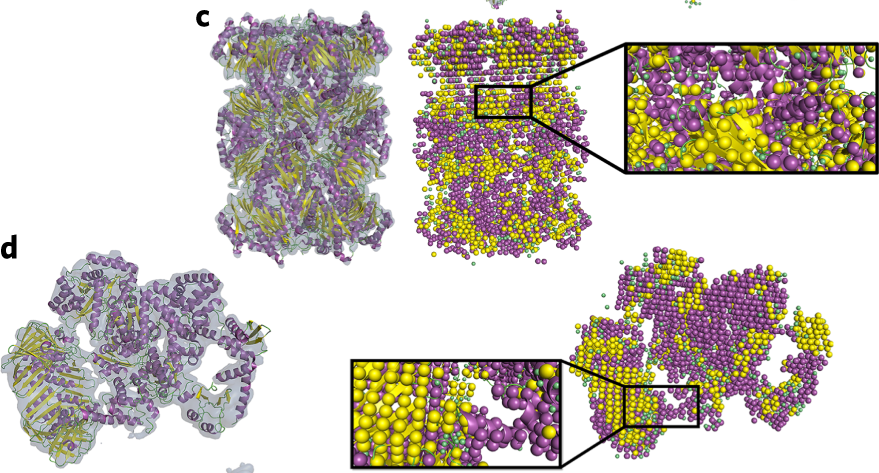
Professor Daisuke Kihara is a faculty member in the Department of Biological Sciences at Purdue University. His research focuses on computational methods for understanding protein structure-function relationships, including protein structure prediction, molecular docking, and cryo-EM-based modeling. He leads the Kihara Lab, which develops tools like LZerD for protein-protein docking and DeepMainmast for cryo-EM structure modeling. Education: Ph.D., Kyoto University (Japan); B.S., University of Tokyo (Japan). Research interests span bioinformatics, computational biology, and structural genomics. His lab emphasizes integrating machine learning with structural biology to address challenges in protein function prediction, pathway analysis, and large-scale genomic data interpretation. Key achievements include AIMBE Fellowship (2021), contributions to Alphafold-based modeling, and leadership in international grants reviews (NIH, NSF, EU). Recent work focuses on AI-driven advancements in cryo-EM structure refinement and ligand modeling. Lab activities include the PULSe interdisciplinary initiative and collaborations with global research networks. Notable tools developed include the DAQ-score database for model quality assessment and the GO2Sum functional summarization tool.
Peter Maurer is an Assistant Professor of Molecular Engineering at the University of Chicago's Pritzker School of Molecular Engineering. His research focuses on quantum sensing techniques applied to biological systems, aiming to achieve nanoscale resolution in probing biological processes. He holds a PhD in Physics from Harvard University and completed postdoctoral training at Stanford University under Steven Chu, specializing in nanoscale imaging technologies. Education: PhD in Physics, Harvard University (Advisor: Mikhail Lukin) Postdoctoral Research, Stanford University (Advisor: Steven Chu) Bachelor's in Physics, ETH Zurich Research Interests: Quantum Optics, Quantum Sensing, Solid-State Spin Systems, Single-Molecule Biophysics, and Physical Chemistry. His lab develops quantum sensors to address challenges in biophysical research and medicine, with a focus on diamond-based technologies and NV centers. Publications highlight advancements in quantum sensor engineering, biocompatible functionalization, and applications in embryogenesis and thermometry. His work bridges quantum engineering, biophysics, and materials science, aiming to push the boundaries of quantum technology in real-world biological systems. Labs/Teams: Lead the Maurer Lab at the University of Chicago, specializing in quantum sensing and nanotechnology applications.
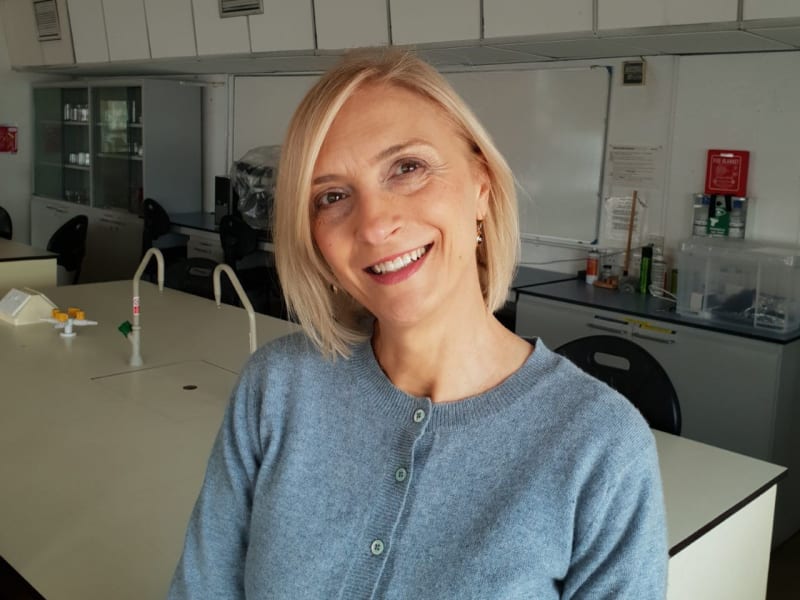
Gabriela Daniels is a Lecturer and Programme Director for science courses at the London College of Fashion (University of the Arts London), specializing in Cosmetic Science. She holds a degree in Chemistry with a focus on cosmetics and fragrance technology. Her academic career bridges industry experience with education, emphasizing hair science and claim substantiation . She advocates for sustainable practices and inclusive beauty , particularly addressing accessibility challenges for visually impaired consumers and aging populations. Her research explores the intersection of science and business in cosmetics, preparing students for industry roles through hands-on projects and ethical considerations. Education: Bachelor’s Degree in Chemistry (Cosmetics and Fragrance Specialization) Her research interests include hair ageing , inclusive product design , and the societal impact of cosmetics. She emphasizes the need for cosmetics to enhance well-being while respecting cultural and environmental contexts. Recent work focuses on blind consumers’ makeup practices and curly hair management taxonomies. Her publications highlight innovative approaches such as AI-driven hair analysis and ethnographic studies on consumer needs. Industry partnerships praise her students’ readiness for professional roles due to the program’s rigorous science and business integration. She leads the MSc Cosmetic Science program, which combines laboratory work with business strategy, fostering creativity in a fashion-focused environment. Her vision aligns with global trends toward sustainable, ethical, and accessible beauty solutions.
Dr. Chung Hoon Lee is an Associate Professor in the Department of Electrical and Computer Engineering at Marquette University's Opus College of Engineering, where he directs the Nanoscale Devices (MNDL) Lab. He holds a PhD in Electrical and Computer Engineering from the University of Wisconsin-Madison and completed postdoctoral fellowships at Cornell University and Columbia University. His research encompasses micro/nano device fabrication, thermoelectric materials, bio-MEMS, and microfluidic systems. Key focus areas include: Thermal analysis of bio/chemical molecules Atomic force microscopy probe development Ultrasonic actuators and sensors Nanoscale energy harvesting systems Analysis of his recent publications reveals strong emphases on environmental sensing (40% of publications) and nanoscale thermal systems (30%), with emerging work in machine learning applications for sensor networks. Award highlights: William and Nancy Stemper Faculty Scholars Award (2014) Way Klingler Young Scholar Award (2013) IEEE UFFC Student Paper Competition Winner (2002) He currently advises 3 graduate students and has graduated 4 MS/PhD students. His research has been supported by $1.2M+ in grants from NSF, DARPA, and DoD, including projects on micro-calorimeters for water quality monitoring and nanowire thermoelectric materials. Dr. Lee leads the MNDL Lab which focuses on MEMS/NEMS devices for biomedical and environmental applications, collaborating with industry partners including Asylum Research Inc.
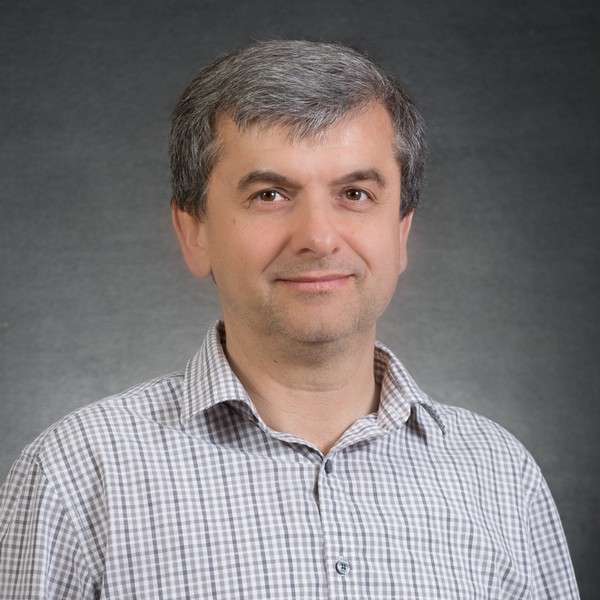
Ioan Kosztin is a Professor in the Department of Physics & Astronomy at the University of Missouri, where he conducts cutting-edge research at the intersection of physics, biology, and computational science. His work focuses on understanding the organization and function of living matter across multiple scales, from atomic to mesoscopic levels. Dr. Kosztin earned his Ph.D. from the University of Illinois at Urbana-Champaign in 1997 under Nobel Laureate Prof. A.J. Leggett, with his doctoral research centered on superconductivity. His academic journey also includes an M.S. from the University of Illinois (1993) and a Dipl. from the University of Cluj, Romania (1985). Professor Kosztin's research spans theoretical and computational biophysics, employing molecular dynamics simulations and non-equilibrium statistical mechanics to investigate biomolecular systems. His work explores mechanical force generation in proteins, energy transfer mechanisms, and transport phenomena in biological systems. Recent publications reveal a strong emphasis on peptide-lipid membrane interactions, utilizing combined theoretical, computational, and experimental approaches to achieve single-residue resolution in understanding these fundamental biological processes. His research has earned significant recognition including the MU Chancellor's Award for Outstanding Research and Creative Activity (2012), the P-G. de Gennes Prize (2010), and the Physics Alumni Faculty Fellow designation (2010). Over the past decade, his work has increasingly incorporated advanced computational techniques, machine learning, and atomic force microscopy to push the boundaries of biomolecular understanding. While specific details about his students and grants aren't provided in the available information, his extensive publication record spanning more than two decades demonstrates a highly productive research program with substantial contributions to biophysics and computational biology. His laboratory appears to maintain active collaborations with experimental groups, bridging theoretical physics with practical biological applications.
Professor Paul Scott is a faculty member at the University of Huddersfield, holding the Taylor Hobson Chair in Computational Geometry within the School of Computing and Engineering. He leads the Centre for Precision Technologies as Research Director and specializes in surface texture and form metrology, precision engineering, and AI-driven manufacturing solutions. His research integrates mathematical principles with advanced instrumentation, focusing on algorithm development for surface characterization and international standardization (ISO TC/213). Scott earned a PhD in Statistics from Imperial College London and a DSc from the University of Huddersfield. His career includes 26 years at Taylor Hobson Ltd, developing metrology instruments. He has pioneered de facto standard algorithms for surface analysis and contributed to 23 ISO standards. Current research spans computational geometry, AI semantic labeling, and machine-readable standards via Category Semantic Language (CSL). His work addresses Industrie 4.0 challenges, including smart algorithms for feature recognition and digital twins modeling. Collaborations span global institutions, with projects funded by EPSRC (e.g., Future Advanced Metrology Hub). Key areas include XCT-based surface measurement, additive manufacturing metrology, and precision instrumentation. Notable contributions include decomposition theory for geometrical products, filtration techniques in surface analysis, and bridging metrology with Industry 4.0 through data-driven approaches. His h-index of 33 reflects over 3,600 citations across 193+ publications.
Dr. Sara Sohail is an Assistant Professor of Chemistry & Biochemistry at Swarthmore College. She holds a B.S. in Chemistry from Haverford College, a Ph.D. in Chemistry from the University of Chicago, and completed her postdoctoral training as a Nancy Nossal Fellow at the NIH's Laboratory of Chemical Physics. Her research focuses on the physical mechanisms of amyloid assembly using advanced fluorescence techniques: Fluorescence lifetime imaging microscopy (FLIM) to characterize amyloid polymorphism Physical forces driving polymorphic amyloid assembly Functional and disease-related amyloids Peptide self-assembly pathways Nanobiomaterial applications Dr. Sohail's recent publications demonstrate a strong interdisciplinary focus combining biophysical techniques with chemical biology. Her work frequently employs single-molecule spectroscopy, FRET imaging, and computational approaches to study protein aggregation phenomena, particularly in neurodegenerative disease contexts. The research shows consistent application of ultrafast spectroscopic methods to photosynthetic systems and protein dynamics. She currently advises undergraduate researchers including Jai Rapaka and Bella Thoen in her lab, which focuses on single-fibril characterization using FLIM. Her team investigates solution conditions affecting amyloid polymorphism for both disease-related and functional amyloids.
Dr. Sevan Harput serves as an Associate Professor in Electrical and Electronic Engineering at London South Bank University (LSBU), where he joined in 2019. He leads Biomedical Imaging, Monitoring and Treatment research within the REACT Innovation Centre, Bioscience and Bioengineering Research Centre, and Digital x Data Research Centre. Harput also heads the South Bank Applied BioEngineering Research (SABER) group, focusing on translating engineering innovations into clinical applications. Harput earned his PhD in Electronic and Electrical Engineering from the University of Leeds (2009-2013). He subsequently worked as a Research Fellow at Leeds (2013-2016), then as a Research Associate at Imperial College London (2016-2019), with additional visiting researcher experience at King's College London. His academic journey demonstrates continuous progression in ultrasound imaging research. His research focuses on developing novel imaging and sensing technologies using ultrasonic frequencies, with current projects emphasizing high frame-rate ultrasound imaging, super-resolution methods, 3D ultrasound, signal processing for biomedical applications, and ultrasound sensor development. He leads the SPE3D Ultrasound research lab ( https://sevanharput.github.io/ ), pioneering innovative ultrasound approaches. His fingerprint reveals expertise in 3D Localization, Microvascular Blood Flow, Ultrasonics Engineering, Transducer Engineering, Cortical Bone Thickness, and Ultrasound Super-resolution Imaging. Harput's recent publications demonstrate significant advancement in ultrasound technology for medical diagnostics, particularly in bone health assessment and microvascular imaging. His work bridges engineering innovation with clinical applications, with strong emphasis on super-resolution techniques, deep learning applications to ultrasound data, and novel transducer designs. The research shows progression from fundamental physics to practical clinical implementations. Secured research funding totaling over £1.2 million as PI, Co-I and researcher (£163k as PI) Industrial Consultancy valued at £70k with partners including Dragerwerk AG, Clinical Technology Ltd., Tribosonics, and Plexus Corp Co-Inventor of patent 'Apparatus and method for manipulating entrained particles' Funding from EPSRC, Royal Society, and GCRF As an educator, Harput teaches Digital Signal Processing, Digital System Design, and Biomedical Electronics. His research contributes to UN Sustainable Development Goals related to health and well-being. With 70 research outputs spanning from 2008 to 2024, his work shows consistent productivity and evolution toward increasingly clinically relevant applications, particularly in bone health monitoring and cancer diagnostics through advanced ultrasound techniques.
Xing Liu is an Assistant Professor in the Department of Mechanical and Industrial Engineering at New Jersey Institute of Technology (NJIT), focusing on interdisciplinary research at the intersection of materials science, mechanical engineering, and machine learning. Education: Ph.D. in Materials Science from Brown University (2021) B.E. in Mechanical Engineering from Tsinghua University (2014) Their research develops innovative frameworks combining computational modeling, experimental validation, and artificial intelligence to address critical challenges in material behavior and mechanical reliability. Current work spans radiation-resistant composites, perovskite solar cells, and multiscale analysis of material interfaces. Recent publications emphasize fracture mechanics, with applications to advanced materials like metal-halide perovskites and amorphous electrolytes. The work integrates mechanics-informed machine learning, radiation response modeling, and experimental nanomechanical testing.
Dr. Krishen Appavoo is an Associate Professor in the Department of Physics at the University of Alabama at Birmingham's College of Arts and Sciences. He directs the Laboratory for Nanoscale and Quantum Photonics, focusing on light-matter interactions at ultrafast timescales and nanoscale dimensions. His research investigates quantum materials, nanostructured electronic systems, and ultrafast spectroscopy for energy and optoelectronic applications. Major projects include time-varying metamaterials, quantum nanosystems, and energy nanomaterials like hybrid perovskites. His work integrates nanofabrication with advanced optical characterization techniques including femtosecond transient spectroscopy and energy-momentum imaging. Dr. Appavoo mentors numerous graduate and undergraduate researchers, maintaining active collaborations with Brookhaven National Laboratory and Rice University. His research has been funded by NSF, NASA, and Alabama EPSCoR, resulting in publications in journals such as Science , Nature Communications , and Advanced Optical Materials .
Shonda Bernadin, Ph.D., is an Associate Professor in the Department of Electrical & Computer Engineering at the FAMU-FSU College of Engineering, a joint institution of Florida Agricultural and Mechanical University and Florida State University. She holds a B.S. from Florida A&M University, an M.S. from the University of Florida, and a Ph.D. from Florida State University. Her research spans digital signal processing, speech recognition, artificial intelligence, autonomous vehicles, and engineering education. She directs the Speech Processing and Data Analysis Laboratory (SPADAL) and focuses on broadening STEM participation through K-12 outreach, including ACEE summer camps and CROP-ENG programs. Dr. Bernadin’s work emphasizes engineering education innovation, including evidence-centered assessment design and strategies to improve retention and diversity in engineering. She has authored numerous peer-reviewed publications on topics like neural networks, sensor-based defect detection, and cybersecurity threats in AI systems. Her teaching philosophy prioritizes creating inclusive, effective learning environments through engaging methods and technology integration. Professional activities include leadership in engineering education reform and collaborations with organizations such as ASTERIX to enhance STEM workforce diversity. Her lab’s research often intersects technology development with societal impact, addressing challenges in healthcare, autonomous systems, and additive manufacturing quality control.
Prof. Dr. Blazej Grabowski is a Professor at the Institute of Materials Science, University of Stuttgart, where he serves as Dean of Studies for Materials Science. His research focuses on computational materials science, utilizing machine learning, ab initio methods, and atomistic simulations to investigate deformation mechanisms, diffusion phenomena, and thermodynamic properties in advanced materials such as high-entropy alloys and intermetallic compounds. His work integrates theoretical modeling with experimental validation to design novel materials with tailored mechanical and functional properties. Research interests span machine-learning interatomic potentials, defect engineering, phase stability, and materials for energy applications. Recent publications demonstrate a strong emphasis on computational acceleration techniques and multi-scale modeling approaches, with applications in metallurgy, solid-state ionics, and photocatalysis. His studies frequently employ density functional theory, molecular dynamics, and novel machine-learning frameworks to predict complex materials behavior.
Glenn Sjoden is a Professor in the Department of Civil & Environmental Engineering at the University of Utah, specializing in nuclear engineering applications. With degrees including a PhD in Nuclear Engineering from Pennsylvania State University (1997), MS from Air Force Institute of Technology (1992), and BS from Texas A&M University (1984), his research spans computational nuclear engineering, reactor design, radiation transport, and nuclear forensics. His research interests focus on reactor physics optimization, isotope production/separation methodologies, nuclear detection systems, and planetary defense applications. Current investigations examine neutron transport modeling, thermoelectrically cooled detectors, asteroid impact mitigation strategies, and advanced morphological analysis for nuclear forensic applications. Recent publications demonstrate consistent focus on experimental validation of computational models across nuclear engineering domains. Article analyses reveal predominant themes in reactor optimization (32%), radiation detection (27%), isotope production (20%), nuclear forensics (13%), and planetary defense (8%). Methodological approaches emphasize Monte Carlo simulations, spectral matching techniques, and automated image processing algorithms. Laboratory activities include the Utah TRIGA reactor facility where his team conducts experimental validation of neutron imaging systems, radioisotope production, and detector performance characterization under controlled irradiation conditions.
Yubin Zhang serves as a Senior Researcher at the Department of Civil and Mechanical Engineering, Technical University of Denmark (DTU), with expertise in advanced materials characterization. His primary affiliation is with DTU Mechanical Engineering (MEK), where he contributes to the 3D Imaging Center (3DIM) project and conducts research on microstructure engineering of metallic materials. His research focuses on Microstructure Engineering, Materials Science, and Tomography, with specialized expertise in aluminum alloys, recrystallization phenomena, nucleation mechanisms, and grain boundary dynamics. He integrates experimental techniques like X-ray microscopy with computational approaches including deep learning for microstructural analysis, enabling precise characterization of deformation and phase transformations in complex materials. Recent publications demonstrate a clear trend toward multimodal 3D/4D imaging techniques combined with machine learning for microstructure quantification. His work bridges fundamental materials science with industrial applications, particularly in additive manufacturing and aluminum processing, where advanced imaging provides critical insights into material behavior during thermo-mechanical treatments. As a dedicated supervisor, Dr. Zhang mentors PhD candidates including Defer, M. C. on additive manufactured AlSiMg alloys, Knipschildt-Okkels, E. F. F. on recrystallization nucleation, and Lindkvist, A. A. on residual stresses in multiphase steels. His research is supported through major grants including the 3DIM project (2016-2029) and Microstructural Engineering of Additive Manufactured AlSiMg (2023-2026), where he serves as Principal Investigator and supervisor respectively. Dr. Zhang operates within DTU's 3D Imaging Center, a state-of-the-art facility utilizing synchrotron radiation and laboratory X-ray sources for non-destructive 3D characterization. His team specializes in diffraction contrast tomography, dark field X-ray microscopy, and machine learning applications for microstructure analysis, with strong collaborations across European research institutions.
Ozgur Keles is an Assistant Professor in the Department of Chemical and Materials Engineering at San José State University (SJSU), where he has worked since August 2015. He previously held a Lecturer and Senior Research Associate position at Illinois Institute of Technology from 2013 to 2015 after completing his Ph.D. in Materials Engineering at Purdue University (2013). His research focuses on developing AI-driven discovery machines for new materials, leveraging active learning and high-throughput methods to explore uncharted chemical and structural spaces. He investigates processing-structure-property-design (PSP-D) interrelationships in multi-functional materials, combining additive manufacturing with data-driven numerical approaches to control hierarchical structures from sub-nano to macro-scale. B.S. in Metallurgical and Materials Engineering from Middle East Technical University, Turkey (2005) M.S. in Metallurgical and Materials Engineering from Middle East Technical University, Turkey (2008) Ph.D. in Materials Engineering from Purdue University (2013) His research interests span artificial intelligence in materials discovery , graphene quantum dots in epoxy composites , sustainable design for smart cities , and virtual reality in engineering education . He uses molecular dynamics, finite element analysis, and vibration-assisted 3D printing to enhance mechanical reliability in composites. Recent projects include NSF CAREER grant-funded work on multi-scale mechanical behavior of quantum dot nanocomposites and an NEA grant for 3D printing cultural heritage artifacts . His publications highlight advancements in additive manufacturing , nanocomposite toughening , and machine learning for structural analysis . Notable contributions include studies on the effects of raster angle on 3D printed parts , thermal conductivity enhancement via GQDs , and stochastic fracture of porous composites . Scientific Awards: ASME Rising Star of Mechanical Engineering (2025) 2023 College of Engineering Award for Excellence in Scholarship 2019 Advisor of the Year at SJSU Keles collaborates extensively, securing grants such as the NSF MRI for a metal AM system and DOE PARC Xerox for ceramic alignment studies. His lab engages students in hands-on research, and he promotes engineering education through virtual reality modules .