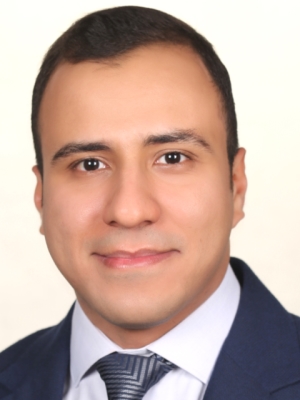
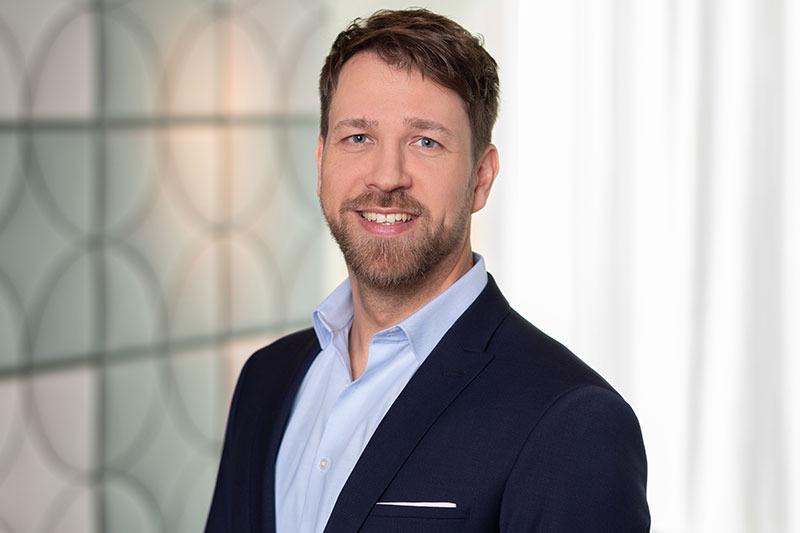
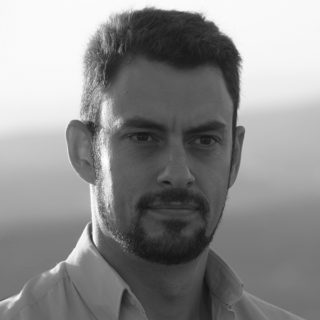
Prof. Dr.-Ing. Bernd Noche is a University Professor at the Transport Systems and Logistics department of the Faculty of Engineering , University of Duisburg-Essen. He serves on examination boards for the Master Logistics Management program and chairs the Technical Logistics Examination Committee. Expertise in logistics systems, sustainable supply chains, and system dynamics Research focuses on circular economy applications in agriculture, maritime transport optimization, and IoT in logistics Collaborations with researchers in Egypt, Indonesia, and Jordan on citrus supply chains and renewable energy logistics Research Trends : His recent work emphasizes Applying machine learning (YOLOv8n) to defect detection in seamless fabrics System dynamics models for sustainable agricultural supply chains in Jordan Valley Life cycle assessment of packaging materials in citrus transportation His publications span Computer Science , Environmental Science , and Operations Research , with subfields including Logistics Automation , Circular Economy , and Maritime Cost Optimization . Email: bernd.noche@uni-due.de
Ozlem Ozgun is a Professor in the Department of Electrical and Electronics Engineering at Hacettepe University, Ankara, Turkey. She serves as Vice Dean of the Faculty of Engineering (2021-present) and previously held leadership roles including Department Vice Chair (2017-2020) and Chair of the Electromagnetic Fields and Microwave Techniques Division (2021-2024). Her academic journey includes positions at TED University as Founding Department Chair (2012-2015) and at Middle East Technical University-Northern Cyprus Campus as Assistant Professor (2008-2012). Education: Ph.D (2007): Middle East Technical University, Dept. of Electrical and Electronics Engineering M.Sc (2001): Bilkent University, Dept. of Electrical and Electronics Engineering B.Sc (1998): Bilkent University, Dept. of Electrical and Electronics Engineering Professor Ozgun's research focuses on computational electromagnetics with emphasis on transformation electromagnetics, finite element methods, and radio wave propagation. Her work bridges theoretical electromagnetics with practical applications in radar systems, antenna design, and wireless communications. She has pioneered techniques using coordinate transformations to solve complex electromagnetic problems, developing innovative methods for modeling scattering phenomena, wave propagation, and metamaterial applications. Her research has significant implications for radar cross-section reduction, microwave imaging for medical applications, and 5G communication systems. Analysis of her recent publications reveals a consistent focus on advancing computational techniques in electromagnetics, particularly through transformation optics and domain decomposition methods. Her work shows increasing integration of machine learning approaches with traditional electromagnetic modeling, especially in radar cross-section analysis and inverse synthetic aperture radar techniques. There's also a strong emphasis on practical tools development, with multiple software packages released for public use including PETOOL, GO+UTD, and VectGUI. Scientific Awards: Hacetepe Science Award (2024) IEEE Antennas and Propagation Society Distinguished Lecturer (2025-2027) Top 2% of the 'career-long impact' category in the world's most influential scientists list (2023-2024) URSI elevation to senior membership (2020) IEEE elevation to senior membership (2013) Prof. Dr. Leopold B. Felsen Award for Excellence in Electromagnetics (2009) Professor Ozgun has supervised 15 graduate students to completion, with research spanning radar cross-section computation, electromagnetic scattering, and microwave imaging. She has secured multiple research grants including TÜBİTAK-TEYDEB and TÜBİTAK-ARDEB projects focused on high-frequency radar analysis and electromagnetic modeling. Her professional service includes significant editorial roles and leadership positions in URSI-Turkey where she served as President of the Steering Committee (2018-2023). She is actively involved in developing computational tools for electromagnetic education and research, with several MATLAB-based applications available for public use. Her research group maintains strong collaborations with international institutions including Penn State University, and she has established a productive research environment focused on advancing computational electromagnetics through innovation in numerical methods and practical applications.
Mohammad Hossein Moradi is a researcher at ETH Zürich affiliated with Prof. Christopher Onder's research group. His work focuses on sustainable transportation and renewable energy systems, with contact via moradim@ethz.ch. His research integrates machine learning with environmental engineering to optimize energy infrastructure across transportation and power sectors. Key interests include emission reduction in maritime and urban transit systems, thermo-electrical analysis of photovoltaic technologies, and pollution control through intelligent systems. His interdisciplinary approach bridges mechanical engineering, data science, and sustainability science. Recent publications (2021-2024) reveal consistent application of reinforcement learning and AI for route optimization, CO2 reduction, and renewable energy integration. Dominant themes include electrified public transportation infrastructure, maritime vessel efficiency, solar power plant allocation, and advanced thermography for PV systems. This work demonstrates strong cross-disciplinary connections between transportation engineering, environmental science, and computational modeling.
Prof. Dr. Şeniz Ertuğrul is a faculty member at the College of Engineering , İzmir University of Economics , Department of Mechatronics Engineering. She previously held academic positions at Istanbul Technical University (ITU) from 1998–2018, progressing from Dr. Öğr. Üyesi to Professor. Her career includes visiting researcher roles at University of Michigan (2002) and University of Malta (2024). PhD in Mechanical Engineering (1996), Wichita State University MSc in Robotics Engineering (1992), Istanbul Technical University BSc in Mechanical Engineering (1988), Istanbul Technical University Her research focuses on system dynamics and control , particularly in humanoid robotics , marine vessel control , fuzzy logic , neural networks , and intelligent systems . She has published over 15 articles in journals like Applied Soft Computing and Ocean Engineering , with recurring themes in robot manipulators , collision avoidance algorithms , and adaptive control . Her work has been cited in studies on autonomous maritime navigation , driver modeling , and industrial optimization . She has received 14 scientific awards , including TÜBİTAK-National Instruments Third Place (2015) and WSU Mechanical Engineering Project First Prize (1993). Her 18+ advisees have explored topics like humanoid robot trajectory planning , ship motion control , and smart actuator design . Current projects include Series Elastic Actuator Development (2023–2024) and Humanoid Robot Cognitive Modeling (2021–2023).
Pablo Aparicio Ruiz is a Professor in the Department of Industrial Organization and Business Management II at the Higher Technical School of Engineering, University of Seville. His academic work spans thermal comfort optimization, logistics systems, and infrastructure management with particular focus on Mediterranean climate applications. His research interests concentrate on thermal comfort optimization in buildings , HVAC systems control , and logistics and supply chain management . He develops machine learning approaches for indoor climate prediction and implements adaptive algorithms for energy efficiency in building systems. His work on last-mile delivery optimization addresses urban logistics challenges through data-driven decision support systems. Analysis of his recent publications reveals a strong trend toward machine learning applications in thermal comfort modeling for Mediterranean climates, with significant contributions to water infrastructure management and logistics optimization . His research bridges theoretical algorithms with practical implementations in building automation and transportation systems. Professor Aparicio Ruiz actively participates in research projects including CONFOrt térmico (thermal comfort in resilient buildings), TRACSINT (optimized transport in integrated supply chains), and GRIAL (water network management using AI). His work demonstrates consistent collaboration with multidisciplinary teams across engineering disciplines.
Andy Witt serves as Professor of Business Informatics with a focus on Digitalization at Hamburg School of Business Administration (HSBA) since September 2023. His academic foundation includes a Computer Engineering degree from Hamburg University of Technology (TU Hamburg) specializing in applied mathematics and physics, followed by doctoral research at the same institution from 2013-2017. His educational background includes: Computer Engineering studies at TU Hamburg with concentration in applied mathematics and applied physics Doctoral research (2013-2017) applying nonlinear Schrödinger equations to model extreme ocean wave phenomena Professor Witt's research spans Nonlinear Dynamics, Cost Engineering, Sustainable Production, Machine Learning, and Big Data Analysis. His work demonstrates a clear evolution from theoretical physics toward industrial applications, particularly in digitalizing production systems and integrating sustainability metrics into cost engineering frameworks. Current research emphasizes AI-driven optimization for sustainable industry practices. Analysis of his publication history reveals a strategic shift from fundamental wave dynamics research (2019-2022) toward applied industrial informatics (2021-2023), with growing emphasis on carbon footprint quantification, fusion energy economics, and sustainable manufacturing systems. This trajectory reflects his dual expertise in physical modeling and business-oriented digital solutions. Professor Witt founded and serves as managing director of CALC4XL GmbH, which develops the namesake software platform for integrated product cost and carbon footprint calculation. This venture directly supports his academic mission by providing industry-tested tools for sustainable product optimization, bridging theoretical research with practical business applications in industrial digitalization.
Dr. Robert Trott serves as a Lecturer in Engineering (Teaching and Research) at Flinders University's College of Science and Engineering. He holds a PhD in stroke rehabilitation robotics from Flinders University (2022), following a Bachelors in Mechanical Engineering (First Class Honours) and a Masters in Biomedical Engineering. Research Focus: Neurorehabilitation, biomechanics, robotics, and engineering design. Teaching Responsibilities: Coordinator of Engineering Work Integrated Learning, Honours and Masters Research Project (Engineering and ICT), and lecturer in ICT Management and Professional Standards. Key Affiliations: Medical Device Research Institute (full member since 2016), Australian Industrial Transformation Institute (Research Fellow 2022). His publications span stroke rehabilitation robotics, brain-computer interfaces, and occupational exoskeleton applications in maritime, mining, and agricultural industries. Awards include the Flinders University Engineering Medal (2016) and multiple scholarships. Scientific Awards: Force Forty Leadership in Engineering (2020-2021), Commonwealth Scholarships Program (2018-2021), Playford Trust Scholar (2016-2020). Professional Memberships: IEEE (2022-present, SA Section Educational Activities Coordinator 2025), Engineers Australia (2022-present), European Committee for Standardisation (2020-2022). Contact: robert.trott@flinders.edu.au | ResearchGate: ORCID
Tor Arne Johansen is a Professor at the Department of Technical Cybernetics, Norwegian University of Science and Technology (NTNU), and a key researcher at the Center for Autonomous Marine Operations and Systems (AMOS). His work bridges control theory, autonomous systems, and remote sensing technologies. Education : Civil Engineering Degree Doctorate in Technical Cybernetics His research focuses on autonomous marine and aerospace systems , with emphasis on control algorithms , collision avoidance, and hyperspectral imaging . Recent work explores UAV navigation in extreme conditions, MPC for maritime operations, and adaptive Kalman filters for spectroscopic correction. The 15 most recent articles highlight trends in autonomous navigation , UAV control systems , hyperspectral satellite data processing , and risk-aware industrial drone applications . Subfields include RRT algorithms, wave-motion compensation, intention-aware trajectory prediction, and onboard classification for earth observation. Advising : Supervised numerous Master’s and PhD students on topics like collision avoidance, UAV recovery, and hyperspectral analytics. Collaborates with institutions like SINTEF and international researchers in maritime and aerospace domains.
Bao Michael Uyen is an Adjunct Professor at the University of Ottawa Faculty of Engineering (Department of Mechanical Engineering) and a Senior Scientist at Defence Research and Development Canada (DRDC) , a role he has held since 1993. He is also co-chair of NATO Modelling Simulation Group 186, leading research on multidimensional data farming. His affiliations span NORAD, US Space Command, NATO Centre for Maritime Research & Experimentation, and DRDC Atlantic. Education: PhD in Theoretical Particle Physics, McGill University (1993) BSc in Physics (summa cum laude), University of Ottawa (1988) BSc in Mathematics (summa cum laude), University of Ottawa (1988) Undergraduate studies at Caltech (2 years) Research Interests: Dr. Uyen's research lies at the intersection of complex systems, autonomous agents, and defense applications. He investigates how autonomous vehicles, human operators, and AI systems interact in high-stakes environments. His work spans robotics, AI, cybersecurity, machine learning, combinatorial optimization, stochastic processes, and discrete mathematics. These disciplines are applied to mine countermeasures, ballistic missile defense, multi-domain operations, and strategic deterrence. Research Trends: His recent publications reflect a strong focus on multi-domain defense modeling , AI-enhanced simulation , and autonomous systems . Themes include quantum game theory in deterrence, probabilistic modeling for mine detection, and data farming for strategic decision support. These works are often collaborative and NATO-linked, emphasizing real-world defense applications. Scientific Awards & Honors: Koopman Prize 2014 – Outstanding Military Operations Research (INFORMS) Third Prize, CORS Practice Competition 2006 – AUV Mine Countermeasures Deputy Minister Commendation Award – NORAD Sustainability Special Merit, CORS Practice Competition 2000 – Search & Rescue Modeling Gold Medal, University of Ottawa 1988 NSERC Postdoctoral Fellowship 1993–1995 Multiple NSERC and Ontario Graduate Scholarships Advising & Grants: Dr. Uyen has mentored numerous graduate students who now hold positions at institutions like Yale, IBM, and the University of Manitoba. He has secured over $6.7 million CAD in defense research funding, including a $5.6M collaborative project with uOttawa, UNB, and NRC focused on autonomous agent coordination. Labs & Teams: He leads research under the NATO Modelling Simulation Group 186 and collaborates with DRDC teams across Canada and internationally. His work integrates defense simulation, robotics, and AI, often involving interdisciplinary teams from academia, military, and government agencies.
Minia Manteiga Outeiro is a researcher and educator at Universidade da Coruña (UDC), specifically affiliated with the Higher Technical School of Nautical and Machinery within the Department of Navigation Sciences and Marine Engineering. Her academic work spans both astronomy and nautical sciences, with a unique interdisciplinary approach connecting stellar evolution with maritime applications. Her research interests focus on stellar evolution, particularly stellar populations and late phases including planetary nebulae. She specializes in applying Artificial Intelligence techniques to astronomical data analysis, Big Data in Astronomy, optical and infrared spectroscopy, and nebula kinematics. Her work bridges astronomy with practical maritime applications, particularly in meteorology and oceanography. Dr. Manteiga Outeiro has been actively involved in numerous research projects funded by Spanish and European agencies since the late 1990s, with a particularly productive period from 2015 to present. Her recent publications (2023-2025) demonstrate continued productivity in both astronomical research and maritime applications. She frequently collaborates with researchers like José Carlos Dafonte Vázquez, D. Garabato, and M.A. Álvarez. She has supervised multiple master's theses on topics including meteorology in extreme conditions, climate change impacts on maritime transport, wave dynamics, and optimal maritime routes. Her work demonstrates a unique integration of astronomical data analysis techniques with practical maritime challenges. As an educator, she teaches courses in the Master's Degree in Nautical Engineering and Maritime Transport and the Degree in Nautical Science and Maritime Transport, including Nautical Meteorology in Extreme Conditions, Meteorology and Oceanography, and Final Degree Projects.
Dr. Snezana Dragićević is a Full Professor at the Department of Mechanical Engineering , Faculty of Technical Sciences in Čačak , University of Kragujevac , Serbia. She holds a PhD in Thermal Engineering and has led over 15 research projects focused on energy systems and renewable technologies. BSc and MSc in Thermal Engineering from University of Belgrade and University of Kragujevac Doctoral research on solar wall optimization at Technical Faculty Zrenjanin Her research spans thermal engineering , solar technology , energy informatics , and artificial intelligence applications in energy systems . She has published over 140 papers in journals like Computers & Industrial Engineering and Journal of Metalurgija , with recent works analyzing solar radiation prediction via machine learning and thermo-hydraulic performance of solar water heaters. As a member of the Faculty Innovation Incubator , she drives technology transfer initiatives in renewable energy and sustainable engineering. Current collaborative projects include the EU PRO Plus Programme for smart growth in metal sector SMEs and the Science-Technological Cooperation Serbia-China on 5G surveillance systems. Her work integrates hydrometeorological modeling , industrial process simulation , and energy efficiency metrics for educational and commercial applications.
Michael Tsikerdekis is an Associate Professor of Computer Science at Western Washington University in Bellingham, WA, where he maintains an active research program at the intersection of computer science and social systems. He is also an IEEE Senior Member and a 2024-2025 U.S. Fulbright Scholar. His work focuses on cybersecurity, particularly in detecting and preventing online deception and related social engineering attacks. Dr. Tsikerdekis is the academic lead for PISCES (Public Infrastructure Security Cyber Education System) and is actively involved in cybersecurity education initiatives. Dr. Tsikerdekis received his educational training through the following institutions: Ph.D. in Informatics (Computer Science) from Masaryk University, Czech Republic (2013) BSc/Mgr. in Forestry and Natural Environment from Aristotle University, Greece (2008) Dr. Tsikerdekis's research interests center around cybersecurity, social computing, online deception, and machine learning. His work explores the intersection of computer science and social systems, with a particular focus on detecting and preventing online deception and related social engineering attacks. He has developed methodologies for identity deception detection in social media using behavioral analysis and network data. His research spans multiple domains including misinformation detection, network security, and the psychological effects of online hoaxes. Dr. Tsikerdekis also investigates how automated feedback systems impact learning outcomes in educational technology contexts. His publications reveal a strong focus on practical cybersecurity applications, with particular emphasis on identity deception detection, network anomaly detection, and misinformation analysis. Over the past decade, his research has evolved from theoretical models of online behavior to applied security solutions using machine learning and deep learning techniques. His work bridges the gap between academic research and real-world cybersecurity challenges, with applications in social media security, IoT protection, and network defense systems. Dr. Tsikerdekis has received several notable recognitions for his work: IEEE Senior Member 2024-2025 U.S. Fulbright Scholar Dr. Tsikerdekis is actively involved in mentoring and advising students, particularly those interested in cybersecurity and social computing research. He encourages undergraduate and graduate students to engage in research projects through independent study and graduate studies. His grant funding includes significant projects such as: Public Infrastructure Security Cyber Education System - Northwest (PISCES-NW) with Pacific Northwest National Laboratory (2024) Enhancing Cybersecurity Education and Infrastructure for Small Public Entities in Greece (2024 Fulbright Grant) Mini-Grant Award from Western Washington University (2023) Public Infrastructure Security Cyber Education System - Northwest (PISCES-NW) with Pacific Northwest National Laboratory (2020) Dr. Tsikerdekis leads the PISCES (Public Infrastructure Security Cyber Education System) initiative, which focuses on providing cybersecurity education and infrastructure support for small public entities. Through this program, he works with students and community partners to develop practical cybersecurity solutions. He is also actively involved in book authorship, having written "Overnight Hercules for Network Security: Become a Security Analyst" and "Grokking Relational Database Design," both aimed at making complex technical topics accessible to learners.
George Giannakopoulos is a Research Fellow at the National Center for Scientific Research "Demokritos" in Athens, Greece, with over 15 years of experience in Artificial Intelligence. He contributes to two MSc programs in Data Science and Artificial Intelligence , while leading the international MultiLing community on multilingual summarization. Education: BSc in Informatics and Telecommunications (2005), National and Kapodistrian University of Athens PhD in Artificial Intelligence (2009), University of the Aegean Research Focus: Natural Language Processing Machine Learning Graph Methods Biomedical Informatics Notable Projects: Co-founder of SciFY, a non-profit technology transfer organization Lead developer of NewSum AI summarization suite Contributor to EU's AI4EU platform Scientific Contributions: With 60+ publications and 700+ citations, he has pioneered n-gram graph methods in NLP and supervised over 30 students. His work spans biomedical analysis, serious games, and open science advocacy.
Wengang Mao serves as an Assistant Professor in Marine Engineering at Chalmers University of Technology, where his research focuses on enhancing the energy efficiency and safety of shipping operations through advanced computational methods and digitalization. His work bridges traditional marine engineering with cutting-edge artificial intelligence techniques to address contemporary challenges in maritime transportation. Dr. Mao's research interests center on four main areas: (1) Machine learning and AI applications for ship performance and response modeling; (2) Ship weather routing and voyage optimization for energy-efficient shipping; (3) Autonomous shipping technologies including route planning, optimal control, and smart navigation systems; and (4) Statistical modeling of hydrodynamic loads, fatigue safety, and environmental conditions. His interdisciplinary approach combines marine engineering fundamentals with data science to develop practical solutions for the maritime industry. Analysis of his recent publications reveals a strong trend toward integrating machine learning techniques with traditional marine engineering problems. His work demonstrates increasing focus on autonomous shipping systems, environmental sustainability through optimized routing, and advanced fatigue assessment methods for marine structures. The research spans both theoretical developments and practical applications, with particular emphasis on real-world validation using ship operational data. Dr. Mao has contributed significantly to the field through numerous collaborative projects, though specific grant information isn't detailed in the available text. His research has practical implications for ship operators seeking to reduce fuel consumption and emissions while maintaining safety standards in increasingly complex maritime environments. His work appears to be closely connected with maritime industry applications, particularly in the areas of voyage optimization systems and ship performance monitoring, suggesting strong industry-academia collaboration in his research activities.
H. Wörtche is an active researcher affiliated with Wageningen University & Research , focusing on interdisciplinary studies at the intersection of environmental science, computer science, and engineering. Their work spans urban microclimate dynamics, sensor network optimization, biomechanics, and acoustic ecology. Research Focus Urban green infrastructure's impact on thermal comfort and microclimate regulation Machine learning applications for anomaly detection in sensor networks Acoustic masking effects in urban environments Biomechanical sensor validation for movement analysis Robotic systems in dynamic maritime environments Publication Trends Recent studies emphasize urban sustainability through green infrastructure, lightweight machine learning for embedded systems, and environmental acoustics. They combine empirical fieldwork with computational modeling, particularly in sensor network analysis and real-time data fusion .