Oumaima Lahmar is a researcher in the Department of Business Administration at the University of Bergamo, specializing in corporate finance, sustainability, and financial communication. Her work explores ESG factors, cultural finance, reputational risk in European banking, and AI applications in financial information systems. Ph.D. in Economics and Business Administration, University of Cagliari Master's in International Management, University of Cagliari Bachelor's in Business Administration, Tunis Business School Her research focuses on financial market dynamics, cultural finance, and AI-driven financial transparency. Recent publications analyze ESG reputational risk, gender differences in informal enterprises, and AI-enhanced financial information accessibility across journals like Research in International Business and Finance and International Review of Financial Analysis . Dr. Lahmar serves as Associate Editor for Research in International Business and Finance and the International Journal of Financial Services Management , and participates in the Communication Committee at the University of Bergamo's Department of Management.
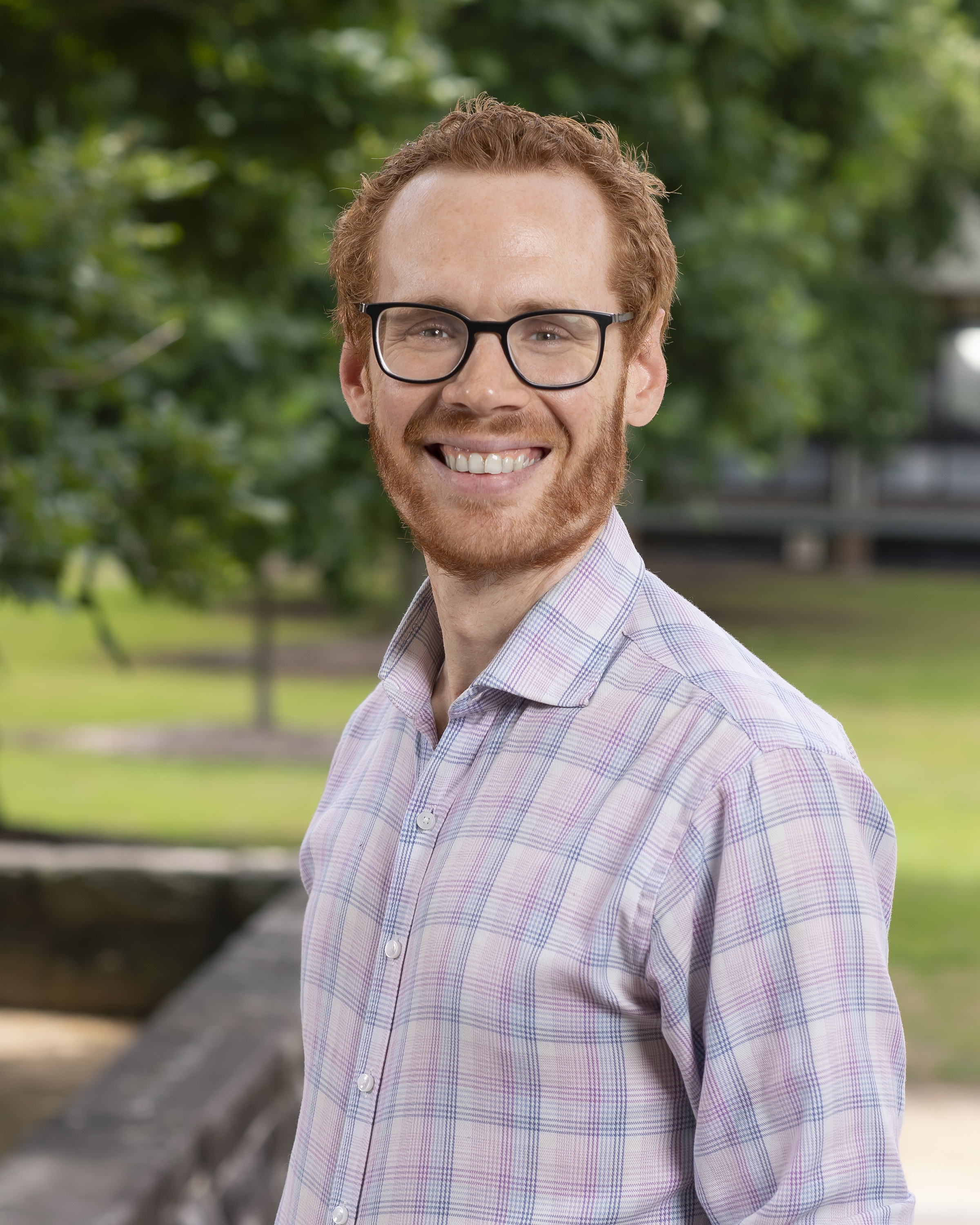
Dr. Michael Stevens is a Senior Lecturer at University of New South Wales (UNSW) Canberra , where he focuses on advanced manufacturing and biomedical device control systems . His work bridges digital manufacturing for SMEs with smart artificial heart technologies , emphasizing industry collaboration and translational research. Specializes in physiological control systems for rotary blood pumps Develops unobtrusive fall detection systems for dementia patients Leads international projects on total artificial heart development Education : B.Eng (Medical - First Class Honours), Queensland University of Technology (2010) PhD in Physiological Control for Biventricular Assist Devices, University of Queensland (2014) Research Trends show consistent focus on: Machine learning for biomedical diagnostics (2018–2025) mmWave radar and thermal sensors in patient monitoring (2021–2024) Computational fluid dynamics in artificial heart modeling (2016–2024) Physiological control algorithms for rotary blood pumps (2011–2025) Scientific Awards : UNSW Scientia Education Award (2021) for contextual teaching Heart Foundation Runner-up for "Smart Artificial Hearts" pitch (2021) ARC PGC Supervisor Award (2017) for mentoring Grants & Supervision : Holds over $6 million in competitive funding including MRFF and ARC grants. Currently supervises 4 PhD students while maintaining industry partnerships with VitalCare and BiVACOR. Labs & Facilities : Works across UNSW Engineering labs and Graduate School of Biomedical Engineering platforms, including mock circulation loops and high-performance computing clusters for CFD simulations.
Bernhard von Stengel is a Professor of Mathematics at the Department of Mathematics, London School of Economics and Political Science . His work bridges game theory, computational complexity , and mathematical economics , with a focus on equilibrium computation and algorithmic aspects. Developed Game Theory Explorer , open-source software for analyzing strategic and extensive-form games. Organized major workshops like What is Strategic Information? (2024) and Game Theory and Machine Learning (2023). Authored the textbook Game Theory Basics (Cambridge University Press, 2021). His research spans zero-sum games , correlated equilibrium , inspection games , and communication over noisy channels . Recent work includes characterizing the Condorcet dimension of metric spaces (2024) and stable-set bounds for Nash equilibria in bimatrix games. He has collaborated with institutions like the Game Theory Society and contributed to public discourse via talks on algorithms' societal impact (2021) and game theory in politics (2020).
Sara Martín Alegre is a Professor in the Department of English and German Studies at the Autonomous University of Barcelona (UAB). She specializes in Gender Studies, Science Fiction, and Cultural Analysis, with a focus on posthumanism and masculinity in media. Her research explores themes such as gender fluidity, AI ethics, and the intersection of popular culture with academic discourse. She has directed numerous research projects and supervised doctoral theses, including works on human-eating monsters in film and transhumanism in literature. Her teaching includes courses on contemporary Anglophone literature, gender studies, and Victorian literature. She actively collaborates in publishing initiatives, such as e-books with students and academic monographs on topics like masculinities in cinema and science fiction. Her work bridges traditional literary analysis with modern digital humanities, emphasizing the role of popular fiction in academic exploration. Award-winning scholar and author, her contributions include monographs like *Detrás de la máscara: masculinidades americanas en el documental contemporáneo* (2023) and edited volumes on topics ranging from children in cinema to 21st-century miniseries. Her research highlights the sociopolitical implications of gender representation in media, from Shakespearean adaptations to modern science fiction narratives.
Gina Crocenzi (Masterson) serves as a Professor in the Department of Modern and Classical Languages at George Mason University, teaching French literature and related disciplines. She maintains prior faculty appointments at Georgetown University and Princeton University, with active teaching responsibilities confirmed for Fall 2025 courses. Her academic foundation includes a summa cum laude B.A. in Philosophy/History from Georgetown University and a Ph.D. in Modern French Literature and Literary Criticism from the Catholic University of America. Professional certifications encompass Hybrid Learning (American University, 2018) and Online Instruction (NOVA, 2020). Research spans dual domains: French literary studies focusing on Kristeva, Bachelard, 20th-century philosophy, and theology; alongside computational geospatial work in traffic simulation and ZIP code systems. This unusual interdisciplinary range reflects publications in both humanities (e.g., Literature and the Science of the Unknowable ) and computer science venues. Scientific recognition includes: Excellence in Teaching Award, Northern Va Community College, Office of the Dean (Spring 2021) No verifiable information exists regarding graduate student mentorship, research grants, or laboratory leadership. Her professional background additionally incorporates international business project management within the US federal government.
Christian Wolff is a University Professor and Chair of Media Informatics at the Institute for Information and Media, Language and Culture at the University of Regensburg. Since April 2022, he has served as the founding Dean of the Faculty of Computer Science and Data Science, while maintaining secondary membership in the Faculty of Languages, Literature and Cultural Studies (SLK). His academic career spans over three decades with significant contributions to multiple disciplines at the intersection of computer science and humanities. Wolff's research interests center around multimedia and multimodal information systems, electronic publishing, and text technology, particularly text mining. His work bridges computer science with digital humanities, legal informatics, and social media analysis. Recent publications demonstrate a strong focus on large language models, sentiment analysis applications across various domains, legal technology innovations, and virtual reality research for cognitive studies. His interdisciplinary approach has produced significant contributions in both technical and humanities domains. His recent publication trends reveal a strategic shift toward applied AI research, particularly in legal technology (LegalTech), social media analysis, and sentiment analysis using large language models. The publications show increasing collaboration across disciplines, connecting computer science with law, political science, literature, and psychology. His work on the digital basis document for legal proceedings represents a major practical application of his research in the German justice system. East Bavarian Cultural Prize Doctoral Award of the University of Regensburg Wolff has led numerous interdisciplinary research projects connecting computer science with humanities and legal studies. His leadership extends to institutional roles including Dean of Research, Vice Dean, and Dean of Faculty positions. He has been instrumental in establishing the new Faculty of Computer Science and Data Science at the University of Regensburg, demonstrating significant impact on institutional development and research infrastructure. Wolff directs research initiatives focused on text technology, digital humanities, and legal informatics. His work with the INDIGO - Internet and Digitization Eastern Bavaria initiative and the TRIO project demonstrates commitment to regional technology transfer and innovation. The interdisciplinary nature of his research groups connects computer scientists with legal scholars, linguists, and social scientists to address complex digital transformation challenges.
Dr Mark J. Hill is a Lecturer in Cultural Computation at King's College London's Department of Digital Humanities within the Faculty of Arts & Humanities. He holds a DPhil from the University of Oxford, an M.Sc. in Political Theory from the London School of Economics, and a B.A. in Political Science from Concordia University. His interdisciplinary work bridges digital humanities, computational social science, and intellectual history. Research Focus: Social network analysis, public discourse analysis via large datasets, quantitative text analysis, and critical evaluation of digital methods. Current Projects: Investigating discourse patterns across historical and contemporary contexts, including Early Modern Nonconformist networks and digital discourse around football fandom. He collaborates with institutions like the University of Helsinki and engages with public sectors on digital research projects. Teaching includes digital research methods and critical thinking in the digital age. His affiliations include the Computational Humanities Research Group and the Centre for Digital Culture at King's College London.
Suzy Anger serves as an Associate Professor and MA Advisor in the Department of English Language and Literatures within the Faculty of Arts at the University of British Columbia. Her academic work bridges literary studies with the history of science, focusing on how Victorian literature engaged with contemporary scientific thought. Dr. Anger received her BA from the University of California, Berkeley, followed by her MA and PhD from the University of Washington. Her educational background established the foundation for her interdisciplinary approach that connects literary analysis with scientific and philosophical inquiry. Her research primarily explores Victorian literature in relation to nineteenth-century science, psychology, and philosophy. Currently, she investigates Victorian fiction and nineteenth-century theories of consciousness, examining novels by Thomas Hardy, Charles Dickens, George Gissing, and Sarah Grand across genres including ghost fiction and scientific romance. Her scholarly work demonstrates how literary texts engaged with emerging scientific concepts of the period, particularly in the areas of mind sciences, hermeneutics, and technological understanding. She has particular expertise in how literary works processed scientific developments related to consciousness, automatism, and the relationship between humans and machines. Her publication record reveals a consistent trajectory of scholarship examining the intersection of Victorian literature and scientific thought, with recent work increasingly focused on theories of consciousness, literary automatism, and the philosophical implications of scientific developments in the nineteenth century. Her research demonstrates how literary works served as laboratories for exploring complex scientific concepts before they were fully developed in scientific discourse. Sonya Rudikoff Prize for the best first book in Victorian Studies (2006) Killam Teaching Prize, University of British Columbia (2018) Newhouse Center Faculty Fellowship, Wellesley College (2006-2007) SSHRC Faculty Research Grant (2005-2008) American Council of Learned Societies Fellowship (2000-2001) National Endowment for the Humanities Stipend (1999) As an academic leader, Dr. Anger has served as president of the Northeast Victorian Studies Association and was former co-chair of UBC's interdisciplinary graduate program in Science and Technology Studies. Her research has been supported by multiple prestigious fellowships and grants from major funding bodies including the American Council of Learned Societies, the National Endowment for the Humanities, and the Social Sciences and Humanities Research Council of Canada. Her editorial work on collections like 'Victorian Science as Cultural Authority' and 'Victorian Automata' has helped shape contemporary scholarship in the field. Through her editorial projects and interdisciplinary collaborations, Dr. Anger has been instrumental in developing the field of Science and Technology Studies within literary scholarship. Her work with colleagues across disciplines has created important spaces for examining how literature processes scientific and technological change, particularly in historical contexts where such changes were rapidly transforming society's understanding of itself.
Katy Ilonka Gero is a Lecturer at the University of Sydney's School of Computer Science, with a PhD in Computer Science from Columbia University (2022). She holds a BSc in Mechanical Engineering from MIT, where she received the Carl G. Sontheimer Prize for Excellence in Innovation and Creativity. Education : BSc (MIT), PhD (Columbia) Her research focuses on Human-Computer Interaction , Creative Writing , and AI Ethics , particularly examining how language models impact writing processes, ownership, and agency. She advocates for community-driven language models trained on consensual data and explores technical innovations for personalized AI tools. Recent publications span language model ethics (Nature Machine Intelligence 2023), generative AI (CHI 2025 Best Paper), and creative collaboration (CHI 2023). Key trends include user-centered AI design , creative ownership , and data ethics . Scientific Awards : NSF Graduate Research Fellowship, Brown Institute for Media Innovation, Amazon Research Award, CHI Best Paper (2025), CHI Honorable Mention (2024) As co-founder of Ensemble Park and former taper editor, she bridges computational poetry and traditional literary practices. Her work at startups Rest Devices and Soofa demonstrates technical innovation in consumer and urban tech.
Dr. Bakht Munir is a Postdoctoral Fellow at the University of Kansas School of Law and a faculty member at the University of the Punjab. His research focuses on the intersection of AI and constitutional governance, law-technology interfaces, and public policy. He holds a Ph.D. from the International Islamic University, Islamabad, and has authored over 45 peer-reviewed articles and the book *Artificial Intelligence (AI) for Lawyers*. Education: Ph.D., International Islamic University, Islamabad (2019) LL.M., University of the Punjab, Lahore (2010) Master's in Pashto Language & Literature, University of Malakand (2011) Master's in International Relations, University of Peshawar (2005) LL.B., University of Peshawar (2007) B.A., University of Peshawar (2003) Research Interests: Dr. Munir bridges AI ethics, constitutional governance, and Islamic jurisprudence. He critiques AI bias, judicial activism in Pakistan, and comparative regulatory frameworks. His work addresses AI integration in legal systems, data protection laws (GDPR/CCPA), and institutional reform. Recent Scholarship Trends: His 2023–2025 articles analyze AI hallucinations in legal tools, Islamophobia in AI datasets, and judicial independence in Pakistan. He emphasizes cross-jurisdictional comparisons between U.S. and Pakistani legal systems. Teaching & Supervision: He teaches AI, constitutional law, legal history, and Islamic jurisprudence. He has supervised LL.M. theses on critical legal issues, contributing to the next generation of legal scholars.
Randy Harris is a Professor in the Department of English Language and Literature at the University of Waterloo, with a cross-appointment to the David Cheriton School of Computer Science. His career spans over three decades, focusing on the intersection of rhetoric , cognitive science , and computational linguistics . He holds a PhD in Communication and Rhetoric from Rensselaer Polytechnic Institute, with postdoctoral experience at the University of Alberta. Education : PhD (Rensselaer), MSc (Rensselaer, Alberta), MA (Dalhousie), BA (Queen's) Research Interests : Cognitive Rhetoric, Computational Rhetoric, Rhetorical Figures, Construction Grammar, Rhetoric of Science, and Neurocognitive Stylistics. His work explores how rhetorical figures like chiasmus and antimetabole reflect brain structure and cognitive processing. Recent projects involve building the Rhetoricon , a collocational database of rhetorical figures, and investigating their role in large language models . He has received numerous awards, including the University of Waterloo Arts Award for Excellence in Research (2023) and Fellow of the Royal Society of Canada (2022) . Harris has supervised graduate students in professional communication , linguistics , and science writing . His grants include NSERC Discovery Horizon (2024-2029) and multiple SSHRC grants for Computational Rhetoric and Rhetorical Figure Ontology . He actively organizes interdisciplinary workshops like Computing Figures and contributes to media discussions on language, AI, and rhetoric.
Arild Michel Bakken is an Associate Professor at the National Centre for Reading Education and Research, Faculty of Arts and Education, University of Stavanger, Norway, a position he has held since 2018. Previously, he taught French and Norwegian in Belgium (2016–2018) and was a Research Fellow in French Literature at the University of Oslo (2015–2016). Education: PhD in French Literature (co-tutelle), University of Paris-Sorbonne and University of Oslo (2015) MA in French Literature, University of Paris-Sorbonne (2010) BA in Modern Literature, Paul Valéry University (2006) His research spans literacy education, AI applications in learning, and reading assessment technologies. He leads major projects including the Erasmus+-funded AILIT (developing AI platforms for literacy) and the NRC-supported Adaptvurder (adaptive reading tests). His work integrates recommender systems, machine translation, and psychometric modeling to enhance educational outcomes. Bakken’s publications transition from early expertise in Mallarmé’s poetry (using hermeneutic/rhetorical frameworks) to contemporary focus on literacy technology. Recent articles emphasize adaptive assessments, AI-driven pedagogy, and equitable educational tools. He contributes to national education initiatives as a developer of reading screening tests for Norway’s Directorate of Education and is active in Stavanger AI Lab . He also edits the Nordic Journal of Literacy Research and conducts professional workshops for teachers.
Cecilia Åsberg is Professor at Linköping University (LiU) since 2005, leading the Theme Gender (TEMAG) department under Department of Theme (TEMA) . She founded the Posthumanities Hub in 2008 - a feminist research platform for interdisciplinary work across art, science, and technology. In 2013, she established The Seed Box , an international environmental humanities program. Current work includes developing ocean humanities through projects like Sea Mania. Professor at Linköping University (2005-present) Founder of Posthumanities Hub (2008) Founder of The Seed Box (2013) Developing ocean humanities and multispecies studies Her research focuses on posthumanist gender studies , environmental humanities , and AI ethics , particularly examining how technology, ecology, and embodiment intersect in contemporary society. She specializes in intersectional analysis of synthetic biology, digital citizenship, and environmental change. Recent publications address AI-generated imagery 's representational politics, multispecies storytelling , and blue humanities approaches to marine ecosystems. She collaborates with networks like the Eco- and Bioart Lab and Queer Death Studies Network . Key projects include: Sea Mania : Coastal culture and sustainable seafood practices Sociocultural implications of AI technology Checking in with Deep Time Clocks : Materializing intergenerational ethics Young Future Creators : Environmental communication for youth As a research leader, she mentors doctoral students and coordinates international collaborations across 28 institutions, funded by ERC , VR , and Formas grants.
Meredith A. Martin is a Professor of English at Princeton University and serves as the Faculty Director of the Center for Digital Humanities (CDH), established under her leadership in 2014. She specializes in anglophone poetry, historical prosody, and the intersection of digital humanities with literary studies. Her work bridges traditional literary analysis with computational methodologies, as seen in projects like the Princeton Prosody Archive (1570–1923) and her forthcoming book Poetry’s Data (2025), which explores critical data studies in humanities contexts. Her research interests extend to Victorian literature, modernism, and interdisciplinary approaches to poetry. She holds leadership roles in multiple initiatives, including co-editing the Journal of Cultural Analytics and serving on committees for the Princeton AI Lab and Language and Intelligence Center. Martin is also affiliated with the Center for Statistics and Machine Learning and the Program in Media and Modernity. Recognized for her mentorship, she has received the Princeton University Graduate Mentoring Award (2021) and the Clio Award (2023). She advises graduate students on digital humanities, critical data studies, and comparative poetics, while overseeing collaborative projects like the Nineteenth-Century Data Collective and the Historical Poetics Reading Group. Her publications include The Rise and Fall of Meter (2012), which won multiple awards, and recent contributions to PMLA , Victorian Studies , and Paideuma . She actively promotes interdisciplinary dialogue through teaching courses on digital culture, poetry, and literature’s relationship with other disciplines.
Oliver Li is a Researcher at Uppsala University's Center for Multidisciplinary Research on Religion and Society (CRS) and Department of Theology, Ethics and Philosophy of Religion division. His interdisciplinary work merges theological inquiry with cutting-edge artificial intelligence ethics, establishing him as a distinctive voice at the technology-religion intersection. Li's research traverses Theology , Philosophy of Religion , Ethics , and Artificial Intelligence , with specialized focus on panentheism and process theism. He critically examines how these frameworks address contemporary AI challenges including artificial suffering, moral development in human-AI systems, and consciousness implications. His investigations extend to literary analysis of AI subjectivity in works like Ishiguro's Klara and the Sun , alongside philosophical explorations of infinity and mathematical theology. Analysis of Li's 15 most recent publications reveals a pronounced trajectory toward technology-theology dialogue, particularly through 2023-2024 works interrogating AGI development ethics. Recurring themes include the morality of creating sentient machines, theological responses to AI-induced cognitive changes, and reimagining divine action in computational contexts. This cohesive body of work positions him at the vanguard of emerging academic discourse on spiritual dimensions of technological advancement. Li actively contributes to Uppsala University's interdisciplinary ecosystem through the Center for Multidisciplinary Research on Religion and Society (CRS), where he engages in cross-departmental projects examining religion's evolving societal role. His collaborative publications with scholars like Johan Eddebo demonstrate substantive engagement with research teams addressing technology's anthropological and ethical implications, particularly through media interventions like the 2023 Aftonbladet debate on AI's cognitive impacts.