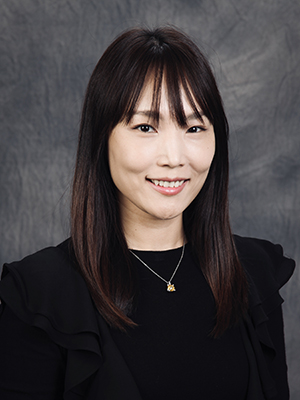
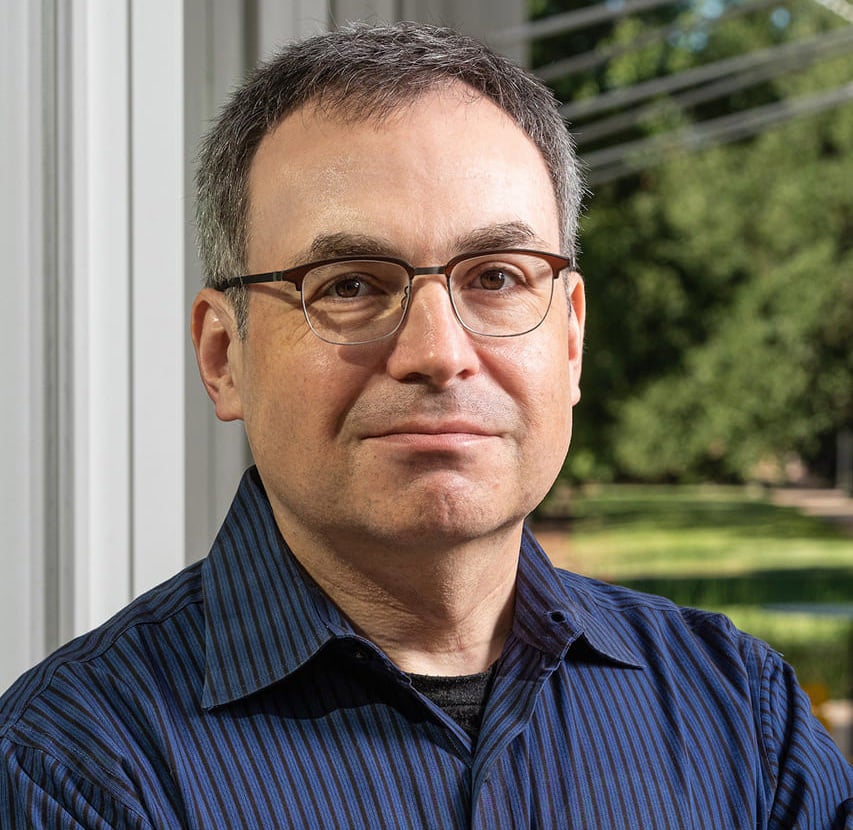
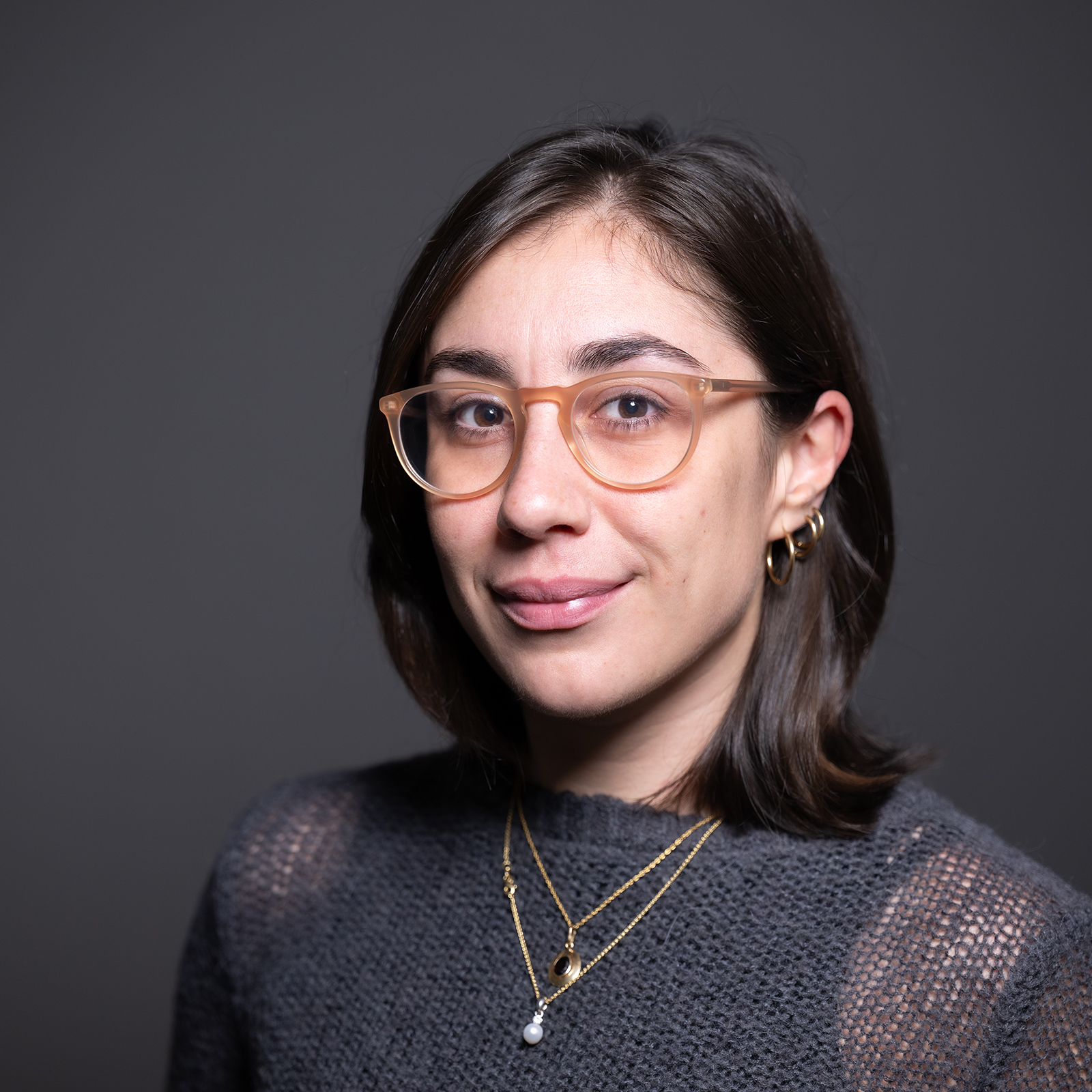
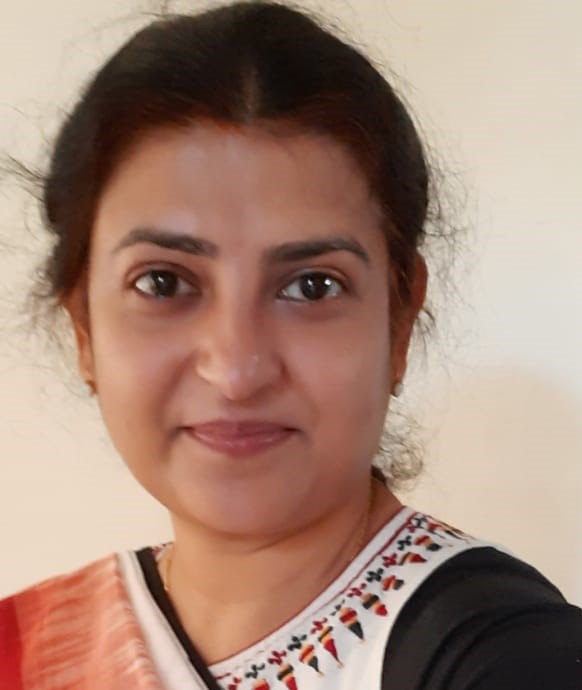
Dr. Mingyan Li is an Adjunct Research Fellow at The University of Queensland's School of Electrical Engineering and Computer Science. Their research focuses on advanced imaging and sensing technologies with applications in biomedical engineering, particularly in MRI system development, RF coil design, and medical signal processing. They hold a PhD from The University of Queensland (2015). Research interests include high-field MRI systems, rotating RF coil technologies, MRI-Linac integration, and electrical properties tomography (EPT). Key contributions include innovations in MRI-Linac distortion correction, RF shielding for SAR reduction, and deep learning approaches for cardiac arrhythmia classification. Publications span MRI hardware optimization, image reconstruction algorithms, and biomedical signal analysis. Collaborations include work on metamaterial-inspired RF shielding and multi-modal antenna systems for body MRI.
Dr. Ahmed M. A. Sayed is a Senior Lecturer (equivalent to Associate Professor) and Director of the MSc Big Data Science Programme at Queen Mary University of London's School of Electronic Engineering and Computer Science. He leads the SAYED Systems Group and focuses on distributed systems, federated learning, edge computing, and network optimization. His research bridges system design and machine learning, emphasizing scalability and efficiency. Education: PhD in Computer Science (HKUST, 2017), M.Sc. and B.Sc. (Assiut University, 2012 and 2007). Prior roles include Research Scientist at KAUST and Senior Researcher at Huawei's Future Network Lab. Research Interests: Systems for ML, federated learning, edge/Cloud computing, network congestion control, and IoT. He has secured £730K+ in grants, including a UKRI-EPSRC grant for the KUber project (2024–2027). Awards: 2024 Best Student Paper (IJCAI FL Workshop), Hong Kong PhD Fellowship (2013–2017), and numerous travel grants. Actively supervises PhD/MSc students and postdocs. Grants & Leadership: PI of UKRI-EPSRC KUber project, Co-I in HKRGC and KAUST grants. Organizes workshops at venues like MobiSys and serves on TPC for ICML, EuroSys, and NeurIPS. Labs: Leads SAYED Systems Group, affiliated with Networks Group and DT4SGD Lab at Queen Mary.
Paul Franzon is the Cirrus Logic Distinguished Professor and Associate Department Head for Graduate Affairs at the Department of Electrical and Computer Engineering, North Carolina State University. He holds a PhD and Bachelor's in Electrical Engineering and a Bachelor's in Physics/Mathematics from the University of Adelaide, Australia. His research focuses on quantum information science, machine learning-driven hardware design, 3D integration, and high-speed systems. Education: PhD in Electrical Engineering, University of Adelaide (1988) Bachelor's in Electrical Engineering, University of Adelaide (1984) Bachelor's in Physics and Mathematics, University of Adelaide (1982) Research Interests: Quantum computing and algorithm optimization AI-driven design automation for 3D integrated circuits High-speed communication systems Hardware security and FPGA acceleration Awards & Honors: IEEE Fellow (2006) Alcoa Foundation Distinguished Engineering Research Award (2005) NC State Alumni Distinguished Undergraduate Professor Award (2003) NSW Australia Expatriate Scientist Award (2003) Advising & Grants: Advised PhD student Priyank Kashyap (2023 graduate) Recipient of NSF Young Investigators Award (1993) Labs & Collaborations: Center for Advanced Electronics Through Machine Learning (CAEML) IEEE EPS Society (Associate Editor)
Milica Orlandic is an Associate Professor in the Department of Electronic Systems at NTNU. She holds an MSc from the University of Montenegro (2009) and a PhD from NTNU (2015). Her research focuses on hyperspectral imaging, remote sensing, FPGA-based systems, and embedded computing for aerospace applications. She is actively involved in the HYPSO CubeSat mission, developing onboard processing systems for Earth observation. Education: MSc in Electrical Engineering, University of Montenegro (2009) PhD in Electronics, NTNU (2015) Research Interests: Her work spans hyperspectral data processing , including compression, anomaly detection, and onboard computing for satellites. She also explores reconfigurable hardware (FPGAs) for real-time signal processing, cyber-physical systems, and spaceborne sensor systems. Publications Trends: Recent work emphasizes lightweight machine learning for anomaly detection, FPGA acceleration of hyperspectral compression (CCSDS 123), and algorithm co-design for CubeSat missions. Key contributions include robust onboard processing frameworks for HYPSO-1 and adaptive hardware-software systems. Advising & Teams: She supervises a dynamic team of over 40 PhD and MSc students working on FPGA implementations, satellite systems, and hyperspectral algorithms. Notable collaborations include the HYPSO CubeSat project, which aims to deliver high-resolution Earth observation data with low latency. Labs & Infrastructure: Her research leverages NTNU’s facilities for embedded systems prototyping, FPGA development, and CubeSat payload testing. The HYPSO mission integrates her team’s hardware-software co-design innovations for space applications.
Linda Katehi is a Professor of Electrical & Computer Engineering and Materials Science & Engineering at Texas A&M University, holding the O'Donnell Foundation Chair II. She is a Member of the National Academy of Engineering and American Academy of Arts and Sciences. Her research focuses on advanced electromagnetic systems, MEMS devices, and embedded intelligent sensors. Katehi earned her Ph.D. in Electrical Engineering from UCLA (1984), with prior degrees from UCLA and the National Technical University of Athens. Education: Ph.D., Electrical Engineering, UCLA (1984) M.S., Electrical Engineering, UCLA (1981) B.S., Electrical and Mechanical Engineering, National Technical University of Athens (1977) Research Interests: Katehi pioneers innovations in microwave circuits, MEMS-based reconfigurable systems, terahertz technology, and neuromorphic sensors. Her work emphasizes integrating artificial intelligence into hardware for adaptive sensing platforms. Recent projects include flexible electronics, time-domain system analysis, and sustainability in urban infrastructure. Awards & Recognition: Ramo Simon Founder’s Award (2015) Charter Fellow, National Academy of Inventors (2013) Leading Women in STEM Award (2012) Rudy E. Henning Mentoring Award (IEEE, 2011) Lab & Teams: Directs the Intelligent Electromagnetic Sensors Lab (IEMSL), advancing embodied intelligence in electronics. Her team develops AI-embedded sensors and reconfigurable systems for applications in healthcare, communications, and environmental monitoring. Collaborates across disciplines to address global sustainability and equity challenges.
Kiju Lee is an Associate Professor in the Department of Engineering Technology & Industrial Distribution and Mechanical Engineering at Texas A&M University, with a joint appointment in Mechanical Engineering. His affiliations include the Adaptive Robotics and Technology Lab and the College of Engineering. He holds a Ph.D. in Mechanical Engineering from Johns Hopkins University (2008), an M.S.E. from the same institution (2006), and a B.S.E. in Electronics and Electrical Engineering from Chung-Ang University (2002). Education: Ph.D., Mechanical Engineering, Johns Hopkins University – 2008 M.S.E., Mechanical Engineering, Johns Hopkins University – 2006 B.S.E., Electronics and Electrical Engineering, Chung-Ang University – 2002 His research focuses on robotics , swarm intelligence , human-robot interaction , and tangible serious games . Recent work includes adaptive robotics systems for multi-terrain navigation, cognitive assessment tools using block games, and swarm-based agricultural automation. His projects bridge robotics with healthcare, education, and environmental monitoring. His publications highlight advancements in reconfigurable mechanisms (e.g., CLAW, Wheeler robots), swarm algorithms for non-convex coverage, and mixed-reality teleoperation systems. He has contributed to both theoretical frameworks (e.g., entropy-based consensus decision-making) and practical applications like amphibious robotics and crop monitoring. Awards: 2022 Engineering Genesis Award 2021 Charlotte & Walter Buchanan Faculty Fellow Dr. Lee’s advising and grants emphasize interdisciplinary collaboration, though specific grant details are not explicitly listed. His lab, the Adaptive Robotics and Technology Lab, drives innovation in robotic mobility, human-swarm teaming, and tangible interfaces for cognitive assessment. He maintains an active presence in both academia and industry, with work spanning robotics hardware design, algorithm development, and socio-technical applications of autonomous systems.
Dan S. Wallach is a Professor of Computer Science and Electrical and Computer Engineering at Rice University, and a Program Manager at DARPA's Information Innovation Office since June 2023. He holds a PhD (1999) and MA (1995) from Princeton University, and a BS (1993) from UC Berkeley. His research focuses on cybersecurity, electronic voting systems, and mobile security. He directed the NSF-funded ACCURATE Center (2005-2011), led the STAR-Vote project, and advised U.S. election security policies including testifying before state and federal committees. He also served on the Air Force Science Advisory Board (2011-2015), USENIX Board (2011-2013), and IEEE Technical Guidelines Committee (2019-2023). Recent work includes developing ElectionGuard cryptographic tools for verifiable elections and analyzing cyber warfare in Ukraine. His 15+ years of teaching include courses like Introduction to Program Design and Election Systems Technologies. Publications span secure voting protocols, smartphone security, and election auditing. Collaborations include Microsoft and VotingWorks on cryptographic voting systems like ElectionGuard and Arlo-CVR-Encryption.
Giulia Guidi is an Assistant Professor of Computer Science at Cornell University, affiliated with the Cornell Ann S. Bowers College of Computing and Information Science. She leads the Cornell High-Performance Computing (HPC) Group and is an Affiliate Faculty at Lawrence Berkeley National Laboratory’s Performance and Algorithms Research Group. Her research focuses on high-performance computing for computational sciences, sparse linear algebra, and scalable software infrastructure for parallel systems. She holds a PhD in Computer Science from UC Berkeley (2022) and has been recognized with awards including the 2024 SIAG/Supercomputing Early Career Prize and the 2023 ISSNAF Young Investigator Award. Her work addresses challenges in genomics, population genetics, and scalable computational methods through collaborations like the NSF-funded 'ACED' project with April Wei’s Lab. Guidi mentors a diverse group of PhD, MEng, and undergraduate students, emphasizing parallel programming and HPC applications. Her lab’s research spans GPU-accelerated algorithms, sparse matrix computations, and bioinformatics tools like the Popcorn and BELLA aligners. She is also a Graduate Field Faculty in Computational Biology and Applied Mathematics at Cornell.
Dr. Dipanwita Thakur serves as Assistant Professor at the Department of Computer Engineering, Modeling, Electronics and Systems (DIMES) at the University of Calabria, Italy since July 2023. She is an active member of the European Cooperation in Science & Technology (COST Action CA22104) focusing on cybersecurity and serves in the IEEE Future Networks Working Group for Artificial Intelligence/Machine Learning. Previously, she held a 15-year Assistant Professor position at Banasthali University, Rajasthan, and has industry experience at TechMahindra and C-DAC. Education: Ph.D. in Smart Healthcare from West Bengal University of Technology, Kolkata M.Tech. in Software Engineering from Banasthali Vidyapith MCA from NIELIT, Government of India B.Sc. from University of Calcutta Her research pioneers Green Artificial Intelligence with emphasis on energy-efficient federated learning and smart healthcare applications. She develops privacy-preserving human activity recognition systems using multimodal data fusion, focusing on performance evaluation and environmental sustainability. Her work bridges theoretical machine learning with practical healthcare solutions, optimizing AI systems for reduced carbon footprint while maintaining clinical efficacy through hardware-algorithm co-design and quantization techniques. Recent publications reveal a strong trajectory toward sustainable AI, with increasing focus on energy-aware federated learning frameworks, multimodal medical segmentation, and non-IID data handling. Her work consistently addresses the critical balance between model accuracy, convergence speed, and energy consumption across edge devices, with growing emphasis on quantization techniques and hardware-algorithm co-design for real-world deployment. Scientific Awards: Elevated to IEEE Senior Member (2024) Dr. B.C. Roy Memorial Scholarship for outstanding 10th Board results (1992) Student Science Seminar Award by West Bengal Government (1990) Dr. Thakur actively mentors students as evidenced by her congratulations to advisee Farwa for paper acceptances. She serves as Associate Editor for Information Fusion (Elsevier) and IEEE Sensors Journal, and holds editorial roles at Scientific Reports. Her research is advanced through COST Action CA22104 and IEEE working groups, though specific grant details aren't listed in the source material. She has organized key workshops including Green-Aware AI 2024 and Green Federated Learning at IJCNN 2025. She leads research within the MONAI community on data quality and federated learning, and contributes to IEEE IoT and Future Networks initiatives. Her work with the COST Action CA22104 Behavioral Next Generation in Wireless Networks connects cybersecurity with sustainable AI development, while her Missouri S&T visiting scholar position focuses on energy optimization for federated learning systems.
Dr. Thomas Chaffey is a Lecturer in the School of Electrical and Computer Engineering at The University of Sydney. His research focuses on nonlinear control theory, convex optimization, and neuromorphic systems. He obtained his PhD from the University of Cambridge (2022) and held the Maudslay-Butler Fellowship at Pembroke College, Cambridge (2022–2025). Education: PhD in Control Theory, University of Cambridge (2022) Maudslay-Butler Fellowship in Engineering, Pembroke College, Cambridge (2022–2025) Master's in Mechanical Engineering, University of Sydney (Australia) Bachelor's in Mathematics and Computer Science, University of Sydney (Australia) Research Interests: Nonlinear control theory and its intersections with optimization and circuit theory Development of neuromorphic systems and analog hardware simulation Monotone operator methods and large-scale optimization algorithms Key Research Trends in Articles: Advances in graphical methods for nonlinear system analysis (e.g., scaled relative graphs) Analysis of neuromorphic circuits using convex optimization frameworks Exploration of symmetry properties in physical systems Awards: Best Student Paper Award, 2021 European Control Conference Outstanding Student Paper Award, 2021 IEEE Conference on Decision and Control Labs/Teams: Leading projects on learning in physical systems and monotone circuits Collaborations with institutions like Lund University and University of British Columbia
Ashish Venkat is an Associate Professor in the Department of Computer Science at the University of Virginia, part of the School of Engineering and Applied Science. He holds a Ph.D. from UC San Diego and has established himself as a leading researcher in computer architecture, compilers, and computer security. Research Interests: His research focuses on cross-disciplinary hardware and software techniques to build secure, high-performance computing systems. He investigates robust exploit mitigations that maintain energy efficiency and programmability, with a particular emphasis on speculative execution, memory safety, hardware security, and privacy-preserving computing. He also explores the application of machine learning to detect security threats and model execution behavior. Publication Trends: His recent publications (2020–2025) demonstrate a strong focus on hardware-based security, particularly microarchitectural vulnerabilities (e.g., micro-op cache attacks), memory safety via microcode capabilities, and secure accelerators for bioinformatics. There is a consistent trend of publishing in top-tier venues like ISCA, MICRO, IEEE S&P, and USENIX Security, often featuring novel hardware/software co-design solutions. Scientific Awards: NSF CAREER Award (2023) NSF CRII Award (2018) IEEE Micro Top Pick (2019) IEEE Design & Test Top Pick (2020, 2021) HPCA Best Paper Runner-Up (2019) DATE Best Paper Nominee (2023) UVA Research Achievement Award (2023) ISCA Prolific Author of the Decade (2013–2022) Advising and Grants: He actively mentors graduate and undergraduate students, many of whom have pursued advanced degrees or joined leading tech companies. He has secured significant funding as PI or co-PI from NSF, DARPA, SRC, and Intel, including a $4.9M DARPA HERCULES grant and an NSF CAREER award. His projects focus on holistic security solutions, speculative optimization, and privacy-preserving machine learning frameworks. Labs and Teams: He leads a research group focused on secure and efficient computing systems, collaborating with researchers at institutions like UC San Diego, UC Riverside, and UC Irvine, as well as industry partners including Intel and IBM.
Prof. Dr. Marcus Vetter is the founder and director of the Institute for Applied Artificial Intelligence and Robotics (A²IR) at Mannheim University of Technology's Faculty of Information Technology. His work bridges Deep learning Medical imaging and navigation Embedded systems Real-time computing Software engineering for medical devices He has taught courses including Deep Learning Methods, Image-Guided Medicine, and Embedded Systems. Education Computer Science, Technical University of Mannheim, 1999 Doctorate ('summa cum laude superato') in 'Image-based navigation systems', University of Heidelberg, 2003 Research focuses on AI-driven medical imaging tools, real-time deformation models, and open-source frameworks like MITK. His 15 most recent publications span 6D pose estimation for medical robotics Spectroscopy-based diagnostics Formal software verification Gesture and gaze recognition interfaces UAV drive train optimization Scientific achievements Doctorate with distinction (2003) Co-founder of MITK open-source project Director of A²IR institute since 2007 He has received BMBF grants for real-time deformation models and tracking systems, and has led development of navigation systems for laparoscopic surgery and cardiac ablation procedures.
Luca Caviglione is a prominent cybersecurity researcher at the National Research Council of Italy (CNR), specializing in steganography, covert channels, and network security. With over 140 publications spanning from 2015 to 2025, he has established himself as a leading expert in information hiding techniques and their security implications. His research bridges theoretical foundations with practical applications in IoT, cloud computing, and mobile security environments. Dr. Caviglione's primary research interests focus on steganography and covert communication channels , particularly their application in modern computing environments. He investigates how data can be hidden within network protocols, mobile applications, and cloud infrastructures, while simultaneously developing detection methodologies. His work extends to IoT security , where he examines vulnerabilities in constrained devices and develops AI-based approaches for threat detection. Additional research areas include container security, malware analysis (particularly stegomalware), and security protocol analysis. Caviglione's publication record reveals a clear evolution toward applying machine learning and artificial intelligence to detect sophisticated threats like stegomalware. His recent work increasingly addresses container security, DDoS protection in microservices, and post-quantum security challenges, reflecting the evolving threat landscape. He frequently collaborates with international researchers, notably Wojciech Mazurczyk (46 co-authored papers) and Steffen Wendzel (31 co-authored papers), forming a productive research network in information hiding. As an active contributor to the cybersecurity research ecosystem, Caviglione serves on editorial boards and has organized special issues focused on information security methodology and replication studies. His leadership in developing taxonomies for steganography methods demonstrates his influence in shaping research directions in this specialized field. His work has practical implications for securing modern computing environments against increasingly sophisticated hidden communication channels.
Konstantinos Markantonakis is a Professor of Information Security in the Department of Information Security at Royal Holloway, University of London, where he also serves as Director of the Smart Card and IoT Security Centre and the Transformative Digital Technologies, Security and Society Catalyst. He is a leading figure in embedded systems and IoT security, with extensive research and consultancy experience. BSc (Hons) in Computer Science, Lancaster University, 1995 MSc in Information Security, Royal Holloway, 1996 PhD in Smart Card Security, Royal Holloway, 2000 MBA in International Management, Royal Holloway, 2005 His research focuses on securing embedded and cyber-physical systems, including smart cards, mobile devices, drones, automotive systems, and IoT. He investigates trusted execution environments, side-channel analysis, secure protocols, and hardware-software binding. His work bridges theoretical security and practical implementation, often uncovering zero-day vulnerabilities in consumer devices. The recent publications highlight a strong trend in trusted computing, remote attestation, secure embedded systems, and privacy-preserving technologies. His research integrates blockchain for secure energy trading, develops frameworks for edge machine learning, and advances forensic techniques for damaged storage media. He also explores covert channels in mobile and cloud environments, demonstrating a deep understanding of both offensive and defensive security. Best Paper Award Markantonakis has led major research projects such as EXFILES (forensic extraction from encrypted smartphones), Future TPM (quantum-resistant trusted modules), and the Academic Centre of Excellence in Cyber Security Research. He has supervised numerous PhD students and delivered keynotes at international conferences. His consultancy work has impacted financial institutions, transport operators, and mobile platform security. He leads the Smart Card and IoT Security Centre, a research hub focusing on practical security for connected devices. The centre conducts cutting-edge research in side-channel attacks, secure application execution, and forensic analysis, contributing significantly to both academic and industrial advancements in cybersecurity.
Glenn Gulak is a Professor in the Department of Electrical and Computer Engineering at the University of Toronto's Faculty of Applied Science and Engineering. He holds the Canada Research Chair in Signal Processing Microsystems and the Edward S. Rogers Sr. Chair in Engineering. A Senior IEEE Member and Professional Engineer in Ontario, he received his Ph.D. from the University of Manitoba. His research spans: Digital Communication Systems: VLSI implementations of MIMO detectors, lattice reduction algorithms, and homomorphic encryption accelerators Lab-on-Chip Microsystems: CMOS biosensors for rapid pathogen detection and integrated fluorescence imaging Recent publications (2019-2025) demonstrate a dominant focus on privacy-enhancing technologies, with 73% concentrated in cryptographic hardware and homomorphic encryption. This reflects industry-aligned work on confidential computing and secure data processing. Awards & Honors: IEEE Millennium Medal (2001) Canada Research Chair in Signal Processing Systems (Tier 1, 2005-2012) Edward S. Rogers Sr. Chair (2005-2010) RBC Research Prize L. Lau Chair (1999-2004) Teaching Award (1999) He has supervised 44+ graduate students (PhD/MASc) with thesis topics spanning VLSI communication systems, CMOS biosensors, and cryptographic accelerators. Notable industry collaboration includes serving as CTO of a semiconductor startup (2001-2003). His lab develops hardware for quantum cryptography and secure medical computation.