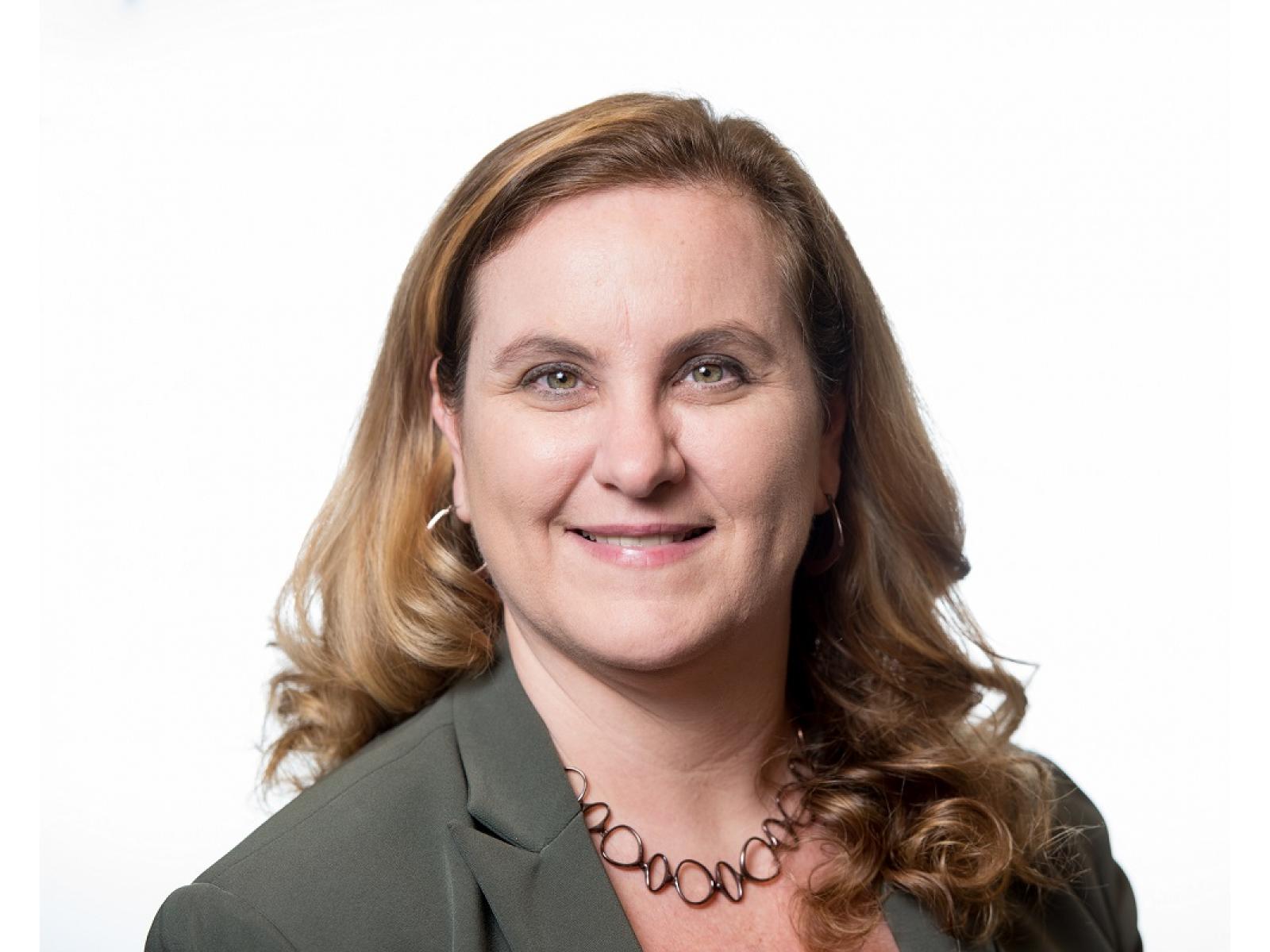
Miriam Schulte is a Professor at the Institute for Parallel and Distributed Systems (IPVS) at the University of Stuttgart . As Dean of Studies SimTech , she leads academic programs in simulation technology. Her research focuses on high-performance computing , multi-physics simulations , and scientific software development , with significant contributions to coupling libraries like preCICE and biophysical frameworks like OpenDiHu . Key Research Areas: High-Performance Computing (HPC) Multi-physics and Fluid-Structure Interaction (FSI) Sparse Grids and Hierarchical Numerical Methods Machine Learning in Simulation Software Parallel and GPU-Accelerated Algorithms Advising: Guided student projects on quantum neural networks , GPU-optimized sparse grids , and SYCL-based HPC frameworks . Coordinated SimTech Research Modules and IPVS/SGS team initiatives. Software Leadership: Maintains preCICE (coupling library for multi-physics) Develops OpenDiHu (neuromuscular simulations) Advances PLSSVM (parallel SVM library) and SG++ (sparse grids) Her recent publications (2022–2025) emphasize machine learning integration with multi-physics simulations , including groundwater heat pumps , brain tumor modeling , and neuromuscular EMG prediction . She actively promotes open-source software sustainability and collaborative research infrastructure at the University of Stuttgart.
Debasish Koner is an Assistant Professor in the Chemistry department. His research focuses on interdisciplinary applications of machine learning in chemistry and physics, particularly in chemical reaction dynamics and spectroscopy. Research Interests : Machine Learning in Chemistry and Chemical Physics Medical Diagnosis Chemical Reaction Dynamics High Performance Computing (HPC) Atomic Molecular and Optical Physics (AMO)
Swarnendu Biswas is an Assistant Professor in the Department of Computer Science and Engineering at the Indian Institute of Technology Kanpur. He teaches courses including Programming for Performance (CS 610), Analysis of Concurrent Programs (CS 636), and Compiler Design (CS 335), demonstrating his expertise across multiple areas of computer systems. His research interests center on Programming Languages, Compilers, Runtime Systems, and Parallel Software Systems. He leads the PROSPAR (Programming Languages and PARallel Systems) research group, which focuses on developing techniques to build efficient and correct parallel software through program analysis, compiler optimizations, and runtime systems. His recent publications reveal a strong trend in addressing fundamental challenges in parallel computing, with work spanning cache coherence, false sharing detection, data race analysis for GPUs, verification of neural networks, and thermal-aware management of heterogeneous systems. His research bridges theory and practice with significant contributions to both hardware and software aspects of parallel systems. His scientific achievements have been recognized through multiple prestigious awards: Google India Research Award 2021 Google Explore CSR 2022 Research Grant from Intel Corporation SERB Start-up Research Grant 2019 Google Cloud Platform Research Credits (2019, 2020) IITK Initiation Grant 2019 As an advisor, he mentors several PhD and MTech students working on cutting-edge research in parallel systems. His PROSPAR group has secured significant funding from industry and government sources, supporting innovative research in programming languages and parallel systems. The group actively collaborates with industry partners including Google and Intel, addressing real-world challenges in parallel computing. He leads the PROSPAR research group at IIT Kanpur, which brings together faculty, PhD students, and MTech researchers to tackle challenging problems at the intersection of programming languages, compilers, and parallel systems. The group maintains strong industry connections and focuses on practical solutions that can be deployed in real systems.
Sally Ellingson is an Assistant Professor at the University of Kentucky with affiliations in the Department of Internal Medicine , Center for Computational Sciences , Institute for Biomedical Informatics , and Markey Cancer Center . Her work bridges computational methods with biomedical applications. Doctor of Philosophy, University of Tennessee-Knoxville (2014) Bachelor of Science in Computer Science, Florida Institute of Technology (2009) Her research focuses on high-performance computing (HPC) for computational biology , particularly in drug discovery and cancer therapeutics. She develops mathematical models using differential geometry and graph theory to analyze biomolecular data, targeting resistance mechanisms in lung and prostate cancers through EGFR mutations and androgen receptor pathways . Recent computational work spans drug resistance prediction , ligand-receptor binding models , and AI bias in pathology , with applications to precision oncology and open data transparency . Her articles demonstrate interdisciplinary integration of machine learning , molecular dynamics , and structural biology . Recipient of the COMP-Chemical Computing Group Excellence Award for Graduate Students (2013) Ellingson leads NSF-funded projects on robust biomolecular data modeling and collaborates on TP53 mutation studies at the Markey Cancer Center. Her work aligns with UN Sustainable Development Goals, emphasizing scientific innovation for global health and computational sustainability .
Mamzi Afrasiabi is a Lecturer at the Department of Mechanical and Process Engineering, ETH Zurich. His research focuses on computational mechanics, fluid dynamics, and advanced manufacturing technologies. Computational Mechanics & Fluid Dynamics Manufacturing Process Simulation Multiphysics and Multiscale Modeling High-Performance Computing (HPC) Scientific Machine Learning (SciML) Dr. Afrasiabi holds a GRA Fellowship and Zienkiewicz Scholarship , with editorial roles in journals like the International Journal of Hydromechatronics . He received the CIRP Best Paper Award and is a Corporate Member of the International Academy for Production Engineering (CIRP).
Anne C. Elster is a Professor and Director of the Heterogeneous and Parallel Computing Lab (HPC-Lab) at NTNU's Department of Computer Science, with additional roles as HPC Leader at the Center for Geophysical Forecasting and Senior Research Fellow at the Oden Institute. She holds board positions at NTNU and its Faculty of Information Technology. Her research spans: High-Performance Computing : GPU acceleration, auto-tuning, and heterogeneous systems Machine Learning : Applied to optimization and computational geosciences Parallel Algorithms : For scientific computing and real-time simulations Her recent publications (2021-2024) focus on GPU auto-tuning, quantum-HPC integration, distributed systems, and ML-driven geophysical data analysis, with strong emphasis on performance optimization across architectures. Awards and honors: IEEE Computer Society Distinguished Contributor (2021) IEEE Distinguished Speaker (2019-2022) IEEE Senior Member (2000) She has supervised 100+ master's students, 15+ PhDs, and secured major grants including EU H2020 projects. Current Post Docs focus on HPC acceleration and AI applications. Her HPC-Lab collaborates with CERN, Equinor, and international universities, specializing in GPU-accelerated scientific computing and tools for performance portability.
Dr. Scott Feister is an Assistant Professor in the Department of Computer Science at California State University Channel Islands (CSUCI), where he has held a tenure-track position since 2019. His academic journey includes a B.S. in Physics from the University of Notre Dame and M.S./Ph.D. in Physics from The Ohio State University, followed by postdoctoral work at the University of Chicago and UCLA. His research focuses on scientific computing at the intersection of computer science, physics, and engineering. Primary domains include: Control systems infrastructure for high-power laser facilities Machine learning applications in experimental science High-data-rate instrumentation and embedded systems High-performance computing for plasma physics simulations Publication analysis reveals consistent focus on laser-plasma interactions (12 papers), high-performance computing (4 papers), and educational innovation (3 papers), with recent work emphasizing machine learning integration and equity-focused STEM training. He leads multiple grants involving collaborations with: Lawrence Livermore National Laboratory Lawrence Berkeley National Laboratory NVIDIA Ohio State University Argonne National Laboratory Teaching innovations include cloud-based learning environments (AWS, Replit), open-source textbooks, and hardware prototyping. He has developed 12 distinct courses and holds certifications in AWS Cloud, Mental Health First Aid, and equity pedagogy.
Arjun Guha is an Associate Professor at Northeastern University's Khoury College of Computer Sciences, where he also serves as the Area Chair for Software. He conducts research in programming languages with a focus on program synthesis for low-resource programming languages and understanding how computer science education is impacted by large language models. His work spans multiple domains including WebAssembly, software-defined networking, and serverless computing. Guha's research interests center around programming language design, implementation, and application. He has made significant contributions to understanding JavaScript through formal semantics (LambdaJS), developing functional reactive programming for web applications (Flapjax), and creating tools for software-defined networks (NetKAT, Frenetic). His recent work focuses on leveraging large language models for code generation in specialized programming languages and understanding their impact on programming education. His publications reveal a strong trend toward applying AI and machine learning techniques to programming language problems, particularly in code generation and understanding. The research spans from foundational programming language theory to practical applications in education and software development tools, with increasing focus on the intersection of programming languages and large language models. Guha has received several prestigious awards including the OOPSLA Most Influential Paper Award in 2019 for his work on Flapjax, an ACM SIGPLAN Research Highlight for his work on NetKAT, and a Best Student Paper Award. His research has been recognized for its foundational contributions to programming language theory and practical impact on software development. OOPSLA Most Influential Paper Award (2019) for Flapjax ACM SIGPLAN Research Highlight for A Fast Compiler for NetKAT Best Student Paper Award for Flapjax paper Guha advises numerous PhD, MS, and undergraduate students, with several alumni now at leading tech companies and academic institutions. His research has been supported by the National Science Foundation, the Department of Energy, the Office of Naval Research, and industry partners including Google, JPMorgan Chase, MathWorks, Meta, Oracle, and Roblox. He leads the Programming Research Laboratory at Northeastern and is actively involved in major research collaborations like the BigCode Project. Guha is a member of the Programming Research Laboratory at Northeastern and leads several major research initiatives including the BigCode Project's evaluation working group. His lab develops practical software systems like MultiPL-E (a polyglot benchmark for Code LLMs) and WasmFX (bringing effect handlers to WebAssembly), with applications in education, software development, and high-performance computing.
Stefano Markidis is a Professor of Computer Science specializing in high-performance computing systems at KTH Royal Institute of Technology in Sweden. He works in the Division of Computational Science and Technology, focusing on supercomputers, quantum computers, and computational methods for scientific simulations. His research spans multiple domains including plasma physics, computational fluid dynamics, and quantum computing. Markidis holds an MS degree from Politecnico di Torino and a PhD in Nuclear Engineering from the University of Illinois at Urbana-Champaign. Prior to joining KTH, he was a graduate research assistant at Los Alamos National Laboratory and Lawrence Berkeley National Laboratory, followed by a postdoc at KU Leuven. His academic journey reflects a strong foundation in both engineering and computational science. His primary research interests include High-Performance Computing , Heterogeneous Systems , and Quantum Computing . Markidis develops computational methods for plasma physics, particle-in-cell simulations, and fluid dynamics. His work bridges theoretical physics and practical computing, with applications in space physics, fusion energy, and materials science. He is particularly known for contributions to parallel computing, GPU acceleration, and the development of scalable simulation frameworks like Neko for computational fluid dynamics. His research increasingly integrates machine learning techniques with traditional numerical methods. Analysis of Markidis' recent publications reveals a strong focus on quantum-classical hybrid computing, advanced particle-in-cell methods, and high-fidelity computational fluid dynamics. His work demonstrates expertise in programming models for heterogeneous architectures including GPUs and quantum processors, with growing emphasis on AI-enhanced scientific computing. R&D100 award (2005) for the CartaBlanca project R&D100 award (2017) for the SHIELDS project Markidis teaches multiple courses at KTH including Applied GPU Programming, Quantum Computing for Computer Scientists, and High-performance Computing for Computational Scientists. He has supervised numerous degree projects across various specializations in computer science and electrical engineering. His research has been supported by various grants related to high-performance computing and quantum technologies, with applications spanning from space physics to medical treatments. Markidis leads research in computational science with a focus on developing frameworks like Neko for extreme-scale computational fluid dynamics. His team works on integrating traditional HPC methods with emerging technologies including quantum computing and AI, contributing to advancements in scientific simulation across multiple disciplines.
Freddie Witherden serves as Assistant Professor in the Department of Ocean Engineering within Texas A&M University's College of Engineering, where he develops and applies advanced numerical methods to complex fluid flow problems. His educational background includes: Ph.D. in Aerospace Engineering from Imperial College (2015) M.S. in Theoretical Physics from Imperial College London (2012) Dr. Witherden's research focuses on creating high-performance computational frameworks for fluid dynamics, with core expertise in numerical methods, computational fluid dynamics, high-performance computing, and quadrature theory. His work bridges theoretical mathematics with practical engineering applications, particularly through the development of the open-source PyFR framework for solving advection-diffusion problems on modern hardware architectures. His publication record (2014-2018) reveals a consistent trajectory from foundational numerical methods (symmetric quadrature rules for finite elements) to cutting-edge applications in green aviation and deep learning for fluid flow control, demonstrating strong interdisciplinary connections between computational mathematics, aerospace engineering, and machine learning. No scientific awards were documented in the provided materials. As leader of the Witherden Research Group, he directs projects developing novel numerical methods for complex flow problems. While specific grant details are absent, his publications in high-impact venues like SC16 and NeurIPS suggest active external funding for computational research. His teaching responsibilities include OCEN 689, focused on advanced ocean engineering topics. The Witherden Research Group functions as his primary research unit, dedicated to implementing and applying innovative numerical techniques to challenging fluid dynamics scenarios, with emphasis on heterogeneous computing environments and unstructured grid systems.
Dr. Jonghyun Harry Lee is an Associate Professor at the University of Hawai'i at Manoa with joint appointments in the Water Resources Research Center and Department of Civil and Environmental Engineering. He holds a PhD in Civil and Environmental Engineering from Stanford University (2014), MS from Colorado State University (2009), and BS from Seoul National University (2007). His research integrates high-performance computing with environmental modeling, focusing on: Scalable inverse methods for subsurface systems Physics-informed neural operators for coastal dynamics Uncertainty quantification in hydrological systems Machine learning applications for satellite hydrology Generative models for geophysical characterization Recent publications (2021-2025) demonstrate strong emphasis on ML-enhanced environmental modeling, with 70% of articles combining deep learning with traditional physical models. Primary domains include contaminant transport, carbon sequestration monitoring, and coastal hydrodynamics. Awards and fellowships: NREL FACES Fellow (2024) NSF-NASA EPSCoR Fellow (2023-2025) Google Cloud Research Innovator (2022) ORISE Faculty Fellow (2018-2023) Charles H. Leavell Fellowship, Stanford Dr. Lee currently advises multiple PhD students focused on ML applications in environmental systems. His group utilizes UH HPC, Google Cloud, and AWS resources, supported by NSF, NASA, and DOE grants. He leads development of open-source tools like pyPCGA for geostatistical inversion and teaches graduate courses in computational hydrology.
Bobbie-Jo Webb-Robertson serves as Division Director and Chief Scientist of computational biology in the Biological Sciences Division at Pacific Northwest National Laboratory (PNNL). She holds multiple academic appointments including Clinical Volunteer Professor at the University of Colorado Anschutz Medical Campus, Courtesy Assistant Professor at the University of Florida, and Clinical Associate Professor at Oregon Health and Sciences University. Dr. Webb-Robertson earned her PhD in Engineering Systems from Rensselaer Polytechnic Institute in 2002, an ME in Statistics from the same institution in 2000, and a BA in Mathematics from Oregon State University in 1997. With over 20 years of experience in statistics and data science, she has established herself as a leader in computational biology with an h-index of 30 and more than 100 publications. Her research focuses on developing and applying advanced statistical and machine learning methods to address challenges associated with large and complex omics data. She specializes in mass spectrometry-based omics data analysis, statistical data integration, predictive modeling, and biomarker discovery. Her work has significant applications in biomedical research, particularly in understanding type 1 diabetes through multi-omics approaches. Dr. Webb-Robertson's recent publications demonstrate a strong trajectory in type 1 diabetes biomarker discovery, multi-omics data integration, and the application of machine learning to biological problems. Her work spans proteomics, metabolomics, and transcriptomics with a focus on developing computational tools that can integrate multiple data types for improved biological insights. Chauncey and Doris Starr Graduate Fellowship, 1997 GE Future Faculty Scholarship, 1999-2000 National Science Foundation Program in Mathematics and Molecular Biology Fellowship, 1999-2001 HPC Analytics challenge in biology first place team member, 2007 Spirit of nPOD award from the Network for Pancreatic Organ Donors with Diabetes Dr. Webb-Robertson serves in various editorial and advisory roles including Executive Editor for the Journal of Proteomics and Genomics Research, Review Editor for Frontiers in Artificial Intelligence, Scientific Advisory Board Member for the Juvenile Diabetes Research Fund IBM Machine Learning Project, and member of the American Statistical Association. She actively contributes to the scientific community through these service roles while maintaining a productive research program focused on computational methods for biological data analysis. Her laboratory develops computational tools for multi-omics data analysis with particular emphasis on applications in type 1 diabetes research. She leads a team that integrates expertise in statistics, machine learning, and biological domain knowledge to tackle complex biomedical problems, with a focus on biomarker discovery and early disease prediction.
Sathish Kumar is an Associate Professor in the Department of Electrical Engineering and Computer Science at Cleveland State University's Washkewicz College of Engineering. He serves as Director of the Intelligent Secure Cyber-Systems Analytics and Applications Research (ISCAR) Lab and holds editorial positions with PLOS One, IEEE Access, and Nature Scientific Reports. With over a decade of industry experience prior to joining academia in 2013, Dr. Kumar has established himself as a prominent researcher in cybersecurity and emerging technologies. Dr. Kumar's research spans Cybersecurity, Machine Learning, Distributed Systems, and Quantum Computing, with applications in Intelligent Cyber Physical Social Systems, Smart Cities, Blockchain, Disaster Resilience, and Health Informatics. His work demonstrates a consistent focus on practical security solutions for emerging technologies, particularly in IoT and IIOT environments. Recent publications show increasing emphasis on quantum machine learning applications and reinforcement learning approaches to security challenges. His research program has attracted significant funding, including multiple NSF grants as PI and Co-PI, CDC and NIH funding for public health applications, and industry partnerships. Dr. Kumar has published over 80 technical papers and co-edited a book on IoT security challenges. His editorial roles with major journals reflect his standing in the research community. National Science Foundation Grant ($799,985) as PI for quantum sensor research (2022-2025) National Science Foundation Grant ($434,431) as Co-PI for HPC infrastructure (2022-2025) Multiple additional NSF, CDC, and industry-funded projects Dr. Kumar actively mentors students at all levels, currently supervising multiple PhD students, postdoctoral researchers, and undergraduate honors students. His lab provides opportunities for students to engage in cutting-edge research with practical applications in cybersecurity and emerging technologies, supported by substantial external funding that ensures resources for student participation.
Dr. Nikolaos Bakas serves as an Assistant Professor in the Information Technology Department at the School of Liberal Arts and Sciences, The American College of Greece, Deree. His academic profile centers on bridging theoretical mathematics with practical machine learning implementations through rigorous algorithmic development. His research program focuses on fundamental mathematical modeling of machine learning systems , with specialized expertise in Numerical Methods and High-Performance Computing (HPC) . Key contributions include stochastic optimization algorithms (notably the ITSO framework), gradient-free neural network training techniques, and computational mechanics applications. This interdisciplinary work connects theoretical mathematics with engineering solutions in structural analysis and environmental risk assessment. Analysis of his 2019-2023 publications reveals a clear trajectory toward practical HPC implementations of machine learning frameworks, with increasing emphasis on domain-specific applications. His research consistently addresses computational efficiency challenges while maintaining mathematical rigor, particularly in stochastic search methods and partition-based approximation systems. As Principal Investigator for multiple industry and academic projects, Dr. Bakas demonstrates active research leadership with direct organizational consulting experience. His project portfolio indicates strong translation of theoretical research into real-world AI and HPC adoption, though specific grant details remain undisclosed.
Muhammad Mustafa Rafique is an Associate Professor in the Department of Computer Science at Rochester Institute of Technology's Golisano College of Computing and Information Sciences. His research specializes in optimizing large-scale computing systems, with focus areas including: High-performance computing (HPC) resource management Distributed deep learning acceleration Fault-tolerant cloud architectures GPU-accelerated checkpointing systems Serverless computing frameworks Dr. Rafique's work demonstrates consistent innovation in improving computational efficiency for containerized HPC workflows, multi-GPU scheduling, memory optimization, and distributed training pipelines. His publications frequently appear in premier IEEE/ACM conferences, reflecting contributions to systems performance engineering. While no awards or student advisees are mentioned in available materials, his research collaborations include co-authors from institutions worldwide, indicating active engagement in the high-performance computing research community. Current work explores emerging memory technologies like CXL and advanced containerization techniques for next-generation datacenters.