Pepa Kostadinova Atanasova is a Tenure Track Assistant Professor in the Natural Language Processing Section of the Department of Computer Science , University of Copenhagen. She co-leads the CopeNLU group with Isabelle Augenstein and has special teaching duties for industry practitioners. Research Interests: Interpretability of Language Models Explainability Methods Factuality in Language Models Parametric Knowledge Analysis Human-AI Alignment Trustworthy AI Scientific Awards: Marie Skłodowska-Curie Fellowship ELLIS Best PhD Thesis Award Informatics Europe Best PhD Thesis Award Collaborations: Active in interdisciplinary research, including partnerships with Meta and Google, and a postdoctoral project combining language model explanations with trading behavior analysis.
Frede Blaabjerg is a Professor at Aalborg University (AAU Energy) , affiliated with the Faculty of Engineering and Science . Since 1998, he has pioneered power electronics research in applications such as wind turbines , photovoltaic (PV) systems , reliability engineering , and Power-2-X technologies. Education : PhD in Electrical Engineering (1995, Aalborg University) Honorary Degrees : Honoris Causa at University Politehnica Timisoara (2017) and Tallinn Technical University (2018) His research focuses on power electronics control , system optimization , and reliability for renewable energy and electric mobility . Recent work includes grid-forming converters , virtual synchronous generators , and smart EV charging systems. Key publication trends span 15+ years , with over 3,733 peer-reviewed articles and 900+ journal papers in power electronics , renewables , and energy storage . Notable book series: Control of Power Electronic Converters and Systems (4 volumes, Elsevier). Scientific Awards : 46 IEEE Prize Paper Awards 2020 IEEE Edison Medal 2019 Global Energy Prize 2014 IEEE William E. Newell Power Electronics Award Leadership Roles : Editor-in-Chief, IEEE Transactions on Power Electronics (2006–2012) Chairman, Danish Council for Research and Innovation Policy (2020–) President, IEEE Power Electronics Society (2019–2020)
Diego Garlaschelli is Professor of Theoretical Physics at the IMT School for Advanced Studies in Lucca, Italy, and at the Lorentz Institute for Theoretical Physics, University of Leiden, the Netherlands. He leads the NETWORKS research unit at IMT and the Econophysics and Network Theory group at Leiden. He is also an external faculty member at the Complexity Science Hub in Vienna and an associate member of the Enrico Fermi Research Center in Rome. His affiliations reflect a strong international and interdisciplinary research profile in network science and statistical physics. He holds a master's degree in theoretical physics from the University of Rome III (2001) and a PhD in Physics from the University of Siena (2005). His postdoctoral experience includes positions at the Australian National University, the University of Siena, the University of Oxford, and the Sant’Anna School of Advanced Studies in Pisa. Garlaschelli’s research spans network theory, statistical physics, econophysics, financial complexity, ecological networks, and social dynamics. He applies maximum entropy models, information theory, and random graph frameworks to understand complex real-world systems. His teaching includes courses in Network Theory, Econophysics, and Complex Systems at both PhD and MSc levels. The 15 most recent publications highlight a consistent focus on network reconstruction, ensemble inequivalence, renormalization, and applications to financial and socio-economic systems. Key themes include statistical inference in networks, resilience, and multi-scale modeling, with publications in top journals such as Nature Reviews Physics , Physics Reports , Science , and Physical Review Letters . His scientific awards include the Best Paper Award at the 6th International Workshop on Self-Organizing Systems (2012) and the Jan Kijne Prize (2013) as supervisor. He has secured multiple grants from NWO, the European Union, and the Royal Society, and has supervised over 40 students at PhD, master’s, and bachelor’s levels. He also mentors postdocs and visiting scientists. Garlaschelli leads and organizes major international workshops and schools in network science and complex systems. He serves on scientific committees and is an active referee for journals like Nature and Physical Review Letters , as well as funding agencies including the ERC and NWO.
Mads Albertsen is a Professor in the Department of Chemistry and Life Sciences at the Faculty of Engineering and Science, Aalborg University, Denmark. He leads the Albertsen Lab and is a key member of the Center for Microbial Communities. His research focuses on high-throughput DNA sequencing methods to explore uncultivated microbes and populate the tree of life. He is actively involved in major interdisciplinary projects such as NanoEat , Microflora Danica , and DarkScience , funded by the European Research Council, Villum Foundation, and Poul Due Jensen Foundation. His research interests span metagenomics , long-read sequencing , bioinformatics , microbial ecology , and environmental biotechnology . He develops cutting-edge methods to improve throughput in microbial genome recovery and applies them to diverse areas including wastewater treatment, human microbiome studies, and infectious disease diagnostics. His work has significant implications for public health and sustainability. The recent publications highlight a strong trend in long-read sequencing (Oxford Nanopore), metagenome-assembled genomes (MAGs) , and microbial dark matter . His team has published high-impact papers in Nature , Nature Methods , and Nature Communications , with applications in environmental systems and clinical diagnostics, including SARS-CoV-2 and bloodstream infections. His scientific awards include: The Grundfos Prize (2021) The Fritz Kaufmann Prize (2021) The Rising Star Award by IWA & ISME (2016) Research Result of the Year in Denmark (2015) The Spar Nord Fond Research Prize (2015) Mads Albertsen advises numerous PhD students, leads externally funded research projects, and is involved in technology transfer through his co-founding of DNASense ApS (2014–2020). He also serves on scientific advisory boards and contributes to public policy, including as a member of the Danish SARS-CoV-2 variant risk-assessment group. He teaches courses in Data Science, Bioinformatics, Genomics, and Environmental Microbiology at Aalborg University. His lab, the Albertsen Lab , is part of the Center for Microbial Communities , a leading research center focused on microbial systems biology and environmental applications. The lab collaborates extensively with national and international partners in academia, industry, and public health institutions.
Mikkel N. Schmidt is an Associate Professor in the Department of Applied Mathematics and Computer Science at the Technical University of Denmark (DTU). His research focuses on statistical modeling, Bayesian methods, and their applications in science and industry. He has held visiting roles at Columbia University (2007) and Cambridge University (2008-2009). His work integrates probabilistic modeling with computational inference to address complex problems in diverse fields such as molecular discovery, optical communication, and brain connectivity analysis. Education highlights include visiting scholar and postdoctoral experiences at top-tier institutions. Research interests span statistical methodology development, machine learning applications, and interdisciplinary problem-solving. Current projects involve Bayesian neural networks for molecular discovery and federated learning optimization. Advising efforts include supervising multiple PhD students in areas like molecular discovery and denoising diffusion models. Notable collaborations involve work on materials science, quantum communication, and medical signal processing. His contributions bridge theoretical advancements with practical industrial applications, emphasizing interdisciplinary innovation.
Yevgeny Seldin is a Professor in the Department of Computer Science at the University of Copenhagen, specializing in Machine Learning Theory . He leads the Machine Learning Section and is a member of the DeLTA Lab . Education : PhD in Computer Science at The Hebrew University of Jerusalem under supervision of Prof. Naftali Tishby His research focuses on Machine Learning , particularly Online Learning and PAC-Bayesian Analysis , with applications to Bandit Algorithms , Reinforcement Learning , and Information Theory . Recent work includes optimal algorithms for delayed feedback, stochastic-adversarial trade-offs, and feedback graphs. Positions Available : PhD and Postdoc positions in Theoretical Machine Learning or energy sector applications Labs & Collaborations : Head of Machine Learning Section Member of DeLTA Lab
Claudia Wagner is a full professor for Applied Computational Social Sciences at RWTH Aachen University and the Scientific Director of the Computational Social Science department at GESIS—Leibniz Institute for the Social Sciences. She is also an External Faculty member at the Complexity Science Hub Vienna. Her work bridges computer science and the social sciences to study algorithmic systems and their societal impacts. Her research focuses on socio-technical phenomena such as inequality, sexism, and perception bias in algorithmically infused societies. She investigates methodological challenges in using digital behavioral data to study human behavior, attitudes, and group dynamics. Her interests span computational social science, algorithmic fairness, network science, and AI ethics. The analysis of her recent publications reveals a strong emphasis on bias, fairness, and methodological rigor in digital data analysis. Her work spans AI psychometrics, gender inequality in online platforms, and validation frameworks for digital traces. She frequently publishes in top-tier venues such as Nature , Science , and AAAI conferences. DOC-fFORTE fellowship from the Austrian Academy of Sciences Four best paper awards at international conferences (ICWSM, CSCW, WWW, AAAI) Associate Editor, EPJ Data Science Steering Committee Member, International AAAI Conference on Web and Social Media Board Member, International Society for Computational Social Science Claudia Wagner has led and co-led substantial research projects funded by national and international agencies. She mentors a diverse group of PhD students working on topics like algorithmic bias, data quality, and dehumanization. She has organized training events such as the CSS Methods Summer School and delivered keynotes globally on inequality and computational social science. She leads the Computational Social Science department at GESIS and collaborates with interdisciplinary teams at RWTH Aachen and the Complexity Science Hub. Her group develops tools for measuring algorithmic impacts and visualizing disparities in socio-technical systems, such as the 'Planets of Disparity' dashboard.
Francisco Camara Pereira is a Professor and Head of Section at the Department of Technology, Management and Economics at the Technical University of Denmark (DTU). His research focuses on Intelligent Transportation Systems, Machine Learning, and Data-Driven Decision-Making in transportation contexts. He actively contributes to advancing transportation science through interdisciplinary approaches combining simulation, optimization, and AI techniques. His work addresses challenges in public transport analysis, charging infrastructure planning, and multimodal demand prediction. Recent projects include developing graph-based optimization methods for electric vehicle networks and causal discovery frameworks for transportation systems. He supervises multiple PhD students in areas like federated learning for cyclist safety, causal graph neural networks, and socially aware AI models. Key contributions include publications on smart card data analysis for travel surveys, stochastic infrastructure expansion models, and transfer learning for bike-share systems. His research aligns with UN Sustainable Development Goals related to sustainable cities and innovation. Dr. Pereira collaborates internationally on transportation policy and infrastructure projects. His lab focuses on translating theoretical advancements into practical solutions for urban mobility challenges.
Qiongxiu Li is a Tenure-Track Assistant Professor in the Cyber Security group at Aalborg University's Copenhagen campus, part of the Technical Faculty of IT and Design. Her research focuses on cybersecurity, distributed optimization, privacy/security, and federated learning. She has authored/co-authored 38 papers in top-tier venues including IEEE Transactions on Information Forensics and Security, ICLR, and EUSIPCO. Education: PhD in Privacy and Security from Aalborg University (2018-2021). Notable achievements include winning the EUSIPCO 2020 3MT Contest and co-delivering a tutorial on privacy-preserving distributed optimization at EUSIPCO 2024. She actively reviews for conferences like NeurIPS, ICLR, and journals such as TPAMI and TIFS. Research Themes: Privacy-preserving distributed algorithms, federated learning security, differential privacy, and adversarial machine learning. Recent Trends: Focus on securing AI systems (e.g., LLM vulnerabilities, federated clustering privacy), quantization for privacy, and theoretical bounds in decentralized learning. Awards: 2020 EUSIPCO 3MT Winner (outstanding finalist in EURASIP's annual doctoral research competition). Grants/Projects: Co-PI of the AI:SECURITY project (2025-2029) addressing AI security threats like phishing and malicious actors. Labs/Teams: Leads the Cyber Security group at Aalborg's Copenhagen campus, focusing on theoretical and applied research in secure distributed systems.
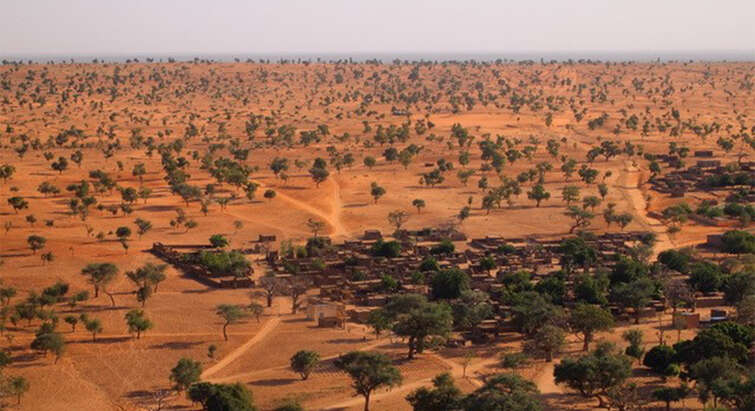
Ankit Kariryaa is a Tenure Track Assistant Professor at the Department of Computer Science and Department of Geosciences and Natural Resource Management , University of Copenhagen. His work bridges Machine Learning and Environmental Informatics , focusing on remote sensing, geospatial analysis, and ecological modeling. University of Copenhagen, Denmark Machine Learning Section, Department of Computer Science Geography, Land, Environment and Society, Department of Geosciences Kariryaa specializes in applying deep learning and computer vision to environmental challenges. His research includes: Automated tree detection and biomass estimation via satellite imagery Multi-modal geospatial representation learning Monitoring farmland tree decline and carbon sequestration potential Agroforestry system mapping using AI Developing AI tools for climate policy and sustainability Recent work trends show a focus on quantum-inspired machine learning , environmental monitoring , and cross-cultural AI applications . His 15 most recent publications span topics in remote sensing , ecological modeling , and AI ethics , with methods ranging from neural networks to tensor-based learning. He collaborates across disciplines, notably with researchers in ecology , climate science , and quantum computing . His outreach includes seminars on AI in agroforestry and ecosystem management , while his team contributes to global tree resource databases like TreeSense.
Daniel Hershcovich is a Tenure Track Assistant Professor at the Department of Computer Science (Faculty of Science, University of Copenhagen) specializing in Natural Language Processing and Machine Learning . His research focuses on cross-cultural adaptation of language models, integrating human values into AI, and analyzing food-related cultural narratives for sustainable diets. Education: Ph.D. in Computational Neuroscience from Hebrew University of Jerusalem B.Sc. in Mathematics and Computer Science from Open University of Israel Recent publications highlight his work on multimodal models (haptic captioning, visual assistants for the blind), historical text analysis (Danish/Norwegian literature, euphemism detection), and cross-cultural NLP (recipe adaptation, cultural value alignment, climate awareness). His projects frequently combine AI ethics with domain-specific applications like food studies, historical linguistics, and accessibility research. Key collaborative networks include institutions in Denmark, Israel, and international partnerships through conferences like ACL, EMNLP, and workshops on cross-cultural NLP. The NLP section at DIKU serves as his primary affiliation for these efforts.
Niels Richard Hansen is a Professor at the Department of Mathematical Sciences , University of Copenhagen, leading research at the intersection of Artificial Intelligence and Statistics . He co-founded the Copenhagen Causality Lab and focuses on automating causal explanation discovery from data using Bayesian networks, stochastic processes, predictive models, and machine learning. His work emphasizes creating interpretable and robust AI systems capable of generalizing across domains. His research has produced over 56 publications spanning causal inference , graphical modeling , stochastic processes , and machine learning . Recent work includes: Predictive and causal learning (2018 keynote) High-dimensional regression solutions (2016 lecture) Interdisciplinary applications in actuarial science , environmental statistics , and neuroscience He actively contributes to scientific communication through media appearances and public explanations of statistical concepts, including analyses of: Gaussian correlation inequality proofs Daylight saving time and blood clots Mathematical approaches to lotteries Climate change vs lunar effects
Sebastian Risi is a Professor at the IT University of Copenhagen , where he directs the Creative AI Lab and co-directs the Robotics, Evolution and Art Lab (REAL) . His work bridges computational evolution, deep learning, and collective intelligence for applications in robotics, art, and video game design. His research focuses on self-organizing AI systems that grow or assemble through local interactions, inspired by biological development. Key areas include neuroevolution , neural cellular automata , and generative modeling , with applications in adaptive robotics, game content creation, and damage-resilient AI. Recent publications highlight trends in self-assembling neural architectures (NDPs) and 3D functional machine generation (Minecraft experiments). Awards include ERC Consolidator Grant (2022), Best Paper at FDG’21 , and Google Faculty Award (2019). Scientific Awards : ERC Consolidator Grant (GROW-AI), Best Paper FDG’21, Runner-Up IEEE Games’20, GECCO 2017 Competition Winner, Sapere Aude Grant, Amazon/Google Faculty Awards He advises on projects like GROW-AI (EU-funded), AI-TESTER (game testing), and C2SIM (military systems). Media coverage includes Science , Wired , and Popular Science .
Erik Bjørnager Dam is a Professor in the Machine Learning section at the Department of Computer Science, University of Copenhagen (UCPH). His research spans theoretical foundations of machine learning to practical applications in medical data analysis, sustainability, and materials science. His key research interests include: Small-scale and resource-efficient deep learning Medical image analysis and segmentation Sustainable and environmentally conscious AI development Graph neural networks for materials science Resource-constrained AI systems Professor Dam's recent publications demonstrate a strong focus on making AI more accessible and sustainable while maintaining high performance standards. His work on 'Performance Per Resource Unit' metrics addresses critical challenges in deploying AI in resource-limited environments, particularly in healthcare applications. His research bridges theoretical machine learning with practical implementations across multiple domains. His notable professional activities include: Co-founding Cerebriu A/S (since 2018) Co-founding Biomediq A/S (since 2008) Delivering lectures on AI's role in green transition (April 24, 2023) Media contributions on deep learning applications in plant research (September 13, 2018) With 74 documented research outputs, Professor Dam maintains an active research profile with significant contributions in 2023-2025 across medical imaging, sustainable AI, and materials science applications.
Stephen Alstrup is a Professor in the Algorithms and Complexity section at the Department of Computer Science (DIKU), University of Copenhagen, Faculty of Science. His research bridges theoretical computer science with practical applications in modern computational challenges. His primary research interests include: Algorithm design and analysis Graph algorithms and data structures Big Data processing techniques Streaming algorithms and Internet distribution Theoretical foundations with practical implementations Alstrup's work demonstrates how theoretical algorithm research can lead to real-world applications, as evidenced by his development of Octoshape technology for large-scale Internet streaming. His research spans from fundamental theoretical problems to applications in Big Data, cloud computing, and information retrieval systems. He has published extensively with 93 research outputs including journal articles, conference proceedings, and books. His recent work focuses on graph spanners, semantic hashing, recommendation systems, and universal graph structures, showing continued productivity in theoretical computer science. Alstrup actively engages with industry and media, contributing to discussions about Big Data applications, technology innovation, and how businesses can collaborate with universities to access cutting-edge knowledge and funding opportunities. His work has been featured in 10 media contributions discussing practical applications of algorithms in education, municipal IT projects, and business innovation.