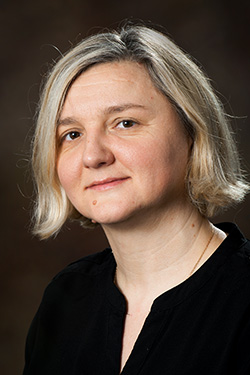
Represa Pérez, César is a faculty member at the University of Burgos , affiliated with the School of Engineering . He has contributed extensively to computer science, parallel computing, and embedded systems through research articles, educational materials, and conference presentations. Education: Doctorate in Parallel & Hybrid Programming (2002). Research Areas: Parallel computing (MPI/CUDA), 3D virtual labs, sensor technology, Android applications, and embedded systems design. Key Collaborations: Co-authored works with José María Cámara Nebreda, Pedro L. Sánchez Ortega, and others on technical education and hardware-software integration. Recent Trends: Focus on smartphone-driven sensors, additive manufacturing monitoring, and educational tools for engineering students.
Abbas Kouzani is a Professor of Engineering at the Deakin University School of Engineering , with a focus on cutting-edge biomedical engineering and AI applications. His work bridges 3D/4D printing and clinical challenges , particularly in dysphagia management and neurological disorders.
Benjamin R Runkle is a Professor in the Department of Biological and Agricultural Engineering at the University of Arkansas at Fayetteville . He leads the Landscape Flux Research Group , focusing on carbon-water-energy cycle interactions in agricultural and wetland systems. His work combines field measurements with climate modeling to advance sustainable rice production and global climate mitigation strategies. BS/PhD in Civil & Environmental Engineering from Princeton/UC Berkeley Postdoctoral research at University of Hamburg (2009-2014) Research spans methane emissions , evapotranspiration , and hydrological controls in rice paddies and Arctic wetlands. Recent projects include Landsat-based methane mapping and climate-smart agricultural modeling . Key applications: global climate models , carbon accounting , and water-efficient irrigation . Selected peer-reviewed publications (2024-2025) address peatland methane dynamics, rice carbon budgets, and remote sensing for climate-smart systems. Awards: NSF CAREER (2018), AGU Sulzman Award (2024), and multiple departmental teaching/research honors. Advising: Mentored senior design teams (ASABE Gunlogson Competition 1st place 2020) Grants: NASA Carbon Monitoring System (2021), USDA Climate Smart Commodities (2022) Labs/Teams: Landscape Flux Group , FLUXNET-CH4 network , and ACT-America airborne campaigns collaborations. Public engagement: Featured in New York Times (2023), DW (2023), and Research Frontiers podcast (2025).
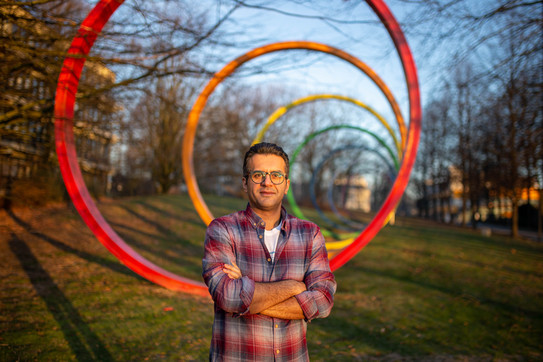
Vahid Farrahi is an Assistant Professor (tenure-track) at the Technical University of Dortmund, Faculty of Arts and Sports Sciences, where he serves as Head of Department 7: Data Analytics in Sport Sciences. He collaborates with fellow professors to design a new master's program in sports data science scheduled for launch in Winter 2024. Dr. Farrahi completed his MSc in Information Technology at Shiraz University of Technology (2016) and earned his PhD from the Faculty of Medicine, University of Oulu (2017-2021) with a prestigious Marie Curie grant. His doctoral work earned him the 'Best PhD Thesis Award 2021' and 'Exemplary PhD Thesis Award.' His research focuses on device-based measurement of movement behaviors, physical activity and health relationships, data-driven health interventions, and wearables for population health. He specializes in analyzing 24-hour movement and non-movement behaviors using wearable accelerometer-based activity monitors, applying machine learning and data mining techniques to understand health outcomes. Dr. Farrahi's publication record shows a strong trend toward digital phenotyping, machine learning applications in movement behavior analysis, and compositional data analysis of 24-hour movement patterns. His work bridges sports science, public health, and data analytics, with increasing emphasis on practical applications for health monitoring and intervention. His notable academic honors include: Best PhD Thesis Award 2021 from Faculty of Medicine, University of Oulu Exemplary PhD Thesis Award from University of Oulu Graduate School Marie Curie grant recipient Dr. Farrahi serves as Associate Editor for the Journal for the Measurement of Physical Behaviour and on editorial boards for the Journal of Activity, Sedentary and Sleep Behaviors and Journal of Physical Activity and Health. He has delivered numerous invited presentations including at ISBNPA 2023 and University of Oulu's Science Day 2023, and reviews for over 20 scientific journals. He actively seeks talented researchers and students to join his team, with a focus on those passionate about executing tasks with precision and accuracy in behavioral and health data science.
Dijana Stojić is an Assistant at the Department of Computer and Software Engineering, Faculty of Technical Sciences in Čačak, University of Kragujevac. She has held this position since January 2018 while pursuing her doctoral studies in Electrical and Computer Engineering with a specialization in Computer Engineering, which she began in 2021. Her academic journey began with excellent results at the 'Vuk Karadžić' elementary school in Čačak, followed by the Technical School in Čačak where she majored in computer electrical engineering. She earned her Bachelor's degree in Computer Engineering in 2011 (average grade 9.37) and Master's degree in 2012 (perfect average grade 10.00) from the Faculty of Technology in Čačak. Her Master's thesis, 'Software Support for Active RFID Localization,' was supervised by Prof. Dr. Siniša Ranđić. Dijana's research spans multiple domains within computer engineering, with recent publications focusing on practical applications of technology in diverse fields. Her work demonstrates strong expertise in IoT systems, machine learning applications, blockchain technology, and human-computer interaction. She has published extensively on topics including earthquake detection using mobile phones, predictive models for identifying students with difficulties in online learning, medical applications like ECG monitoring with Arduino, agricultural engineering applications, and infrastructure monitoring systems. Award for best first-year student at Faculty of Technology in Čačak Award for best second-year student at Faculty of Technology in Čačak Her professional activities include serving as Student Vice-Dean at the Technical Faculty in Čačak from December 2010 to September 2012, participating in the TEMPUS SIGMUS project, and completing an internship at D.O.O. DOCUS from June 2013 to June 2014. She was a scholarship holder of the Ministry of Education, Science and Technological Development from April 2013 to March 2017 and has been involved in significant research projects including 'Development and modeling of energy efficient, adaptable, multiprocessor and multisensory electronic low-power systems' (TR 32043) and the 'German-Serbian Collocation Dictionary for German Language and Teaching' (DeSKoll).
Dr. Etienne Vermeirssen is a Senior Scientist and Group Leader at the Ecotox Centre since 2011, affiliated with Eawag (Swiss Federal Institute of Aquatic Science and Technology) and EPFL (École Polytechnique Fédérale de Lausanne). His work focuses on aquatic, sediment, and soil ecotoxicology, with expertise in biotests, passive sampling, and the physiological effects of hormonally active substances. Education: PhD in Biological Sciences from the University of East Anglia, UK (1995), postdoctoral research at CEFAS (UK) and Max Planck Institute (Germany). Research Interests: Hormonally active substances, mixture toxicity, passive sampling techniques, and environmental risk assessment of micropollutants. Publications: His research spans 2006–2025, emphasizing endocrine disruptors, tire particle toxicity, wastewater treatment impacts, and passive sampler applications. Key trends include integrating bioassays with chemical analysis and studying estrogenic activity in aquatic systems. Scientific Contributions: Developed methods for bioassay-guided chemical analysis, assessed tire particle bioaccessibility, and evaluated passive sampling systems for environmental monitoring. Advising: Supervised doctoral research by Mechelke, J. and contributed to numerous interdisciplinary projects. Labs/Teams: Leads the aquatic ecotoxicology group at Ecotox Centre, collaborating with institutions like EPFL, Eawag, and international partners.
Dr. Heran Zheng is a Lecturer in Sustainable Infrastructure Economics and Finance at The Bartlett School of Sustainable Construction, University College London. She is a globally recognized researcher in climate change economics and sustainable cities, particularly focused on emerging economies. 2024 World Top 2% Scientist Rankings 2022 IOP Publishing Top Cited Paper Award Her research integrates input-output modelling , decarbonisation , and sustainable production to analyze human-infrastructure-environment interactions. She developed the globally adopted multi-regional input-output model for emerging economies, accessible via CEADs and Zenodo. Her 15 most recent publications (2024-2025) span journals like Nature Climate Change , Nature Communications , and Science of the Total Environment , covering topics such as: Regional carbon inequality Water-saving strategies Low-carbon industrial transitions Global supply chain emissions Carbon-negative technologies A dedicated educator, she leads curriculum development for sustainability modules and supervises over 10 MSc students annually. She also chairs the MSc Student Partnership Committee and contributes to departmental REF panels and sustainability initiatives.
Kalle Elfvengren is a researcher at the Lappeenranta-Lahti University of Technology (LUT) within the School of Engineering Sciences , focusing on Decision Sciences and Technology and Innovation Management . His work bridges computational methods with practical problem-solving across industries. Research Trends : Elfvengren's publications highlight expertise in digital twins, RFID technologies, and AI applications for service needs assessment. He explores how these innovations transform manufacturing, healthcare, and logistics while addressing sustainability and pandemic-related challenges.
Dr. Ebenezer Miezah Kwofie holds the position of Assistant Professor within the Department of Bioresource Engineering at McGill University's Macdonald Campus, where he also serves as Co-Director of the Integrated Food and Bioprocess Engineering Program. His research focuses on sustainable food systems, with particular emphasis on agri-food life cycle assessment and circular bioeconomy development in the Canadian context. Dr. Kwofie's primary research interests include agri-food life cycle assessment , sustainable food systems , and circular bioeconomy . He investigates environmental impacts such as greenhouse gas emissions and resource use across food supply chains, while also considering nutritional outcomes and food security dimensions. His methodological approach frequently employs life cycle sustainability assessment (LCSA), multi-criteria decision analysis (MCDA), and systems modeling to evaluate trade-offs and identify sustainable pathways for agricultural and food processing systems. Analysis of Dr. Kwofie's recent publications (2023-2025) shows a growing emphasis on integrating environmental and health considerations in food system analysis. His work increasingly applies advanced computational methods, including deep learning, to develop decision support tools for sustainable healthy diets. Key research themes include circular bioeconomy accounting, plant-based dietary transitions, and the development of holistic frameworks for net-zero food systems, with many studies focusing on Canadian case examples. No scientific awards, fellowships, or major honors were documented in the provided faculty profile and related materials. While Dr. Kwofie's role as Assistant Professor and Co-Director of the Integrated Food and Bioprocess Engineering Program indicates involvement in graduate education, specific details about current or past students were not provided. Similarly, information about research grants, funding sources, or collaborative projects was not included in the available text. The source materials did not specify any dedicated research laboratory or core research team associated with Dr. Kwofie. However, his research focus suggests collaboration within McGill's Department of Bioresource Engineering and potentially with external partners in the Canadian agri-food sector.
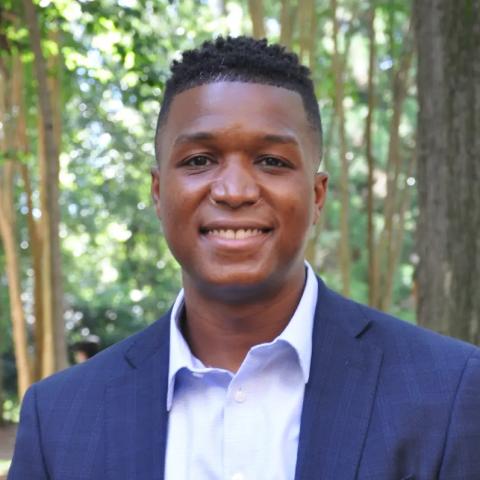
Joe F. Bozeman III is an Assistant Professor in the School of Civil and Environmental Engineering at the Georgia Institute of Technology's College of Engineering, with a courtesy appointment in the School of Public Policy. He serves as the SEI Lead for Ethics in Energy Transition and directs the Social Equity and Environmental Engineering Lab (SEEEL). His work bridges engineering practice with ethical considerations in climate change adaptation and mitigation strategies. Dr. Bozeman's educational background includes: Ph.D. in Industrial Ecology from University of Illinois at Chicago (2020) M.S. in Environmental Engineering from Wright State University (2010) B.S. in Environmental Engineering from Wright State University (2008) As an industrial ecologist, Dr. Bozeman focuses on developing ethical climate change adaptation and mitigation strategies. His research spans circularity analysis, food-energy-water nexus systems, sustainable urban systems, and life cycle assessment. His work uniquely integrates sociodemographic considerations into environmental engineering practice, examining how different demographic groups experience environmental impacts differently. This focus on systemic equity in industrial ecology applications has positioned him as a thought leader addressing the 'wicked' challenges of our time through cross-disciplinary collaboration with psychology, economic, and public health experts. Dr. Bozeman's scientific contributions have gained significant attention, with research featured in mainstream media outlets including NPR, the New York Post, Popular Science, and Free Speech TV. His work on U.S. food-consumption impacts across sociodemographic subgroups has particularly resonated with broader audiences. His publications demonstrate recognition through frequent citations and media coverage. With over a decade of experience in public and private sectors as an energy and environmental practitioner before joining Georgia Tech, Dr. Bozeman brings practical insights to his academic work. His SEEEL lab serves as a hub for integrating ethics, engineering, and community engagement, exploring innovative ways to merge technical findings with artistic expression for broader public accessibility. Dr. Bozeman maintains affiliations with multiple research centers at Georgia Tech, including Sustainable Systems, Renewable Bioproducts, Energy initiatives, and the Institute for Matter and Systems. His work on urban carbon management strategies, food-energy-water equity, and circular economy approaches demonstrates his commitment to creating more just and sustainable systems through engineering practice.
Dr. Caitlin Moore is a Senior Lecturer at the School of Agriculture and Environment at The University of Western Australia (UWA), where she conducts research at the intersection of ecosystem processes, climate change, and sustainable agriculture. Her work focuses on understanding how native and managed ecosystems respond to environmental stressors through advanced measurement and modeling techniques, with particular emphasis on Western Australian ecosystems. Education: PhD in Environmental Science from Monash University (Australia), focusing on tropical savanna productivity Honours Degree of Bachelor of Science in Geographical Science from Monash University Bachelor of Science in Geography and Environmental Science Dr. Moore's research centers on ecosystem processes across multiple scales, from leaf to landscape. She employs sophisticated measurement techniques including leaf gas exchange, eddy covariance, micrometeorological observations, and hyperspectral sensing (LIDAR, sun-induced chlorophyll fluorescence) to monitor ecosystem dynamics. Her work addresses critical challenges in native ecosystem monitoring, bioenergy sustainability, food security through high-throughput phenotyping, and tropical savanna ecology. She has established herself as a leading researcher in understanding how ecosystems respond to climate variability and stress through integrated measurement and modeling approaches. Analysis of her recent publications reveals a strong focus on climate change impacts, bioenergy crop sustainability, and advanced measurement techniques. Her work spans ecosystem monitoring in Western Australia, carbon dynamics in bioenergy systems, and innovative approaches to measuring photosynthesis and vegetation responses to environmental stress. The research demonstrates increasing integration of remote sensing technologies with ground-based measurements to understand ecosystem responses at multiple scales. Scientific Recognition: School of Agriculture and Environment Mid-Career Research Award (2022) Dr. Moore actively secures research funding through multiple significant grants, including projects with the ZNE-Ag CRC, Department of Industry, Science and Resources, and Western Australian government funding. She serves as an investigator on numerous active research projects totaling millions in funding, with research spanning from 2024 to 2033. Her external roles include Regional Ambassador for the Terrestrial Ecosystem Research Network, Regional ECR Ambassador for the Fluxnet Community Council, and Communications Officer for OzFlux. She has supervised multiple research students and contributes significantly to national research infrastructure through her work with TERN (Terrestrial Ecosystem Research Network). Dr. Moore leads research within UWA's Centre for Water and Spatial Science and is actively involved with the Leverhulme Centre for Climate Change Mitigation as a Collaborator. Her work connects with multiple research networks including OzFlux, Fluxnet, and the Terrestrial Ecosystem Research Network, positioning her at the forefront of ecosystem monitoring and climate change research in Australia and internationally.
Dr. Renata Ivanek is a Professor in the Department of Population Medicine and Diagnostic Sciences at Cornell University College of Veterinary Medicine. She serves as Co-Director of the Combined DVM-PhD Degree Program (2021-present) and Co-Director of the Cornell Institute for Digital Agriculture (2023-present). Education: D.V.M. (Faculty of Veterinary Medicine, University of Zagreb, 1997), MS in Veterinary Epidemiology (Royal Veterinary College & London School of Hygiene and Tropical Medicine, 2001), PhD in Comparative Biomedical Sciences (Cornell University, 2008) Her One Health research integrates epidemiology, veterinary medicine, public health, mathematical modeling, biostatistics, and machine learning to control infectious diseases in humans and animals. Key projects include enhancing antimicrobial stewardship in livestock, improving farm-to-fork food safety, and addressing ethical challenges in AI applications for veterinary systems. Her lab develops computational models for pathogen dynamics in agricultural settings. Recent publications focus on bacterial growth patterns on fresh produce, thermal inactivation of avian influenza in dairy, and data governance in digital food safety. Awards include the Zoetis Award for Veterinary Research Excellence, SUNY Chancellor's Award for Teaching, and recognition for the "Find CoV Control" app. She leads interdisciplinary initiatives bridging veterinary science, AI, and public policy. Scientific Honors M.Sc. scholarship (Croatian Ministry of Agriculture & World Bank, 2000) MENSA membership (2001-present) Phi Zeta 2nd place (2005) Mark Gearhart Award (2008) Texas A&M Outstanding Young Faculty Research Award (2012) Zoetis Award (2017) SUNY Teaching Excellence (2019) IFPA Tech Innovation Finalist (2022) The Ivanek Lab trains students and professionals in cross-sectoral approaches to infectious disease control, leveraging collaborations with public health institutions and agricultural agencies. Current research emphasizes predictive analytics for microbial risk in food systems and sustainable solutions for antimicrobial use in livestock.
Dr. Hisham AbouGrad is a Senior Lecturer in Computer Science and Digital Technologies at the University of East London, within the School of Architecture Computing and Engineering. With over 20 years of experience in IT industry and higher education, he has taught at multiple UK institutions including Falmouth University, Northumbria University, Roehampton University London, and University of Plymouth. Department of Computer Science and Digital Technologies School of Architecture Computing and Engineering University of East London Dr. AbouGrad holds a DProf (DBA) in Workflow Information Systems Performance from London South Bank University (2020), an MSc in Software Engineering from University of Bradford (2002), and an MBA in Management from University of Lincoln (2002). His research spans multiple domains including Business Process Management (BPM), Decision Support Systems (DSS), Workflow Systems Performance, Enterprise Content Management (ECM), Machine Learning, and Geographic Information Systems (GIS). His recent publications demonstrate a strong focus on applying AI and machine learning to solve real-world problems in finance, healthcare, agriculture, and transportation. His publication trends show a clear progression from foundational work on business process management and enterprise content systems toward cutting-edge applications of deep learning, blockchain, and computer vision in diverse domains. The breadth of his research covers financial technology, healthcare monitoring, agricultural optimization, transportation safety, and food security systems. Fellow of the Higher Education Academy (FHEA) Project Management Professional (PMP) in IT Professional member of the British Computer Society (BCS) since 2009 Member of the Central & North London Branches (CeNLB) Committee of BCS Dr. AbouGrad actively supervises doctoral research (ProfDoc, PhD), master's dissertations, and undergraduate degree projects. He has participated in doctoral research workshops and academic events to support university researchers. His teaching portfolio includes modules on Database Systems, Software Engineering, Information Systems, and Business Information Systems. He is a member of the Intelligent Systems Research Group and contributes to Research Enhanced Learning & Teaching initiatives at UEL.
Professor Paul Blackwell is a faculty member at the University of Sheffield within the School of Mathematical and Physical Sciences . His academic work focuses on Bayesian statistics , statistical ecology , and inference for stochastic processes , applied to disciplines including environmental science, archaeology, and marine biology. His recent research involves animal movement modeling using continuous-time Bayesian frameworks , radiocarbon calibration for archaeological dating, and ecological uncertainty quantification . Publications span Bayesian computation , habitat selection , and ecosystem dynamics , with applications in reindeer behavior , coral reef resilience , and fisheries management . He contributes to Bayesian methodology for ecological and environmental modeling , integrating stochastic processes with real-world data . His projects often involve interdisciplinary collaboration, particularly with marine and climate scientists .
Dr. Andy Nichols serves as Senior Lecturer in Water Engineering and Director of the General Engineering interdisciplinary degree programme at the University of Sheffield's School of Mechanical, Aerospace and Civil Engineering. Since joining the department in 2015, he has established expertise in water infrastructure management, sensor development, and railway drainage systems through industry collaborations and EPSRC-funded research. His research integrates novel sensing technologies with AI-driven asset management to improve water infrastructure efficiency and safety. Key interests include optical/acoustic sensor development for water industry applications, hydraulic process modeling, asset degradation prediction, and machine learning-based railway drainage management. His work bridges laboratory experimentation with field deployments through partnerships with Network Rail, local authorities, and the Sensors for Water Interest Group (SWIG), which he chairs as founder. Recent publications reveal strong emphasis on computational fluid dynamics, sensor innovation, and data-driven approaches for urban drainage and railway infrastructure. His work connects environmental fluid mechanics with practical engineering solutions for flood risk management, water quality monitoring, and sustainable drainage systems development. Scientific recognition includes: 21st Harold Jan Schoemaker Award for best paper in Journal of Hydraulic Research Royal Academy of Engineering Industrial Fellowship in Railway Drainage Infrastructure Management Outstanding Teaching Award (Sheffield Students' Union, 2018) Multiple early-career awards (CIWEM, IAHR, SWIG, 2012) Fellow of the Higher Education Academy Dr. Nichols secures significant research funding including Horizon 2020's Co-UD Labs project for collaborative urban drainage research and a KTP with Hydro International for sediment monitoring in stormwater systems. He actively supervises PhD students while developing interdisciplinary teaching methods for fluid mechanics and engineering design. He contributes to multiple research groups: Water - Environmental Fluid Mechanics, SuDS and Urban Drainage, Water - Catchments & River Engineering, and Resources, Infrastructure Systems & Built Environment, maintaining strong connections with Pennine Water Group and Sheffield Water Centre.