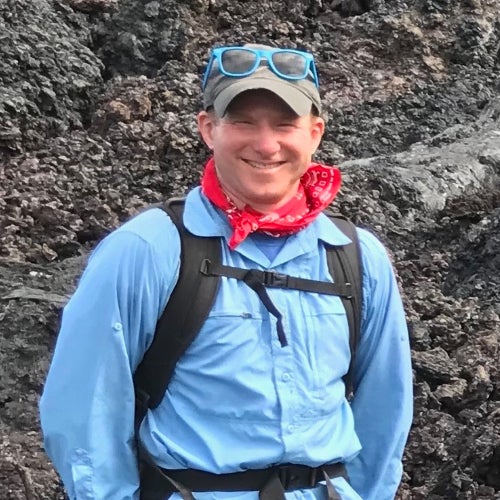
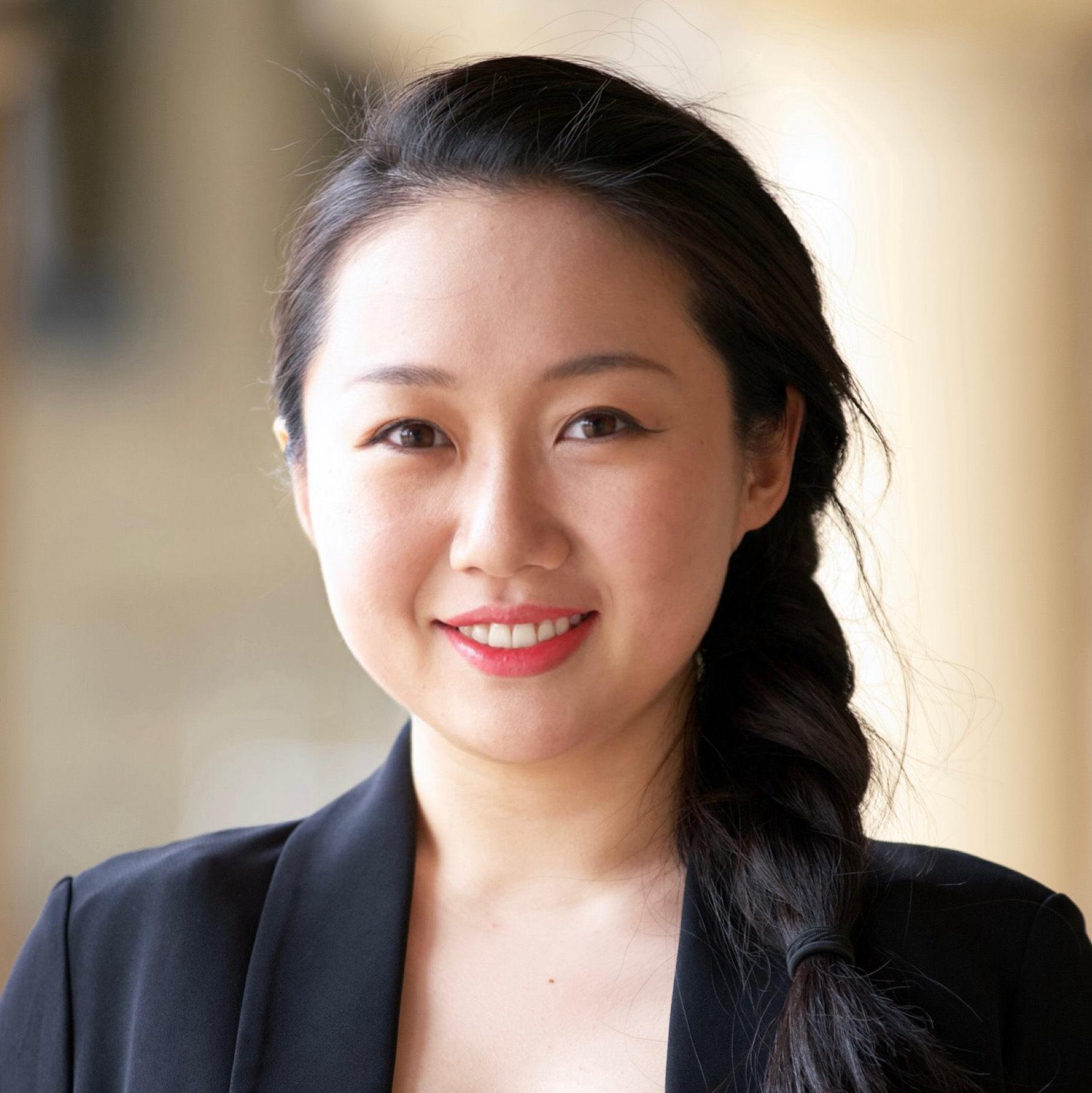
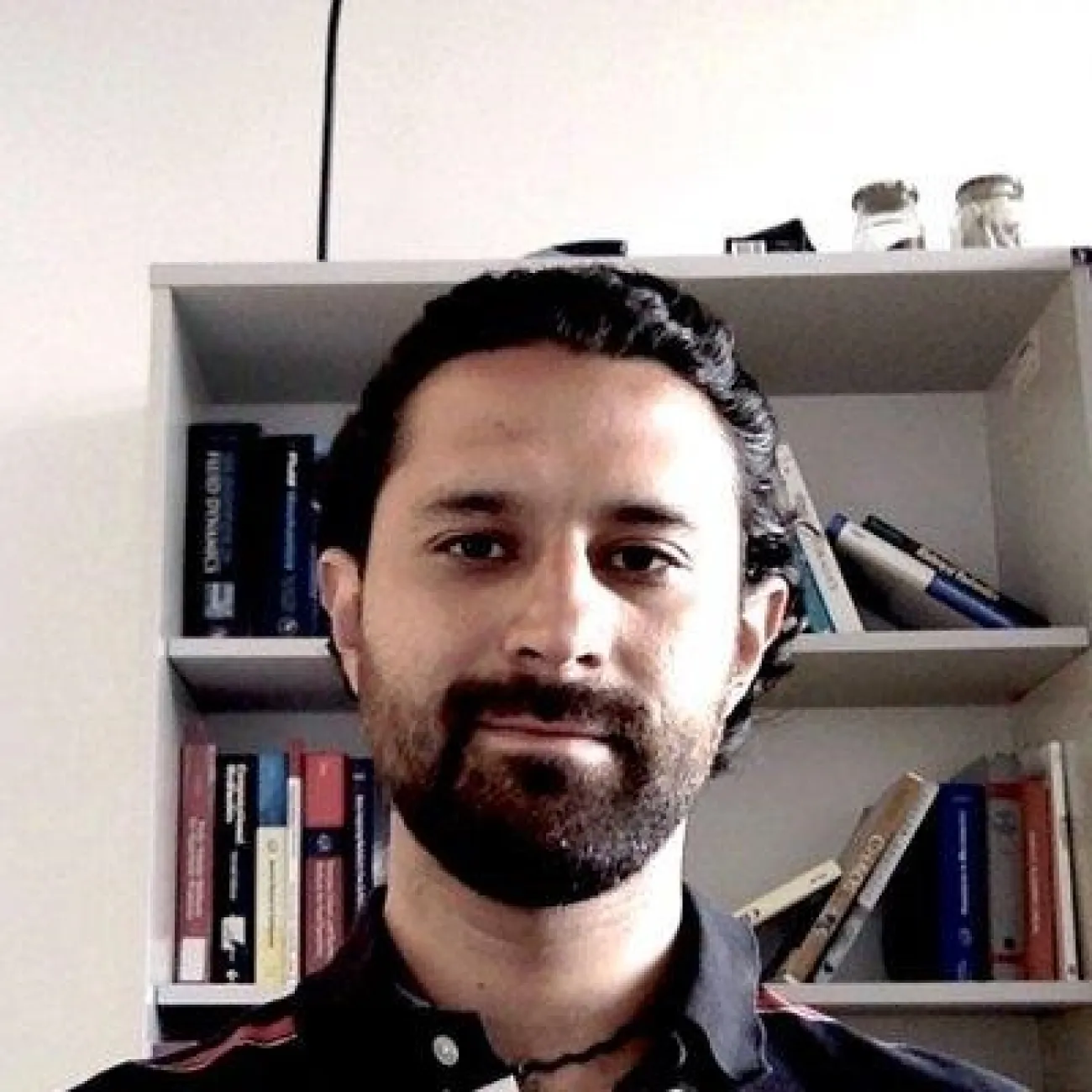
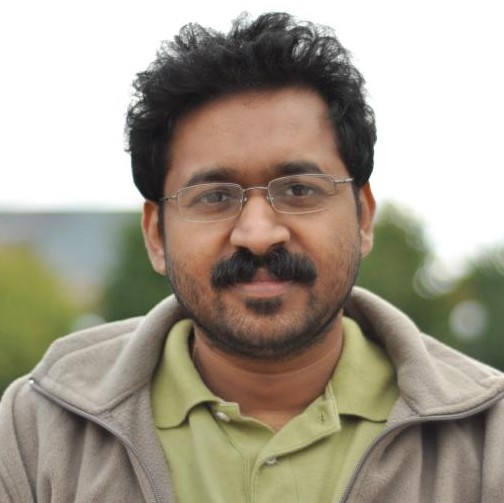
Professor Adam Soule is a faculty member in the Department of Marine Geology and Geophysics at the University of Rhode Island's Graduate School of Oceanography. He also serves as the Executive Director of the NOAA-funded Ocean Exploration Cooperative Institute, a collaborative effort involving the Ocean Exploration Trust, URI GSO, WHOI, University of New Hampshire, and University of Southern Mississippi. Education B.A. from Carleton College (Northfield, MN) Ph.D. from the University of Oregon (Eugene, OR) Research Focus Dr. Soule's research investigates submarine volcanic activity and its impacts on ocean chemistry and ecosystems. His work includes: Developing chemical geochronometers to study eruption dynamics Using numerical fluid dynamics simulations Deploying deep submergence tools like submersibles, ROVs, and autonomous vehicles He emphasizes technological innovation for deep-sea exploration, integrating machine learning techniques to analyze complex geological data.
Dr. Öğr. Üyesi Aydın Karabulak , currently lecturing at the Department of Physical Education and Sports within Süleyman Demirel University's Faculty of Sports Sciences , combines academic rigor with practical football coaching expertise. Holding a PhD in Physical Education and Sports Teaching from Burdur Mehmet Akif Ersoy University (2022), he has authored research on football-specific training, physical performance metrics, and health-sports intersections. Education: Pre-Degree: Akdeniz University - Machine Drawing and Construction (1993) BSc: Akdeniz University - Physical Education and Sports Teaching (1997) MSc: Süleyman Demirel University - Sports Sciences (2013) PhD: Burdur Mehmet Akif Ersoy University - Physical Education and Sports Teaching (2022) Research Focus: Specializing in football performance analysis, Aydın investigates training methodologies (core stability, functional drills), environmental factors (playing surfaces), and health outcomes (nutrition-exercise interactions, pandemic-related activity patterns). His work bridges theoretical sports science with applied coaching practices. Publication Trends: Recent studies emphasize technology integration in sports, injury prevention, and evidence-based training frameworks. Conference presentations explore player psychology, surface adaptation, and recovery protocols, while co-authored books address contemporary issues in sports pedagogy. Professional Engagement: Head of Department, Süleyman Demirel University (2018-2022) Football Coach, Türkiye Futbol Federasyonu (2011-present) Member, TÜFAD (Türkiye Futbol Antrenörler Derneği) (1995-present)
Lisa Elviri is an Associate Professor in Analytical Chemistry at the Department of Pharmacy, University of Parma, Faculty of Sciences. She holds a PhD in Chemical Sciences (Analytical Chemistry) from the University of Parma and has been a tenured researcher since 2004. Education: PhD in Chemical Sciences (Analytical Chemistry, University of Parma); Laurea in Chemistry (University of Parma). Her research spans analytical chemistry , mass spectrometry , biomaterials , 3D printing , and clinical diagnostics . She focuses on developing LC-MS and immunoenzymatic methods, validating techniques for pharmaceutical analysis, and designing chitosan-based scaffolds for tissue regeneration. Recent publications highlight work on Alzheimer’s disease (PCSK9 inhibition, APOE4 genotype studies), 3D-printed medical devices , and biorefinery quality monitoring using spectroscopy. Her teaching includes Analytical Chemistry for 5-year Master’s programs in Pharmacy and Pharmaceutical Chemistry. She has authored 75 international publications, 140 conference communications, and holds an H-index of 26 (Google Scholar). Her office is located at the Science and Technology Campus, Parma.
Yakir Hadad is a Senior Lecturer (equivalent to Assistant Professor) at Tel Aviv University's School of Electrical Engineering, Department of Physical Electronics. He holds a B.Sc. and M.Sc. from Ben-Gurion University (2006, 2008) and a Ph.D. from Tel Aviv University (2014), followed by postdoctoral research at the University of Texas at Austin (2014-2016). His research focuses on fundamental wave phenomena in complex systems, with expertise spanning: Analytical methods in electrodynamics and acoustics Physical bounds in wave engineering Time-variant and nonlinear wave systems Metamaterials for RF/optical applications Plasmonics and nanophotonics Hybrid-physics wave interactions Publication analysis reveals consistent focus on wave manipulation through spatiotemporal modulation, non-reciprocal systems, and topological phenomena, with recent expansion into machine learning applications for electromagnetic field transformation. His work bridges theoretical foundations with practical devices like antennas, waveguides, and frequency converters. Major Scientific Awards: Krill Prize for Excellence in Research (2020) Alon Fellowship for Outstanding Young Researchers (2017-2020) Leopold B. Felsen Award for Excellence in Electrodynamics (2016) TAU Rector's 100 Best Teachers List (2019) Leads an active research group with 3 PhD candidates, 1 MSc student, and 3 undergraduate researchers. Current projects include time-varying metamaterials, acoustic wave guiding, and nonlinear device synthesis. Research is supported by: ISF Grant 1353/19 (2019-2023) MAFAT research grant Alon Fellowship (2017-2020) TAU Rector Startup Fund (2017-2020)
Gege Wen is an Assistant Professor at Imperial College London with co-appointments in Earth Science Engineering and I-X (Imperial + AI). Their research focuses on computational methods and AI for Energy Transition, particularly subsurface energy storage and CO2 geological storage. Ph.D. in Energy Sciences & Engineering, Stanford Doerr School of Sustainability M.S. in Fluid Mechanics and Hydrology, Stanford University B.S. in Mineral Engineering (Honors), University of Toronto Their work combines deep learning models like convolutional neural networks (Wen et al., 2021) and enhanced Fourier neural operators (Wen et al., 2022) to predict CO2 plume migration and pressure dynamics in heterogeneous and anisotropic permeability maps. Recent projects include CCSNet.ai , a web application providing 1,000+ daily predictions for subsurface CO2 storage scenarios. Current research emphasizes AI-driven solutions for energy transition challenges, including synthetic data generation, multiphase flow modeling, and deployment of pre-trained models for isotropic/anisotropic cases. The group actively seeks PhD students interested in AI-fluid flow intersections.
Praveen Linga is a Professor in the Department of Chemical and Biomolecular Engineering at the National University of Singapore (NUS) , where he has served since 2010. He held leadership roles as Vice Dean (Industry-Relation, Innovation & Enterprise) and Vice Dean (Communications & Outreach) at NUS's College of Design and Engineering . Dr. Linga co-leads the Centre for Energy Research & Technology (CERT) at NUS and maintains visiting professorships at institutions in India, China, and Thailand. His research focuses on clathrate hydrates for clean energy storage , CO₂ capture , and environmental stewardship , aligning with UN Sustainable Development Goals 6, 7, and 13. The Linga Lab combines fundamental and applied studies to optimize hydrate formation/dissociation kinetics and explore energy recovery from natural gas hydrates. Recent publications highlight innovations in CO₂ hydrate kinetics using amino acid promoters, methane storage in seawater systems, and hydrogen hydrate stability analysis. His work appears in leading journals like Energy & Fuels , Applied Energy , and Chemical Engineering Journal , with over 200 peer-reviewed papers and significant citation impact (h-index 77). Dr. Linga is recognized as a Highly Cited Researcher (Clarivate, 2018-2024), NRF Investigator (S$3.5M grant), and recipient of multiple Best Paper Awards from Applied Energy and Advances in Applied Energy . He serves as Executive Editor of Energy & Fuels and sits on editorial boards of 12 journals. Linga Lab's work has been featured in global media (Chemistry World, Science et Vie) and recognized by Research.com as #9 in Singapore's engineering scientists. His research bridges chemical engineering fundamentals with large-scale energy applications, particularly in hydrate-based CO₂ sequestration and unconventional gas storage.
Dr Sergio Maldonado is a researcher at the University of Southampton 's Faculty of Engineering and Physical Sciences , specializing in Environmental Fluid Mechanics and Hydraulics . He leads modules including Environmental Hydraulics and Flood Modelling and Mitigation while supervising PhD students in topics spanning sediment transport, coastal morphodynamics, and fluid-algae interactions. Education: PhD (Environmental Fluid Mechanics, University of Edinburgh), MSc (Hydraulic Engineering, UNAM), BSc (Mechanical Engineering, Tecnológico de Monterrey) Research Focus: His work addresses fundamental aspects of environmental hydraulics, with applications in: Sediment transport mechanics in open channels Coastal and river morphodynamics Fluid dynamics of algae systems Machine Learning for computational hydraulics Experimental fluid mechanics innovations Recent Publications demonstrate expertise in morphodynamic simulations, temperature measurement techniques, and physics-informed neural networks for shallow water equations. He actively supervises PhD students and contributes to interdisciplinary coastal risk reduction research.
Dr. Ali Nabavi is a Reader in Energy Systems and Head of the Centre for Energy Decarbonisation and Recovery at Cranfield University . He serves as Director of the Advanced Chemical Engineering Course and has made significant contributions to low-carbon energy systems through experimental and computational research. PhD in Energy (Cranfield, 2016) MSc in Thermal Power and Fluid Engineering (Manchester, 2012) Research Areas: Carbon capture, utilization, and storage (CCUS) Reversible solid oxide fuel cells Hydrogen purification technologies Process intensification for energy efficiency Microfluidic particle formulation Hydrogen social acceptance modeling Recent Publications: Focus on sorption-enhanced reforming, hydrogen social dynamics, and catalyst development for gas processing. His work spans experimental validation and computational modeling across multiple energy systems. Scientific Contributions: Development of novel adsorbents for CO2 capture and optimization of solid oxide fuel cell integration in transportation applications. Facilities: Utilizes Cranfield's High-Performance Computing (HPC) systems and advanced material synthesis labs with pilot-scale reactor infrastructure.
Giuseppe Pascazio serves as a Full Professor in the Department of Mechanics, Mathematics & Management at the Polytechnic University of Bari, Italy. His research spans computational fluid dynamics with dual focus on aerospace applications and biomedical engineering, particularly in hypersonic flow phenomena and microwave ablation technologies for cancer therapy. His primary research interests include fluid dynamics, computational methods for high-enthalpy flows, thermochemical non-equilibrium modeling, turbulent boundary layer analysis, and biomedical device optimization. Pascazio develops advanced numerical techniques including high-order schemes, state-to-state kinetics implementations, and GPU-accelerated solvers to address complex flow physics in atmospheric entry and medical applications. His work bridges fundamental gas dynamics with practical engineering solutions for spacecraft thermal protection and minimally invasive cancer treatments. Analysis of his recent publications (2021-2025) reveals three dominant research thrusts: (1) High-fidelity simulation of hypersonic flows with detailed chemistry using state-to-state kinetics, (2) Development of robust numerical methods for shock-capturing in thermochemically non-equilibrium flows, and (3) Biomedical applications focusing on microwave ablation probe design and microcapsule transport in vascular systems. His aerospace work emphasizes atmospheric reentry physics while biomedical research targets cancer therapy optimization. Pascazio has participated in significant research projects including "PrInCE" (Innovative Processes for Energy Conversion) and "INNOVHEAD" (Advanced technologies for reduction of polluting emissions in Heavy Duty engines). His collaborative work involves industrial partnerships in aerospace and medical device sectors, though specific grant details beyond project names aren't provided. He maintains active research output with over 50 publications demonstrating consistent contributions to high-speed aerodynamics and biomedical fluid dynamics.
Sorin Mitran is a Professor in the Department of Mathematics at the University of North Carolina at Chapel Hill. His research focuses on computational simulation of multiscale and multiphysics systems, data-driven constitutive relations for hyperelastic materials, and information geometry for reduced stochastic models. PhD in Aerospace Engineering from Politehnica University Bucharest (1995) Professional background includes fellowships at University of Tokyo (1993), Karlsruhe Institute of Technology (1998-1999), and University of Washington (1999-2002) His research develops numerical tools to predict macro-scale behavior from micro-scale interactions, such as plastic deformation of metals from lattice defect dynamics, microtubule mechanics from molecular dynamics, and protein folding from atomic-level simulations. Mathematical approaches include adaptive computation, machine learning for constitutive law prediction, and information geometry for stochastic process analysis. Recent publications (2023-2018) span computational biology, multiscale fluid dynamics, and medical applications of continuum mechanics. Articles frequently explore data-driven modeling, wave propagation in biological systems, and GPU-accelerated numerical methods like Lattice Boltzmann and Lattice Fokker-Planck formulations.
Katherine Newhall is a Professor in the Department of Mathematics at the University of North Carolina at Chapel Hill, where she maintains an active research program in stochastic modeling and dynamical systems. Her office is located in Phillips Hall 308, and she can be reached at knewhall@unc.edu. She serves as a member at large of the GSNP (Group on Statistical and Nonlinear Physics) board, a position she assumed in April 2024. Dr. Newhall earned her educational credentials from Rensselaer Polytechnic Institute, including a B.S. in Applied Physics and Applied Mathematics (2004), an M.S. in Mechanical Engineering (2006) with thesis entitled 'Turbulent Boundary Layers: A look at Skin Friction, Pressure Gradient and Surface Roughness,' and a Ph.D. in Mathematics (2011) with dissertation 'Synchrony in Stochastically-Driven Neuronal Network Models.' Following her doctoral work, she completed postdoctoral research at New York University's Courant Institute of Mathematical Sciences from 2011 to 2014. Her research focuses on developing new tools for analyzing large and infinite dimensional stochastic systems to understand large-scale and long-time dynamics of physical and biological systems. Rather than relying on traditional Fokker-Planck formulations that become intractable with increasing complexity, her work builds on concepts of statistical mechanics to create macroscopic descriptions from individual unit statistics. This approach extends the usefulness of energy landscapes even in non-gradient systems, enabling explanations of experimentally observable phenomena while exposing fundamental mechanisms responsible for system behavior. Her work spans applications from granular materials and chromosome dynamics to biological systems and metamaterials. Dr. Newhall's publications demonstrate consistent advancement in stochastic modeling techniques, with recent work (2023-2025) focusing on hyperuniformity in biological structures, energy landscape sampling methods, and the role of weak transient interactions in biological systems. Her research shows a clear trajectory from fundamental mathematical developments toward increasingly sophisticated biological applications. Outstanding Referee of the Physical Review journals (2019) NSF grant DMS-1816394 DMREF grant ($2M NSF Grant to Revolutionize Materials, 2023) Member at large of the GSNP board (2024) Dr. Newhall has successfully mentored numerous PhD students to completion, including Anna Coletti (2024), Daftari (2023), Moakler (2021), Ben Walker (2021), and Yuan Gao (2019). Her research is consistently supported by competitive grants, most notably the $2M NSF DMREF grant awarded in 2023. She maintains active collaborations across disciplines, particularly in applying mathematical techniques to biological problems such as chromatin organization and organ transplantation risk assessment. Her laboratory work focuses on developing computational methods for analyzing complex stochastic systems, with particular emphasis on the hydra string method for exploring high-dimensional potential energy surfaces. The research group maintains strong connections with both theoretical and experimental collaborators working on granular materials, chromosome dynamics, and biological systems.
Muhammet Kayfeci is a Professor at Karabük University , Faculty of Technology, Department of Energy Systems Engineering, Turkey. He holds a PhD in Mechanical Engineering from Süleyman Demirel University (2011) and a Master's in Mechanical Education from Zonguldak Karaelmas University (2005). His academic career spans roles from Instructor (2008-2011) to Associate Professor (2016-2021) and Professor (since 2021), with administrative roles including Dean (2021-2024) . Education : PhD (Mechanical Engineering) - Süleyman Demirel University (2006-2011) Master's (Mechanical Education) - Zonguldak Karaelmas University (2004-2005) BSc (Mechanical Engineering) - Bartın University (2014-2016) Kayfeci’s research focuses on thermodynamics , renewable energy systems , and hydrogen storage , particularly through metal hydride reactors and nanofluid applications . His work integrates computational modeling and experimental validation for energy efficiency improvements in photovoltaic/thermal (PV/T) systems and hydrogen storage technologies. Recent publications indicate a strong trend in nanofluid-enhanced cooling systems for solar panels, metal hydride reactor optimization , and machine learning applications for energy systems. He has supervised 13 theses (PhD and Master’s) and secured funding for projects like "Biomimetic Flow Channels in PEM Electrolysis Development" (2025-2026). Scientific Awards : TÜBİTAK-ULAKBİM International Scientific Publications Encouragement (UBYT) Award (2009-2014) He teaches courses including Fuel Cells and Electricity Production (Doctoral), Heat Exchangers , and Thermodynamics at undergraduate and graduate levels.
Dr. Edmund Spencer is an Associate Professor in the Department of Electrical and Computer Engineering at the University of South Alabama , with research focused on space plasma physics and space weather . He designs advanced instruments for space science, develops theoretical frameworks for plasma characterization, and applies stochastic optimization algorithms to complex systems. Ph.D. Electrical and Computer Engineering, University of Texas at Austin M.S. Electrical and Computer Engineering, University of Texas at Austin B.S. Electrical and Electronics Engineering, University of Leicester, UK His work bridges space instrumentation with nonlinear magnetospheric dynamics , particularly in geomagnetic substorms and solar wind-earth magnetosphere interactions . Current projects include onboard space weather modules for satellites and advanced antenna systems for CubeSats . Recent research trends from his 15 most recent publications (2019-2025) include: Development of time-domain impedance probes for ionospheric electron density measurements Applications of machine learning in substorm prediction Hybrid physics-black-box modeling for Dst index forecasting Advanced antenna designs for small satellites 3D Particle-in-Cell simulations for RF instruments Collisional effects in plasma probe measurements Scientific contributions include: NSF CAREER Award (2013) for RF impedance probe development Key role in NASA's USIP CubeSat missions (e.g., JAGSAT I) Leveraging WINDMI model for substorm dynamics analysis He teaches graduate and undergraduate courses in electromagnetics and stochastic processes , contributing to the department's space science integration in engineering education.
Prof. Dr. Robert Eberlein is a Senior Lecturer in Mechanics at the ZHAW School of Engineering , specifically working at the Institute of Mechanical Systems (IMES) . He has served as Director of IMES since 08/2017, following previous roles as Senior Lecturer at IMES (11/2013-07/2017) and industry leadership positions including CTO of Angst+Pfister Group (06/2006-10/2013). Dr. Eberlein holds a Dr.-Ing. (PhD) in Numerical Mechanics from Darmstadt University of Technology (1992-1997) and completed an exchange program at UC Berkeley (1991-1992). Education: Dr.-Ing. (PhD) in Numerical Mechanics, Darmstadt University of Technology (07/1992-07/1997); Exchange Student at University of California, Berkeley (07/1991-06/1992) Professional: Director of Institute IMES (08/2017-today); Senior Lecturer at IMES (11/2013-07/2017); CTO & Group Executive Committee, Angst+Pfister Group (06/2006-10/2013); Group Leader in Biomechanics, Sulzer Innotec (07/1998-04/2006) Dr. Eberlein focuses on experimental and numerical modeling of solid polymers and lightweight structures. His research spans material modeling, finite element analysis, and fatigue life prediction for materials like POM gears, TPU and vulcanizates. Recent work explores digital twin development for rubber spring elements and machine learning enhanced process simulation in additive manufacturing. His projects include Lifetime prediction of POM gears , Measurement of human soft tissue properties , and Optimization of plastic gear geometry . Scientific achievements include: Professor ZFH (Fachhochschulrat) - 12/2019 Dr.-Ing. (PhD) summa cum laude - Darmstadt University of Technology - 07/1997 Graduate Assistantship - Darmstadt University of Technology - 01/1993 His work appears in journals like International Journal of Non-Linear Mechanics , Rubber Chemistry and Technology , and Journal of Loss Prevention in the Process Industries . Publications since 2015 show a consistent focus on material characterization , finite element modeling , and fatigue analysis with applications in industrial components and biomedical systems.
Renu John is a Professor in the Department of Biomedical Engineering at Indian Institute of Technology Hyderabad . He earned his Ph.D. in Physics (Optics) from IIT Delhi in 2006 and has held postdoctoral positions at Duke University and University of Illinois . He leads the Medical Optics and Sensors Laboratory (MOS) and co-founded the Center for Healthcare Entrepreneurship (CfHE) , focusing on affordable healthcare solutions for India. Research Interests : Biomedical Imaging, Optical Coherence Tomography (OCT), Digital Holography, AI/ML in Diagnostics, Microfluidic Biosensors, 3D Bioprinting, Nanoparticle-based Imaging, Optical Elastography. Awards : Best Paper & Poster Awards at international conferences (2018-2019), Samsung Innovation Award (2018) for smartphone-based oral cancer detection. Grants : Lead investigator for an ICMR Center of Excellence (15.2 Cr funding) in Medical Devices and Diagnostics. Students : Mentored over 20 researchers, including current and alumni Ph.D. candidates working on OCT, microfluidics, AI-driven imaging, and biosensor development. Labs & Innovations : The MOS Lab develops cutting-edge technologies like lensless microscopes, FF-OCT systems, and dual-modality biosensors. His team has filed 18 patents and published 117 international journal articles, with projects spanning from in vivo magnetomotive imaging to organ-on-chip platforms for disease modeling.