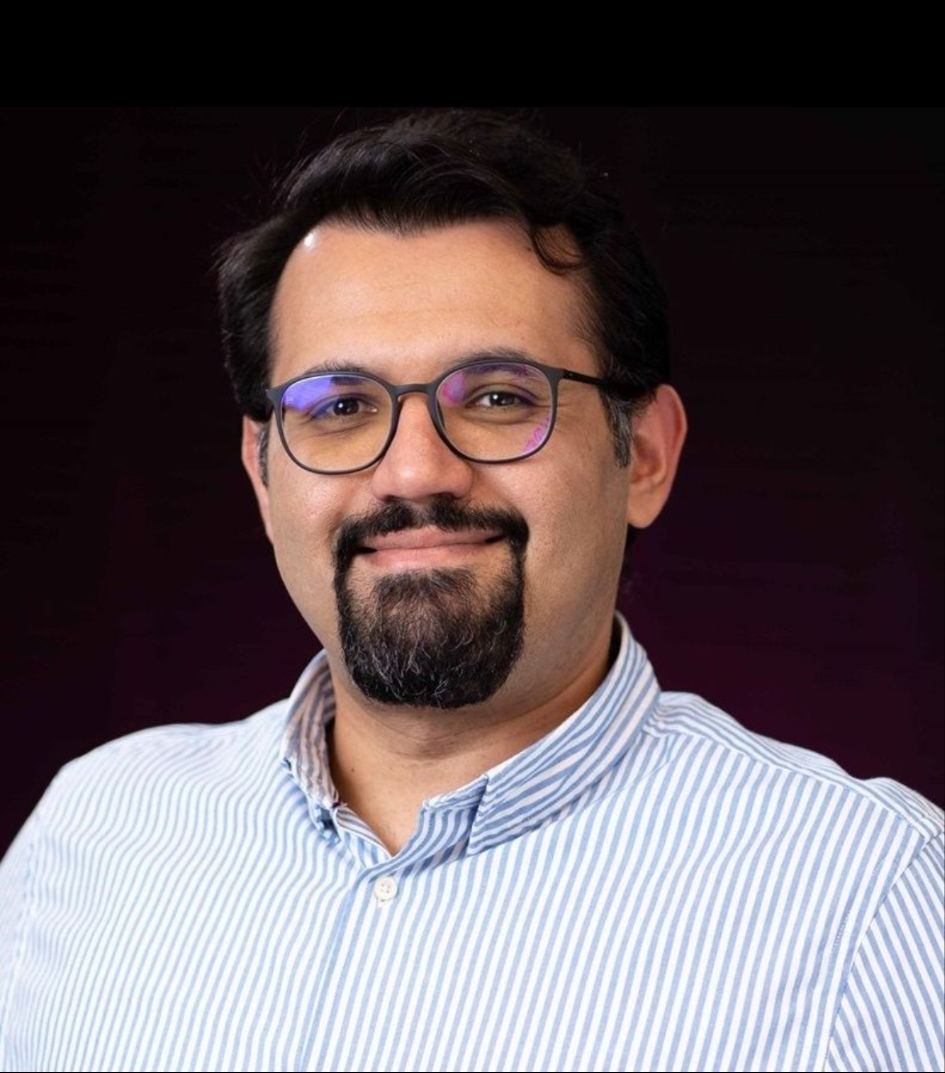
Dr. Ehsan Abbasnejad is an Associate Professor at Monash University's Department of Data Science and Artificial Intelligence, and holds adjunct positions at the Australian Institute for Machine Learning (AIML, University of Adelaide) and the Centre for Augmented Reasoning (CAR). He specializes in foundational AI, focusing on vision-language tasks, adversarial machine learning, and reinforcement learning. His work bridges theory with real-world applications in agriculture, energy, healthcare, and sports. Education: PhD in Computer Science from Australian National University (ANU). Research Interests: Machine Learning Theory and Adversarial Defenses Neural Network Robustness and Generalization Multimodal Learning (Vision-Language) Continual and Transfer Learning Applications in Energy, Healthcare, and Robotics Awards: Finalist for Australian AI Academic/Researcher of the Year (2024) Multidisciplinary competition wins (e.g., OzMineral Explorer Challenge) Advising & Grants: Australian Research Council (ARC) Discovery Project on Reinforcement Learning CSIRO's Next Generation Graduate Fund Accepting PhD students in foundational AI and applications Labs & Teams: Director of Foundational Machine Learning & Reasoning at Monash, leading global teams in AI competitions and industry collaborations (Microsoft Research, NEC Labs America).
Michael P. Wellman is a Professor of Computer Science and Engineering at the University of Michigan, specializing in computational game theory and its applications to economics and finance. He has advised 28 PhD graduates and currently mentors 6 students, emphasizing independent research and tailored advising approaches. His work focuses on multi-agent systems, strategic interactions, and agent-based modeling of financial markets. He holds the endowed Lynn A. Conway Professorship and created the Morris Wellman Faculty Development Professorship. His research group meets weekly for progress reports, paper discussions, and practice presentations. Wellman encourages internships, teaching experience, and conference participation (e.g., ICAIF, AAMAS, EC) to foster career readiness. His scientific contributions span empirical game-theoretic analysis (EGTA), market manipulation detection, and cybersecurity strategies. He prioritizes student independence, collaborative problem-solving, and ethical considerations in AI-driven financial systems.
Roles and Affiliations: Tien Foo Sing is the Provost's Chair Professor in the Department of Real Estate at the NUS Business School, National University of Singapore. He serves on the Management Board of the Institute of Real Estate and Urban Studies (IREUS) and was its former Director (2017–2022). He has held leadership roles including Head of the Department of Real Estate (2020–2022) and past President of the Asian Real Estate Society (AsRES). He is a CLC Fellow (2024–2026), Fellow of AsRES, and a Fellow of the Weimer School of Advanced Studies. He edits the International Real Estate Review and serves on editorial boards of journals like Real Estate Economics and Journal of Real Estate Finance and Economics. Education: PhD (Land Economy) and MPhil (Land Economy) from the University of Cambridge, UK; BSc (Estate Management) from NUS. Research Interests: Focuses on urban planning, real estate economics, housing markets, climate finance, transport economics, and environmental policy. His work bridges theory and policy, addressing issues like urban resilience, intergenerational mobility, and environmental externalities. Recent studies include impacts of sea level rise on housing prices, ESG-REIT linkages, and PropTech adoption. Awards: Recognized with the Outstanding Referee Award (2017) for Real Estate Economics, Fellowships from AsRES and the Weimer School, and book awards for his 'Kiasunomics' series. Professional Activities: Serves on government boards (e.g., Valuation Review Board, Singapore Chapter of APREA) and advises organizations like the PropTech Association of Singapore. His work influences policy on housing, transportation, and sustainable development. Labs/Teams: Leads research initiatives through IREUS and collaborates with institutions like the Sustainable & Green Finance Institute (SGFIN). His projects often involve large-scale data analysis (e.g., smart card transit data, housing transactions).
Benyuan Liu is a Professor at the Miner School of Computer and Information Sciences within the Kennedy College of Sciences at the University of Massachusetts Lowell . He serves as Director and Graduate Coordinator for Ph.D. programs, with expertise in Data and Computer Communication Networks, Mobile and Wireless Networks, and Internet Technologies & Applications. Education: B.S., University of Science and Technology of China M.S., Yale University Ph.D., University of Massachusetts Amherst His research focuses on Artificial Intelligence in Medical Imaging , Deep Learning for Endoscopy , and Edge Computing Systems . Recent work includes automated lesion detection, 3D reconstruction from sensor data, and predictive models for financial and reproductive health domains. The 15 most recent publications highlight applications of deep learning in medical diagnostics (thyroid nodules, gastric lesions, dental caries), computer vision (attention mechanisms, transformers), and financial technology (market psychology analysis). Technical themes include mmwave radar processing, diffusion models for synthetic data, and multi-scale feature extraction. Benyuan Liu leads the Computer Networking Lab and CHORDS initiative at UMass Center for Digital Health. His work bridges network optimization with healthcare AI , emphasizing real-time systems and portable diagnostics.
Confidence Duku is a researcher at Wageningen University & Research, specializing in climate resilience and agricultural systems. Their work integrates climate science, hydrology, and machine learning to address food security, deforestation impacts, and flood forecasting in data-scarce regions. Research Interests: Climate change modeling in Eastern Africa Hydrology-guided neural networks for flood forecasting Agricultural resilience (common bean, green gram) under climate stressors Economic impacts of deforestation in Brazil Climate services for financial institutions and SMEs Notable Contributions: Developed frameworks for climate-smart business planning and flood prediction, with a focus on regions like East Africa and Brazil. Their work emphasizes ecosystem services and adaptation strategies. Collaborations: Active in multi-institutional projects, including partnerships with SNV and Copernicus. Led LVVN projects on cascading climate risks and reforestation impacts.
Vladimir Spokoiny is a Professor at the Departments of Mathematics and Economics of the Humboldt University of Berlin and Head of the Research Group "Stochastic Algorithms and Nonparametric Statistics" at the Weierstrass Institute for Applied Analysis and Stochastics (WIAS) in Berlin, Germany. His research spans multiple areas of statistics, machine learning, and financial mathematics, with significant contributions to nonparametric statistics, high-dimensional data analysis, and statistical methods in finance. Spokoiny received his M.Sc. in applied mathematics from the Moscow Institute of Railway Engineering in 1981 and his Ph.D. in mathematics from Lomonosov Moscow State University in 1988. He completed his Habilitation at Humboldt University in 1996. His academic career includes positions at the All-Union Institute of Railway Transport in Moscow, the Institute for Information Transmission Problems in Moscow, and the Institute for Applied Analysis and Statistics in Berlin before joining the Weierstrass Institute and Humboldt University where he has been a professor since 2002. Spokoiny's research focuses on adaptive nonparametric smoothing and hypothesis testing, high dimensional data analysis, statistical methods in finance, image analysis with applications to medicine, classification, and nonlinear time series. His work often addresses the challenges of nonstationarity in time series data and develops innovative methods for volatility estimation and risk management. He has made significant contributions to the development of adaptive weights smoothing procedures, which have applications in image processing, community detection, and manifold learning. His recent work has expanded into high-dimensional statistics, Bayesian inference, and optimization methods for machine learning, with publications demonstrating novel approaches to Gaussian approximation, Laplace methods, and statistical inference in non-Euclidean spaces. Spokoiny has supervised numerous PhD students including Oliver Reiss, Danilo Mercurio, Ying Chen, Elmar Diederichs, and Mstislav Elagin, whose research has focused on mathematical finance, time series analysis, and statistical methods. He serves as an Associate Editor for The Annals of Statistics (since 2004) and Statistics and Decisions (since 2002), and has previously served on the editorial board of the Journal of Statistical Planning and Inference. His professional activities include reviewing for major statistical journals including Annals of Statistics, Bernoulli, Econometrica, and Journal of American Statistical Association, as well as reviewing grant proposals for the National Science Foundation (USA), German Research Foundation, and Netherlands Organisation for Scientific Research. Spokoiny is a member of several professional societies including the International Statistical Institute, American Statistical Association, Institute of Mathematical Statistics, and Bernoulli Society. He is fluent in Russian (mother tongue), English, and German, and has good knowledge of French. His research group at WIAS focuses on developing novel statistical methodologies with applications across various scientific domains, particularly emphasizing adaptivity and robustness in complex data environments. The group's work has significant implications for financial risk management, medical imaging, and machine learning applications, with recent publications addressing fundamental questions in high-dimensional statistics and nonparametric inference.
Dalibor Radovanović is a researcher at Singidunum University , affiliated with the Faculty of Business Informatics . His work spans cybersecurity, blockchain technologies, and their applications in business and IoT systems. Education: Doctoral Dissertation (2016, Singidunum University) Master's & Basic Studies (Faculty of Business Informatics) Secondary Education: ETŠ Nikola Tesla Research Interests include: Security frameworks for IoT and blockchain integration Smart card and wireless network vulnerabilities E-governance and corporate IT audit methodologies Machine learning applications in cybersecurity Environmental performance optimization in agribusiness Publication Trends reveal a focus on blockchain (2022), cybersecurity (2009-2022), and IT governance (2010-2017). His work bridges theoretical analysis with practical implementations in Serbia's digital economy. Collaborations with scholars like Marko Šarac and Saša Adamović highlight interdisciplinary approaches to securing financial systems, educational institutions, and industrial IoT applications.
Scientia Professor Robert Kohn is a distinguished academic at the University of New South Wales, holding a position in the School of Economics within the UNSW Business School. With a career spanning several decades, Professor Kohn has established himself as a leading expert in statistical methodology and econometric modeling. His research has significantly contributed to Bayesian statistics and computational methods for complex data analysis. Professor Kohn's research focuses on advanced statistical methodologies including Bayesian methodology, variable selection and model averaging, nonparametric regression models, time series modeling, multivariate Gaussian and non-Gaussian regression, and Markov chain Monte Carlo simulation algorithms. His work bridges theoretical statistics with practical applications across economics, finance, and cognitive science. His research demonstrates a consistent trajectory toward developing more efficient computational methods for complex statistical models, with recent work emphasizing variational Bayesian methods, particle filtering techniques, and applications to time series analysis. Analysis of his recent publications (2022-2025) reveals a strong focus on advancing computational statistical methods, particularly in Bayesian inference for complex models. His work shows increasing integration of machine learning techniques with traditional statistical methods, especially in handling high-dimensional data and complex time series structures. Professor Kohn has made significant contributions to variational inference methods, particle-based computational techniques, and applications to financial time series and cognitive modeling. Professor Kohn has maintained an exceptionally productive research career with continuous publication output since the 1970s, demonstrating remarkable longevity and adaptability in his research focus as statistical methodologies have evolved. His work shows strong international collaboration, particularly with researchers in Australia, the United States, and Europe, reflecting his standing in the global statistical community.
Ronnie Sircar is the Eugene Higgins Professor of Operations Research and Financial Engineering at Princeton University , where he contributes to the Department of Operations Research and Financial Engineering (ORFE). His work spans financial mathematics, stochastic modeling, and applied probability, with a focus on market volatility, optimal investment strategies, and dynamic game theory. Email: sircar@princeton.edu Office: Sherrerd Hall, Room 208, Princeton, NJ 08544 His research interests include: Stochastic Volatility: Asymptotic analysis, calibration, and impact on option pricing and portfolio optimization. Mean Field Games: Applications to cryptocurrency mining, energy markets, and interbank network formation. Portfolio Theory: Forward performance processes, drawdown constraints, and risk-averse strategies. Credit Risk: Multi-name credit derivatives, CDO valuation, and risk measures. Energy Systems: Renewable reliability, unit commitment, and electricity market design. Recent publications emphasize mean field games in energy and blockchain, stochastic volatility in portfolio optimization, and machine learning applications for financial engineering. He has advised graduate students such as Giulia Crippa, Nicolas Garcia, and Burak Aydin, often collaborating with researchers including M. Soner, P. Chan, and A.M. Reppen.
Prof. Dr. Peter Gomber is Chair of e-Finance at the Faculty of Economics and Business, Goethe University of Frankfurt, Germany. He serves as Co-Chairman and member of the Board of the 'efl – the Data Science Institute', an industry-academic partnership between Frankfurt and Darmstadt Universities and leading industry partners. Additionally, he is a member of the Exchange Council of the Frankfurt Stock Exchange, Supervisory Board of Clearstream Banking AG, and Research Fellow at the Leibniz Institute for Financial Research SAFE in Frankfurt. Prof. Gomber received his Ph.D. at the Institute of Information Systems at the University of Giessen in 1999 after graduating in Business Administration. Before joining Goethe University in 2004, he worked for five years as Director, Head of Market Development Cash Markets and Xetra Research at Deutsche Börse AG, where he developed new market models and products for cash market trading on Xetra. His research focuses on market microstructure theory, digital finance and fintech, regulatory impact on financial markets, and electronic trading systems. With over 150 publications in leading international journals, his work has significantly influenced the field, particularly his highly cited papers on the Fintech Revolution. His recent research examines market fragmentation, circuit breakers, research unbundling under MiFID II, and the application of AI in financial markets. Prof. Gomber's extensive publication record shows a clear evolution from traditional market microstructure and electronic trading systems toward digital finance, fintech innovations, and regulatory impact analysis. His work bridges technical aspects of financial markets with regulatory considerations, demonstrating how technological innovations interact with market structure and regulation. His scientific recognition includes: IBM Shared University Research Grant (2007) Reuters Innovation Award (2000) Best Paper Award of the Journal of the Association for Information Systems (2020) Best Information Systems Publications Award (2020) Top 1 and Top 3 most cited articles in Fintech research (2025 bibliometric analysis) Prof. Gomber has successfully supervised numerous PhD students, including Tino Cestonaro who won the Best PhD Paper Award 2025. He has acquired significant research funds from both public institutions and the private sector. Notably, a market model invention by Prof. Gomber was granted a patent by the United States Patent and Trademark Office, with two additional market model inventions filed for patent in Europe and the US. He leads an active research team at the Chair of e-Finance, including researchers like Benjamin Clapham, Micha Bender, and Tino Cestonaro. The team collaborates closely with the efl – the Data Science Institute and the Leibniz Institute for Financial Research SAFE, bridging academic research with practical applications in financial markets.
Adam B. Badawi is a Professor of Law at the University of California, Berkeley - School of Law, where he maintains an active research agenda at the intersection of law, finance, and corporate governance. His scholarly work has established him as a leading expert in contract law, M&A transactions, securities litigation, and ESG compliance. Professor Badawi's research interests span multiple dimensions of corporate law and legal theory. His work on contractual complexity, particularly in debt agreements and M&A transactions, has provided significant insights into how legal drafting affects economic outcomes. He has extensively examined the business judgment rule, board authority, and the role of courts in corporate governance. More recently, his research has expanded into ESG-related topics, analyzing how environmental, social, and governance considerations intersect with traditional corporate law frameworks. His methodological approach often combines legal analysis with empirical techniques, including text analysis of legal documents and event studies of litigation outcomes. Professor Badawi's scholarly output demonstrates consistent high-impact research across multiple domains of corporate law. His early work focused on foundational aspects of contract theory and interpretation, while his more recent publications reflect growing interest in ESG metrics, executive compensation structures tied to sustainability goals, and the evolving regulatory landscape. The trajectory of his research shows a progression from theoretical legal analysis toward increasingly empirical and interdisciplinary approaches that bridge law with finance and data science. Professor Badawi has collaborated with numerous scholars across different institutions, including Duke University, Stanford Law School, and the University of Chicago Law School, reflecting the interdisciplinary nature of his work and its relevance to multiple academic communities.
Xiaofeng Shao is a Professor of Statistics & Data Science at Washington University in St. Louis, with a joint appointment in the Department of Economics. He holds a PhD from the University of Chicago and previously served at the University of Illinois at Urbana-Champaign for 18 years. He is a Fellow of the Institute of Mathematical Statistics and the American Statistical Association. His research focuses on econometrics, time series analysis, change-point detection, high-dimensional statistics, nonparametric methods, and functional data analysis. Recent work emphasizes object-valued time series modeling and machine learning applications in high-dimensional and imaging data. Notable contributions include the dependent wild bootstrap method and self-normalization techniques for time series inference. Key awards include Fellowships from leading statistical societies. His publications span over 20 years, addressing topics like change-point detection in climate projections, statistical methods for COVID-19 infection trends, and high-dimensional dependence testing.
Prof. Jochen Hartmann holds the Digital Marketing professorship at the TUM School of Management (Munich). Previously, he was an assistant professor at the University of Groningen's School of Business and Economics and worked as a management consultant at McKinsey & Company. He earned his doctorate from the University of Hamburg and coordinated the DFG research group FOR 1452 (2019-2022). His research focuses on digital marketing and machine learning, particularly analyzing unstructured data (computer vision, NLP) and generative AI. Key themes include social media, algorithmic fairness, diversity in advertising, and human-machine interactions. Education: Ph.D. in Business Administration (University of Hamburg), Management Consulting experience at McKinsey & Company. Research interests combine cutting-edge AI techniques with marketing challenges. Recent work explores generative AI's impact on advertising, algorithmic bias in finance, and visual search innovations. His text/image mining studies rank among top-cited articles in marketing journals like the International Journal of Research in Marketing and Journal of Marketing Research. Awards include the EMAC-Sheth Sustainability Award, Lindau Nobel Laureate Meetings' Young Economist distinction, and multiple best dissertation awards. Grants: Led DFG-funded research group (2019-2022). Affiliated with Columbia Business School (visiting scholar) and Mannheim Business School (lecturer in machine learning). Labs/Teams: Active in interdisciplinary research groups focusing on AI applications in marketing and business analytics.
Mike Kirby is a Professor at the Kahlert School of Computing, University of Utah. He also holds adjunct professorships in the Department of Bioengineering and the Department of Mathematics. His current roles include leadership in scientific computing and informatics initiatives, including former directorships of the Utah Informatics Initiative (2019-2023) and the Multi-Scale Multidisciplinary Modeling of Electronic Materials (MSME) Collaborative Research Alliance (2016-2022). He has extensive experience in strategic research initiatives, including serving as Assistant Vice President for Research (2024-2025). Education: Dr. Kirby earned a PhD in Applied Mathematics (2002) and MS in Computer Science (2001) from Brown University, and a BS in Applied Mathematics and Computer Science from Florida State University (1997). Research Interests: Focus on large-scale scientific computing, physics-informed machine learning, computational science and engineering, high-order numerical methods, and visualization. His work bridges applied mathematics and computer science to address real-world engineering challenges. Publications: Over 150 peer-reviewed articles, including high-impact contributions in journals like Journal of Computational Physics and SIAM Journal on Scientific Computing . Recent work emphasizes machine learning for differential equations, topology optimization under uncertainty, and multi-fidelity modeling. Awards: Recognized for leadership in computational science and informatics, including contributions to University of Utah’s Clery Compliance Program. Advising & Grants: Supervised over 50 graduate students and postdocs. Secured funding from NSF, DOE, and industry partnerships, totaling millions in research grants. Active in interdisciplinary collaborations across engineering, materials science, and medicine. Labs/Teams: Scientific Computing and Imaging (SCI) Institute, Utah Informatics Initiative, and the Center for Multiscale Modeling of Electronic Materials (MSME).
Tengyao Wang is a Professor in the Department of Statistics at the London School of Economics and Political Science (LSE), serving as the MSc Statistics (Financial Statistics) Programme Director. Prior to LSE, he held positions as a Lecturer at University College London and a Research Fellow at the Cantab Capital Institute for the Mathematics of Information, University of Cambridge. His research focuses on high-dimensional statistics, computational efficiency, and statistical limitations imposed by computational constraints. Education: PhD in Statistics under Prof Richard Samworth at the University of Cambridge, with earlier studies including a Part III Essay in Empirical Process Theory. Research interests include sparse signal detection, change-point analysis, dimension reduction, robust statistics, and applications in medical statistics, financial data analysis, and material discovery. Key contributions include methodologies for handling missing data, high-dimensional change-point detection algorithms, and statistical learning techniques. Publications span theoretical advancements and applied innovations, with recent work emphasizing deep learning with missing data, residual permutation tests, and semi-supervised learning via random projections. His work has been recognized with awards such as the Royal Statistical Society Research Prize (2019) and the Guy Medal in Bronze (2023). He is an Associate Editor of the Journal of the Royal Statistical Society, Series B (JRSS B), and actively contributes to open-source tools like the 'ocd' and 'MissInspect' R packages for changepoint detection and missing data analysis.