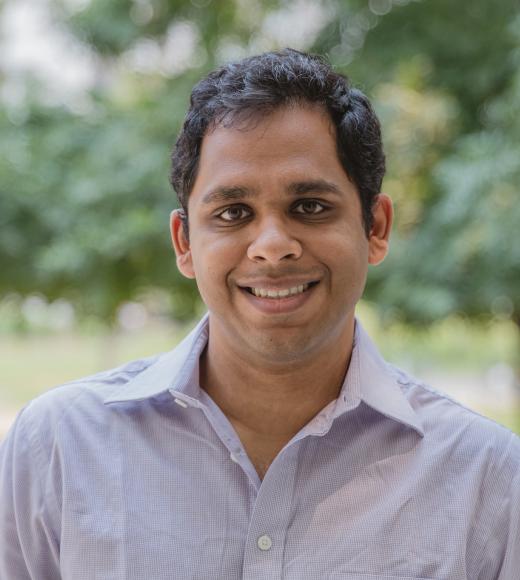
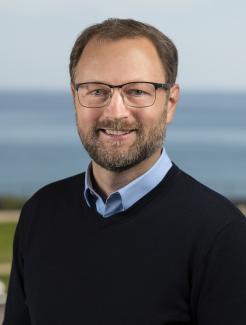
Axel Schülzgen is a Professor of Optics at CREOL, The College of Optics and Photonics, University of Central Florida. He also holds an Adjunct Research Professor position at the University of Arizona's College of Optical Sciences. His research focuses on fiber fabrication, nano-structured fibers, nonlinear materials, and applications in fiber lasers, sensing, and communications. He earned a PhD in Physics from Humboldt-University of Berlin, Germany. His expertise spans optical fiber devices, components, and structures, with a strong emphasis on advancing high-power laser delivery and sensing technologies. Research Interests: - Development of hollow-core fibers for low-loss light transmission - Anti-resonant fiber designs for multi-mode guidance - Nonlinear optical materials for fiber lasers - Applications in fiber optic sensing and medical imaging - Disordered media imaging using optical fibers Awards & Honors: OSA Fellow (Optical Society of America) SPIE Fellow (International Society for Optics and Photonics) 2021 Excellence in Graduate Teaching Award 2015 CREOL Excellence in Research Award Advising & Labs: - Current advisees: Ameen Alhalemi, Caleb Dobias, Md Abu Sufian - Notable alumni: Xiaowen Hu (2022), Stefan Gausmann (2021), and Jian Zhao (2019) - Research Group: Focuses on fiber fabrication technology, nanotechnology in fibers, and photonics applications
Huazhen Fang is an Associate Professor in the Department of Mechanical Engineering at the University of Kansas School of Engineering, where he joined in 2014. He leads the Information & Smart Systems Laboratory (ISSL) and holds a courtesy appointment in the Department of Electrical Engineering & Computer Science. His research focuses on enabling intelligence for complex systems through information-driven approaches. Dr. Fang received his Ph.D. in Mechanical Engineering from the University of California, San Diego in 2014, following an M.Sc. from the University of Saskatchewan and a B.Sc. in Computer Science & Technology from Northwestern Polytechnic University in China. He was a Visiting Faculty Fellow at Mitsubishi Electric Research Laboratories in 2022. His research interests span Systems and Control, Advanced Battery Management, Energy Storage Systems, and Robotics, with particular focus on system modeling, estimation, control design, machine learning and numerical optimization. Dr. Fang's work has significant applications in energy management, cooperative robotics, and environmental observing systems. His research has been supported by the National Science Foundation, Department of Energy, Army Research Laboratory, and Mitsubishi Electric Research Laboratories. His extensive publication record shows a clear trend toward increasingly sophisticated integration of physics-based modeling with machine learning approaches, particularly in battery management systems and autonomous vehicle control. Recent work demonstrates a growing emphasis on Bayesian inference methods, distributed control architectures, and safety-critical applications of intelligent control systems. Faculty Early Career Award from National Science Foundation (2019) University Scholarly Achievement Award (2024) Miller Professional Development Award (2022) Miller Faculty Scholar Award (2018, 2019, 2023) Wesley G. Cramer Outstanding Mechanical Engineering Faculty Award (2016) Big XII Faculty Fellowship (2015) IEEE Transactions on Transportation Electrification Prize Paper Award (2024) Dr. Fang has successfully mentored numerous graduate students through the Information & Smart Systems Laboratory, with many receiving awards for their research. His research has attracted significant funding from prestigious organizations including the National Science Foundation, Department of Energy, Army Research Laboratory, and Mitsubishi Electric Research Laboratories. He currently serves as an Associate Editor for multiple prestigious journals including Information Sciences, IEEE Transactions on Industrial Electronics, and IEEE Control Systems Letters. The Information & Smart Systems Laboratory (ISSL) under Dr. Fang's leadership has established itself as a center for cutting-edge research in information-driven smart systems. The lab focuses on pushing the frontiers of information extraction, analysis and exploitation for dynamic systems to deal with system complexity and enable system intelligence. The lab actively collaborates with industry partners and local communities, emphasizing research that serves societal needs.
Bo Wu is an Associate Professor in the Department of Computer Science at Colorado School of Mines. His research focuses on compilers and programming systems, particularly program optimizations for heterogeneous computing and emerging architectures, with applications in machine learning and graph processing. He joined Mines in 2014 after earning a Ph.D. from The College of William and Mary and earlier degrees from Central South University in China. Education : B.S. in Computational Science and Technology (Central South University, 2005) M.S. in Computer Science (Central South University, 2008) Ph.D. in Computer Science (The College of William and Mary, 2014) Research Interests : Wu's work emphasizes enhancing data locality in heterogeneous systems, GPU scheduling, and optimizing applications for emerging architectures. His contributions include frameworks like GraphZero for efficient graph mining and FLEP for GPU preemption. Awards & Grants : NSF SPX Award (2018) NSF CAREER Award (2018) Supercomputing Best Paper Award (2015) Multiple NSF grants for GPU-related research Advising & Grants : Wu has led several NSF-funded projects and actively participates in conference program committees (e.g., PPoPP, SC, ICS). His research spans compiler optimizations, parallel computing, and high-performance systems. Labs & Teams : While specific labs aren’t named, his work involves collaborations on GPU-based systems, graph processing frameworks, and compiler toolchains.
Johanna Pirker serves as an Associate Professor at the Institute of Human-Centred Computing, Graz University of Technology, where she holds teaching authorization in Applied Computer Science. Her work bridges academic research with practical applications in interactive technologies, maintaining active consultation hours for students every Monday morning. Her research centers on human-centered computing with emphases on virtual/augmented reality systems, serious game design, and AI-driven interactive experiences. She investigates player behavior, user experience optimization, and therapeutic/educational applications of immersive technologies across diverse contexts including rehabilitation, engineering education, and social platforms. Recent 2025 publications reveal strong trends in AI integration for gaming ecosystems (toxicity detection, dialogue systems), VR-based educational tools across disciplines, and cross-cultural analyses of gaming communities. Her work consistently combines experimental user studies with novel system development to address real-world challenges. While specific grant details and student advising records aren't documented in source materials, her extensive publication output across venues like FDG and iLRN indicates active leadership in interdisciplinary collaborations focused on advancing immersive technologies for societal benefit.
Mustafa Bilgic is a Professor and Chair of the Computer Science Department at Illinois Institute of Technology, where he also directs the Master of Artificial Intelligence program and the Machine Learning Laboratory. His research focuses on machine learning, active learning, explainable AI, and probabilistic graphical models, with applications in healthcare, social media analysis, and biomedical engineering. He has received funding from NSF, NIH, and Samsung, among others. Education: PhD in Computer Science, University of Maryland at College Park (2010) M.S. in Computer Science, University of Maryland at College Park (2006) B.S. in Computer Science, University of Texas at Austin (2004, with High Honors and Special Honors) Research Highlights: Dr. Bilgic's work emphasizes AI ethics, algorithm transparency, and interactive machine learning systems. Notable projects include analyzing political news engagement dynamics and developing frameworks for eliminating explanation noise in AI models. His lab explores tools like OrganoID for tracking organoid growth and IDGI for improving model interpretability. Awards: NSF CAREER Award (2014) ACM SIGKDD Best Student Paper Award (2008) Illinois Tech College of Computing Teaching Excellence Award (2021) Teaching and Leadership: Bilgic teaches advanced courses in AI, machine learning, and data mining. He leads initiatives to bridge AI theory and practical applications, emphasizing interdisciplinary collaboration. His administrative roles include overseeing the AI master’s program and fostering innovation in computing education.
R. Michael Alvarez , Flintridge Foundation Professor of Political and Computational Social Science at Caltech, is a leading scholar in election technology, political methodology, and machine learning applications in social science. Affiliated with the Caltech/MIT Voting Technology Project , the Social and Decision Neuroscience Program , and the Resnick Sustainability Institute , his work bridges technology and democracy. Education: B.A. from Carleton College, Ph.D. from Duke University Academic Career: Caltech faculty since 1992 His research spans: Election Integrity : Monitoring election security, fraud detection, and ballot systems Computational Social Science : Applying machine learning to voter behavior and policy analysis Climate Policy : Examining public attitudes and behavioral interventions for sustainability Online Behavior : Analyzing toxicity in gaming and social media dynamics Key article trends show focus on election forensics (2025 Nature Climate Change study), game toxicity analysis (2025 CHI Play paper), and LLM applications in social science. His students include Jacob Morrier, Mitchell Linegar, and teams of postdocs and undergraduates in Caltech's SURF program. Scientific recognition includes: Google Cloud Research Innovators Class of 2022 Co-editor of multiple academic series including Cambridge Elements in Quantitative Methods
Salman Durrani is a Professor and Associate Director Education at the School of Engineering, Australian National University. He holds a PhD in Electrical Engineering from the University of Queensland and a BSc (First Class Honours) from the University of Engineering & Technology, Lahore, Pakistan. His research spans Internet of Things networks, satellite/UAV communications, machine learning applications in wireless systems, early wildfire detection, and backscatter communications. Current projects focus on terahertz communication security, UAV-assisted networks, and IoT-based environmental monitoring. His recent publications demonstrate strong emphasis on wireless security, terahertz technology optimization, UAV network design, and IoT applications for environmental protection. Technological innovations include novel beamforming techniques and lightweight authentication protocols. AI 2000 Internet of Things Most Influential Scholar (2020, 2022, 2023) IEEE ComSoc Asia Pacific Outstanding Paper Award (2016) Australian Council of Graduate Research Excellence Award (2019) ANU Vice-Chancellor's Awards for Supervision (2018) and Education (2012) He has supervised 15 PhD students to completion and secured $1.9M in research funding as chief investigator for six grants. Current projects include participation in the ANU Optus Bushfire Research Centre of Excellence.
Pardis Pishdad is an Associate Professor and Graduate Program Director in the School of Building Construction at Georgia Institute of Technology’s College of Design. She directs the Smart Built Environment Eco-System (Smart Bees) Laboratory, focusing on integrating cyber-physical systems, digital twins, and innovative project delivery methods (e.g., IPD, Flash Tracking) for sustainable built environments. Her research bridges technology adoption, trust-building in construction contracts, and supply chain optimization. Education: PhD, Environmental Design and Planning (Virginia Tech) Master’s Degrees: Civil Engineering (Virginia Tech), Design Studies in Project Management (Harvard), Architecture (University of Tehran) Bachelor’s in Architectural Engineering (Azad University of Shiraz) Research Interests: Her work emphasizes sustainable construction practices using IoT, BIM, and blockchain. Key areas include lifecycle cost analysis, lean construction, and smart building technologies. She explores trust dynamics and collaboration in construction projects through game theory and process optimization. Recognition: 2018 ENR Top 20 Under 40 Professionals 2016 CII National Outstanding Researcher Award 2020-2022 Georgia Tech Provost Teaching Learning Fellow Advisory Roles: Academic Advisor for CII’s Supply Chain Management Community, Vice Chair of BuildingSMART’s BIM Forum 5D Taskforce. Formerly advised the Construction Management Association of America’s Board (2016–2018). Industry Collaboration: Partnerships with Turner Construction, GDOT, and VDOT. Research on Flash Tracking and blockchain has been integrated into industry practices. Labs & Teams: The Smart Bees Lab pioneers cyber-physical systems for smart buildings, exploring AI-driven solutions and sustainable construction frameworks.
Ambarish Kulkarni is an Assistant Professor in the Department of Chemical Engineering at the University of California, Davis. His research focuses on multi-scale molecular modeling, data science for materials discovery, catalysis, and separations. He combines quantum chemistry methods (e.g., wave function theory, density functional theory) with classical simulations and machine learning to design novel materials for applications in catalysis, energy storage, and environmental remediation. Specific areas of interest include methane activation, CO 2 capture, and heterogeneous electrocatalysis. His work bridges theory and experiment, collaborating with experimental groups to validate computational findings. Notable projects include: Developing catalysts with atomically dispersed metals for enhanced reactivity Designing zeolite materials for selective chemical transformations Creating machine learning workflows to accelerate material discovery Recent research highlights the role of water in CO 2 adsorption mechanisms, the dynamic behavior of confined nanoparticles, and redox-cycling phenomena in zeolite-embedded catalysts. His computational tools like the Multiscale Atomic Zeolite Simulation Environment (MAZE) enable detailed analysis of complex material behaviors. No scientific awards are explicitly listed in the provided information. His advising activities and grants are not detailed in the current data, but his extensive publication record indicates active research collaboration and funding support.
Kyle DeMars is an Associate Professor and Associate Department Head for Theoretical and Computational Research in the Department of Aerospace Engineering at Texas A&M University. He holds a Ph.D. from The University of Texas at Austin (2010) and has expertise in space situational awareness, navigation systems, Bayesian filtering, and information theory. His work focuses on advanced estimation techniques for spacecraft autonomy and space surveillance. Dr. DeMars' research emphasizes robust nonlinear filtering, multitarget tracking, and information-theoretic approaches to orbital dynamics. He has developed innovative methods for spacecraft navigation, including terrain-relative systems and anonymous feature processing. His contributions address challenges in uncertainty quantification, sensor fusion, and cislunar space domain awareness. Education: Ph.D./M.S.E./B.S. in Aerospace Engineering (UT Austin, 2004–2010) Awards: AIAA Young Professional Award (2017), NASA Innovation Award (2014), and multiple teaching/research recognitions Labs/Teams: Active in space situational awareness, guidance & control, and probabilistic navigation systems Key trends in his publications include: Advances in particle flow and Gaussian mixture methods for nonlinear estimation Cislunar trajectory analysis and resonance-based surveillance strategies Development of fault-resistant and anonymous navigation frameworks Integration of information theory into sensor tasking and uncertainty management His work bridges theoretical developments with practical applications in planetary landing navigation, space traffic management, and autonomous spacecraft systems.
Eric Masanet is a Professor and Mellichamp Chair in Sustainability Science for Emerging Technologies at the University of California, Santa Barbara (UCSB), holding a courtesy appointment in the Department of Mechanical Engineering. He leads the Bren School's Industrial Sustainability Analysis Laboratory, focusing on decarbonizing industrial and IT sectors while advancing equity and sustainability. His research spans energy system analysis, climate mitigation, and sustainable manufacturing. Education: Ph.D. in Mechanical Engineering from UC Berkeley, with M.S. and B.S. degrees from Northwestern University and the University of Wisconsin-Madison, respectively. Research interests include data center sustainability, industrial decarbonization, and the intersection of technology and climate policy. He has contributed to the IPCC's Sixth Assessment Report, advised the U.S. White House, and serves on the DOE's Industrial Technology Innovation Advisory Committee. Notable achievements include authoring the U.S. Data Center Energy Usage Report and leading the Resources, Conservation, and Recycling journal as former Editor-in-Chief. His work bridges academia with policy, influencing international energy and climate strategies. Advising and grants: Supervises PhD students (e.g., Jaxon Stuhr) and postdocs (Antoine Merlo, Jason Ye) in decarbonization research. Collaborates with Lawrence Berkeley National Laboratory and international organizations like the IEA. Labs/Teams: Directs the Industrial Sustainability Analysis Laboratory, advancing models for low-carbon industrial and IT systems.
Professor Tirthankar Roy holds the position of Professor of Economic History at the London School of Economics and Political Science (LSE). His expertise spans South Asian economic history, global historical dynamics, environmental history, and the legacies of colonial empires. He teaches courses such as EH307 (Economic History of South Asia, 1600–2000) and EH404 (India and the World Economy). His research interrogates long-term patterns in Indian capitalism, the interplay between climatic conditions and economic change, and the persistence of colonial legal frameworks in modern India. Key contributions include Monsoon Economies: India’s History in a Changing Climate and co-authored works like Law and the Economy in Colonial India and its sequel. His recent book Water and Development: The Troubled Economic History of the Arid Tropics examines water resource management in arid regions. He actively engages with public discourse via social media, countering historical myths about colonialism with evidence-based scholarship. Research interests include the economic development of South Asia, global historical comparisons, environmental determinants of economic activity, and the socio-political dimensions of colonial legal systems. His work bridges historical analysis with contemporary policy debates, emphasizing the need for evidence-based understanding of historical processes.
Nicola Paltrinieri is a Professor of Risk Assessment at the Department of Mechanical and Industrial Engineering, NTNU (Norway), and an Adjunct Professor at the University of Bologna (Italy). His expertise spans risk assessment, hydrogen technologies, process safety, and data-driven safety management. He holds Chartered Engineer and Chartered Scientist certifications and has served on editorial boards for journals like Safety Science and Journal of Risk Research . Education: PhD in Environmental, Safety and Chemical Engineering (University of Bologna, 2012) Master’s in Chemical and Process Engineering (University of Bologna, 2008) Research Interests: Focuses on hydrogen infrastructure safety, Natech accident analysis, risk-based inspection strategies, and AI integration in safety systems. His work emphasizes sustainable energy transitions and mitigating risks in emerging technologies like hydrogen. Key Projects (2022-2026): H2Glass : Decarbonizing glass and aluminum sectors via hydrogen HyInHeat : Hydrogen technologies for industrial heating HYDROGENi : Norwegian research center for hydrogen/ammonia Awards: Onsager Fellowship (2016–2021) Frank Lees Medal (2012) for safety-related publications Grants & Leadership: Head of NTNU Energy Team Hydrogen, coordinator for EU-funded projects like SUSHy , and active in international risk committees (e.g., EFCE, ESRA). His work bridges academia and industry, with over 8 PhD examinations supervised. Labs/Teams: Leads the NTNU Energy Team Hydrogen and collaborates on initiatives like SH2IFT-2 for safe hydrogen fuel handling. His research group focuses on AI-driven risk analysis and hydrogen infrastructure resilience.
Prof. Dr. Katja Thoring is a Full Professor of Integrated Product Design at the Technical University of Munich (TUM School of Engineering and Design). She holds a doctorate in Design Research from Delft University of Technology and has previously served as Professor of Integrated Design at Anhalt University of Applied Sciences in Dessau from 2009–2022. Her research bridges product design, architectural space, and technology, focusing on how physical environments stimulate creativity and design processes across functional, emotional, and cognitive dimensions. Key areas include generative AI applications in design, innovative research methodologies, and creative workspace design. She developed methods like the 'Delphi Design Sprint' and contributed to frameworks such as the FOD (Future-Oriented Design) model. Thoring is a member of prominent design societies (DGTF, Design Society, DRS) and a founding member of the Academy of Design Innovation Management (ADIM). Notable awards include the 'Best Paper Award' at ADIM Conference (2017) and recognition as a top early-career researcher (2019). Her work integrates design education innovation, with studies on pedagogical spaces and cross-cultural design thinking. She has published extensively on design knowledge models, creative environments, and future-oriented design strategies.
Jung Soo Lim is an Assistant Professor in the Department of Computer Science at California State University, Los Angeles, within the College of Engineering, Computer Science, and Technology. He earned his B.S. from Cal State LA and M.S. and Ph.D. from UCLA, returning to his alma mater as a part-time lecturer in 2014 before transitioning to a full-time assistant professor role in 2019. Education: B.S. (Cal State LA), M.S. (UCLA), Ph.D. (UCLA) His research focuses on Internet of Things (IoT) , Cyber-Physical Systems , Wireless Networking , Software Engineering , and Medical Computing . He has active projects in IoT applications for healthcare, urban safety, and wastewater monitoring, including the Center for Inclusive Computing (CIC) Transfer Pathways Project. Recent publications highlight interdisciplinary work bridging IoT, healthcare diagnostics, and smart city infrastructure. Notable topics include stroke detection algorithms , IoT communication protocols , and sensor-based environmental monitoring . Scientific Awards: Outstanding Senior at Cal State LA (1997) He teaches core computer science courses such as Computer Programming Fundamentals and Analysis of Algorithms, and actively mentors graduate students. His lab focuses on developing embedded systems and IoT solutions for real-world challenges.