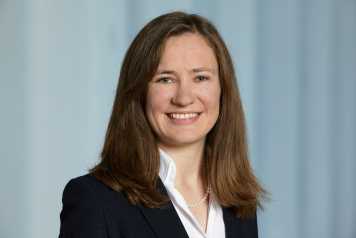
Prof. Dr. Katja Thoring is a Full Professor of Integrated Product Design at the Technical University of Munich (TUM School of Engineering and Design). She holds a doctorate in Design Research from Delft University of Technology and has previously served as Professor of Integrated Design at Anhalt University of Applied Sciences in Dessau from 2009–2022. Her research bridges product design, architectural space, and technology, focusing on how physical environments stimulate creativity and design processes across functional, emotional, and cognitive dimensions. Key areas include generative AI applications in design, innovative research methodologies, and creative workspace design. She developed methods like the 'Delphi Design Sprint' and contributed to frameworks such as the FOD (Future-Oriented Design) model. Thoring is a member of prominent design societies (DGTF, Design Society, DRS) and a founding member of the Academy of Design Innovation Management (ADIM). Notable awards include the 'Best Paper Award' at ADIM Conference (2017) and recognition as a top early-career researcher (2019). Her work integrates design education innovation, with studies on pedagogical spaces and cross-cultural design thinking. She has published extensively on design knowledge models, creative environments, and future-oriented design strategies.
Brad Campbell is an Associate Professor in the Department of Computer Science and Electrical and Computer Engineering at the University of Virginia, where he is a member of the Link Lab, a cross-disciplinary research group focused on cyber-physical systems. His research centers on designing and building scalable, effective, and unobtrusive embedded systems for the Internet of Things, with applications in smart buildings, smart cities, and personal health. His work spans hardware design, networking, and cloud infrastructure, with a strong emphasis on energy-harvesting systems, low-power wireless communication, and resilient embedded operating systems. He has led projects such as the Living Link Lab, a heavily instrumented smart building testbed, and has developed open-source platforms for self-powered sensing and IoT ecosystems. His recent publications reflect a strong trend toward privacy-preserving federated learning, contactless occupancy sensing using WiFi and light, decentralized edge computing, and sustainable IoT systems. These works are published in top venues including SenSys, BuildSys, MobiCom, and IPSN, indicating a high impact in the systems and networking community. NSF CAREER Award (2022) Best Paper Award at DFHS’19 Multiple graduate fellowships and teaching awards for his students UVA Engineering Endowed Graduate Fellowships Link Lab Seminar Award CPS Rising Star recognition Brad Campbell has advised numerous PhD and master’s students, many of whom have gone on to academic and industry roles. He has secured significant research funding, including from the NSF, and has contributed to curriculum development in cyber-physical systems. He is actively involved in teaching courses on computer networking, IoT, and operating systems, and has co-taught wireless IoT courses across multiple institutions. His lab focuses on real-world deployment of IoT systems, emphasizing scalability, fault tolerance, and long-term sustainability. He continues to push the boundaries of what embedded systems can achieve in everyday environments, from homes to cities.
Malgorzata Agnieszka Cyndecka is a Professor at the Faculty of Law, University of Bergen (UiB) , where she specializes in EU/EEA state aid law and data protection/GDPR. She is affiliated with SLATE (Centre for the Science of Learning & Technology) and serves as a member of the Norwegian Data Protection Board. Since 2019, she has been Associate Editor of the European State Aid Law Quarterly . She also holds an Associate Professor II position at the University of Oslo and contributes to interdisciplinary research on AI, privacy, and education. University: University of Bergen School: Faculty of Law Academic Rank: Professor Email: malgorzata.cyndecka@uib.no Affiliations: SLATE, Norwegian Data Protection Board, Council of Europe Expert Group on AI and Education Her research centers on EU/EEA state aid rules —particularly their application in tax, energy, and education sectors—and data protection law , with a focus on GDPR compliance in AI-driven educational technologies. She has led and contributed to major projects such as the Norwegian Data Protection Authority’s Sandbox for Responsible AI (AVT project), where she provided legal guidance on processing student data, and UiB’s DIGI courses, where she co-developed DIGI113 on Privacy and GDPR. Her work bridges legal theory with practical policy, influencing national and international frameworks on digital rights and public aid. The analysis of her recent publications reveals a strong focus on the evolution of state aid jurisprudence , especially the Market Economy Operator Principle (MEOP), burden of proof in aid cases, and sustainability in public support. Concurrently, her interdisciplinary work explores AI and privacy challenges in education , anonymization of unstructured data under GDPR, and ethical implications of algorithmic decision-making. Her contributions span legal doctrine, policy recommendations, and public commentary. Scientific Awards: European State Aid Law Quarterly PhD Award (2012–2016) for best doctoral dissertation in state aid law Advising and Grants: She supervises master’s students in EU/EEA law, data protection, and GDPR. She has been involved in externally funded projects including the Norwegian Data Protection Authority’s Sandbox for Responsible AI, the ENDO4P project (aimed at personalized endocrinology treatment via EU Horizon funding), and the Clean Up Project (Machine Learning for Anonymisation of Unstructured Personal Data) at the University of Oslo. She has also coordinated collaborations with Media City Bergen for law and technology education. Her teaching includes course leadership in JUS2302, JUS3502, JUS2303, JUS3503, and DIGI113. Labs and Teams: She is a key member of SLATE (Centre for the Science of Learning & Technology) at UiB and participates in multiple research groups including the Research Group for Information and Innovation Law. She contributes to interdisciplinary teams working on digital competence, AI ethics, and data governance in education and health. She is also active in the Academy for Young Researchers (AYF) and leads the EU and EEA Law Issues Committee in the Norwegian branch of the International Commission of Jurists (ICJ).
Katarzyna Chawarska is the Emily Fraser Beede Professor of Child Psychiatry at Yale School of Medicine, with primary affiliation in the Child Study Center and secondary appointments in Pediatrics and Statistics. She is a leading expert in autism spectrum disorders (ASD), directing the NIH Autism Center of Excellence, the Social and Affective Neuroscience of Autism Program, and the Yale Toddler Developmental Disabilities Clinic. Education: PhD in Psychology, Yale University (2000) Post-Doctoral Fellowship, Yale University School of Medicine (2000) MS in Psychology, Yale University MPhil in Psychology, Yale University MA, Jagiellonian University (1986) Her research focuses on identifying early diagnostic markers and novel treatment targets in ASD, particularly in infants at risk due to familial, genetic, or perinatal factors. Her work integrates clinical assessment, neuroimaging, eye-tracking, and longitudinal design to understand the neurodevelopmental trajectories of autism. Her recent publications explore disrupted functional connectivity, atypical visual attention, social anhedonia, and familial recurrence in autism. She employs advanced methodologies including fMRI, eye movement dynamics, and machine learning to identify biomarkers. Her research spans developmental neuroscience, clinical psychology, genetics, and pediatric psychiatry, with strong emphasis on early detection and intervention. Scientific Awards: No specific awards mentioned in the provided text. Dr. Chawarska is the Principal Investigator on active clinical trials, including studies on emotional development in infants at risk for ASD and regulation of visual attention and emotion in autism. She mentors research through her lab and collaborates extensively with experts such as Fred Volkmar, James McPartland, and Frederick Shic. She leads the Chawarska Lab, which is part of the Center for Brain & Mind Health and the Wu Tsai Institute at Yale.
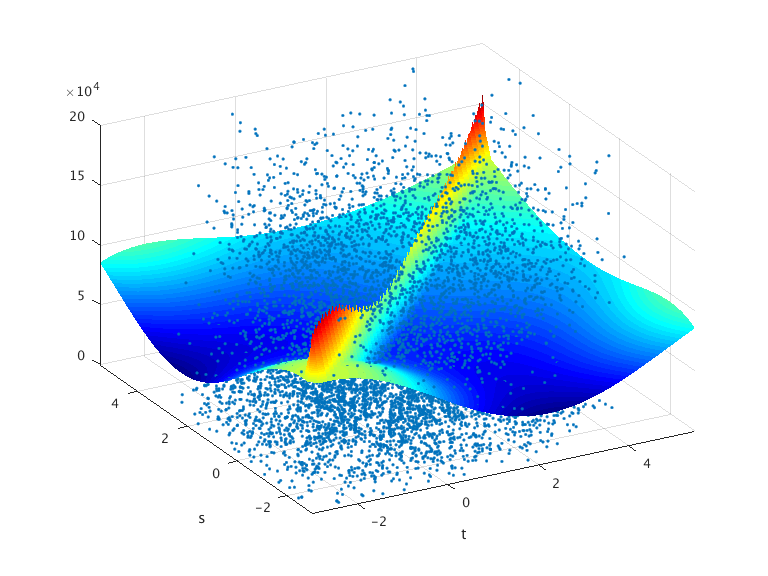
Hans-Georg Mueller is a Professor in the Department of Statistics at the University of California, Davis. His research spans multiple domains of modern statistical methodology, with groundbreaking contributions to functional data analysis, metric statistics, and nonparametric inference for random objects. Key research areas include Fréchet regression, distributional data analysis, network regression, and optimal transport Applications span longitudinal growth studies, brain development, aging and longevity, plant genomics Research Interests : He has pioneered methods for analyzing complex data structures such as functional data, manifold-valued data, and random objects. His work on the PACE approach for longitudinal data has become foundational in the field. Recent Publications demonstrate strong trends in Fréchet analysis, metric statistics, and distributional data modeling, with applications in both biomedical and environmental domains. Books and Edited Works : Author of the foundational monograph Nonparametric Regression Analysis for Longitudinal Data (1988), and co-editor of influential volumes including Change-point Problems (1994) and Mathematical Modeling in Experimental Nutrition (1998).
Jung Soo Lim is an Assistant Professor in the Department of Computer Science at California State University, Los Angeles, within the College of Engineering, Computer Science, and Technology. He earned his B.S. from Cal State LA and M.S. and Ph.D. from UCLA, returning to his alma mater as a part-time lecturer in 2014 before transitioning to a full-time assistant professor role in 2019. Education: B.S. (Cal State LA), M.S. (UCLA), Ph.D. (UCLA) His research focuses on Internet of Things (IoT) , Cyber-Physical Systems , Wireless Networking , Software Engineering , and Medical Computing . He has active projects in IoT applications for healthcare, urban safety, and wastewater monitoring, including the Center for Inclusive Computing (CIC) Transfer Pathways Project. Recent publications highlight interdisciplinary work bridging IoT, healthcare diagnostics, and smart city infrastructure. Notable topics include stroke detection algorithms , IoT communication protocols , and sensor-based environmental monitoring . Scientific Awards: Outstanding Senior at Cal State LA (1997) He teaches core computer science courses such as Computer Programming Fundamentals and Analysis of Algorithms, and actively mentors graduate students. His lab focuses on developing embedded systems and IoT solutions for real-world challenges.
Eva Cantoni is a Full Professor at the Research Center for Statistics within the Geneva School of Economics and Management , University of Geneva. Her expertise spans robust statistical methodology, model selection, and applications in ecology and medicine. Ph.D. from University of Geneva Accredited European Statistician (FENStatS) Research Interests : She specializes in Robust statistics for real-world data Variable/model selection in high-dimensional settings Nonparametric and semi-parametric regression Zero-inflated and overdispersed count models Longitudinal and spatiotemporal data analysis Her work addresses ecological challenges (fish stock assessment), medical applications (hospital congestion modeling), and housing market analysis. Recent Trends in Publications : Recent articles focus on Confidence intervals for robust mixed models Editorial leadership in robust statistics Applications to fisheries science and public health Flexible modeling frameworks for complex data Comparative studies of statistical measures Extremes modeling in healthcare Leadership & Grants : She has served as: Vice-Dean for Teaching (2020-2023) Director of Master's in Statistics (2012-2019) Director of Applied Statistics Certificate (2015-2019) President, Swiss Federal Statistics Committee (2024-2027) Specialty Chief Editor, Frontiers in Applied Mathematics (2024) Grants include projects on Robust solutions for modern data (2023-2025) Sustainable fisheries modeling (2018-2021) Advancements in state-space models (2014-2017) Software Contributions : Developed R packages for robust statistical methods: confintROB (bootstrap confidence intervals) RobSSM (robust state-space models) R2_LMM (explained variation measures)
Thierry Badard is an Associate Professor at the Department of Geomatics Sciences , Université Laval, where he also serves as Director of the Center for Research in Geospatial Data and Intelligence (CRDIG) . With over 28 years of experience in geospatial science, he leads research initiatives at the intersection of GeoAI , LiDAR processing , and smart city technologies . Director, CRDIG (2016-2022) Steering Committee Member, Big Data Research Centre (CRDM) Researcher, Institute for Intelligence and Data (IID) Research Expertise spans geospatial big data, GeoNLP, and IoT applications for digital twins. His work addresses flood risk modeling , 3D urban analytics , and environmental monitoring through AI-driven solutions. Recent publications focus on contrastive learning for LiDAR segmentation and geospatial ontologies for early warning systems. Grant Leadership includes collaborative projects on smart insurance analytics (2018-2025), Arctic bioaerosol research (2019-2025), and Quebec-Morocco digital twin partnerships (2022-2023). He has advised 15+ graduate students in geomatics and related fields.
Behzad Alaei serves as an Associate Professor in the Section for Study of Sedimentary Basins within the Department of Geosciences at the University of Oslo's Faculty of Mathematics and Natural Sciences. His office is located in room K38 of the Geology Building at Sem Sælands vei 1, 0371 Oslo, with a professional email contact at behzad.alaei@geo.uio.no. Dr. Alaei maintains an active research profile with publications spanning from 2005 to the present, demonstrating his ongoing contributions to geological sciences. Dr. Alaei's research spans multiple critical areas within structural geology and sedimentary basin analysis, with particular expertise in fault zone architecture, seismic interpretation techniques, and CO2 storage site assessment. His work bridges theoretical geological concepts with practical applications in petroleum geology and carbon sequestration. A significant portion of his research focuses on the Norwegian Barents Sea region, where he has conducted extensive studies on normal fault systems and their geometric characteristics. His recent work increasingly integrates machine learning and deep learning approaches with traditional geological analysis, reflecting the evolving nature of geoscience research methodology. The analysis of Dr. Alaei's publication record from 2018-2024 reveals a strong thematic continuity in fault characterization research, with progressive incorporation of advanced computational methods. Early publications focused primarily on traditional structural analysis of fault systems in sedimentary basins, while more recent work demonstrates increasing integration of machine learning techniques for fault detection and characterization. A notable trend is the application of these geological insights to practical challenges in carbon capture and storage, particularly regarding fault risk assessment for CO2 storage sites in the North Sea region. His collaborative work with Anita Torabi appears consistently throughout this period, suggesting a strong research partnership. Dr. Alaei maintains an active research program with multiple ongoing projects related to sedimentary basin analysis and fault characterization. His work appears to involve significant collaboration with both academic and industry partners, particularly in the context of CO2 storage research. While specific grant details aren't provided in the available information, his consistent publication record across multiple high-impact journals suggests successful funding of his research activities over the past two decades.
Barak Ariel is a Professor of Experimental Criminology at the Institute of Criminology, University of Cambridge. He holds a PhD in Criminology from Hebrew University of Jerusalem, an LLM (Hebrew University), LLB (Academic Centre of Law & Business), MA in Criminology (Hebrew University), and BA in Psychology (University of New York). Since 2008, he has been affiliated with the Jerry Lee Centre of Experimental Criminology and teaches on the MSt in Applied Criminology and Police Management. Academic Rank: Professor of Experimental Criminology Key Affiliations: University of Cambridge, Jerry Lee Centre of Experimental Criminology Education: PhD, LLM, MA, LLB, BA Dr. Ariel specializes in experimental criminology, evidence-based policing, and the role of technology in crime prevention. His research focuses on evaluating policing strategies through randomized controlled trials (RCTs), particularly in areas such as body-worn cameras, domestic abuse hotspots, and interventions to reduce violence against women. He has advised police departments and governments across the UK, USA, Latin America, and Europe. His recent publications highlight trends in global crime dynamics, the impact of police interventions on offender behavior, and the use of machine learning for crime forecasting. These works span subfields including hot spots policing, procedural justice, victim-offender overlaps, and network analysis of organized crime. Scientific Awards : Academy of Experimental Criminology Young Experimental Scholar Award European Society of Criminology Young Criminologist Award Fellow of the Division of Experimental Criminology As Chair of the Division of Experimental Criminology (2019–2021), Dr. Ariel has contributed to advancing methodological rigor in criminological research. He has conducted extensive evaluations of police-led interventions, including trials on body-worn cameras, victim communication strategies, and data-driven approaches to domestic homicide prevention. His work bridges academic research with practical policing reforms, emphasizing the importance of empirical evidence in criminal justice policy.
Suyash Gupta is a Tenure-Track Assistant Professor in the Department of Computer Science at the University of Oregon, where he leads the Distopia Laboratory and co-leads the Oregon Networking Research Group. His expertise lies in distributed systems, databases, blockchain technologies, fault tolerance, and federated learning. Education: Ph.D. in Computer Science, University of California, Davis (2022) M.S. in Computer Science, Purdue University (2017) M.S. (Research) in Computer Science, Indian Institute of Technology Madras Research Focus: Dr. Gupta’s research is centered on designing efficient distributed, decentralized, and blockchain systems that are resilient to arbitrary failures and can scale across wide-area networks. His work spans consensus protocols, Byzantine fault tolerance, secure transaction processing, and federated learning systems. He has contributed foundational work in permissioned blockchain architectures and fault-tolerant distributed databases. Scientific Contributions & Awards: Best Paper Award, EuroSys 2023 Distinguished Reviewer Award, SIGMOD 2025 Best Graduate Researcher Award, UC Davis Author of Fault-Tolerant Distributed Transactions on Blockchain , Morgan & Claypool Teaching & Mentorship: He currently teaches advanced courses like CS 607: Hot Topics in Systems and CS 451/551: Database Processing . He actively mentors a diverse group of PhD and MS students, including Nihal Balivada, Shistata Subedi, Neil Sharma, and others from institutions like UC Davis and BITS Pilani. Labs & Teams: Dr. Gupta leads the Distopia Laboratory at UO and co-leads the Oregon Networking Research Group , both focused on cutting-edge research in distributed systems and secure networked architectures.
Jason Ur is the Stephen Phillips Professor of Archaeology and Ethnology at Harvard University, specializing in early urbanism, landscape archaeology, and remote sensing. He directs the Erbil Plain Archaeological Survey (EPAS) in Iraqi Kurdistan and has conducted fieldwork in Syria, Turkey, and Iran. His work leverages declassified satellite imagery and geospatial technologies to study ancient settlement patterns, irrigation systems, and transportation networks. Research Focus: Early urban development in Mesopotamia, GIS-based landscape analysis, qanat systems, and postmortem segregation in colonial New England cemeteries. Field Projects: EPAS (2012–present), Tell Hamoukar Survey (1999–2001), and studies of colonial-era burying grounds since 2020. Methodology: Remote sensing (CORONA, HEXAGON, U2 imagery), UAV photogrammetry, 3D visualization, and intensive ground surveys. Key Findings: Discovery of undocumented urban centers, mapping of ancient canals and hollow ways, and analysis of rural Assyrian landscapes.
Prof. Dr. Olga Fink is a Tenure Track Assistant Professor at École Polytechnique Fédérale de Lausanne (EPFL) since March 1, 2022. She leads the Intelligent Maintenance and Operations Systems (IMOS) research group within the Department of Civil and Environmental Engineering under the School of Architecture, Civil and Environmental Engineering (ENAC). She also serves in PhD program committees for Civil and Environmental Engineering and Robotics, Control, and Intelligent Systems. PhD Students: Faghih Niresi Keivan, Garmaev Sergei, Sharma Vinay, Sun Han, Theiler Raffael Pascal, Von Krannichfeldt Leandro, Wei Amaury Pierre Jiezhi, Xu Chenghao, Zhang Zepeng, Zhao Mengjie Past PhD Student: Nejjar Ismail Her research focuses on applying machine learning to infrastructure condition monitoring and predictive maintenance of industrial systems. She teaches courses including Introduction to Machine Learning for Engineers , Data Science for Infrastructure Condition Monitoring , and Machine Learning for Predictive Maintenance Applications .
Xiaodong Yan is an Assistant Professor in the Department of Materials Science and Engineering and an affiliated faculty member in the Department of Electrical and Computer Engineering at the University of Arizona . His research bridges materials science, nanoelectronics, and quantum computing, with a focus on developing novel quantum materials and devices for next-generation computing systems. Education : BS in Physics (Peking University, China), MS in Electrical Engineering (University of Notre Dame), PhD in Electrical and Computer Engineering (University of Southern California). Postdoctoral Training : Materials Science and Engineering, Northwestern University (2021-2023). Dr. Yan’s research explores the synthesis and physics of emerging quantum materials, particularly 2D materials and van der Waals heterostructures , to create advanced devices for neuromorphic computing , quantum sensing , and low-power electronics . His work spans nanofabrication, device characterization, and algorithm integration. His recent publications in Nature and Nature Electronics highlight breakthroughs in Moiré synaptic transistors with room-temperature neuromorphic functionality and reconfigurable heterojunction transistors for machine learning hardware. These studies emphasize 2D material integration , reconfigurable electronics , and bio-mimicking systems . Scientific Awards : MHI Ph.D. Scholar, Ming Hsieh Department of ECE at USC. Dr. Yan leads the Yan Research Group , which focuses on material and device solutions for neuromorphic computing and quantum sensing . The group actively recruits graduate and undergraduate researchers.
Juan-Pablo Correa-Baena is an Associate Professor at the Georgia Institute of Technology , holding the Goizueta Early Career Faculty Chair in the School of Materials Science and Engineering. He leads the Materials for Solar Energy Harvesting and Conversion research initiative at the Institute for Materials (IMat) and Strategic Energy Institute, aiming to consolidate Georgia Tech's expertise in photovoltaics and interdisciplinary energy research. Education: PhD in Environmental Engineering, University of Connecticut (2014) MS in Environmental Engineering, University of Connecticut (2011) BS in Management and Engineering for Manufacturing, University of Connecticut (2008) His research focuses on the chemistry-structure-property relationships of low-cost semiconductors for optoelectronic applications. Key areas include halide perovskites , nanoscale control , and advanced deposition/characterization techniques . He develops atomic layer deposition and synchrotron-based imaging to address metastable material behavior. Recent publications highlight innovations in dimensional control , machine learning for thermal stability , and flexible photovoltaic devices . His work integrates materials synthesis , quantum phenomena , and industrial scalability . Scientific recognition: Highly Cited Researcher (Web of Science, 2019–2021) Nature Index Leading Early Career Researcher in Materials Science (2019) NSF, DoE, and industry-funded projects Students and team: He advises 14 graduate students and postdocs, including Sanggyun Kim, Diana LaFollette, and Leonardo Josué Lugo Salas, fostering interdisciplinary collaboration through workshops and symposia.