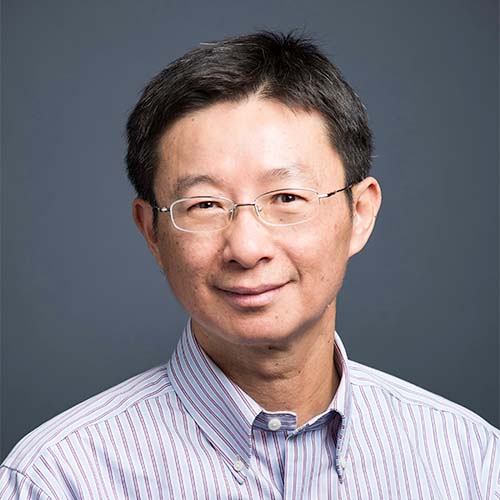
Weiwei Lin is an Associate Professor in the Department of Civil Engineering at Aalto University, specializing in structural engineering with a focus on bridge systems, composite materials, and structural health monitoring. His research explores fatigue behavior of steel structures, seismic performance of composite systems, and innovative repair techniques. He holds a PhD from Waseda University (2012), MSc from Southeast University (2009), and BEng from Southwest Jiaotong University (2006). Key research areas include: steel-concrete composites, bridge redundancy evaluation, replaceable energy dissipaters, and AI-driven infrastructure diagnostics. Lin leads projects like CCU Structure (EU Horizon Europe) and RCF Mobility initiatives, focusing on sustainable construction and material recyclability. He has published 120+ peer-reviewed articles and secured 6 major grants. Lin has received prestigious awards including the IABMAS Young Award (2014) and Outstanding Reviewing Award (2017). His lab collaborates globally, hosting researchers from institutions like Israel Institute of Technology and Tsinghua University. Current work emphasizes crowdsourcing-based bridge monitoring and physics-guided AI frameworks for infrastructure diagnostics.
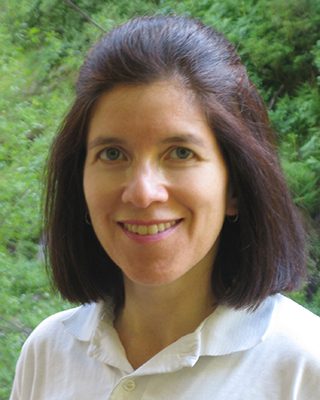
Vladimir Bulović is a Professor of Electrical Engineering and Computer Science at MIT, holding the Fariborz Maseeh Chair in Emerging Technology. He serves as Founding Director of MIT.nano, a 20,000 m² nanofabrication and prototyping facility. His research focuses on nanoscale materials, renewable energy, and optoelectronics, with emphasis on scalable solar technologies and printed electronics. Education: B.S.E. and Ph.D. in Electrical Engineering from Princeton University. Research Interests: Development of thin-film photovoltaics (perovskites, organic PVs), energy-efficient optoelectronics, and advanced manufacturing techniques. His work bridges nanotechnology with real-world applications, such as transparent solar cells and flexible electronics. Key innovations include vapor transport deposition (VTD) for perovskite solar cells and scalable printed electronics. Publications: Over 250 articles (45,000+ citations) focus on perovskite materials, semiconductor fabrication, and optoelectronic device optimization. Recent trends emphasize machine learning-driven materials design and stability enhancement strategies for photovoltaics. Awards: MacVicar Fellowship (2018), Top 1% Highly Cited Researcher (2018) Advising & Grants: Co-founded Ubiquitous Energy, Kateeva, and QD Vision. Led projects on grid-edge solar solutions and MIT-Eni Solar Frontiers Center. Served as Associate Dean for Innovation and Director of MIT’s Innovation Initiative (2013–2018). Labs/Teams: Directs the Organic and Nanostructured Electronics Lab and oversees MIT.nano’s interdisciplinary research programs.
Lei Lei is an Associate Professor at the University of Guelph, specializing in Computer Engineering. Her research focuses on Machine Learning/Deep Reinforcement Learning, Internet of Things (IoT)/Internet of Vehicles (IoV), Mobile Edge Computing, and Smart Grid Optimization. She explores cutting-edge applications in energy-efficient systems, autonomous vehicles, and intelligent transportation networks. Her work integrates advanced AI techniques with real-world challenges in communication and control systems. Key research areas include optimizing electric vehicle charging schedules using hierarchical deep reinforcement learning and enhancing vehicular networks through 6G communication protocols. She has pioneered methods for joint communication-control systems, securing federated learning models, and developing robust resource allocation strategies in IoT and edge computing environments. Lei Lei’s publications emphasize interdisciplinary solutions, bridging computer science, electrical engineering, and transportation systems. Her recent work addresses challenges in smart grid security, multitimescale control systems, and the application of AI tools like ChatGPT in connected vehicles. She is affiliated with the AI Affiliated Faculty at the University of Guelph, reflecting her contributions to artificial intelligence research.
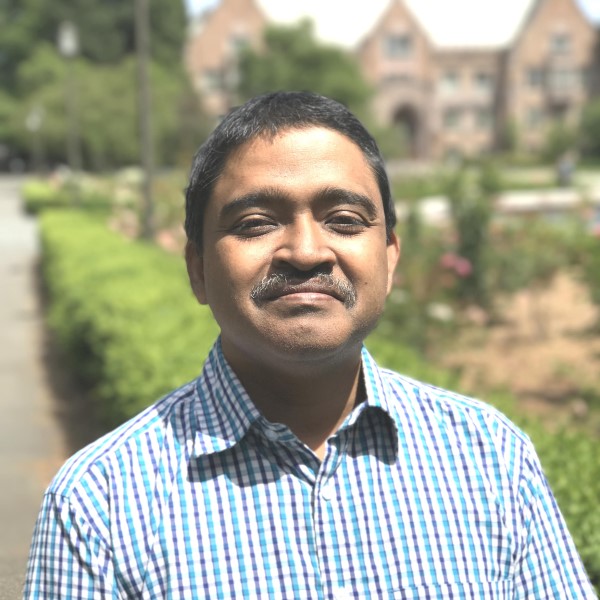
Arrvindh Shriraman is an Associate Professor and Program Director of Software Systems at Simon Fraser University's School of Computing Science in Surrey. His research focuses on energy-efficient software, multicore memory systems, and optimizing hardware/software interfaces for parallel programming. He holds a Ph.D. (2010) and M.S. (2006) in Computer Science from the University of Rochester, and a B.Eng. (2004) from the University of Madras. He teaches courses on parallel programming and energy-conscious software design. His research interests include synchronization mechanisms for domain-specific architectures, cache optimization, and FPGA-based acceleration. He has contributed to frameworks like Mu-grind for HLS-generated RTL instrumentation and TAPAS for parallel accelerator generation. Notable projects include RANGE-BLOCKS for synchronization in domain-specific systems and TapeFlow for gradient computation in neural networks. His work emphasizes real-time verification of autonomous systems and safety-critical trajectory planning for underwater vehicles. Shriraman collaborates closely with the Tangent Lab, exploring cutting-edge solutions in hardware-software co-design and embedded systems. His teaching and research bridge theoretical computer science with applied engineering challenges, addressing scalability, efficiency, and safety in modern computing systems.
Professor Bing Chu is an academic at the University of Southampton, actively contributing to research in control systems, robotics, and machine learning. They are a member of the Vision, Learning and Control Centre for Internet of Things and Pervasive Systems and the Centre for Robotics, focusing on interdisciplinary approaches that combine control theory with data-driven methodologies. Current research interests include: Iterative learning control Human-robot interaction Wind farm power optimization Robot behavior modeling Control system architectures Collaborative learning systems Recent publications highlight trends in data-driven control systems, human-robot interaction datasets, and optimization techniques for both continuous-time systems and wind energy applications. Professor Chu supervises multiple PhD students across robotics and electronic engineering, including Balint Gucsi, Haonan Shen, and Aleksander Wolski, while leading projects funded by Zhengzhou University and the Royal Society.
Jan Martin Nordbotten is a full-time Professor at the Department of Mathematics, University of Bergen (UiB), with adjunct positions at Princeton University and NORCE. His research focuses on applied mathematics, particularly in porous media, CO2 storage, fluid dynamics, and interdisciplinary applications in hydrology, biomedicine, and ecology. He completed his PhD at UiB in 2004 and became Norway's third youngest professor in 2007. His work emphasizes numerical methods, multiscale modeling, and experimental validation. Affiliations: UiB (full-time), Princeton (adjunct), NORCE (adjunct) Research Group: Center for Sustainable Subsurface Resources Research interests span mathematical modeling of subsurface processes, including flow in fractured media, geomechanics, and phase-field fracture. Notable contributions include analytical and numerical solutions for CO2 leakage, multiphase flow, and development of tools like DarSIA for image processing in porous media. Publications highlight advancements in mixed-dimensional models, finite element methods, and experimental validation of CO2 storage forecasts. His work bridges theoretical mathematics with practical applications in energy and environmental systems.
Yong-Bin Kang is a Senior Data Science Research Fellow at the ARC Centre of Excellence for Automated Decision Making and Society (ADM+S) at Swinburne University of Technology, affiliated with the School of Social Sciences, Media, Film and Education. He holds a PhD in AI from Monash University and leads numerous transdisciplinary research projects applying artificial intelligence to address complex societal challenges. Education: PhD in Faculty of IT, Monash University, Australia Dr. Kang's research focuses on Responsible AI and Society, with specific interests in developing Societal-AI platforms that integrate social data with ethical principles. His work spans healthcare, humanitech, education, financial planning, environmental health, and justice domains. He investigates how AI can enhance decision-making processes while promoting societal well-being, with particular attention to ethical implementation and human-centered approaches. His expertise encompasses AI, natural language processing, machine learning, and decision-making optimization. Analysis of Dr. Kang's recent publications reveals a strong trajectory toward socially responsible AI applications across diverse domains. His work consistently bridges technical AI capabilities with social implications, particularly focusing on ethical frameworks, community-centered design, and addressing societal inequalities through technology. The publications demonstrate increasing collaboration across disciplines including criminology, environmental science, mental health, and education. Dr. Kang is actively involved in significant research funding initiatives, with multiple ongoing projects that address critical societal challenges through AI. His supervision availability includes Doctorate (PhD) candidates, indicating his commitment to mentoring the next generation of researchers in AI and data science fields. Current Flagship Areas: Digital Capability Innovative Society Manufacturing Futures Sustainable Development Goals: Good Health and Well Being (SDG 3) Industry, Innovation and Infrastructure (SDG 9) Affordable and Clean Energy (SDG 7)
Roummel F. Marcia is a Professor and current Chair of the Department of Applied Mathematics at the University of California, Merced, within the School of Natural Sciences. He received his Ph.D. from UC San Diego under Professor Philip Gill and previously held postdoctoral positions at the San Diego Supercomputer Center and University of Wisconsin-Madison, as well as a research scientist position in electrical engineering at Duke University. His research spans multiple areas in optimization and its applications, with a focus on signal processing, data science, machine learning, linear algebra, and mathematical biology. Dr. Marcia's work has significant interdisciplinary impact, particularly in biomedical imaging, computational biology, and quantum computing applications. His research methodology often combines theoretical optimization approaches with practical applications in data-intensive fields. Dr. Marcia's recent publications demonstrate a strong trend toward integrating optimization theory with deep learning architectures, particularly in applications requiring sparse data handling, biomedical imaging, and quantum computing. His work shows increasing focus on developing novel optimization algorithms specifically designed for machine learning contexts, including quasi-Newton methods adapted for deep learning and specialized techniques for handling non-convex optimization problems. School of Natural Sciences Faculty Award for 'Developing or Improving Academic Programs and Tracks' (2021-22) Leadership roles in SIAM Activity Group on Applied Mathematics Education Recognition as a Math Alliance Mentor for supporting underrepresented students Dr. Marcia has successfully mentored numerous doctoral students to completion, with graduates moving to positions at Meta, Johns Hopkins University Applied Physics Laboratory, Lawrence Livermore National Laboratory, and other prestigious institutions. His research has been consistently funded by major agencies including NSF (with grants IIS 1741490, DMS 1840265, DMS 2229495, CCF 2343610), DARPA, and ARPA-E. As the current graduate chair of the Applied Math Graduate Program, he plays a key role in shaping the next generation of mathematical scientists. His work with the SMaRT (Scientific Mathematics Research and Training) team demonstrates his commitment to collaborative, interdisciplinary research.
Alexander Pan is a third-year Computer Science PhD student at the University of California, Berkeley, advised by Jacob Steinhardt . His research focuses on developing safe machine learning systems, particularly sequential decision-making agents. He holds a dual bachelor's degree in Mathematics and Computer Science from Caltech, where he worked with Anima Anandkumar and Yuanyuan Shi . His recent work explores AI safety through topics like unlearning , LLM transparency , and reward hacking , with publications at premier conferences including ICML and ICLR. He has received recognition such as the FLI PhD fellowship and hackathon awards for projects like SimSquare and homES ReInvented . Scientific Awards: FLI PhD fellowship Best Social Network Hack - Stanford Hackathon 2021 Best Use of ESRI Technology - Caltech Hackathon 2020 ICML 2023 Oral Presentation
Professor Chun-Hung Chen is a distinguished academic at George Mason University ’s Volgenau School of Engineering , where he holds the rank of Professor in the Department of Systems Engineering and Operations Research . He has also held professorships at National Taiwan University and visiting roles at institutions like University of Pennsylvania and Microsoft Research Asia . Education: PhD in Decision and Control, Harvard University (1994) MS in Electrical Engineering, National Taiwan University (1989) BS in Control Engineering, National Chiao-Tung University (1987) Research Interests focus on Stochastic Simulation Optimization , particularly his pioneering Optimal Computing Budget Allocation (OCBA) methodology. OCBA enhances simulation efficiency by dynamically allocating computational resources to critical design alternatives, reducing computation time by orders of magnitude. Applications span air transportation , healthcare , power grids , and semiconductor manufacturing . His 15 most recent articles (2022–2025) explore intersections of simulation optimization , artificial intelligence , reinforcement learning , and personalized medicine , emphasizing computational efficiency and stochastic systems in domains like microgrids and organ transplant logistics . Scientific Awards include: IEEE Fellow (2015) K.D. Tocher Medal (2017) Best Paper Awards at IEEE CASE (2019), LOGMS (2019), and IEEE ICC (2021) Harvard’s Eliahu I. Jury Award (1994) Advisory roles include editorial leadership in IIE Transactions , Journal of Simulation , and IEEE Transactions series. He has coordinated graduate programs at George Mason (2006–11, 2015–19) and led conferences like INFORMS International Meeting (2025) and Harvard Control Workshop (2024). His work is funded by organizations such as the National Science Foundation , National Institutes of Health , and Department of Energy , with applications in healthcare logistics and microgrid control .
Cecilia R. Aragon is a Professor in the Department of Human Centered Design & Engineering at the University of Washington, where she also serves as an Adjunct Professor in Computer Science & Engineering, Electrical and Computer Engineering, and the Information School. She is additionally a Senior Data Science Fellow at the eScience Institute. Aragon directs the Human-Centered Data Science Lab and has made significant contributions at the intersection of human-computer interaction and data science. Her research interests focus on human-centered data science, human-centered artificial intelligence, human-centered machine learning, human-computer interaction (HCI), computer-supported cooperative work (CSCW), visual analytics, aviation and astronautics sociotechnical systems, and emotion in informal text communication. Aragon's work bridges technical and social aspects of data science, particularly examining how humans interact with and gain insight from large datasets through both quantitative and qualitative methods. Aragon's recent publications demonstrate a strong focus on understanding online communities, sentiment analysis, distributed mentoring systems, and the ethical implications of AI. Her work spans multiple disciplines including social computing, data visualization, and astrophysics data analysis, showing her interdisciplinary approach to human-centered data science. Presidential Early Career Award for Scientists and Engineers (PECASE) 2008 Fulbright Fellowship 2017-18 HCDE Faculty Innovator in Research Award, University of Washington, 2015 Distinguished Alumni Award, Computer Science, University of California, Berkeley, 2013 Top 25 Women of the Year, Hispanic Business Magazine, 2009 Aragon has secured over $28 million in research funding from organizations including the National Science Foundation, National Institute of Standards and Technology, Department of Energy, Gordon and Betty Moore Foundation, Alfred P. Sloan Foundation, Washington Research Foundation, and industry partners like Microsoft and Intel. Her educational background includes a Ph.D. in Computer Science from UC Berkeley (2004), an M.S. in Computer Science from UC Berkeley, and a B.S. with Honors in Mathematics from Caltech. She leads the Human-Centered Data Science Lab and is affiliated with the eScience Institute, the Nearby Supernova Factory, and various research groups focused on data-intensive scientific collaborations. Her work on collaborative visual analytics systems like Sunfall has had significant impact in both academic and applied settings.
Xiaoqing Pan is a Professor and Henry Samueli Endowed Chair in Engineering at the University of California, Irvine, with dual appointments in the Department of Materials Science and Engineering and the Department of Physics and Astronomy. He serves as Director of the Irvine Materials Research Institute (IMRI) and the Center for Complex and Active Materials (NSF MRSEC). A renowned electron microscopy expert, Pan has developed advanced transmission electron microscopy (TEM) techniques for atomic-scale material characterization. Ph.D., Universität des Saarlandes, Germany (1991) His research focuses on atomic-scale structure-property relationships in oxide heterostructures, ferroelectrics, nanocatalysts, and 2D functional materials. Pan leads development of novel 4D-STEM and momentum-resolved vibrational electron microscopy methods to study single-atom catalysts and complex oxides. With over 400 high-impact publications in Nature , Science , and Nature Materials , his work has been recognized by major fellowships and awards from the American Ceramic Society, American Physical Society, and National Science Foundation. Pan's recent work includes: Atomic-scale analysis of grain boundary phonon anisotropy Advances in FeSe/SrTiO 3 interface electron-phonon coupling Plastic waste upcycling through carbon intermediate interception Control of metal-support interactions in photocatalysts Strain engineering in high-entropy oxide films His laboratory at UCI represents the forefront of materials characterization technology development.
Kishalay Mitra is a Professor at the Indian Institute of Technology Hyderabad , with affiliations to the Department of Chemical Engineering , Department of Climate Change , and Department of Artificial Intelligence . He also holds visiting professorships at Washington University in St. Louis and University of Washington, Seattle . His work in the Global Optimization & Knowledge Unearthing Laboratory (GOKUL) spans interdisciplinary optimization, machine learning, and their applications in industrial-scale engineering problems. Education : Ph.D. from IIT Bombay. Research Interests : Mitra's research focuses on optimization under uncertainty , surrogate modeling , multi-objective optimization , and integrating machine learning with physics-based models . His work addresses real-world challenges in wind energy , bioenergy supply chains , chemical process control , nanoscience , and environmental modeling (e.g., PM10 spatiotemporal analysis, forest fire prediction, and carbon capture). Article Trends : His recent publications emphasize wind energy systems (layout optimization, yaw control, forecasting), materials science (precipitate growth prediction, polymerization), and industrial processes (crystallization, grinding circuits). Techniques include neural operators , Bayesian optimization , generative adversarial networks (GANs) , and explainable AI .
Holger Wittges is the Managing Director of the SAP University Competence Center (UCC) at the Technische Universität München (TUM) . His work focuses on Digital Transformation , Next Generation ERP , and Hybrid Cloud infrastructure. He is affiliated with the KrcmarLab and collaborates with IBM via the OpenPOWER@TUM initiative. Educational Background: 2004: Dr. rer. oec. (Promotion), Universität Hohenheim 1996: Diplom Wirtschaftsinformatiker, Universität Bamberg Research Interests include Digital Transformation, Cloud Computing, Enterprise Resource Planning (ERP), XaaS (Everything as a Service), and Service-Oriented Architecture (SOA). His work bridges academic innovation with industry needs through SAP UCC TUM, which provides 40+ educational service bundles like SAP HANA and S/4HANA for teaching and research. Recent Publications highlight advancements in machine learning for ERP support ticket systems, energy efficiency in SAP S/4HANA, and educational frameworks for cloud-based enterprise software. Articles emphasize collaboration with institutions across Europe and contributions to digital ecosystems like the SAP University Alliances. Key Projects include the OpenPOWER@TUM initiative with IBM, focusing on accessible AI/ML infrastructure for academia, and the SAP UCC TUM, which drives Education as a Service (EaaS) strategies for digital business ecosystems.
Farzan Banihashemi serves as a Research Fellow at the Chair of Energy Efficient and Sustainable Design and Building at the Technical University of Munich (TUM), maintaining this affiliation since 2019 while concurrently working as a Data Scientist at Climateflux GmbH since 2023. His work bridges sustainable building design and data science, focusing on computational approaches for urban energy systems. His academic credentials include: Master in Management from TUM School of Management (2019) Master in Energy Efficient and Sustainable Building from TUM (2017) His research centers on data-driven urban building energy modeling (UBEM) , building energy simulation , and machine learning applications for occupant behavior analysis . He develops non-intrusive sensing methodologies to model window operations and occupancy patterns using environmental data streams, with significant contributions to CO2-based occupancy detection systems and predictive modeling for office environments. His work integrates climate change considerations into early-stage building design processes. Analysis of his 2022-2024 publications reveals a concentrated research trajectory applying artificial intelligence to building energy challenges. Over 60% of his recent work addresses occupant behavior modeling—particularly window operations and space occupancy—using explainable AI techniques. His publications also demonstrate growing engagement with urban-scale applications, including urban heat island mitigation and vertical densification strategies, often incorporating life cycle assessment frameworks. No scientific awards were documented in the source materials. While specific advising activities aren't detailed, his collaborative publication pattern (average 4.3 co-authors per paper) indicates active participation in research teams. Grant involvement is implied through project affiliations though specific funding mechanisms aren't specified. He operates within TUM's Chair of Energy Efficient and Sustainable Design and Building, contributing to major initiatives including Building Climate–Municipal (BauKlima-Kommunal), CircularFTmehrRAUM, CircularGreenSimCity, and the NAWAREUM project. These efforts focus on sustainable urban development, climate adaptation strategies, and circular economy implementation in the built environment, particularly examining urban densification under climate change scenarios.