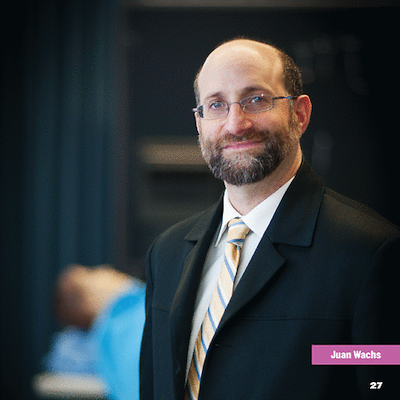
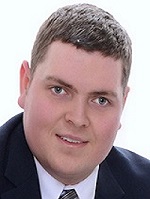
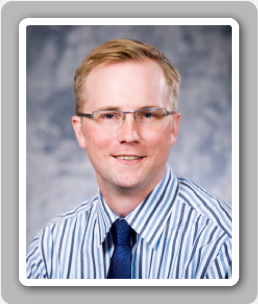
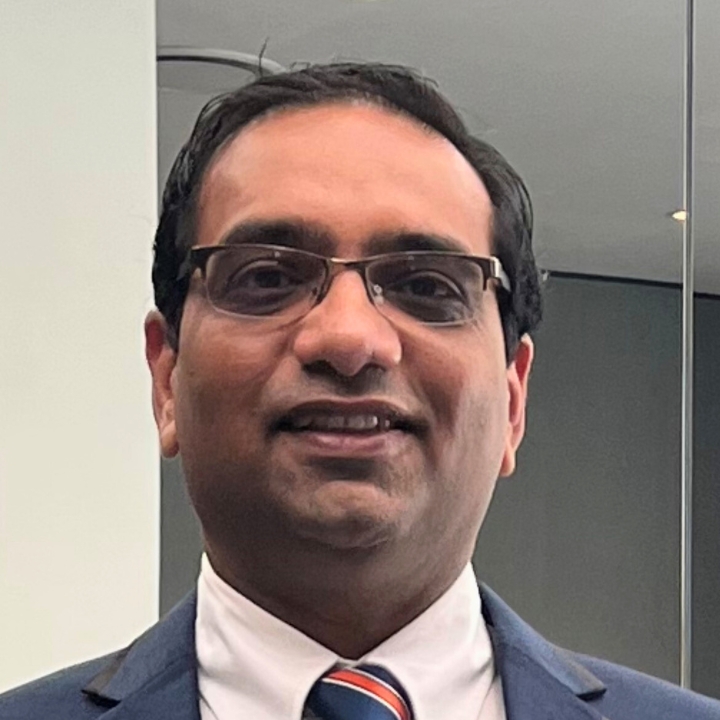
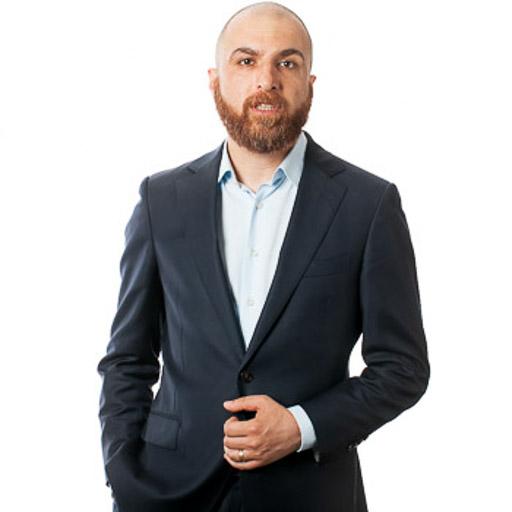
Juan Wachs is the James H. and Barbara H. Greene Professor at the Edwardson School of Industrial Engineering, Purdue University. He holds a courtesy appointment in Biomedical Engineering and is an Adjunct Professor of Surgery at the IU School of Medicine. His research focuses on the intersection of robotics, human-AI interaction, and healthcare systems, with a particular emphasis on surgical robotics, assistive technologies, and telemedicine. Education: PhD in Industrial Engineering (Intelligent Systems), Ben-Gurion University of the Negev MSc in Industrial Engineering (Information Systems), Ben-Gurion University of the Negev BEdTech in Electrical Education, ORT Academic College in Jerusalem Research interests include surgical telementoring via augmented reality, gesture-based interfaces for sterile environments, and semi-autonomous robotic systems for healthcare. His ISAT Lab develops solutions like the STAR telementoring system and robotic assistants like Gesturenurse and FIST-D for explosive ordnance disposal. Recent work emphasizes AI-driven medical decision support (Trauma THOMPSON), burn wound characterization, and robotic ultrasound automation. Key contributions include over 100 publications in robotics, medical AI, and human factors. Scientific Awards: James H. and Barbara H. Greene Professorship Purdue University Faculty Scholar Advising & Labs: Guides over 10 PhD/Master’s students in robotics and healthcare tech ISAT Lab fosters interdisciplinary projects in surgical robotics, human-robot interaction, and accessibility
Mehmet Eren Ahsen is an Assistant Professor at the University of Illinois at Urbana-Champaign, holding dual appointments in Business Administration and Biomedical and Translational Sciences . He is also the Deloitte Scholar in Accountancy and an affiliate at the Carl R. Woese Institute for Genomic Biology. His research bridges artificial intelligence, healthcare analytics, and biomedical informatics, focusing on applications in medical decision-making, disease diagnosis, and drug development. Key research interests include: AI-driven healthcare workflows, particularly in mammography screening and radiology Machine learning for biomarker discovery and genomic analysis Economics of AI adoption in clinical settings Unsupervised ensemble learning for biomedical problems His work has been recognized by the CHITA Young Researcher Award (2024) . Notable collaborations involve interdisciplinary teams addressing challenges in cancer genomics, supply chain resilience, and pandemic response. Recent studies highlight: Economic impact of AI-human task sharing in mammography Optimizing screening mammography recall strategies Analysis of social media's role in pandemic information dissemination Development of ensemble models for disease prediction Dr. Ahsen's research also explores: Extracellular vesicle RNA signatures for early cancer detection Correlated drug action models for combination therapies Algorithmic fairness in healthcare AI systems His lab integrates computational methods with clinical and genomic data to advance precision medicine and healthcare efficiency.
Kaize Ding is an Assistant Professor in Statistics and Data Science at Northwestern University, leading the REAL Lab and affiliated with the IDEAL Institute. He holds a Ph.D. in Computer Science from Arizona State University (2023) under Prof. Huan Liu, with prior degrees from Beijing University of Posts and Telecommunications. His research focuses on reliable AI systems for autonomous decision-making, knowledge-guided algorithms using GNNs/LLMs, and applications in healthcare, environmental science, and cybersecurity. Collaborations include Google Brain, Microsoft Research, and Amazon Alexa AI. Education: Ph.D. in Computer Science, Arizona State University (2023) M.S. and B.S., Beijing University of Posts and Telecommunications Research Interests: Developing robust AI for decision-making under uncertainty Graph-based machine learning for anomaly detection and network analysis Large language models (LLMs) integrated with domain-specific knowledge Cross-domain applications in healthcare diagnostics, environmental monitoring, and cybersecurity Recent Activities: Received Amazon Research Award and Google Research Grant NeurIPS 2025 Area Chair and ARR Area Chair Postdoc opening in AI4Health for swallowing disorder research Recent publications at AAAI, NeurIPS, EMNLP, and KDD Lab & Team: The REAL Lab focuses on advancing AI through interdisciplinary projects. Current students include Ruiyao Xu (PhD), Qingcheng Zeng (co-advised), and over 10 master's/undergraduate researchers. Alumni have moved to top PhD programs at UVa, UIC, and JHU.
Wei Ding is a Professor in the Department of Computer Science at the University of Massachusetts Boston (UMass Boston). She earned her Ph.D. in Computer Science from the University of Houston in 2008. From 2019 to 2023, she served as a Program Director at the National Science Foundation's Division of Information and Intelligent Systems (IIS), overseeing programs in Information Integration, Smart Health, Deep Learning Foundations, and Scalable Systems. Her research integrates knowledge discovery, data mining, and machine learning with applications spanning health sciences, astronomy, geosciences, and environmental sciences. She employs advanced techniques like spatio-temporal modeling, deep neural networks, and semantic analysis to address complex real-world problems such as disease subtyping, physical activity prediction, and environmental forecasting. Her work emphasizes interdisciplinary collaboration and societal impact. Analysis of her recent publications reveals a focus on AI-driven healthcare solutions (e.g., neuroimaging biomarkers, disorder diagnosis), fundamental ML advancements (e.g., generalization, GAN stability), and cross-domain applications (e.g., climate forecasting, animal behavior analysis). Recurring themes include low-data learning, interpretability, and scalable algorithms. Awards & Honors: IEEE Fellow (2023) NSF Director's Award (2022) WISAY Distinguished Woman in Science Award, Yale University (2019) AI for Earth Award (2018) Best Paper Awards (ICTAI 2011, ICCI 2010) Advising & Grants: She mentors PhD and Master’s students in the Knowledge Discovery Lab (KDLab), with alumni at institutions like Facebook, Google, and McKinsey. Her research is funded by NSF, NIH, NASA, and DOE, including: NIH R01: Predicting youth physical activity (2016) NSF EAGER: Machine learning for cancer subtyping (2017) NIH R01: Accelerometer/gyroscope data for activity estimation (2022) Leadership: She directs the KDLab and co-founded the Women in Sciences Club (WINS). She serves as Associate Editor for ACM TKDD, TIST, and KAIS journals.
Lynn Kistler is a Professor in the Department of Physics & Astronomy at the University of New Hampshire (UNH), part of the College of Engineering and Physical Sciences. Her research focuses on plasma physics, space weather, and magnetospheric dynamics, particularly investigating the interactions between the solar wind and Earth's magnetosphere-ionosphere system. She holds a Ph.D. in Physics from the University of Maryland, along with a B.S. from Harvey Mudd College. Dr. Kistler's work emphasizes understanding plasma processes such as ion outflow from the ionosphere, magnetic reconnection, and storm-time magnetospheric evolution. She has led studies using data from missions like the Van Allen Probes, Solar Orbiter, and Cluster, contributing to advancements in instrumentation (e.g., the SWA suite) and computational modeling. Her research bridges observational analysis, theoretical frameworks, and machine learning to address challenges in space weather prediction and plasma dynamics. Key areas of her research include the role of ionospheric ions (O⁺, H⁺) in plasma sheet dynamics, the effects of geomagnetic storms on ring current formation, and the behavior of heavy ions in near-Earth space. She has authored or co-authored over 260 publications, spanning journals like Nature Communications , Geophysical Research Letters , and Journal of Geophysical Research . Dr. Kistler has secured grants and collaborations through initiatives like the NASA Interstellar Mapping and Acceleration Probe (IMAP) and has served as a co-investigator on multiple missions. Her work emphasizes interdisciplinary approaches, combining spacecraft observations with ground-based data and numerical simulations to unravel the complexities of Earth's space environment.
Dr. Michael Gallaugher is an Assistant Professor of Statistical Science at Baylor University. He holds a Ph.D., M.S., and B.S. in Statistics from McMaster University. His research focuses on clustering and classification methodologies, particularly in matrix/tensor variate data, mixed-type data, clickstream analysis, and outlier detection. He has been recognized with prestigious awards including the Vanier Canada Graduate Scholarship and the Banting Postdoctoral Fellowship. Education: Ph.D., Statistics, McMaster University (2020) M.S., Statistics, McMaster University (2017) B.S., Statistics, McMaster University (2015) Research Interests: Dr. Gallaugher's work emphasizes advanced clustering techniques for complex data structures, including high-dimensional datasets, clickstream behavior analysis, and skewed distribution modeling. His contributions span statistical methodology development and applications in fields like bioinformatics and sports science. His recent work explores hidden Markov models for time series and robust co-clustering algorithms. Publications Trends: His publications reflect a strong focus on matrix-variate distributions, skewed data modeling, and algorithmic innovation in clustering. Recent work (2022-2025) highlights advancements in contaminated normal mixtures, co-clustering for high-dimensional data, and spatial regression models. Awards: Vanier Canada Graduate Scholarship Banting Postdoctoral Fellowship Advising & Grants: While no advisees are listed, his research has been supported by grants from the Natural Sciences and Engineering Research Council of Canada. He contributes to statistical consulting services at Baylor and collaborates internationally on methodological projects. Labs & Teams: He is affiliated with Baylor's Department of Statistical Science and collaborates with research groups focused on machine learning and statistical computing.
Kyle B. Reed serves as an Associate Professor in the Department of Mechanical Engineering at the University of South Florida's College of Engineering. His academic career at USF has progressed from Assistant Professor (2009-2016) to his current position as Associate Professor (2016-present), following postdoctoral research at Johns Hopkins University. He teaches specialized courses including Haptics (EML 4593/6594), Mechanical Controls, and Advanced Engineering Mathematics. Dr. Reed earned his Ph.D. (2007) and M.S. (2004) in Mechanical Engineering from Northwestern University, and his B.S. in Mechanical Engineering from the University of Tennessee-Knoxville (2001). Prior to his faculty position, he completed postdoctoral research at Johns Hopkins University's Laboratory for Computational Sensing and Robotics (2007-2009) and worked as a researcher at Los Alamos National Laboratory (1998-2001). His research focuses on rehabilitation engineering, haptics, human-robot interaction, and medical robotics, with applications in medical devices and rehabilitation technologies. The REED Lab (Rehabilitation Engineering and Electromechanical Design Lab), which he directs, develops innovative solutions for human motion analysis and assistive technologies. His work bridges fundamental engineering principles with clinical applications, particularly in stroke rehabilitation and assistive device development. Analysis of his publication record shows consistent contributions to haptics research, human-robot interaction, and rehabilitation engineering. His work spans theoretical investigations of human motor control to practical applications in medical devices, with publications appearing in venues like IEEE Transactions on Haptics, EMBC, and Haptics Symposium. Recent work emphasizes wearable haptic devices, rehabilitation robotics, and human factors in medical technology. Developed the Gait Enhancing Mobile Shoe (GEMS) prototype during postdoctoral work Created minimally invasive steerable needle system for biopsies at Johns Hopkins Established REED Lab focusing on rehabilitation engineering and haptic technologies Developed innovative haptic devices for communication, rehabilitation, and education Dr. Reed actively mentors students through the REED Lab, supervising both graduate and undergraduate researchers. His teaching philosophy emphasizes building intuition while providing frameworks for logical problem-solving. He incorporates substantial project components into his courses, with students regularly developing haptic devices and robotics applications that sometimes lead to publications. The lab maintains strong outreach connections, working with K-12 students to promote engineering education. The REED Lab, located in the Interdisciplinary Research Building Room 114 on USF's Tampa campus, serves as the hub for his research activities. Current projects include wearable haptic devices for communication, diagnostic tools for Parkinson's disease, and rehabilitation technologies for gait analysis. The lab maintains strong connections with both clinical partners and industry, facilitating translational research from concept to application.
Feng Chen is an Associate Professor in the Department of Computer Science at The University of Texas at Dallas (UT Dallas), part of the Erik Jonsson School of Engineering & Computer Science. He directs the AI Safety Laboratory and holds tenure. His research focuses on AI safety, ethical machine learning, uncertainty quantification, and fair algorithms. He earned a Ph.D. from Virginia Tech (2012), M.S. from Beijing University of Aeronautics & Astronautics (2004), and B.S. from Hunan University (2001). His research spans AI safety frameworks, resilient AI systems, fairness in healthcare and finance, cybersecurity, and environmental AI applications. Key contributions include uncertainty-aware deep learning, causal representation learning, and adversarial vulnerability analysis. He has authored over 150 peer-reviewed publications, including top venues like NeurIPS, ICML, KDD, and ICDM. Grants: $4.2M+ in funding from NSF, Army Research Office, IARPA, and industry partners. Teaching: Courses in data mining, anomaly detection, and artificial intelligence since 2014. Notable achievements include an NSF CAREER Award (2018) and leadership in projects like EMBERS (social media event prediction). His work bridges theory and practice, addressing societal challenges through ethical AI principles. Labs/Teams: AI Safety Laboratory (UT Dallas), collaborative projects with Virginia Tech, Carnegie Mellon, and industry partners on software vulnerability analysis and causal AI. Awards: Multiple best paper nominations, including 2nd Place in NAE Security Category (2009) and UT Dallas Outstanding Research (2021-2022).
Amit Morey is an Associate Professor in the Department of Poultry Science at Auburn University's College of Agriculture. His research focuses on food safety, poultry meat quality, and advanced sensing technologies. He leads projects involving biosensor development, microbial pathogen detection, and spoilage prediction using machine learning and spectral imaging. His work bridges laboratory innovations with industry applications, addressing challenges in poultry processing, packaging, and supply chain management. Education details are not explicitly listed, but his extensive publications suggest advanced training in food science, microbiology, and engineering. Research interests include antimicrobial biopolymer films, texture analysis of catfish and chicken fillets, and the application of functional ice in seafood preservation. He has pioneered methods for rapid Salmonella detection using microfluidics and fiber optics-based SERS sensors. Notable contributions include developing predictive models for spoilage using near-infrared spectroscopy and exploring cyclic temperature abuse impacts on poultry safety. His interdisciplinary approach integrates artificial intelligence with traditional food science techniques to enhance food safety and reduce waste. While no specific grants or awards are listed, his active publication record (over 100 papers from 2005–2025) indicates sustained research funding. He collaborates on projects addressing global food safety inequities, such as sensor-enabled decision support systems (SENS-D) for vulnerable communities. Lab activities include the Auburn Poultry Science Lab, focusing on meat quality assessment, microbial interventions, and smart packaging solutions. His work has direct industry impact, with applications in poultry processing plants and retail cold chain management.
Ibrahim RADWAN is an Associate Professor in Machine Learning/AI and Robotics at the University of Canberra. His research focuses on advancing AI techniques in areas such as human pose estimation, affective computing, and healthcare technology. He leads projects addressing challenges in robotics, autonomous systems, and human behavior analysis. RADWAN’s work bridges theory and application, contributing to fields like sports science, medical diagnostics, and security through innovative machine learning approaches. Research Projects: Assistive Technologies for Young People Safety on Two-Wheelers AI-Based Methods for Driver Sentiment and Mood Prediction Robotics Applications in Organic Waste Management Research Interests: RADWAN’s expertise spans human pose reconstruction , nonverbal behavior analysis , and EEG-based healthcare diagnostics . He pioneers methods for real-world applications such as: 6G Extended Reality systems using wearable sensors Multimodal deception detection via motion analysis Affective computing for mood and emotion inference Publications: His recent work emphasizes trends in spatiotemporal data analysis, few-shot learning, and synthetic data applications in healthcare and robotics. Key contributions include novel architectures like CrossFormer for 3D pose estimation and Resanet for dense prediction tasks. Advising & Grants: RADWAN supervises PhD students and has secured grants for projects integrating AI with robotics and medical technology. His team collaborates on interdisciplinary challenges, including railway safety and surgical instrument tracking. Labs/Teams: Part of the AI and Robotics research group at the University of Canberra, contributing to cutting-edge solutions in autonomous systems and human-centered AI.
Dr. Ali Nazemi is an Associate Professor in the Department of Building, Civil, and Environmental Engineering at Concordia University, where he joined in 2015 as a Strategic Hire in Water Resources. He holds adjunct appointments at the University of Saskatchewan's School of Environment and Sustainability and is an Associate Member of the Global Institute for Water Security. His foundational education includes a PhD from the University of Birmingham (UK), an MSc from Ferdowsi University of Mashhad (Iran), and a BSc from KNT University of Technology (Iran). Dr. Nazemi's research advances methodologies for water security challenges under climate change, focusing on: Hydrological modeling and algorithm development Climate change vulnerability assessments Coupled human-water systems Hydroclimatic data diagnostics His recent publications predominantly explore climate model integration, uncertainty quantification in water systems, and hybrid modeling approaches, with consistent themes of climate adaptation and risk management across Canadian and international contexts. He has been recognized with several awards, including: Dorothy Hodgkin Postgraduate Award (UK government, 2005–2009) Best Presentation Award at IEEE World Congress on Computational Intelligence (2006) Post Graduate Teaching Award (University of Birmingham, 2004–2007) Dr. Nazemi actively supervises graduate students through his Water Security and Climate Change (WSCC) lab, with projects on climate downscaling, vulnerability assessment tools, and coupled human-water systems. He leads research collaborations with the Saskatchewan Water Security Agency, NSERC's Changing Cold Region Network, and the Global Water and Energy Cycle Experiment.
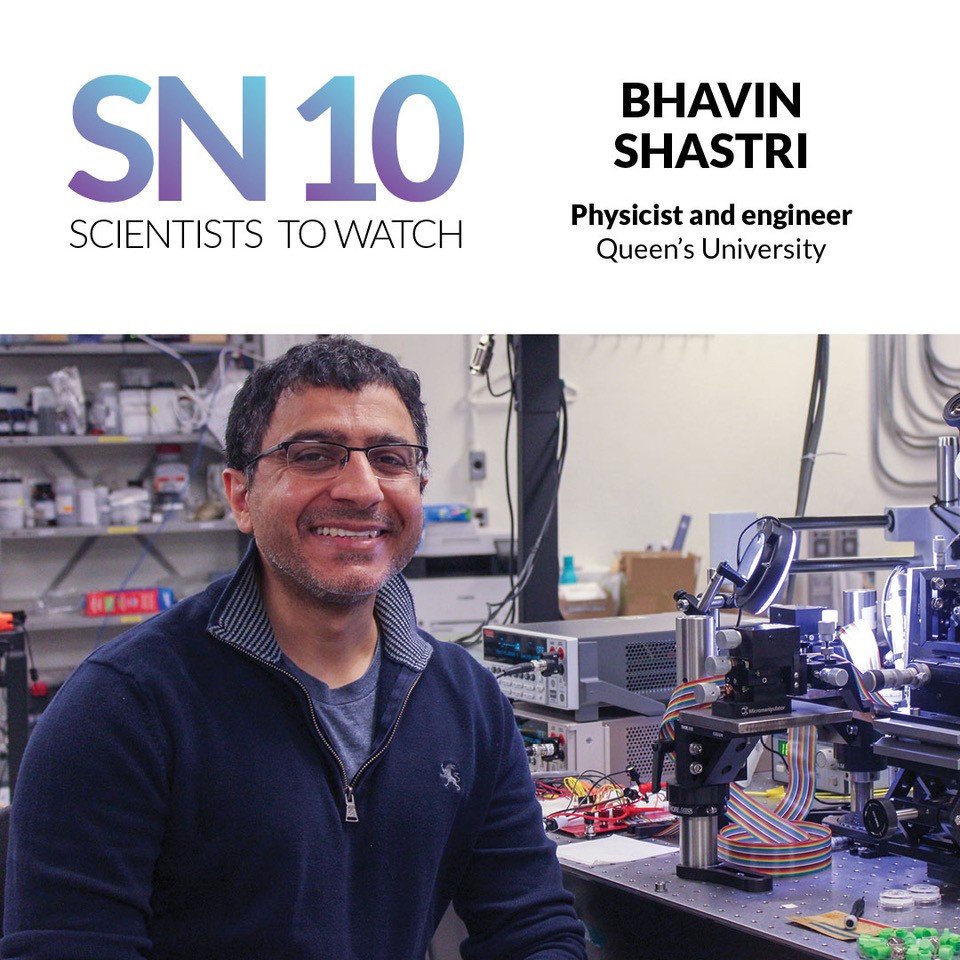
Bhavin Shastri is Canada Research Chair in Neuromorphic Photonic Computing and Assistant Professor of Engineering Physics at Queen's University. He directs research developing light-based computing systems that mimic neural processing for AI applications. His lab designs photonic integrated circuits that implement neural network architectures on chip-scale platforms. Research focuses on overcoming limitations of conventional computing through nanophotonic physics and novel materials. Publications demonstrate advances in photonic tensor cores, quantum photonic neural networks, and microwave photonic processors. Recent work achieves orders-of-magnitude improvements in processing speed and energy efficiency over electronic systems. Awards include: Alfred P. Sloan Research Fellowship (2025) Royal Society of Canada College Member (2024) Science News SN10 Scientist to Watch (2024) SPIE Early Career Award (2022) As Scientific Co-Director of NSERC's NUCLEUS program, he leads national efforts in photonic computing. Guides 12+ graduate students researching silicon photonics, neuromorphic architectures, and quantum photonics.
Akshay Narayan is a Senior Lecturer (Educator Track) at the School of Computing, National University of Singapore (NUS), where he teaches senior undergraduate and graduate-level courses in AI Planning and Decision Making, as well as introductory and intermediate-level Software Engineering courses. Education: Ph.D. in Computer Science from National University of Singapore (completed in 2020) M.Tech. in Information Technology from International Institute of Information Technology Bangalore, India B.E. in Computer Science & Engineering from Visveswaraya Technological University, India Research Interests: Dr. Narayan's research spans multiple domains within computer science with a primary focus on artificial intelligence and its applications. His current research centers on transfer learning in reinforcement learning, multi-agent decision making, and AI planning. He has also made significant contributions to cloud computing research, particularly in areas such as smart metering, chargeback systems, power-aware cloud metering, and workload analysis for virtual machine sizing. His work bridges theoretical foundations with practical applications, addressing real-world challenges in computing systems. He has recently expanded his research to include technology in education, exploring how AI can be integrated into teaching and learning processes. Publication Trends: Dr. Narayan's publication record demonstrates a clear evolution from foundational work in cloud computing to more recent explorations in reinforcement learning and AI education. His early work focused on practical applications in cloud systems, including smart metering and QoS monitoring. More recently, his research has shifted toward AI planning, decision making, and the educational applications of AI. This progression shows his ability to adapt to emerging fields while maintaining a strong foundation in systems research. Awards and Recognition: Teaching and Mentoring: Dr. Narayan teaches a variety of courses at NUS including CS2113 Software Engineering & Object-Oriented Programming, CS3219 Software Engineering Principles and Patterns, CS3268 Responsible AI: From Algorithms to Impact, and IT5100F Industry Readiness: Data Analytics and AI in Practice. He has also taught CS4246/CS5446 AI Planning and Decision Making. His teaching approach integrates his research expertise with practical applications, providing students with both theoretical foundations and hands-on experience. He has taught these courses across multiple academic years from AY-2013/14 through AY-2020/21. Research Groups and Collaborations: Dr. Narayan has collaborated with researchers across multiple institutions, including work with Prof. Tze Yun Leong at NUS (his PhD advisor), Shrisha Rao, Zhuoru Li, and others. His research has often involved interdisciplinary collaborations that bridge theoretical computer science with practical system implementations.
Assistant Professor Low Jun Siong is affiliated with the Department of Microbiology and Immunology at the National University of Singapore (NUS), under the Yong Loo Lin School of Medicine. His research focuses on understanding T and B cell biology in the context of infection, cancer, and autoimmunity. He collaborates with clinical partners to characterize immune cell responses in patient cohorts and explores strategies to manipulate these cells for therapeutic purposes. Key areas of interest include antigen specificity, immune cell dysfunction, and immune-based disease interventions. Education: Holds a BSc and PhD (specific disciplines unspecified). Affiliated with the Cancer Science Institute (CSI) and A*STAR Infectious Diseases Labs. His work spans translational immunology, virology, and cancer immunotherapy. Recent projects include studies on SARS-CoV-2 immune responses, tumor microenvironment interactions, and tropical sponge microbiome evolution. He employs high-throughput approaches and machine learning for immune profiling. Research highlights include: Characterizing T/B cell responses against pathogens and cancers Engineering immune cells for enhanced functionality Investigating antibody mechanisms against coronaviruses Dissecting metabolic influences on T cell efficacy in tumors Exploring symbiotic microbiome evolution in marine environments No specific grants or advising roles are detailed in the provided text. He contributes to collaborative initiatives like the Department Safety and Health Programme (DSHP) and the Department Microbial Culture Collection (DMCC).
Kathleen H. Sienko is the Arthur F. Thurnau Professor in the Department of Mechanical Engineering at the University of Michigan's College of Engineering. She directs the Sienko Research Group, a multidisciplinary lab focused on developing technological solutions at the intersection of healthcare and engineering. Her work spans medical device design, design science, and engineering education with a strong emphasis on global health contexts. Dr. Sienko earned her Ph.D. in Medical Engineering and Bioastronautics from the Harvard-MIT Division of Health Sciences and Technology (HST) program in 2007, an S.M. in Aeronautics & Astronautics from MIT in 2000, and a B.S. in Materials Engineering from the University of Kentucky in 1998. Ph.D., Medical Engineering and Bioastronautics, Harvard-MIT Division of Health Sciences and Technology, 2007 S.M., Aeronautics and Astronautics, Massachusetts Institute of Technology, 2000 B.S., Materials Engineering, University of Kentucky, 1998 Her research focuses on sensory augmentation, rehabilitation engineering, biomechanics, and medical device design with emphasis on global health contexts and task-shifting devices. She has pioneered efforts to incorporate global health technology constraints within engineering design education at undergraduate and graduate levels, establishing field sites in sub-Saharan Africa and Asia where numerous devices have been conceptualized and refined with local stakeholders. Her work in design science examines how and when designers use prototypes in development cycles and how prototypes assist during stakeholder interactions and user requirements identification. Her recent publications reveal a strong trend toward human-centered approaches in global health design, with increasing focus on stakeholder engagement, contextual factors in engineering design, and equity considerations in health technology development. Her work bridges biomechanics, rehabilitation engineering, and design methodology with applications in balance assessment, medical device development for low-resource settings, and engineering education. Dr. Sienko has received numerous prestigious awards including the NSF CAREER Award, University Undergraduate Teaching Award, Provost's Teaching Innovation Prize, and the Miller Faculty Scholar Endowed Award. Her recognition spans teaching excellence, research innovation, and outreach contributions. NSF CAREER Award, 2009 Provost's Teaching Innovation Prize, 2012 Miller Faculty Scholar Endowed Award, 2013 University Undergraduate Teaching Award, 2012 Raymond J. and Monica E. Schultz Outreach and Diversity Award, 2011 She has advised numerous graduate students including Nick Moses (who defended his dissertation in December 2023), Lucy Spicher, Marty Kilbane, and Ibrahim Mohedas. Her research has been supported by significant grants from the National Science Foundation, including the CAREER program, Research Initiation Grants in Engineering Education, and the Graduate Research Fellowship program, as well as funding from the University of Michigan's Rackham Merit Fellows program and Center for Research on Learning and Teaching. The Sienko Research Group operates as a talented multidisciplinary lab developing novel methodologies to create technological solutions addressing pressing societal needs at the healthcare-engineering intersection. Current research thrusts include Design Science, Autonomous Vehicles, Balance, Sensory Augmentation, and Wearable Devices, with particular emphasis on how design ethnography can inform medical device development and how engineering students develop ethnographic skills for global health contexts.