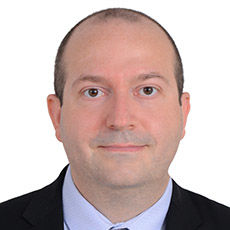
Garth V. Crosby is an Associate Professor at Texas A&M University's Department of Engineering Technology and Industrial Distribution within the College of Engineering. He is also affiliated with the Multidisciplinary Engineering program. His research focuses on IoT and IIoT security, cyber-physical systems, and STEM education innovation. Crosby holds a Ph.D. in Electrical Engineering from Florida International University (2007), an M.S. in Computer Engineering, and a B.S. in Electronics (Applied Physics) from the University of the West Indies. His work spans cybersecurity frameworks for emerging technologies, including blockchain-based federated learning, post-quantum cryptography, and IoT threat mitigation. He has contributed to educational advancements through online lab design and faculty efficacy studies in hybrid learning environments. Crosby's recent publications emphasize securing robotic IoT systems, supply chain blockchain applications, and ransomware evasion techniques using generative AI. His research portfolio includes over 40 peer-reviewed articles in journals like IEEE Transactions and conferences such as ASEE and FiCloud. Key themes include volunteer cloud reliability models (ProTrust), edge computing security, and educational technology evaluation. Crosby's interdisciplinary approach bridges engineering systems with pedagogical innovation, addressing both technical and human factors in modern technological challenges.
Karen Butler-Purry is a Professor of Electrical & Computer Engineering at Texas A&M University, holding the Raytheon Company Professorship. She is affiliated with the Power System Automation Laboratory and the College of Engineering. Her research focuses on intelligent systems for power distribution automation, fault diagnosis, and renewable energy integration. She completed her B.S. at Southern University (1985), M.S. at UT Austin (1987), and Ph.D. at Howard University (1994). Her work emphasizes cyber-physical systems, smart grid security, and microgrid resilience. Recent research includes AI-driven grid restoration, cybersecurity frameworks for distribution systems, and self-healing shipboard power systems. She has pioneered methods for transformer lifespan prediction and unbalanced load management in distributed networks. Publications span over three decades, with notable contributions to IEEE journals and conferences. Her educational initiatives include the Texas A&M System AGEP Alliance and LSAMP programs, advancing underrepresented minority participation in STEM academia. She leads interdisciplinary projects at the intersection of power systems, machine learning, and equity-focused academic workforce development. Labs/Teams: Principal Investigator in the Power System Automation Laboratory, collaborating with industry partners like Raytheon. Active in curriculum development for digital systems education through initiatives like the Enrichment Experiences in Engineering (E³) program.
Gaurav Sharma is a Professor at the University of Rochester, holding joint appointments in the Department of Electrical and Computer Engineering, Computer Science, and Biostatistics and Computational Biology. He is also a Distinguished Researcher at the Goergen Institute for Data Science and Artificial Intelligence. His research focuses on Data Analytics, Cyber Physical Systems, Signal and Image Processing, Computer Vision, Media Security, and Communications. Previously, he served as Director of the Center for Emerging and Innovative Sciences (2008-2010) and held roles at Xerox Research (1996-2003). He earned a PhD in Electrical and Computer Engineering from North Carolina State University (1996), alongside degrees from Indian institutions including the Indian Institute of Science and IIT Roorkee. Education: PhD (NCSU), M.S. Applied Mathematics (NCSU), M.S. Electrical Communication Engineering (IISc), B.Eng (IIT Roorkee) Awards: Fellow of IEEE, SPIE, and IS&T; Elected Sigma Xi member Editorial Roles: Editor-in-Chief of IEEE Transactions on Image Processing (2018-2020) and Journal of Electronic Imaging (2011-2015) Leadership: Chair of IEEE Signal Processing Society committees and SPIE/EI conferences His research spans interdisciplinary areas like medical imaging analytics, cybersecurity in IoT systems, and computational methods for biomedical applications. Recent work includes studies on cardiac mortality patterns, viral protein inhibition, and federated learning for privacy-sensitive healthcare tasks. Dr. Sharma’s contributions to academic governance include roles on IEEE publication committees and strategic planning boards, reflecting his commitment to advancing technical standards and open science practices.
Jawad Ahmad is a Lecturer in the School of Computing, Engineering and the Built Environment at Edinburgh Napier University . His work is closely associated with the Centre for Cybersecurity, IoT and Cyberphysical Systems and the Centre for Distributed Computing, Networking and Security , where he contributes to cutting-edge research in secure and intelligent systems. His research interests are centered on cybersecurity , artificial intelligence , and Internet of Things (IoT) technologies. He focuses on developing advanced intrusion detection systems, privacy-preserving frameworks using federated learning and homomorphic encryption, and secure data transmission mechanisms leveraging chaos-based and quantum-inspired encryption. His interdisciplinary work extends to healthcare, smart agriculture, and environmental monitoring, demonstrating the broad applicability of his research. The analysis of his recent publications reveals a strong trend toward AI-driven security solutions, particularly using deep learning models like transformers and attention mechanisms for network intrusion detection. He also explores the integration of machine learning with blockchain and distributed ledgers for trusted threat intelligence sharing. His work consistently emphasizes real-world deployment, performance optimization, and resilience against cyber threats in industrial and healthcare settings. Funded Research Projects: Data Sharing in Highly Secure Environments (Innovate UK, £273,181) PhD Studentship on Homomorphic Encryption (6G Health Institute GmbH, £35,082) TrustShare: Privacy-Preserving Threat Intelligence Sharing (Innovate UK, £31,386) Cyber Hunt: Automated Cyberthreat Hunting (Norway Research Council, £37,500) AI Dashboard for COVID-19 Sentiment Analysis (Chief Scientists Office, £135,104) Dr Ahmad actively supervises postgraduate research, currently serving as Director of Studies for Hisham Ali and as second supervisor for other PhD candidates. He is involved in multiple collaborative research teams focusing on cybersecurity, AI, and IoT, often working with Prof Bill Buchanan and other leading researchers in the field. His research is published in high-impact journals such as IEEE Access , Frontiers in Computational Neuroscience , and Sensors , and presented at international conferences.
Mohammed Shafae is an Assistant Professor in the Department of Systems and Industrial Engineering at the University of Arizona, where he has been serving since 2018. He is also a member of the Graduate Faculty, contributing to advanced research and mentorship in engineering disciplines. Education: PhD in Industrial and Systems Engineering, Virginia Tech, Blacksburg, Virginia, United States MS in Industrial and Systems Engineering, Virginia Tech, Blacksburg, Virginia, United States MS in Production Engineering, Alexandria University, Alexandria, Egypt BS in Production Engineering, Alexandria University, Alexandria, Egypt His research centers on cyber-physical systems security , smart manufacturing systems , and data-driven quality control , with a strong emphasis on leveraging manufacturing data for process monitoring, modeling, and securing machining and additive manufacturing systems. His work integrates statistical process monitoring, machine learning, and advanced metrology to enhance manufacturing resilience and efficiency. His recent publications (2022–2025) reflect a clear trend toward securing Industry 4.0 systems, with a focus on digital twin security, attack detection in machining, and anomaly detection in additive manufacturing using photodiode and thermal data. He also explores futuristic applications such as in-situ lunar manufacturing using regolith-based materials. Scientific Awards: First Place in the ASCEND Propel Pitch Competition (AIAA, Fall 2020) Virginia Tech Teaching Excellence Award (Spring 2017) Harold Schneikert Graduate Fellowship (Spring 2016) David H. Burrows Graduate Fellowship (Fall 2015) Best Track Paper Award (IEOM 2012) Prize for Excellence in Senior Design Project (Cairo, 2009) Dr. Shafae actively mentors graduate students, co-authoring numerous publications with advisees in areas such as cybersecurity, additive manufacturing, and process monitoring. While specific grant details are not listed, his research is clearly funded through competitive fellowships and likely external grants given the volume and quality of his outputs. He has no listed labs or teams in the provided text, but his collaborative work suggests active participation in research groups focused on smart manufacturing and cybersecurity.
Francesco Regazzoni is a Senior Researcher at the Faculty of Informatics, Università della Svizzera italiana (USI), and affiliated with the Dalle Molle Institute for Artificial Intelligence (IDSIA USI-SUPSI). His work bridges embedded systems, cybersecurity, and artificial intelligence, with a focus on securing hardware and cyber-physical systems. Research Interests: His expertise spans embedded and cyber-physical systems security, side-channel attacks, post-quantum cryptography, hardware trojans, random number generators, and the security of AI and approximate computing. He also contributes to hardware/software co-design and operating systems security. The analysis of his recent publications reveals a consistent focus on hardware and system-level security , particularly in resource-constrained environments like IoT and embedded devices. His work integrates machine learning for attack detection and applies formal methods to ensure trust in hardware. A growing emphasis is placed on securing AI systems from physical and adversarial threats. Scientific Contributions: Over 100 peer-reviewed publications One book and one patent Extensive international collaboration (Belgium, Netherlands, USA, Switzerland, Singapore) Advising and Grants: While specific advisees and grants are not listed, his leadership in funded research projects and involvement with ALaRI and IDSIA suggest active mentorship and project coordination. His work has been supported by industry (e.g., ST Microelectronics, HP), the Swiss National Foundation, and the European Union. Labs and Teams: He is part of the Graph Machine Learning Group (GMLG) at IDSIA, which evolved from the Advanced Learning and Research Institute (ALaRI). This group focuses on graph machine learning, reinforcement learning, and dynamical systems, particularly in non-stationary environments.
Carlos Cilleruelo Rodríguez is an Associate Professor in the Department of Computer Science at Universidad de Alcalá. He is affiliated with the TIFyC research group ("Information Technologies for Training and Knowledge") and specializes in cybersecurity, healthcare IT security, and authentication systems. His research focuses on dark web analysis, malware detection, and adaptive security frameworks. He earned his Doctorate from Universidad de Alcalá in 2023 with the thesis "A cybersecurity review of healthcare industry 2023" , supervised by Dr. José Javier Martínez Herráiz and Dr. Luis de Marcos Ortega. His work spans ransomware mitigation in manufacturing, continuous authentication architectures (JBCA), and privacy issues in IoT healthcare devices. Recent projects include the ProTego initiative for mobile authentication in eHealth environments. Publications highlight trends in machine learning for behavioral authentication, darknet interconnections, and security in Bring-Your-Own-Device (BYOD) healthcare settings. No scientific awards explicitly mentioned. Labs/teams: Active contributor to the TIFyC group, focusing on cybersecurity education and applied research in critical infrastructure protection.
Umair Shah is an Assistant Professor (Teaching Stream) at the University of Waterloo's Department of Management Sciences. He holds a Doctorate in Management of Technology (2016) and a Master of Applied Science in Management Sciences (2012), both from the University of Waterloo. His research interests span stakeholder theory, technology ethics, computational social science, and human factors in technology adoption. He actively teaches courses such as Organizational Behavior, Production and Service Operations Management, and Foundations of Senior Management, reflecting his expertise in both theoretical and applied aspects of management sciences. Shah's recent work emphasizes ethical dimensions of AI, human-technology interaction, and circular economy strategies. His articles critically examine moral dilemmas in autonomous systems, stakeholder engagement in technology firms, and cybersecurity governance. He has published in prestigious journals like Journal of Business Ethics , Technovation , and Journal of Cleaner Production , with a focus on bridging theoretical frameworks and real-world applications. His teaching portfolio includes courses taught consistently since 2020 across multiple academic levels, demonstrating his commitment to experiential learning and pedagogical innovation. Though not currently accepting graduate students, his research collaborations span interdisciplinary themes in technology ethics and stakeholder analysis.
Xiaolu Zhang is currently a Professor in the Information Systems and Cybersecurity department at the University of Texas at San Antonio (UTSA), affiliated with the College of AI, Cyber and Computing. Her research focuses on digital forensics, cybersecurity, and emerging technologies like IoT and blockchain. Specializes in Digital Forensics, IoT Security, and Privacy in Virtual Environments Active in Mobile Application Forensics, Cloud Storage Forensics, and Blockchain Forensics Her recent publications highlight trends in Metaverse privacy challenges, advanced forensic techniques for mobile and cloud platforms, and automated knowledge-sharing systems for IoT investigations. She also contributes to digital forensic education through experiential learning frameworks.
Professor Hakima CHAOUCHI is affiliated with Telecom SudParis, part of the NeSS group. Her primary research focuses on Internet of Things (IoT), wireless networks, RFID technology, and cyber-physical systems. She has contributed extensively to advancements in IoT infrastructure, localization techniques, and network security. Research interests include IoT architecture, RFID-enabled systems, distributed edge computing, and energy-efficient protocols. Her work spans topics like anomaly detection in IoT data, resilient cyber-physical systems, and resource allocation in 5G networks. Key contributions include the PrIoT project for IoT prototyping, studies on dynamic resource allocation in HetNets, and frameworks for mobile cloud computing privacy. She has authored multiple books and book chapters on IoT and wireless networks, including The Internet of Things: Connecting Objects to the Web . Her publications emphasize practical applications like industrial autonomous systems, vehicular networks, and edge AI integration. She collaborates actively with industry and academia, contributing to standards like MIH-IEEE 802.21 and security protocols for mobile networks.
Dr. Paul de Vrieze is a Principal Academic in Web Systems and Technologies at Bournemouth University's Faculty of Science and Technology, Department of Computing and Informatics. He is the coordinator of the EU H2020 FIRST project and leads research in enterprise information systems, digital twins, and Industry 4.0. His work contributes to the UN Sustainable Development Goals, particularly Quality Education, Decent Work and Economic Growth, Industry Innovation and Infrastructure, and Reduced Inequalities. Education: PhD in Information Systems, Radboud University Nijmegen, 2006 MSc in Information Systems Management, Tilburg University, 2002 His research focuses on the design and implementation of complex enterprise information systems, especially in supporting and automating business processes, with a strong emphasis on cross-organizational and collaborative systems. He investigates resilience, interoperability, and service-oriented architectures in virtual factories and digital twins. His recent work applies these concepts in industrial contexts, particularly under Industry 4.0. The 15 most recent publications show a strong trend toward digital twin technologies, predictive maintenance, federated simulation, and compliance in collaborative networks. These works are deeply rooted in computer science and industrial engineering, with applications in smart manufacturing, supply chain resilience, and sustainable production. Scientific Awards and Recognitions: Panel Member, Guardian round table on cloud computing, 2012 Dr. de Vrieze has supervised multiple PhD students to completion, including Olaolu Sofela, John-Paul Kasse, Oluwetoyin Fakorede, Go Sang, and Rushan Arshad. He has secured grants from the European Commission (H2020, Horizon Europe), National Natural Science Foundation of China, British Council, and internal Fusion Funding. His current major grant is the Sustainable Production of High Entropy Alloys from Secondary Metals (Horizon Europe MSCA, starting 2026). Labs and Research Teams: He is central to the EU H2020 FIRST project team, which focuses on virtual factories and interoperation supporting business innovation. He collaborates extensively with Prof. Liang Xu and researchers across Europe and China. He is also involved in the Service Computing Research group at Bournemouth University.
David Palma is an Associate Professor at the Department of Information Security and Communication Technology , Faculty of Information Technology and Electrical Engineering , Norwegian University of Science and Technology (NTNU). His research focuses on next-generation networking paradigms, including intent-based networking , knowledge-driven management , and IoT device automation . Key research interests include: Human-centric Internet of Things (IoT) Ontology-based network management Cloud/Edge/Fog computing for IoT Arctic and satellite communication 5G integration in smart grids His recent publications (2024-2019) highlight trends in knowledge graphs for network compliance, XR applications in critical sectors, UAV-based emergency networks , and 5G-enabled smart grid protection . Articles also explore Arctic connectivity via satellite swarms and energy-efficient IoT management.
Rozhin Yasaei is an Assistant Professor in the Department of Cyber Operations, Intelligence, and Technology at the College of Applied Science and Technology (CAST), University of Arizona. She contributes to the CAST Curriculum Committee, shaping academic programs in cybersecurity and technology. Her research integrates machine learning with hardware and cyber-physical systems security. Education: Ph.D. in Computer Engineering, University of California, Irvine (2023) M.Sc. in Computer Engineering, University of California, Irvine (2021) B.Sc. in Electrical Engineering, Sharif University of Technology (2018) Research Interests: Rozhin's research lies at the intersection of machine learning and system security, with a focus on Graph Neural Networks applied to integrated circuits , embedded systems , and cyber-physical systems . Her work advances automated security analysis and detection of hardware vulnerabilities. She explores cross-layer security solutions that bridge hardware and software domains using AI-driven modeling techniques. Scientific Awards and Recognition: UC Irvine Pedagogical Fellowship (2021) Teaching Excellence Certificate Rising Stars in EECS Award (2022) iREDEFINE Professional Development Award (2022) UCI UROP Research Discovery Fellowship (2022) UCI Henry Samueli Endowed Scholarship (2018) Mentoring Excellence Certificate Multiple conference scholarships Advising and Grants: Dr. Yasaei is an active mentor, recognized for her excellence in mentoring undergraduate and graduate students. She is currently seeking PhD students for Fall 2025 and encourages prospective applicants to contact her and apply to the ECE graduate program at the University of Arizona. While specific grant funding is not detailed, her prior fellowships and research roles indicate strong support for her scholarly work. Labs, Teams, and Professional Engagement: She has served as President of the UCI chapter of Women in CyberSecurity (WiCyS) since 2021 and continues to support the organization at the University of Arizona. She actively promotes diversity and inclusion in STEM through workshops, panels, and outreach. Her past research experience includes a role at NASA Frontier Development Lab and industry internships, reflecting strong interdisciplinary collaboration.
Dr. Israat Haque is an Associate Professor in the Faculty of Computer Science at Dalhousie University, Halifax, where she leads the Programmable and Intelligent Networking (PINet) research group. She also holds an adjunct professorship in the Department of Computing Science at the University of Alberta. PhD in Computer Science, University of Alberta NSERC Postdoctoral Fellow, University of California, Riverside MSc in Computer Science, Concordia University Her research focuses on developing high-performance, secure, and dependable distributed and emerging networking systems, with key interests in Software-Defined Networking (SDN), Cyber-physical Systems (CPS), Internet of Things (IoT), 5G/6G technologies, and AI/ML applications in networking. She applies data-driven approaches to solve real-world problems in network programmability, stream processing, and edge/cloud computing. The 15 most recent publications highlight a strong trend in in-network computing, IoT security, AI-driven network reliability, and stream processing. Her work spans from theoretical surveys to practical system implementations, often leveraging programmable data planes (P4), machine learning, and hardware acceleration to address challenges in performance, security, and fairness in distributed systems. Dr. Haque has received numerous prestigious recognitions: IEEE/ACM N2Women Rising Star Award (2021) ACM FAccT Best Paper Award (2023) IEEE WICE Outstanding Mentoring Award (2025) University of Alberta Alumni Honour Award (2024) Digital Nova Scotia Thinking Forward Award (2022) Intel Fast Forward Initiative Winner (2022) President’s Research Excellence Award, Dalhousie (2021) She actively mentors PhD and MSc students and leads externally funded research projects, including a Canada First Research Excellence Fund (CFREF)-supported initiative on Securing Smart Environments. She has served on editorial boards of IEEE Transactions on Vehicular Technology and IEEE Communications Magazine, and on program committees of top conferences such as IEEE ICNP, IEEE NetSoft, and ACM SIGCOMM. Her lab, PINet, fosters innovation in networking systems and produces high-impact research with real-world applicability. Dr. Haque leads the PINet research group, which includes current PhD and MSc students working on cutting-edge topics like post-quantum cryptography, network programmability for security, and large ML model security. The group collaborates with institutions such as the University of Alberta, Laval University, and Concordia, and has strong industry ties with Intel, Meta, Amazon, and Facebook.
Dr. Alessio Faccia is an Assistant Professor in Finance at the School of Business and Law, University of Birmingham Dubai, with a strong international academic and professional background. He holds a PhD in Business Economics (Accounting & Finance) from Università Politecnica delle Marche and has taught at institutions in Italy, UAE, UK, and Malta. He is also a qualified Chartered Accountant and Auditor in Italy, with prior experience at Accenture and as founder of an independent audit firm. Education: PhD in Business Economics (Accounting & Finance), Università Politecnica delle Marche, 2012 MBA (Hons) in Business Economics & Accounting, Università Roma TRE, 2006 BSc in Business Economics and Accounting, Università Roma TRE, 2004 LLM, Pegaso University, 2019 MSc in Criminology, Pegaso University, 2017 CA (Chartered Accountant and Auditor), Italy, 2009 Fellow of the Higher Education Academy (FHEA), 2021 Certified Management & Business Educator (CMBE), 2020 His research spans interdisciplinary domains including blockchain, accounting information systems, machine learning, fraud examination, and sustainable finance. He explores how emerging technologies like AI, blockchain, and cognitive computing can enhance transparency, resilience, and innovation in financial systems. His work often bridges theory with practical applications in fintech, auditing, and regulatory compliance. His recent publications reflect a strong trend toward leveraging big data, blockchain, and AI to transform traditional finance and accounting practices. Topics include blockchain for supply chain risk, NLP for financial transparency, generative AI in education, and quantum fintech. These contributions appear in high-impact journals such as Annals of Operations Research , Sustainability , and Big Data and Cognitive Computing . Scientific Awards and Recognition: Fellow of the Higher Education Academy (FHEA), 2021 Certified Management & Business Educator (CMBE), 2020 Dr. Faccia actively contributes to the academic community as a reviewer for top-tier journals including Technovation , Chaos, Solitons & Fractals , PLoS ONE , and International Journal of Production Economics . He serves on the editorial board of the International Journal of Accounting & Finance Review and Journal of Risk and Financial Management . He has also acted as Guest Editor for special issues and Publicity Chair for international conferences, demonstrating leadership in academic dissemination. He supervises MSc students’ dissertations in finance and accounting and teaches postgraduate modules such as Financial Statement Analysis, Risk Management, and Alternative Finance. His advisory role extends to guiding research on blockchain, fraud, and sustainable business models. He has no listed grants, but his collaborative research indicates strong engagement with international scholars. Dr. Faccia is involved in cutting-edge research teams focused on blockchain, AI in finance, and digital transformation. He contributes to initiatives like the International Conference on Cloud and Big Data Computing and participates in technical research on ERP integration, semantic web applications, and cybersecurity resilience, positioning him at the forefront of technological innovation in business education.