Wenguang Chen is a researcher affiliated with Tsinghua University and Pengcheng Laboratory , specializing in computer science and high-performance computing . His work bridges theoretical advancements with practical applications in domain-specific languages , parallel programming , and machine learning . Research Interests include: Development of modular DSLs for numerical methods (e.g., Mat2Stencil) Performance optimization in distributed and parallel systems Compiler frameworks for privacy-preserving AI (e.g., FHE-based neural network inference) Graph algorithms scaling to trillion-edge datasets Applications of Rust in memory-safe pointer analysis Recent Publications span 2014–2025, focusing on: Parallelization strategies for supercomputing Compiler automation tools Extreme-scale data processing Performance variance diagnosis in production environments
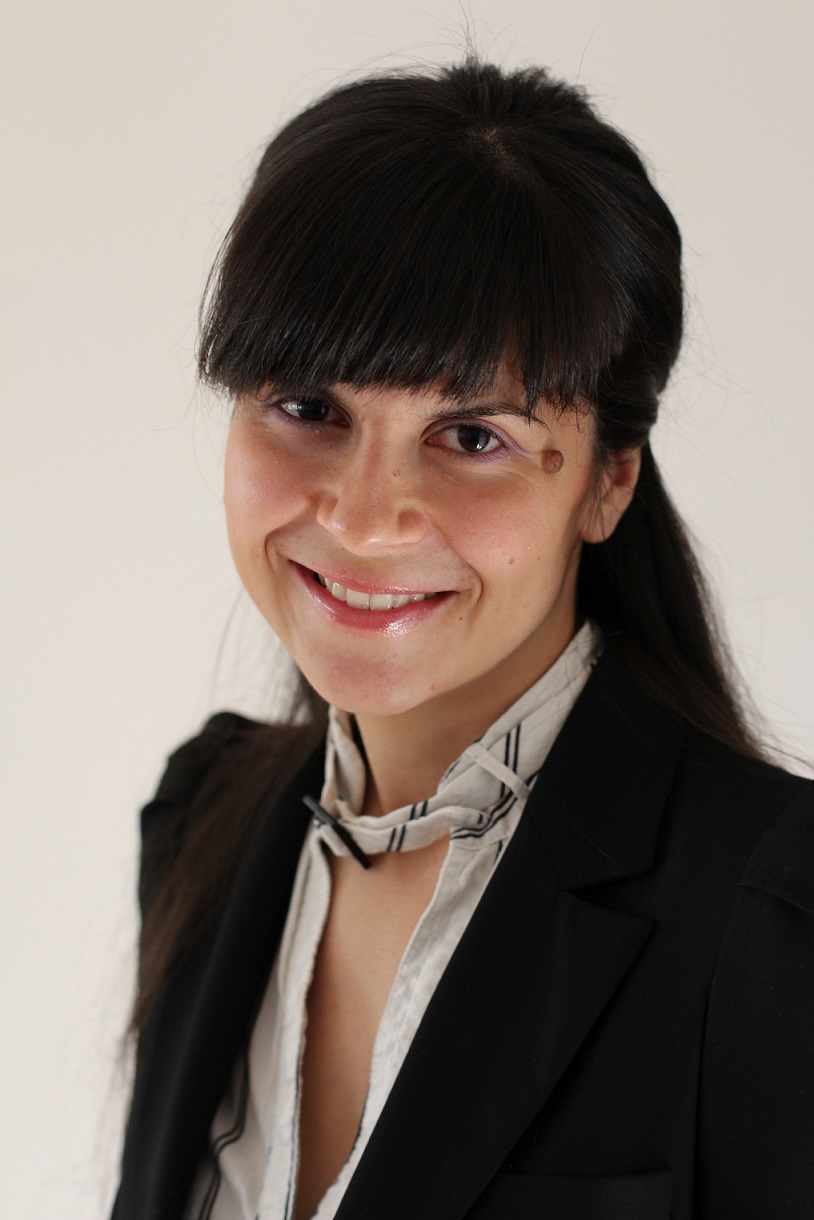
Renata Borovica-Gajic is an Associate Professor in Data Analytics and an ARC DECRA Fellow at the School of Computing and Information Systems (CIS), University of Melbourne. She also serves as Associate Dean (Diversity and Inclusion) for the Faculty of Engineering and IT, demonstrating leadership in both research and academic community development. Her research lies at the intersection of database systems, machine learning, and artificial intelligence, with a vision of creating adaptive, self-driving database engines that optimize query execution in real-time. Her work spans learned indexes, query optimization, data quality, and data-driven traffic optimization, aiming to reduce costs and improve performance in data analytics. The recent publications reflect a strong trend toward integrating machine learning into core database operations—particularly through learned indexes, bandit-based tuning, and reinforcement learning for traffic systems. These works emphasize automation, provable guarantees, and real-time adaptation, showcasing a cohesive research agenda focused on intelligent, self-optimizing data systems. Her scientific excellence is recognized by numerous awards, including: L'Oréal-UNESCO for Women in Science Fellowship (2023) Victorian Young Tall Poppy (2024) Test of Time Award at SIGMOD 2022 Multiple Research and Teaching Excellence Awards from the University of Melbourne Google Research Inclusion Award (2021) She actively mentors PhD students and leads significant research projects funded by the Australian Research Council, Google, and Telstra. Her service includes roles as Associate Editor for SIGMOD Record, conference organization (e.g., aiDM, ADC, VLDB), and leadership in diversity and inclusion initiatives. She has also contributed to influential publications such as a chapter in the 7th edition of Database System Concepts . Her research lab focuses on AI-powered databases, traffic optimization via reinforcement learning, and self-healing data systems, positioning her at the forefront of next-generation data management.
V. Linderhof is a researcher at Wageningen Economic Research , focusing on biodiversity conservation, food systems transformation, and environmental policy analysis. Active in EU-funded projects like NEXOGENESIS and MINDVAL, they combine spatial modeling, socioeconomic data, and nature-based solutions to address global sustainability challenges. Current projects: Stewardship Economy, Climate-Resilient Food Systems, Nitrogen Reduction Policy Evaluation Research domains: Environment & Agriculture, Natural Resource Management, Urban Food Security Their recent work examines biodiversity-water-food-energy-climate nexus dynamics, circular economy strategies, and dietary equity through system dynamics and geospatial approaches. Key contributions include frameworks for policy effectiveness assessment and participatory modeling in Sub-Saharan Africa. Publications reflect interdisciplinary methodological innovations spanning: Machine learning for environmental uncertainty analysis Mobile data collection in urban Uganda Nature-based adaptation pathways Economic valuation of biodiversity Policy integration frameworks As a lead project coordinator, Linderhof bridges academic research with practical implementation through: Collaborative workshops with stakeholders Interactive policy simulation tools Media engagement on biodiversity challenges Open-access dataset development (e.g., SIM4NEXUS baseline data)
Eli Anne Eiesland is an Associate Professor in the Department of Primary and Secondary Teacher Education at the Faculty of Education and International Studies, Oslo Metropolitan University (OsloMet). Her work bridges linguistic research and classroom practice, with a strong focus on grammar instruction, language didactics, and the evolution of Norwegian in educational materials. Her research interests include language didactics , grammar pedagogy , linguistic change in textbooks , second language acquisition , and exploratory approaches to language teaching . She investigates how grammar is taught in schools, how language evolves in educational contexts, and how students and teachers engage with language as a system. Her recent work explores the impact of digital tools and AI on language learning and writing motivation. The trends in her publications show a consistent focus on contextualized grammar teaching , teacher reflection , and language change in educational materials . Her interdisciplinary approach combines corpus linguistics, pedagogical theory, and classroom-based research. She frequently collaborates with colleagues such as Urd Vindenes and Signe Laake, contributing to both Norwegian and international scholarly discourse. Scientific contributions and dissemination: Over 11 scientific publications, including articles in Journal of Child Language , Nordic Journal of Linguistics , and Pedagogical Linguistics 2 textbooks, including Utforskende arbeid med grammatikk i skolen (2022) 1 research report on Norwegian noun-noun compounds (2016) 73 dissemination works, including public lectures, conference presentations, and media contributions Eiesland actively contributes to teacher education and curriculum development. She has been involved in projects integrating linguistics into teacher training and analyzing language change in national curricula. Her work supports both pre-service and in-service teachers in developing deeper metalinguistic awareness and innovative teaching strategies. She has presented at national and international conferences, including the International Conference on Construction Grammar and the NordAnd conference. She is a key member of the Text and Disciplinary Didactics research group at OsloMet, where she collaborates on projects related to language learning, grammar instruction, and textbook analysis. Her work emphasizes practical applications of linguistic research in educational settings, aiming to enhance both teaching quality and student engagement with language.
Luigi De Napoli is an Assistant Professor in the Department of Mechanical, Energy and Management Engineering at the University of Calabria's Engineering Faculty. He has been serving in this position since March 1, 2006, and achieved National Scientific qualification as associate in the Italian higher education system for the disciplinary field of 09/A3 - Industrial design, machine construction, and metallurgy, starting from December 20, 2019. His educational background includes a Bachelor Degree in Mechanical Engineering from the University of Calabria in 1993, followed by qualification as an Engineer in 1994. He completed his Ph.D. degree in Design and Methods in Industrial Engineering at the University of Bologna in 2003, with a thesis focused on the reconstruction of archaeological artifacts using CAD systems. High school: Liceo Scientifico Statale E. Fermi di Cosenza (1986) Bachelor Degree: Mechanical Engineering, University of Calabria (1993) Engineer Qualification (1994) Scholarship: ITIA-CNR in Milan on advanced FEM and BEM systems (1995/96) Ph.D.: Design and Methods in Industrial Engineering, University of Bologna (2003) Dr. De Napoli's research primarily focuses on Reverse Engineering applications in Mechanical Engineering, Product Design and Development, and Virtual Prototyping. His work spans various applications including the reconstruction of archaeological artifacts, geometry inspection, hull and prosthesis reconstruction, and sustainable product design methodologies. His recent publications demonstrate a strong emphasis on biomedical applications, particularly in cranial prosthetics, tissue engineering, and ovarian tissue culture systems. His teaching portfolio is extensive, covering courses such as Computer-Aided Design, Sustainable Product Design, Engineering Drawing/CAD, and Modeling and Prototyping for Bioengineering across both Mechanical and Management Engineering programs. He has been teaching CAD courses since 2010 and Sustainable Product Design since 2011 at the University of Calabria. Dr. De Napoli is actively involved in the Research Group for Industrial Engineering Design and Methods (ING-IND/15), which focuses on methodologies and tools for product development processes, industrial product design and development (with particular attention to parametric and sustainable aspects), prototyping (virtual and mixed), and manufacturing using 3D printers. His work also encompasses Reverse Engineering techniques, User Centered Design methodologies for ergonomic analysis, and Virtual and Augmented Reality applications for industrial product design.
Manuel Wimmer is a Full Professor and Head of the Department of Business Informatics – Software Engineering at Johannes Kepler University Linz, Austria. He also serves as the Program Director for the Business Informatics master's program since 2019. His academic leadership extends to representing JKU Linz in the AutomationML society and leading significant research initiatives. Dr. Wimmer received his Ph.D. and Habilitation from TU Wien. His academic journey includes: Research associate at the University of Malaga, Spain Visiting professor at the University of Marburg, Germany Visiting professor at TU Munich, Germany Assistant professor at the Business Informatics Group (BIG), TU Wien, Austria Professor Wimmer's research focuses on Model-Driven Software Engineering and its applications, particularly in the emerging field of Digital Twins . His work bridges theoretical foundations with practical industrial applications, with special emphasis on model transformations, runtime modeling, and the integration of artificial intelligence techniques into model-driven approaches. More recently, he has been exploring the intersection of model-driven engineering with quantum computing, investigating how modeling principles can be applied to quantum software development. His recent publications reveal a strong trend toward Digital Twin engineering, with approximately 40% of his 2023-2025 publications focusing on various aspects of Digital Twin technology. Another significant strand of his work involves the application of AI and machine learning techniques to enhance model-driven engineering processes. The emergence of quantum software engineering as a research direction is also notable in his most recent publications, demonstrating his ability to identify and explore cutting-edge research frontiers. From 2017-2023, Professor Wimmer led the Christian Doppler Laboratory on Model-Integrated Smart Production (CDL-MINT), where he developed engineering approaches for digital twins. He is also the co-author of the influential book "Model-driven Software Engineering in Practice" (2nd edition, 2017). Professor Wimmer is actively involved in the organization of major scientific events including the IEEE International Conference on Quantum Software (QSW) and the International Conference on Engineering Digital Twins (EDTconf), demonstrating his leadership in these emerging research communities. His research has practical applications across various domains including smart cities, industrial automation, tunneling/construction, and quantum computing. The MATISSE project represents a significant multi-partner effort to develop a framework for federated digital twins of industrial systems.
Matthias Becker is a Professor at the Institute for Practical Computer Science within the Faculty of Electrical Engineering and Computer Science at Leibniz University Hannover, where he has been a core member of the Human-Computer Interaction group since 2019. He serves as Internship Coordinator for Computer Science and Computer Engineering and holds key roles in the Computer Science Examination Board and Selection Committee, actively shaping academic governance and student development. His academic journey began with PhD studies at the University of Bremen (1996-2000) supported by a DFG grant, followed by a postdoctoral permanent position at Leibniz University Hannover (2000-2019), an Associated Assistant Professor role at École des Mines de Nantes (2000), and a Habilitation in Computer Science in 2013. This foundation enabled his transition to a full professorship in 2019. Becker's research spans Human-Computer Interaction, Simulation and Modeling, and Bio-inspired Computing, with applications in agriculture, renewable energy, and manufacturing. His work integrates distributed systems, optimization algorithms, and wireless sensor networks to solve complex real-world problems, such as greenhouse monitoring, wind farm logistics, and tire noise reduction. Recent publications reveal a strategic focus on practical validation of simulation models and cross-domain applications of nature-inspired algorithms. His 15 most recent publications (2018-2024) demonstrate consistent innovation in applying simulation techniques to offshore wind farm installation, agricultural pest management, and sports science. These works emphasize real-world validation, collaborative problem-solving, and the development of domain-specific optimization frameworks that bridge theoretical algorithms and industrial implementation. As Internship Coordinator, Becker facilitates critical industry-academia connections for students, while his examination board responsibilities ensure rigorous academic standards. His leadership in the Human-Computer Interaction group drives research on interactive systems for agriculture, energy, and health, with particular emphasis on user-centered design in complex operational environments like wind farm logistics and greenhouse automation.
Professor Hendrik Dietz holds the Chair of Biomolecular Nanotechnology at the Technical University of Munich (TUM) , affiliated with the TUM School of Natural Sciences and the Munich Institute of Robotics and Machine Intelligence . His research focuses on constructing synthetic molecular devices and machines through DNA origami and self-assembly principles. Research Themes DNA origami for programmable nanodevices Self-assembly inspired by natural molecular systems Molecular visualization with cryo-EM Applications in medicine and synthetic biology Key Article Trends : Dietz's work explores DNA-based rotary motors, virus-trapping shells, and bio-inspired vesicle production. His recent articles highlight integrations of DNA origami with electrochemical sensing, deep learning, and transmembrane transport systems. Scientific Awards ERC Consolidator Grant (2016) Gottfried Wilhelm Leibniz Prize (2015) Hoechst Lecturer Scholarship (2012) Arnold Sommerfeld Award (2010) ERC Starting Grant (2010) Collaborations and Grants : He receives funding from the Deutsche Forschungsgemeinschaft (DFG) via the Excellence Clusters CIPSM and NIM, SFB863, and the Leibniz Prize program, as well as the European Research Council. Dietz collaborates with institutions like Harvard Medical School and the Max Planck School Matter to Life.
Jianke Zhu is a Professor at the College of Computer Science and Technology of Zhejiang University . He obtained his Ph.D. in Computer Science and Engineering from The Chinese University of Hong Kong and conducted postdoctoral research at the BIWI Computer Vision Lab, ETH Zurich . His research focuses on Computer Vision and Machine Learning , with a particular emphasis on 3D scene understanding, LiDAR-based mapping, and neural rendering. Dr. Zhu’s research spans several subfields, including 3D Reconstruction , Semantic Segmentation , Multimodal Learning , and Autonomous Driving . His work integrates Neural Networks , LiDAR Processing , and Uncertainty Quantification to address challenges in real-time and adverse conditions. Selected Recent Trends: 2025 publications highlight his work in Hexagonal Mesh-based Neural Rendering , Instance-aware 3D Scene Understanding , and Efficient Visual Projectors for Multimodal LLMs . Earlier works include Box2Mask for Instance Segmentation (2024) and Token Selection for Point Cloud Learning (2025). Scientific Awards : Senior member of the IEEE Advising and Grants : As a Doctoral Supervisor , he mentors students in advanced topics like LiDAR Odometry and Multi-view Stereo Recovery . His projects have attracted funding for autonomous driving , 3D scene modeling , and neural rendering .
Carlo Alberto Avizzano serves as Associate Professor in Robotics and Automation at the University of Pisa's School of Engineering, Department of Information Engineering. He coordinates the Department of Excellence in Robotics & Artificial Intelligence (MUR) and leads the Intelligent Automation System Research Group. Research spans robotics, human-robot interaction, computer vision, and control systems Specializes in creating intelligent automation systems with cognitive capabilities Integrates AI, machine learning, and mechatronics for robust autonomous systems His research focuses on developing robots that learn from human examples, adapt to changing environments, and interact through advanced perception systems. Current work emphasizes wearable robotics, UAVs, and industrial automation solutions with applications in medical rehabilitation, firefighting, and manufacturing. He employs distributed computing architectures integrating sensors, real-time control, and knowledge transfer algorithms. Publications reveal strong emphasis on practical implementations: 15 recent works cover exoskeleton design (2024), UAV firefighting systems (2024), industrial bin-picking datasets (2024), and haptic interfaces (2012-2023). Key trends show progression from virtual reality systems (2006-2008) toward modern AI-integrated robotics with industrial and medical applications. Teaching responsibilities include PhD courses in Sensors for Construction, Python Programming for HealthScience, and Digital Perception; plus undergraduate Mechatronics and Computer Vision labs. He serves on PhD boards for Emerging Digital Technologies and Health Science Technology. Extensive patent portfolio including haptic interfaces (2012), sailing simulators (2006), and UAV systems (2024) Research directly translated to commercial products and spin-off companies
Andrej Bogdanov is a Professor at the University of Ottawa in the School of Electrical Engineering and Computer Science . He earned his B.S. and M.Eng. from MIT and Ph.D. from UC Berkeley . Before joining Ottawa, he held positions at the Chinese University of Hong Kong , ITCS (Tsinghua) , DIMACS (Rutgers) , and the Institute for Advanced Study . He has served as a Visiting Professor at the Tokyo Institute of Technology (2013) and the Simons Institute (2017, 2021). Research Interests : Computational complexity, cryptography foundations, pseudorandomness, one-way functions, property testing, quantum algorithms, and sublinear-time algorithms. Teaching : Courses on Discrete Mathematics, Great Algorithms, Computational Complexity, and Cryptography at University of Ottawa, Chinese University of Hong Kong, and Rutgers University. Publications : 15+ recent works in TCC , CRYPTO , ICALP , RANDOM , and journals like Journal of Cryptology and Theory of Computing . Service : Program co-chair for SAC 2026 , and committee member for major conferences including CRYPTO , TCC , Eurocrypt , and FOCS . Advising : 12 current and former Ph.D./M.Phil. students, with postdoctoral advisees at institutions like IIT Palakkad and Academia Sinica . His work bridges theoretical computer science with applications in cryptography, quantum computing, and network security.
Nikos Giatrakos is an Assistant Professor at the School of Electronic & Computer Engineering, Technical University of Crete, and a core member of the Software Technology and Network Applications Lab (SoftNet) . His work bridges Big Data systems, IoT, and advanced analytics, with a focus on real-time processing and scalable architectures. Previously, he served as a postdoctoral researcher at the same laboratory. Education PhD in Computer Science, University of Piraeus (2012) Postgraduate Diploma in Information Systems, Athens University of Economics and Business (2008) BSc in Computer Science, University of Piraeus (2006) Research Focus : Nikos specializes in software architectures for Big Data streaming, including Distributed Big Data Processing , Federated Machine Learning , Cloud-to-Edge Data Management , and Approximate Query Processing . His work has also advanced Complex Event Processing and Outlier Detection in decentralized environments. Scientific Contributions : His research has led to the DAG* workflow optimizer for IoT, the SuBiTO framework for real-time neural learning, and the INFORE approach for cross-platform analytics. He received the Best System Demonstration Award at ACM CIKM 2020 for INforE. Academic Leadership : Nikos teaches Object-Oriented Programming, Data Science, and Distributed Systems. He has supervised numerous European and national grants as Principal Investigator and served on program committees for top-tier conferences like SIGMOD, VLDB, and DEBS.
Debabrota Basu is a tenured faculty member (Inria Starting Faculty Position - ISFP) at the Scool team (previously called SequeL) of Inria Centre at University of Lille in France. He teaches postgraduate-level courses on privacy, responsible machine learning, and research methods in AI at École normale supérieure-PSL University, Université de Lille, and Centrale Lille. He is also a member of the ELLIS Society (European Laboratory for Learning and Intelligent Systems) and the Paris unit of ELLIS. Dr. Basu earned his PhD in Computer Science from the Department of Computer Science, School of Computing, National University of Singapore, advised by Stéphane Bressan and Pierre Senellart. Prior to that, he obtained a B.E. degree with Honours in Electronics and Telecommunication Engineering from Jadavpur University. Before joining Inria, he was a postdoctoral researcher at Chalmers University of Technology's Data Science and AI Division. Dr. Basu's research focuses on constructing algorithms for developing efficient, robust, private, and ethical learning machines that solve real-world problems. His methodological approach blends statistics, machine learning, and optimization. His application interests span sustainable agro-ecology, medical and pharmaceutical applications, energy-efficient autonomous systems, and algorithmic audits. Recent collaborations include the Inria-Indian Statistical Institute associate team SeRAI for developing Sequential Testing and Learning Algorithms for Verifiably Robust and Responsible AI, and the Inria-INRAE collaboration on Resilient Agricultural Decision Making under Environmental Risks. His publication record demonstrates expertise in bandit algorithms, reinforcement learning, and privacy-preserving machine learning. Recent work shows a strong theoretical foundation with practical applications, particularly in pure exploration bandits, differential privacy mechanisms, constrained optimization, and fairness verification. His research bridges the gap between theoretical guarantees and real-world deployment challenges across multiple domains. Dr. Basu has received notable recognition for his contributions: Best Student Paper Award at ACM EAAMO 2022 for 'On Meritocracy in Optimal Set Selection' Young researcher (JCJC) grant from the French National Research Agency (ANR) in 2022 in 'Artificial Intelligence and Data Science' He leads the project 'RL under Real-life Constraints: Regrets and Algorithms' and supervises PhD students and postdoctoral researchers. His research is supported by multiple projects including REPUBLIC ('Vers l'IA responsable avec l'apprentissage par renforcement sous contraintes') and 'Foundations of robustness and reliability in artificial intelligence.' Dr. Basu actively collaborates with institutions worldwide, including establishing the RELIANT associate team with Kyoto University for investigating structured multi-armed bandit problems.
Dr. José Luis Calvo Rolle serves as a Professor in the Department of Industrial Engineering at the School of Engineering, Universidade da Coruña (UDC), specializing in Systems Engineering and Automation. His research focuses on intelligent control systems, fault detection, and virtual instrumentation within the Cybernetic Science and Technology Research Group. Teaches across multiple programs including Master's in Industrial Computing and Robotics, Textile Technology, and Occupational Risk Prevention Coordinates thesis supervision across Industrial Engineering and related disciplines His research spans intelligent control systems and optimization, with significant contributions in virtual sensors, fault detection, and AI-driven modeling for industrial applications. Current projects integrate machine learning with industrial processes for naval construction, wastewater treatment, and precision livestock farming, demonstrating cross-disciplinary impact from energy systems to agricultural technology. Recent publications reveal strong trends in applying deep learning to industrial metaverse frameworks, wastewater optimization, and livestock monitoring systems. His work bridges theoretical control engineering with practical implementations in energy management, naval manufacturing, and sustainable agriculture, frequently utilizing dimensionality reduction and one-class classification techniques. Dr. Calvo Rolle actively mentors students through thesis supervision across multiple engineering disciplines and coordinates research projects with diverse funding sources including the European Commission, Spanish National Research Agency, and industrial partners like Navantia and Telefónica. His laboratory work centers on the Cybernetic Science and Technology Research Group, developing testbeds for industrial automation, virtual instrumentation, and AI-driven monitoring systems. Current initiatives include digital twin implementations for naval manufacturing and smart energy management systems.
Brennan Bean is an Assistant Professor in the Mathematics and Statistics Department at Utah State University's College of Arts & Sciences. His work focuses on geospatial modeling, statistical methods for extreme weather analysis, and machine learning applications in structural and environmental engineering. Recent publications highlight expertise in snow load prediction, Bayesian entropy, and interdisciplinary data science. Notable contributions include optimizing design methods for insulated concrete wall panels and addressing deployment challenges for ML models in engineering contexts. Research trends span geospatial data integration, climate change impact assessments, and educational interventions in STEM. Key subfields include ground snow load mapping, extreme value statistics, climate downscaling, and high-dimensional ecological modeling.