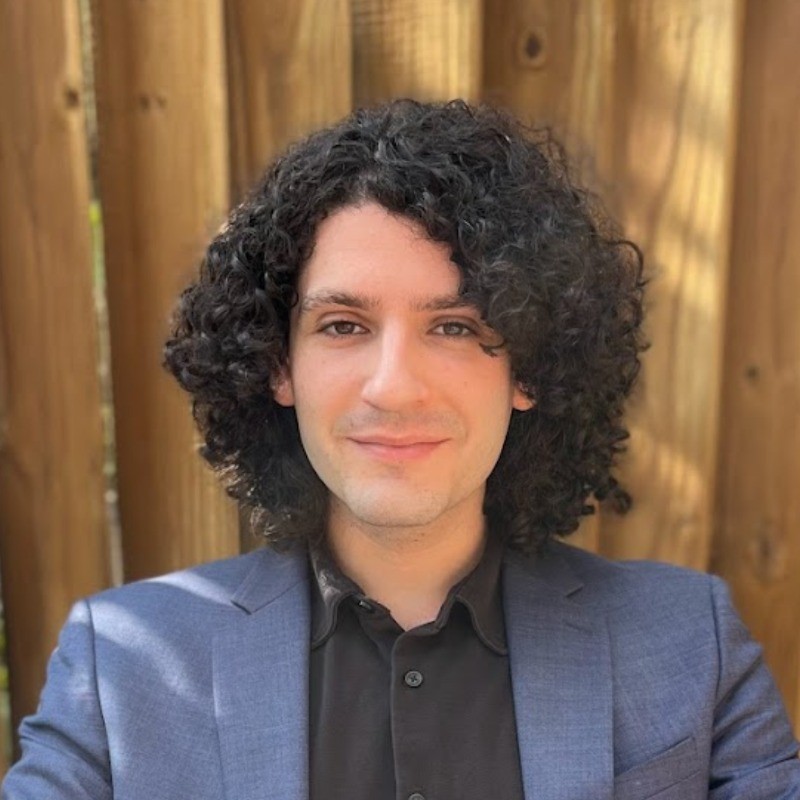
Dr. Eunice Eunhee Jang is a Professor in the Department of Applied Psychology and Human Development at the Ontario Institute for Studies in Education (OISE), University of Toronto. Her research focuses on synergistic learner modeling, dynamic assessment systems, and the intersection of language testing with educational measurement. PhD with specializations in language testing, educational measurement, and program evaluation Develops interactive digital assessment interfaces for struggling readers Author of "Focus on Assessment" (2014) and co-author of OECD Reviews on Evaluation and Assessment in Education Research Interests Dr. Jang's work explores prismatic assessment analytics to understand learner potential and predict learning pathways. She integrates natural language processing and machine learning to create diagnostic feedback systems that support cognitive, metacognitive, and affective growth in technology-rich classrooms. Scientific Awards Jacqueline Ross TOEFL Dissertation Award Caroline Clapham IELTS Master’s Award Tatsuoka Measurement Award Professional Contributions She has served on major advisory boards including EQAO provincial assessments and TOEFL Committees of Examiners. Currently, she is an elected board member for the International Language Testing Association and contributes to the Broader Measures of Success Advisory Committee for People for Education.
Prof. Dr. Wolfgang Lutz is a Full Professor and Head of the Department of Clinical Psychology and Psychotherapy at the Faculty of Psychology, University of Trier, Germany. He also serves as Director of the Outpatient Clinic and Postgraduate Clinical Training. Additionally, he holds an Adjunct Professor position at the University of Western Australia and is a Fellow of the Association for Psychological Science (APS). Dr. Lutz's research focuses on advancing clinical psychology and psychotherapy through precision mental health care, treatment personalization, and feedback-informed psychological therapy. His work emphasizes using data-driven approaches to optimize treatment outcomes, with particular attention to depression, anxiety disorders, and PTSD. He has pioneered the development of the Trier Treatment Navigator (TTN), a system for feedback-informed treatment that helps match patients to the most effective therapeutic approaches. His recent publications reveal a strong emphasis on integrating technology and artificial intelligence into psychotherapy research and practice. This includes developing algorithms for personalized therapy, using large language models to analyze therapy sessions, and implementing routine outcome monitoring systems. His research shows how temporal dynamics in therapy processes affect outcomes and how clinical microskills can predict therapeutic alliance and success. Fellow of the Association for Psychological Science (APS) Editor of Psychotherapy Research He leads initiatives to develop a European Psychotherapy Consortium (EPoC) to standardize outcome measurement across countries and promote cooperation in psychotherapy research. His laboratory focuses on precision mental health care, developing tools for treatment personalization, and investigating the mechanisms of change in psychotherapy.
David H Laidlaw is a Professor of Computer Science at Brown University, specializing in virtual reality, scientific visualization, and medical imaging. His work spans interdisciplinary applications in neuroscience, biomedical research, and educational tools. Brown University Affiliation Department of Computer Science His research focuses on: Immersive visualization for complex data analysis Diffusion MRI and neuroimaging techniques Human-computer interaction in virtual environments 3D interaction methods for scientific exploration Collaborative visualization tools for multidisciplinary teams Recent trends in his publications highlight advancements in: Graph neural networks for biomedical data Memory-efficient segmentation algorithms Perceptual studies in VR environments Annotation and analysis of placental vasculature Technological innovations in foot dynamics research He teaches courses in virtual reality design and scientific visualization, including: CSCI 1370 - Virtual Reality Design for Science CSCI 1951S - Virtual Reality Software Review CSCI 1951T - Surveying VR Data Visualization Software CSCI 2370 - Interdisciplinary Scientific Visualization
Jason Smith is a Postdoctoral Scholar at Northwestern University , affiliated with the Interactive Audio Lab . He earned his PhD in Music Technology from the Georgia Institute of Technology . Research Focus Human-AI collaboration in creative domains Interactive music systems AI-driven accessibility solutions Creative autonomy and neural audio generation Recommender systems for music libraries Publication Trends His work spans 2019–2025, emphasizing AI applications in music education, accessibility (especially for blind/visually impaired users), and immersive environments like AI holodecks. Key methodologies include co-design, hybrid recommendation algorithms, and automated creativity assessment. Lab Affiliation He contributes to the Interactive Audio Lab, exploring intersections of sound, code, and AI.
Antonio Krüger is a Professor at Saarland University and the CEO & Scientific Director of the German Research Center for Artificial Intelligence (DFKI). He leads the Ubiquitous Media Technology Lab and the Cognitive Assistance Systems department at DFKI, specializing in human-machine interaction, artificial intelligence, and intelligent user interfaces. University: Saarland University Department: Ubiquitous Media Technology Lab Organizational Role: CEO & Scientific Director, DFKI Research Interests Human-Machine Interaction User Modeling Cognitive Sciences Ubiquitous Computing Publications (2025) span disciplines including neuroscience, VR, and federated learning, focusing on topics like EEG-based BCIs, immersive plant trait analysis, and long-term mental modeling for well-being. Contact: ceo@dfki.de
Max Pellert is a computational social scientist and cognitive scientist with faculty appointments at multiple institutions. Since 2022, he has served as an Assistant Professor at the Chair for Data Science in the Economic and Social Sciences at the University of Mannheim . He previously held an interim Professor position at the University of Konstanz and an Assistant Researcher role at Sony Computer Science Laboratories Rome. His work bridges computational methods with social science theory. Education M.Sc., University of Vienna (2017) in Middle European interdisciplinary Master's program in Cognitive Science (with distinction) Ph.D., Medical University of Vienna (2022) in Medical Informatics, Biostatistics & Complex Systems Research interests center on Computational Social Science , Digital Traces , and Natural Language Processing for emotion and sentiment analysis. He develops Temporal Adapters for tracking longitudinal emotional patterns and FAULTANA pipeline for polarization studies. His AI Psychometrics framework assesses personality-like traits in large language models. Recent publications include: (1) 2025 ACL work on political bias in LLMs; (2) 2025 ICWSM study of temporal emotion analysis; (3) 2024 Perspectives on Psychological Science paper on LLM psychometrics; (4) 2024 PNAS Nexus polarization analysis; (5) 2023 Emotion cross-cultural study of pandemic emotions. Scientific Awards Habilitation candidate status at University of Mannheim Teaching includes IS 616: Large Scale Data Analysis , IS 809: Advanced Text Mining Lab , and IS 723: Data Science Seminar at master’s and PhD levels. His Barcelona Supercomputing Center role focuses on principal investigator duties for computational social science projects.
Jennifer Neville is a Senior Principal Researcher at Microsoft Research Redmond and holds the Samuel Conte Chair Professor of Computer Science and Statistics at Purdue University. With over 100 publications and 10K citations, her research spans data mining, machine learning, and AI algorithms for relational and networked domains including social networks, epidemiology, and web analytics. Education: BS in Computer Science, University of Massachusetts Amherst (2000) MS in Computer Science, University of Massachusetts Amherst (2004) PhD in Computer Science, University of Massachusetts Amherst (2006) Her work focuses on relational learning techniques that exploit connections between entities to enhance pattern discovery. Recent research explores large language models (LLMs), emphasizing alignment with user intent through interaction at scale, while addressing statistical biases from graph structures. Selected scientific awards include the NSF Career Award (2012), ICDM Best Paper (2009), and IEEE’s 10 to Watch in AI (2008). She served on the AAAI Executive Council (2015-2018) and chaired multiple conferences including SIAM Data Mining (2019) and ACM Web Search (2016). Contact: neville@cs.purdue.edu jenneville@microsoft.com
Dr. Yu Huang is an Assistant Professor in the Department of Computer Science at Vanderbilt University's School of Engineering, with a secondary appointment in the Department of Teaching and Learning at the Peabody School of Education. She is affiliated with the Institute for Software Integrated Systems, the Frist Center for Autism and Innovation, the Vanderbilt Lab for Immersive AI Translation (VALIANT), and the Vanderbilt LIVE Learning Innovation Incubator. Her academic journey began with a BS in Aerospace Engineering from Harbin Institute of Technology in China (2011), followed by an MS in Computer Engineering from the University of Virginia (2015), and culminated with a PhD in Computer Science and Engineering from the University of Michigan in 2021 under Professor Westley Weimer. Dr. Huang's research bridges human cognition and machine intelligence to enhance software development. Her work spans software, hardware, AI, medical imaging (fMRI/fNIRS), eye tracking, and mobile sensing through collaborations with Security, Education, Psychology, and Neuroscience researchers. She leads the MIND Lab (Mixed INtelligence Development for programming lab), investigating programming expertise formation, code comprehension processes, cognitive error patterns, and diversity in programming communities. Her innovative approach combines empirical human studies with AI model development to create more effective programming tools. Her recent publications reveal a growing emphasis on leveraging human attention data to improve code language models, analyzing cognitive biases in security contexts, and examining social factors in technical communication. The research shows strong interdisciplinary connections between neuroscience, psychology, and software engineering, with increasing applications of LLMs in developer tooling. Dr. Huang's work consistently demonstrates how understanding human cognition can inform better AI systems for programming tasks. Dr. Huang has received numerous prestigious recognitions including the 2025 ICPC Vaclav Rajlich Early Career Achievement Award and three ACM SIGSOFT Distinguished Paper Awards (ICSE 2019, FSE 2023, ICSE 2024). Her lab has earned the Best Presentation Award at GI2024, while her students have received the Richard Bennett/Dorothy Danforth Compton Prize scholarship and the C. F. Chen Best Paper award. She actively mentors a diverse team of graduate students (Yifan Zhang, Zach Karas, Zihan Fang, Yueke Zhang, Jiahao Zhang) and undergraduate researchers, with many former students advancing to top institutions (Stanford, Harvard, Duke, UC Berkeley) and organizations (NASA JPL). Her research is supported by a 4-year NSF grant, GitHub Tech for Social Good funding, and the Provost's Faculty Immersion Vanderbilt Grant, enabling comprehensive studies of human-AI collaboration in software engineering. The MIND Lab maintains a strong collaborative culture, frequently working with Professor Kevin Leach's research group and organizing retreats to locations like Radnor State Park and the Great Smoky Mountains. This environment fosters innovation at the intersection of human cognition and software engineering while supporting the professional development of emerging researchers in the field.
Santosh S. Vempala is the Frederick P. Storey II Chair and Professor of Computer Science at Georgia Institute of Technology's College of Computing with joint appointments in the H. Milton Stewart School of Industrial and Systems Engineering (ISyE) and the School of Mathematics. He teaches courses including CS6150: Computing for Good (C4G) and CS6550/CS8803DAA: Continuous Algorithms: Optimization and Sampling. His research spans multiple interconnected domains: Algorithmic convex geometry and high-dimensional sampling Continuous optimization methods Computational models of brain function Randomized algorithms with applications to machine learning Vempala's recent publications reveal a strong focus on developing efficient algorithms for high-dimensional problems, particularly logconcave sampling and convex body integration. His work bridges theoretical computer science with practical applications in optimization and neuroscience, with increasing attention to the intersection of theoretical frameworks and brain computation models through his collaboration with Christos Papadimitriou. He leads the Computing for Good (C4G) initiative which applies computational approaches to social challenges, including projects like Safe and Easy Passwords!, LifeNet, C4G BLIS, and Shelter-to-Home that address problems in resource-constrained settings. Vempala currently advises PhD students Xinyuan Cao, Mirabel Reid, Max Dabagia, and Yunbum Kook, and has authored influential books including 'Spectral Algorithms' and 'The Random Projection Method' that have shaped research in algorithmic convex geometry. His tutorials at major conferences, including STOC 2015 on 'Sampling and Volume Computation in High Dimension' and FOCS 2020 on 'Computation in the Brain,' demonstrate his leadership in connecting theoretical computer science with broader scientific challenges.
Mirella Lapata is a Professor of Computer Science at the University of Edinburgh , affiliated with the School of Informatics and the EdinburghNLP group. Her research focuses on developing AI systems that reason, generalize, and handle long contexts, with specific interests in compositional generalization, cross-lingual transfer, and verifiable generation. She leads projects funded by UKRI and ERC , including the UKRI AI Centre for Doctoral Training in Responsible NLP and Turing AI Fellowship for human-like reasoning in models. Research Emphasis : Coarse-to-fine decoding in semantic parsing, parameter-efficient LLMs, collaborative writing frameworks, and multimodal summarization. Advising : Supervises current PhD students and has mentored 23 PhD graduates since 2007, including notable alumni like Li Dong and Siva Reddy. Labs & Teams : Co-leads the Generative AI Laboratory (GAIL) and contributes to the Edinburgh Laboratory for Integrated Artificial Intelligence (ELIAI). Her recent work addresses hallucinations in generative models, cross-lingual semantic parsing, and structured reasoning in text-to-SQL tasks. She has co-authored 15+ publications in 2024 alone, spanning journals like TACL , NeurIPS , and ACL .
Christine Cheng serves as Assistant Professor of Accountancy at the University of Mississippi's Patterson School of Accountancy, specializing in Tax and Data Analytics. She previously held a visiting scholar position at the Securities and Exchange Commission Division of Economic and Risk Analysis (2020-2022) and currently contributes to the Financial Accounting Standards Board Taxonomy Advisory Group. Her academic credentials include: Ph.D. in Business Administration from Pennsylvania State University (2011) M.B.A. in Business Administration from Pennsylvania State University Harrisburg (2003) Dr. Cheng's research examines machine-readable financial reporting determinants, tax-influenced decision making, and the intersection of tax analytics with corporate strategy. Her work bridges theoretical accounting frameworks with practical data science applications, particularly in post-Wayfair e-commerce taxation and marriage tax policy analysis. She employs advanced tools like Alteryx and robotic process automation to model complex tax scenarios. Publication trends reveal a strategic shift toward data-driven tax education and regulatory compliance, with 60% of recent work integrating analytics into financial reporting. Her articles frequently address real-world policy impacts, such as same-sex marriage tax implications and hail damage fraud detection, demonstrating applied relevance to both academic and practitioner audiences. Major recognitions include: 2023 Public Interest Section Best Paper Award (American Taxation Association) 2023 Graduate Teacher Award (American Accounting Association) Three ATA/Deloitte Teaching Innovation Awards (2019-2022) 2019 Best Article Award from The Tax Adviser As an educator, she pioneered Ole Miss's Master's of Taxation and Data Analytics program and maintains a YouTube channel with 200+ instructional videos. Her advising includes master's student Taylor, J. (lead author on a 2015 publication), and she has secured multiple curriculum development grants through Deloitte partnerships. Current projects focus on SEC disclosure analytics and blockchain-based tax compliance systems.
Professor Philip Armstrong is a distinguished academic and poet at the University of Canterbury, where he has served in the English Department within the Faculty of Arts since February 1998. His work bridges scholarly research and creative practice, establishing him as a significant voice in contemporary literary studies and poetry. PhD in Critical and Cultural Theory, University of Wales (1992-1995) MA(Hons), University of Auckland (1990-1991) Armstrong's research centers on literary representations of the natural world, with particular expertise in human-animal studies, Shakespearean scholarship, and environmental humanities. His interdisciplinary approach connects literary theory with ecological concerns, examining how cultural narratives shape our relationship with non-human entities. His scholarly publications span from analyses of Shakespeare to contemporary explorations of human-animal relations, including his acclaimed book Sheep (2016) and the forthcoming Disturbing Nature in Narrative Literature (2025). As a creative writer, Armstrong has published two award-winning poetry collections: Sinking Lessons (2020), which won the Kathleen Grattan Award for Poetry, and Touch Screen (2025). His poetry often explores the intersection of human experience with natural and technological environments, demonstrating his consistent thematic concern with boundaries between human and non-human worlds. Kathleen Grattan Award for Poetry (2019) Landfall Essay Prize (2011) Caselberg Trust International Poetry Prize (runner-up) Armstrong actively supervises graduate students in both scholarly and creative writing projects, mentoring the next generation of literary scholars and poets. His teaching encompasses literary studies, with a focus on Shakespeare, and graduate-level creative writing. He has also contributed significantly to public discourse through essays, interviews, and literary criticism published in major journals and media outlets across New Zealand, Australia, the UK, and the USA. His creative and scholarly work frequently appears in prominent literary journals including Landfall , Sport , PN Review , and JAAM , reflecting his standing in the international literary community. Living in Lyttelton, New Zealand, Armstrong's work remains deeply engaged with both local and global literary traditions.
Celia Byrne is an Associate Professor in the Department of Preventive Medicine and Biostatistics at the Uniformed Services University of the Health Sciences (USUHS). She holds a dual appointment in the Department of Epidemiology and Biostatistics. Her academic background includes a Bachelor's in Biology from Earlham College and a PhD/Master's in Epidemiology from UCLA. Her research focuses on environmental exposures, breast cancer epidemiology, and public health disparities. Key projects include investigating polycyclic aromatic hydrocarbons (PAHs) and breast cancer risk, environmental metal impacts on breast density, and the effects of SARS-CoV-2 on long-term health outcomes in military populations. She has led federally funded studies, such as the US Army-funded PAHs and Breast Cancer Risk project and a National Institute of Environmental Health Sciences study on metal/metalloid exposures. Byrne’s work bridges epidemiology and biostatistics, emphasizing methodological rigor in analyzing population-level health data. Her recent studies address post-COVID-19 sequelae, vaccination impacts, and racial disparities in endocrine-disrupting chemical exposure. Collaborations include multidisciplinary teams across military and civilian institutions. Her publications span environmental health, infectious disease epidemiology, and breast cancer research. Notable contributions include analyses of long-COVID symptoms, hybrid immunity mechanisms, and the role of acculturation in breast density among immigrant populations.
ZhaoHong Han is a Professor of Language and Education at Teachers College, Columbia University, and Director of the Center for International Foreign Language Teacher Education (CIFLTE). Her research focuses on second language acquisition (SLA), systems thinking, and the integration of AI into language education. She holds a Ph.D. in Applied Linguistics from Birkbeck College, University of London, and has authored over 100 scholarly publications. Key Affiliations: Teachers College, Columbia University Expertise: SLA theory, language teacher education, crosslinguistic influence, and AI applications Research Interests Dr. Han explores foundational SLA concepts like fossilization, ultimate attainment, and the critical period hypothesis through complex dynamic systems theory. She investigates how AI can transform language learning, emphasizing ethical use of generative models like ChatGPT. Her work bridges theory and practice through teacher training and classroom-based research in diverse contexts like Tunisian EFL education. Publications Her recent work addresses AI's role in SLA (2025), social physics in language development (2024), and critical age-attainment relationships (2023). She frequently critiques methodological limitations in SLA research while advocating for interdisciplinary approaches. Center for International Foreign Language Teacher Education As director, she leads global initiatives to improve language teacher training through evidence-based practices and cross-cultural collaboration.
Courtney N. Reed is a Lecturer in Digital Technologies at Loughborough University London, where she joined in November 2023. She maintains a dual role as a visiting research fellow at the Max Planck Institute for Informatics. Her academic journey includes a BMus in Electronic Production and Design from Berklee College of Music (2016), followed by an MSc (2018) and PhD (2023) in Computer Science from Queen Mary University of London. Prior to her current position, she completed postdoctoral research at both the Max Planck Institute for Informatics and King's College London. Bachelor of Music: Electronic Production and Design, Berklee College of Music (2016) Master of Science: Computer Science, Queen Mary University of London (2018) Doctor of Philosophy: Computer Science, Queen Mary University of London (2023) Dr. Reed's research explores the entangled relationships between humans, bodies, instruments, and technology in music interaction, with particular focus on vocal electromyography (VoxEMG) and the vocalist-voice relationship. Her work incorporates feminist and post-human theories to examine sociopolitical contexts within arts technology, aiming to design for creativity while acknowledging individual, messy bodies in artistic practice. She has developed an open-source platform for vocal electromyography to investigate how biosignal feedback changes understanding and perception of the body in vocal performance. Her interdisciplinary approach bridges music technology, human-computer interaction, and embodied interaction studies. Analysis of Dr. Reed's recent publications (2023-2025) reveals a strong thematic focus on embodied interaction in music technology, with particular emphasis on vocal performance, biosignal feedback, and the philosophical underpinnings of digital instrument design. Her work consistently integrates theoretical frameworks like Karen Barad's agential realism with practical applications in digital musical instruments. Key trends include the exploration of ambiguity in data representation, the sociocultural dimensions of timbre in instrument design, and the development of novel methodologies for understanding embodied musical experiences through micro-phenomenology and ethnographic approaches. ACM SIGCHI Outstanding Dissertation Award (2024) for her thesis 'Imagining & Sensing: Understanding and Extending the Vocalist-Voice Relationship Through Biosignal Feedback' Best Newcomer Award at Loughborough University London's Community Awards Celebration (2024) Dr. Reed actively contributes to the academic community through conference organization and leadership roles. She serves as Member-at-Large on the NIME Board, previously chaired papers for NIME 2024, and co-organized the IBM SkillsBuild Sprint at Loughborough London. She has also chaired sessions at the ACM TEI Conference and co-chaired the Student Design Competition. Her collaborative work spans multiple institutions and includes significant contributions to interdisciplinary projects that bridge music, technology, and human experience. She has been instrumental in developing the senSInt research group and the RaveNET wearable network project. Dr. Reed leads the senSInt research group which focuses on sensorimotor interaction in music and performance contexts. The group develops innovative technologies including the VoxEMG platform for vocal electromyography, the Bones anti-corset for vocal performance, and the RaveNET network of wearable biosensing nodes. These projects explore the intersection of biosignals, embodied interaction, and musical expression, creating novel frameworks for understanding how technology mediates human creativity and performance. The group frequently collaborates with musicians, technologists, and theorists to develop and test these systems in real-world performance contexts.