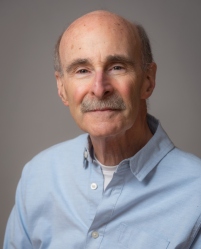
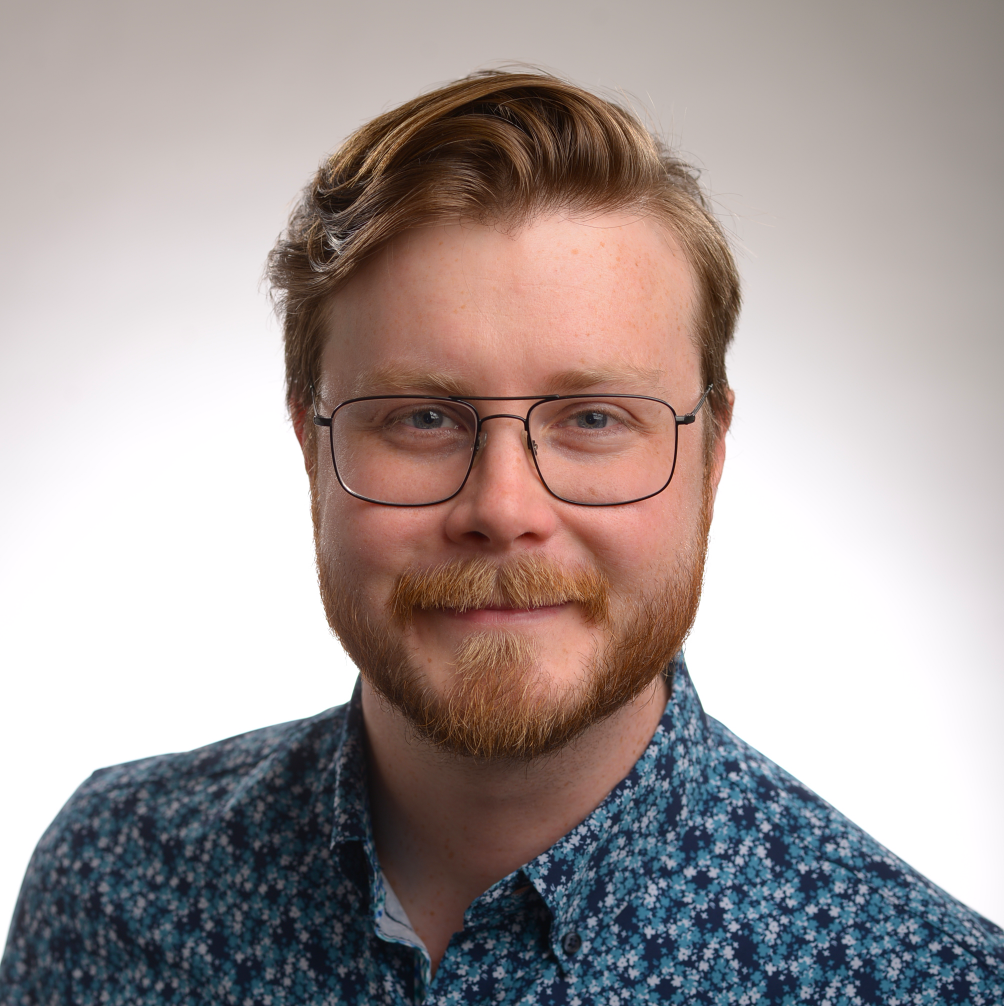
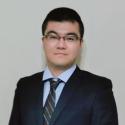
Antti H. Niemi is a Professor and Dean at the University of Oulu 's Faculty of Technology , specializing in computational solid and structural mechanics. His research focuses on advanced numerical methods for engineering analysis and design. Research areas include computational mechanics, structural engineering, and metamaterials Develops innovative finite element methods for thin-body problems Current projects address snow structures, timber building envelopes, and machine learning applications in mechanical systems His recent work emphasizes discontinuous Petrov-Galerkin (DPG) methods for plates and shells, with applications in civil and mechanical engineering. Publications cover: Snow and ice vaults (2024) Machine learning for steel beam capacity prediction (2024) Hygrothermal analysis of timber structures (2024) DPG formulation for Reissner-Mindlin plates (2023) Shell element benchmarking (2018-2022)
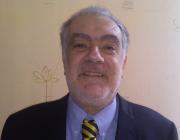
Professor Farookh Hussain is a distinguished academic at the School of Computer Science , University of Technology Sydney , specializing in Artificial Intelligence , Cloud Computing , and Software Engineering . His research spans diverse sectors including agriculture, manufacturing, healthcare, and transportation. Affiliated with the Australian Artificial Intelligence Institute (AAII) , he leads impactful work in business intelligence and carbon credit systems. Key research areas: AI applications, blockchain for provenance, carbon credit analytics Active in Masters/PhD supervision and cloud computing education Research Highlights : Developed KACINO framework for carbon dynamics modeling Created hybrid cybersecurity frameworks for supply chain risk management Advanced chatbot dialogue breakdown solutions through systematic reviews Proposed hypercomplex knowledge graph recommenders Published extensively on carbon credit price prediction and blockchain storage methods Contributions to water demand forecasting and collaborative robotics adoption Grant Activities : Secured funding from Hampton Capital Asset Management , Innovation Connections , and Science and Industry Endowment Fund Projects include LLM-driven text-to-SQL conversion , blockchain for melanoma data , and AI for storm water management
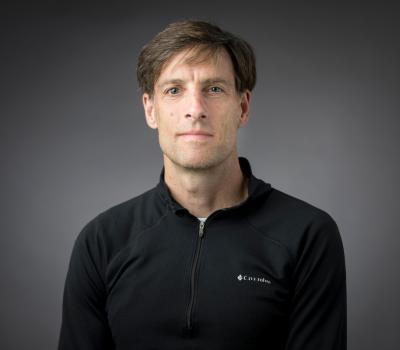
Tushar Sharma is an Assistant Professor at the Faculty of Computer Science, Dalhousie University, Canada. His research focuses on software code quality , refactoring , sustainable AI , and machine learning for software engineering (ML4SE) . He holds a PhD in Software Engineering from Athens University of Economics and Business (2019) and an MS in Computer Science from IIT-Madras (India). Current affiliations: Dalhousie University, SMART Lab, IEEE Senior Member Past experience: Siemens Research (2019-2021), Siemens Corporate Technology (2008-2015) Research interests span code quality assessment, technical debt management, and sustainable AI. He founded Designite , a widely used software design quality assessment tool, and contributed to the book Refactoring for Software Design Smells . Recent work examines energy-efficient language models for code, reproducibility issues in configuration scripts, and human-guided code smell detection. Publication trends reveal expertise in code smell detection, refactoring techniques, and green AI. His articles address topics like commit message generation, model quantization, and empirical studies on code quality. Collaborative efforts include tools like DesigniteJava 2.0 and frameworks for attention mechanisms in code language models. Scientific recognition: Dean's Research Excellence Award (2025), Best Artifact Award (SCAM 2023) Grants: Mitacs Accelerate grants ($225K, $15K, $30K), NSERC Discovery Grant ($154M CFREF climate action project), DRA computing resources ($51K) He actively contributes to academic service as PC Co-chair (ICSE 2024), editorial board member (JSS), and organizer of workshops on technical debt. His media coverage highlights environmental impacts of AI and software quality challenges.
Ed Grant is a Professor in the Department of Chemistry at the University of British Columbia (UBC), Faculty of Science. He leads research in chemical physics, focusing on laser spectroscopy, ultracold plasmas, and Raman spectroscopy. B.A., 1969, Occidental College Ph.D., 1974, University of California, Davis Research Interests: Grant's work spans fundamental and applied domains. His team investigates ultracold plasmas using molecular beam techniques, revealing Coulombic interactions and strong correlations. In Raman spectroscopy, they develop instruments for microscale biological sample analysis and employ multivariate classification. Recent projects integrate quantum computing, machine learning, and environmental science (e.g., microplastics' atmospheric impact). Scientific Awards: R&D 100 Award (1998) Fellow of the American Physical Society (1992) Humboldt Research Award (1992, 2012) Kelly Award for Excellence in Undergraduate Teaching (1990) Fulbright Senior Scholar (1988)
Enda Hayes serves as Professor of Air Quality & Carbon Management and Director of Research and Enterprise at the School of Architecture and Environment, University of the West of England (UWE Bristol). With over a decade of professional experience in environmental science, he specializes in atmospheric emissions management including odour, bioaerosols, traditional air pollutants, and greenhouse gases. His work spans technical modeling, policy development, and community engagement across multiple international projects. Dr. Hayes holds a PhD, MSc, and BSc (Hons), along with professional memberships MIEnvSc and MIAQM. His educational foundation has enabled extensive collaboration with governmental bodies including Defra, Devolved Administrations, South African government, Irish EPA, European Environment Agency, and European Commission. His research focuses on Air Quality Management, carbon management, emission inventories, dispersion modeling, bioaerosols, water-energy-food nexus, Water Security, and ammonia emissions. Recent work demonstrates interdisciplinary approaches combining environmental science with social dimensions of pollution management. He has particular expertise in urban air quality, agricultural emissions, and health impacts of traffic-related pollution. Analysis of Dr. Hayes' 136 publications reveals evolving research trajectories from technical emission modeling toward integrated socio-technical approaches. His recent work (2023-2025) shows strong emphasis on citizen science applications, health impacts (especially on children), advanced air quality forecasting techniques, and the psychological dimensions of climate decision-making. A consistent theme across his publications is bridging technical environmental solutions with social equity considerations. Dr. Hayes leads significant research initiatives including the Horizon 2020 ClariCity Project as Technical Director, the AmmoniaN2K Project with University College Dublin and Irish EPA, multiple NERC-funded bioaerosol studies, and European Commission support on Ambient Air Quality Directive review. His projects consistently integrate scientific rigor with practical policy applications and community engagement.
Fraser King is an incoming Assistant Professor in the Department of Atmospheric and Oceanic Sciences (AOS) at the University of Wisconsin–Madison, starting in Winter 2026. He holds a PhD in Machine Learning and Remote Sensing of Precipitation from the University of Waterloo (2022) and is currently a postdoctoral research associate at NASA Goddard Space Flight Center. His research integrates machine learning with atmospheric physics to advance precipitation and snowfall retrieval, cloud microphysics, and climate modeling. He has held research positions at the University of Michigan and NASA Jet Propulsion Laboratory. His research interests include: Climate and Climate Change Radiation and Remote Sensing Synoptic Meteorology Atmospheric and Cloud Physics Large Scale Dynamics Machine Learning and Model Interpretability Arctic Snowfall Prediction His recent publications reflect a strong trend in applying deep learning (e.g., U-Net, CNNs) and unsupervised methods (PCA, t-SNE, UMAP) to radar and satellite data for precipitation and snow microphysics. Key themes include radar gap inpainting, melting layer detection, and dimensionality reduction for physical interpretation. His work bridges geoscience and AI, aiming for interpretable models that enhance physical understanding. Scientific awards and professional service include: Finalist for the 2023 Governor General's Gold Medal, University of Waterloo Associate Editor, Journal of Atmospheric and Oceanic Technology (AMS) Member, AMS Committee on Artificial Intelligence Applications to Environmental Science Executive Council Member, AGU Precipitation Technical Committee Executive Member, Eastern Snow Conference Research Board Fraser King has mentored students through research projects and led educational initiatives such as a 12-week course on machine learning for land cover classification. He has secured research experience through internships at Aquanty Inc. and multiple NASA-affiliated institutions. He founded MapsByFraser, a company combining cartography and satellite data, and has collaborated with Google's Quantum AI team. His technical skills span Python, deep learning frameworks, and high-performance computing platforms. He leads several major research projects: Towards Interpretable Physical Models : Using sparse autoencoders and nonlinear dimensionality reduction to interpret geoscience models. Microphysical Dimensionality Reduction : Applying PCA, t-SNE, and UMAP to identify physical modes in precipitation data. BlindPaint : A U-Net for radar gap inpainting in spaceborne systems. DeepPrecip : A deep learning model for surface precipitation retrieval. iPhone LiDAR : Using consumer smartphones for snow depth measurement via drones. NRCan Machine Learning Land Cover Classifier : Training ML models on Sentinel-2 data. Climate Model Calibration : Using ML to correct biases in snow-related climate variables. CloudSat Snowfall Validation : Validating high-latitude snowfall estimates. Snow Modelling : A Rust-based physical/temperature-index snow model.
Josef Eitzinger is a full Professor at the University of Natural Resources and Life Sciences, Vienna (BOKU), affiliated with the Institute of Meteorology and Climatology. His research bridges agricultural meteorology, climate change impacts, and sustainable farming systems. He holds a Dr.nat.techn. degree and completed postdoctoral work at Colorado State University. His research focuses on: Agricultural meteorology and microclimatology Climate change impacts on crop production and water resources Drought monitoring and forecasting systems Agrivoltaics and renewable energy integration in agriculture Recent publications (2023-2025) emphasize climate risk modeling, soil moisture dynamics, agrivoltaic design, and sustainable land management. Trends show strong integration of remote sensing, machine learning, and cross-disciplinary approaches to address agricultural resilience. Awards & Honors: Austrian Sustainability Award 2018 WMO Award as RA VI expert team leader (2014) Klimaschutzpreis (2002) Pöttinger Preis (2001) He leads 67+ projects including EU initiatives like CropShift (climate-driven crop shifts) and Machine Learning ET Estimation . His team develops tools like the Agricultural Risk Information System (ARIS) for real-time agrometeorological forecasting. At BOKU's Institute of Meteorology and Climatology, he oversees micrometeorological field studies and collaborates with European research networks on climate adaptation strategies.
Ida Scheel is an Associate Professor in Statistics and Data Science at the University of Oslo , Department of Mathematics. She specializes in Bayesian hierarchical modeling, recommendation systems, and stochastic processes on networks. Her research interests include: Bayesian statistics and model diagnostics Data science applications in environmental and health domains Network-based machine learning Uncertainty quantification in predictive modeling Recent publication trends show a focus on Bayesian model validation, machine learning for product adoption prediction, and real-estate analytics. She contributes to interdisciplinary projects like BigInsight and CELS . Scientific awards : Sverdrup Prize for Young Researchers (2011) Advising : Supervised 8 PhD students (main/co-supervisor) in areas spanning Bayesian causal effects, neural network survival analysis, and model conflict detection. Key grants include participation in the Data Science@UiO and Integreat projects. Labs/teams : Active member of the Center for Computational Inference in Evolutionary Life Science (CELS) and the BigInsight center.
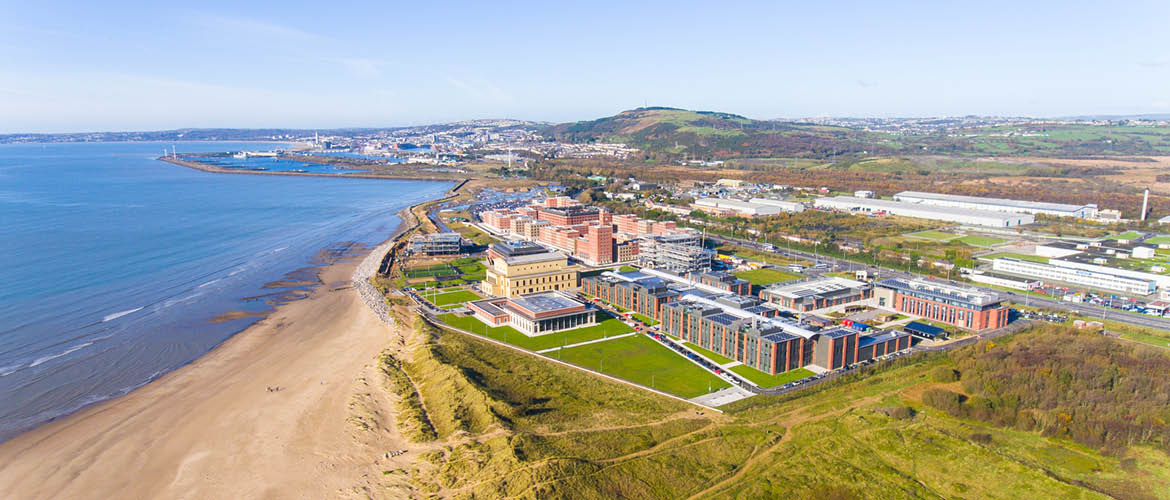
Sabri Boubaker is a Professor in the Department of Accounting and Finance at the School of Management , Swansea University. He holds a PhD from Université de Paris-Est and has an extensive publication record, with over 90 Scopus-indexed articles and 900+ citations. As co-founder of the Paris Financial Management Conference and the Vietnam Symposium in Banking and Finance , and President of the International Society for the Advancement of Financial Economics (ISAFE) , he is a key figure in empirical finance. He leads the Hawkes Seminar Series , attracting global speakers to engage with staff and students. His research focuses on ownership structure , control of listed companies , and the intersection of corporate governance with environmental finance . Recent work examines the impacts of climate policy , corporate carbon risk , and banking stability using advanced analytical frameworks like DEA-machine learning and MCDA . His supervision includes PhD projects in Islamic banking , though specific student names are not listed. Professor Boubaker’s publications span top-tier journals such as the Journal of Corporate Finance , Financial Management , and British Journal of Management , addressing topics like debt choice , sovereign wealth funds , and anti-corruption campaigns . He is an active member of the Hawkes Centre for Empirical Finance , contributing to global discourse on financial economics.
Dr. Ninghao Liu is an Assistant Professor of Computer Science in the School of Computing at the University of Georgia, part of the Franklin College of Arts & Sciences - Division of Physical & Mathematical Sciences. He holds a Ph.D. in Computer Science from Texas A&M University (2021) and an M.S. in Electrical and Computer Engineering from Georgia Institute of Technology (2015). His research focuses on Explainable AI (XAI), Graph Mining, Model Fairness, Recommender Systems, and Outlier Detection, with notable contributions to foundational AI techniques and their applications in education, healthcare, and environmental sciences. Dr. Liu has secured significant funding, including a three-year NSF grant (2022–2025) for 'Graph-Oriented Usable Interpretation' and a five-year $10 million grant from the U.S. Department of Education (2024–2029) for the GenAI Empowered National Initiative for STEM+C Education. He has also been honored with the Outstanding Paper Award at ICML 2022, Best Paper Award Shortlist at WWW 2019, and other distinctions. His work emphasizes interpretable machine learning, graph neural networks, and addressing algorithmic bias. He collaborates across disciplines, contributing to radiology AI, climate-smart forestry, and pandemic prediction through knowledge-enhanced deep learning. His lab is based at the Boyd Research and Education Center, where he advances research in trustworthy AI systems and data-centric solutions.
Nicholas V. Sarlis is a Professor of Experimental Solid State Physics at the Department of Physics , National and Kapodistrian University of Athens since 2017. With an h-index ≥36, he has authored 2 monographs, >155 peer-reviewed publications, and 80 conference communications. B.Sc. in Physics (1991), National and Kapodistrian University of Athens Ph.D. in Physics (1997), National and Kapodistrian University of Athens His research applies Natural Time Analysis to: Earthquake precursor identification Space weather and cosmic ray studies Climate phenomenon prediction (El Niño) Fracture mechanics and complex systems Seismicity and geoelectric field correlations Non-extensive statistical mechanics applications Recent work includes analyzing seismic entropy changes under time reversal and developing earthquake nowcasting systems. Publications span 2025's Statistical mechanics in geophysical contexts to 2024's cross-disciplinary disaster prediction tools.
Martin Bicher is a PostDoc Researcher at TU Wien, affiliated with the Department of Data Science under the Faculty of Informatics. He specializes in agent-based simulation, epidemiological modeling, and decision support systems for public health crises. His work focuses on optimizing resource allocation, vaccination strategies, and policy evaluation during pandemics. He teaches courses such as Modeling and Simulation (194.076), Modelling and Simulation in Health Technology Assessment (194.094), and Advanced Modeling and Simulation (194.056). His research is supported by projects like DynOptTestControl (2022–2026) and KLIPHA-COVID19 (2020–2021). Key research interests include agent-based modeling frameworks, integration of machine learning into simulation systems, and multi-criteria decision support for public health interventions. His publications analyze pandemic response strategies, vaccination prioritization, and the impact of environmental factors on disease spread. Recent work includes developing mathematical models for equitable disease testing, simulating vaccination strategies under supply uncertainties, and evaluating contact-tracing policies. He collaborates with interdisciplinary teams to address challenges in healthcare resource optimization and policy design. Advising two students, Bicher has mentored theses on railway simulation and delay modeling. His contributions to pandemic decision support have been featured in high-impact journals like Omega and PLoS ONE.
Alan Fern is a Professor of Computer Science and Robotics in the School of Electrical Engineering and Computer Science at Oregon State University. He leads research in artificial intelligence, focusing on reinforcement learning, planning, and robotics applications like humanoid robotics and agricultural AI. His work includes co-directing the Dynamic Robotics Lab and leading the AgAID National AI Institute for agricultural solutions. Fern holds a Ph.D. from Purdue University and has contributed to over 100 publications. His recognitions include the NSF CAREER Award and multiple best paper awards. Education: B.S., Electrical Engineering, University of Maine (1997) M.S. & Ph.D., Computer Engineering, Purdue University (2000 & 2004) Research Interests: His research spans machine learning, planning, and robotics. Key areas include: AI for humanoid robotics (e.g., bipedal locomotion on Cassie) Reinforcement learning algorithms and applications Agricultural AI for specialty crops Explainable AI and anomaly detection Awards: 2017 College of Engineering Research Collaboration Award 2013 AAAI Outstanding Paper Award 2006 NSF CAREER Award Advising & Labs: Supervised over 50 students. Key collaborations include the Dynamic Robotics Lab (with Jonathan Hurst) and AgAID. His teams address challenges like robot navigation, policy learning, and AI ethics. Labs/Teams: Dynamic Robotics Lab, AgAID National AI Institute, and contributions to computational sustainability initiatives.
Roberto Rojas-Cessa is a Professor in the Department of Electrical and Computer Engineering at New Jersey Institute of Technology (NJIT), affiliated with the School of Applied Engineering and Technology. His research focuses on networking, blockchain applications in smart cities, energy systems, wireless communications, and high-performance switching. He has led multiple National Science Foundation (NSF)-funded projects, including initiatives on controlled delivery power grids and next-generation network quality of service. Notably, his work explores blockchain for energy metering, sustainable environmental measures, and smart grid optimization. He is also a Senior Member of the National Academy of Inventors (2024). His research interests span network protocols, distributed systems, and IoT applications. Recent projects include AMI-Chain (a blockchain-based power metering system) and studies on indirect free-space optical communications for vehicular networks. He has contributed to advancements in medium access control for crowded networks and energy packet switches for digital microgrids. Rojas-Cessa’s work integrates machine learning for network management and flood impact analysis. He has developed tools for time-lapse analysis of urban data and agent-based models to evaluate electric vehicle adoption. His publications emphasize scalability, security, and efficiency in both traditional and emerging technologies. Grants: Collaborative Research on Power Grids (NSF, 2016–2018), NeTS-NR: Quality of Service Networks (NSF, 2004–2008) Awards: Senior Member of the National Academy of Inventors (2024) His lab activities include experimental evaluations of digital microgrids and blockchain implementations for carbon footprint tracking. He actively collaborates on projects addressing emergency communications and resilient energy distribution systems.
Summer Rupper is a Professor at the School of Environment, Society & Sustainability at the University of Utah, where she has held her position since July 2019. Her research focuses on understanding the interactions between climate, glaciers, and water resources, with particular emphasis on high mountain regions including High Mountain Asia, the Himalayas, and polar regions. She leads multiple research projects examining glacier dynamics, hydrological processes, and climate change impacts on water security for downstream populations. BS in Geology from Brigham Young University (2001) MS in Geology from University of Washington (2004) PhD in Earth and Space Sciences from University of Washington (2007) Professor Rupper's research spans physical geography, environmental geoscience, and climate change science, with specific expertise in glaciology, hydrology, and atmospheric sciences. Her work integrates field measurements, remote sensing, and numerical modeling to understand glacier dynamics, snow processes, and water resource availability in mountainous regions. She has particular expertise in High Mountain Asia, where glaciers provide critical water resources for over a billion people. Her research addresses fundamental questions about glacier response to climate change, hydrological partitioning, and the implications for water security in vulnerable regions. Her recent publications demonstrate a consistent focus on understanding glacier dynamics, hydrological processes, and climate interactions in mountainous regions. The work spans multiple methodologies including remote sensing analysis, numerical modeling, statistical approaches, and field-based measurements. Key themes include glacier melt contributions to river systems, precipitation patterns in complex terrain, snow density modeling, and the impacts of climate change on water resources in High Mountain Asia and polar regions. Her research often integrates multiple data sources and approaches to address complex questions about cryospheric processes and their societal implications. Superior Research Award (2024, CSBS, University of Utah) G.K. Gilbert Award for Excellence in Geomorphic Research (2022) Outstanding Utah Higher Education Science Teacher (2021) Top Researcher Award, Celebrate U showcase (2017) Antarctic Service Medal (2010, USAF) Professor Rupper actively mentors graduate students through thesis research courses at both the PhD and Master's levels, as well as individual projects. She has secured significant research funding from multiple federal agencies including NSF, NASA, and USAID, with current projects examining climatic controls on Antarctic ice sheets, glacier dynamics in High Mountain Asia, and historical glacier changes. Her collaborative work extends across international boundaries, working with scientists in Pakistan, Bhutan, and other regions to address shared water security challenges. She also engages in community outreach through workshops with school districts and science teacher associations to communicate climate science to broader audiences. Professor Rupper participates in multiple collaborative research teams including the NASA High Mountain Asia Team (HiMAT), where she contributes expertise in glacier dynamics and hydrology. She serves on several scientific committees including the NSF Ice Core Facility Sample Allocation Committee and the American Geophysical Union Cryosphere Section Fellows Committee. Her research often involves interdisciplinary teams combining expertise in glaciology, hydrology, remote sensing, and climate modeling to address complex questions about mountain water systems under changing climate conditions.