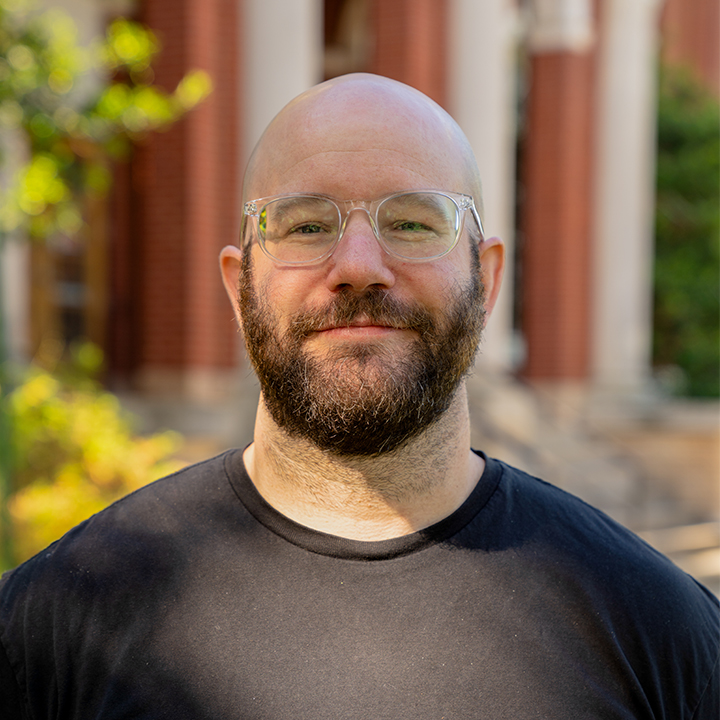
John Beckmann is an Associate Professor in Entomology & Plant Pathology at Auburn University's College of Agriculture. His research integrates molecular biology, evolutionary algorithms, and biotechnology to study Wolbachia symbiosis, cytoplasmic incompatibility, and vector-borne diseases. Key innovations include AI-driven biotech tools and bite-blocking textiles for mosquito control. Dr. Beckmann leads NSF CAREER-funded projects on pathogen effector origins and incompatibility mechanisms. Publications span high-impact journals, with recent work on metagenomics, insecticide screening, and gene transfer. He mentors students in entomology and biotechnology, emphasizing interdisciplinary approaches to solve agricultural and medical challenges.
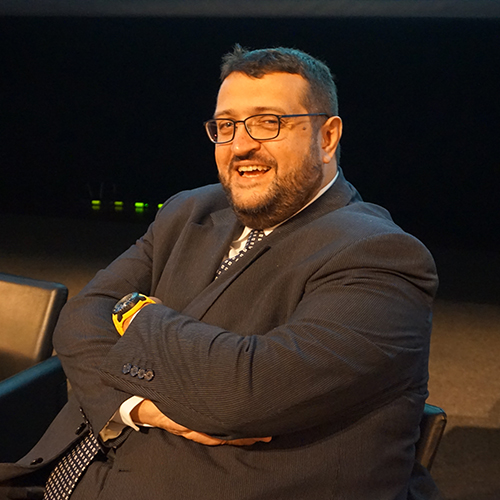
Timothy M. Wick, Ph.D., is a Professor in the Department of Biomedical Engineering at the University of Alabama at Birmingham (UAB). He serves as Director of Engineering Design and Director of the BS in Engineering Design Program. His research focuses on orthopedic tissue engineering, transdermal drug delivery systems, and engineering innovation. He has trained over 90 graduate students and 100+ undergraduates in design and project management. Education: B.S. Chemical Engineering (University of Colorado), Ph.D. Chemical Engineering (Rice University), Postdoc in Biochemistry (Rice University) Labs: Director of School of Engineering Design & Prototyping Lab and founder of Project Lab (2015) His labs provide students access to advanced equipment including 3D printers, CNC machines, and laser cutters. Project Lab collaborates with clients like Children’s of Alabama Simulation Center, Alabama Department of Rehabilitation Services, and industry partners. He developed UAB’s BS in Engineering Design program, which emphasizes product development and project management skills. Client Impact: Delivered 25+ products in medical simulation, disability aids, and workflow optimization for manufacturing/healthcare sectors Career Outcomes: Graduates work at Honda, Tesla, Johnson Controls, and top academic programs Award-winning educator, he prioritizes student development and hands-on learning through interdisciplinary projects.
Conor McCarthy is a Professor at the University of Limerick, affiliated with the School of Engineering and multiple research centers including the Bernal Institute, Centre for Research Training in Foundations of Data Science, and Centre for Sustainable Digital (Re)Manufacturing. His research focuses on advanced materials, composite systems, and manufacturing processes, with emphasis on finite element analysis, 3D printing, and sustainable materials engineering. Key research interests include composite material behavior under various loading conditions, bolted joint performance, and the integration of machine learning in manufacturing processes. His work contributes to UN Sustainable Development Goals through advancements in sustainable manufacturing and material durability. Recent publications highlight innovations in 4D printing of weather-resistant nanocomposites, robotic drilling optimization, and the mechanical properties of shape-memory materials. His interdisciplinary approach bridges materials science with advanced manufacturing technologies.
Noel O'Dowd is a Professor at the University of Limerick, holding dual affiliations with the Bernal Institute and the School of Engineering. His research focuses on Computational Mechanics, Fracture Mechanics, Materials Behaviour, and Structural Integrity, with a particular emphasis on composite materials, metallic alloys, and advanced manufacturing processes. He has contributed extensively to understanding material behavior under extreme conditions, including thermal aging, mechanical fatigue, and microstructural evolution. Prof. O'Dowd’s expertise spans experimental and computational methods, including finite element analysis (FEA), machine learning for material modeling, and in-situ microscopy techniques. His work addresses challenges in aerospace, energy, and biomedical engineering sectors, aligning with UN Sustainable Development Goals related to infrastructure and industry innovation. Recent research trends include optimizing manufacturing processes via neural networks, analyzing interfacial properties of bio-based composites, and investigating phase transformations in high-performance steels. He collaborates internationally, with studies often involving advanced materials characterization and multiscale modeling. Prof. O'Dowd has authored over 210 publications and serves on editorial boards of materials science journals. His lab, affiliated with the Bernal Institute, focuses on bridging computational and experimental approaches to advance structural integrity and material innovation.
Dr. Eoin Hinchy is an Associate Professor at the University of Limerick (UL), affiliated with the School of Engineering, Bernal Institute, and the Centre for Sustainable Digital (Re)Manufacturing. His research focuses on digital manufacturing, advanced robotics, and additive manufacturing, with emphasis on robotic safety systems and machine learning applications. He holds a PhD in Mechanical Engineering from UL (2016) and previously worked at DePuy Synthes and Confirm Smart Manufacturing. His work integrates digital twin technology, robotics, and 3D printing to enhance manufacturing processes. He leads an SFI-ADI co-funded project on human-robot interaction in factories. Teaching interests include advanced manufacturing processes, industrial robotics, and smart manufacturing systems. He has published extensively on topics such as 4D printing, composite material processing, and machine learning in manufacturing quality control. Recent research trends include the development of adaptive materials for 3D printing, robotic drilling optimization, and digital twin frameworks for life sciences automation. His collaborative projects with industry partners like Analog Devices International aim to advance factory-of-the-future technologies.
Prof. Giambattista Gruosso is an Associate Professor of Electrical Engineering at the Polytechnic University of Milan's Department of Electronics and Information. His research focuses on modeling and simulation of electrical/electronic systems, electromagnetic devices, magnetic materials, and optimization techniques. He explores IoT and embedded systems for fault analysis and energy performance prediction, with emphasis on energy systems for transportation and sustainability. His work involves developing numerical simulators for electromagnetic fields and digital twins for industrial systems. He is a Senior Member of IEEE, part of the SPS-DRIVE Italia scientific committee, and a reviewer for multiple journals. His research lab, SimLab, specializes in digital transformation of electrical systems using Hardware-in-the-Loop (HIL) simulations to create Digital Twins. Projects address Industry 4.0 technologies for complex electrical systems, including smart grids and EV integration. Notable contributions include frameworks for EV charging optimization, grid stability via machine learning, and fault detection in CNC machinery. His work bridges theoretical models with practical applications in energy efficiency and industrial automation.
Michael Hacon is a Demonstrator in Mechanical Engineering at Bournemouth University within the Faculty of Science and Technology. His role focuses on hands-on instruction in engineering principles and student project supervision across machining and manufacturing disciplines. Education: BSc Engineering (Hons) His expertise centers on practical manufacturing engineering, including CNC machining, CAD/CAM programming, automation systems, industrial robotics, and composite materials production. He integrates industry experience into teaching through projects like the Stirling Engine flywheel press tool, which exposes students to integrated machining techniques, prototype manufacturing, and tool design for real-world applications. Scientific Awards: No awards mentioned With 10 years as Principal Technician at the University of Portsmouth and 8 years in aerospace manufacturing, Mr. Hacon mentors students through complex technical projects while maintaining strong industry connections. His instruction spans pneumatics, injection molding, and lightweight composite production for aviation interiors, emphasizing applied learning in laboratory settings.
William Green is a Lecturer in the Department of Manufacturing Technology at Colorado Mesa University. Born in San Antonio, Texas, and raised in Montrose since 1975, Green brings extensive industry experience to his academic role. After earning an Associates Degree in Laser Electro-Optics from Albuquerque Technical Vocational Institute, he worked at The Aerospace Corporation in California, specializing in high-powered lasers, satellite tracking systems, high-voltage power systems, and space shuttle programs. In 1989, he returned to Montrose, transitioned into CNC machining and manufacturing roles with local companies, and now teaches with a hands-on approach emphasizing experiential learning. Education: Associates Degree in Laser Electro-Optics from Albuquerque Technical Vocational Institute Green's research and teaching interests span advanced manufacturing technologies, including precision machining, electro-optical systems, and aerospace engineering applications. His career bridges industrial expertise with academic mentorship, focusing on practical skill development and student-driven challenges in manufacturing disciplines.
Cvijetin Mlađenović is an Assistant Professor at the Faculty of Technical Sciences, University of Novi Sad , specializing in machine tools, technological systems, and CAD/CAE/CAM integration. His research focuses on machining process optimization, thermal behavior modeling of machine components, and vibration analysis for manufacturing stability. Department: Chair of Computer Aided Technological Systems and Design His work leverages neural networks and machine learning to address challenges in machining parameter optimization and predictive maintenance. Recent publications (2022-2025) highlight applications in Ti-6Al-4V alloy machining, spindle thermal modeling, and small dataset-driven optimization. Key trends in his research include integrating artificial intelligence with traditional manufacturing methods, improving geometric accuracy via laser systems, and advancing hybrid mechanism design for machine tools. Notable projects include stability lobe diagram modeling and development of workpiece manipulation devices (patent 2012).
Sanjeev Bedi is a Professor in the Department of Mechanical and Mechatronics Engineering at the University of Waterloo, holding the position of NSERC Design Chair and serving as Director of the IDEAs Clinic. He founded both the Engineering IDEAs Clinic and the NSERC Chair in Immersive Design Engineering Activities (IDEAs). Bedi leads the 5-Axis Surface Machining Lab and previously served as Director of Mechatronics Engineering from 2006 to 2012. He is also a founding faculty member of the Mechatronics Engineering Program at Waterloo. Education: Doctorate in Engineering (1987), University of Victoria, Victoria, BC Master's in Mechanical Engineering (1984), University of British Columbia, Vancouver, BC Bachelor's in Mechanical Engineering (1982), Indian Institute of Technology, Kanpur Professor Bedi's research focuses on advanced manufacturing techniques, particularly 5-axis machining, tool path strategies, NC controller design, and surface machining methods. His expertise spans flank milling, gouge detection and avoidance mechanisms, automated polishing, complex curve machining methods (including Principle Axis Method and Multi-Point Method), machined surface evaluation, and surface finish estimation. He has developed innovative approaches like the Drop and Tilt Method for tool positioning in 5-axis machining. His research bridges theoretical computational geometry with practical manufacturing applications, addressing challenges in precision machining of complex surfaces. Analysis of his recent publications reveals a strong focus on computational methods for 5-axis machining, particularly for tensor product surfaces and triangulated models. His work consistently addresses practical manufacturing challenges while developing novel geometric algorithms. In recent years, he has expanded his research scope to include engineering education, developing innovative approaches to design education and multidisciplinary teamwork training. As Director of the IDEAs Clinic, Bedi has overseen significant educational initiatives with over 24,000 student contacts and employment of more than 100 co-op students, 10+ research assistants, and 5 sessional lecturers. The clinic has sponsored five courses including engineering and art, experiential engineering modules for MEng students, and practical FEA courses for graduate students. Professor Bedi has taught several courses in recent years including MTE 100 (Mechatronics Engineering, 2020-2024), MTE 380 (Mechatronics Engineering Design Workshop, 2024), and MTE 481 (Mechatronics Engineering Design Project, 2022-2023), demonstrating his ongoing commitment to engineering education and student development.
Dr. Nebojša Stanković is an Assistant Professor at the Department of Information Technologies, Faculty of Technical Sciences, University of Kragujevac. With over 30 years of academic experience since 1992, he specializes in information technologies, programming education, and multimedia systems. His research focuses on artificial intelligence applications in education and innovative teaching methodologies. Education: BSc (1991): Technical Faculty Čačak, University of Kragujevac MSc (2009): Technical Faculty Čačak, University of Kragujevac PhD (2021): Faculty of Technical Sciences Čačak, University of Kragujevac Dr. Stanković's research spans multiple areas including artificial neural networks for predicting student success in programming, e-learning technologies, and multimedia systems. He has made significant contributions to understanding how AI can enhance educational outcomes, particularly in computer science education. His work also addresses cybersecurity in educational contexts and the impact of digital tools on teaching methodologies, with a strong focus on practical applications that improve learning experiences. His recent publications show a clear trend toward AI applications in education, with a particular emphasis on using machine learning to predict student success in programming. He has also explored cybersecurity challenges in educational environments, pollen level prediction using ML techniques, and optimizing solar energy yield through hybrid AI models. These works demonstrate his interdisciplinary approach connecting computer science with practical educational and environmental applications. Dr. Stanković has been an authorized ECDL (European Computer Driving Licence) examiner since 2005 and has co-authored three accredited teacher training programs. He has organized numerous computer training courses for employees and unemployed in cooperation with the Employment Bureau and has been actively involved in the "Technics and Informatics in Education" conference series since 2006. He has served as an organizer and technical editor for multiple academic conferences and has contributed to the development of educational materials including several textbooks on information technologies, multimedia systems, and computer applications.
Florian Senn is a Lecturer for Manufacturing and Automation at the Fachhochschule Nordwestschweiz FHNW (University of Applied Sciences and Arts Northwestern Switzerland), specifically within the School of Engineering and Environment and the Institute of Product and Production Engineering. His academic activities focus on applied automation in manufacturing and production, with a strong emphasis on robotics, PLC programming, industrial fixture construction, and lean production methodologies. He actively contributes to laboratory exercises involving CNC machining, cutting force measurement, and PLC programming, supporting hands-on learning in manufacturing technology.
Mark French is a Professor in the Department of Mechanical Engineering Technology within Purdue University's Polytechnic Institute, where he has served since 2004 after transitioning from aerospace engineering and automotive industry careers. His work uniquely bridges industrial practice and academia through experimental mechanics and stringed instrument design. His educational background includes: B.S. in Aerospace and Ocean Engineering from Virginia Tech (1985) M.S. in Aerospace Engineering from the University of Dayton (1988) Ph.D. in Aerospace Engineering from the University of Dayton (1993) Prof. French's research centers on Experimental Mechanics , Noise and Vibration Analysis , and Stringed Instrument Design , where he innovates by merging traditional luthiery with modern engineering techniques like CNC machining and fractional calculus modeling. His work emphasizes practical applications in industrial support systems and guitar craftsmanship. His publication trend reveals a consistent focus on translating engineering principles to musical instrument design, particularly through American Lutherie journal articles that blend academic rigor with artisanal practice. Recent works emphasize CNC automation in luthiery, historical building methods, and mechanical impedance analysis. His honors include: Three College Awards for Outstanding Undergraduate Teaching (2008, 2014, 2018) 2018 University-level Murphy Teaching Award 2018 Purdue Book of Great Teachers 2010 Society for Experimental Mechanics Brewer Award 2024 Purdue MEP Lifetime Achievement Award for industry impact Through Purdue's TAP40 program, French has managed over 115 industry projects providing fee-free technical assistance to Indiana businesses, impacting hundreds of jobs with eight-figure economic benefits. He mentors students in the Guitar Lab while leading industry collaborations like the Gibson partnership. His YouTube channel (7.7M views) extends his educational reach globally. He directs the Purdue Guitar Lab, which has produced custom instruments including the 2025 Indianapolis Colts 'Win for Jim' tribute guitar. The lab's Gibson partnership and collaborations with local businesses like Freckles Graphics and Prime Body and Paint create experiential learning opportunities combining engineering technology with musical artistry.
Dr Darren Watts is a Senior Lecturer and Senior Teaching Fellow in CAD & CAE at the Wolfson School of Mechanical and Manufacturing Engineering, Loughborough University. He serves as Director of Professional Training and IMechE Academic Liaison Officer. His expertise spans Additive Manufacturing, CAD/CAE software development, and design optimization. Education: BEng (Hons) Mechanical Engineering and MSc(Eng) Product Design & Management from the University of Liverpool, followed by a PhD in Topology Optimization for Rapid Manufacturing at Loughborough University. Research interests include Bespoke CAE software, Genetic Algorithms, Virtual Assembly Methods, and Medical Applications of Additive Manufacturing. He has led projects such as the EPSRC-funded 'Topologically Optimised Street Furniture for Concrete Printing' and 'Exploitation of Sinus Surgery Simulation Phantoms'. Awards include the Loughborough University Enterprise Award for Cultural Impact (2013) and a Royal Academy of Engineering Industrial Secondement Award (2013-2014). He is a Chartered Engineer and Fellow of the Higher Education Academy. Key roles: Co-Investigator on multiple EPSRC grants, Principal Investigator for surgical simulation projects, and industrial collaboration through Majenta PLM Ltd secondment. Labs/Teams: Core academic member of the Additive Manufacturing Research Group (AMRG), contributing to customized assembly and medical device prototyping advancements.
Sanja Antić, PhD , is an Associate Professor in the Department of Electrical Engineering at the Faculty of Technical Sciences Čačak , University of Kragujevac , Serbia. She has been a faculty member since 2001, teaching a broad range of control-systems and electrical-engineering courses. Education PhD in Electrical Engineering, Faculty of Electrical Engineering, University of Belgrade (2016) Dissertation: “Application of Model-Based Failure Detection Methods in Electro-Mechanical Systems” MSc in System Control, Faculty of Technical Sciences Čačak (2009) Thesis: “Simulation and Realization of Voltage-Current Control of a DC Micro Motor” Dipl. Ing. in Industrial Power Engineering, Faculty of Technical Sciences Čačak (2000) Thesis: “Application of Fuzzy Logic in Estimating the Dynamic Model of a DC Motor” Research Interests Her research centres on model-based fault detection and isolation (FDI) for electromechanical systems, with particular emphasis on permanent-magnet DC motors and their associated power-electronic amplifiers. She develops structured and directional residual techniques combined with parameter-estimation algorithms to detect actuator, sensor and multiplicative faults. Additional interests include energy-efficient electric drives , digital control systems , torque-ripple reduction in induction motor drives , and the creation of remote and virtual laboratories for engineering education. Scientific Awards & Recognition “Vuk Karadžić” diploma for exceptional academic performance (primary & secondary school) Top graduate of the 1999/2000 academic year, Faculty of Technical Sciences Čačak Projects & Funding Principal Investigator, Serbian Ministry of Education project “Modernisation of three compulsory courses in Electrical Machines 2, Automatic Control and Electric Drives” (2020-2021) Team member, TEMPUS project “Building Network of Remote Labs for strengthening university-secondary vocational schools collaboration” (2013-2016) Participated in national technological-development projects on energy efficiency of electric motor drives (2011-2014) and prototype development of a 4-axis CNC welding machine (2011-2012) Teaching & Educational Contributions Dr Antić has designed and delivered courses in Automatic Control , Digital Control Systems , Control of Electromotive Drives , Fundamentals of Electrical Engineering and Electric Drives . She co-authored three textbooks and numerous workbooks and practicums that integrate remote-experiment platforms, thereby fostering hands-on learning aligned with Industry 4.0 concepts.