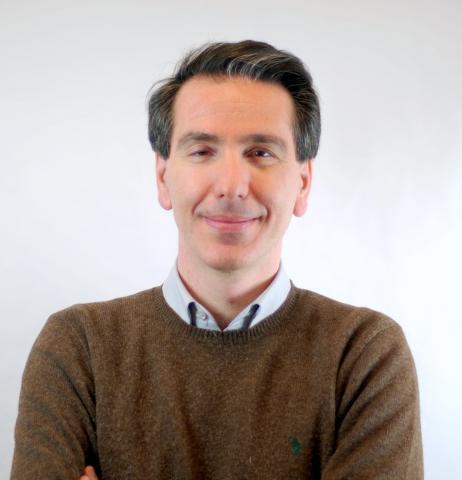
Luca Demetrio is an Assistant Professor at the University of Genoa, Italy, specializing in adversarial machine learning and cybersecurity. Previously, he was a Post-doctoral Researcher at the PRA Lab within the Department of Electrical and Electronic Engineering at the University of Cagliari. He holds bachelor's (2015), master's (2017), and Ph.D. (2021) degrees from the University of Genova, with his doctoral thesis focusing on formalizing evasion attacks against security detectors. His research emphasizes enhancing the robustness of machine learning models against adversarial attacks, particularly targeting malware detectors, SQL injection defenses, and Windows security systems. He leads the development of SecML Malware, a Python library for generating adversarial Windows malware, and contributes to the SecML framework. His work has been published in top-tier journals like ACM TOPS and IEEE TIFS. Key research interests include adversarial example generation, malware analysis, and cybersecurity defense mechanisms. He has explored query-efficient attacks on phishing detectors, certified adversarial robustness via randomized smoothing, and robust synthetic data-driven threat detection. His recent studies (2023–2025) address challenges in hardening machine learning models against evasion attacks, adversarial SQL injection countermeasures, and securing autonomous driving systems from adversarial reinforcement learning attacks.
Federico Miretti is an Assistant Professor at the Polytechnic University of Turin, affiliated with the Department of Energy and the interdepartmental center Cars@PoliTo. His research focuses on hybrid and electric vehicles, with emphasis on energy management strategies, battery state estimation, and sustainable transport solutions. PhD in Energetics from Polytechnic University of Turin Research areas include: Optimization-based Energy Management Strategies for hybrid propulsion systems Simulation and digital twinning of hybrid systems Thermal management for electrified vehicles Techno-economic assessment of mobility solutions Recent publications highlight advancements in battery temperature anomaly detection, wireless power transfer feasibility, and control algorithms for energy efficiency. His work aligns with SDGs 7 (Clean Energy) and 9 (Innovation). Teaching roles include: Fluid Machinery (2019-2025) Energy Management in Hybrid/Electric Vehicles (2021-2025) Projects: PRoSIT (2025): Predictive thermal management demonstrator Consulting contract with MIDAC SpA (2025): Battery Digital Twin development EBOAT project (2025-2026): Technical support for Vulkan
Sandra Paterlini is a Full Professor in the Department of Economics and Management at the University of Trento, Italy. She holds academic roles including Co-Chair of the ERCIM Working Group on Optimization Heuristics and Vice-Chair of the IEEE Task Force on Portfolio Optimization. Her career includes visiting positions at institutions such as the University of Minnesota and Ludwig-Maximilians-Universität München. She earned a PhD in Computational Methods for Financial and Economic Decisions from the University of Bergamo, an MSc in Financial Mathematics from the University of Warwick, and a Laurea in Economics from the University of Modena and Reggio E. Her research focuses on quantitative finance, risk management, portfolio optimization, and network analysis, with applications to ESG, systemic risk, and financial stability. Key research contributions include methodologies for sparse graphical modeling, systemic risk analysis, and ESG scoring frameworks. She has received multiple awards for research excellence and serves on editorial boards of journals like Computational Statistics & Data Analysis and Frontiers in Applied Mathematics and Statistics . Her work bridges academia and policy, with contributions to the European Central Bank’s Financial Stability Directorate and involvement in global conferences on computational finance and econometrics.
Neil Shah is a Lead Research Scientist at Snap Inc., leading initiatives in user modeling, personalization, and trust and safety across Snapchat. His research focuses on advancing machine learning algorithms for large-scale structured data, including graph and sequential representations, with applications to recommendation systems and social platform security. PhD in Computer Science, Carnegie Mellon University (2017), advised by Christos Faloutsos B.S. in Computer Science, North Carolina State University Current research interests span: Graph Neural Networks (GNNs) for real-time inference and scalable training Cross-domain recommendation systems and generative modeling Test-time augmentation and hyperbolic geometry in representation learning Explainability methods for GNNs and fairness-aware outlier detection Recent publications highlight productionized GNN frameworks (GiGL), multimodal graph benchmarks, and novel approaches to link prediction and collaborative filtering. His work has appeared at top venues like KDD, ICLR, NeurIPS, and WWW. Scientific recognition includes: Outstanding Service Award at WSDM 2022 Best Paper Honorable Mention at CHI 2019
Stefano Leonardi is a Full Professor in the Department of Computer, Control and Management Engineering Antonio Ruberti at Sapienza Università di Roma. His research focuses on Algorithm Theory, Algorithms and Data Science, and Economics and Computation. He leads the ERC Advanced Grant project AMDROMA, exploring algorithmic mechanisms for online markets. He has held roles as Conference Chair for STOC 2021, WWW 2015, and FUN 2018, and coordinates the Sapienza School of Advanced Studies (2016-2018). His work spans approximation algorithms, online algorithms, and mechanism design. Awards include the ERC Advanced Grant and EATCS Fellowship. His research interests emphasize foundational algorithmic problems in web-based markets, leveraging rigorous design and large-scale data analysis. Recent projects include ALGADIMAR (PRIN 2019-2022) for digital market algorithms. He chairs the Highlights of Algorithms conference series and serves on program committees for top venues like EC, ICALP, and SODA. His lab focuses on web algorithmics and data mining, addressing challenges in online labor markets and fair division. Leonardi's academic contributions include over 100 publications, with recent work on fair algorithms, prophet inequalities, and mechanism design in auctions. He has pioneered methods for submodular optimization, online learning, and multi-agent systems. Grants and awards reflect his leadership in bridging theory with real-world applications, particularly in digital economies. Grants: ERC Advanced Grant (2018-2023), PRIN ALGADIMAR (2019-2022) Leadership: Chair of ACM STOC 2021, WWW 2015, and 9th FUN Conference Labs/Teams: Laboratory on Web Algorithmics and Data Mining Key Projects: AMDROMA (algorithmic mechanisms), ALGADIMAR (digital markets)
Riccardo Raheli is a Full Professor at the University of Parma , Department of Engineering and Architecture, with a career spanning over three decades in Information and Communication Technologies (ICT). He has served as Chair of the Councils for Telecommunications and Communication Engineering programs, and as representative of the University of Parma in CNIT and its Members' Assembly. Education: Laurea in Electronic Engineering (University of Pisa, 1983), M.Sc. in Electrical and Computer Engineering (University of Massachusetts, 1986), Postgraduate Diploma (Scuola Superiore Sant'Anna, 1987) Key Roles: President of Degree Councils (2002-2018), CNIT Committee Member (2000-2005), Editorial Board member for IEEE Transactions, Springer and MDPI journals His research bridges telecommunications , digital signal processing , and healthcare applications , producing extensive international publications and industrial patents. He has co-authored monographs including Detection Algorithms for Wireless Communications (Wiley, 2004) and LDPC Coded Modulations (Springer, 2009). Recent article trends show interdisciplinary work in automotive stress monitoring (IoT/Matlab-based systems), video processing for healthcare (neonatal seizures, respiratory monitoring), and acoustic field control (microphone virtualization, personal sound zones). His work spans machine learning applications in automotive systems, stochastic acoustic modeling , and power-line communications . Scientific Leadership : Co-Chair for IEEE conferences (ICC 2010, GLOBECOM 2011, ISPLC 2020) Editorial roles in 7+ international journals Grants & Collaborations : Led industrial patents in communications systems Coordinated CNIT Technical Reports series (2025) He teaches Wireless Communications and Digital Signals Laboratory , emphasizing Matlab/Simulink proficiency. His laboratory sessions focus on practical implementation of signal processing algorithms, requiring full software installation on personal devices.
Seth Frey is an Associate Professor in the Department of Communication at the University of California, Davis, with affiliate status at Indiana University's Ostrom Workshop and as Research Director at Metagov. His research focuses on computational social science approaches to understanding self-governance in complex social systems, particularly through the lens of online communities as model institutions. Education: Ph.D. in Cognitive Science and Informatics (complex systems), Indiana University, 2013 B.A. in Cognitive Science, UC Berkeley, 2004 Research Interests: Frey specializes in computational approaches to institutional analysis and the cognitive science of strategic behavior . His work examines how communities design governance systems to overcome collective action problems, with emphasis on: Emergent institutional structures in digital commons Policy-as-data through NLP and institutional grammar frameworks Cognitive mechanisms underlying cooperative behavior Design principles for participatory change in online platforms His methodology integrates large-scale data analysis, web-based experiments, and computational modeling across diverse contexts including Minecraft, Reddit, and professional sports ecosystems. Publication Trends: Recent publications (2023-2025) demonstrate a cohesive trajectory toward computational institutional analysis, with increasing focus on NLP-driven policy analysis (e.g., NLP4Gov), decentralized governance architectures (DAOs, multi-level platform governance), and the cognitive foundations of collective action. His work consistently bridges theoretical institutional analysis with practical applications in digital community design, showing particular growth in translating Ostrom's design principles into computational frameworks. Awards: Honorable Mention Award for Best Paper at ACM CSCW 2019 Advising and Grants: Frey mentors students interested in data science applications at the intersection of communication, cognition, and complex systems, emphasizing resourcefulness and intellectual curiosity. His research has secured substantial funding from: National Science Foundation (NSF) NASA Ford Foundation Google Open Source Foundation He actively encourages aspiring graduate students with strong self-directed research skills to explore computational approaches to social phenomena. Labs and Teams: He leads the Computational Communication Lab at UC Davis and co-directs the Institutional Grammar Research Initiative. Through Metagov, he develops the 'Governance API' framework for modular community governance. His past affiliations include Disney Research (Walt Disney Imagineering) where he applied complexity science to theme park systems, and the New England Complex Systems Institute (NECSI). Current collaborations span Ethereum governance, Minecraft server ecosystems, and Colorado's cannabis monitoring infrastructure.
Stefano Grivet-Talocia is a Full Professor at the Department of Electronics and Telecommunications at the Polytechnic University of Turin, where he also serves as Director of the Doctoral School and President of the Doctoral School Council. He is a member of the Interdepartmental Center SmartData@PoliTO - Big Data and Data Science Laboratory, the University Committee for Research, Technology Transfer and Services to the Territory, and the Commission for the Promotion of Library, Archive and Museum Heritage. His academic career spans over two decades at Politecnico di Torino, where he has established himself as a leading researcher in electromagnetic modeling and signal integrity. Grivet-Talocia earned his Laurea degree (summa cum laude) in Electronic Engineering in 1994 and his Ph.D. in Electronic and Communication Engineering in 1998, both from the Polytechnic University of Turin. Between 1994 and 1996, he conducted research at NASA/Goddard Space Flight Center in Greenbelt, Maryland. His educational background laid the foundation for his expertise in electromagnetic modeling, wavelet analysis, and signal processing. His research focuses on behavioral modeling, electromagnetic compatibility, macromodeling, model order reduction, numerical modeling, passivity, power integrity, signal integrity, transmission lines, and wavelets . Grivet-Talocia is particularly renowned for his work on passive macromodeling of interconnect structures, development of the TOPLine technique for transmission line simulation, and pioneering contributions to passivity enforcement algorithms. He has co-authored the first book entirely dedicated to Macromodeling (2016) and developed innovative approaches to waveform relaxation and wavelet-based signal processing. His recent publications (2024-2025) demonstrate continued leadership in model order reduction, with significant contributions to data-driven modeling of linear and nonlinear systems, power integrity analysis, and electromagnetic compatibility. His work spans both theoretical advances in numerical methods and practical applications in circuit design, with strong industry relevance particularly for semiconductor and electronic design automation companies. IEEE Fellow (2018-present) Three Intel SRS Grants (2022-2024) Three IBM SUR Grant Awards (2007-2009) Best Associate Editor Award - IEEE Transactions on Components, Packaging and Manufacturing Technology (2020) Multiple Best Conference Paper Awards (2006-2020) URSI Young Scientist Awards (1999) Ranked among the "top 2% worldwide researchers" (Stanford) since 2019 Grivet-Talocia actively supervises doctoral students including Michele Cusano, Sara Paknezhad Panahi, Antonio Carlucci, and Kun Zhao. He has secured numerous research grants from competitive national calls (PRIN) and commercial contracts with industry partners including Intel, IBM, Nokia, Hitachi, Infineon, and Cadence. His technology transfer activities include co-founding the spin-off IdemWorks (2007-2016), which was acquired by CST in 2016. He also developed the autoCircuits web service for automated circuit problem generation, widely used in electrical engineering education. He leads the EMC Group (Electromagnetic Compatibility) at DET and has been instrumental in establishing the Compact Dynamical Modeling research area. His work has practical applications in high-speed electronics design, with algorithms embedded in commercial tools like IBM PowerSPICE. Grivet-Talocia maintains strong industry connections through his research projects and serves as Associate Editor for IEEE Transactions on Components, Packaging and Manufacturing Technology.
Giacomo Calzolari is a Full-time Professor of Economics at the European University Institute (EUI) in Florence, Italy, and serves as Provost for Research and External Relations. He holds a Ph.D. from the University of Toulouse. His research focuses on Industrial Organization, Competition Policy, Artificial Intelligence, and Banking Regulation, with notable contributions to understanding algorithmic pricing, collusion, and regulatory frameworks. Education: Ph.D. in Economics from the University of Toulouse. Research Interests: Artificial Intelligence and Market Dynamics Competition Policy and Antitrust Economics Algorithmic Pricing and Collusion Banking Regulation and Supervision Behavioral and Experimental Economics Publications: Recent work includes studies on AI-driven markets, algorithmic collusion, and regulatory policy. His research emphasizes the intersection of technology and competition, with over 50 publications in top-tier journals like the American Economic Review and International Journal of Industrial Organization. Awards: Recognized with the 'Best Paper Award' from the Association of Competition Economics (2013) and the 'Young Economist Award' (2005). Advisory Roles: Advises the European Commission on competition policy and the European Parliament on AI in financial markets. Serves as Editor of the International Journal of Industrial Organization and European Economy - Banks and Regulation. Research Groups: Leads projects on digital transformations, technological change, and AI's impact on competition. Supervises numerous graduate students and collaborates with institutions like the Centre for Economic Policy Research (CEPR).
Antonino Vallesi is a Full Professor in Neuropsychology and Cognitive Neuroscience at the University of Padua. He holds a master's degree in Psychology (University of Padua, 2003) and a PhD in Neuroscience (SISSA, Trieste, 2007). He has held roles as Assistant and Associate Professor at SISSA and the University of Padua before achieving his current rank. His research focuses on executive functions, cognitive aging, and temporal processing, employing neuroimaging, EEG, and experimental psychology methods. He has supervised over 10 PhD students, 13 postdocs, and 65 trainees. Education: PhD in Neuroscience, SISSA, Trieste (2007) Master's in Psychology, University of Padua (2003) Research Interests: The anatomo-functional organization of executive functions, cognitive aging, temporal processing, and neuropsychological methodologies. His work explores these areas through advanced techniques like EEG, neuroimaging, and neuromodulation. Awards: Bertelson Award (2011) Outstanding Young Person Award (2011) SIPF Prize (2017) ERC Starting Grant (2013) Advising & Grants: Supervisor of over 10 PhD students and 13 postdocs. Secured significant funding including an ERC grant. Involved in grant reviewing for EU programs (e.g., Horizon 2020) and international agencies. Labs & Teams: Leads the Executive Function Lab at the University of Padua, focusing on cognitive neuroscience and clinical applications.
Gaetano Miraglia is a Fixed-term Assistant Professor in the Department of Structural, Building and Geotechnical Engineering (DISEG) at Politecnico di Torino, where he conducts research in structural health monitoring, seismic analysis, and computational modeling. He is a member of the Interdepartmental Center R3C – Responsible Risk Resilience Centre, contributing to interdisciplinary efforts in risk mitigation and infrastructure resilience. His work spans both theoretical and applied domains, with strong emphasis on heritage preservation and sustainable urban development. His research interests include Bayesian calibration of nonlinear models, hybrid simulation, peridynamics, masonry structures, and the integration of satellite interferometric (InSAR) data with in-situ measurements for structural monitoring. He applies advanced computational and machine learning techniques to improve the accuracy and reliability of structural assessments, particularly in historical and monumental buildings. His work supports UN Sustainable Development Goals 9, 11, and 13. His recent publications demonstrate a consistent focus on data fusion, digital twinning, domain adaptation, and real-time damage detection. He frequently collaborates with researchers such as Rosario Ceravolo and Erica Lenticchia, publishing in high-impact journals like Computer-Aided Civil and Infrastructure Engineering , Structures , and Scientific Reports , as well as at major conferences including EWSHM, SAHC, and EVACES. His research is applied in projects such as the monitoring of the Vicoforte Sanctuary and the development of the CAMELOT and HY-LEARN toolboxes. Research Projects: MONITORAGGIO VICOFORTE (2024–2026) – Member of Research Group CAMELOT – PoC Transition (2023–2024) – Member of Research Group HY-LEARN – Model Calibration via Hybrid Simulation and ML (2022–2024) – Scientific Manager (PNRR Mission 4) He teaches in various programs, including as a course collaborator in PhD, Master’s, and Bachelor’s level courses such as Earthquake Engineering , Structural Consolidation , and Seismic Risk of Cultural Heritage . He is also an inventor on national and international patents and software related to the CAMELOT toolbox, highlighting the translational impact of his research. He has no listed scientific awards or formal advisees in the provided text.
Oumaima Lahmar is a researcher in the Department of Business Administration at the University of Bergamo, specializing in corporate finance, sustainability, and financial communication. Her work explores ESG factors, cultural finance, reputational risk in European banking, and AI applications in financial information systems. Ph.D. in Economics and Business Administration, University of Cagliari Master's in International Management, University of Cagliari Bachelor's in Business Administration, Tunis Business School Her research focuses on financial market dynamics, cultural finance, and AI-driven financial transparency. Recent publications analyze ESG reputational risk, gender differences in informal enterprises, and AI-enhanced financial information accessibility across journals like Research in International Business and Finance and International Review of Financial Analysis . Dr. Lahmar serves as Associate Editor for Research in International Business and Finance and the International Journal of Financial Services Management , and participates in the Communication Committee at the University of Bergamo's Department of Management.
Germain Gauthier is an Assistant Professor at the Department of Social and Political Sciences, Bocconi University. His work bridges economics and political science with a focus on political economy, public economics, and machine learning methods. He develops AI tools for social scientists, particularly for analyzing unstructured data like texts and images. Ph.D. in Economics, Ecole Polytechnique (2018–2023) Postdoctoral Researcher, ETH Zürich (2023) M.Sc. in Analysis and Policy in Economics, Paris School of Economics (2017–2018) M.Sc. in Quantitative Economics, HEC Paris (2013–2017) His research spans two main areas: applied studies on digital technologies' societal consequences (e.g., X's algorithms, #MeToo's impact) and methodological innovations in machine learning for social science data. Recent publications include work on protest dynamics, inequality, and narrative extraction from texts. Key trends in his publications include: Machine learning applications to political and economic analysis Text mining for social science narratives Empirical studies on protest movements and digital governance Algorithmic bias in labor markets Economic policy evaluation using big data He has received significant funding: Swiss National Sciences Foundation Grant (300K CHF, 2023–2026) Swiss National Sciences Foundation Grant (100K CHF, 2020) Laboratoire d’Excellence Ph.D. Grant (2018–2023) He teaches courses on Public Finance (Bocconi) and Text as Data for Social Sciences (LMU München), and has developed open-source software packages like relatio and DeepLatent for text analysis and latent variable modeling.
Giacomo Fiumara is an Associate Professor at the University of Messina, Department of Mathematical and Computer Sciences, Physical Sciences and Earth Sciences. He holds academic rank since October 2021. Previously, he served as a Permanent Researcher (2008–2021) and secondary school teacher (1997–2008). He earned a Doctorate in Physics (1993) and a Degree in Physics (1989), both from the University of Messina. He is an associate member of the Accademia Peloritana dei Pericolanti and qualified as an associate professor in INF/01 and ING-INF/05 sectors. His research focuses on social network analysis, network science, data science, criminal networks, knowledge representation, bioinformatics, and computational modeling. He has supervised over 170 theses and advised PhD students in Mathematics and Computational Sciences. Key collaborations include work with Prof. Pasquale De Meo on criminal networks and complex systems, and international projects with institutions in the US, UK, China, and Australia. Teaching includes courses on Algorithms, Data Structures, Bioinformatics, and Machine Learning across Computer Science, Engineering, and Medical programs since 2000. He also contributed to international programs at Lviv Polytechnic, Birzeit University, Cluj-Napoca, and Murcia. His editorial roles include Associate Editor of IEEE Access and Academic Editor of Complexity. He holds a patent for predictive analysis of criminal organizations' social structures and has received FFABR research funding. Key awards include FFABR funding (2017) and recognition in the FFABR Unime 2020 II edition. He organized conferences like Crimenet 2014 and participated in high-profile events such as the 2022 Complex Networks conference in Palermo, presenting on quantum walks for criminal network analysis.
Salvatore Ruggieri is a Full Professor in the Department of Computer Science at the University of Pisa, where he teaches in the Master Programme in Data Science and Business Informatics. He is affiliated with the KDD LAB, a joint research group of ISTI-CNR and the University of Pisa, and actively contributes to national and European AI initiatives such as XAI, NoBIAS, TAILOR, and SoBigData.eu. His research focuses on data mining and knowledge discovery, with a strong emphasis on ethical AI. Key areas include discrimination discovery and prevention, fairness, privacy, explainable AI (XAI), causal inference, and classification algorithms. He has led significant projects such as ENFORCE, a national FIRB project on legal and computational enforcement of non-discrimination and privacy rights in ICT systems (2010–2014), and has served as program chair for the XIII Italian Symposium on Artificial Intelligence (2014). The recent publications (2018–2023) highlight a consistent trend in interpretable and fair machine learning, including selective classification, stability of interpretable models, and causal reasoning for fairness. His work often involves collaboration with leading researchers like Dino Pedreschi and Riccardo Guidotti, and appears in top venues such as AAAI, IEEE TKDE, and WIREs. His scientific honors include the award for the best Ph.D. thesis in Theoretical Computer Science from the Italian Chapter of EATCS. Best Ph.D. Thesis in Theoretical Computer Science, Italian Chapter of EATCS He advises and collaborates with numerous researchers in the KDD LAB and has contributed to major grants and research initiatives in AI and data science. He is involved in educational programs, including the National Ph.D. in Artificial Intelligence - Society, and promotes interdisciplinary research at the intersection of computer science, law, and ethics. Ruggieri is a member of the KDD LAB, where he leads research in ethical and transparent AI. He is also part of large collaborative networks such as SoBigData.eu and HumanE-AI-Net, which aim to build socially responsible and human-centered AI systems.