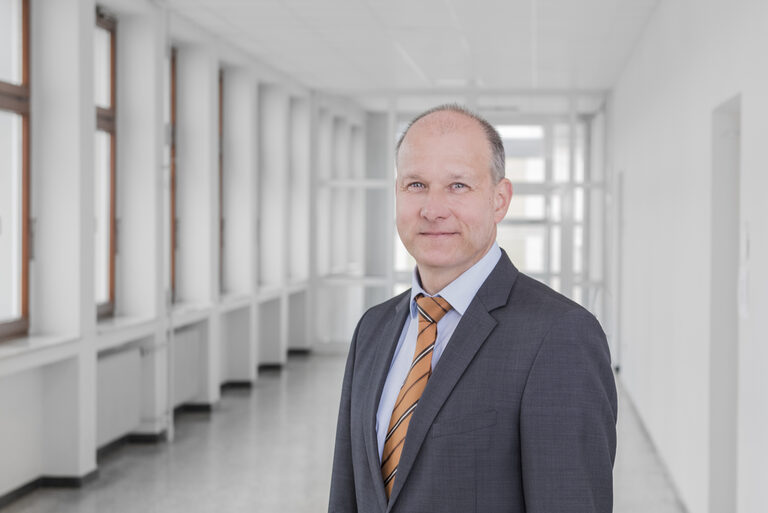
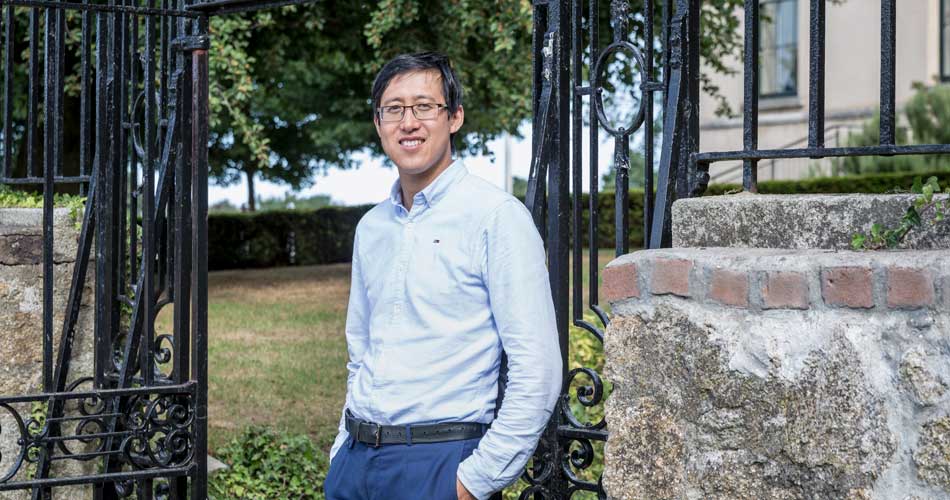
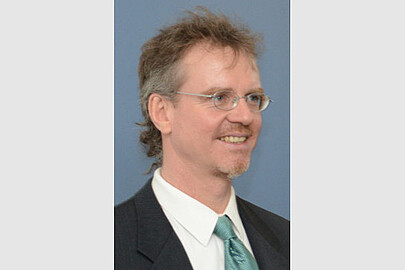
Dr. Muhammad Fahim is a Lecturer in the School of Electronics, Electrical Engineering and Computer Science at Queen's University Belfast. His research focuses on AI-driven solutions for healthcare, including wearable sensor data analysis, deep learning models for healthcare platforms, and integrating intelligence into digital twins for societal impact. He specializes in multimodal sensor data, energy expenditure estimation, and activity recognition in smart homes. His work spans projects such as TUDOR (Ubiquitous 3D Open Resilient Network) and MISO (Atmospheric Carbon Monitoring). He has been awarded the Queen's Merit Fellowship and SEDA Leading Undergraduate Programmes Certification. His research interests include edge intelligence, quantum-based models, and proactive health monitoring systems. Dr. Fahim collaborates internationally and has contributed to over 60 publications in areas like smart healthcare systems, network security, and environmental modeling. He actively participates in academic activities, including PhD examinations and invited talks on AI and wearable computing.
Christof Röhrig is a Professor at the FH Dortmund - University of Applied Sciences and Arts , conducting research at the Institute for the Digitalization of Work and Living Environments (IDiAL). He leads the Intelligent Mobile Systems Lab , focusing on robotics, wireless sensor networks, and kinematic modeling. His research spans mobile robotics , indoor localization , and industrial automation , with a strong emphasis on IoT , 5G networks , and rescue robotics . Key trends in his recent work include LoRaWAN localization , modular robot design , and digital twin architecture . He collaborates extensively on motion control , sensor fusion , and energy-efficient systems , though no specific students, awards, or grants are listed in the provided data. The lab at IDiAL explores robotics in emergency response and industrial IoT applications , with a focus on precision localization and collaborative automation .
Paula Chanfreut Palacio is an Assistant Professor in the Control Systems Technology section of the Department of Mechanical Engineering at Eindhoven University of Technology (TU/e). She joined TU/e in February 2023 after previously contributing to the ERC Advanced Grant project OCONTSOLAR (Optimal Control of Thermal Solar Energy Systems). Education: B.Sc. and M.Sc. in Industrial Engineering (University of Seville, 2017/2019) Ph.D. in Automation Engineering (University of Seville, 2018–2022) Visiting scholar at UC Berkeley (2021) and MIT (2022) Research Interests: Her work centers on decentralized and data-driven model predictive control (MPC) for large-scale interconnected systems. Key applications include renewable energy plants, traffic networks, and smart grids, with emphasis on scalability, cooperative multi-agent frameworks, and real-time optimization. She also investigates cyber-security in control systems and learning-based supervisory methods. Publications: Recent articles (2025) focus on advanced MPC techniques for safety-critical systems like vehicle platooning and power grids, highlighting themes such as cyber-attack resilience, nonlinear cooperative control, and invariant set design. Cross-cutting topics include distributed optimization, robustness, and machine learning integration. Projects: Active member of the Model Predictive Pandemic Control project (2023–2025), funded by an ERC Advanced Grant, focusing on control strategies for large-scale health crises. Affiliation: Part of the Cyber-Physical Systems and Systems Engineering research group at TU/e, contributing to interdisciplinary work in control theory and real-world engineering solutions.
Navarun Gupta is a Professor and Chair of the Department of Electrical Engineering within the School of Engineering at the University of Bridgeport's College of Engineering, Business & Education. He holds a Ph.D. in Electrical Engineering from Florida International University (2003), complemented by an M.S. in Physics from Georgia State University (1992) and an M.S. in Electrical Engineering from Mercer University (1998). His educational credentials include: Ph.D., Electrical Engineering, Florida International University, 2003 M.S., Physics, Georgia State University, 1992 M.S., Electrical Engineering, Mercer University, 1998 Dr. Gupta's research centers on signal processing with specialized applications in audio and bio signals . His work spans: Digital Signal Processing for mobile and biomedical applications Pattern Recognition in biosignals (e.g., meditation impact on brain activity) Audio Spatialization and 3D sound modeling using anthropometric data Millimeter-wave propagation for 5G networks Biomedical case studies on electrical burns and respiratory flow dynamics Neuroscience applications in problem-solving and concentration His publication trends (2018-2020) emphasize biomedical signal classification, cloud security protocols, and wireless propagation modeling, demonstrating cross-disciplinary impact in healthcare and communications. Earlier works (2000-2016) established foundational contributions in audio spatialization, brain signal analysis, and biomedical engineering case reports. No scientific awards are documented in his current profile. Dr. Gupta has secured significant research funding including: National Science Foundation grant ($192,347, 2014) as Co-PI for teacher fellowship programs in urban schools United Illuminating Company grant ($11,020, 2018) as Co-PI for energy loss analysis Department of Education grant (2014) as Co-PI for aerospace/hydrospace curriculum development ENGAGE mini-grant ($2,000, 2013) as PI for engineering education initiatives As Department Chair, he leads interdisciplinary collaborations in biomedical signal processing and wireless communications, with research directly impacting healthcare monitoring systems, audio engineering, and electrical safety standards through industry partnerships.
Alberto Gottardi is a Professor at the University of Genoa's Department of Electrical, Electronic, Telecommunications Engineering, and Naval Architecture, with a distinguished research career spanning over two decades in satellite communications and next-generation networking technologies. His work bridges theoretical research with practical applications in telecommunications infrastructure. Dr. Gottardi's research interests focus on Satellite Communications , 5G/6G Networks , Non-Terrestrial Networks , UAV Communications , Federated Learning , and Internet of Things . His work demonstrates a consistent trajectory from traditional satellite communication protocols toward integrating AI techniques with next-generation wireless networks, particularly focusing on the convergence of terrestrial and non-terrestrial network architectures. Analysis of his recent publications (2022-2025) reveals a strong emphasis on AI-driven approaches for satellite-terrestrial network integration, with particular focus on federated learning applications, UAV communications, and 6G non-terrestrial network architectures. His research increasingly incorporates machine learning techniques to solve traditional telecommunications challenges, showing a clear evolution toward data-driven network optimization. Dr. Gottardi has maintained an exceptionally productive research output, with over 99 publications documented in the dblp database spanning from 2005 to projected 2025 publications. His work demonstrates consistent collaboration with key researchers including Pietro Cassarà (45 joint publications), Manlio Bacco (33), and Erina Ferro (23), indicating stable research partnerships and team leadership. His research has significant practical applications in maritime communications, intelligent transportation systems, and emergency response networks, with several publications addressing real-world implementation challenges in satellite-based IoT systems and vehicular communications.
Dr. Nan Zhang is a research leader at the UCD School of Mechanical and Materials Engineering , focusing on precision manufacturing technologies for micro/nano-scale devices. His work bridges lab-scale prototyping and industrial mass production, with applications in medical devices, microfluidics, and functional surfaces. Research Keywords : Precision Manufacturing, Microfluidics, Nanotechnology, Materials Science, Medical Devices, Advanced Manufacturing Research Trends : Recent publications highlight advancements in digital light processing (DLP) 3D printing, machine learning-optimized microfabrication, liquid metal antenna technologies, and scalable nanocomposite mold development. His work emphasizes industrial feasibility, biocompatibility, and surface engineering. Scientific Awards : Smurfit Kappa Newman Fellowship Award ERC Grants (contextual institutional affiliation) Labs & Collaborations : Based at the UCD Engineering and Materials Science Centre, Dr. Zhang’s research involves partnerships with industry and academic networks, focusing on precision tooling, microfluidic scale-up, and novel material applications (e.g., bulk metallic glasses, bio-plastics).
Chigo Okonkwo is Full Professor and Chair of Secured Ultra High Capacity Transmission at the Department of Electrical Engineering , Eindhoven University of Technology. He leads the high-capacity optical transmission laboratory at the Institute for Photonics Integration and contributes to the Center for Quantum Materials and Technology Eindhoven (QT/e) . Academic Qualifications: MSc in Telecommunications and Information Systems, University of Essex (2002) PhD in Optical Signal Processing, University of Essex (2010) Research Interests: Professor Okonkwo focuses on: Maximizing capacity of single-mode fiber systems through advanced-coded modulation and Probabilistic/Geometrically shaped signals Developing Space Division Multiplexing (SDM) systems for Petabit/s transmission using multi-mode/multi-core fibers Quantum secure communications and cryptographic protocol development Optical vector network analyzer (OVNA) technology for SDM fiber characterization Free-space optical link deployment in urban environments Low-complexity digital signal processing algorithms Recent Publications Trends: His 15 most recent articles (2023-2025) demonstrate active research in: Quantum-classical network integration Extreme capacity fiber transmission (Petabit/s systems) Machine learning for optical diagnostics SDM fiber measurement technologies Hybrid QKD-PQC security frameworks Free-space optical urban communication Scientific Awards: Asia Communications and Photonics Conference (ACP) 2018 Best Paper Award European Conference on Optical Communications (ECOC) 2018 Student Paper Award Optica Student Paper Awards (2022) Corning Outstanding Student Paper Competition Finalist (2025) Advisory & Collaborations: Advisor to 8+ researchers including Menno van den Hout, Vincent van Vliet, and Thomas Bradley Technical Program Committee Member, European Conference on Optical Communications (ECOC) since 2014 Sub Committee Chair for Digital Signal Processing track at ECOC 2018 General Chair for OSA Advanced Photonics Congress on Signal Processing for Photonics Collaborates with EU projects (HOMTech, PhotonDelta) and industrial partners Co-founder and Chief Technology Officer of CUbIQ Technologies Laboratory & Infrastructure: Maintains the world-class High Capacity Optical Transmission Lab at TU/e, featuring: Advanced SDM fiber testing equipment Quantum communication research infrastructure Free-space optical link experimental setups Multi-core fiber amplification systems Coherent transmission testbeds Machine learning-enabled diagnostic tools
Meng Yuan is a Marie Skłodowska-Curie Fellow at Chalmers University of Technology , affiliated with the Control Engineering department. Previously, he was a Research Fellow at the Rehabilitation Research Institute of Singapore, Nanyang Technological University, and earned his PhD in Electrical and Electronic Engineering from the University of Melbourne. Research Focus: Control theory, energy systems, rehabilitation engineering, robotics, and industrial automation. Notable Projects: Integration of reinforcement learning and predictive control for energy management in smart homes (SmartHOME), funded by the European Commission (EU). His recent publications explore machine learning for industrial load forecasting, deep reinforcement learning in manufacturing optimization, and safety-critical control systems for assistive robots. A 2024 Advanced Engineering Informatics paper highlights his work on steel logistics, while a 2023 IEEE Transactions on Cybernetics article details wheelchair speed control using robust MPC. Awards: Marie Skłodowska-Curie Fellowship Collaborative Networks: Active in smart home energy projects and industrial robotics teams at Chalmers. Supervises research in control algorithm development but no specific students are listed in the provided data.
Jonas Sjöberg is a Full Professor of Mechatronics at Chalmers University of Technology, where he leads the Mechatronic research group in the College of Engineering. His research spans multiple aspects of mechatronic systems with a strong focus on automotive applications. Sjöberg holds leadership roles in numerous research projects related to autonomous vehicles, vehicle control systems, and transportation safety. His research interests encompass a broad spectrum of mechatronics applications, with particular emphasis on model-based methods, signal processing, control systems, system identification, and optimization for design and product development of mechatronic systems. Sjöberg's work bridges theoretical control engineering with practical automotive applications, especially in the domains of Automotive Active Safety and Hybrid Electric Vehicles. Analysis of Sjöberg's recent publications reveals a strong research trajectory focused on autonomous vehicle technologies, with particular attention to vehicle dynamics control, intersection safety, road surface condition estimation, and optimization of vehicle maneuvers. His work demonstrates a consistent approach of applying advanced control theory to solve real-world transportation challenges, with increasing emphasis on machine learning techniques integrated with traditional control systems. Sjöberg actively supervises research and education at both undergraduate and graduate levels while leading multiple research projects funded by VINNOVA, the European Commission, and other organizations. His research group collaborates extensively with both academic institutions and industry partners in the automotive sector. His laboratory work focuses on mechatronic systems development, particularly for automotive applications including autonomous bicycles, bus docking systems, and vehicle control algorithms. The research group maintains strong connections with the automotive industry, particularly in Sweden's robust vehicle technology ecosystem.
James Gross is a Professor at the School of Electrical Engineering and Computer Science at KTH Royal Institute of Technology, Stockholm. He leads research in mobile systems and networks, with a focus on 5G/6G, edge computing, and performance evaluation. He is Associate Director of KTH's Digital Futures center and a board member of the Innovative Centre for Embedded Systems. Previously, he directed the ACCESS Linnaeus Centre (2016–2019) and was Assistant Professor at RWTH Aachen University. PhD, TU Berlin (2006) Studies: TU Berlin, UC San Diego His research lies at the intersection of wireless networking, edge computing, and mathematical performance modeling. Key areas include ultra-reliable low-latency communications (URLLC), age-of-information, network calculus, and resource allocation. He applies these to 5G/6G, cyber-physical systems, and industrial IoT. His work combines theoretical modeling with real-world implementation and standardization impact. The recent publications highlight a strong focus on deterministic and reliable communications for future networks. Topics include hierarchical inference at the edge, age-of-information optimization, finite blocklength coding, and integration of TSN with wireless systems. There is a clear trend towards AI/ML for resource management and semantic communications, reflecting the evolution of intelligent edge networks. Best Paper Award, ACM MSWiM 2015 Best Demo Paper Award, IEEE WoWMoM 2015 Best Paper Award, IEEE WoWMoM 2009 Best Paper Award, European Wireless 2009 ITG/KuVS Dissertation Award, 2007 James Gross has supervised PhD students such as Samie Mostafavi and advises numerous master's projects. His research has been funded by national science foundations in Germany and Sweden, the ICT TNG SRA, Linnaeus ACCESS Centre, DFG-funded UMIC Centre, German Ministry of Science, and various industry partners. His work has led to patents and influenced wireless standards. He is involved in initiatives like the TECoSA project on trustworthy edge computing and organizes summer schools on Edge AI and 6G. His lab conducts experimental research on edge computing testbeds (e.g., Ainur, ExPECA) and wireless performance evaluation.
Hongyu An is an Assistant Professor in the Department of Electrical and Computer Engineering at Michigan Technological University. He holds affiliations with the Computer Science and Biomedical Engineering departments. Dr. An leads the BrainX Lab (Neuromorphic Robotics Lab and Neuromorphic Brain-Machine Interface Lab) and collaborates with the Institute of Computing and Cybersystems (ICC). He earned his PhD, MS, and BS in Electrical Engineering from Virginia Tech, Missouri University of Science and Technology, and Shenyang University of Technology respectively. Research Interests: Dr. An focuses on neuromorphic computing and its applications in AI hardware , robotics , and medical devices . His work spans memristor-based circuits , spiking neural networks , and energy-efficient AI systems . Key projects include associative learning in neuromorphic robots , neural prosthetics for memory restoration , and power-efficient adaptive deep brain stimulation systems . Publications & Research: With over 15 significant publications since 2016, Dr. An's work demonstrates expertise in 3D neuromorphic IC design , memristor reliability , and self-learning robotic systems . His research has appeared in journals like IEEE Transactions on Computing Aided Design and Frontiers in Computational Neuroscience. Awards & Funding: Bill and LaRue Blackwell Dissertation Award NSF CRII and ERI Awards USAF VFRP Fellowship Best Paper Nomination (2017 ISQED) Students & Collaborations: Dr. An mentors PhD students Tianze Liu and Md Abu Bakr Siddique, undergraduate Lucas Haddad, and volunteers like Vinay Kumar Pillalamarri. His team collaborates with Dr. Yan Zhang on neuromorphic brain-machine interfaces . The lab operates advanced infrastructure including LabLynx wireless neural recording systems and Intel Loihi-2 neuromorphic servers .
Tracy Camp is a Professor in the Department of Computer Science at Colorado School of Mines, College of Applied Science and Engineering. With a distinguished career spanning over three decades, she has established herself as a leading researcher in wireless networking, mobility modeling, and computing education. Her work has evolved from foundational research in mobile ad hoc networks to impactful contributions in broadening participation in computing. Dr. Camp's research interests span wireless networking, mobility modeling, machine learning applications in networking, and computer science education. Initially focusing on mobility models for ad hoc networks, she published seminal work including the widely cited survey 'A survey of mobility models for ad hoc network research' (2002). More recently, her work has shifted toward computing education, particularly broadening participation in computing, K-12 teacher preparation, and supporting underrepresented students through scholarship programs like S-STEM. Her recent publications reveal a strong emphasis on machine learning applications for network security, particularly in analyzing encrypted messaging applications and smart device traffic. Simultaneously, she has become a national leader in departmental strategies for broadening participation in computing, developing frameworks for BPC (Broadening Participation in Computing) plans that are now required by the NSF. Dr. Camp has been instrumental in developing the CS@Mines program, creating successful scholarship ecosystems for low-income and underrepresented students, and leading Colorado's strategic approach to prepare K-12 computer science teachers. Her work bridges technical research with practical educational initiatives that address critical challenges in the computing field. She has served in leadership roles for major computing education conferences including SIGCSE, where she has contributed to shaping the national conversation about computing education, enrollment surges, and diversity in the field. Her collaborative work with organizations like CRA-W (Computing Research Association-Women) demonstrates her commitment to addressing systemic issues in computing.
Marko Šarac is a Professor at Singidunum University in the Faculty of Informatics and Computer Science . He holds a Master's degree in Contemporary Information Technologies (2008) and a PhD in Advanced Protection Systems (2013) from the same institution. His research spans Cybersecurity, Artificial Intelligence, Blockchain, Internet of Things (IoT), Machine Learning, and Data Privacy . Education: Master: Contemporary Information Technologies, Singidunum University, 2008 PhD: Advanced Protection Systems, Singidunum University, 2013 Research Focus: SSL Traffic Security, Virtual Datacenters, Biometric Cryptography, and IoT Healthcare Systems Developed frameworks for Explainable AI in Metaverse Security , Blockchain-based IoT Security Gateways , and Machine Learning for Medical Diagnostics Notable Publications: 2025: CNN-enhanced attack detection for IoT-based Metaverse 2024: Modified Firefly Algorithm for medical dataset classification 2023: Space weather prediction using metaheuristics Projects: Co-author on 9+ books including Internet Marketing (2020) and Computer Network Security (2014) Contributed to 50+ peer-reviewed journals and conference papers on cybersecurity and AI Grants & Collaborations: Active in IEEE , ZINC , and Sinteza conference series Collaborated with researchers across Europe and Asia on IoT, Blockchain, and Cloud Security Contact: msarac@singidunum.ac.rs
Matthias Becker is a Professor at the Institute for Practical Computer Science within the Faculty of Electrical Engineering and Computer Science at Leibniz University Hannover, where he has been a core member of the Human-Computer Interaction group since 2019. He serves as Internship Coordinator for Computer Science and Computer Engineering and holds key roles in the Computer Science Examination Board and Selection Committee, actively shaping academic governance and student development. His academic journey began with PhD studies at the University of Bremen (1996-2000) supported by a DFG grant, followed by a postdoctoral permanent position at Leibniz University Hannover (2000-2019), an Associated Assistant Professor role at École des Mines de Nantes (2000), and a Habilitation in Computer Science in 2013. This foundation enabled his transition to a full professorship in 2019. Becker's research spans Human-Computer Interaction, Simulation and Modeling, and Bio-inspired Computing, with applications in agriculture, renewable energy, and manufacturing. His work integrates distributed systems, optimization algorithms, and wireless sensor networks to solve complex real-world problems, such as greenhouse monitoring, wind farm logistics, and tire noise reduction. Recent publications reveal a strategic focus on practical validation of simulation models and cross-domain applications of nature-inspired algorithms. His 15 most recent publications (2018-2024) demonstrate consistent innovation in applying simulation techniques to offshore wind farm installation, agricultural pest management, and sports science. These works emphasize real-world validation, collaborative problem-solving, and the development of domain-specific optimization frameworks that bridge theoretical algorithms and industrial implementation. As Internship Coordinator, Becker facilitates critical industry-academia connections for students, while his examination board responsibilities ensure rigorous academic standards. His leadership in the Human-Computer Interaction group drives research on interactive systems for agriculture, energy, and health, with particular emphasis on user-centered design in complex operational environments like wind farm logistics and greenhouse automation.
Stephan Preihs is a postdoctoral researcher and group leader at the Institute of Communications Technology of the Leibniz University Hannover , with a focus on acoustics, digital signal processing, and immersive audio systems. He received his Dipl.-Ing. in electrical engineering (communications engineering) from the same university in 2010 and his Dr.-Ing. in 2016. Education: Dipl.-Ing., Electrical Engineering (Communications Engineering), Leibniz University Hannover (2010) Dr.-Ing., Leibniz University Hannover (2016) Research Interests: Acoustics for immersive audio reproduction Digital signal processing and audio coding Signal detection/classification Psychoacoustic models Audio transmission for PMSE Recent Article Trends: Deep learning in sound source localization Wind turbine noise analysis via immersive audio Advancements in headphone technology Immersion prediction in spatial audio Low-latency communication protocols Scientific Awards: Best Paper Award at IEEE International Workshop on Networked Immersive Audio (2024) AES Show 2024 Best Technical Paper Award AES Spring 2021 Student Paper Award AES Poster Award 2019 AES Convention Student Paper Award 2019 Teaching: Lecturer for '3D Audio - Fundamentals of Spatial Reproduction Systems' Lecturer for 'Applications of Digital Audio Signal Processing' Coordinator of student laboratories in 'Audio Communication and Acoustics' and 'Transmission Technology'