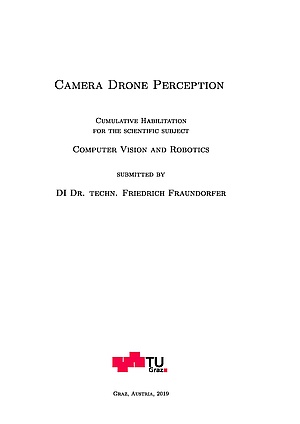
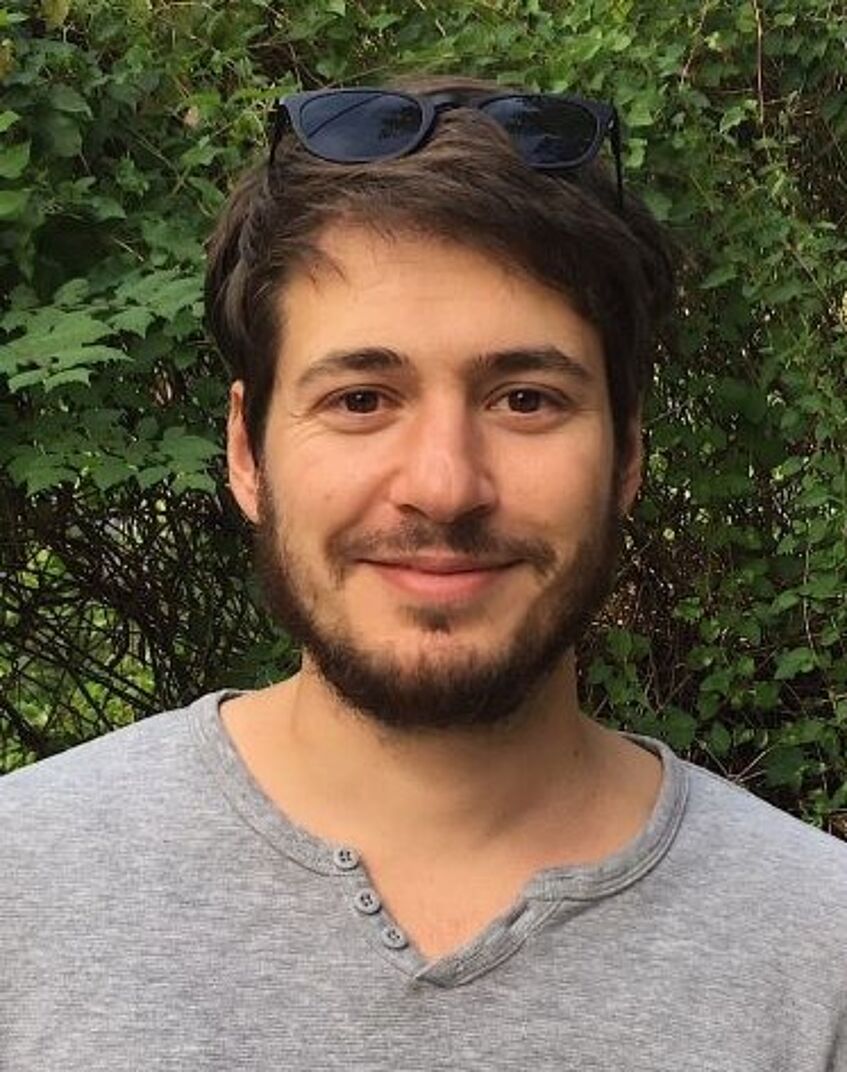
Friedrich Fraundorfer is a Professor at Graz University of Technology, specializing in 3D Computer Vision and Autonomous Systems at the Institute of Computer Graphics and Vision (ICG). He has held academic positions at institutions including ETH Zurich, University of North Carolina at Chapel Hill, and Technische Universität München, where he served as Deputy Director of the Chair of Remote Sensing Technology. Research : Focuses on Micro Aerial Vehicle (MAV) autonomy, Visual-Inertial Fusion, and Multi-View Geometry. Projects : Led EU-funded SFly (autonomous MAVs for search-and-rescue), SNF MAV (camera-only 3D mapping), and VCharge (vision-based self-driving cars). Teaching : Offers courses like 'Camera Drones' and 'Mathematical Principles in Vision.' His Pixhawk project created open-source MAV platforms adopted globally. Key Collaborations : With NVIDIA, Volkswagen AG, University of Zurich, and German Space and Aerospace Center (DLR). His students (e.g., Dominik Hirner, Rafael Weilharter) have published on lightweight CNNs for stereo vision and self-supervised 3D reconstruction.
Andreas Uhl is a University Professor in Artificial Intelligence and Human Interfaces at the Department of Computer Science, University of Salzburg. With a prolific research career spanning from 1996 to present, he has authored or co-authored 534 publications and led or participated in 59 research projects. His work demonstrates sustained academic productivity with recent publications and projects extending through 2025. Professor Uhl's research interests span multiple domains at the intersection of artificial intelligence and practical applications. His primary focus areas include computer vision, biometrics, biomedical imaging, and digital forensics, with significant contributions to pattern recognition and image analysis. His work bridges theoretical computer science with practical applications in cultural heritage preservation, medical diagnostics, and security systems, demonstrating a versatile research portfolio that addresses both fundamental challenges and real-world problems. His recent publications reveal a strong emphasis on temporal image forensics, biomedical image analysis, and biometric security. The research shows a clear trajectory toward increasingly sophisticated applications of AI in specialized domains, with particular attention to validation methodologies and limitations of current approaches. His work on cultural heritage applications demonstrates an innovative application of computer vision techniques to historical artifacts. Best paper award @ 25th ACM Symposium on Applied Computing (Applications Track), 2010 Best Paper award @ 2nd European Workshop on Visual Information Processing (EUVIP'10), 2010 IEEE Biometrics Council Best Paper Award (TBIOM), 2022 Kurt Zopf Preis, 2023 Professor Uhl actively leads multiple significant research initiatives, including the CDL-POSA project on People and Object Surface Authentication (2025-2032), Artificial Intelligence driven Biomedical Imaging Innovation (2025-2029), and the AIBIA Research and Transfer Junior Lab (2023-2025). His research group maintains active collaborations with institutions like Carnegie Mellon University, as evidenced by his recent research stay there in September 2024. The scope and duration of his current projects indicate substantial grant funding and institutional support for his research agenda. His laboratory activities focus on AI applications in biomedical imaging, border security through vehicle-integrated technologies (AutoBorder project), and cultural heritage analysis. The research environment appears to integrate academic inquiry with practical transfer through initiatives like the FFG Student Internships program, suggesting a strong commitment to both fundamental research and real-world implementation.
Alan van Beek is a researcher at the University of Salzburg within the Department of German Studies. Their work bridges medieval literature analysis with modern digital humanities tools and game studies frameworks. Active in computational analysis of Middle High German texts Key contributor to the MHDBDB database development Interdisciplinary focus on medieval reception in digital media Expert in data literacy and interface design Research interests span three major domains: Medieval Literature: Focusing on giants, stones, and sword names in medieval texts, analyzing cyclical narrative structures and material culture representation Digital Humanities: Specializing in database development, digital sustainability, and user-centered design for linguistic research Game Studies: Investigating medievalism in modern games and institutional requirements for establishing game science Recent publications show a clear trend toward: Interdisciplinary methodologies combining literary analysis with data science Digital infrastructure development for medieval studies Critical examination of medieval themes in contemporary gaming contexts Exploration of material symbolism in both historical texts and modern media Advancing queer studies through medieval literature analysis Promoting digital literacy in humanities research Their projects include: Users First: Optimization of user interface and crowdsourcing for medieval databases MHDBDB goes AI: Preparing data for AI applications in literary analysis MHDBDB Relaunch: Ensuring digital sustainability of the Middle High German term database Current activities demonstrate extensive engagement with: Scientific website maintenance for digital humanities projects Conference presentations on medieval themes in games Editorial work for PLUS Salzburg's digital humanities initiatives Collaborative research with institutions like Zenodo
David Meyer is a Professor at the University of Applied Sciences Technikum Wien. Since 2017, he has served as Program Director for the Bachelor in Business Informatics program, and since 2020, also for the Master Data Science program. He is a Senior Lecturer and a member of the University Council. Education Habilitation in Business Informatics PhD in Business Informatics from Vienna University of Business Administration Undergraduate studies in Business Informatics at Vienna University of Technology and University of Vienna Lycée Français de Vienne Research Interests Meyer's work spans Data Science , including core areas like Data Engineering, Data Visualization, and Machine Learning. His focus extends to Statistical Computing , programming language R , ERP Systems , and Business Intelligence/Data Warehousing . He has held leadership roles in academic governance, including membership of the University Council since 2018 and board membership of the Doctoral College 'Resilient Embedded Systems' from 2018–2024. Professional Experience 2010–present: Professor and Lecturer at UAS Technikum Wien 2004–2010: Assistant Professor at WU Wien (Institute for Business Informatics) 2000–2004: Research Assistant at TU Wien (Institute for Statistics and Probability Theory) 1998–2000: Consultant at Arthur Anderson and as a freelancer 1995–1998: IT Project Manager for ERP systems 1990–1995: Software Engineer for medical ERP systems Contact Email: david.meyer@technikum-wien.at
Linus Franke is a postdoctoral researcher at Inria Sophia Antipolis in France, affiliated with the GraphDeco research group under George Drettakis. He previously completed his PhD at the Chair of Visual Computing , Friedrich-Alexander-Universität Erlangen-Nürnberg (FAU) in Germany under Marc Stamminger. His research focuses on Computer graphics Perceptual rendering Computer vision Machine learning Neural rendering Novel view synthesis Key trends in his recent publications include neural rendering , 3D Gaussian splatting , radiance fields , and real-time rendering with applications in virtual reality and light field displays. His work often integrates point clouds , differentiable rendering , and GPU optimization techniques. His personal website at lfranke.github.io highlights projects like VET (Visual Error Tomography) and TRIPS (Trilinear Point Splatting for Real-Time Rendering).
Simon Kranzer is a Senior Lecturer and Head of Research Group at the Department of Information Technologies and Digitalisation, FH Salzburg. His work bridges academic research and practical application in digital transformation. Location: Campus Urstein, Room 425 Contact: simon.kranzer@fh-salzburg.ac.at | +43-50-2211-1316 Research Focus: Digital Twins for industrial systems Collaborative Robotics (Co-Bots) in retail Knowledge Transfer between academia and industry Operational Technology (OT) Security Data Acquisition and Visualization Programming Language Applications in industrial contexts Research Trends: Recent publications show expertise in retail automation (service robots, customer behavior analysis), industrial digital twins, and OT security. Earlier work spans GIS-SCADA integration, medical software implementation, and 3D microstructure analysis. Collaborative Projects: Active in interdisciplinary living labs, smart factory bootcamps, and 5G-based robotics exploration.
Mirjam Ernestus is a Professor of Psycholinguistics at the Centre for Language Studies within Radboud University's Faculty of Arts. She serves as Chair of the Editorial Board of Radboud University Press and Scientific Director of the Centre for Language Studies since 2017. Her career spans 20+ years in psycholinguistics and phonetics research. Member of Royal Netherlands Academy of Arts and Sciences Recipient of ERC Starting Grant and NWO VICI grant Specializes in speech comprehension and conversational speech Research Focus: Her work integrates psycholinguistics and phonetics to explore auditory word recognition, morphological processing, and cross-linguistic speech phenomena. She develops computational models like DIANA for speech comprehension analysis. Publication Trends: Recent studies examine exemplar-based processing differences between native/non-native speakers, phonetic-morphological interactions, speech rate dynamics, and multimodal language learning approaches. Her work frequently applies machine learning and experimental paradigms. Awards: ERC Starting Grant (2011) NWO VICI grant (2011) KNAW membership (2015) EURYI Award (2006) Leadership: She has directed major research initiatives including the gravitation project Language in Interaction and the Research Unit Spoken Morphology. Her management roles include overseeing 160+ researchers at the Centre for Language Studies.
Gabriele Kotsis is a Full Professor at the Institute of Telecooperation, Johannes Kepler University Linz, with extensive contributions to Artificial Intelligence research. Her institutional presence spans multiple departments through interdisciplinary projects while maintaining her primary affiliation with JKU's engineering-focused research units. Her research expertise encompasses: Natural Language Processing and Neural Machine Translation systems Reinforcement Learning applications for Smart Grid optimization Mobile Computing and Multimedia Intelligence frameworks Big Data Analytics and Database Systems innovation Human-centered AI development methodologies Recent publications (2024-2025) reveal a strategic focus on practical AI implementations addressing multilingual communication barriers and energy efficiency challenges. Her work consistently bridges theoretical AI advances with real-world applications across multiple domains. Professor Kotsis maintains an active supervision record with thesis guidance and leads multiple funded research initiatives. Her current portfolio includes: 'Enhancing Neural Machine Translation' project (2025-2026) for Southeast Asian languages 'INTES' regulatory compliance ecosystem (2023-2026) 'Human-centered Artificial Intelligence' initiative (2022-2026) Through her leadership in international conferences (iiWAS, MoMM, DEXA) and editorial roles for major proceedings, she maintains significant influence in the global computer science research community while advancing JKU's research profile.
Privatdozent Dr. Dr. Ingo Feinerer serves as the Head of Faculty of Engineering at the University of Applied Sciences Wiener Neustadt in Austria. With two doctoral degrees and the Habilitation qualification (indicated by Privatdozent), he holds a senior academic position equivalent to Associate Professor in many systems. His research interests span multiple disciplines: Text Mining and Computer Science (class diagrams, schema mapping, domain constraints) Radiobiology and Ion Therapy for advanced cancer treatment Social Network Analysis and digital media History of Psychology and academic journal evolution Prof. Feinerer's work demonstrates exceptional interdisciplinary breadth, connecting technical computer science with medical physics applications and historical analysis. His current major research initiative is the PAIR project (2022-2026), which focuses on expanding radiobiological understanding of ion beams for cancer treatment. This project recognizes ion therapy using protons and carbon ions as the most advanced radiation-based cancer treatment due to its physical and biological advantages over conventional photon beams. His publication record spans from 2007 to 2025, with 36 publications including 18 journal articles and 15 conference papers. Recent publications show a shift toward medical physics applications while maintaining connections to his computer science expertise, as evidenced by the 2025 paper on an open-source framework for pre-clinical ion-beam research. As Head of Faculty, Prof. Feinerer oversees academic programs and research activities within the Faculty of Engineering, contributing to both educational leadership and active research in his diverse fields of expertise. His ORCID identifier (0000-0001-7656-8338) provides a persistent link to his scholarly work across these interdisciplinary domains.
Sakeena Muntaha serves as a Junior Researcher at the University of Applied Sciences St. Pölten, affiliated with the Institute of Creative\Media/Technologies and the Department of Media and Digital Technologies since 2017. Currently on leave, she contributes to the institution's research mission through interdisciplinary projects spanning computer vision and applied machine learning. Her academic foundation includes a Master's degree in Computer Engineering from the National University of Sciences and Technology (NUST), Pakistan (2016) and a Bachelor's degree in Computer System Engineering from the NFC Institute of Engineering and Technology (NFCIET), Pakistan (2012). These qualifications underpin her technical expertise in visual computing systems. Dr. Muntaha's research program centers on machine learning and computer vision with dual application tracks: medical diagnostics (skin lesion segmentation, dermoscopy analysis) and environmental/urban systems (building footprint extraction, flood monitoring, real estate analysis). Her methodological approach integrates deep learning architectures with classical image processing techniques like level sets and Gabor filters, demonstrating versatility across domains from cultural heritage preservation to cybersecurity. Recent work shows increasing focus on robustness evaluation and real-world deployment challenges in vision systems. Analysis of her 15 most recent publications reveals strong thematic continuity in computer vision applications, with growing sophistication in handling real-world data constraints. Early work focused on medical imaging and malware detection, while recent publications emphasize urban infrastructure analysis and environmental monitoring, reflecting strategic alignment with societal challenges. The consistent use of deep learning frameworks across diverse domains highlights her technical agility. As an active member of the Media Computing Research Group, she contributes to projects including IMREA (Intelligent Multimodal Real Estate Assessment), Scribe ID AI (cultural heritage analysis), and ImmBild (location assessment via computer vision). Her collaborative research involves partnerships with institutions across Austria and Pakistan, though specific grant details and advising activities are not documented in available sources.
Jozsef Arato is a Research Fellow at the Vienna Cognitive Science Hub, University of Vienna, where he has worked as a senior scientist for data science since 2019. His research spans multiple interdisciplinary domains within cognitive science, with particular expertise in computational modeling of eye-movement patterns and visual statistical learning. His research interests focus on understanding the principles that guide learning and decision-making through computational modeling approaches. He investigates how eye-movement patterns can reveal learning processes, comparing gaze patterns across different observers. His work spans diverse application areas including art perception, environmental psychology, and animal communication systems. His publication record from 2020-2024 shows a strong focus on eye-tracking methodologies applied to art perception, with significant contributions to understanding how gaze patterns relate to aesthetic experiences. His research also extends to environmental conservation psychology and comparative studies of vocal learning in birds, demonstrating remarkable interdisciplinary breadth. Dr. Arato has been actively involved in academic service, having served as Program Chair of the Pattern Recognition in Neuroimaging Summer School in 2020. He organizes the CogData reading group and contributes to the academic community through collaborative research projects. As an educator, he teaches Scientific Computing in Python (TEWA 1) for the Psychology master's program at the University of Vienna. Previously, he taught Cognitive Modelling at both the University of Vienna and Eötvös University in Budapest, demonstrating his commitment to training the next generation of cognitive scientists and data analysts.
Nicola Zannone serves as Associate Professor and Chair of the Data Protection research group within the Department of Mathematics and Computer Science at Eindhoven University of Technology (TU/e). He holds a PhD in Computer Science from the University of Trento (2007), where his dissertation focused on security requirements engineering during a research visit to the Center for ... Research Focus: His work centers on cybersecurity with emphasis on data protection, phishing defense mechanisms, and access control systems. Recent investigations explore emerging threats like quishing and LLM-generated phishing attacks, autonomous navigation security, and industrial control system vulnerabilities. His research uniquely bridges technical security solutions with human behavioral factors in organizational contexts. Publication Trends: Between 2024-2025, Zannone's output demonstrates growing attention to AI-powered threats and automated vulnerability mitigation. His systematic reviews and empirical studies consistently address practical security challenges in critical infrastructure and software supply chains, reflecting industry relevance through collaborations with security practitioners. Leadership Roles: As Chief Editor for Computer Security (Frontiers in Computer Science) and Associate Editor for Cybersecurity and Privacy (Frontiers in Big Data), he shapes discourse in security research. His editorial work on topics like "Generative AI for Cybersecurity" highlights forward-looking engagement with evolving threat landscapes.
Siavash Arjomand Bigdeli serves as an Associate Professor of Computer Vision at the Technical University of Denmark, following prior employment as a scientist at the Swiss Center for Electronics and Microtechnologies (CSEM). His research focuses on: Ante-/Post-Hoc explainability of machine learning models Integration of statistical models in learning/inference processes Philosophical methodologies in artificial intelligence development Advanced computer vision techniques for visual understanding Recent publications reveal consistent specialization in image restoration and stereo vision, employing deep learning architectures and probabilistic graphical models to solve core challenges in visual data reconstruction and temporal coherence. His work demonstrates strong interdisciplinary connections between theoretical machine learning, practical computer vision applications, and epistemological considerations in AI systems.