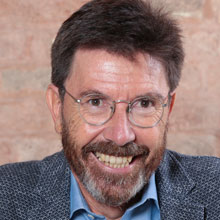
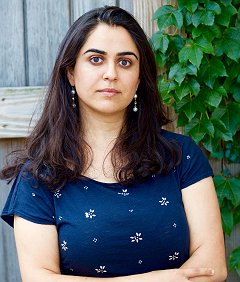
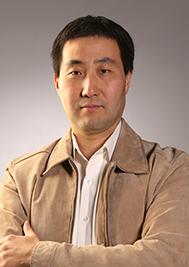
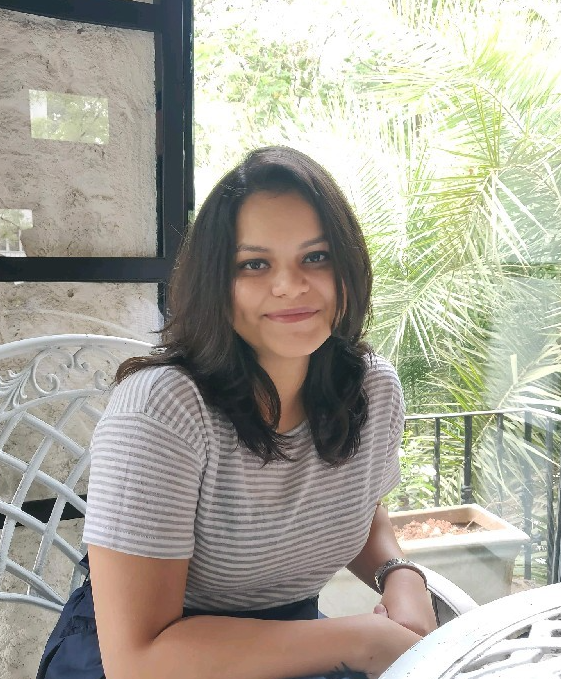
Aleksandra Pawlicka is a prominent researcher specializing in cybersecurity , explainable AI , and disinformation detection . Her work bridges ethical considerations with technical innovations in network security and AI applications , particularly focusing on the intersection of human-robot collaboration , fake news analysis , and IoT vulnerabilities . Key research areas: Cybersecurity Ethics, AI Explainability, Disinformation Mitigation Notable collaborations: Marek Pawlicki, Rafal Kozik, Michal Choras Her publications analyze xAI challenges in intrusion detection, machine learning for network security, and ethical dilemmas in cybersecurity. She contributes to projects like ULTIMATE (robotic AI) and SWAROG (fake news detection), emphasizing transparency and practical implementation. Recent work explores adversarial attacks against AI systems , few-shot learning for cybersecurity, and neuro-symbolic reasoning for trustworthy AI. Her 2023 study on ChatGPT's impact on scientific communication highlights evolving technological and ethical landscapes in academic practices.
Anton Akusok is a Part-time Lecturer in the Big Data Analytics Master's program at Arcada University of Applied Sciences. He holds a BSc in IT from Moscow (2011), MSc in ML and Data from Aalto University (2014), and a DSc in ML from the University of Iowa, USA (2016). His research focuses on Extreme Learning Machines (ELM), hardware acceleration for ML on mobile devices, and real-time geospatial predictions. He has developed libraries like HPELM and Scikit-ELM, and created the HaSuRiski app for acid sulfate soil prediction in Finland. Research Interests: ELM applications in environmental modeling, federated learning security, mobile edge computing, and geospatial visualization. Key projects include real-time mapping apps with iOS integration and open-source ML tools. Publications (2021-2024) highlight work on federated learning privacy, acid sulfate soil detection, signature verification, and distributed ELM algorithms.
Zeina ELRAWASHDEH is a Researcher Lecturer at the Institut Catholique d'Arts et Métiers (ICAM), based at the Grand Paris Sud campus. Her research focuses on Measurements and Controls, with a particular emphasis on fiber-optic sensors, multi-agent systems, and IoT integration for smart infrastructure. She collaborates with prestigious research laboratories globally to develop innovative solutions in energy optimization, smart cities, and precision engineering. Her expertise spans applied research in fiber-optic displacement sensors, algorithm optimization for sensor performance, and user-centric building automation systems. Zeina’s work bridges theoretical advancements with practical applications in manufacturing, energy, and urban systems. She actively contributes to international academic discourse through peer-reviewed publications and participates in ICAM’s strong industry partnerships for applied research outcomes. Zeina’s research portfolio demonstrates a trajectory toward integrating AI and IoT with traditional engineering challenges, addressing technical gaps in sensor networks, multi-agent coordination, and precision machining. Her recent work highlights advancements in smart city infrastructure and energy-efficient building systems. While no awards are explicitly mentioned, her involvement in ICAM’s research initiatives underscores her commitment to impactful, industry-relevant science. Collaborations with global companies and academic institutions position her at the forefront of applied engineering research.
Max Cohen is a Postdoctoral Scholar Research Associate in the Department of Mechanical and Civil Engineering at the California Institute of Technology (Caltech). His research focuses on safety-critical control systems, adaptive control, and the integration of control barrier functions with reinforcement learning. He explores theoretical frameworks for robust control design in nonlinear systems, emphasizing safety guarantees through formal verification methods. His work addresses challenges in automated vehicle navigation, hybrid systems, and rehabilitation engineering using functional electrical stimulation (FES). Key research directions include uncertainty quantification in adaptive systems, layered control architectures, and safe exploration strategies in model-based reinforcement learning. Publications span topics like control barrier function synthesis, temporal logic-guided learning, and reduced-order modeling for safety-critical applications. Current research trends emphasize bridging formal methods with data-driven control paradigms to ensure safe operation in complex robotic and cyber-physical systems. No scientific awards or grants are explicitly mentioned in the provided information. His office is located in Gates-Thomas Laboratory (Room 300), and he actively contributes to interdisciplinary projects at Caltech's engineering division.
Agostino Cortesi is a Full Professor at Ca' Foscari University of Venice , affiliated with the Department of Environmental Sciences, Informatics and Statistics. He serves as Rector's Delegate for Research Quality Assessment and Deputy Coordinator of the Scientific Committee for the Innovation Ecosystem Project. His academic career includes a PhD in Applied Mathematics and Informatics from the University of Padova (1992), a postdoctoral fellowship at Brown University, and visiting professor roles at institutions such as the University of Illinois and École Normale Supérieure Paris. Research interests focus on software engineering , static analysis , security applications , and abstract interpretation . He has pioneered techniques for formal verification of software systems and explored cybersecurity in e-Government and robotics. His work spans over 200 publications in top journals and conferences (e.g., ACM TOPLAS, IEEE TSE, POPL, PLDI). Key contributions include advancements in abstract domains for behavioral property verification and security-oriented analysis frameworks. He has held leadership roles including Vice-Rector at Ca' Foscari, Dean of Computer Science programs, and Chair of the Department of Computer Science. Cortesi coordinates EU Horizon 2020 projects (e.g., Families_Share €1.6M) and regional initiatives like CEVID (€360K). He founded Factors , a university spin-off focused on robotic systems verification, which won the 2020 Veneto SmartCup ICT Prize. Education: PhD in Applied Mathematics and Informatics (1992, University of Padova) Editorial Roles: Co-Editor-in-Chief of Springer’s 'Services and Business Process Reengineering', and member of editorial boards for 'Computer Languages' and others Grants: Over €3M in EU and regional funding for projects in cybersecurity, Industry 4.0, and digital innovation Teaching includes courses on Software Correctness , Data Programming , and Computer Networks across Computer Science and Management programs. His research lab actively engages in industrial partnerships with Cisco, Leonardo, and AGID (Italy’s Digital Agency).
Rakotonirainy Andry is a Professor at Queensland University of Technology (QUT), affiliated with the Centre for Accident Research & Road Safety - Queensland (CARRS-Q). His research focuses on transportation safety, automated vehicles, human factors, and intelligent transportation systems (ITS). He leads interdisciplinary projects exploring driver behavior, connected vehicle technologies, and the societal impacts of automation. Key areas include accident prevention, human-vehicle interaction, and equity in transport systems. His work integrates machine learning, simulation studies, and behavioral analysis to address challenges in road safety. Notable contributions include studies on driver stress detection, automated vehicle acceptance, and the Australian Naturalistic Driving Study (ANDS). He collaborates with institutions globally, advancing innovations like connected vehicle pilots and multimodal AI for traffic safety. Research interests span automated driving systems, vulnerable road user protection, and policy implications of emerging technologies. His findings contribute to safer transportation policies and technologies, emphasizing both technical and human-centric perspectives.
Maryam Mehri Dehnavi is an Associate Professor in the Department of Computer Science at the University of Toronto and a Principal Research Scientist at NVIDIA. She holds the Canada Research Chair in Parallel and Distributed Computing and leads the ParaMathics research group. Research focuses on high-performance computing , machine learning , sparse matrix optimizations , and compiler design for heterogeneous systems. Her work develops domain-specific languages , scalable numerical libraries , and auto-vectorization techniques for cloud and GPU platforms. Recent publications address LLM compression , sparse code translation , GPU kernel synchronization , and control flow optimization . Scientific recognition: Ontario Early Researcher Award (2021), NSF CRII Grant, NSERC New Frontiers in Research Fund. Current students: Mushegh Shahinyan , Martin Phan , Maryam Haghifam , and others. Former advisees: Kazem Cheshmi (NJIT), Zachary Blanco (MIT Lincoln Lab), Yuanxi Li (Amazon).
Dr. Liang (Leon) Dong is an Associate Professor in the Department of Electrical and Computer Engineering at Baylor University, where he conducts research and teaches in the areas of signal processing, wireless communications, and artificial intelligence. He leads the Laboratory of Signal Processing, Communications, and Artificial Intelligence, fostering innovation in next-generation communication systems, IoT, and AI-driven applications. PhD, Electrical & Computer Engineering, The University of Texas at Austin (2002) MS, Electrical & Computer Engineering, The University of Texas at Austin (1998) BS, Applied Physics with Minor in Computer Engineering, Shanghai Jiao Tong University (1996) Dr. Dong's research focuses on advancing digital signal processing and wireless communications, with strong emphasis on artificial intelligence applications. His work spans NextG wireless systems , IoT and smart cities , cyber-physical system security , and AI in healthcare and industrial automation . He applies deep learning to domains such as autonomous driving and drug discovery, and investigates energy-efficient, secure, and reliable communication protocols. The recent publications highlight a strong trend toward integrating AI into traditional signal processing and communications. Topics include mRNA vaccine stability prediction , smart city infrastructures , secure cyber-physical systems , and deep learning for biomedical and industrial applications . His work bridges theoretical innovation with real-world impact in defense, transportation, and public health. Dr. Dong has earned recognition as a Senior Member of IEEE and a Member of the American Physical Society. He has also served as Faculty Advisor for Baylor University's InterVarsity chapter. Senior Member, Institute of Electrical and Electronics Engineers (IEEE) Member, American Physical Society (APS) He has successfully advised numerous graduate and undergraduate students, many of whom now hold academic and industry positions at institutions like Stanford, Intel, NASA, L3Harris, and Cummins. His research is generously supported by Baylor's VP for Research, the National Science Foundation, NASA, the Department of Defense (TARDEC), the Michigan Department of Transportation, and industry leaders including Intel, L3Harris, ExxonMobil, and Denso. He actively mentors students through research assistantships and senior design projects. Dr. Dong leads the Laboratory of Signal Processing, Communications, and Artificial Intelligence, which provides a collaborative environment for advancing research in signal processing, communications, and AI. The lab supports graduate and post-doctoral researchers and offers opportunities for undergraduate involvement in AI programming, circuit design, and embedded systems.
Anantaa Kotal is an Assistant Professor of Computer Science at The University of Texas at El Paso (UTEP), commencing her position in Fall 2024. Previously, she completed her PhD at the University of Maryland, Baltimore County (UMBC) and gained industry experience at Amazon and IBM. Her academic credentials include: PhD in Computer Science, University of Maryland Baltimore County (UMBC), 2024 B.E. in Computer Science and Engineering, Jadavpur University, 2017 Dr. Kotal's research centers on Generative AI applications for privacy and security, with emphasis on privacy-preserving data sharing, synthetic data generation, and policy compliance verification. She integrates knowledge graphs, reinforcement learning, and neurosymbolic approaches to develop frameworks for secure data synthesis in healthcare, agriculture, and cybersecurity domains. Her work addresses critical challenges like policy ambiguity resolution and trustworthy AI code generation. Analysis of her 15 most recent publications (2021-2025) reveals a strong trajectory toward knowledge-infused generative models for privacy preservation, with increasing focus on large language models (LLMs) and real-world applications in distributed systems. Key thematic clusters include policy-aware data synthesis (12 publications), healthcare data security (7 publications), and knowledge-graph-enhanced cybersecurity (5 publications). Dr. Kotal is actively recruiting graduate students for her research lab at UTEP and currently teaches Data Mining (CS 5362/6362) in Fall 2024. She maintains active research collaborations with her doctoral advisor Dr. Anupam Joshi at UMBC and industry partners including IBM. She leads a research laboratory at UTEP focused on developing next-generation privacy-preserving AI systems, with current projects spanning healthcare data anonymization, agricultural data sharing frameworks, and policy-compliant synthetic data generation for cybersecurity applications.
Koushik Sen is a Professor in the Department of Electrical Engineering and Computer Sciences at the University of California, Berkeley. He holds a B.Tech from IIT Kanpur and M.S./Ph.D. from UIUC. His research focuses on Software Engineering, Programming Languages, and Formal Methods, emphasizing tools like DART, CUTE, and Jalangi for improving software reliability. He leads projects such as CORVETTE and Sky Computing Lab, and collaborates with Samsung Research America on JavaScript analysis. Sen has received prestigious awards including the Sloan Fellowship and ACM SIGSOFT Impact Award. Education: B.Tech, Indian Institute of Technology, Kanpur M.S. and Ph.D., University of Illinois at Urbana-Champaign Research Interests: Software Testing, Verification, Symbolic Execution, Security, and Quantum Computing. His work bridges automated testing (e.g., concolic testing) with machine learning for bug detection and program synthesis. Projects include Hindsight Logging for ML reproducibility and quantum circuit optimization (QFAST). Awards: NSF CAREER, IFIP Manfred Paul, ACM SIGSOFT Distinguished Paper (multiple), and Sloan Fellowship. Advising: Supervised over 30 students/postdocs, leading to faculty roles at UBC, CMU, and industry positions at Google, Facebook, and Samsung. Labs/Teams: Berkeley Center for Responsible, Decentralized Intelligence (RDI), EPIC Data Lab, and Sky Computing Lab. Active in quantum computing and hardware fuzzing (RTL-FuzzLab).
Professor Anne Remke leads the safety-critical systems group at the Faculty of Mathematics and Computer Science at Westfälische Wilhelms-Universität Münster since October 2014. She is also affiliated with the Design and Analysis of Communication Systems group at the University of Twente, where she served as assistant professor from June 2010 and became associate professor in March 2016. Her research focuses on dependability and security in critical infrastructures, particularly electrical power systems and telecommunication networks. Her educational background includes a PhD (2008) and MSc (2004) in Computer Science from the University of Twente and RWTH Aachen respectively. Her doctoral research focused on 'Model Checking Structured Infinite Markov Chains,' for which she publicly defended her thesis in June 2008. Professor Remke's research interests center on cyber-physical systems, with particular focus on evaluation of charging strategies for local energy storage in smart homes and security of control networks (SCADA) in smart grids. Her work bridges theoretical model checking techniques with practical applications in critical infrastructure protection. She has made significant contributions to the analysis of hybrid Petri nets, stochastic models, and the development of tools for dependability evaluation. Her recent publications demonstrate a strong trend toward integrating machine learning with formal verification methods for cyber-physical systems. The research spans stochastic hybrid systems, reachability analysis, and security evaluation of smart grid infrastructures, showing consistent growth in both theoretical foundations and practical applications of dependability analysis. Veni award from Dutch Science foundation (NWO) for 'Counting on a reliable water supply' GI/ITG MMB prize for best diploma thesis in computer and communication systems Best Paper Award at Valuetools 2023 conference Best Repeatability and Artifact Evaluation Award at QEST21 Teaching award from Fachschaft FB10 (2019) Professor Remke has successfully secured multiple research grants including the DFG project 'RealyST: Reachability Analysis for Stochastic Hybrid Systems' in collaboration with RWTH Aachen. She has supervised numerous students including Katharina Sichma, Pauline Blohm, Joanna Delicaris, Verena Menzel, Mathis Niehage, Jonas Stübbe, and Lisa Willemsen. Her research group actively participates in international collaborations and standardization efforts in critical infrastructure security. The safety-critical systems group maintains several research tools including HYPEG (for simulation and analysis of hybrid Petri nets), TimeNET (a GUI for modeling hybrid Petri nets), and a Smart Neighbourhood Simulation Tool for community energy storage and trading. These tools support their research in modeling and evaluating complex critical infrastructures through both analytical methods and simulation techniques.
Marc Hanheide is a Professor of Intelligent Robotics and Interactive Systems at the University of Lincoln 's School of Computer Science. With a career spanning EU projects like VAMPIRE, COGNIRON, CogX, and STRANDS, his work focuses on long-term robotic behavior, human-robot spatial interaction, and cognitive system architectures. He has secured over 12 major grants from organizations including EPSRC, BBSRC, and the European Commission. Key Research Areas : Autonomous robotics, HRI, AI, cognitive systems, agricultural robotics Current Projects : STRANDS (long-term behavior), AgriFoRwArdS (robotics training), NCNR (nuclear robotics) Major Contributions : Human-aware navigation modules, topology optimization for robot fleets, causal analysis frameworks Scientific Awards: While no specific awards are listed, his numerous EPSRC grants and leadership in multi-institutional projects highlight his impact. He has over 172 publications and collaborates with institutions like CoR-Lab and CITEC.
Dr. Stavros Shiaeles is an Associate Professor in Cybersecurity at the Faculty of Technology , University of Portsmouth, and Co-Director of the Portsmouth AI and Data Science Centre (PAIDS) . With over 130 publications and 3000+ citations, he specializes in cybersecurity, applied AI, and threat mitigation frameworks. Academic Qualifications : PhD in Electrical and Computer Engineering (Democritus University of Thrace, 2013), MEng in Electrical and Computer Engineering (Democritus University of Thrace, 2007), MBA in Human Resource Management (University of Plymouth, 2016), and PG Cert in Academic Practice (University of Plymouth, 2017). Research Interests span cybersecurity, malware detection, blockchain, 6G networks, AI/ML applications, digital forensics, and post-quantum cryptography. His work addresses threats in IoT, financial systems, and critical infrastructure while exploring SDG4 (Quality Education) through cybersecurity training. Recent publications emphasize AI-driven anomaly detection (e.g., ransomware behavior analysis, 6G traffic monitoring), deepfake forensics, synthetic image attribution, and hybrid blockchain/AI security architectures. He also curates datasets for malware analysis and synthetic media classification. Scientific Awards : IEEE SMC TCHS Outstanding Service Award (2021). Grant Funding : Over €18M secured in EU Horizon 2020 grants, including €8M as Principal Investigator for the ongoing XTRUST-6G project. Active in KTPs, consulting, and research commercialization opportunities.
Joanna Cecilia da Silva Santos is an Assistant Professor in the Department of Computer Science and Engineering at the University of Notre Dame , where she leads the Security and Software Engineering research lab (S 2 E) . She earned her Ph.D. and M.Sc. in Computing and Information Sciences from Rochester Institute of Technology (RIT) and a B.Sc. in Computer Engineering from Federal University of Sergipe (UFS) . Research Interests: Her work focuses on the intersection of Software Engineering and Software Security , with specific emphasis on Code Generation , Program Analysis , Software Architecture , and Quantum Software Engineering . Recent projects include evaluating large language models for code generation, detecting regular expression denial-of-service vulnerabilities, and creating taint-based analysis tools for Java security. 2025: Code generation benchmarks, LLM performance in programming assignments 2024: Frameworks for secure code generation, ReDoS analysis, static analysis of deserialization 2023: GitHub Copilot complexity prediction, vulnerability characterization 2022: Transformer-based code smell detection, security evaluation datasets Scientific Awards: 2017 Best Paper Award at ICSA 2020 JOBS Workshop Research Pitch Competition Winner 2023 Distinguished Reviewer at ESEC/FSE 2014 CAPES Scholarship for Masters at RIT 2013 3rd Place Paper at XIII ERBASE Her research group engages in empirical studies of code vulnerabilities, automated security tools, and educational applications of language models, with funding reflected in multiple peer-reviewed publications.
Per-Olov Östberg is an Associate Professor at the Department of Computing Science, Umeå University, and a research leader in the Autonomous Distributed Systems Lab (ADSLab). His work focuses on resource management for distributed cloud environments using AI/ML-based techniques, with a particular emphasis on ethical reasoning integration for responsible AI solutions. Research Themes: Cloud-edge continuum optimization, serverless frameworks, 6G computing challenges, data fabric architectures, and energy-aware systems Projects: COGNIT (cognitive serverless framework), WARA Common Information Bridge (data-driven cloud operations), De facto Center of Excellence in Autonomous Distributed Systems His publications (2011-2024) demonstrate consistent contributions to cloud resource management, including fairshare scheduling, decentralized prioritization, and power-performance tradeoffs. He has collaborated on interdisciplinary projects with institutions across Europe. Scientific Awards: None explicitly stated in provided information.