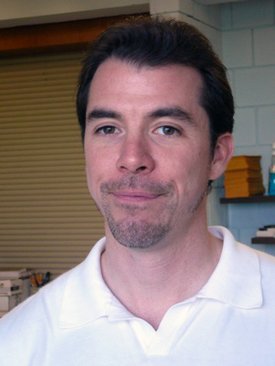
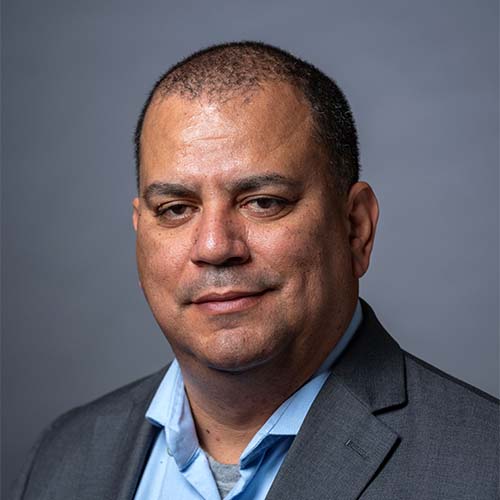
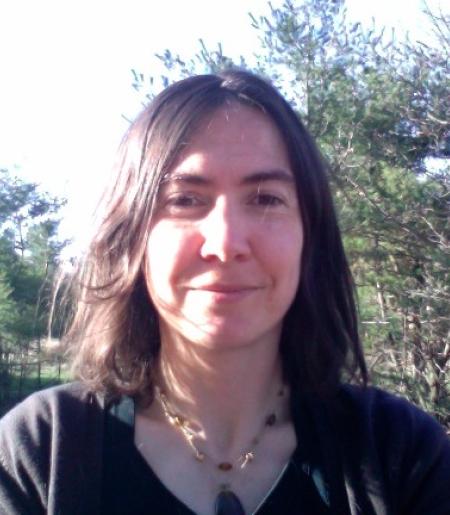
Prof. G. Scott Watson is a Professor in the Department of Physics at Syracuse University, affiliated with the College of Arts & Sciences. His research focuses on the interplay between fundamental particle physics and cosmology, particularly early universe cosmology, inflationary models, dark matter/energy, and string theory applications. He holds a Ph.D. in Physics from Brown University (2005) and B.S. degrees in Mathematics and Physics from the University of North Carolina at Wilmington (2000). Key research interests include string phenomenology as a quantum gravity framework, probing inflationary scenarios through cosmic microwave background (CMB) studies, and exploring dark matter origins. He leads major projects like CMB-S4 and contributes to the CMBPol mission concept. Watson has received the American Physical Society Outstanding Referee Award (2021) and serves on high-profile collaborations such as the Inflation Probe Study Analysis Group (IPSAG). Teaching responsibilities include advanced courses like Quantum Field Theory, Relativity and Cosmology, and Quantum Mechanics II. He actively mentors students through independent studies and advises on graduate admissions. Watson has secured significant grants, including a Department of Energy-funded project on theoretical particle physics and cosmology (2013–2025) and NSF support for cosmic acceleration research (2018–2023).
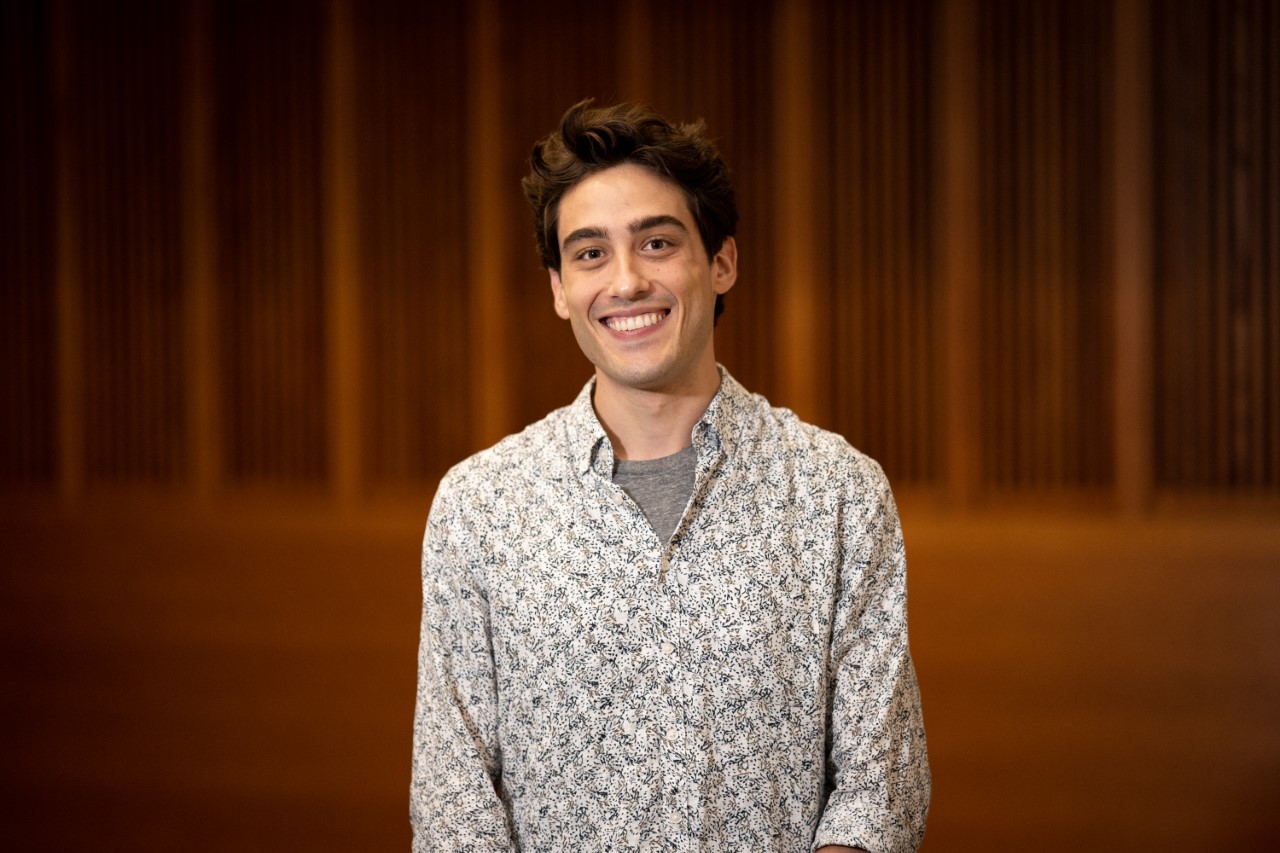
Konstantinos KANAVOURAS is a Doctoral Researcher at the Interdisciplinary Centre for Security, Reliability and Trust (SnT) within the University of Luxembourg, specifically in the Space Systems Engineering research group (SpaSys). He is advised by Prof. Andreas Hein and focuses on model-based systems engineering, software development, and aerospace engineering applications in satellite systems. His research integrates agile methodologies and machine learning for spacecraft design and anomaly detection. Kanavouras holds a Master’s degree from Aristotle University of Thessaloniki (2021) and contributed as an avionics engineer to ESA’s AcubeSAT nanosatellite project under the Fly Your Satellite! program. His work emphasizes lightweight data management tools, PocketQube missions like POQUITO, and fractionated satellite systems for planetary observation. His publications highlight trends in small satellite development, including agile systems engineering practices, thermal anomaly detection via machine learning, and adapting space projects to remote collaboration (e.g., during the pandemic). Key projects include the University of Luxembourg’s first PocketQube mission (POQUITO) and lean approaches to spacecraft subsystems. Current affiliations include the SpaSys group at SnT, with a focus on interdisciplinary collaboration between systems engineering and software development. No scientific awards are listed, but his work aligns with cutting-edge space technologies and mission design.
Elisa Capello is a Full Professor of Flight Mechanics at Politecnico di Torino, Department of Mechanical and Aerospace Engineering (DIMEAS). She serves as Contact person for internationalization of innovation and technology transfer, Member of the Interdepartmental Center PIC4SeR (PoliTO Interdepartmental Center for Service Robotics), and Deputy Coordinator of the Doctoral College in Aerospace Engineering. With over 100 publications, her work spans aerospace engineering, control systems, and robotics. Her research focuses on flexible spacecraft, flight control systems, robotic systems, and unmanned aerial vehicles. She designs guidance, control and navigation systems for aircraft and spacecraft, develops control systems for wind turbines and wind farms, studies flight mechanics of fixed and rotary wing aircraft, tests unmanned aerial systems, and plans mission control for autonomous systems. Her work bridges theoretical control systems with practical aerospace applications, with strong emphasis on experimental validation. Her recent publications demonstrate a strong focus on advanced control techniques for aerospace applications, particularly in UAV control, spacecraft formation flying, and robotic systems. There's a clear trend toward integrating machine learning with traditional control methods, as seen in transformer-based MPC and multimodal learning approaches. Her work spans theoretical development, simulation, and experimental validation across multiple platforms. Member of the Editorial Board of IEEE Control Systems Society (2019-) Member of the Scientific Committee - IEEE Technical Committee Aerospace Control (2016-) International FAI Judge for Helicopter Championship (2009-2015) Professor Capello supervises numerous PhD students working on topics including autonomous aerial vehicles, path planning, risk analysis, spacecraft dynamics, and control. She leads multiple research projects including CREATEFORUAS (2019-2022), Assessment of drag free control systems for L3 gravity wave observatory (2018-2019), and Guidance, Navigation and Control algorithms for in-Orbit servicing (2020-2021). Her international collaborations include institutions in the USA, Japan, and Germany. She is actively involved with the Flight Dynamics, Control and Simulation research group at DIMEAS and the DRAFT (DRones Autonomous Flight Team) at PoliTo, where she mentors students in developing autonomous flight capabilities for various applications.
George M. Church is a Professor of Genetics at Harvard Medical School and affiliated with MIT, where he directs PersonalGenomes.org, providing open-access genomic, environmental and trait data. His laboratory focuses on transformative technologies for reading and writing 3D/4D biological structures with attention to ethics, safety, and equitable access. Church has co-initiated major scientific initiatives including the BRAIN Initiative (2011) and multiple Genome Projects (GP-Read-1984, GP-Write-2016, PGP-2005). Church's research spans multiple cutting-edge domains including genome engineering, synthetic biology, aging reversal, and space genetics. His lab pioneered foundational methods for direct genome sequencing, molecular multiplexing and barcoding in 1984, leading to the first genome sequence in 1994. His innovations contributed to nearly all next-generation DNA sequencing methods and companies. Current research directions include machine learning for protein engineering, tissue reprogramming, organoids, gene therapy, and in situ 3D DNA/RNA/protein imaging. His work bridges fundamental biology with therapeutic applications across diverse fields from Alzheimer's disease to de-extinction biology. Church's recent publications reveal a remarkable breadth of scientific inquiry, spanning from fundamental genome editing techniques to applications in aging research, neuroscience, and space biology. His work increasingly integrates artificial intelligence with biological systems, as seen in papers on machine-guided cell-fate engineering and automation of systematic reviews with large language models. His research maintains a strong translational focus, with numerous papers addressing therapeutic applications in cancer immunotherapy, gene therapy, and diagnostics. The consistent theme across his diverse publications is the development and application of transformative technologies to address fundamental biological questions and medical challenges. National Academy of Sciences (NAS) membership National Academy of Engineering (NAE) membership Franklin Bower Laureate for Achievement in Science Co-initiator of the BRAIN Initiative (2011) Director of multiple NIH Centers for Excellence in Genomic Science (2004-2020) Church directs numerous research centers including the NIH-CEGS, Personal Genome Project (PGP), Lipper Center for Computational Genetics, and Wyss Institute Synthetic Biology center. His laboratory has trained PhD students across multiple Harvard and MIT programs including Biophysics, BBS, Biomedical Informatics, ChemBio, Chemistry, SSQB, MCO, Virology, HST, EE/CS, Physics and Applied Math. His commercial impact is extensive through companies spanning medical diagnostics (Knome/PierianDx, Alacris, Nebula, Veritas) and synthetic biology/therapeutics (AbVitro/Juno, Gen9/enEvolv/Zymergen/Warpdrive/Gingko, Editas, Egenesis). Church also pioneered new privacy, biosafety, ELSI, environmental and biosecurity policies. The Church Lab operates across multiple research domains including molecular multiplexing, next-generation sequencing, nanopore technology, and genome engineering. The lab maintains strong connections with the Personal Genome Project, Wyss Institute, and multiple commercial ventures. Current research directions include the Spatial Atlas of Human Anatomy (SAHA), human skin rejuvenation via mRNA, and space genetics research through the Consortium for Space Genetics and BioAstra. The lab's mission focuses on transformative technologies for reading and writing 3D/4D structures at any scale, inspired by but not limited by biology.
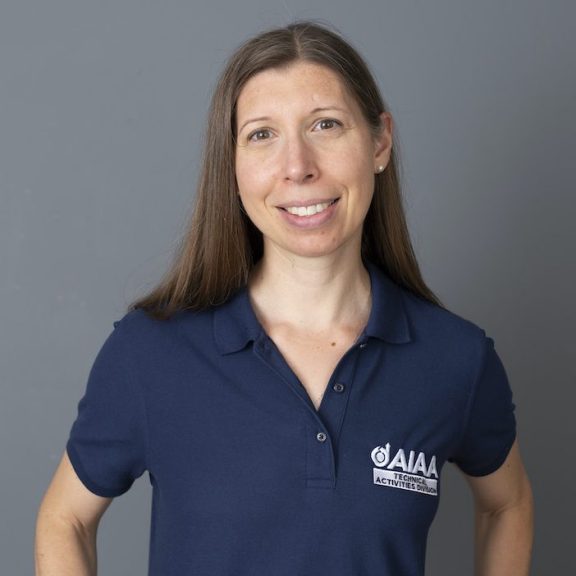
Kerri Cahoy is the Sheila Evans Widnall (1960) Professor in MIT's Department of Aeronautics and Astronautics, where she serves as Director of the Small Satellite Collaborative and Head of the Space Sector. Her work bridges electrical engineering and aerospace to advance space-based sensing and communication technologies through nanosatellite platforms. Her academic foundation includes: Ph.D. in Electrical Engineering, Stanford University (2008) M.S. in Electrical Engineering, Stanford University (2002) B.S. in Electrical Engineering, Cornell University (2000) Professor Cahoy's research integrates atmospheric sensing with exoplanet detection , pioneering laser communications and adaptive optics for space applications. She develops autonomy systems for nanosatellites to enable cost-effective Earth observation and astronomical missions, transforming how we study planetary atmospheres and distant worlds through innovative small satellite constellations. Her recent publications (2018-2020) demonstrate consistent focus on optical engineering for space systems, with core themes in CubeSat-based atmospheric tomography, laser communication terminal development, and wavefront correction techniques for exoplanet imaging. These works reveal interdisciplinary convergence of aerospace engineering, optics, and machine learning to solve extreme-environment challenges. Her scientific recognition includes: MIT Committed to Caring Award (2020) AIAA Associate Fellow (2018) MIT Outstanding UROP Mentor (2013) Cornell Co-Op Mentor of the Year (2008) As an educator, Cahoy champions hands-on satellite development through MIT's UROP program, with mentoring philosophy emphasizing technical rigor and mission-driven innovation. Her STAR Lab provides students direct experience in spacecraft design, laser communication testing, and orbital operations while securing research funding from NASA and aerospace industry partners for cutting-edge space technology development. She directs the Space Telecom, Astronomy & Radiation Lab (STAR Lab) and leads the Small Satellite Collaborative, driving projects in laser communication terminals, adaptive optics for space telescopes, and nanosatellite constellations for atmospheric science. These initiatives position MIT at the forefront of miniaturized space instrumentation and autonomous satellite operations.
Brandon A. Jones is an Associate Professor in the Department of Aerospace Engineering and Engineering Mechanics at the University of Texas at Austin. He holds the Charles Elmer Rowe Fellowship in Engineering and leads the Texas Spacecraft Laboratory (TSL) and the Controls, Autonomy, Estimation, and Learning for Uncertain Systems (CAELUS) Laboratory. His research focuses on space situational awareness, spacecraft navigation, and uncertainty quantification, with applications to orbital mechanics, multi-target tracking, and autonomous systems. Dr. Jones received his Ph.D. in Aerospace Engineering from the University of Colorado Boulder and has held roles at NASA Johnson Space Center and as a Research Assistant Professor. He is an Associate Fellow of the AIAA and former chair of the American Astronautical Society's Space Surveillance Technical Committee. His work includes NASA-funded projects like the SCOPE-1 CubeSat mission for terrain-relative navigation and the Crater-based Navigation and Timing (CNT) system for lunar missions. Key research areas include: Multi-source information fusion for space object tracking Machine learning for crater detection and autonomous navigation Uncertainty propagation in cislunar and highly perturbed orbits Event-based sensor systems for harsh-lighting environments Recent achievements include the 2023 W. A. 'Tex' Moncrief Grand Challenge Award and leadership in collaborative projects with NASA, JPL, and academia. His labs emphasize student-driven CubeSat missions and cutting-edge algorithms for space domain awareness.
Roger Michaelides is an Assistant Professor of Earth, Environmental, and Planetary Sciences and Environmental Studies at Washington University in St. Louis. He leads the Radar Interferometry and Geospatial Science Laboratory (Radar Lab), focusing on radar remote sensing, geospatial techniques, and Arctic permafrost dynamics. His work integrates InSAR, radar altimetry, and multi-sensor fusion to study environmental processes like wildfire-permafrost interactions, coastal erosion, and climate change impacts. Michaelides earned a PhD in Geophysics from Stanford University (2020) and held postdoctoral positions at the Colorado School of Mines (2020–2022). He joined Washington University in 2022. His research emphasizes developing novel remote sensing methods for cryospheric and terrestrial systems, including NASA-funded studies tracking permafrost thaw and wildfire effects in the Arctic. Recent awards include a NASA Early Career Investigator Program Fellowship (ECIP-ES), supporting his $300,000 project on Arctic permafrost monitoring. He actively mentors graduate and undergraduate students, offering funded PhD opportunities in InSAR applications and climate science. His lab collaborates with agencies like NASA and the Indian Space Research Organization, leveraging satellite data from missions like NISAR. Key interests include radar signal processing, environmental modeling, and interdisciplinary approaches to Earth observation. Michaelides’ work bridges geophysics, ecology, and climate science, with applications to global environmental challenges such as permafrost degradation and wildfire prediction.
Sarah Azimi is a fixed-term researcher at the Department of Control and Computer Science (DAUIN) within the College of Computer, Film and Mechatronics Engineering at Politecnico di Torino. She actively contributes to research and teaching in the domains of reliable computing, reconfigurable systems, and AI applications for space and smart city security. Research Interests: Reliability and fault tolerance in safety-critical and space systems RISC-V and FPGA-based architectures High-performance computing (HPC) and reconfigurable computing AI resilience and real-time gesture recognition for public safety Radiation effects and hardening techniques for aerospace applications Publication Trends: Her recent publications focus on RISC-V reliability, radiation effects in space missions, AI resilience in reconfigurable platforms, and smart city security through gesture recognition. Her work spans both journal and conference venues, emphasizing practical and mission-tailored solutions in embedded and aerospace computing. Scientific Awards: No awards explicitly mentioned in the provided text. Advising and Grants: Sarah Azimi supervises multiple PhD students including Federico Buccellato, Aobo Cui, and Giorgio Cora. She leads the competitive research project Safe Smart City: Detecting Violence and Requests for Help in Real Time Through Video Surveillance Devices (2024). She is also a member of the RAMSES CubeSat-1 Development project (2025–2026) and led the commercial research project on the Rempro fault-tolerant processor (2022–2023). Labs and Teams: She is a key member of the CAD - Electronic CAD & Reliability Group (DAUIN) at Politecnico di Torino, contributing to cutting-edge research in electronic design automation and system reliability for aerospace and terrestrial applications.
Hari Sundar is an Associate Professor in the Department of Computer Science at Tufts University, holding the Ada Lovelace Associate Professorship. Previously, he served as an Associate Professor at the Kahlert School of Computing, University of Utah. His research focuses on developing parallel algorithms for computational sciences and high-performance computing, addressing challenges in biosciences, geophysics, computational fluid dynamics, and computational relativity. He leads efforts in adaptive mesh refinement, geometric multigrid methods, and scalable scientific computing frameworks like Dendro-GR for numerical relativity. Education: Ph.D. in Computer Science from the University of Pennsylvania (2009), and a Bachelor of Engineering from the University of Delhi (2000). Postdoctoral work at the Oden Institute, University of Texas at Austin. Research Interests: Parallel algorithms, high-performance computing architectures, computational relativity (binary black hole simulations), multiphase flow modeling, and domain-specific languages for scientific computing. His work emphasizes scalability and efficiency on modern supercomputers. Key Contributions: Development of the Dendro-GR platform for gravitational wave simulations, scalable PDE solvers, and GPU-optimized algorithms for phonon transport and genomic sequence alignment. His recent work includes advancements in gravitational waveform modeling for LISA space missions and thermodynamically consistent two-phase flow simulations. Grants & Collaborations: Active in NSF-funded projects on computational relativity, multiphase flow algorithms, and scalable PDE solvers. Collaborates across disciplines in astrophysics, materials science, and bioinformatics.
Elaine Petro is Assistant Professor in Cornell University's Sibley School of Mechanical and Aerospace Engineering, where she directs the ASTRAlab. She holds a Ph.D. from the University of Maryland and develops sustainable space exploration technologies with focus on plasma propulsion systems and novel propellants. Her research program: Designs water-based propulsion systems for deep space missions Models complex plasma behaviors in electric thrusters Develops miniaturized propulsion for small satellites Investigates next-generation ionic liquid propellants Recent publications demonstrate applications of computer vision for space weather prediction and economic analyses of space development. She received the AFOSR Young Investigator Award to study ionic liquid stability in propulsion systems. Prior to academia, Professor Petro worked on NASA missions including MAVEN Mars Orbiter, James Webb Space Telescope, and Hubble Space Telescope at Goddard Space Flight Center. She participated in JPL's Planetary Science Summer School mission design for Enceladus exploration.
James Bellingham is the Bloomberg Distinguished Professor of exploration robotics at Johns Hopkins University, holding primary appointments in the Department of Mechanical Engineering and the Applied Physics Laboratory's Asymmetric Operations Sector. He serves as executive director of the Johns Hopkins Institute for Assured Autonomy and is a member of the Data Science and AI Institute. With over 30 years of expertise, Bellingham pioneered small, high-performance autonomous underwater vehicles (AUVs), leading global expeditions across polar and oceanic regions. His work bridges robotics innovation with environmental monitoring, including oil spill response, Arctic exploration, and NASA collaborations for extraterrestrial oceanic exploration. Bellingham's educational background includes BS, MS, and PhD in physics from MIT. He previously led Woods Hole Oceanographic Institution's Marine Robotics Consortium, creating advanced prototyping facilities and fostering entrepreneurship in robotics. His leadership roles span institutional boards such as the Naval Studies Board and OceanX. His research focuses on advancing AUV capabilities for adaptive sampling, fault detection, and interdisciplinary oceanography. Over 50 publications demonstrate his technical contributions, including AUV design, environmental hazard mapping, and collaborative robotic systems. Awards include National Academy of Engineering induction and military honors for public service.
Ran Dai is a Professor in the Department of Aeronautics and Astronautics at Purdue University's College of Engineering. His research focuses on optimal control theory, trajectory optimization, and robotics applications, with an emphasis on aerospace systems and energy-efficient solutions. He leads the Autonomous Optimization Lab (AOL) and has contributed extensively to advancements in learning-based control, mixed-integer programming, and deployable space systems. His work spans applications such as spacecraft guidance, unmanned vehicle path planning, and energy management for solar-powered systems. Notable contributions include algorithms for fuel-optimal powered descent, real-time trajectory optimization, and origami-inspired deployable mechanisms. He holds a Ph.D. in Aerospace Engineering and has published over 100 peer-reviewed articles. Research interests include: Optimal control and trajectory optimization Reinforcement learning for decision-making Autonomous systems and robotics Energy-efficient aerospace engineering Recent work emphasizes meta-reinforcement learning frameworks and adaptive optimization engines for complex systems.
Alexandre Barreto serves as an Associate Professor in the Department of Cyber Security Engineering at George Mason University, specializing in cybersecurity applications for transportation systems and critical infrastructure. His work integrates air traffic management expertise with advanced security protocols to address defense and infrastructure vulnerabilities. Education PhD, Instituto Tecnológico de Aeronáutica, Brazil Barreto's research centers on transportation security (particularly aviation), cyber impact assessment, and blockchain applications for critical infrastructure. He develops secure protocols for air traffic systems like ADS-B and creates decision support frameworks for defense scenarios. His methodology combines machine learning, network security, and risk modeling to enhance resilience in smart grids and urban air mobility systems. Analysis of his 15 most recent publications reveals dominant themes in aviation cybersecurity (ADS-Bsec frameworks, Cyber-ARGUS), energy infrastructure protection (SIAD-AERO), and blockchain integration for air traffic management. Over 60% of his work focuses on securing air traffic surveillance systems, while emerging research explores carbon emissions prediction and deep space navigation applications. Advising and Grants No specific student advisement records or grant funding details were documented in the source material, though his classroom activities span graduate and undergraduate cybersecurity education.
Noah P. Molotch is a Professor in the Department of Geography at the University of Colorado Boulder, leading the Mountain Hydrology Group and affiliated with the Cryosphere and Surface Processes Lab and Niwot Ridge Long-Term Ecological Research program. His work integrates ground observations, remote sensing, and computational modeling to advance understanding of mountain hydrology, water resources, and ecohydrology in changing climates. His educational background includes: PhD in Hydrology and Water Resources from the University of Arizona (2004) MS in Environmental Science and Management from the University of California, Santa Barbara (2000) BA from the University of Colorado Boulder (1997) Molotch's research focuses on snow hydrology , ecohydrology , and remote sensing with emphasis on snowmelt distribution, soil moisture dynamics, and streamflow generation. He investigates how climate change alters snowpack characteristics and hydrological partitioning, affecting forest productivity and carbon cycling in montane ecosystems. His work spans from the Colorado Front Range to Chilean Andes, addressing critical water security challenges through field studies and satellite data integration. Recent publications (2024-2025) reveal three dominant research thrusts: (1) Advanced snow water equivalent estimation using machine learning and airborne remote sensing, (2) Climate impacts on snowmelt timing and hydrological partitioning across mountain systems, and (3) Ecohydrological feedbacks between snow dynamics and vegetation productivity. These studies increasingly incorporate drone-based multispectral imaging and cross-scale data fusion to resolve spatial heterogeneity in alpine environments. Molotch mentors PhD students Millie Spencer and Emma Tyrrell, with Spencer documenting glacier retreat in Chile through CUAHSI-funded research. His group has secured significant grants from the U.S. Bureau of Reclamation for developing operational snowpack datasets, while collaborating with NASA, NOAA, and water management agencies on real-time monitoring systems. Community engagement includes art-science collaborations like the Colorado Arts Science Environment Program to communicate climate impacts. The Mountain Hydrology Group operates cutting-edge facilities including the Cryosphere and Surface Processes Lab and contributes to the Niwot Ridge Long-Term Ecological Research site. They deploy airborne lidar, drone-based thermal imaging, and wireless sensor networks to map snow properties at unprecedented resolutions, directly informing water resource management during drought and flood events across the Western U.S.
Rachel Bean is Jacob Gould Schurman Professor of Astronomy at Cornell University and Senior Associate Dean for Math and Science. Her cosmology research focuses on dark energy properties, gravitational physics, and the early universe using cosmic microwave background and galaxy survey data. As co-recipient of the Gruber and Breakthrough prizes, she contributed to precision cosmology through the WMAP mission. Research develops methods to extract cosmological information from large astrophysical datasets, including cross-correlation techniques between CMB experiments (Atacama Cosmology Telescope, Simons Observatory) and galaxy surveys (DESI, Rubin LSST). Current projects investigate modified gravity constraints using cluster abundances and novel statistical approaches to kSZ velocity reconstruction. Publication themes include precision cosmology, gravity tests, and multi-messenger astrophysics. Recent work advances machine learning applications for cosmological inference, while earlier research established foundations in semiconductor device physics. Articles consistently demonstrate innovative approaches to cosmological parameter estimation and physical theory testing. Awards: Gruber Prize (2012), Breakthrough Prize (2018), Presidential Early Career Award, and Cottrell Scholar Award. Leadership includes former chair of LSST Dark Energy Science Collaboration and service on the Astronomy and Astrophysics Advisory Committee.