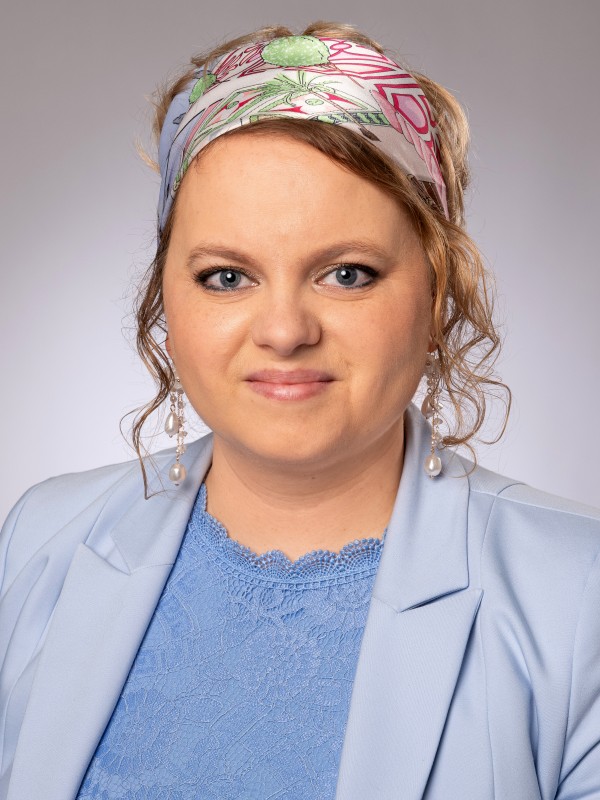
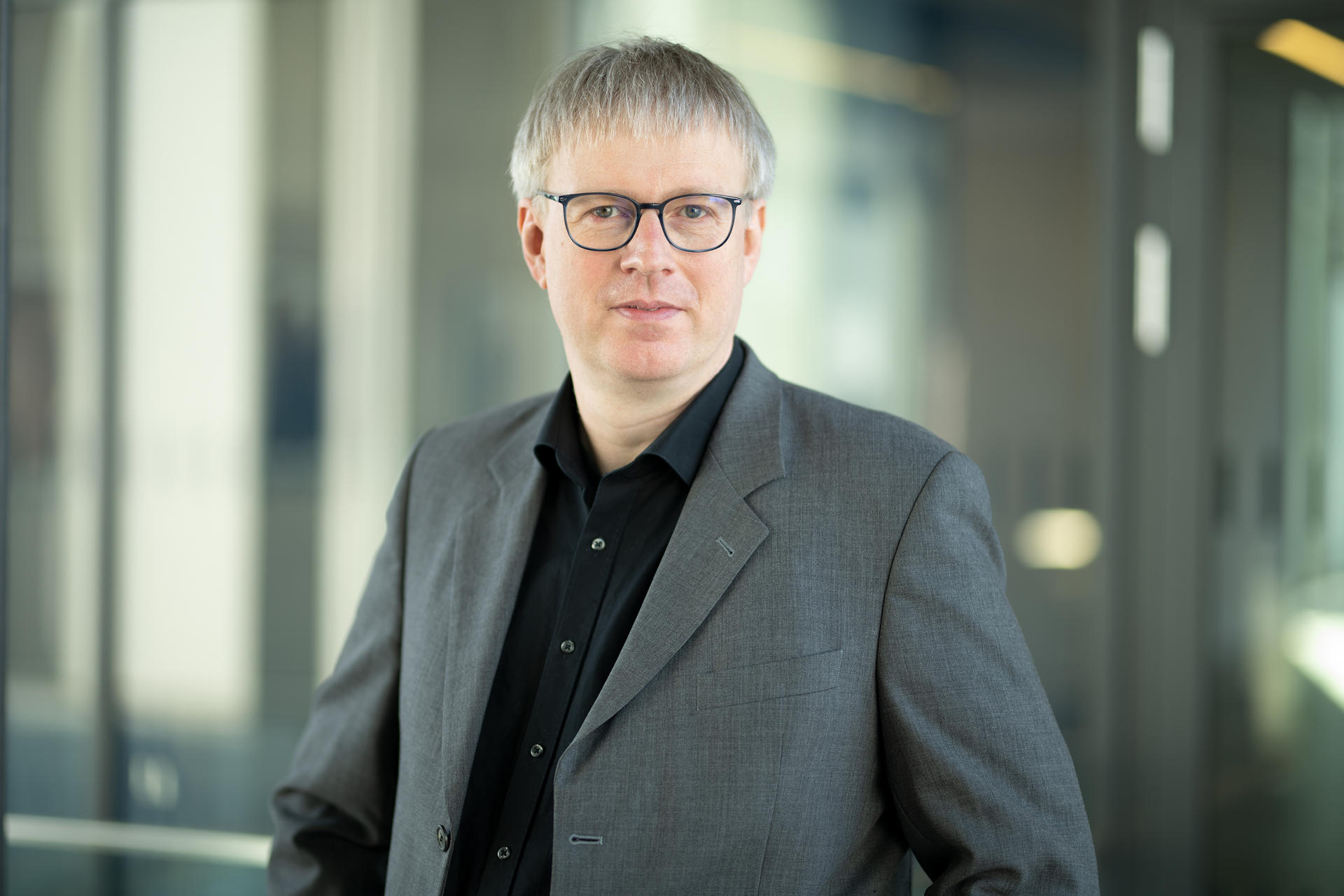
Prof. Dr. med. Henning Schneider serves as a Professor at the Technical University of Central Hesse (THM), School of Health, with his office located at Ostanlage 45, Building B14, Room 2.07. His research spans telemedicine systems for chronic disease management, rare disease monitoring, and clinical informatics, with significant publications in emergency medicine technology and respiratory care. His primary research interests include: Telemedicine implementation for COPD and rare diseases Clinical data interoperability and EHR optimization Digital health solutions for pre-hospital emergency care Predictive modeling in chronic disease management IT-supported clinical trial recruitment systems Analysis of his 15 most recent publications (2015-2024) reveals consistent focus on telemonitoring technologies for respiratory diseases, evolving into rare disease awareness systems (RD-MON) and drone-based emergency response tools. His work emphasizes practical clinical integration, with methodologies centered on semantic interoperability (LOINC/FHIR), user acceptance studies, and health economic evaluations. Regarding academic mentorship, no doctoral students or formal advisees are documented in the provided materials. His collaborative research involves institutions across Germany, with frequent co-authorship with Sohrabi, Blasini, and Marquardt, though specific grant details remain unreported. Current projects appear centered on VR tolerability assessment and IT-enhanced trial recruitment, reflecting ongoing engagement with emerging health technologies.
Andreas Nicola is a Professor and current Head of the Institute of Machine Components . His work focuses on integrating Artificial Intelligence and Machine Learning into Prognostics and Health Management (PHM) systems for industrial and wind power drives. Research highlights include: Developing AI-driven strategies for early pitting damage detection in gearboxes Implementing adaptive operating strategies to extend the remaining useful life of wind turbine components Systematic Design of Experiments (DOE) to correlate sensor data with damage progression Multi-sensor data acquisition combining vibration , torque , and speed measurements His team's work on AI-based condition monitoring has direct applications in offshore wind energy systems, where minimizing downtime and ecological footprints is critical. Contact: Phone +49 711 685 66532 | Room 2.129, Pfaffenwaldring 9, 70569 Stuttgart, Germany
Dr. Thomas Henkel is a Researcher at the Leibniz Institute of Photonic Technology, leading the Microfluidics Research Group since 2002. His work focuses on microsystem technology for biotechnological applications, particularly in biophotonics, environmental monitoring, and drug discovery. Research Interests: Dr. Henkel's research spans Microfluidics and Lab-on-a-chip systems Imaging flow cytometry (IFC) and tomographic IFC (tIFC) Bioparticle characterization Plasmonic sensing Automated screening platforms Environmental safety applications Publication Trends: Over the past five years, Dr. Henkel has developed microfluidic systems for high-throughput bioparticle analysis, including astaxanthin-producing Haematococcus pluvialis monitoring, hepatitis B drug screening, and Legionella detection. His work combines multispectral imaging, machine learning, and innovative fluid dynamics to enable label-free cell sorting and real-time process monitoring. Labs & Teams: As group leader, he collaborates with interdisciplinary teams at Leibniz-IPHT, integrating photonic technology, materials science, and biotechnology to advance microfluidic applications in medical and environmental fields.
Prof. Dr. Ulrich Husemann is a Professor of Experimental Particle Physics at the Institute of Experimental Particle Physics (ETP) of the Karlsruhe Institute of Technology (KIT) . He leads research in CERN's CMS experiment , focusing on top quark physics , Higgs boson coupling measurements , and dark matter detection using machine learning techniques. His work also explores medical applications of semiconductor detectors for radiotherapy. 2024: Co-convener of the Physics Preparatory Group for the European Strategy for Particle Physics 2024: Organizer of the German Physical Society Spring Meeting on Particle Physics 2023: KIT Senate member 2021–2023: Vice Dean at KIT Department of Physics His research spans detector system development and data analysis for hadron colliders, including contributions to the CMS Phase-1 Pixel Detector Upgrade (2017) and Phase-2 Silicon Strip Tracker for the High-Luminosity LHC. Medical applications include evaluating HV-CMOS technology for beam monitoring in ion therapy with Heidelberg Ion Beam Therapy Center. Recent publications focus on ttH/tH production rates (2025), ttbb cross-section measurements (2024), and machine learning integration in particle physics (2024). Earlier works (2005–2018) address rare top quark decays, silicon detector radiation effects, and LHC/HL-LHC sensitivity projections. He teaches courses on Computer-Guided Data Analysis , Accelerators and Detectors , and Modern Experimental Physics . As of spring 2025, he has supervised 20 doctoral theses, 50 Master's theses, and over 90 Bachelor's theses. Contact: ulrich.husemann@kit.edu | Office: Building 401, Room 407 (Campus North) and Building 30.23, Room 8-19 (Campus South).
Bodo Rosenhahn is a Full Professor at Leibniz University Hannover, heading the Institute for Information Processing since September 2008. His research focuses on automated image interpretation with profound expertise in Computer Vision, Machine Learning, and Big Data Analysis. He has established himself as a leading researcher through extensive contributions to the field and successful industry transfer of his work. Rosenhahn received his Computer Science education at the University of Kiel, earning his Dipl.-Inf. in 1999 and Dr.-Ing. in 2003. His academic journey included a postdoctoral position at the University of Auckland (2003-2005), funded by the German Research Foundation, followed by senior researcher work at the Max-Planck Institute for Informatics in Saarbruecken (2005-2008). His research interests span multiple cutting-edge areas including Computer Vision, Machine Learning, 3D Human Pose Estimation, Motion Capture, Object Tracking, Anomaly Detection, and Reinforcement Learning. His work bridges theoretical foundations with practical applications, particularly in medical imaging, autonomous systems, and industrial quality control. The group he leads has developed innovative approaches for video-based motion capture, semantic scene analysis, and multi-object tracking that have achieved state-of-the-art results in numerous challenges. His most recent publications demonstrate strong trends toward explainable AI systems, uncertainty quantification in vision models, robust multi-model fitting techniques, and the integration of quantum principles with machine learning. These works reflect his commitment to developing both theoretically sound and practically applicable computer vision solutions that address real-world challenges in industry and medicine. DAGM-Prize 2002 Dr.-Ing. Siegfried Werth Prize 2003 DAGM-Main Prize 2005 ERC-Starting Grant 2011 (EUR 1.43 million) CVPR 2017 Multi-Object Tracking Challenge PhysRev-A Editors Suggestion 2023 TÜV-Süd Innovation award 2018 As head coach of the LUH AI competition team, Rosenhahn has mentored numerous students who have achieved success in international competitions. His research has been supported by prestigious grants including the ERC Starting Grant and POC Grant. He has also received the Erskine Fellowship for research at the University of Canterbury. Since 2023, he serves as associate editor for IEEE TPAMI, the highest-ranked journal in computer science. Rosenhahn leads a vibrant research group focused on automated image interpretation with multiple ongoing projects including Multiple People Tracking, Relational Object Tracking, Physics-based modeling, Video-based Motion Capture, and Quantum Learning. His group has developed significant datasets such as the Multimodal Motion Capture Indoor Dataset (MPI08) and Multimodal Motion Capture Dataset (TNT15) that have become valuable resources for the computer vision community. The group maintains strong industry connections, successfully transferring research into practical applications while continuing to push the boundaries of fundamental research in computer vision and machine learning.
Dr. Melanie Schaller is a researcher at the Institute of Information Processing, Leibniz Universität Hannover. Her work bridges machine learning with engineering applications in biomedical and civil infrastructure domains. PhD in Cyber-Physical Systems for Intracranial Pressure Monitoring (University of Würzburg, 2023) Specializes in end-to-end integration of engineering knowledge into ML models Research focuses on anomaly detection in multivariate time-series and graph signal processing . Recent projects like P-BIM and KI@FlowChief demonstrate applications in structural behavior analysis and water distribution network optimization. Publications emphasize sensor network applications and adaptive learning systems. Dataset contributions include detailed pulsating waterjet cutting experiments and smart beehive monitoring , with methodologies for incremental learning and audio signal classification. Technical reports highlight expertise in heterogeneous graph neural networks and signal processing for material transitions.
Joachim Müller is a Professor at the University of Hohenheim and leads the Subject Area Agricultural Engineering in the Tropics and Subtropics (440e) within the Institute for Tropical Agricultural Sciences (Hans-Ruthenberg-Institute) . He also serves as a leader in the International Graduate College 'Adaptation of Maize-based Agricultural Production Systems to Limited Phosphate Resources' (IRTG 2366/2) and contributes to the IRTG 2366 project. Research Focus: Sustainable agricultural systems, phosphorus recycling, biogas optimization, and postharvest processing technologies, particularly for cassava and tropical crops. Projects: Current work includes adaptation of maize systems to phosphate scarcity (IRTG 2366/2) and developing sustainable banana value chains through circular bioeconomy approaches. Publications: His recent work spans phosphorus recovery from digestate, soil management in Southeast Asia, cassava leaf drying, mycotoxin contamination, and innovative biogas solutions. Technological Contributions: Innovations in solar drying systems, UAV-based crop monitoring, and mechanical stimulation for plant growth regulation.
Prof. Bastian Leibe serves as a University Professor at RWTH Aachen University, leading the Computer Vision Group within the Chair of Computer Sciences 8 (Computer Graphics, Computer Vision, and Multimedia). His research focuses on developing computer vision applications for mobile devices, robotic systems, and autonomous vehicles, with strong institutional ties to the Cluster of Excellence "UMIC - Ultra High-Speed Mobile Information and Communication". His core research spans visual object recognition, tracking, self-localization, and 3D reconstruction, with increasing emphasis on integrated solutions for real-world deployment. Recent work demonstrates deep specialization in autonomous driving perception systems, human-robot interaction interfaces, and foundational computer vision methodologies that bridge theoretical advances with practical engineering constraints. Analysis of recent publications reveals dominant trends in LiDAR-based anomaly detection for autonomous systems, efficient 3D scene understanding frameworks, and novel applications of foundation models in robotics. The group consistently contributes to top-tier conferences with innovations in diffusion models, vision transformers, and interactive segmentation techniques that push the boundaries of real-time mobile vision. The Computer Vision Group maintains active educational engagement through specialized lectures and seminars in computer vision and machine learning, while operating from the UMIC Research Centre facility in Aachen with direct industry and academic collaborations in mobile information systems.
Dr. Martina Göring is a researcher at the Institute for Applied Photogrammetry and Geoinformatics (IAPG) at Jade University of Applied Sciences. She specializes in optical 3D measurement technologies and their application to wind turbine rotor blade dynamics. Projects: Model adaptation for lifetime extension assessments (2023-2026), TurbuMetric (2018-2022), and Jade2Pro doctoral program (2014-2023). Research Focus: Non-contact, marker-free vibration measurement, torsion analysis, fluid-structure interaction, and AI-driven material classification from sensor data. Funding: Supported by the Federal Ministry for Economic Affairs and Energy, European Regional Development Fund (ERDF), and Jade2Pro program. Her work bridges photogrammetry, laser scanning, and wind energy engineering, with recent publications emphasizing dynamic rotor blade monitoring and fluid mechanics integration. She has supervised final theses on laser scanner-based vibration analysis, surface detection in point clouds, and terrestrial laser scanner error analysis, collaborating closely with Prof. Thomas Luhmann and Prof. Till Sieberth.
Stefan Geisler is a Professor at Ruhr West University of Applied Sciences since 2010. He holds the professorship for Applied Computer Science / Human-Machine Interaction and serves as Program Director for the Human-Technology Interaction program. Since 2016, he has led the Positive Computing Research Institute , contributes to the Intelligent Mobility research program , and directs the Media and Interaction Department in the North Rhine-Westphalian doctoral program. Research Focus: Human-Machine Interaction (HMI), Natural User Interfaces (NUI), Usability Engineering, Automotive HMI, and Intelligent Mobility. Projects: Golden Rules in Automotive HMI, PARCURA (smart glasses in hospitals), UsAHome (home HMI systems), BMBF-funded AHA project (safety-critical interfaces), and intercultural/intergenerational innovation development. Collaborations: FH Struktur, IQPC Conference, CAMO network, and North Rhine-Westphalian doctoral program. Teaching: Covers the entire usability engineering lifecycle, emphasizing user testing integration and intuitive interface design. Publication Trends: Focus on automotive HMI optimization, gesture-based interaction, user experience in mobility systems, and human-centered design for safety-critical applications. Subfields include driver assistance systems, natural user interfaces in automated vehicles, and usability testing methodologies. Leadership: Directs the Positive Computing Research Institute and the Media and Interaction Department. Supervises doctoral research in intercultural innovation and automotive NUI development.
Daniele Bernardini is a researcher at the School of Engineering and Design, Technical University of Munich (TUM), contributing to Healthcare and Rehabilitation Robotics under Prof. Cristina Piazza. He co-founded and leads Cognivix, a startup focused on industrial automation for high-variability/low-volume production. Education : M.Sc. in Theoretical Physics, University of Florence (1997) Ph.D. candidate in Computation, Information and Technology, TUM (since 2022) Research Focus : Robotic perception for manipulation tasks Deep learning in grasping systems 6D pose estimation techniques Photovoltaic energy management frameworks Recent Publication Trends : His 2022-2024 work spans robotics (6D pose estimation, bionic hands), machine learning (deep reinforcement learning), and energy systems (photovoltaic optimization), reflecting interdisciplinary efforts between AI and industrial applications.
Prof. Dr.-Ing. Wolfgang Kellerer is a full professor at the Chair of Communication Networks within the Department of Computer Engineering , TUM School of Computation, Information and Technology . He also serves as an adjunct professor in the Department of Informatics. His research focuses on adaptive, programmable communication networks, particularly Software Defined Networking (SDN) , Network Function Virtualization (NFV) , and 6G technology . He has contributed to quantifying network flexibility and AI-driven network management. Member of the ERC Peer Review Panel (2023-2024) Scientific Director of TUM Venture Lab Robotics/AI/Communication (2020-present) Editorial roles: IEEE Transactions on Network and Service Management , IEEE Communications Surveys & Tutorials His research spans from 5G to 6G , emphasizing ultra-low latency, resilience, and cross-layer optimization. Key projects include 6G-life , 6G Future Lab Bavaria , and ERC FlexNets , with over 300 publications and 40 patents. Scientific Awards include the ERC Consolidator Grant (2015) , IEEE Fellow (2025) , and multiple best paper awards at IEEE/IFIP CNSM, IEEE Future Networks, and ACM SIGCOMM.
Michael Rinderle is a researcher at the Technical University of Munich, affiliated with the TUM School of Computation, Information and Technology. He works under the Associate Professorship of Computational Photonics (headed by Prof. Jirauschek) and the Associate Professorship Simulation of Nanosystems for Energy Conversion (headed by Prof. Alessio Gagliardi). His research focuses on computational modeling of optoelectronic materials and devices, integrating machine learning with multiscale simulations. Research Interests: Michael specializes in applying machine learning techniques to materials discovery and simulation, particularly for organic semiconductors, perovskite solar cells, and electrocatalytic systems. His work bridges computational methods like kinetic Monte Carlo, density functional theory, and graph neural networks with practical applications in photovoltaics, IoT energy autonomy, and nanoscale device engineering. Teaching Roles: He contributes to courses including Computational Photonics Laboratory , Python for Engineering Data Analysis , and Simulation of Quantum Devices . His teaching emphasizes practical skills in programming, device simulation, and data visualization for engineering students. Projects: Involved in DFG e-Conversion clusters (I-III), TUM Innovation Network ARTEMIS, EU Lion-Hearted, and BMWi-funded initiatives, focusing on interfaces, energy conversion, and machine learning-driven materials optimization.
Christian Creß is a Research Assistant and Ph.D. candidate at the Technical University of Munich (TUM), working at the Chair of Robotics, Artificial Intelligence and Real-Time Systems under the supervision of Prof. Dr.-Ing. habil. Alois Christian Knoll. He joined TUM in 2020 after completing his M.Sc. in Applied Computer Science at the University of Applied Sciences Kempten in 2016. Creß holds a Master of Science degree in Applied Computer Science from the University of Applied Sciences Kempten, where he completed his thesis titled "Visual Scene Analysis for the Segmentation of Static and Dynamic Objects" in collaboration with ESG Elektroniksystem- und Logistik-GmbH. Prior to his position at TUM, he worked as a software developer in the industry. His research focuses on computer vision, particularly with event-based cameras, within the context of intelligent transportation systems. Creß has established the complete perception pipeline for the Providentia++ roadside intelligent transportation system, covering calibration, object detection, and data fusion. His work bridges theoretical computer vision research with practical applications in autonomous driving and traffic monitoring systems. He has published extensively on topics including sensor calibration, event-based vision, and multi-modal perception for intelligent transportation infrastructure. Creß has contributed significantly to the AUTOtech.agil and Providentia++ projects, prestigious research initiatives in the field of intelligent transportation. His publications demonstrate a strong focus on practical computer vision solutions for roadside infrastructure, with particular expertise in event-based cameras, sensor calibration, and multi-modal perception systems. His most cited works include literature surveys on roadside ITS infrastructure and datasets like TUMTraf Event that have become valuable resources for the research community. As a thesis supervisor, Creß has mentored numerous Master's and Bachelor's students through their research projects, covering topics such as radar-based instance segmentation, camera-based object detection in poor visibility conditions, deep learning for rain removal, and traffic trajectory prediction. His students have completed works on accident prevention frameworks, self-diagnosis functionality for ITS, and synthetic data generation using GANs.
Benedikt Feldotto is a Researcher at the Technical University of Munich, affiliated with the Department of Computer Science, Chair of Robotics, Artificial Intelligence and Real-Time Systems led by Prof. Knoll. He works on the Neurorobotics Platform as part of the European Human Brain Project and serves as lead developer of the NRP Robot Designer since 2017. His educational background includes a Bachelor of Engineering in Mechatronics from Baden-Wuerttemberg Cooperative State University (DHBW) with industry experience in automation pre-development, including a development stay in the USA. He further specialized with a Master of Science in "Robotics, Cognition, Intelligence" at Technical University of Munich. Feldotto's research focuses on biomimetic learning in neurorobotic systems, with particular emphasis on spiking neural networks for embodied cognition. His work bridges cognitive neuroscience and robotics, exploring how robots can interact naturally with humans and environments through biologically-inspired learning mechanisms. Key areas include musculoskeletal modeling, human-robot interaction, and the ethical implications of learning robots in society. He actively develops simulation tools to enable large-scale neurorobotic experiments and has contributed significantly to the Human Brain Project's Neurorobotics Platform infrastructure. His publication record shows a clear progression from foundational platform development toward increasingly sophisticated embodied simulations using high-performance computing. Recent work emphasizes scaling spiking neural networks for robotic control, analyzing neural network architectures for specific motor tasks, and validating biomechanical models against human movement data. The research consistently connects theoretical neuroscience with practical robotics applications. His scientific recognition includes: Best Poster Award from the Graduate School of Bioengineering (2018) As an educator, Feldotto has taught Cognitive Systems course exercises from Spring Semester 2018 through Spring Semester 2022. He regularly offers thesis and project opportunities in biomimetic robotics and neural network learning, though no current openings are listed. His teaching and research are supported through the European Human Brain Project funding framework. Feldotto leads development of the NRP Robot Designer, a critical tool within the Neurorobotics Platform ecosystem. He has presented this work internationally through workshops at major conferences including the European Robotics Forum and Japanese Neural Network Society meetings. His outreach extends to public exhibitions at the Deutsches Museum and participation in ethics discussions on robot stereotypes, demonstrating commitment to both technical advancement and societal implications of neurorobotics research.