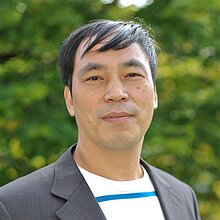
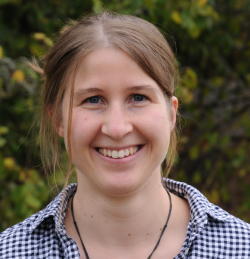
Peter Bauer-Gottwein is a Professor at the Water Systems Department of Space Research and Technology at the Technical University of Denmark. His research focuses on hydrology, water resources management, hydrogeophysics, and remote sensing techniques. Hydrology and Water Resources Hydrogeophysics and Remote Sensing Hydroeconomic Modeling and Satellite Data He actively uses UAV technologies and satellite altimetry in hydrological studies, with recent work on river monitoring and flood forecasting systems. His publications highlight interdisciplinary approaches combining geospatial technologies with environmental management. Current projects include: GNSS reflectometry for river monitoring UAV navigation systems Machine learning for flood prediction Arctic river modeling
Dr. Changxing Dong is a Research Associate at the Leibniz Institute of Agricultural Development in Transition Economies (IAMO) since November 2010, specializing in agent-based modeling and agricultural policy simulation. He previously worked at Martin-Luther-University Halle-Wittenberg. Current affiliation: IAMO Department of Structural Development of Farms and Rural Areas Prior affiliation: Martin-Luther-University Halle-Wittenberg His research focuses on: Agent-based modeling of agricultural systems Ecosystem services quantification Land market dynamics and resilience Policy simulation tools (AgriPoliS) Multifunctional agricultural land use Recent publications highlight trends in: Deep reinforcement learning integration with agent-based models AgriPoliS software sustainability Spatial analysis of grazing intensity in Kazakhstan Simulation games for policy evaluation He collaborates extensively on projects like AgEnRes, AgriPoliS, MULTAGRI, and Rehwinkel Resilience, working with Alfons Balmann, Ruth Njiru, and Franziska Appel on AI-enhanced agricultural simulations.
Giuseppe Giorgi is a fixed-term researcher at the Department of Mechanical and Aerospace Engineering (DIMEAS), Politecnico di Torino. He serves as Scientific Coordinator for multiple EU-funded projects including MERMAIDS, BLUE-X, and AIMS, and leads commercial research contracts for offshore wind microclimate studies. Research focuses on hybrid offshore platforms integrating Floating Offshore Wind Turbines (FOWTs) with Wave Energy Converters (WECs) Expertise in nonlinear hydrodynamics , fluid-structure interaction , and experimental validation through lab tests and sea trials Research Interests : Marine Renewable Energy Systems Nonlinear Dynamic Modeling Mechanical and Techno-Economic Optimization Hybrid Wind-Wave Energy Platforms Parametric Resonance Energy Harvesters Scientific Achievements : 2022: IFAC CAMS Best Paper Award 2022: Institution of Civil Engineers - Baker Medal 2022: AIMETA Junior Mechanics of Machines Award 2023: IFToMM Bronze Best Student Paper Award Academic Leadership includes supervising 6 PhD students and teaching Numerical Modeling of Marine Energy Converters (PhD level). His 15 most recent publications focus on wave energy converter optimization, floating wind turbine dynamics, and hybrid offshore energy systems with applications in the Mediterranean Sea and North Sea.
Konstantinos Christakos is a researcher at the Norwegian Meteorological Institute and an adjunct researcher at the Department of Marine Technology, Norwegian University of Science and Technology (NTNU). His work focuses on metocean statistics, numerical wave modeling, and marine renewable energy applications. Doctoral dissertation: Wind-Generated Waves in Fjords and Coastal Areas (University of Bergen, 2021) Master’s thesis: Characterization of the coastal marine atmospheric boundary layer (MABL) for wind energy applications (University of Bergen, 2013) Christakos specializes in wave modeling for coastal and fjord environments, with a focus on wind-wave interactions, inhomogeneous wave dynamics, and open-source software development. He has contributed to tools like metocean-api , DNORA , and metocean-stats for metocean data analysis and visualization. His recent publications and conference presentations address Arctic wave energy resource assessment, downscaled wave hydrodynamics, and fjord-specific modeling challenges. He actively collaborates with institutions like SFI BLUES, SINTEF, and NOAA, and lectures on marine dynamics and stochastic methods at NTNU. Konstantinos participates in interdisciplinary teams and workshops, emphasizing computational modeling, machine learning integration, and environmental engineering for marine structures.
Arun Agrawal is the Pulte Family Professor of Development Policy at the Keough School of Global Affairs, University of Notre Dame, where he also serves as the inaugural director of the Just Transformations to Sustainability Initiative. His work bridges political science, environmental studies, and development policy with a global reach. His research focuses on environmental politics, sustainable development, governance, and the political economy of institutional change . He explores community-based conservation, Indigenous knowledge systems, common property regimes, agrarian transformations, and sustainability governance. His interdisciplinary approach integrates qualitative fieldwork with quantitative analysis, particularly in the Global South. Agrawal’s recent publications reflect a strong trajectory in climate justice, land governance, migration and adaptation, and the use of machine learning for sustainability . His work appears in leading journals such as Science , PNAS , Nature Climate Change , and Nature Sustainability , indicating a high-impact, policy-relevant research agenda. Scientific Awards and Recognition: Fellowship from the John Simon Guggenheim Memorial Foundation Support from the MacArthur Foundation Support from the Ford Foundation Support from the Moore Foundation Agrawal has secured significant research funding from the National Science Foundation, U.S. Department of Defense (Minerva Research Initiative), UK development cooperation agency , and other global foundations. He serves on the editorial board of PNAS and other interdisciplinary journals, and he mentors students and leads large-scale sustainability research initiatives. His prior academic appointments include positions at the University of Michigan, Yale, UC Berkeley, Harvard, and McGill.
Prof. Dr. Hanna Meyer is a Professor of Remote Sensing and Spatial Modeling at the Institute of Landscape Ecology, University of Münster (WWU). She leads the Remote Sensing and Spatial Modeling Group and is actively involved in teaching and research in geospatial data science, machine learning, and environmental monitoring. Her work is supported by multiple national and international funding bodies including the DFG, EU Horizon Europe, and internal university grants. B.Sc. Geography, Philipps University Marburg (2007–2010) M.Sc. Environmental Geography, Philipps University Marburg (2010–2013) Ph.D., Philipps University Marburg (2014–2018) Her research focuses on machine learning methods for spatial data, optical remote sensing, environmental monitoring, and spatio-temporal modeling. She develops and applies advanced statistical and machine learning techniques to satellite and drone-based data for mapping ecological variables, land cover, and environmental change. Her work emphasizes methodological rigor, model transferability, and uncertainty quantification in spatial predictions. The recent publications reflect a strong trend in developing and validating machine learning models for environmental mapping, with applications in soil science, peatland hydrology, forest ecology, and polar climatology. She contributes both to theoretical advancements in spatial model validation and to practical software tools in R for geospatial analysis. She has secured competitive research funding for projects such as PRISM, Carbon4D, Uebersat, and BEyond, focusing on spatial pattern recognition, carbon modeling, AI model transferability, and biodiversity prediction. She teaches courses on remote sensing, spatial data analysis with R, and environmental modeling, and supervises students and early-career researchers. She collaborates widely with researchers across institutions and leads a dynamic research group including postdoctoral researchers and students. Her open-source contributions, particularly R packages like CAST and uavRst, support reproducible research in geospatial machine learning.
Assoc Prof Geraldine Torrisi is the Deputy Head of School (Learning & Teaching) at the School of Information and Communication Technology at Griffith University. With a PhD in Educational Studies and degrees in Science (Physics/Mathematics) and Education, she focuses on Human-Computer Interaction (HCI) , User Experience , and Learning Theory . She is a Senior Fellow of the Higher Education Academy and Griffith Learning and Teaching Academy . Education: PhD in Educational Studies (Griffith University) Masters of Educational Studies (James Cook University) Bachelor of Education (Secondary Science and Maths) (James Cook University) Bachelor of Science (Physics/Mathematics) (James Cook University) Research Interests include Interactive Digital Media , Educational Technology , and Data Literacy . Her 2025 book chapters explore AI's role in education, while 2024-2023 articles address data literacy frameworks and hybrid teaching models. Scientific Awards include Griffith Award for Excellence in Teaching (2011) , Excellence in Teaching Award (2015) , and Senior Fellow of the Higher Education Academy (2018) . She also received multiple Group Learning and Teaching Commendations (2009, 2017, 2019). Grants include The Dignity Project (2024-2025), Promoting Renewable Energy Adoption (2022-2025), and Smart Environmental Sensing (2022-2023). She supervises PhD students on topics like Human-Machine Teaming and Instructional AR Design .
Dr. Hesham El-Askary is a Professor of Computational and Data Science at Schmid College of Science and Technology, Chapman University . With expertise in Global Climate Change, Remote Sensing, and Natural Disasters , his research spans atmospheric aerosols, marine ecosystems, and sustainable resource management. He holds a Ph.D. in Computational Sciences from George Mason University. B.Sc. Alexandria University M.Sc. George Mason University (×2) Ph.D. George Mason University His research interests focus on: Dust storm monitoring via remote sensing Climate change impacts on sea-level rise and coral reefs Renewable energy for sustainability Hydrological extremes and drought analysis AI/ML applications in environmental science Marine habitat and coastal zone management Recent publications highlight his work in: Machine learning for groundwater vulnerability Land surface temperature trends Coral reef monitoring in the Red Sea Solar energy optimization in Egypt/UAE Drought prediction in Mediterranean regions Awards & Grants : Chapman University Senior Wang-Fradkin Professorship (2015) Regional Coordinator for EU Horizon 2020 GEO-CRADLE Project ($3M, 2016) Saudi Environmental Management Award (2006) Funding from NSF, NASA, USDA, and EU As a IEEE and AGU member , he bridges environmental science with advanced computational methods.
Danielle Ignace serves as Associate Professor in the Department of Forest Resources at the University of Minnesota, Research Associate at Harvard Forest, and affiliated faculty at the University of British Columbia. An enrolled Coeur d'Alene tribal member, she directs ecophysiology research on climate change, fire, and invasive species impacts on forest ecosystems and Indigenous communities across North America. Her academic foundation includes: PhD in Ecology and Evolutionary Biology, University of Arizona (2006; Advisor: Travis Huxman) MS in Ecology and Evolutionary Biology, University of Arizona (2004) BS in Zoology and Environmental Studies, University of Wisconsin, Madison (2000) Dr. Ignace's research integrates Traditional Ecological Knowledge with scientific methodologies to address global environmental challenges. She examines ecosystem responses to climate stressors while centering Indigenous perspectives on land stewardship, with particular focus on reconciliation of knowledge systems and equitable science practices. Her work bridges forest ecology, social justice, and community-based adaptation strategies through transdisciplinary collaborations. Recent publications reveal strong thematic trends in decolonizing ecological frameworks, with recurring emphasis on knowledge co-production, terminology reform, and climate resilience. Key subfields include Indigenous research methodologies, invasive species management, permafrost carbon dynamics, and geospatial forest monitoring, reflecting her commitment to both theoretical innovation and applied conservation solutions. Her scientific recognition includes: Excellence in Ecology Scholar, Ecological Society of America Wall Scholar at Peter Wall Institute for Advanced Studies (UBC, 2022-2023) Science for Society Equity Fellow, Fair Count Inc Dr. Ignace mentors multiple graduate students including PhD candidate Miah Godek (Public Scholars Initiative and Climate Solutions Scholars awardee) and Master's researchers Gracie Crafts (triple fellowship recipient) and Devlin Grewal. She secured $937,212 from the Paul G. Allen Foundation for Coeur d'Alene Tribe climate-salmon initiatives and leads four UBC Indigenous Strategic Initiatives Fund projects. Her advisory roles include the BC Conservation Fund ($300M ecosystem initiative) and Silviculture Innovation Program ($10M provincial investment). The Ignace Lab operates as a dynamic nexus for ecophysiology research, art-science collaborations (including Clyfford Still Museum exhibitions), and science communication through YouTube field documentation. It connects with broader networks including the Forest MacroSystems Network, Systems Beings Lab, and UBC's Wine Production and Climate Change Research Cluster to advance community-driven environmental solutions.
Tümay Kadakci Koca is an Associate Professor in the Department of Geological Engineering, Faculty of Engineering at Muğla Sıtkı Koçman University. She holds a Ph.D. in Applied Geology from Dokuz Eylül University (2021), an MSc in Applied Geology (2011), and a BSc in Geological Engineering from Hacettepe University (2009). Research Focus: Engineering geology, rock mechanics, slope stability analysis, geotechnical engineering, and soft computing applications in geological problems. Academic Contributions: Over 15 publications focusing on rock slope stability in mining operations, soil burn severity mapping post-wildfires, and geomechanical properties of sedimentary rocks. Scientific Recognition: Recipient of Kemal Erguvanlı Engineering Geology Award (2022) and Altın Çekiç Geology Research/Article Award (1900). Projects: Led TÜBİTAK-funded research on post-fire soil burn severity in Muğla, contributed to dam reservoir landslide analyses, and consulted for private mining projects in Turkey. Her work integrates numerical modeling with field studies, emphasizing Turkey-specific geological challenges and environmental impacts.
Len Kne is a Researcher at the University of Minnesota , serving as Research Computing Director at U-Spatial. He has taught graduate-level GIS courses since 2012 including: GIS 8501: GIS Project Management & Professional Development (2012-2019) PubH 7253: GIS in Public Health (2015-2018) PubH 6719: Humanitarian Crisis Simulation (2018-2019) GIS 5577: Spatial Databases (2012-2017) Research Interests: Geographic Information Science, Spatial Computing, Remote Sensing, and Spatial Thinking. His work contributes to UN Sustainable Development Goals through geospatial analysis applications. Notable Projects: Lead PI for USDA-funded crop evaluation ML modeling (2024-2026) Co-PI on winter stress mitigation for northern turfgrasses (2021-2026) Minnesota Department of Health infrastructure transparency tool (2021-2026) USDA Forest Service floodplain analysis projects (2023-2024) Datasets: Contributed to multiple open datasets including historical surface waters mapping, digital surface models, and ecological suitability studies for Twin Cities.
Professor Eigil Kaas is affiliated with the Niels Bohr Institute at the University of Copenhagen . His work spans climate dynamics , numerical weather prediction (NWP) , and atmospheric modeling . As former Section Head of Climate and Computational Geophysics , he leads research on climate-chemistry coupling and sea ice impacts. Education : MSc (1987) and PhD (1993) in Meteorology from University of Copenhagen Research Focus : Climate dynamics and physics Numerical methods in atmospheric models Machine learning for weather prediction Arctic sea ice-climate interactions Thunderstorm electricity and radiation Coupled atmosphere-ocean modeling Article Trends : Recent work combines neural networks with radiative transfer optimization Focus on storm dynamics and gamma-ray flashes Extreme precipitation modeling under climate change Pioneering tidal flow studies in Faroe Island fjords Teaching Legacy : Instructor of Atmospheric Physics and Dynamical Meteorology courses Developed zonally averaged climate model for educational use Mentored 12 PhD/MSc students with DMI/ECMWF collaborations Professional Roles : Chairman of BFI Group 28 (Geosciences & Climate) Scientific Advisory Committee member at ECMWF Project lead in EU ENSEMBLES and PEGASOS initiatives
Jean-Marc Mwenge Kahinda is an Associate Professor of Water Engineering at the University of the Witwatersrand's School of Civil and Environmental Engineering in Johannesburg, South Africa. With over 20 years of experience in the water sector, he has established himself as a leading expert in water resources engineering and management, particularly in the Southern African Development Community (SADC) region. His educational background includes: PhD from University of the Witwatersrand MSc (Eng) in Water Resources Engineering and Management from University of Zimbabwe BSc (Eng) in Mining Engineering from University of Lubumbashi (DRC) Professor Mwenge Kahinda's research focuses on the critical intersection of land and water management, with particular emphasis on sustainable practices that address land degradation in semi-arid regions. His work integrates hydrological processes, ecosystem management, and climate change adaptation strategies to develop practical solutions for water security challenges. He has pioneered research on rainwater harvesting systems, developing GIS-based decision support tools that have contributed to nationwide implementation of these practices in South Africa. Analysis of his recent publications reveals a strong focus on land degradation assessment in the Greater Sekhukhune District Municipality, utilizing advanced geospatial techniques and social-ecological systems approaches. His research increasingly incorporates remote sensing technologies (particularly Sentinel-2 satellite imagery) and multi-criteria analysis to understand the complex interactions between human activities, climate change, and land degradation processes in semi-arid environments. As an active academic, he serves as guest editor for the Elsevier Journal of Physics and Chemistry of the Earth and as an academic editor for PLOS Water. He regularly reviews for accredited journals and research reports in his field. Professor Mwenge Kahinda supervises PhD and MSc students across multiple universities and has extensive experience lecturing on water-related subjects throughout the SADC region. He organizes and conducts specialized training and short courses on water management topics. His leadership in multidisciplinary research projects focuses on securing and managing water resources through integrated approaches that consider both technical and social dimensions of water management challenges.
Ahmed Ahmed, an associate professor in the Department of Computer Science at Prairie View A&M University (PVAMU) , shapes tech leaders through innovative teaching and research. His work spans IoT, AI, and ML applications across agriculture, infrastructure monitoring, and healthcare. Key research areas include: IoT and AI for sustainable agricultural practices LoRa-based location tracking in constrained environments Secure blockchain-federated learning systems Geofencing for community safety With over 50 peer-reviewed publications and a $300k NSF grant (2023), Ahmed develops hands-on learning tools like a Special Interest Group for IoT and live programming demonstrations. His global journey—from Cairo University to a PhD at the University of Saskatchewan—fuels his commitment to empowering underrepresented students. Scientific awards include the PVAMU Faculty Service Award . He advises students like Kritika Singh (2022 graduate) and advocates for continuous refinement of teaching as a craft.
Justine E. Vanden Heuvel is a Professor in the Horticulture Section at Cornell University's School of Integrative Plant Science . Her work bridges viticulture research and undergraduate education . Education: Doctorate (2002) from the University of Guelph M.Sc. in Plant Agriculture (1999) from the University of Guelph B.Sc. (1996) from the University of Guelph Research Interests: Focus on digital viticulture for precision management, flavor/aroma optimization in wine grapes, and ecophysiological factors affecting fruit-wine composition. Implements computational tools like NDVI imaging and computer vision for sustainable practices in cool climates. Publication Trends: Research spans soil-plant interactions , climate adaptation , and vineyard technology . Key areas include under-vine vegetation for environmental sustainability, microbial composition studies , and canopy management to improve grape quality. Outreach Activities: Actively engages through @thegrapeprof YouTube content and media contributions to outlets like the New York Times Well blog and HuffPost Science . Teaches courses such as The Science of Grapevines (VIEN 3300) , Advanced Viticulture (VIEN 4460) , and Wine Culture (VIEN 2810) . Contact: G14 Plant Science Building, Ithaca, NY 14853