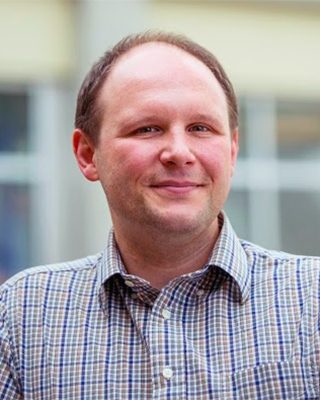
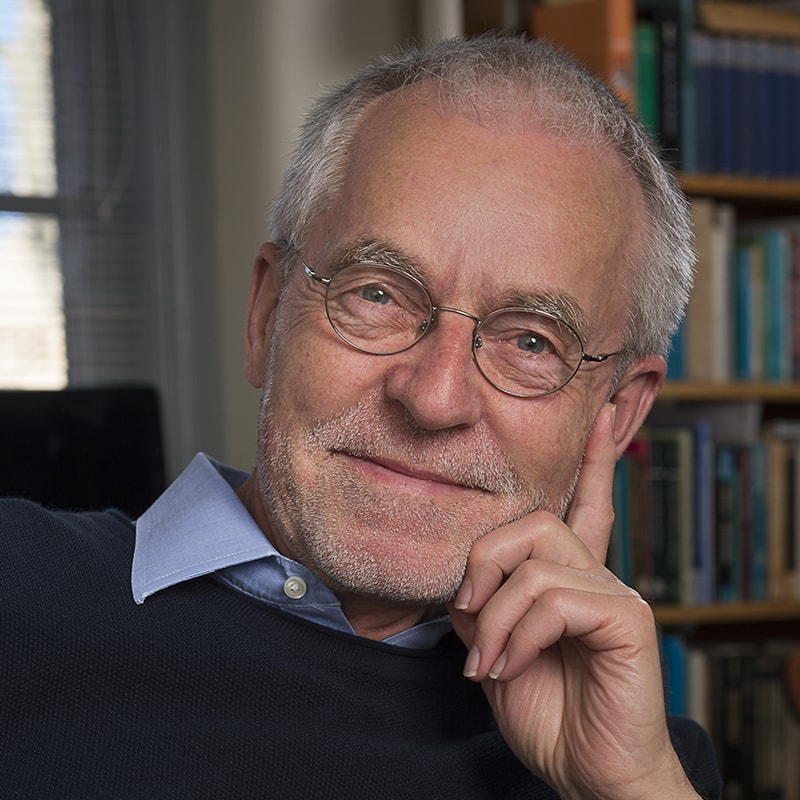
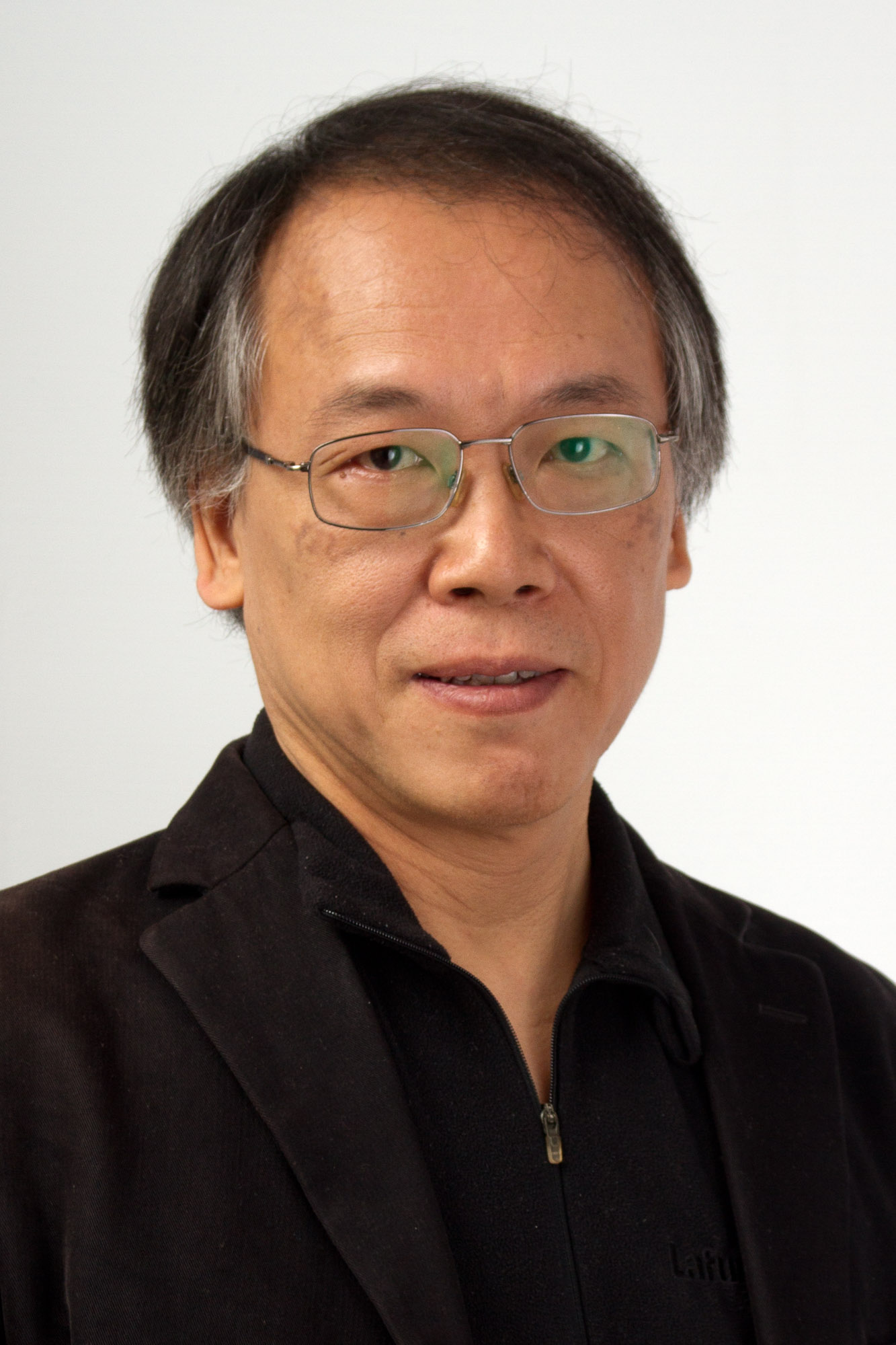
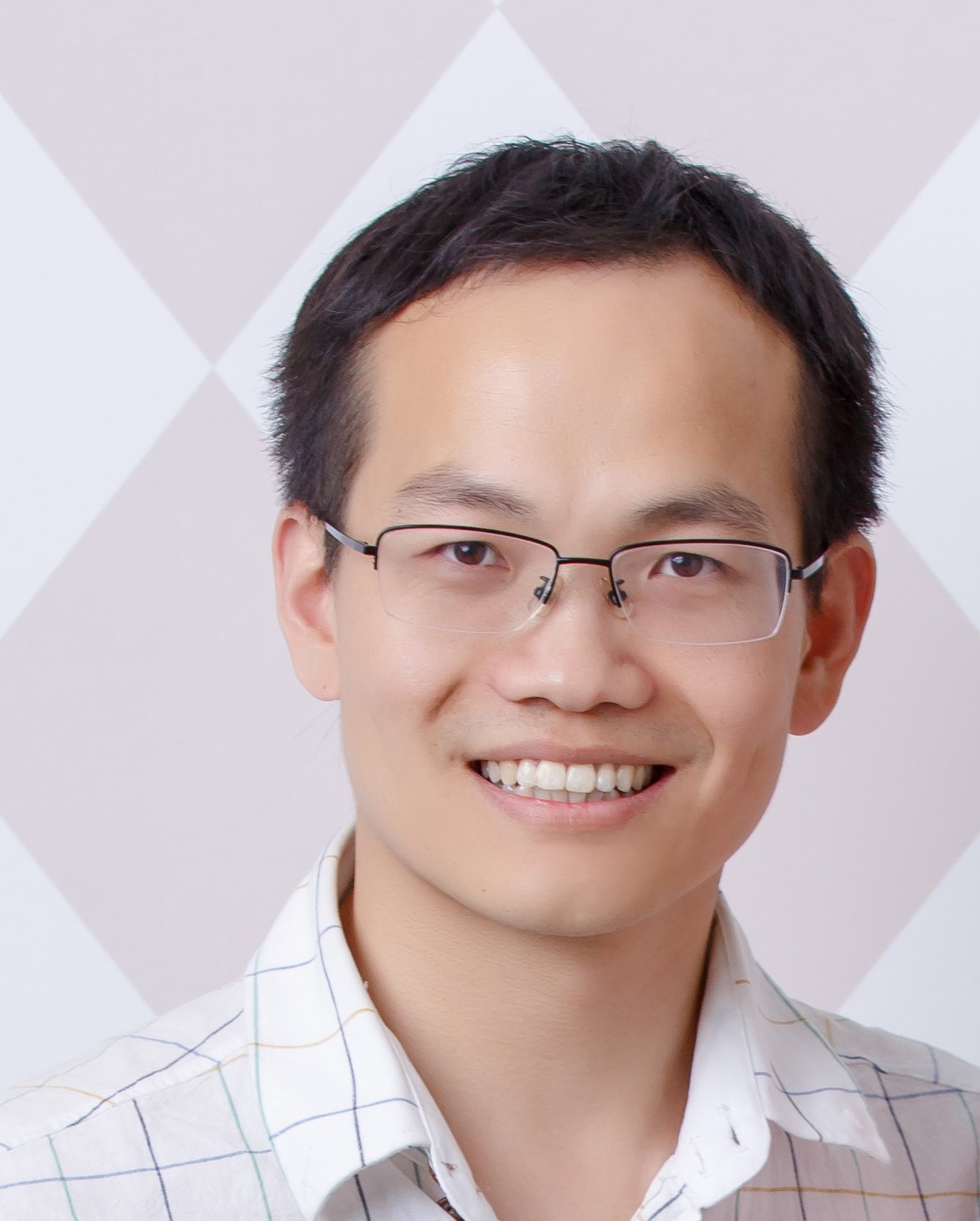
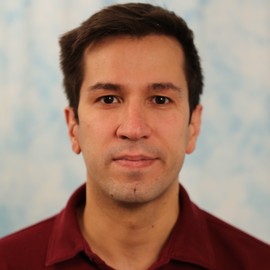
Ioan Raicu is a Professor in the Department of Computer Science at Illinois Institute of Technology (IIT) and a guest research faculty at Argonne National Laboratory's Math and Computer Science Division. He leads the Data-Intensive Distributed Systems Laboratory (DataSys) at IIT, focusing on distributed systems, cloud computing, and high-performance computing. His work is primarily funded by the NSF and DOE. Research interests include distributed systems, many-task computing, and data-intensive applications. Over 140 peer-reviewed publications have yielded a H-index of 46, with top papers addressing cloud vs. grid computing comparisons, Globus GridFTP, Swift workflow systems, and Falkon frameworks. Recent projects explore fine-grained parallelism, scalable indexing, and energy-efficient blockchain algorithms. Awards include NSF grants and recognition for lab innovations. Advised PhD students include Alexandru Orhean and Poornima Nookala. The DataSys lab has won the Grainger Computing Innovation Prize and leads initiatives like the BigDataX REU program. Active in conferences such as SC and IEEE IPDPS, Raicu's work bridges theory and practice in extreme-scale computing systems.
Dr. Ciara Rafferty is a Senior Lecturer at Queen's University Belfast's School of Electronics, Electrical Engineering and Computer Science, affiliated with the Centre for Secure Information Technologies. She leads research in advanced cryptography, focusing on post-quantum systems, homomorphic encryption, and hardware acceleration. Her work includes quantum-safe cryptography projects like the UK Quantum Communications Hub and AQuASeC (Innovate UK). She co-teaches CSC2056 - Systems Security and Cryptography and actively supervises PhD students. Dr. Rafferty is a Senior Member of IEEE and an EPSRC SPRITE+ Expert Fellow. Research Interests: Homomorphic Encryption Post-Quantum Cryptography Cryptographic Hardware Architectures Privacy-Preserving Technologies Side-Channel Attack Mitigation Key Projects: UK Quantum Communications Hub (Phase 2) SAFEcrypto (H2020 Project) AQuASeC (Toshiba Europe-funded) SEQURED (Rolls Royce-funded) Awards: Senior Member of IEEE EPSRC SPRITE+ Expert Fellow Advising & Grants: PhD Supervision: Shabnam K (Secure Cloud Computation) Funding: EPSRC, Innovate UK, Industry Partners Lab/Teams: Centre for Secure Information Technologies (CSIT), collaborating on hardware-accelerated cryptography and quantum-safe systems.
Professor Carsten Rudolph serves as Deputy Dean at Monash University's Faculty of Information Technology and directs the Oceania Cyber Security Centre (OCSC). He holds a PhD in Information Security from Queensland University of Technology (2002) and a Diplom in Computer Science from Goethe University Frankfurt (1997). His interdisciplinary research focuses on cybersecurity foundations, including cryptographic protocols, AI-driven security, human factors, and national cybersecurity policy. Key areas include securing smart grids, digital health systems, and transnational energy networks. Notable contributions include establishing the OCSC, leading Pacific region cybersecurity maturity reviews with Oxford University, and advancing frameworks for firmware security in virtual power plants. He chairs major projects like RAI4IoE (Responsible AI for Energy) and Post-Quantum Cryptography initiatives. Teaching responsibilities include cybersecurity modules like FIT3173 and FIT3168. Rudolph's research outputs (137+ publications) emphasize phishing detection via AI, blockchain-based energy trading, and resilient smart grid systems. He collaborates internationally on policy development and has advised 12 major research projects funded by agencies like the U.S. Bureau of East Asia and Pacific Affairs.
Md. Zoheb Hassan serves as an Assistant Professor in the Department of Electrical Engineering and Computer Engineering at Laval University, where he leads cutting-edge research in wireless communications and spectrum management. His academic role includes graduate recruitment and active participation in the university's research ecosystem, particularly through the Establishment of the Next Generation of Professors program funded by FRQNT. Dr. Hassan's research centers on spectrum sharing and management, wireless communication systems, and communications network control systems. He pioneers the integration of digital twin technology and machine learning to solve critical challenges in next-generation networks, including interference management in 5G/6G aerial corridors, Internet of Vehicles, and satellite-terrestrial integration. His work emphasizes practical implementations such as proof-of-concept demonstrations for tactical networks and proactive resource allocation in dynamic environments. Analysis of his 2024-2025 publications reveals a dominant trend toward AI-driven wireless resource optimization, with 12 of 15 recent papers featuring digital twins for interference management, spectrum sharing, and energy efficiency. Key thematic clusters include vehicular communications (4 papers), underwater IoT networks (2 papers), and hardware-impairment resilient designs (3 papers), demonstrating his focus on bridging theoretical advances with real-world deployment challenges across diverse network topologies. Dr. Hassan has secured significant competitive funding for his research initiatives: Digital Twin-Enhanced Interference Management for Next-Generation Radio Access Networks in the FR3 Band (FRQNT, 2025-2027) Center for Radio Frequency and Communications Systems, Technologies and Applications (FRQNT, 2024-2030) Context-Aware Spectrum Sharing and Management for Next Generation Wireless Networks (NSERC, 2024-2029) Development of innovative technologies for modeling predictive systems in urban mobility (MITACS, 2022-2026) Springboard to Discovery supplement for Context-Aware Spectrum Sharing (NSERC, 2024-2025) He actively mentors doctoral candidates, currently supervising Mahima Karim (PhD in Electrical Engineering, expected 2025) and Mohammadamin Parhizgar (PhD in Electrical Engineering, expected 2024). His supervisory approach combines theoretical rigor with practical problem-solving, focusing on spectrum management algorithms and digital twin implementations for next-generation networks. While specific laboratory affiliations aren't detailed in the source material, his projects indicate strong alignment with Laval University's wireless research infrastructure and the Center for Radio Frequency and Communications Systems.
Zachary Tatlock is an Associate Professor at the Paul G. Allen School of Computer Science & Engineering at the University of Washington, where he leads the Programming Languages & Software Engineering Group (PLSE) and the SAMPL Group. His research spans programming languages, formal verification, compilers, and computational fabrication. He is also an Amazon Scholar with AWS's Automated Reasoning Group and previously advised OctoML. Tatlock's work bridges theoretical foundations with practical systems, focusing on making it easier to write tricky code while ensuring correctness through rigorous proofs and measurements. PhD in Computer Science & Engineering, University of California, San Diego (2014) Thesis: Reducing the Costs of Proof Assistant Based Formal Verification Advisor: Sorin Lerner BS in Computer Science (Honors) and Mathematics, Purdue University (2007) Professor Tatlock's research focuses on the intersection of programming languages, formal methods, and systems. His work in compilers and formal verification aims to make it easier to write tricky code while ensuring correctness through rigorous proofs. He explores computational fabrication techniques that bridge digital design with physical manufacturing. His recent work on equality saturation (via the egg framework) has transformed program optimization and synthesis. Tatlock also investigates floating-point numerics, distributed systems verification, and hardware/software co-design, always seeking to balance theoretical rigor with practical implementation. Tatlock's recent publications demonstrate a strong focus on equality saturation techniques (egg framework), computational fabrication, and verified systems. His work increasingly integrates machine learning with program analysis and synthesis. There's a clear trajectory toward more practical applications of formal methods in real-world systems, particularly in numerical computing and fabrication. His research group has made significant contributions to e-graph technology, floating-point accuracy, and the verification of distributed systems. Distinguished Paper Award for Rewrite Rule Inference Using Equality Saturation (OOPSLA 2021) Spotlight Paper Award for Dynamic Tensor Rematerialization (ICLR 2021) Distinguished Paper Award for egg: Fast and Extensible Equality Saturation (POPL 2021) Faculty Appreciation for Career Education & Training (FACET) Award (2020) NSF CAREER Award: Verifying Distributed System Implementations (2017) Distinguished Paper Award for Automatically Improving Accuracy for Floating Point Expressions (PLDI 2015) Distinguished Teaching Award Nomination (2015) Professor Tatlock has advised numerous doctoral, master's, and undergraduate students who have gone on to prominent positions in academia and industry, including faculty positions at the University of Utah and Brown University, and leadership roles at companies like OctoML and Certora. His research is supported by significant funding from NSF, DARPA, DOE, and industry partners, totaling millions of dollars. Current grants include projects on computer-aided reasoning, formal verification, computational fabrication, and machine learning systems. He has served on numerous program committees and organized workshops including FPTalks, EGRAPHS, and PNW PLSE. As co-leader of the Programming Languages & Software Engineering (PLSE) research group and affiliate of the SAMPL Group at the University of Washington, Tatlock has developed influential tools including egg (an equality saturation toolkit), Carpentry Compiler, and Odyssey. His group actively collaborates with industry partners including Amazon Web Services, where he serves as an Amazon Scholar. The group has made significant contributions to equality saturation, floating-point accuracy, program synthesis, and computational fabrication, with applications ranging from compiler optimization to 3D printing.
Wei Ding is a Professor in the Department of Computer Science at the University of Massachusetts Boston (UMass Boston). She earned her Ph.D. in Computer Science from the University of Houston in 2008. From 2019 to 2023, she served as a Program Director at the National Science Foundation's Division of Information and Intelligent Systems (IIS), overseeing programs in Information Integration, Smart Health, Deep Learning Foundations, and Scalable Systems. Her research integrates knowledge discovery, data mining, and machine learning with applications spanning health sciences, astronomy, geosciences, and environmental sciences. She employs advanced techniques like spatio-temporal modeling, deep neural networks, and semantic analysis to address complex real-world problems such as disease subtyping, physical activity prediction, and environmental forecasting. Her work emphasizes interdisciplinary collaboration and societal impact. Analysis of her recent publications reveals a focus on AI-driven healthcare solutions (e.g., neuroimaging biomarkers, disorder diagnosis), fundamental ML advancements (e.g., generalization, GAN stability), and cross-domain applications (e.g., climate forecasting, animal behavior analysis). Recurring themes include low-data learning, interpretability, and scalable algorithms. Awards & Honors: IEEE Fellow (2023) NSF Director's Award (2022) WISAY Distinguished Woman in Science Award, Yale University (2019) AI for Earth Award (2018) Best Paper Awards (ICTAI 2011, ICCI 2010) Advising & Grants: She mentors PhD and Master’s students in the Knowledge Discovery Lab (KDLab), with alumni at institutions like Facebook, Google, and McKinsey. Her research is funded by NSF, NIH, NASA, and DOE, including: NIH R01: Predicting youth physical activity (2016) NSF EAGER: Machine learning for cancer subtyping (2017) NIH R01: Accelerometer/gyroscope data for activity estimation (2022) Leadership: She directs the KDLab and co-founded the Women in Sciences Club (WINS). She serves as Associate Editor for ACM TKDD, TIST, and KAIS journals.
Wilfried Sieg serves as the Patrick Suppes Professor of Philosophy at Carnegie Mellon University within the Dietrich College of Humanities and Social Sciences, where he has been a core faculty member since 1985. He previously held appointments at Columbia University (1977-1985) and co-founded CMU's interdisciplinary Pure and Applied Logic program. His educational background includes: Ph.D. in Philosophy, Mathematical Logic, and Foundations of Mathematics from Stanford University (1977) M.S. in Mathematics and Logic from Westfälische-Wilhelms-Universität, Münster (1971) B.S. in Mathematics and Physics from Freie Universität, Berlin (1969) Sieg's research fundamentally explores the Foundations of Mathematics through proof theory, with significant contributions to the History of Modern Logic and Philosophy of Mathematics. His work critically examines Hilbert's Program, Gödel's incompleteness theorems, and the historical development of computability concepts. He emphasizes the dialectic between mathematical practice and philosophical reflection, revealing how foundational positions shape and are shaped by mathematical developments. Analysis of his recent publications shows a sustained trajectory from historical-philosophical investigations toward computational implementations, particularly through the AProS project. This evolution reflects growing integration of proof-theoretic insights with automated reasoning systems, focusing on heuristic search algorithms and cognitive modeling of mathematical reasoning. Sieg directs the Laboratory for Symbolic & Educational Computing (LSEC), which develops pedagogical tools like the AProS proof tutor. His grant-funded projects include editorial work on Hilbert, Gödel, and Bernays supported by the German National Science Foundation, Sloan Foundation, and National Endowment for the Humanities, alongside NSF-funded development of web-based logic education. He has advised numerous graduate students through research seminars while maintaining active collaboration with computer science and mathematics departments.
Professor Raja Jurdak is a leading academic in distributed systems and applied data sciences at Queensland University of Technology (QUT), where he directs the Trusted Networks Lab. He holds dual roles as Professor of Distributed Systems and Chair in Applied Data Sciences, alongside leadership in the Centre for Data Science. His research focuses on dynamic network modeling, blockchain-based trust frameworks, and IoT applications, with particular emphasis on cybersecurity, energy efficiency, and mobility-driven diffusion processes. Jurdak formerly led CSIRO's Distributed Sensing Systems Group and maintains a visiting scientist role there. Education: PhD in Information and Computer Science, University of California, Irvine MS in Computer Networks and Distributed Computing, University of California, Irvine BE in Computer and Communications Engineering, American University of Beirut Research Interests: Network science, blockchain technology, IoT security, sustainable energy systems, and data-driven decision-making. His work bridges theoretical advancements with practical applications in smart grids, health surveillance, and urban mobility. Awards: Finalist for the 2019 Eureka Prize, multiple CSIRO accolades, and IEEE Senior Member status. His research has received industry recognition for interdisciplinary innovation, including the DiNeMo project's real-time disease surveillance system. Advisory & Grants: Leads high-impact projects funded by government and industry partnerships. Supervises PhD candidates in areas like decentralized data processing and privacy-preserving AI. Holds editorial roles at journals such as Ad Hoc Networks and PLoS ONE . Labs & Teams: Directs the Trusted Networks Lab at QUT, fostering collaborations with institutions like Oxford University and MIT. His work emphasizes cross-disciplinary teams to address global challenges in cybersecurity and sustainable systems.
Jieh Hsiang is a Distinguished Professor at National Taiwan University , with affiliations in the Department of Computer Science and Information Engineering, the Digital Archives and Automatic Inference Laboratory, and the Digital Humanities Research Center. He holds concurrent roles at the Institute of Information Science, Academia Sinica, and the Higher Education Research & Development Office, National Taiwan University. Education PhD in Computer Science, University of Illinois at Urbana-Champaign (1979–1982) BS in Mathematics, National Taiwan University (1972–1976) Research Interests Hsiang's work spans automated reasoning , digital libraries , digital humanities , and information retrieval . His research focuses on integrating computational methods with cultural heritage preservation , particularly through tools like DocuSky and databases such as the Taiwan Historical Digital Library . He explores AI applications in patent analysis , historical text mining , and semantic relationships in legal documents . Recent Trends in Publications His recent articles highlight advancements in BERT and GPT-2 fine-tuning for patent classification , LARGE language models for legal automation , and GIS-based analysis of historical archives . Themes include digital preservation , AI-driven legal text analysis , and cross-disciplinary computational tools for humanities scholars. Scientific Awards 2019 Ministry of Science and Technology Distinguished Research Fellow 2009 National Taiwan University Outstanding In-House Service Award 2008 Chinese Library Association Special Contribution Award 2006 IEEE Test-of-Time Award 1997 & 1999 National Science Council Outstanding Research Award 1997 Ministry of Education Outstanding Industrial-Academic Collaboration Award 1998–2001 Founder and First Chair of IFIP WG1.6 Labs and Collaborations Hsiang leads the Digital Archive and Automatic Inference Laboratory , developing platforms like DocuSky for digital humanities, Taiwan Historical Digital Library , and QGIS Cloud Maps for spatial analysis. His team collaborates internationally on projects involving historical document digitization , patent automation , and cross-domain knowledge integration .
Willem Jonker is a Full Professor at the Digital Society Institute, specializing in Semantics, Cybersecurity & Services. His research focuses on encryption schemes, access control, and privacy-preserving technologies. He has contributed to over 120 publications, with recent work addressing CVE-to-CWE mapping, anomaly detection in network traffic, and functional encryption systems. His expertise aligns with UN Sustainable Development Goals related to secure digital systems and privacy. Jonker has supervised 10 students and actively participates in academic conferences, presenting on topics like secure data management and cryptographic protocols. Research interests include cryptographic protocols, secure data management, and cybersecurity solutions. Notable projects involve developing methods for detecting covert channels, enhancing data privacy in healthcare, and improving secure search over encrypted data. He has also contributed to standards in digital rights management and forensic image recognition.
Affiliations Full-time Assistant Professor of Computer Science at the School of Computing and Information Systems (SCIS) , Singapore Management University (SMU). Research focuses on cryptography, post-quantum systems, and secure protocols. Previously affiliated with PolyU for select teaching and collaborations. Education PhD in Computer Science, Chinese Academy of Sciences (2015). Research Interests Specializes in advanced cryptographic techniques including: Post-Quantum Cryptography (e.g., lattice-based systems) Threshold Cryptography (e.g., secure distributed ECDSA) Zero-Knowledge Proofs and Privacy-Preserving Technologies Authenticated Key Exchange (AKE) protocols Efficient implementations of cryptographic primitives (e.g., Kyber, NewHope) Notable Awards First Prize (LAC.PKE) and Second Prize (SIAKE, LAC.KEX) in Chinese Post-Quantum Cryptography Competition (2020) Best Paper Awards at IWSEC 2015 and ProvSec 2014 Advising & Collaborations Advises PhD students JIANG Bowen and WANG Jiaheng at SMU. Collaborates with researchers such as Guofeng Tang (post-doc) and international teams. Active in organizing conferences (e.g., CCS, ProvSec) and contributes to open-source projects like the Preprocess-then-NTT library. Labs & Teams Leads research initiatives at SMU focused on cryptographic protocol design and implementation. Collaborates with PolyU on advanced security projects.
Ruben Martins is an Assistant Professor at Carnegie Mellon University's School of Computer Science and serves as the program director of the Master of Science in Computer Science (MSCS) . His research focuses on the intersection of constraint programming, program synthesis, analysis, and verification, with recent work aiming to make formal methods tools more accessible through automated reasoning. Ruben earned his Ph.D. with honors from the Technical University of Lisbon, Portugal (2013) , followed by postdoctoral research at the University of Oxford (2014-2015) and UT Austin (2015-2017) . Research Interests : Ruben's work bridges constraint programming and program synthesis , with applications in software verification , optimization , and automated reasoning . He has developed award-winning tools like Open-WBO , a modular MaxSAT solver that has won gold medals in international competitions. His publications span top-tier venues such as POPL , PLDI , FSE , SAT , and CP , often addressing real-world challenges from program analysis to network security. Scientific Awards include: Distinguished Paper Award at PLDI 2018 Distinguished Paper Award at FSE 2021 Distinguished Paper Award at SAT 2022 Gold medals for Open-WBO in MaxSAT competitions Teaching & Advising : Ruben mentors Ph.D., Master’s, and undergraduate students in research projects related to program synthesis, formal methods, and constraint solving. He teaches courses such as Bug Catching: Automated Program Verification and Advanced Topics in Logic: Automated Reasoning and Satisfiability , emphasizing hands-on experience with tools like Why3. His advising spans topics from AI-driven program repair to network protocol verification , fostering collaboration across disciplines.
Marcel Böhme is a faculty member at the Max Planck Institute for Security and Privacy (MPI-SP) , leading the Software Security research group. His work focuses on foundational advancements in fuzzing , statistical program analysis, and scalable vulnerability discovery. Education: PhD from National University of Singapore (NUS) Research interests span: Statistical and causal frameworks for software testing Efficiency/Scalability of automated testing Fundamental limits of vulnerability detection Practical fuzzing technology (e.g., Entropic in LibFuzzer) Recent publications highlight trends in: Machine learning for security analysis Privacy-preserving statistical methods Future-proof security frameworks Protocol fuzzing with large language models Scientific accolades include: ERC Consolidator Grant (2024) NUS Outstanding Young Alumni Award (2022) ARC DECRA (2019) Multiple ACM Distinguished Paper Awards He serves as: Spokesperson for Research Group Leaders at Max Planck Society Guest Editor-in-Chief for ACM TOSEM PC Chair for ASE'25 and ISSTA'26
Esfandiar Mohammadi is an Associate Professor at the Institute for IT Security, University of Lübeck, leading the Privacy & Security (PrivSec) group and directing the AnoMed competence cluster. He has held tenured faculty positions since 2019 after postdoctoral research at ETH Zürich (2016-2019) and a PhD at Saarland University (2015). University of Lübeck (2015-present) ETH Zürich (2016-2019) Saarland University (2015) His research focuses on privacy-preserving technologies in machine learning, anonymous communication protocols, and formal verification of security properties. Recent work includes advancements in Mixnet scalability and federated learning with differential privacy guarantees. Key publication trends reveal a strong emphasis on privacy-preserving algorithms for machine learning (2024), cryptographic protocols for anonymous communication (2025), and security analysis of decentralized systems (2023-2025). Collaborations span institutions like ETH Zürich, Saarland University, and industry partners EnergieDock/NAECO Blue for the VeDS project. His group includes 11 researchers (5 PhD students) and software engineers working on topics like Differential Privacy Secure Multi-Party Computation Trusted Execution Environments
Henry Corrigan-Gibbs is an Assistant Professor at the Massachusetts Institute of Technology (MIT) in the Department of Electrical Engineering and Computer Science. He is affiliated with the Computer Science and Artificial Intelligence Laboratory (CSAIL) and collaborates with the PDOS and CSS research groups. Henry co-hosts the MIT Security Seminar series. Education : PhD in Computer Science from Stanford University (advisor: Dan Boneh), Postdoc at École polytechnique fédérale de Lausanne (EPFL) (host: Bryan Ford), and B.S. in Computer Science from Yale University . Research Interests Henry focuses on computer security , cryptography , and systems research , building technologies that: Empower end users through privacy-preserving design Implement strong cryptographic security in real-world deployments Scale to millions of users while maintaining security Key projects include: Tiptoe for private web search Prio for privacy-preserving aggregate statistics used by Apple and Google Express for metadata-hiding communication SafetyPin and True2F for secure authentication Scientific Contributions Standards Influence : IETF and NIST standards recommend his private-aggregation systems Industry Impact : Deployed in Apple iOS , Google Android , and Mozilla Firefox Non-profit Deployment : Co-founder of Divvi Up for real-world Prio implementations Academic Recognition 2023 MIT EECS Jerome Saltzer Award for teaching excellence 2020 ACM Doctoral Dissertation Honorable Mention 2016 Caspar Bowden Award for PET research 2015 IEEE Security & Privacy Distinguished Paper Award Multiple IACR Best Young Researcher Paper Awards (2015–2018) Advising and Collaborations Current advisees include: PhD students: Alexandra Henzinger , Ryan Lehmkuhl Postdoc: Emma Dauterman Collaborates with industry (Apple, Google, Mozilla) and standards bodies (IETF, NIST) to translate research into practice.