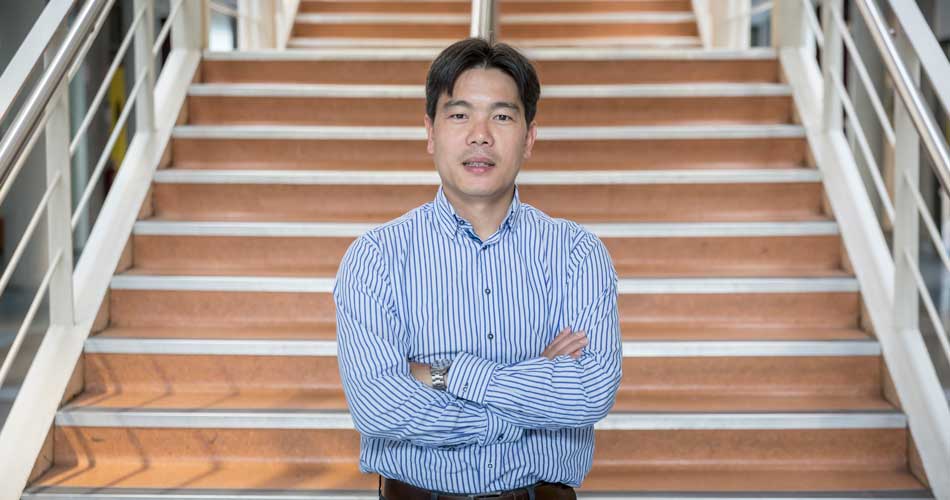
Dr. Le-Nam Tran is a researcher at the UCD School of Electrical & Electronic Engineering , University College Dublin. His work focuses on optimizing the last hop of 5G/6G wireless networks through mathematical programming, with emphasis on energy efficiency, interference management, and security against eavesdropping. Develops low-cost, low-complexity transmission techniques Projects supported by Science Foundation Ireland Career Development Award Author of over 80 peer-reviewed publications Research Keywords: Wireless Communications Network Security Signal Processing Energy-Efficient Systems Beamforming Optimization Interference Mitigation
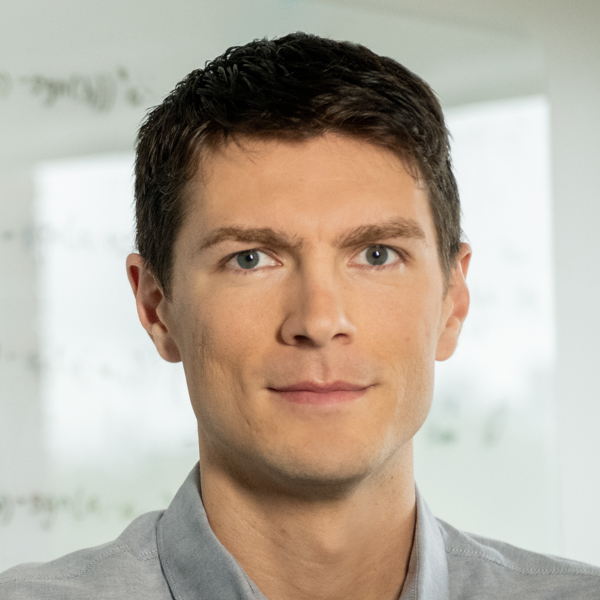
Paul E. Hand is an Associate Professor in the Department of Mathematics and Computer Science at Northeastern University, affiliated with the College of Science and Khoury College of Computer Sciences. He holds a Ph.D. in Mathematics from New York University (2009) and specializes in signal recovery, deep learning, and optimization. His research focuses on developing mathematical frameworks for inverse problems, phase retrieval, and generative models with provable guarantees. He has taught advanced courses in machine learning, algorithms, and deep learning at Northeastern and Rice University. Education: Ph.D. in Mathematics, New York University (2009); M.S. and B.S. in Mathematics, not explicitly stated but inferred from academic trajectory. Research Interests: Applied mathematics, compressed sensing, deep learning, phase retrieval, signal recovery, and optimization. His work bridges theory and practice, addressing challenges in imaging, robustness, and generative modeling. Grants: NSF CAREER Grant DMS-1848087 (2018). Outreach: Directed STEM summer camps at Rice University (2017) and developed LeadingLesson , a platform for multivariable calculus problem-solving resources. Teaching: Courses include Machine Learning (CS 6140), Deep Learning (CS 7150), Algorithms (CS 3000), and Analysis at Northeastern and Rice. He emphasizes rigorous proof techniques and pedagogical innovation. Labs/Teams: Collaborates with researchers in computational mathematics, computer vision, and machine learning. Active in authoring peer-reviewed papers and reviewing for top conferences (NeurIPS, ICML, ECCV).
Manxi Wu is an Assistant Professor in Cornell University's School of Operations Research and Information Engineering, specializing in societal networks and game-theoretic approaches to system design. Her research develops computational models for strategic learning and incentive mechanisms in socio-technical systems, with applications to transportation networks and digital platforms. Education: B.S. Applied Mathematics, Peking University (2015) M.S. Transportation, Massachusetts Institute of Technology (2017) Ph.D. Social and Engineering Systems, Massachusetts Institute of Technology (2021) Her research integrates game theory, optimization, and machine learning to address challenges in autonomous services, traffic management, and decentralized decision-making. Current investigations focus on adaptive incentive structures, spatial resource allocation, and equilibrium analysis in complex networked environments. Publication analysis reveals consistent emphasis on game-theoretic frameworks applied to urban mobility systems, with recent work exploring multi-agent reinforcement learning, congestion pricing equity, and electric fleet management. Methodological innovations include novel convergence proofs for decentralized algorithms and computational approaches to fairness constraints. Awards and Honors: Hammer Fellowship UTC Milton Pikarsky Memorial Award Siebel Scholarship EECS Rising Star recognition No information is currently available regarding student advising, research grants, or laboratory affiliations.
Simon Colreavy Donnelly is an Associate Professor in the Department of Computer Science & Information Systems at the University of Limerick. He is a member of the Interaction Design Centre and focuses on interdisciplinary research at the intersection of artificial intelligence, educational technology, and healthcare informatics. His work spans machine learning applications in medical data analysis, virtual reality (VR) and extended reality (XR) for inclusive education, and deep learning techniques in chemical analysis and spectroscopy. Research Interests: His primary areas of investigation include generative AI for education equity, semisupervised learning algorithms, virtual learning environments design, and the ethical deployment of immersive technologies in healthcare and palliative care. He also explores NMR spectroscopy analysis using deep learning and develops tools for nutritional content estimation through image processing. Collaborations: His recent collaborations span international teams addressing challenges in toxicity-free online discourse (PAN 2024), semisupervised learning distribution mismatches, and VR applications for post-pandemic blended learning. His work integrates computational methods with real-world applications in education, healthcare, and chemical analysis. Labs/Teams: Active within the Interaction Design Centre at UL, his research group develops practical solutions for accessibility in digital education and healthcare systems, emphasizing user-centered design principles for extended reality applications.
Prof. Christoph Benzmüller is a Full Professor at the University of Bamberg (Chair for AI Systems Engineering) and an adjunct professor at Freie Universität Berlin's Department of Mathematics and Computer Science. He is a leading researcher in automated reasoning, computational metaphysics, and formal logic systems. His work focuses on integrating higher-order logic into AI to achieve transparent and ethically grounded systems. Research Interests: His research spans automated theorem proving, formal ontologies, and normative reasoning in AI. Notably, he has formalized Gödel's ontological argument using computational methods and developed the Leo theorem provers for higher-order logic. He emphasizes the use of symbolic reasoning for ethical and legal AI frameworks. Grants & Projects: He leads projects like PetraKIP (AI portfolios for teacher education) and NFDIxCS (National Research Data Infrastructure). His work is funded by DFG, EPSRC, and the Volkswagen Foundation. He also collaborates with institutions globally, including Stanford and Cambridge. Awards: Recipient of the Central Teaching Award (FU Berlin) for his Computational Metaphysics course and a DFG Heisenberg Fellowship. His research on Gödel's argument gained international media attention. Education: Studied at Saarland University, where he earned his PhD (1999) and habilitation (2006).曾是专业长跑运动员,后转向学术研究。
Mohammed Y Niamat is a full-time Professor in the Department of Electrical Engineering and Computer Science at the University of Toledo's College of Engineering . His research focuses on hardware security, FPGA vulnerabilities, and blockchain applications in cybersecurity. Research Interests : Physical Unclonable Functions (PUFs), FPGA Security, Blockchain-based Security Frameworks, IoT Security, Smart Grid Authentication, Machine Learning Vulnerability Analysis Publications : Over 85 publications from 1986-2024, with recent works on integrations of blockchain and PUFs for secure supply chains, neural network modeling attacks on PUFs, and hardware Trojan detection techniques. Collaborations : Co-authored with Junghwan Kim (4), Weiqing Sun (2), Richard Molyet (1). Recent Article Trends : 2024 works on zero-trust architecture for FPGA supply chains using blockchain and ROPUFs; 2023 studies on IoT device authentication, hardware Trojan detection, and NFT-based IP protection; 2021-2019 research on machine learning attacks against PUFs, lightweight cryptographic designs for IoT, and BER optimization in wireless systems.
Zhe Hou is a Senior Lecturer at the School of Information and Communication Technology , Griffith University, Australia. His academic journey includes a PhD in automated reasoning for separation logic from the Australian National University (2015) and prior research roles at Nanyang Technological University, Singapore (2015-2017). He joined Griffith University in 2017 and became permanent faculty in late 2019. Research Interests : Formal methods for software verification Automated reasoning with logical frameworks Blockchain technology and security Quantum computing verification Integration of LLMs with rigorous reasoning Sports analytics via model checking Recent Publications demonstrate expertise in neural-symbolic reasoning, blockchain security, quantum SAT solvers, and runtime verification frameworks. His work combines formal logic with machine learning for applications in cybersecurity and AI trustworthiness. Scientific Awards : ACM SIGSOFT Distinguished Paper Award (2025) Supervision Roles : Principal/Associate Supervisor for 6+ doctoral projects in blockchain security, AI verification, and network security. Professional Activities : Editor for Springer-Nature and Formal Aspects of Computing special issues, conference chair for ICFEM, ICECCS, and ISACE symposia.
Hans Tompits is an Associate Professor in the Department of Knowledge-Based Systems at Technische Universität Wien (Vienna University of Technology). His research focuses on computational logic, declarative logic programming, and formal methods, with a particular emphasis on Answer-Set Programming (ASP). He coordinates the Master's program in Logic and Computation and leads projects in areas such as formal methods for optimization, fault-tolerant autonomous systems, and algorithmic composition. His work bridges theoretical advancements with practical applications, including tools like SeaLion (an ASP IDE with debugging support) and dlvhex (an ASP-based semantic web reasoner). He has contributed to foundational topics like program equivalence, debugging techniques, and integration of ASP with external systems. His recent projects address challenges in autonomous vehicle architectures, music composition algorithms, and safety-critical system design. Tompits has published extensively on topics ranging from nonmonotonic reasoning and modal logics to the development of declarative programming tools. His interdisciplinary approach spans computer science, mathematics, and AI, with applications in both academic and industrial contexts.
Michael Bronstein is a Professor at Università della Svizzera italiana (USI Lugano) in Switzerland and Imperial College London in the UK, where he holds the Chair in Machine Learning and Pattern Recognition. He serves as Head of Graph Learning Research at Twitter following the acquisition of his startup Fabula AI, and maintains a principal engineer position at Intel Perceptual Computing. His research focuses on the interplay between geometry, machine learning, and computer vision, with particular emphasis on non-Euclidean structured data. Professor Bronstein received his Ph.D. with distinction in Computer Science from the Technion in 2007. He has held visiting appointments at Stanford University, MIT, Harvard University (as a Radcliffe Fellow), and Tel Aviv University, and has been affiliated with multiple Institutes for Advanced Study including TUM-IAS where he was a Rudolf Diesel Industry Fellow (2017). He is a Fellow of IAPR, Senior Member of the IEEE, and a member of the Young Academy of Europe. His research program centers on theoretical and computational methods in spectral and metric geometry applied to computer vision, pattern recognition, and machine learning. He pioneered the field of geometric deep learning, developing novel neural network architectures that process non-Euclidean data structures like graphs and manifolds. His work spans from theoretical foundations to practical applications, with over 100 publications in top scientific journals and conferences, and has been featured in international media including CNN. Analysis of his recent publications reveals a strong trajectory in geometric deep learning with applications spanning computer vision, 3D shape analysis, social network analysis, and bioinformatics. His research consistently bridges theoretical innovation with real-world applications, developing novel neural architectures for processing complex data structures. The work demonstrates increasing interdisciplinary reach, connecting machine learning with fields from particle physics to molecular biology. Dalle Molle Prize (2018) Royal Society Wolfson Research Merit Award (2018) ERC Proof of Concept Grant (2018) Amazon AWS Machine Learning Research Award (2018) Fellow, International Association for Pattern Recognition (IAPR) Google Faculty Research Award (2017) Radcliffe fellowship, Harvard University (2017) Rudolf Diesel industrial fellowship, TU Munich (2017) ERC Consolidator Grant (2016) World Economic Forum Young Scientist (2014) Professor Bronstein has secured multiple ERC grants (Starting Grant 2012, Proof of Concept Grants 2016 and 2018, Consolidator Grant 2016) and has mentored numerous students who have contributed to over 30 granted patents. He has chaired more than a dozen conferences and workshops in his field and served as area chair at major computer vision conferences including ECCV 2016 and ICCV 2017. His research group at USI Lugano collaborates extensively with industry partners including Intel and Twitter. As a serial entrepreneur, Professor Bronstein co-founded Novafora (2005-2009) developing large-scale video analysis, Invision (2009-2012) which created low-cost 3D sensors and was acquired by Intel, and Fabula AI (2018-2019) focused on fake news detection which was acquired by Twitter. His work bridges theoretical research with commercial applications, with his technology contributing to Intel RealSense and Twitter's graph learning infrastructure.
Roopsha Samanta serves as an Assistant Professor in the Department of Computer Science at Purdue University, where she leads the Purdue Formal Methods (PurForM) research group and participates in the Purdue Programming Languages (PurPL) initiative. Her academic foundation includes a PhD from the University of Texas, Austin (2013) and postdoctoral research at the Institute of Science and Technology Austria prior to joining Purdue in 2016. Education: PhD in Computer Science, University of Texas, Austin (2013) Postdoctoral Researcher, Institute of Science and Technology Austria Professor Samanta's research centers on bridging formal methods with programming languages to enhance software reliability, with core expertise in program verification, program synthesis, and concurrency. Her work uniquely targets both professional developers and non-programmers, developing techniques to ensure programs align with user intent through automated reasoning and synthesis. Recent efforts focus on distributed systems verification where traditional methods face scalability challenges. Analysis of her 2020-2024 publications reveals a dominant trajectory in distributed agreement systems, particularly advancing parameterized verification for unbounded process networks. Key innovations include bounded verification techniques for doubly-unbounded systems, explainable synthesis through specification localization, and secure multi-party computation frameworks like HACCLE. Her work consistently integrates theoretical formal methods with practical system implementation. Scientific Awards: NSF CAREER Award (2019) for “Robustness of Inductive Reasoning Engines” Amazon Research Award (2021) supporting secure computation research Her research is primarily funded through competitive grants including the NSF CAREER award and Amazon Research Award, enabling exploration of verification robustness and secure multi-party computation. While specific advising details aren't publicly documented, her leadership of the PurForM group indicates active mentorship of graduate researchers in formal methods. Current projects suggest expanding applications to privacy-preserving technologies and explainable AI-assisted programming. The PurForM research group, under her direction, develops foundational tools for program verification and synthesis with emphasis on distributed and concurrent systems. Collaborations within PurPL and industry partners like Amazon drive translational research from theoretical models to practical verification frameworks applicable to real-world distributed infrastructure.
Adilson Motter is the Charles E. and Emma H. Morrison Professor of Physics and Astronomy and (by courtesy) Engineering Sciences and Applied Mathematics at Northwestern University. He serves as Director of the Center for Network Dynamics (CND) and has been a faculty member since March 2006. His academic appointments include affiliations with the Chemistry of Life Processes Institute (CLP), Molecular Biophysics Program, NSF-Simons National Institute for Theory and Mathematics in Biology (NITMB), Paula M. Trienens Institute for Sustainability and Energy, Graduate Program in Applied Physics, Center for Interdisciplinary Exploration and Research in Astrophysics (CIERA), Institute for Quantum Information Research and Engineering (INQUIRE), and Northwestern Institute on Complex Systems (NICO). Professor Motter received his Ph.D. in 2002 from UNICAMP (University of Campinas), Brazil, where he worked with Professor Patricio S. Letelier. Prior to joining Northwestern, he held positions as Guest Scientist at the Max Planck Institute for the Physics of Complex Systems in Germany and as Director's Funded Postdoctoral Fellow at the Center for Nonlinear Studies at Los Alamos National Laboratory. Professor Motter's research focuses on the dynamical behavior and control of complex systems and networks. His work spans theoretical and computational approaches to understanding phenomena in physical, biological, and engineered systems. Key research areas include: Cascading dynamics and network resilience Spontaneous synchronization and symmetry phenomena Network control theory and applications Quantum networks and information transfer Machine learning applications to network science Data-driven discovery in complex systems Applications to quantitative biology, biomedical research, renewable energy, smart power grids, microfluidics, and metamaterials Analysis of Professor Motter's recent publications reveals a strong interdisciplinary focus spanning physics, engineering, biology, and computer science. His work demonstrates consistent innovation in network science, with recent contributions advancing quantum networking architectures, understanding power grid limitations for electric vehicle integration, developing machine learning approaches for genetic analysis, and exploring fundamental synchronization phenomena. A notable trend is the increasing application of his theoretical frameworks to real-world challenges in energy systems, biomedical research, and quantum information technology. Professor Motter has received numerous prestigious awards and honors: Alfred P. Sloan Research Fellowship (2009) Weinberg Award for Excellence in Mentoring Undergraduate Research (2009) Northwestern-Argonne Early Career Investigator Award for Energy Research (2010) NSF Faculty Early Career Development (CAREER) Award (2011) Erdös-Rényi Prize in Network Science (2013) Fellow of the American Physical Society (2013) Simons Foundation Fellowship in Theoretical Physics (2015) Fellow of the American Association for the Advancement of Science (2015) Scialog Fellow (2015) Outstanding Referee, American Physical Society (2016) Fellow of the Network Science Society (2020) Senior Scientific Award, Complex Systems Society (2022) Professor Motter has demonstrated exceptional commitment to mentoring, as evidenced by the Weinberg Award for Excellence in Mentoring Undergraduate Research. His research group has received significant funding through multiple NSF grants, including his CAREER award, and collaborations with Argonne National Laboratory. Current research directions include mechanical metamaterial networks, quantum network science, and other areas of complex systems. The group has been actively recruiting postdoctoral researchers and has seen students recognized with awards and research grants. As Director of the Center for Network Dynamics (established September 2023), Professor Motter leads a multidisciplinary team exploring network phenomena across various domains. The Center has hosted significant events including the 'Brain Architecture and Computing 2024' workshop and is organizing the 2025 CDC Workshop on Neurocomputation and Dynamics in Rio de Janeiro. The Motter Group maintains active collaborations with experimentalists and researchers from diverse disciplines, facilitating the translation of theoretical insights into practical applications.
Professor Vallipuram Muthukkumarasamy is an Associate Professor at the School of Information and Communication Technology at Griffith University, where he has pioneered Network Security teaching and research since joining in 2001. He leads the Networking & Security and Blockchain Research Group at the Institute for Integrated and Intelligent Systems. Muthu holds a Ph.D. from Cambridge University and a B.Sc. Eng. with 1st Class Honors from the University of Peradeniya, Sri Lanka. His extensive academic appointments include Group Leader of Network Security and Blockchain Research (2008-present), Program Director for the Graduate Certificate in Blockchain Technology (2022-present), HDR Convenor (2022-present), Member of the University Council (2020-2021), and Deputy Head of School for Learning and Teaching (2013-2016). Muthu's research expertise spans Cyber Security, Blockchain Technology (DLT), and Wireless Sensor Networking. He has secured national and international funding for interdisciplinary research, published over 150 articles in international journals and conferences, and supervised more than 30 research Masters and PhD students to completion. He pioneered the Network Security teaching at Griffith and successfully proposed and led the development of Queensland's first Master of Cyber Security Program, creating a truly interdisciplinary curriculum with Law, Business, and Criminology Schools. His recent publications reveal a strong research trajectory in blockchain applications, security visualization techniques, and wireless sensor networks. His work explores DeFi user behavior analysis, NFT privacy risks in the metaverse, blockchain transaction visualization, and the integration of blockchain with AI for credit scoring systems. His wireless sensor network research focuses on energy-efficient routing protocols and network lifetime modeling. Muthu has received multiple best teacher awards from students and peers, and during his tenure as Deputy Head of School, the Griffith IT program was ranked #1 in Australia for overall student satisfaction. He successfully proposed and developed Cisco-related courses at undergraduate and postgraduate levels and instrumental in creating industry-sought-after networking and security courses across all academic levels. His funded research includes significant projects such as Increasing the South East Queensland Cyber Security Workforce, Linking Digital Payments to Crime Using Big Data Machine Learning Tools, Improving Water Markets through Digital Technologies, and developing Indo-Australian partnerships for digital transformation through blockchain. He is actively involved in community and charity activities and has been instrumental in internationalization efforts for Griffith University.
Enrico Magli is a Full Professor at the Department of Electronics and Telecommunications (DET) at Polytechnic University of Turin, Italy. He serves as Director of the Image Processing and Learning group and Coordinator of the 'ICT for Smart Societies' M.Sc. degree program. Additionally, he is a committee member of the PhD program in Electrical, Electronic and Communications Engineering and a member of the Interdepartmental Center SmartData@PoliTO - Big Data and Data Science Laboratory. Professor Magli's research focuses on applying machine learning and deep learning methods to satellite imaging, with applications to onboard processing and image analysis on the ground. His work spans deep learning for image and video analysis, image and video compression, compressive sensing, satellite imaging, and graph signal processing. He has published over 90 journal papers with 5900+ citations and an h-index of 40 on Google Scholar. His recent publications demonstrate a strong focus on developing deep learning architectures for satellite image processing, particularly for onboard applications. His research addresses challenges in hyperspectral image compression, super-resolution, change detection, and efficient neural network architectures suitable for resource-constrained satellite environments. There's also significant work on secure authentication systems using deep learning techniques and neural network optimization for edge devices. Elevated to IEEE Fellow (2017) 'for contributions to compression and communication of remotely sensed imagery' IEEE Geoscience and Remote Sensing Society 2011 Transactions Prize Paper Award IEEE Multimedia 2019 Best Paper Award Best Paper Awards at IEEE ICIP (2015, 2019) ERC Starting grant (consolidator type) and ERC Proof-of-Concept Grant recipient Multiple Best Paper Awards Francesco Carassa (2011, 2013, 2014) Professor Magli actively supervises numerous PhD students working on cutting-edge topics in deep learning for satellite imaging, image processing, and secure authentication systems. His research is supported by significant grants including ERC projects and multiple commercial contracts with space agencies and technology companies. He leads the Image Processing and Learning (IPL) Group at Politecnico di Torino, which focuses on developing innovative solutions for satellite image analysis and compression.
Mohammad Mahmoody is an associate professor in the Computer Science Department at the University of Virginia. His research focuses on theoretical aspects of cryptography, computational complexity, and machine learning, particularly on understanding barriers such as lower bounds and impossibility results. He has taught courses including Algorithms, Cryptography, and Theory of Computation. His work explores foundational questions in cryptography, adversarial robustness in machine learning, and computational assumptions underlying cryptographic primitives. Education: Ph.D. in Computer Science from Princeton University (2010) Affiliations: University of Virginia, Department of Computer Science Research Interests: His interests span cryptography (e.g., encryption schemes, coin-tossing, and registration-based systems), theoretical computer science (computational complexity, algorithms), and machine learning (adversarial robustness, data poisoning). He emphasizes formal proofs and rigorous analysis in security and learning frameworks. Publications: Recent work includes studies on quantum-resistant cryptography, adversarial machine learning, and cryptographic protocol design. Key themes involve impossibility results, lower bounds for cryptographic assumptions, and the interplay between computational constraints and learning theory. Service & Grants: - Served on program committees for ICML, NeurIPS, CRYPTO, and TCC - Organized workshops on cryptography and lower bounds - Research funded by grants exploring adversarial robustness and cryptographic foundations Labs/Teams: - Collaborations with researchers in cryptography, machine learning, and theoretical computer science - Advises a team of graduate students and postdocs in security and learning theory.
Nathan Sturtevant is a Professor at the University of Alberta's Department of Computing Science, an Amii Fellow, and Canada CIFAR Chair. His research spans heuristic and combinatorial search problems, with applications in game AI and pathfinding algorithms. He collaborates with the games industry to implement his research in commercial products. Dr. Sturtevant's research explores search algorithms for single and multiple agents, covering areas such as bidirectional search, meta-learning for game theory, procedural content generation, and multi-agent pathfinding. His work integrates machine learning techniques with classical search algorithms to solve complex problems in game environments. Recent publications demonstrate innovations in search optimization, including novel frameworks for suboptimal bidirectional search, new puzzle difficulty metrics, and applications of transformer models to card game planning. His FarmQuest player telemetry dataset provides resources for studying player behavior in farming simulations.