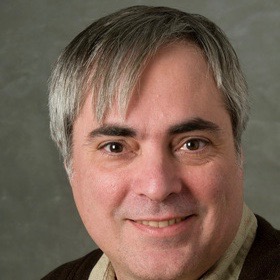
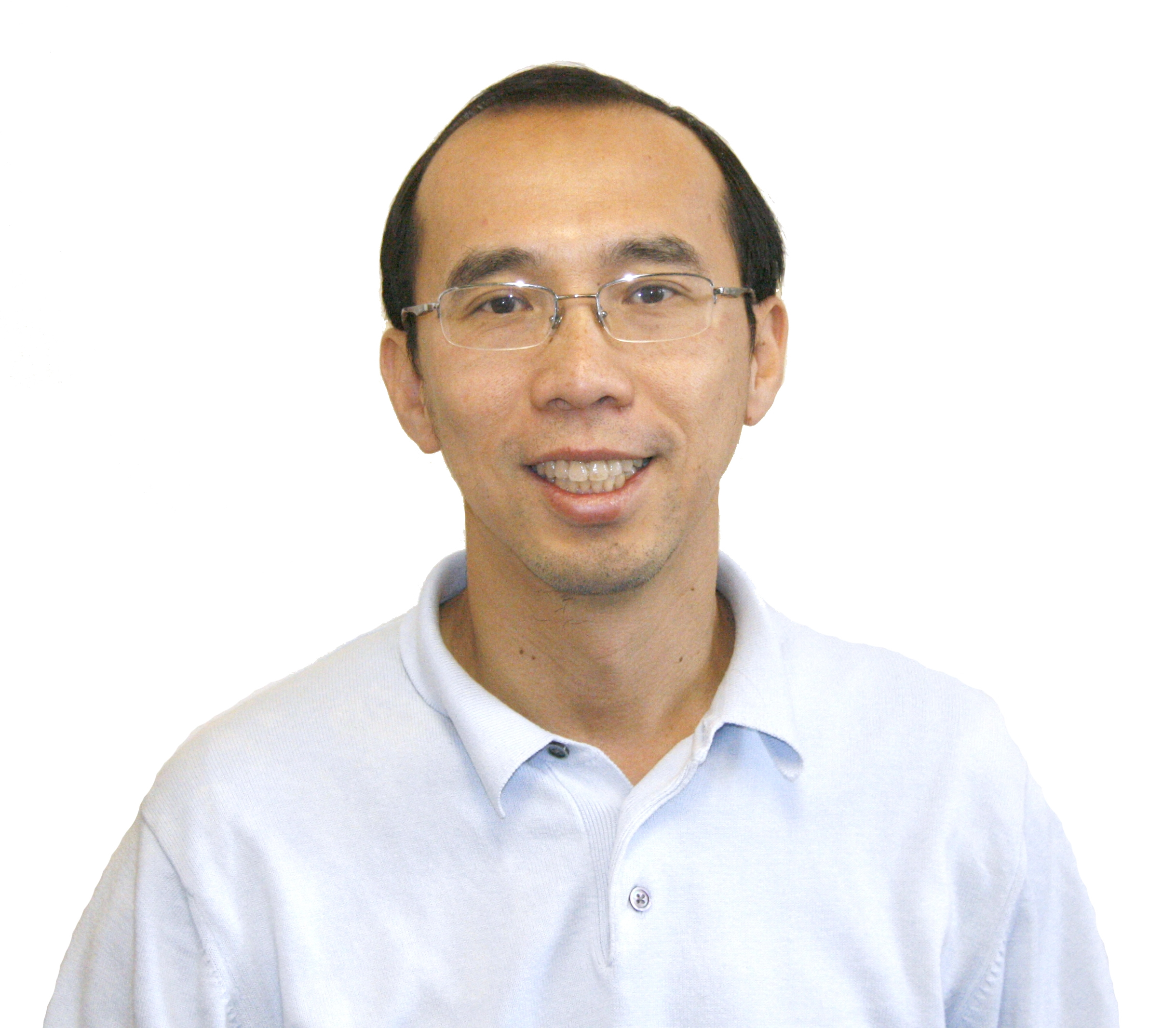
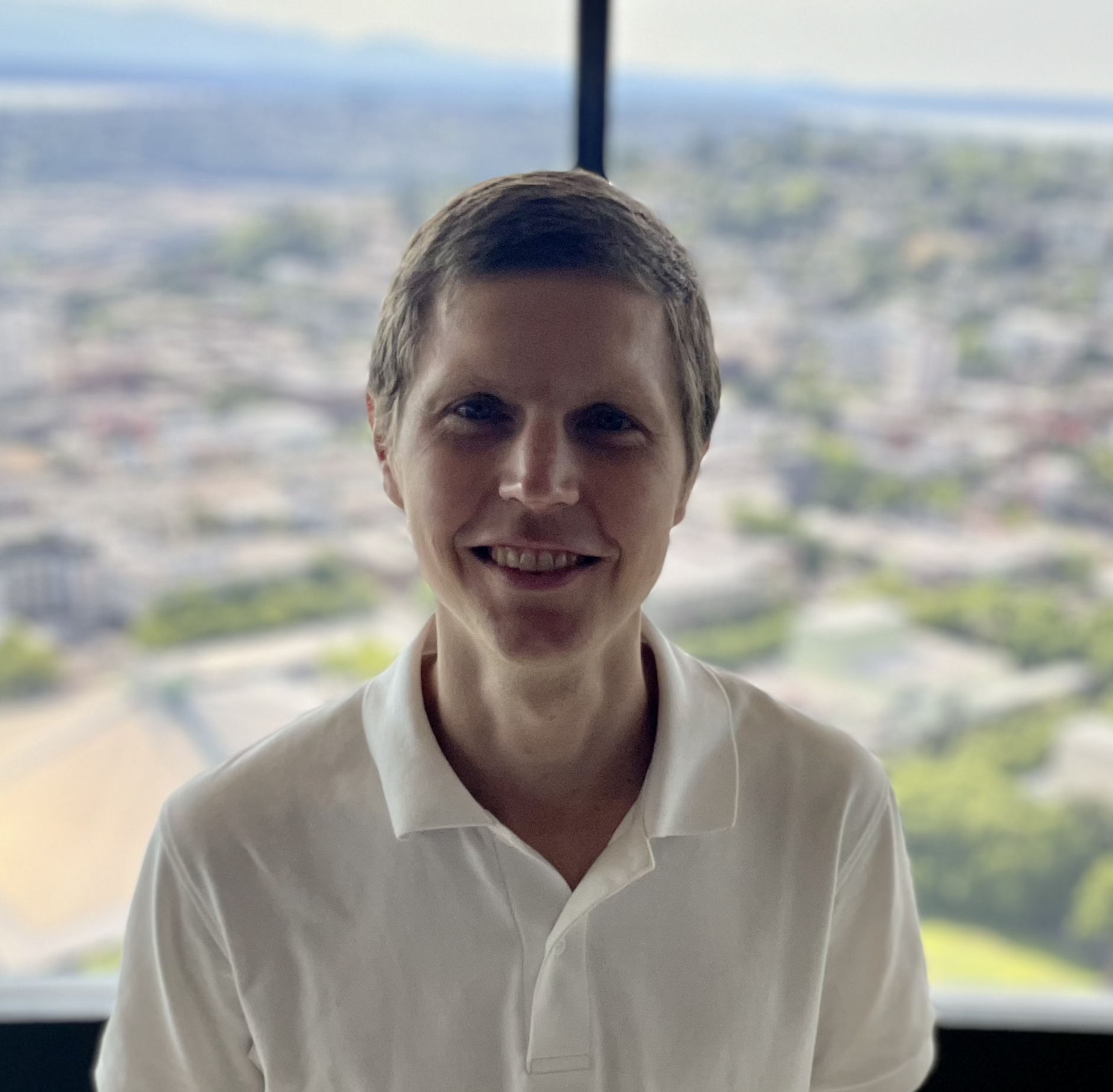
Stuart Kurtz is a Professor in Computer Science and the College at the University of Chicago, and serves as Master of the Physical Sciences Collegiate Division. He holds the endowed position of George and Elizabeth Yovovich Professor. His research focuses on theoretical computer science, including computational complexity theory, randomness in computation, type theory, and formal logic. He has contributed to foundational areas such as the Berman-Hartmanis Isomorphism Conjecture and the computational properties of random sets. Kurtz is affiliated with the Theoretical Computer Science and Programming Languages Groups at the University of Chicago. He has been recognized with the 2009 Quantrell Award for teaching excellence. His service roles include Director of Undergraduate Studies and Department Chair in Computer Science. He actively mentors Ph.D. students and has advised multiple graduates in complexity theory and related fields. His academic background includes a Mathematics Ph.D. from the University of Illinois, supervised by Carl Jockusch. He approaches type theory as an intersection of formal logic and functional programming. Research interests span measure-theoretic randomness, computational logic, and complexity class separations. His recent work explores connections between theoretical computer science and interdisciplinary fields like physics and statistics. In teaching, Kurtz has instructed courses such as Formal Language Theory, Discrete Mathematics, and Honors Intro Programming. His service contributions include roles in the Computation Institute and Toyota Technological Institute at Chicago. His lab affiliations and collaborative work reflect a strong commitment to advancing theoretical foundations in computer science.
Hui Wang is a Professor and Associate Chair for PhD Studies and Research in the Department of Computer Science at the Charles V. Schaefer, Jr. School of Engineering and Science, Stevens Institute of Technology. She also serves as the Director of the Data Science PhD Program and holds leadership roles in multiple institutional committees, including the Doctoral Committee, Faculty Mentoring Program, and Strategic Planning initiatives at both departmental and university levels. Research Interests: Dr. Wang's research focuses on building trustworthy machine learning systems by integrating privacy, fairness, and accountability . Her work aims to fortify ML models against privacy attacks, eliminate algorithmic biases, and ensure auditable decision-making. She explores intersections between machine learning, data mining, and cybersecurity, with applications across domains requiring ethical and secure AI deployment. Recent Research Trends: Her recent publications and funded projects reflect a strong emphasis on privacy-preserving machine learning , fairness-aware systems , and verifiable computing . Themes include securing graph embeddings, federated learning with fairness guarantees, and audit mechanisms for black-box models. Supported by NSF, Cisco, and Google, her work bridges theoretical rigor with practical system design. Scientific Awards: NSF CAREER Award, 2014 Advising and Grants: Dr. Wang actively mentors PhD students and hosts visiting scholars. She leads multiple NSF-funded projects, including Securing Network Embedding against Privacy Attacks and Privacy for All: Ensuring Fair Privacy Protection in Machine Learning . Her research is supported by substantial grants from the National Science Foundation, Cisco, and Google, reflecting her leadership in trustworthy AI. Labs and Teams: While not explicitly named, Dr. Wang leads a research group focused on trustworthy machine learning, advising students and collaborating with industry partners. She is deeply integrated into the Data Science PhD program and CS faculty leadership, shaping research and academic strategy at Stevens.
Manos Kapritsos is an Associate Professor in the Department of Computer Science and Engineering at the University of Michigan's College of Engineering. He leads the GLaDOS research group focusing on reliability of distributed systems through formal verification and fault-tolerant replication techniques. His research spans: Formal verification of concurrent and distributed systems Fault-tolerant replication protocols beyond client-server models Automation of verification processes for complex systems Performance verification including latency properties Reliable cryptographic code implementation Analysis of his publications reveals strong emphasis on: developing automated verification tools (Armada, Vale, IronFleet), creating novel replication protocols (Aegean), verifying performance characteristics (Performal), and improving specification reliability (IronSpec). His work consistently bridges theoretical formal methods with practical systems implementation. Awards and honors include: Jay Lepreau Best Paper Award at OSDI 2025 Jon R. and Beverly S. Holt Award for Excellence in Teaching (2022) NSF CAREER Award (2021) Distinguished Paper Award at PLDI 2020 Google Faculty Award (2017) Distinguished Paper Award at USENIX Security 2017 Grant support includes NSF FMitF grants (2020, 2023), NSF Large grant (2021), DARPA grant (2020), and Google Faculty Award (2017). He advises PhD students through the GLaDOS group, focusing on distributed systems verification. He directs the GLaDOS lab at University of Michigan, developing verification frameworks and reliable distributed systems. Current projects include automated proof generation (Basilisk) and efficient communication protocols (Scrooge).
Andrea Fumagalli is a Professor in the Department of Electrical Engineering at the Erik Jonsson School of Engineering and Computer Science , The University of Texas at Dallas. He earned his Ph.D. (1992) and Laurea (1987) in Electrical Engineering from Politecnico di Torino, Italy. Research Interests: All-Optical Network Architectures, Photonic Slot Routing, Wavelength Routing and Protection, Sensor Networks, Cooperative Wireless Networks, Network Optimization, Next Generation Internet (NGI), and Multi-hop Optical Networks. Education: Ph.D., Electrical Engineering, Politecnico di Torino (1992) Laurea, Electrical Engineering, Politecnico di Torino (1987) Key Research Trends: His recent publications focus on 5G networking, optical network automation, elastic optical networks, network reliability, and cross-layer optimization. He explores FPGA acceleration in 5G Low-PHY functions, live migration of containerized network components, and spectral fragmentation mitigation in EONs. Scientific Awards: Best Teaching Award, Electrical Engineering, UTD (2002) Best Thesis Award for Ph.D. Advisee Isabella Cerutti (2002) IEEE ComSoc Distinguished Lecturer Tour (2000) Best Paper Award (1999): 'An Optimal Design Algorithm for Photonic Slot Routing Networks Migrating to Optical Packet Switching' Advising and Grants: He advised Ph.D. student Isabella Cerutti. In 2001, he secured a $300,000 grant from FUNDACAO CPqD for optical network reliability research. He leads the Optical Networking Advanced Research (OpNeAR) Lab at UTD, collaborating on international projects like the Italian government-funded grid computing initiative (2002) and the OMEGA Test-bed for differentiated reliability. Laboratories and Teams: He directs the OpNeAR Lab , which develops tools for optical network emulation and reliability testing. His projects involve partnerships with institutions in Brazil (Unicamp), Sweden (KTH), Italy (Politecnico di Torino, Scuola Superiore Sant'Anna), and CNR/CNIT.
Dr. Amir Keyvan Khandani is a Professor and Senior Ciena-NSERC Industrial Research Chair in the Department of Electrical and Computer Engineering at the University of Waterloo. He holds prestigious research chairs including Tier 1 Canada Research Chair in Wireless Communications and former Senior NSERC Chairs with Blackberry and Nortel. His research focuses on information theory, wireless and optical communications, and signal processing, emphasizing foundational principles and practical applications. Dr. Khandani earned his BEng and MEng from Tehran University (1985) and PhD from McGill University (1992). He joined Waterloo in 1993, supervising over 45 PhD students, 35 master’s candidates, and numerous postdoctoral researchers. His alumni work globally in academia and industry. Research interests include Network Information Theory , Media-Based Modulation , Full-Duplex Systems , and Quantum-Safe Encryption . Recent work explores secure key generation, interference management, and next-generation wireless innovations. Notable awards include NSERC/Ciena Industrial Research Chair and multiple Canada Research Chairs. His publications span foundational and applied topics in communications, with recent focus on cybersecurity and 5G/6G technologies. Dr. Khandani actively contributes to conferences, consults for industry/government, and teaches ECE 307 - Probability Theory and Statistics . His lab develops cutting-edge solutions in wireless networks, optical systems, and secure communication protocols.
Raymond T. Ng is a Professor of Computer Science at the University of British Columbia (UBC) and serves as Director of the Data Science Institute . In addition, he is the part-time Chief Informatics Officer at the PROOF Centre of Excellence for the Prevention of Organ Failures located at St Paul’s Hospital. Since 2016 he has held the prestigious Canada Research Chair in Data Science and Analytics. Education B.Sc. (Hons.) Computer Science, University of British Columbia, 1986 M.Math. Computer Science, University of Waterloo, 1988 Ph.D. Computer Science, University of Maryland, College Park, 1992 Research Interests Professor Ng’s research lies at the intersection of data mining , text mining , health informatics , sensor analytics , and databases . Over the past decade he has focused on two major domains: Genomics & Biomarker Discovery: Developing multi-omics biomarker panels for heart, lung and kidney transplant rejection and COPD exacerbations using transcriptomics, proteomics and metabolomics data. Natural Language Processing: Mining and summarizing conversational text such as emails, blogs and meeting transcripts to generate structured metadata and actionable insights. Scientific Awards Canada Research Chair in Data Science and Analytics (2016-2026) Best Paper Award, ACM SIGMOD 2004 Best Paper Award, ACM SIGKDD 2001 Selected among Best Papers of VLDB ’99 & ’98 Governor General’s Gold Medal, UBC (1986) Research Funding & Leadership Since joining UBC in 1992, Professor Ng has continuously secured major peer-reviewed funding from NSERC, CIHR, Genome Canada, CFI, MITACS and industry partners (Google, IBM, SAP). He leads or co-leads several large-scale initiatives: HEARTBiT multi-marker blood test for cardiac transplant rejection (CIHR 2018-2021) MERIDIAN ocean acoustic data infrastructure (CFI 2018-2021) Pan-Canadian Early Detection of Lung Cancer (Terry Fox 2018-2021) Business Intelligence Network (NSERC 2009-2014) Multiple Genome Canada programs on biomarker translation (2004-2018) Laboratories & Teams Professor Ng directs the Data Science Institute and works closely with the Natural Language Processing Research Group . At the PROOF Centre he heads a multidisciplinary team of statisticians, computer scientists and clinicians advancing computational biomarker pipelines from discovery to clinical implementation.
Dr. Gowri Sankar Ramachandran is a Senior Lecturer in the School of Information Systems at Queensland University of Technology (QUT), specializing in cybersecurity and distributed systems. She holds a PhD from KU Leuven (Belgium) and a postdoctoral position at the University of Southern California (USC). Her research focuses on open-source software security, runtime threat detection, blockchain applications, and IoT vulnerabilities. Notable contributions include the FUSE tool for detecting malicious packages and the discovery of hyperlink hijacking vulnerabilities affecting millions of domains. Research interests span software supply chain security, metadata-based risk analysis, and generative AI for cyber risk modeling. Awards include Best Paper Awards at ACM CBSE (2016), Mobiquitous (2017), and BigMM (2019). Collaborations include projects with CSIRO, the City of Los Angeles, and the University of São Paulo. She teaches courses on cybersecurity, database management, and network security, and actively supervises PhD students in cybersecurity and blockchain domains. Recent publications address blockchain-based data governance, quantum-resilient IoT protocols, and decentralized identity systems. Her work bridges academic research with real-world impact, addressing critical challenges in digital systems security and privacy.
Li-Yang Tan is an Assistant Professor of Computer Science at Stanford University , focusing on theoretical computer science. His research emphasizes computational complexity, machine learning theory, and algorithm design. Education: Ph.D. in Computer Science from Columbia University , advised by Rocco Servedio His work explores: Boolean function complexity Decision tree learning algorithms Circuit lower bounds Computational-statistical tradeoffs Query complexity Massively parallel algorithms Recent publications analyze computational-statistical tradeoffs via NP-hardness, improve decision tree learning techniques, and establish direct sum theorems for query complexity. His research often bridges complexity theory, learning theory, and algorithm design, with applications in pseudorandomness and correlation clustering. Awards: Best Paper Award at FOCS Best Paper Award at CCC Best Paper Award at SAT Sloan Fellowship Li-Yang collaborates with students and researchers including Guy Blanc, Caleb Koch, and Carmen Strassle. He has delivered invited special issue papers at FOCS, CCC, and SAT conferences.
Thorsten Schmidt is Professor of Mathematical Stochastics at the University of Freiburg, succeeding Prof. Ernst Eberlein in the summer semester of 2015. He also serves as Senior Financial Engineer at MathFinance. Previously, he held professorships at Chemnitz University of Technology (2008-2015), Technical University Munich (2008), and University of Leipzig (2004 onwards). From 2017-2019, he was a Research Fellow at the Freiburg Institute for Advanced Studies (FRIAS) in a joint research group with the University of Strasbourg and USIAS on the topic of Linking Finance and Insurance. His research focuses primarily on financial and actuarial mathematics, stochastic processes, and statistics, with recent work on machine learning methods and their applications in financial mathematics and AI regulation. In Freiburg, his goal with his young team is to tackle complex challenges with improved mathematical models and apply these methodologies to various fields. Key Research Areas: Financial mathematics and credit risks Pricing and hedging of derivative financial products Statistics of stochastic processes Energy markets and nonlinear filter theory Machine learning applications in finance and insurance His recent publications show a strong trend toward integrating machine learning with traditional mathematical finance, particularly in risk management, insurance-finance arbitrage, and robust financial modeling. His work increasingly addresses ethical considerations in AI applications within finance, reflecting his broader interest in responsible AI development. Notable Awards: IDA Award Finance (2015) FRIAS-USIAS Research Fellow (2017/2018) IDA Award Machine Learning and AI (2020) MAPFRE Research Grant (2020) Luis Bachelier Fellow (2021) As Editor-in-Chief of Statistics and Risk Modeling and Associate Editor for Mathematical Finance and International Journal of Theoretical and Applied Finance, Schmidt plays a significant role in academic publishing. He leads the CRC 'Small Data' research center with Harald Binder, focusing on medical problems where disease progression must be estimated with few data points per patient. His LeanAI project, funded by the Vector Foundation, explores the connection between machine learning and theorem-proving software LEAN, aiming to develop AI that can translate between mathematics and formal proof systems. His laboratory work centers around the application of stochastic methods combined with machine learning to solve problems in finance and insurance where data is limited ('Small Data' initiative), with significant funding from DFG (€12 million for CRC Small Data) and the Carl Zeiss Foundation.
Sean Welleck is an Assistant Professor at Carnegie Mellon University's School of Computer Science, specifically within the Language Technologies Institute (LTI). He leads the L3 Lab and serves as an advisor for the AI for Math Fund. His academic journey includes a PhD from New York University under Kyunghyun Cho and postdoctoral positions at the Allen Institute for Artificial Intelligence and the University of Washington with Yejin Choi. Dr. Welleck's educational background shows a strong foundation in computer science. He earned his PhD in Computer Science from New York University, where he worked under the mentorship of Kyunghyun Cho and Zheng Zhang. Prior to this, he completed his MSE and BSE in Computer Science from the University of Pennsylvania, demonstrating a long-standing commitment to the field. Dr. Welleck's research focuses on bridging informal and formal reasoning with AI, with particular emphasis on developing learning, inference, and evaluation algorithms for large language models. His work spans multiple cutting-edge areas including mathematical reasoning , code generation , inference algorithms , and AI reasoning agents . A significant portion of his recent work involves combining AI with formal methods for mathematics, where he has developed frameworks like Llemma (an open-source language model for mathematical reasoning) and meta-generation (for inference-time algorithms). His research is characterized by a strong theoretical foundation coupled with practical applications that push the boundaries of what AI systems can achieve in formal reasoning domains. Analysis of Dr. Welleck's recent publications reveals a clear research trajectory focused on enhancing language models' capabilities in formal reasoning and mathematical problem-solving. His work demonstrates an evolution from foundational research in neural text generation to increasingly sophisticated approaches that integrate formal methods with deep learning. Key trends include the development of inference-time algorithms that improve model performance without additional training, frameworks for mathematical reasoning that connect informal and formal proofs, and novel evaluation methodologies for language models. His publications consistently appear in top-tier conferences including NeurIPS, ICLR, ICML, and ACL, reflecting the high impact of his contributions to the field. Dr. Welleck's scientific achievements have been recognized with several prestigious awards: NAACL 2025 Best Paper Award ICLR 2025 Oral Presentation (Top 2%) ICLR 2025 Spotlight Presentation (Top 5%) NeurIPS 2021 Outstanding Paper Award (Top 0.1%) for MAUVE NVIDIA AI Labs Pioneering Research Award (2017 and 2018) As an educator and mentor, Dr. Welleck actively guides the next generation of AI researchers. He currently advises multiple PhD students including Pranjal Aggarwal, Weihua Du, Andre He, and Seungone Kim (some co-advised with other faculty), along with MS students Riyaz Ahuja, Jiewen Hu, Qinyue Tan, and Thomas Zhu, and undergraduate Tate Rowney. At CMU, he teaches advanced courses such as Neural Code Generation and Advanced NLP, and has previously taught at New York University and the University of Washington. His commitment to education extends to creating resources like the Thesis Review Podcast and developing tutorials on neural theorem proving that have been presented at major conferences. Dr. Welleck leads the L3 Lab at CMU, which focuses on the intersection of language, learning, and logic. The lab brings together students and researchers to tackle challenging problems in AI reasoning, with particular emphasis on mathematical reasoning and code generation. Recent initiatives include the development of Llemma, an open-source language model specialized for mathematical reasoning, and work on inference-time algorithms that enable language models to improve their performance through additional computation during inference rather than through additional training.
Moïse Blanchard is an Assistant Professor and Tennenbaum Early Career Professor at the H. Milton Stewart School of Industrial and Systems Engineering at Georgia Institute of Technology, having joined in August 2025. Previously, he was a Postdoctoral Fellow at Columbia University Data Science Institute. His academic journey includes a Ph.D. in Operations Research from MIT (2024), and M.Sc. and B.Sc. degrees in Applied Mathematics from École Polytechnique. Blanchard's research focuses on the intersection of machine learning theory, statistics, and optimization. His work addresses fundamental questions in universal learning, online algorithms, and convex optimization under memory constraints. His research program explores learnability under minimal assumptions, query complexity/memory tradeoffs, and decision-making in adversarial environments. This work has significant implications for theoretical computer science, operations research, and statistical learning theory. His publications reveal a strong emphasis on foundational aspects of learning theory and optimization. Recent work demonstrates expertise in universal learning frameworks, memory-constrained optimization, and probabilistic analysis of combinatorial problems. His research often bridges theoretical computer science with practical optimization challenges, particularly in contexts where traditional i.i.d. assumptions don't hold. Columbia DSI postdoctoral fellowship, 2024 INFORMS Transportation Science & Logistics (TSL) best student paper award, 2023 Air Force Office of Scientific Research Grant (AFOSR), with Prof. Patrick Jaillet, 2023 COLT 2022 Best student paper runner-up Bronze medal, Alibaba Global Mathematics Competition, 2022 Blanchard has received significant research funding including an Air Force Office of Scientific Research Grant. His work has been recognized with multiple prestigious awards, including the INFORMS TSL best student paper award for his research on the k-Traveling Salesman Problem. His extensive publication record in top venues demonstrates a strong research trajectory with impactful contributions to theoretical machine learning and optimization.
Angshuman Karmakar is an Assistant Professor in the Department of Computer Science and Engineering at the Indian Institute of Technology Kanpur, India. His research focuses primarily on Post-Quantum Cryptography (PQC) and Computation On Encrypted Data (COED), which are critical areas in modern cryptography and computer security. Dr. Karmakar received his Ph.D. from Katholieke Universiteit Leuven (KU Leuven), Belgium, where he worked under Prof. Ingrid Verbauwhede in the COSIC research group. He was awarded the prestigious Erasmus Mundus fellowship for his doctoral studies and the FWO (Fonds voor Wetenschappelijk Onderzoek – Vlaanderen) fellowship for his post-doctoral research at KU Leuven. His research spans theoretical development of cryptographic schemes, implementation algorithms, side-channel and fault attack analysis, and countermeasure development. Dr. Karmakar has established extensive international collaborations with researchers and engineers worldwide to address complex challenges in cryptography and security. Recent publications demonstrate a strong focus on practical post-quantum cryptographic implementations with particular attention to hardware and software efficiency, side-channel resistance, and novel attack methodologies. His work bridges theoretical cryptography with real-world implementation challenges across diverse platforms from IoT devices to high-performance computing systems. Erasmus Mundus fellowship for doctoral studies at KU Leuven FWO fellowship for post-doctoral study at KU Leuven Google India Research Award for work on practical transition to post-quantum cryptography Dr. Karmakar is actively seeking graduate students and postdoctoral researchers to collaborate on cutting-edge research in cryptography and computer security. His work has significant implications for securing future communication systems against quantum computing threats, with applications spanning blockchain technologies, IoT security, and general-purpose computing systems.
Naranker Dulay is a Professor in the Department of Computing at Imperial College London, part of the Faculty of Engineering. He holds affiliations with the Centre for Cryptocurrency Research and Engineering, Centre for Smart Connected Futures, and the Distributed Software Engineering group. His research focuses on Distributed Computing, Applied Economics, Policy and Administration Law, Computer Software, and Information Systems. His work explores blockchain technologies, smart contracts, consensus algorithms, and distributed systems. Recent research includes optimizing post-trade processing using distributed ledgers and developing adaptive protocols for dispute resolution in smart contracts. He is also involved in cybersecurity and privacy-preserving technologies for data management. Key contributions include frameworks like Chainlog for logic-based smart contracts and FADE for self-destructing data. His articles span over a decade, emphasizing blockchain scalability, energy-efficient neural networks, and decentralized macro-programming in wireless sensor networks. Dr. Dulay collaborates across interdisciplinary domains, blending technical innovation with socio-technical challenges. His affiliations reflect a commitment to advancing smart connected futures through cutting-edge research.
Gurjot Singh is a Research Fellow at the Department of Computer and Information Science (IDA) at Linköping University, Sweden. His research focuses on cybersecurity in aviation systems, next-generation communication networks, and industrial IoT security. He collaborates with prominent researchers like Andrei Gurtov and Suleman Khan, contributing to projects such as SEC-AIRSPACE and Post Quantum Secure Handover Mechanisms. His work spans vulnerability assessments, secure protocol design, and post-quantum cryptography applications. Education details are not explicitly stated, but his research aligns with advanced cybersecurity and network engineering domains. Key research interests include aviation cyber risk assessment, secure data link communications, and privacy-preserving authentication mechanisms for IoT and industrial environments. Publications emphasize cybersecurity challenges in aviation, industrial networks, and IoT, with recent work addressing quantum-resistant protocols and drone remote identification security. Collaborations include contributions to conferences like NordSec and AIAA DATC. He is affiliated with the cybersecurity lab at LiU, supporting educational programs like Digital4Business, which integrates AI and cybersecurity expertise. His role in the Database and Information Techniques (ADIT) division highlights involvement in interdisciplinary research groups.
Aayush Jain is an Assistant Professor in the Computer Science Department at Carnegie Mellon University. Previously, he was a Postdoctoral Fellow at NTT Research and a PhD student at UCLA, advised by Professor Amit Sahai. His work bridges theoretical and applied cryptography with core computer science principles. Education PhD in Computer Science, University of California, Los Angeles (UCLA) Postdoctoral Fellowship, NTT Research Research Focus His research explores: foundational cryptography, indistinguishability obfuscation, functional encryption, lattice-based cryptography, secure multi-party computation, and post-quantum security. Work emphasizes rigorous theoretical frameworks with practical implications. Publication Trends Recent articles (2021-2024) demonstrate consistent focus on cryptographic primitives, obfuscation techniques, and security reductions. Dominant venues include CRYPTO, EUROCRYPT, FOCS, and STOC with emerging work in machine learning interfaces. Awards Best Paper Award at STOC 2021 for foundational contributions to indistinguishability obfuscation Advising and Collaboration Current PhD advisees: Alper Cakan, Quang Dao (co-advised), Sagnik Saha, Noah Singer (co-advised). Mentored postdocs: Mitali Bafna (2022-2023) and Rex Fernando (2022-2023). Teaches graduate courses in cryptography and theoretical tools. Leadership Leads the CMU Cryptography research group; organized the CMU Cryptography Workshop. Program committee member for FOCS, TCC, ITCS, and ICALP.