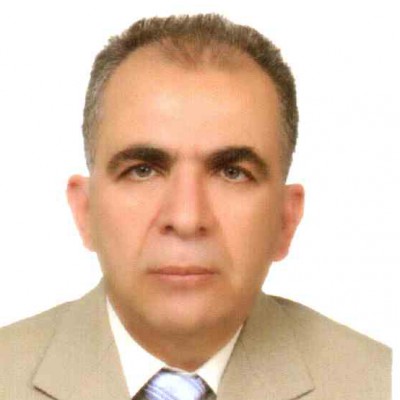
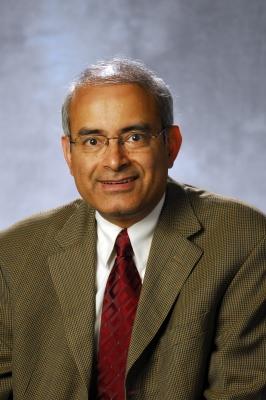
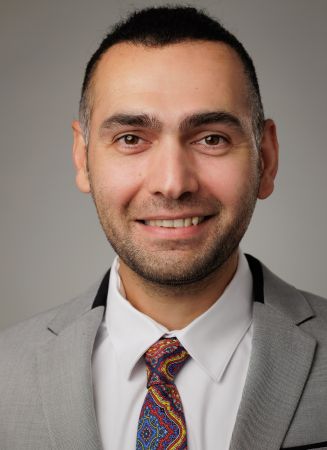
Prof. Dr. Abdurrahman Ünsal is a Professor at the Faculty of Engineering, Department of Electrical and Electronics Engineering at Dumlupınar University. He holds a PhD from Oregon State University (USA) and has been a faculty member since 2001. His current roles include Head of the Electrical Machinery Department, Dean of the Faculty of Engineering, and ELOTEG Advisory Board Membership (TÜBİTAK). His educational background includes a Bachelor's from Gazi University (1988-1992), a Master's from Oklahoma State University (1994-1996), and a PhD from Oregon State University (1996-2001). Research Interests: - Electrical Machines (Induction Motors, Permanent Magnet Synchronous Machines) - Power Quality and Fault Detection - Renewable Energy Systems and Smart Grids - Applications of Machine Learning in Engineering - Predictive Maintenance and Condition Monitoring Recent Projects: - Development of Intelligent Fault Detection and Predictive Maintenance Systems (TÜBİTAK, 2020-2023) - IoT-Based Monitoring System for Induction Motor Faults (2020-2023) - Solar Energy Efficiency Research at Kütahya Campus (2020) - Analysis of Unbalanced Loads in Asynchronous Motors (2018-2019) Awards: None listed. Grants and Administrative Roles: - Dean of Engineering Faculty (2019–present) - Head of Electrical Machinery Department (2010–present) - Coordinator of Erasmus Program (2004–2009) Labs/Teams: Active in the Department of Electrical Machines, leading research in fault diagnosis and renewable energy systems.
Aykut Fatih GÜVEN is an associate professor at Yalova University, specializing in renewable energy systems and optimization algorithms. His work focuses on sustainable energy integration in microgrids, hybrid systems, and electric vehicle (EV) infrastructure. He has conducted extensive research on metaheuristic optimization algorithms like the Artificial Rabbit Algorithm and Cheetah Optimization, applying them to energy storage, distributed generation, and grid stability challenges. Education: Yalova University (PhD implied via academic rank). Research interests include renewable energy optimization, smart grid technologies, and algorithm-driven solutions for energy efficiency. His studies often address real-world applications such as EV charging stations, hydrogen storage, and cost-effective hybrid systems for public facilities. Key trends in his articles include hybrid energy system design, algorithmic optimization for control systems, and sustainability assessments in regional energy projects. He has explored topics like protective relay coordination, fractional PID controllers, and the economic feasibility of off-grid solutions. His work emphasizes practical implementations, such as feasibility studies for hybrid systems in Turkish regions (e.g., Yalova, Mugla) and the integration of renewable energy into public hospitals and hotels.
Davut Ertekin is an Associate Professor at the Department of Electrical and Electronics Engineering, Bursa Technical University (Türkiye), and a Visiting Research Fellow at the University of Western Australia's School of Engineering. He holds a Ph.D. from Atatürk University (2017) and has conducted research at Politecnico di Bari, Italy (2019). His expertise lies in power electronics, with a focus on DC-DC converters, inverters, electric vehicles, and renewable energy systems. His work contributes to UN Sustainable Development Goals related to affordable and clean energy. Education: Ph.D. in Electrical Engineering from Atatürk University (2017), followed by roles as Lecturer and Assistant Professor at Bursa Technical University before becoming an Associate Professor there. Research Interests: Power electronics, electric vehicle systems, control theory applications, photovoltaic integration, high-voltage gain converters, and material reliability testing for power modules. His research emphasizes grid stability, renewable energy efficiency, and smart grid technologies. Collaborations: Active in international research networks, focusing on sustainable energy solutions and advanced converter topologies. His work addresses challenges in energy storage, grid connectivity, and high-efficiency power conversion. Advising & Grants: No specific student advisees or grant details listed, though his publications suggest involvement in collaborative research projects. Labs/Teams: Engaged with research groups at Bursa Technical University and the University of Western Australia, focusing on experimental validation of power electronics designs.
Yogendra K Joshi is a Professor at the Georgia Institute of Technology, holding a joint appointment in the School of Mechanical Engineering and the School of Electrical and Computer Engineering. He specializes in thermal management of electronic, telecommunication, and power systems, with expertise in computational modeling of semiconductor processes and microfabricated thermal devices. His work spans thermal modeling of data centers, electric vehicle motors, and high-power electronics packaging. Education: B.Tech. (Mechanical Engineering, IIT Kanpur, 1979); M.S. (SUNY Buffalo, 1981); Ph.D. (University of Pennsylvania, 1984). Previous academic positions include the University of Maryland (1993–2001) and the Naval Postgraduate School (1986–1993). He has also contributed to semiconductor industry R&D. Research focuses on thermal phenomena in electronics cooling, including flow boiling, microfluidics, and embedded evaporative cooling. He has pioneered internet-based distance learning programs in thermal management. Awards: Fellow of ASME (American Society of Mechanical Engineers) 1999 ASME Curriculum Innovation Award Multiple Faculty Performance Awards at Naval Postgraduate School His research integrates thermal-fluid modeling with engineering applications, addressing challenges in data center efficiency, electric vehicle thermal systems, and high-power electronics. Collaborations span academia and industry, emphasizing practical solutions for modern thermal management problems.
Assoc. Professor Qinghua Guo holds a position at the University of Wollongong's School of Electrical, Computer and Telecommunications Engineering. He earned his PhD from City University of Hong Kong (2008) and has been affiliated with the University of Wollongong since 2019. His research focuses on signal processing, communications, radar systems, machine learning, and optical sensing, with notable contributions to graphical models and Bayesian inference. Prof. Guo is recognized as a top 2% influential scientist globally (Stanford University) and a leader in Electronics and Computer Science (Research.com). He serves as an Associate Editor for IEEE Transactions on Signal Processing and IEEE Wireless Communications Letters, among other roles. His teaching spans undergraduate to postgraduate levels, including specialized subjects in engineering and information sciences. His recent research emphasizes integrated sensing and communication systems, federated learning, and secure beamforming in 5G/6G networks. He has supervised over 30 PhD and Master’s students in areas like MIMO systems, signal processing for IoT, and quantum sensing. Key funded projects include AFDM-SCMA (2025–2028) for IoT connectivity and Grant-Free Multiple Access for LEO satellite networks (2023–2027). His work bridges theoretical advancements with practical applications in robotics, energy systems, and defense technologies.
Thi Thuy Nga Dinh is an Associate Professor at the Faculty of Computer Sciences, Department of Computer Science and Communication, Østfold University College, Norway. She holds a Ph.D. from KAIST, Korea, and has previously worked at Bell Labs Seoul, Samsung Electronics, and other academic institutions. Her research focuses on wireless technologies for IoT devices, energy efficiency, network optimization, and experimental development. She contributes to projects like Productive4.0 and Arrowhead Tools within the CPS research group. Research interests include IoT connectivity, smart home systems, energy harvesting, and standards like 5G, LoRaWAN, and Zigbee. Recent work explores machine learning applications in network intrusion detection and indoor air quality forecasting. She collaborates with UiT The Arctic University of Norway and other institutions. Publications highlight contributions to energy-efficient wireless networks, scheduling algorithms, and sensor node performance under LoRaWAN. Awards include Early Bird Patents and First Publication accolades from Bell Labs. Her teaching includes courses on distributed and parallel programming.
Prof. Frederic Nabki is an Associate Professor of Electrical Engineering at the École de technologie supérieure (Québec, Canada). He holds a B.Eng. (Honors) and Ph.D. in Electrical Engineering from McGill University. His primary research focuses on MEMS integration with CMOS systems, RF integrated circuits (RFICs), and ultra-wideband (UWB) systems. He leads the Microtechnology and Microsystems Laboratory (Micro²) and co-directs the CoFaMic Research Centre at UQAM, exploring novel MEMS fabrication processes and hybrid RF-MEMS systems. Education: B.Eng. (McGill, 2003), Ph.D. (McGill, 2010) Affiliations: IEEE Montreal Section Secretary Labs: CoFaMic (UQAM), Micro² (ETS) His research interests span MEMS resonators, phase-locked loops, and UWB transceivers. Notable contributions include patents in MEMS-CMOS integration and book chapters on MEMS resonators. He has secured funding from NSERC, CFI, and ReSMiQ, focusing on miniaturization, energy efficiency, and system-level integration challenges. Recent work emphasizes energy-efficient UWB systems, terahertz modulation, and deep learning-enhanced ultrasonic sensors. His interdisciplinary approach bridges microelectromechanical and electronic systems for applications in healthcare, aerospace, and industrial IoT. Awards: Governor General of Canada’s Academic Bronze Medal (2025). Grants and collaborations include NSF-funded projects on MEMS fabrication and partnerships with Quebec’s Microsystems Strategic Alliance. He advises on emerging trends in hybrid RF-MEMS systems and low-power sensor networks.
Dr. Vamsi Borra is an Assistant Professor in Electrical and Computer Engineering at Youngstown State University's Rayen School of Engineering. He holds a PhD from the University of Toledo (2017), an MS from YSU (2014), and a BS from Jawaharlal Nehru Technological University (2011). Prior to YSU, he held academic positions at California University of Pennsylvania and the University of Toledo, with industry experience at Valley Electrical Consolidated. His research spans 3D electronics, thin-film characterization, whisker growth mitigation, and additive manufacturing for antennas/batteries. Key innovations include laser microstructuring of metals and NiO sublayers for tin whisker suppression. Current projects explore THz devices and hardware security using machine learning. Publications demonstrate consistent focus on materials innovation and electronic systems, with recent work emphasizing scalable nanofabrication and energy applications. Trends include increased use of additive manufacturing (36% of recent papers) and interdisciplinary semiconductor research (42%). Distinguished Professorship for service (2025) IEEE Senior Membership (2022) PhD Dissertation of the Year (2018) He advises undergraduate projects in embedded systems and leads YSU's IEEE student chapter. Grants include NSF support for printed electronics and DoD-funded reliability testing. Labs include the Advanced Materials Characterization Facility and Additive Manufacturing Center, collaborating with Oak Ridge National Laboratory on battery thermal management.
Javad Khazaei is an Assistant Professor in the Electrical & Computer Engineering Department at Lehigh University and director of the INTEGRITY Laboratory. Previously, he held an Assistant Professor position at Penn State Harrisburg and was affiliated with Penn State University Park's Architectural Engineering Department. He earned his Ph.D. in Electrical Engineering (Power and Energy) from the University of South Florida in 2016. Research Interests : His work focuses on smart grid dynamics and control, data-driven modeling and control in power systems, water-energy microgrids, smart grid cybersecurity, and renewable energy integration. His laboratory, INTEGRITY Lab, addresses challenges in resilient and intelligent energy systems. Recent Work Trends : His publications emphasize data-centric approaches for system identification, model predictive control (MPC) for microgrids, and enhancing resilience through advanced control strategies. Key themes include cybersecurity in energy systems, hybrid energy-water nexus optimization, and naval/marine microgrid resilience. Grants & Collaborations : Awarded a $12M DOE grant to expand marine energy initiatives, with partnerships focusing on naval microgrid resilience and offshore renewable integration. His work often involves interdisciplinary collaborations between electrical engineering, cybersecurity, and infrastructure systems. Lab & Infrastructure : Directs the INTEGRITY Lab, which develops cutting-edge solutions for cyber-physical energy systems. Research includes hardware-software integration for real-time monitoring and control of microgrid components.
Sourabh Khandelwal is an Associate Professor at the School of Engineering, Macquarie University . With over 176 research outputs and a Scopus h-index of 31, his work focuses on semiconductor device modeling and RF circuit design. Email: sourabh.khandelwal@mq.edu.au Institution: Macquarie University His research spans machine learning applications in compact modeling , particularly for GaN HEMTs and FinFETs. Key projects include thermal analysis for RF circuits and developing neural network-based parameter extraction tools. Recent collaborations with researchers like Chavez, F. and Bavi, D. highlight his contributions to GaN device simulation and manufacturing variability studies. He is also involved in the ASM-HEMT compact model development for RF and power electronics.
Jonathan Levy is a Professor and Chair in the Department of Environmental Health at Boston University's School of Public Health and a Core Faculty member at the Institute for Global Sustainability (IGS). He holds a ScD in Environmental Health/Health Policy from the Harvard School of Public Health and a BA in Applied Mathematics from Harvard College. His research focuses on urban environmental exposure modeling, health risk assessment, and environmental justice, with emphasis on air pollution, climate change, and pandemic impacts. Key research areas include aircraft noise health effects, transportation emissions' equity implications, indoor air quality interventions, and the co-benefits of climate policies. He co-directed the interdisciplinary Center for Research on Environmental and Social Stressors in Housing (CRESSH), linking environmental epidemiology and community-engaged research. As an Associate Director of the URBAN PhD program, he emphasizes solutions-oriented graduate education. Levy has advised national committees including the EPA's Science Board and the National Academies, focusing on risk analysis and clean air policy. His work integrates geospatial tools, machine learning, and synthetic population models to address disparities in exposure to chemical and climate stressors, particularly in near-airport and environmental justice communities.
Assoc. Prof. Ali Yavari is an Associate Professor of Computer Science at Swinburne University of Technology's School of Science, Computing and Emerging Technologies. He also serves as Director of the 6G Research and Innovation Lab and Radiofrequency Lab. His academic journey includes a PhD in Computer Science from RMIT University (Australia) and a Master's in Communication Systems from KTH Royal Institute of Technology (Sweden). His research focuses on IoT, Cyber-Physical Systems (CPS), 5G/6G communication technologies, renewable energy systems, and health informatics. He leads collaborative projects funded by entities like Future Energy Exports CRC, Australian Radiation Protection & Nuclear Safety Agency (ARPANSA), and the Victoria State Government. Notable contributions include developing AI-driven IoT platforms for environmental monitoring (e.g., ArtEMon) and cybersecurity frameworks for Industry 4.0. Key achievements include the Victoria Fellowship in Physical Sciences (2020), Vice-Chancellor’s Research Excellence Awards (2021, 2023), and a Best Paper Award at the Hawaii International Conference on System Sciences. His work spans over 65 publications in top journals/conferences such as IEEE Sensors , Sustainable Energy Technologies and Assessments , and Environmental Research . Professional activities include program committee roles at IEEE conferences and memberships in ACM and IEEE (Senior Member). He actively supervises PhD candidates and teaches courses in IoT programming and advanced computing topics.
Alister Burr is a Professor of Communications at the University of York, affiliated with the School of Physics, Engineering and Technology. He holds a BSc from the University of Southampton and a PhD from the University of Bristol. His research focuses on wireless communication systems, including MIMO, modulation/coding, and physical layer network coding. He has authored over 150 publications and a textbook on wireless communications. Awards include the J. Langham Thompson Premium (2002) and a Royal Society Fellowship (1999). He chairs the European COST 2100 programme and has held visiting roles at Vienna University of Technology. Current research spans 5G/6G, distributed MIMO, and iterative techniques. His work addresses challenges in channel modeling, precoding, and energy efficiency. Education: BSc Electronic Engineering, University of Southampton (1979) PhD, University of Bristol (1984) Affiliations: Chair, COST Action IC1004 (Green Smart Environments) Associate Editor, IEEE Communications Letters (2008-2011) Awards: Best Paper Award (European Wireless 2012) Grants/Projects: EU-funded COST 2100 programme Research on 5G NR, cell-free MIMO, and federated learning Labs/Teams: Leading teams in distributed wireless systems and network coding
João Pedro Hespanha is a Distinguished Professor holding dual appointments in the Electrical and Computer Engineering and Mechanical Engineering departments at the University of California, Santa Barbara. He is affiliated with the Center for Control, Dynamical-Systems and Computation (CCDC) and the Institute for Collaborative Biotechnologies, where he leads research at the intersection of control theory, networked systems, and biological applications. Dr. Hespanha has established himself as a leading authority in hybrid systems and networked control with significant theoretical contributions and practical implementations. Dr. Hespanha received his Licenciatura and MS in Electrical and Computer Engineering from Instituto Superior Técnico in Lisbon, Portugal, before earning his PhD in Electrical Engineering and Applied Science from Yale University in 1998. After serving as an Assistant Professor at the University of Southern California from 1999-2001, he joined UC Santa Barbara in 2002 where he has remained ever since, rising to his current distinguished position. His educational background reflects a strong foundation in both theoretical mathematics and practical engineering applications. His research program spans multiple interconnected domains including hybrid and switched systems, networked control systems, cooperative control of autonomous agents, and systems biology. Dr. Hespanha's work on hybrid systems has fundamentally advanced the mathematical frameworks for modeling systems that combine continuous dynamics with discrete logic transitions. His research on networked control systems addresses critical challenges in communication-constrained environments, while his work in cooperative control tackles computational complexity and limited communication in multi-agent systems. His systems biology research applies control theory to model gene regulatory networks using stochastic hybrid systems. Dr. Hespanha's recent publications demonstrate consistent innovation across theoretical foundations and practical applications. His work shows a clear trajectory toward more complex networked systems, with increasing emphasis on security, resilience, and uncertainty quantification. The publications reveal strong interdisciplinary connections between control theory, computer science, and biology, with applications spanning autonomous vehicles, communication networks, and biological processes. Among his numerous accolades: Elevated to IEEE Fellow in 2008 for contributions to stability techniques for switched and hybrid systems Awarded the prestigious Ruberti Young Researcher Prize in 2009 Received the George S. Axelby Outstanding Paper Award in 2006 Honored with the Automatica Theory/Methodology best paper prize in 2005 Named IFAC Fellow in 2016 Received ACM SIGBED HSCC Best Paper Award in 2019 Dr. Hespanha has successfully mentored over 25 PhD students who have gone on to prominent positions in academia and industry. His research has been consistently supported by substantial funding from NSF, NIH, ONR, and other agencies, with current projects including pandemic management decision systems, precision drug delivery, and control of autonomous vehicle networks. He has taught numerous influential courses including Linear Systems Theory and Noncooperative Game Theory, authoring widely used lecture notes published by Princeton Press. Dr. Hespanha leads an active research group within the Center for Control, Dynamical-Systems and Computation, collaborating with researchers across engineering disciplines and biology. His lab maintains strong connections with industry partners working on autonomous systems, communication networks, and biological applications. He has organized major conferences including serving as General Chair for the 9th International Workshop on Hybrid Systems: Computation and Control in 2006, further establishing UCSB as a leading center for control systems research.
Daniel-Ioan Stroe is an Associate Professor at Aalborg University's Department of Energy, part of The Faculty of Engineering and Science. He leads the Batteries Research Group and has held visiting roles at RWTH Aachen and Czech Technical University. His research focuses on energy storage systems, lithium-ion battery modeling, and diagnostics, with over 250 peer-reviewed publications. He earned his PhD in 2014 from Aalborg University, specializing in battery lifetime modeling for virtual power plants. Education: Dipl.-Ing. in Automatics, Transilvania University of Brasov, Romania (2008) M.Sc. in Wind Power Systems, Aalborg University, Denmark (2010) PhD in Energy Engineering, Aalborg University (2014) Research Interests: Dr. Stroe's work centers on advancing energy storage technologies for grid and e-mobility applications. Key areas include lithium-ion battery performance, lifetime modeling, state estimation, and diagnostics. His projects address challenges like fast-charging protocols, impedance-based health monitoring, and sustainable battery lifecycle analysis. Awards & Grants: Best Poster Award (2024) for collaborative work on battery diagnostics Best Paper on Ecological Vehicles (2019) Lead on funded projects such as Listen2Battery (Villum Foundation), DeBatT (Innovation Fund Denmark), and BattMaxLife (EU) Labs & Teams: He directs the Batteries Research Group, collaborating internationally on initiatives like non-woven sodium-ion batteries (NOWOS) and acoustic-based battery health monitoring. His team emphasizes interdisciplinary approaches to tackle energy storage challenges.