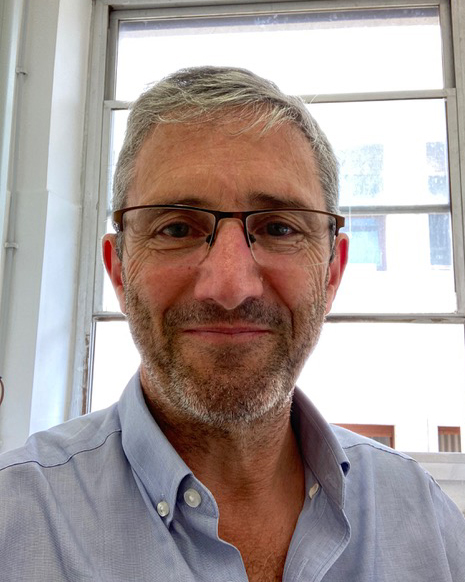
Rishidev Chaudhuri is an Associate Professor at the University of California, Davis in the Department of Neurobiology, Physiology and Behavior within the College of Biological Sciences. His research focuses on computational neuroscience and neural dynamics, employing mathematical models to investigate how neural circuits generate cognitive processes such as memory, perception, and decision-making. His work explores neural dynamics through models of memory systems, attentional mechanisms, and probabilistic inference. Recent publications highlight advances in understanding hippocampal memory scaffolds, parietal-frontal interactions, and neuromorphic computing inspired by brain architecture. Education: BA in Physics (Amherst College), PhD in Applied Mathematics (Yale University) Centers: Center for Neuroscience; affiliated with Applied Mathematics and Neuroscience Graduate Groups Scientific awards and honors are not explicitly mentioned in the provided materials.
Lifeng Zhou is an Assistant Professor in the Department of Electrical and Computer Engineering at Drexel University, where he leads the Zhou Lab focused on advancing robustness and reliability in multi-robot systems through integration of foundation models. His research addresses real-world challenges in environmental monitoring, disaster response, and urban mobility. Education PhD, Electrical and Computer Engineering, Virginia Tech, 2020 MS, Control Science and Engineering, Shanghai Jiao Tong University, 2016 BS, Automation, Huazhong University of Science and Technology, 2013 Research Focus Dr. Zhou's work integrates robotics, algorithms, game theory and machine learning to develop secure and scalable autonomous systems. Primary research thrusts include: Resilient multi-robot coordination in adversarial environments Large language model integration for robotic decision-making Game-theoretic resource allocation strategies Risk-aware planning for autonomous vehicles Publication Trends Recent work (2024-2025) demonstrates strong focus on large language model applications in multi-robot systems, with 12/15 articles exploring LLM integration for flocking, scene segmentation, and decision-making. Additional emphasis includes adversarial robustness in target tracking (5 articles) and autonomous driving applications (4 articles). Awards and Recognition Best Paper Award, WACV 2025 LLVM-AD Workshop Professional Service Associate Editor, ICRA Conference Editorial Board Laboratory Focus The Zhou Lab develops foundational algorithms for secure and scalable multi-robot systems, with current projects spanning environmental monitoring drones, disaster response coordination, and autonomous vehicle perception systems.
Nazanin Tajik is an Assistant Professor in the Department of Industrial and Systems Engineering at Mississippi State University (MSU). She holds a Ph.D. from the University of Oklahoma, an M.S. from the University of Tehran, and a B.S. from Sharif University of Technology. Her research focuses on integrating artificial intelligence, machine learning, and social science concepts to develop cross-disciplinary frameworks for infrastructure resilience, smart transportation systems, and disaster management. Her academic journey includes a Ph.D. at the University of Oklahoma where she contributed to the Risk-Based Systems Analytics Laboratory. At MSU, she established a research center bridging AI/ML tools with socio-technical systems. Key research domains include cyber-physical-social infrastructure resilience, search-and-rescue planning, and game-theoretic robotic designs. Tajik's work emphasizes optimization algorithms for network vulnerability assessment, resource allocation in disaster scenarios, and adaptive recovery strategies. She is actively involved with professional organizations such as INFORMS, ISE, and POMS, reflecting her commitment to advancing operations research and systems engineering methodologies.
Dr. James Ashton-Miller is a prominent faculty member in the Department of Mechanical Engineering at the University of Michigan, where he directs the Biomechanics Research Laboratory. He serves as a Center Member of the University of Michigan Injury Prevention Center and maintains affiliations with the Institute of Gerontology. His interdisciplinary work bridges engineering principles with medical applications, focusing on injury prevention across sports medicine, obstetrics, and geriatrics. Dr. Ashton-Miller's educational background includes: PhD from the University of Oslo, Oslo, Norway (1978-1983) MSME from M.I.T., Cambridge, MA, U.S.A (1972-1974) B.SC. (Hons) from the University of Newcastle-upon-Tyne, Newcastle-upon-Tyne, England (1967-1972) His research focuses on the biomechanics of injury prevention across multiple critical domains. In sports medicine, he has demonstrated that some ACL injuries are overuse injuries resulting from too many sub-maximal loading cycles that prevent healing of collagen damage. In women's health, his work on childbirth injuries addresses conditions that affect more women than breast cancer. His research on fall-related injuries in older adults reveals the dual threat of physical and cognitive factors. He also investigates sciatica, disc degeneration, and develops new medical devices for screening, diagnosis and treatment. Dr. Ashton-Miller's recent publications show a strong trend toward developing practical clinical applications from fundamental biomechanical research, with emphasis on advanced imaging methods, wearable sensors, and computational modeling for pelvic floor function assessment. His work consistently aims to translate engineering insights into clinical solutions for injury prevention. His research insights have earned him numerous national and international research awards, though specific awards aren't detailed in the available information. His work involves close collaboration with clinicians and surgeons who meet weekly to discuss progress and next steps. Dr. Ashton-Miller is deeply committed to mentoring, working with NIH K-series fellows along with 1-2 post-doctoral fellows, 3-5 PhD students, 2-4 M.S. students, 4-5 undergraduate students, and 2-4 young clinicians. His research is generously supported by the National Institutes of Health, National Science Foundation, National Basketball Association, Fortune 500 companies, and startup companies including Procter & Gamble and Hologic, Inc. He directs the Biomechanics Research Laboratory and co-leads the Pelvic Floor Research Group, where his teams develop new medical devices to improve screening, diagnosis, and treatment of various biomechanical conditions. These laboratories maintain strong clinical connections, ensuring research remains grounded in real-world medical challenges.
Zian Qin serves as an Associate Professor in the Department of Electrical Sustainable Energy at Delft University of Technology, Netherlands. His academic journey includes a B.Sc. from Beihang University (2009), M.Sc. from Beijing Institute of Technology (2012), and Ph.D. from Aalborg University (2015), all in Electrical Engineering, with a Visiting Scientist stint at RWTH Aachen University (2014). B.Sc., Electrical Engineering, Beihang University (2009) M.Sc., Electrical Engineering, Beijing Institute of Technology (2012) Ph.D., Electrical Engineering, Aalborg University (2015) His research centers on power electronics-based grid stability, solid-state transformers, and battery energy storage systems. Key contributions span DC microgrid control, magnetic material optimization, and EV charging infrastructure, with fingerprints highlighting expertise in power quality ( 100% ), voltage stability ( 87% ), and grid-forming applications ( 79% ). Current projects like ECS4DRES and GROW focus on resilient renewable energy systems and African energy storage solutions. His 154+ publications reveal strong emphasis on power electronics control ( 83% ), grid integration ( 79% ), and EV technologies ( 42% ), with recent work targeting microgrid vulnerability reduction and data-driven magnetic loss modeling. Awards include IEEE Prize Paper Awards (2023), World Top 2% Scientist recognition, and IEEE Innovation Awards (2024). IEEE International Challenge Excellent Innovation Award (2024) IEEE Open Journal Prize Paper Award (2023) World's Top 2% Scientist (2022-2024) Featured IES Journal Articles (2023) IEEE TIE Distinguished Reviewer (2020) As Founding Chair of IEEE Transportation Electrification Council Benelux Chapter and Dutch National for Cigre WG B4.101, he leads critical industry collaborations. His editorial roles in IEEE TPEL/TIE/JESTPE and projects like PROGRESSUS demonstrate significant grant leadership in next-generation power infrastructure. Lab activities focus on DC systems, energy conversion, and storage validation through Delft's Electrical Sustainable Energy facilities.
Dr. Chee Kiat Seow is an Associate Professor at the University of Glasgow's School of Computing Science. He holds a PhD from Nanyang Technological University (NTU) and an MSc from the National University of Singapore (NUS). His research focuses on cyber-physical security, wireless communication localization, and IoT systems leveraging AI/ML. He has led projects valued in the millions, winning awards like the IEEE Best Student Paper and National Instruments Engineering Impact Awards. Education: PhD (NTU), MSc (NUS) Research: Specializes in UWB positioning, spoofing detection, and IoT integration with 5G/GNSS. Teaching: Courses include Big Data, Software Engineering, and Data Analytics. His recent work addresses NLOS mitigation in indoor localization and cyber-physical security threats. Over 63 publications span journals like IEEE Transactions and conferences such as IPIN and WF-IoT. Supervised 6+ PhD/MSc students on topics like autonomous robotics and AI-driven localization. Grants: Includes $853K for 5G-X Smart Building projects and $797K for GNSS signal authentication. Awards: IEEE PIERS Best Student Paper (2019), NI Engineering Impact Awards (2015-2016). He advises on IoT and cybersecurity for organizations like ARTC and National Instruments. Active in IEEE Signal Processing and Computer Society.
Dr. Frederick Li is an Associate Professor in the Department of Computer Science at Durham University, UK. He holds editorial roles as Associate Editor of Frontiers in Education (Digital Education) and Editorial Board Member of Virtual Reality & Intelligent Hardware. His research focuses on Computer Graphics, Machine Learning, Geometric Modelling, Collaborative Virtual Environments, Visual Aesthetics, and Educational Technologies. He earned his B.A. (Hons) and M.Phil. from The Hong Kong Polytechnic University and his Ph.D. in Computer Graphics from City University of Hong Kong. Prior roles include Assistant Professor at HK PolyU and project manager of a Hong Kong Government ITF-funded project. **Education**: B.A. (Computing Studies) and M.Phil. from HK PolyU; Ph.D. in Computer Graphics (CityU Hong Kong). **Research Interests**: His work spans mesh saliency detection, human-object interaction recognition, cloud modeling, face beautification, and educational technology. Recent achievements include awards for papers (e.g., Best Paper at ITiCSE 2014) and recognition such as EPSRC Peer Review College membership. He leads Durham's Undergraduate Board of Examiners and has been an external examiner at Northumbria University. **Awards**: Best Paper (ACM ITiCSE 2014), Outstanding Paper (ICALT 2013), EPSRC Peer Review College (2024), Outstanding BMVC 2024 Reviewer. **Grants & Labs**: His research is supported by grants from EPSRC and others. He collaborates with the Centre for Vision and Visual Cognition, VIViD, and AIHS group at Durham.
Dr Jonathan Cook is a Research Fellow at Jesus College, University of Oxford, affiliated with the Medical Sciences division. He holds a primary medical qualification from Queen’s University (Canada, 2021) and a PhD investigating viral immune evasion mechanisms under Prof Jeffrey Lee. His work was supported by the Vanier Canada Graduate Scholarship and recognized with the Stuart Alan Hoffman Memorial Prize. As an incoming Banting Fellow at the Jenner Institute, he focuses on vaccine design for infectious diseases. His research interests include malaria eradication, emerging pathogens, and structure-based vaccine strategies. **Education**: - PhD (Investigation of viral entry glycoproteins), University of Toronto, supervised by Prof Jeffrey Lee - Primary Medical Qualification, Queen’s University, Canada **Research Interests**: - Malaria Eradication : Developing vaccines targeting Plasmodium species. - Emerging Infectious Diseases : Designing rapid-response strategies for pathogens like SARS-CoV-2. - Structure-Based Vaccine Design : Leveraging protein structural data to enhance immunogenicity. **Awards**: - Vanier Canada Graduate Scholarships Programme (2017–2020) - Stuart Alan Hoffman Memorial Prize (2021) - Banting Fellowship (incoming) **Grants/Advising**: Works on Jenner Institute-funded projects. No listed advisees yet. **Labs/Teams**: Collaborates with Prof Lee's lab at the Jenner Institute and the University of Toronto's Medical Microbiology program.
Chris Marone is a Full Professor (Professore Ordinario) at La Sapienza Università di Roma since 2020, with prior roles as Professor of Geophysics at The Pennsylvania State University (2003–2020) and Associate/Assistant Professor at MIT (1997–2000, 1992–1997). His research spans earthquake physics, geomechanics, and rock deformation. Ph.D. in Geophysics from Columbia University (1988) 40+ years of academic experience across multiple institutions His work focuses on frictional mechanics, slow earthquakes, and fault slip behaviors, integrating laboratory experiments and field observations. Recent themes include rate-state friction laws, rock-fluid interactions, and granular mechanics. Key trends in his publications reveal interdisciplinary approaches combining deep learning (2022), high-frequency seismic signatures (2022), and poromechanics (2022) with traditional geophysical methods. His research has dominated fault healing and stress dynamics for decades. ERC Advanced Grant: TECTONIC Louis Néel Medal (European Geosciences Union) Fellow of the American Geophysical Union Paul F. Robertson Award for Breakthrough of the Year Kerr-McGee Career Development Professorship
Dr. Mahesh Tripunitara is a Professor in the Department of Electrical and Computer Engineering at the University of Waterloo, serving as Associate Chair for Undergraduate Studies. He holds a PhD (2005) and Master's (1995) in Computer Science from Purdue University, along with a BSc (1993) in Computer Science from Dalhousie University. His research focuses on information security, authorization mechanisms, cryptographic key management, and hardware security, with industry experience at Motorola's R&D labs and Silicon Valley. His work spans theoretical advancements like access control policy analysis and practical applications such as secure payments systems and IoT device reliability. Notable awards include the Best Student Paper at Usenix Security 2013 and Best Paper at ACM SACMAT 2013. He actively serves on program committees for major security conferences including CCS, CODASPY, and SACMAT. Recent publications highlight innovations in cellular security (SUCI-Catchers defense), role-mining optimization, and blockchain smart contract auditing. Teaching includes advanced algorithm design courses (ECE 406/606) and digital computation (BME 121). His research emphasizes balancing security rigor with usability in authorization systems and hardware protection mechanisms.
Bryan Tripp is an Associate Professor at the University of Waterloo, specializing in computational neuroscience, deep learning, robotics, and medical AI. He leads the BRAIN Lab, which focuses on developing neural system models that interact with the physical world through robots. His research integrates neurobiological models with advanced machine learning techniques to study visuomotor processes and robotic applications. Tripp teaches courses such as Computational Neuroscience (SYDE 552), Deep Learning (SYDE 577), and Biomedical Engineering Design Workshops (BME 461/462). His lab has achieved milestones including the OREO robotic head, the first spiking neural network model for complex action planning, and comprehensive datasets for robotic grasping. His recent work emphasizes Medical AI applications, with graduate positions available. The BRAIN Lab is affiliated with the Centre for Theoretical Neuroscience and Waterloo.AI, contributing to interdisciplinary AI research initiatives.
Professor Fernando Calamante is a Professor of Biomedical Engineering at The University of Sydney and Director of Sydney Imaging Core Research Facility. He leads the National Imaging Facility node and focuses on advanced MRI methodologies, particularly Diffusion and Perfusion MRI, to study brain connectivity and neurological disorders. His work includes developing the MRtrix software, widely used in diffusion MRI analysis. He holds extensive funding (~$50M) and has been recognized with awards like ISMRM Fellowship and NHMRC grants. His research spans super-resolution imaging, brain connectomics, and clinical applications in stroke and tumors. Education: BSc (Physics, Argentina), PhD (Magnetic Resonance Imaging, University College London). Career highlights include leadership roles at The Florey Institute and ISMRM presidency (2021-2022). Research interests include: Novel MRI methods for brain connectivity and super-resolution imaging Applications of Diffusion and Perfusion MRI in neurology Integration of structural and functional connectomics Key achievements: Over 200 publications, software innovations, and leadership in global MRI societies.
Professor Daniel Quevedo is a leading academic in Electrical and Computer Engineering at The University of Sydney. Previously, he held positions at Queensland University of Technology and Paderborn University, Germany, where he founded the Chair in Automatic Control. He earned his PhD from the University of Newcastle (Australia) and MSc/Ing. degrees from Universidad Técnica Federico Santa María (Chile). His research focuses on networked control systems, cyber-physical systems, and cybersecurity, with contributions to state estimation, control of power converters, and human-in-the-loop systems. He has pioneered work integrating machine learning, behavioral economics, and advanced mathematics to address challenges in interconnected digital-physical environments. Quevedo serves as Associate Editor for IEEE Transactions on Control of Networked Systems and IEEE Control Systems. He chairs the Committee of Experts for Germany’s Excellence Strategy on Digital Methods and has held leadership roles in IEEE technical committees. Notable awards include the IEEE Axelby Outstanding Paper Award (2018) and multiple fellowships. Teaching includes advanced control systems courses like Reinforcement Learning and Optimal Control. He is a Fellow of the IEEE and has published over 200 peer-reviewed articles, with recent work emphasizing privacy-preserving state estimation, resilient control systems, and energy-efficient wireless control. His research labs explore topics such as human-machine collaboration, cybersecurity in Industry 5.0, and data-driven control strategies. Current projects include secure remote state estimation frameworks and adaptive control under adversarial conditions.
George T. C. Chiu is a Professor in the School of Mechanical Engineering at Purdue University, with courtesy appointments in Electrical and Computer Engineering and Psychological Sciences. He holds a 50% appointment as Assistant Dean for Global Engineering Programs and Partnerships. His research focuses on mechatronics, dynamic systems and control, functional printing, and human-machine interaction, with applications in biomedical engineering, robotics, and advanced manufacturing. Education: PhD (1994), MS (1990) University of California, Berkeley; BS (1985) National Taiwan University. Research interests emphasize application-driven solutions for printing technologies, motion control, and embedded systems. Notable projects include developing inkjet printing for biomedical materials and sensor systems. Awards include ASME Fellowship (2013) and the 2024 ASME Rabins Leadership Award. Publications span topics like inkjet drop dynamics, control systems, and biofabrication. He has led initiatives such as the Purdue FIRST Programs, fostering K-12 STEM education through robotics mentorship. Editorial roles include Editor-in-Chief of IEEE/ASME Transactions on Mechatronics (2017-2019).
Saleh A. Alshebeili is a Professor in the Department of Electrical Engineering at King Saud University's College of Engineering, Riyadh, Saudi Arabia. With over 139 publications spanning from 1991 to 2024, his research demonstrates significant contributions across multiple engineering disciplines. His academic profile shows consistent collaboration with Saudi research institutions and international partners, particularly in communications and signal processing fields. Dr. Alshebeili's research interests span wireless communications, optical networks, radar systems, and biomedical signal processing. His work bridges theoretical signal processing with practical applications in 5G/6G communications, IoT security systems, and healthcare monitoring. The interdisciplinary nature of his research connects electrical engineering with computer science, particularly through machine learning applications for signal analysis and system optimization. His publications demonstrate expertise in both traditional signal processing techniques and emerging AI-driven approaches to engineering problems. Analysis of his recent publications (2021-2024) reveals a strong focus on next-generation communication technologies including 6G systems, optical wavelength conversion, and OAM-SDM communication. Simultaneously, he maintains active research in biomedical applications, particularly EEG signal processing for seizure detection and biometric authentication using physiological signals. His work consistently appears in top IEEE journals including IEEE Access, IEEE Transactions on Wireless Communications, and IEEE Journal of Biomedical and Health Informatics, reflecting the high quality and relevance of his research. Dr. Alshebeili has established extensive collaborations with researchers across King Saud University, particularly with Fathi E. Abd El-Samie (29 co-authored papers), Turky N. Alotaiby (22 papers), and Amr Ragheb (21 papers). These long-term collaborations suggest leadership in research groups focusing on communications systems and biomedical signal processing. His work spans theoretical development, simulation, and experimental validation, as evidenced by publications with 'Experimental Investigation' and 'Experimental Demonstration' in their titles.