Patrick Farrell is a Professor at the University of Oxford , affiliated with the Mathematical Institute and serving as a Tutorial Fellow at Oriel College . His research focuses on advanced numerical methods for solving differential equations. PhD BSc (Hons) His work spans adaptive discretizations of PDEs, adjoint methods for PDE-constrained optimization, and bifurcation analysis of nonlinear PDEs. Recent publications emphasize finite-element methods, kinetic theory, and numerical software development for complex physical systems. Key trends in his research include: Design of optimization algorithms for constrained variational problems High-order numerical implementations for plasma physics Wave dynamics in non-Newtonian fluids Multiscale modeling of rarefied gases Efficient solvers for nonlinear inequalities Scientific recognition includes: LMS Whitehead Prize (2021) Broyden Prize in Optimization (2021) Wilkinson Prize for Numerical Software (2015) EPSRC Early Career Fellowship (2013)
Dr. Heather Harrington is a Royal Society University Research Fellow at the Mathematical Institute, University of Oxford. She leads research in applied algebra, systems biology, and topological data analysis, with affiliations to the Oxford Centre for Industrial and Applied Mathematics and the Topological Data Analysis research subgroup. Her research focuses on mathematical modeling of biological systems, combining algebraic techniques with computational topology to analyze complex data patterns in chemical reaction networks and tumor microenvironments. She also explores topological methods for audio identification. Recent publications address algebraic identifiability in PDE models, absolute concentration robustness in biochemical systems, and relational persistent homology applications. These works span applied algebra, computational biology, and data science. Prizes & Fellowships: Philip Leverhulme Prize (2020) Adams Prize (2019) LMS Whitehead Prize (2018) Royal Society University Research Fellow (2017-2022) EPSRC Postdoctoral Fellowship (2014-2017) Hooke Research Fellowship (2013-2014) NSF Graduate Fellowship (2007-2010) Barry M Goldwater Scholarship (2005-2006) Dr. Harrington contributes to interdisciplinary research through collaborations in biomedical data analysis and audio signal processing, leveraging her expertise in topological data analysis to solve real-world problems across diverse domains.
Sam Howison is a Professor at the Mathematical Institute, University of Oxford , with an academic rank of Associate Professor. His research spans applied mathematics and financial engineering, focusing on differential equations, free and moving boundary problems, stochastic processes, and network modeling. Research Interests: His work in applied mathematics addresses fluid dynamics, shallow water flows, and non-classical PDEs, while in financial mathematics, he specializes in derivatives pricing, energy markets, volatility modeling, and market microstructure. Recent projects include network-based analysis of cryptocurrency markets and community detection in temporal multilayer networks. Publication Trends: Over the past decade, his research has bridged fluid mechanics with financial modeling, emphasizing asymptotic methods, stochastic games, and network theory. Key themes include limit order books, non-Markovian biological systems, and environmental market pricing. Scientific Awards: SIGEST Paper Award for Risk-Neutral Pricing of Financial Instruments in Emission Markets Advising and Collaborative Work: He has co-authored over 80 publications with colleagues like Mason Porter and Michael Boulton, contributing to interdisciplinary projects in mathematical finance and industrial applications. He co-founded the Oxford Centre for Industrial and Applied Mathematics and served as Head of the Mathematical Institute (2011-2015).
Hannes Meinlschmidt is an Assistant Professor and Senior Scientist at the Chair for Dynamics, Control, Machine Learning and Numerics – Alexander von Humboldt Professorship at Friedrich-Alexander-Universität Erlangen-Nürnberg (FAU) since March 2021. His work focuses on optimal control of partial differential equations (PDEs) and applied analysis, with a particular emphasis on regularization, regularity theory for elliptic and parabolic evolution equations, and nonlinear PDE systems with nonsmooth data. Degree : PhD in Mathematics (2017), TU Darmstadt Supervisor : Stefan Ulbrich (TU Darmstadt) PostDoc : RICAM Linz (2017), working with Karl Kunisch His research lies at the intersection of control theory and PDE analysis, addressing problems with applications in physics and engineering. Recent work includes regularization in optimal control, Hölder continuity for nonlinear PDEs, and well-posedness of models like the Keller-Segel system and thermistor equations on nonsmooth domains. Publications highlight his expertise in elliptic and parabolic PDEs, mixed boundary conditions, and numerical methods, with applications ranging from semiconductor modeling to biological systems. Collaborations with researchers like Joachim Rehberg and Karl Kunisch underscore his interdisciplinary approach.
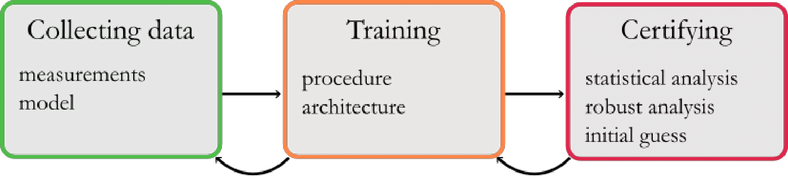
Matthieu Barreau is an Assistant Professor within the Division of Decision and Control Systems at KTH Royal Institute of Technology, Stockholm, Sweden, since September 2023. His academic journey includes a PhD in Control Systems from LAAS-CNRS, Toulouse (2019), a Master's degree in Space Engineering from KTH (2016), and an Engineering degree in Aeronautical Engineering from ISAE-ENSICA, Toulouse (2016). Education: PhD in Control Systems, LAAS-CNRS, Toulouse (2019) Master's in Space Engineering, KTH (2016) Engineering degree in Aeronautical Engineering, ISAE-ENSICA, Toulouse (2016) Dr. Barreau's research focuses on the intersection of system theory and machine learning, particularly on physics-informed neural networks (PINNs) applied to traffic systems, time-delay systems, and infinite-dimensional systems. His methodology addresses three key questions: what can be expected from data given measurement constraints, how to effectively train PINNs under specific constraints, and which tools are needed to certify the quality of trained models. His work combines robust control theory (Lyapunov functions, Integral Quadratic Constraints) with modern machine learning techniques, creating a bridge between traditional control theory and data-driven approaches. His recent publications demonstrate a clear trend toward applying PINNs to traffic flow modeling, power system monitoring, and stability analysis of complex dynamical systems. The research spans theoretical foundations of stability analysis for infinite-dimensional systems to practical applications in traffic control and power transformer monitoring. A significant portion of his work addresses the challenge of training physics-informed neural networks under constrained optimization frameworks, developing methods to ensure stability and performance guarantees. Scientific Awards: Best French Ph.D. thesis award from GdR MACS and Club EEA in 2020 Dr. Barreau actively supervises master's students for internships and thesis projects, though specific students aren't listed in the available information. His research is funded by multiple prestigious sources including the Human Horizon project Ultimate, the Swedish Foundation for Strategic Research, the Swedish Research Council, and Knut and Alice Wallenberg Foundation. His international collaborations include researchers from The University of Sheffield, Gipsa-Lab, and other institutions across Europe and the US. He leads projects on traffic applications under the supervision of Karl-Henrik Johansson and collaborates on stability analysis of infinite-dimensional systems with Alexandre Seuret, Frederic Gouaisbaut, and Carsten Scherer. Dr. Barreau has developed notable open-source contributions including the tf2-bfgs package for implementing BFGS optimization in TensorFlow 2, demonstrating his commitment to making research tools accessible to the broader community.
Katayoun Eshkofti is a Postdoctoral Fellow in the Division of Decision and Control Systems at KTH Royal Institute of Technology, joining in June 2024 under supervisors Matthieu Barreau and Henrik Sandberg. Her research bridges machine learning and engineering physics, focusing on predictive maintenance and physics-informed neural networks (PINNs). Education: PhD in Industrial Engineering, specializing in PINNs for coupled PDEs in mechanical systems. Research Interests: Physics-informed machine learning, thermoelasticity, non-Fickian diffusion, and reliability analysis of complex systems. Recent Projects: Developed gradient-enhanced PINNs (gPINNs) for hyperbolic systems, shock-induced thermoelasticity, and non-Fourierian heat transfer in porous materials. Publications: Available via Google Scholar , including presentations at Brown University's CRUNCH seminar.
Kateryna Morozovska is a Researcher at the KTH Royal Institute of Technology , affiliated with the Division of Decision and Control Systems and the School of Electrical Engineering and Computer Science . Her work bridges computational methods and energy systems development, focusing on physics-informed machine learning for renewable energy integration and power transformer optimization. Education B.S. and M.S. in Electrical Mechanics from Zaporizhzhya National Technical University (2013) European Energy Masters program with mobility at DTU (Denmark), TU Delft (Netherlands), and NTNU (Norway) PhD in Electrical Engineering from KTH (2020) on 'Dynamic rating for applications in renewable energy' Licentiate from KTH (2019) Research Focus Kateryna's research emphasizes Physics-Informed Neural Networks (PINNs) for power system optimization, including transformer thermal modeling, cellulose degradation analysis, and renewable energy integration. Her projects explore dynamic rating techniques to enhance grid efficiency and sustainability, funded by Vinnova and applied in PV-power plants and wind farms. Scientific Contributions She has developed frameworks for transformer cost analysis, wind farm sizing, and sensor placement optimization using PINNs and MILP. Her work addresses environmental trade-offs in wind energy, such as raw material mining impacts, and investigates thermodynamic challenges in nanocellulose and power systems. Affiliations Kateryna collaborates with industry partners through the PINN Summer School and contributes to SweGRIDS and Mendeley communities. Her teaching includes hands-on PINN training and multi-GPU machine learning.
Matteo Icardi is an Associate Professor in Applied Mathematics at the University of Nottingham's School of Mathematical Sciences, appointed in October 2017. His research bridges numerical methods, mathematical modeling, and engineering applications with emphasis on complex flow systems and computational frameworks. Education: BSc and MSc in Engineering Mathematics from Politecnico di Torino PhD in Chemical Engineering from Politecnico di Torino (2012) with thesis on 'Computational models for turbulent poly-dispersed flows: LES and QBMM' Research Interests: Professor Icardi specializes in multiphase flow modeling, porous media transport, multiscale methods, uncertainty quantification, and computational fluid dynamics. His work leverages OpenFOAM-based solvers for applications in environmental fluid dynamics, lithium-ion battery simulation, and industrial transport processes. Current research focuses on model reduction techniques and physics-informed neural networks for complex systems. Publication Trends: Recent work (2023-2025) demonstrates strong focus on homogenization methods (HiPhom), topological data analysis for infrastructure resilience, and multiscale modeling of peatlands, bubble dynamics, and electrochemical transport. The research consistently addresses heterogeneous porous media using advanced computational frameworks with applications spanning environmental systems and energy storage. Scientific Awards: No scientific awards mentioned in source material Advising and Grants: Professor Icardi advises PhD students and collaborates with postdoctoral researchers. He participates in the MultiForm research group and Multiscale Modelling Research Theme, though specific grant details are not provided in the source material. Labs and Teams: Co-founder of the MultiForm research group (Multiscale Fluid Dynamics and Porous Media) and initiator of the Multiscale Modelling and Heterogeneous Media Research Theme at Nottingham, fostering interdisciplinary collaboration between Mathematics and Engineering departments.
Prof. Dr. Michael Griebel is a leading academic at the Institute for Numerical Simulation (INS) at the University of Bonn , Germany. His work focuses on numerical methods for partial differential equations (PDEs), sparse grid techniques, and applications in computational science, machine learning, and materials modeling. Research Interests : Numerical analysis, sparse grids, high-dimensional approximation, tensor product methods, stochastic processes, and multiscale simulations. Collaborations : Co-author of over 50 publications with researchers in computational mathematics, fluid dynamics, and quantum chemistry. Prominent research trends include advancements in sparse grid methods for uncertainty quantification, kernel-based regression, and efficient solvers for ill-posed problems. His work on space-filling curves and domain decomposition enables scalable parallel algorithms for complex simulations. Scientific Contributions : Editor of 10+ volumes in Lecture Notes in Computational Science and Engineering . Co-developer of the EXAHD exascale sparse grid framework for plasma physics simulations. Foundational work on tensor product spaces and their applications to electronic structure theory. Innovations in adaptive wavelet solvers and parallel multigrid methods. Software and Projects : Key developer of sparse grid solvers and adaptive algorithms. His INS Preprint Series archives over 200 technical reports, reflecting his group’s impact on computational methods.
Tailin Wu is an Assistant Professor at Westlake University in the Department of AI within the School of Engineering . He leads the AI for Scientific Simulation and Discovery Lab , focusing on integrating machine learning with fundamental scientific domains. Previously, he conducted postdoctoral research at Stanford Computer Science (2020-2023) under Jure Leskovec , earned his PhD in Physics from MIT (2019) under advisors Isaac Chuang and Max Tegmark , and completed his BSc in Physics at Peking University (2012). Research Interests : Generative AI for scientific simulation (diffusion models, flow matching), AI agents for automated discovery (neural-symbolic integration), representation learning with graph models and information theory His work spans physics-informed machine learning, with applications in fluid dynamics, energy systems, and life sciences. Key contributions include developing methods for safe PDE control with conformal prediction and creating interpretable theory-learning frameworks through the AI Physicist paradigm. Scientific Awards : Best Poster Award, ICML Time Series Workshop (2019) Outstanding Postdoc, Westlake University (2024) Nominated for Outstanding Youth Paper Award, China Embodied AI Conference (2025) As an educator, he teaches Frontiers in Computer Science and Technology at Westlake University and has guest-lectured at Caltech and MIT. His lab actively recruits postdocs, PhD students, and interns.
Jon Cockayne is an Associate Professor at the University of Southampton specializing in Bayesian Numerical Methods , Probabilistic Numerical Methods , and Uncertainty Quantification . His research focuses on integrating probabilistic approaches into numerical algorithms, particularly for solving linear systems , differential equations , and MCMC output analysis . He has contributed to BayesCG (Bayesian Conjugate Gradient) and Computation-Aware Gaussian Processes . Notable collaborations include work on Statistical Finite Element Methods , Probabilistic Iterative Methods , and Calibrated Numerical Algorithms for industrial applications like Hydrocyclone Equipment state estimation.
Dr. Alexander Heinlein is an Assistant Professor in the Numerical Analysis group at the Delft Institute of Applied Mathematics (DIAM), Faculty of Electrical Engineering, Mathematics & Computer Science (EEMCS), Delft University of Technology (TU Delft). His work bridges scientific computing and machine learning through scientific machine learning (SciML) , focusing on domain decomposition methods and multiscale approaches for solving complex partial differential equations on modern hardware like GPUs. Research interests include: Developing high-performance computing algorithms for nonlinear PDEs with applications in fluid-structure interaction and photonic crystals Advancing physics-aware machine learning techniques for groundwater heat transport and post-burn contraction prediction Creating parallel preconditioners like FROSch for challenging problems in computational mechanics Building hybrid numerical-ML frameworks with domain decomposition for multi-physics applications His recent publications highlight a 128-235x speedup in biomedical simulations through deep operator networks , and keynote presentations on geometric challenges in machine learning-based surrogate models at international conferences like CASML 2024. Scientific awards include: 2025 NWO Open Technology Programme grant for the RAPID-Wind project on offshore wind turbine foundations Students and collaborations involve: Yuhuang Meng (PhD candidate, 2024) Jing Zhao (co-supervisor) Prof. Jun Zou (Chinese University of Hong Kong collaboration, 2024) He leads software development for COMSOL and Trilinos extensions while maintaining open-source reproducibility standards.
Professor Emil Wiedemann is a leading expert in mathematical analysis, partial differential equations, and continuum mechanics. He is actively engaged in research and teaching, though his institutional affiliation is not specified in the provided text. His research centers on rigorous mathematical analysis of PDEs arising in fluid dynamics, elasticity, and biology. Key themes include: Compressible and incompressible Euler and Navier–Stokes equations Measure-valued and statistical solutions Convex integration techniques Energy conservation and Onsager’s conjecture Variational problems in nonlinear elasticity Algorithmic fairness and optimal transport PDE models in population biology and cell fragmentation Recent publications (2011-2019) demonstrate sustained productivity in high-impact journals such as Communications in Mathematical Physics , Archive for Rational Mechanics and Analysis , and SIAM Journal on Mathematical Analysis . The work spans foundational questions in fluid mechanics, rigorous justification of turbulence phenomena, and interdisciplinary applications like fairness in machine-learning algorithms. Teaching experience includes advanced courses on measure theory, dynamical systems, functional analysis, and specialized seminars on the Navier–Stokes equations and calculus of variations. No students, e-mail addresses, or scientific awards are listed in the provided material.
Nagaiah Chamakuri is an Associate Professor at the School of Mathematics, Indian Institute of Science Education and Research Thiruvananthapuram (IISER TVM), India. His research focuses on numerical analysis, computational biology, and optimal control of partial differential equations (PDEs) with applications in cardiac electrophysiology and multiscale modeling. Ph.D. in Mathematics, Otto-von-Guericke University, Magdeburg (2007) M.Tech in Industrial Mathematics and Scientific Computing, IIT Madras (2003) M.Sc in Applied Mathematics, Osmania University (2001) His research interests include: Computational modeling of cardiac dynamics and calcium cycling Parallel and adaptive numerical methods for PDEs Optimal control and optimization techniques in biomedical applications Scientific machine learning for multiscale problems Numerical simulations of fluidized beds and convection-diffusion-reaction systems His recent publications emphasize multiscale modeling of cardiac myocytes, high-performance computing for PDE simulations, and applications of scientific computing in tumor growth and drug interactions. He has taught courses such as High-Performance Computing, Numerical Analysis, Machine Learning, and Finite Element Methods. His research group includes Ph.D. students and postdoctoral researchers working on computational biology and numerical methods.
Maria Strazzullo is a Fixed-term Assistant Professor at the Department of Mathematical Sciences (DISMA) within Politecnico di Torino, Italy. Her research focuses on reduced order methods, optimal control theory, and numerical analysis for parametrized partial differential equations. Numerical Analysis and Scientific Computing Model Order Reduction Neural Networks for Parametrized PDEs Uncertainty Quantification Her recent publications address convection-dominated flows, bifurcating nonlinear PDEs, and optimal control problems with random inputs. She collaborates on interdisciplinary projects integrating machine learning with computational physics.