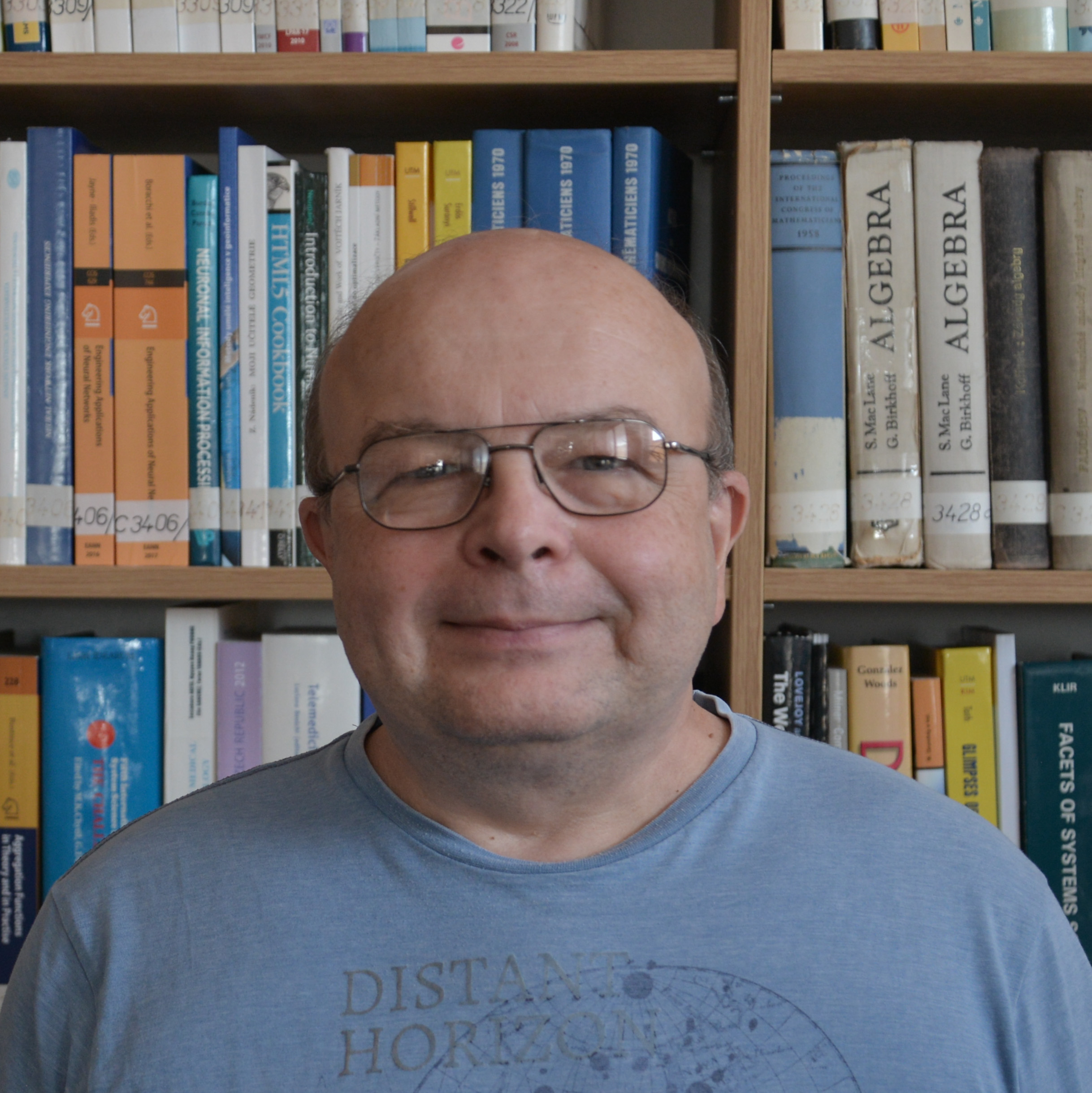
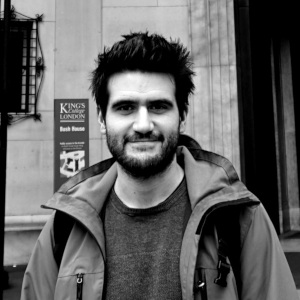
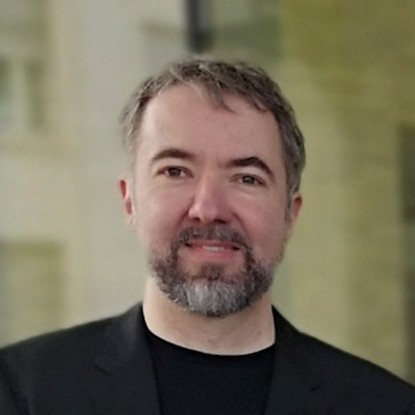
Jan Huisken is a Humboldt Professor for Multiscale Biology at the Georg-August-Universität Göttingen, affiliated with the Johann Friedrich Blumenbach Institute of Zoology and Anthropology. His research focuses on advanced light sheet microscopy techniques for biomedical and developmental biology applications. Role: Humboldt Professor University: Georg-August-Universität Göttingen Department: Johann Friedrich Blumenbach Institute of Zoology and Anthropology Research interests include light sheet microscopy , biomedical imaging , and developmental biology with a strong emphasis on zebrafish models. He develops tools for tissue clearing , image processing , and 3D microscopy . The 15 most recent publications analyze innovations in light sheet microscopy, tissue clearing protocols, and computational methods for image restoration. These works span fields such as optical imaging , developmental cardiology , computational biology , and biomedical instrumentation . Huisken contributes to open-source microscopy systems like 'Flamingo' and 'BigFUSE,' aiming to democratize access to advanced imaging technologies. His work integrates engineering, computer science, and biology to solve complex imaging challenges.
Prof. Dr. Peter Sollich is a Professor of Theoretical Physics at Georg-August-Universität Göttingen, affiliated with the Institute for Theoretical Physics. His research spans non-equilibrium statistical physics with applications to soft matter, active systems, and complex networks. He maintains a small part-time appointment at King's College London. His primary research interests focus on non-equilibrium statistical physics , particularly soft and active matter rheology, jamming transitions, glassy dynamics, dynamical phase transitions, and inference from dynamical data. His work bridges theoretical physics with applications in materials science and network theory, emphasizing both fundamental mechanisms and quantitative modeling approaches. Analysis of his recent publications reveals strong thematic consistency in studying glassy dynamics and active matter systems , with increasing integration of machine learning techniques for network analysis. Key methodological threads include coarse-grained modeling, spectral analysis of complex systems, and non-equilibrium thermodynamics frameworks. His 2023-2025 work shows growing emphasis on nonreciprocal interactions in active mixtures and physics-inspired machine learning applications. Prof. Sollich actively supervises Bachelor's, Master's, and PhD students, welcoming thesis inquiries in theoretical physics. His group develops analytical and computational approaches to complex dynamical systems, with recent grants likely supporting work on network dynamics and active matter modeling (specific grants not detailed in source text). His research group operates within the Institute for Theoretical Physics at Göttingen, focusing on computational and analytical modeling of disordered systems. Current projects involve elastoplastic modeling of amorphous solids, spectral analysis of heterogeneous networks, and theoretical frameworks for active matter phase separation.
Jürgen Schönwälder is a Professor at Jacobs University Bremen, Germany, with affiliations at the University of Osnabrück and TU Braunschweig's Department of Computer Science. His research focuses on network management, protocol design, and internet infrastructure. Key research areas include network management protocols (NETCONF, RESTCONF, YANG), IPv6 performance analysis, cybersecurity, and network configuration. He has contributed extensively to standardization efforts through RFCs and collaborations with institutions like the IETF and Dagstuhl Seminars. Recent publications highlight trends in RESTCONF implementation for constrained devices, active malware analysis using Bayesian models, and metamorphic testing for cryptographic protocols. His work intersects network management, internet infrastructure, and security evaluation. Co-authors like Vaibhav Bajpai, Anuj Sehgal, and Abhilash Hota appear frequently in his research, indicating long-term collaborations. He has participated in editorial roles for journals like IEEE Communications Magazine.
Jörn Altmann is a Professor in the Department of Computer Science and Engineering at Seoul National University's College of Engineering. With a publication history spanning over three decades from 1994 to 2025, he has established himself as a leading researcher in the economics of computing services, particularly focusing on cloud computing economics, software service platforms, and IT service ecosystems. He has served as editor for the GECON (Economics of Grids, Clouds, Systems, and Services) conference proceedings for multiple years, demonstrating his leadership in the field. Altmann's research interests center on the economic aspects of computing infrastructure, with particular expertise in cloud federation models, resource allocation mechanisms, and the business dynamics of software service ecosystems. His work bridges technical computing concepts with economic theory, examining how market mechanisms can be applied to computing resource allocation. Recent research has expanded into cybersecurity economics, AI adoption frameworks, and knowledge management in distributed systems environments. His publications consistently explore the intersection of technology adoption patterns and economic incentives within computing ecosystems. Analysis of his recent publications reveals a strong focus on cloud federation architectures, trust mechanisms in cybersecurity information sharing, and the economic modeling of value creation in distributed computing environments. His work demonstrates a methodological diversity, employing game theory, agent-based modeling, systematic literature reviews, and empirical analysis of industry dynamics, particularly in the Korean technology sector. Altmann has collaborated extensively with researchers worldwide, with notable long-term collaborations with José Ángel Bañares, Omer F. Rana, Kurt Vanmechelen, and Korean researchers including Kibae Kim. His work has appeared in prestigious venues including Future Generation Computer Systems, IEEE Transactions on Engineering Management, and the GECON conference series which he has helped shape through editorial leadership. His research has practical implications for cloud service providers, enterprise IT strategy, and policy development in digital infrastructure. The consistent publication record and editorial leadership suggest active supervision of graduate students and research teams, though specific students are not documented in the provided publication records.
Dr. Sven Burger is a leading Researcher at the Zuse Institute Berlin (ZIB) within the Modeling and Simulation of Complex Processes department. His work focuses on Nanophotonics , Quantum Technologies , and Optical Resonance Computation , particularly in photonic crystals, plasmonic systems, and quantum light sources. Key projects: NanoLab GRIPS 2024 , MATH+ TES QT , MATH+ PaA-1 (perovskite solar cells), Colour Impression of Solar Cells Collaborations: MATH+ , BIFOLD , Research Campus MODAL His research spans Bayesian optimization for quantum systems, quasinormal mode expansions , chiral plasmonics , and terawatt-scale photovoltaics . Recent work emphasizes RPExpand software for resonance analysis and AAA algorithm applications in photonic design. He contributes to quantum key distribution via plug&play single-photon sources, hot carrier dynamics in plasmonic nanocrystals, and high-efficiency light extraction for deep-UV LEDs. His computational methods address non-Hermitian systems , exceptional points , and self-interference nanoparticle tracking .
Jiří Šíma is a senior scientist at the Department of Theoretical Computer Science, Institute of Computer Science, Czech Academy of Sciences. He holds the academic title of Research Professor (DrSc.) and has been a key researcher at ICS CAS since 1994. He has also served as head of the department (2010–2012, 2021–2023) and has held external lecturing positions at Charles University, Masaryk University, and Czech Technical University. His educational achievements include a CSc. (Ph.D.) in 1993, an Associate Professor qualification (doc.) and RNDr. in 2000, and a DrSc. in 2009 from the Slovak University of Technology. These qualifications reflect his deep expertise in theoretical computer science and neural networks. Šíma's research focuses on the theoretical foundations of neural computation, including the computational power of analog and spiking neural networks, energy complexity in deep learning models, formal language recognition by neural automata, and complexity theory. His work bridges theoretical computer science and artificial intelligence, with a strong emphasis on mathematical rigor and computational models. The 15 most recent publications highlight a consistent trend in analyzing the computational capabilities and energy efficiency of neural networks. His recent work (2020–2024) centers on energy complexity in fully-connected and convolutional networks, while earlier work explores analog neuron hierarchies, hitting sets for branching programs, and the limitations of spiking neurons. The research spans subfields such as formal languages, computational complexity, dynamical systems, and neurocomputing, demonstrating a cohesive and long-term research trajectory in theoretical machine learning. Best ICS Paper Award (2024) Best ICS Paper Award (2021) Second/Third Best ICS Paper Award (2019) Best ICS Paper Award (2018) Otto Wichterle Award (2003) Award of the CAS for young scientists (1998) Šíma has been principal investigator on multiple Czech Science Foundation grants, including LEDNeCo (2025–2027), AppNeCo (2022–2024), and FoNeCo (2019–2021). He has also served on grant evaluation panels and scientific councils, including at the Czech Science Foundation and Charles University. Although no formal students are listed, he has collaborated extensively with researchers such as J. Cabessa, P. Vidnerová, S. Žák, and P. Orponen. He is actively involved in the academic community, serving on program committees for major conferences such as ICANN, ICONIP, SOFSEM, and MFCS. His work is primarily conducted within the Department of Theoretical Computer Science at ICS CAS, a leading research group in theoretical computer science in the Czech Republic.
Martim Brandão is a Lecturer (Assistant Professor) in Robotics and Autonomous Systems at King’s College London, where he leads the Responsible Robotics and AI (RRAI) Lab and serves as Co-Director of the UKRI Centre for Doctoral Training in Safe and Trusted AI. His research focuses on ethical, explainable, and safe AI and robotics, with applications in human-robot interaction, motion planning, fairness, and societal impact. His research interests include: Explainable AI and Motion Planning Fairness and Bias in AI Systems Human-Robot Interaction and Social Robotics Adversarial Robustness in Robotics Value Alignment and Ethical AI Inclusive and Participatory Robotics Design His recent publications (2023–2025) reflect a strong trend toward socially responsible robotics, focusing on fairness in navigation, explainability of planning failures, worker-centered agricultural robotics, environmental justice in drone delivery, and the dangers of bias in drowsiness detection and LLM-driven robots. His work emphasizes user understanding, societal impact, and ethical safeguards in autonomous systems. He has advised and collaborated with numerous students and researchers across diverse topics in robotics and AI. He is actively involved in shaping responsible robotics through: Leadership in the RRAI Lab Co-directing a national CDT in Safe and Trusted AI Developing fairness-aware algorithms Advocating for inclusive and ethical design practices His lab and research group focus on: Responsible Robotics and AI Explainability in Multi-Agent Planning Fairness in Coverage and Navigation Human-Centered Evaluation of AI Systems
Prof. Mario Kupnik is a Full Professor at the Technische Universität Darmstadt , leading the Measurement and Sensor Technology Group within the Department of Electrical Engineering and Information Technology. His academic career includes roles at Stanford University (2005–2011) and Brandenburgische Technische Universität Cottbus (2011–2014). He holds a doctorate from Montanuniversität Leoben (2000–2004) and a master's in Telematics from Graz University of Technology. His research focuses on micromachined sensors and actuators , ultrasonic and electroacoustic systems , and non-destructive testing . He pioneers innovations in wearable sensors, biomedical applications, and additive manufacturing for sensor integration. Notable contributions include air-coupled ultrasonic transducers, 3D-printed ferroelectret sensors, and robotics for STEM education. Recent work emphasizes biodegradable sensors , acousto-optic modulation , and multi-parameter medical measurement systems . His projects span from fundamental material science to applied engineering solutions, often leveraging open-source hardware. Kupnik’s labs integrate interdisciplinary approaches, combining electrical engineering, materials science, and biomedical engineering.
Bernard Haasdonk is a Professor at the University of Stuttgart, affiliated with the Institute of Applied Analysis and Numerical Simulation (IANS), part of the Faculty of Mathematics and Computer Science. His research focuses on model reduction techniques for parametrized partial differential equations (PDEs), kernel-based methods, numerical analysis, and machine learning applications in scientific computing. He leads a research group in numerical mathematics and has contributed to software tools like RBMatlab and KerMor. Affiliations: Institute of Applied Analysis and Numerical Simulation, University of Stuttgart Roles: Academic Researcher, Software Developer, Grant Principal Investigator His work bridges numerical simulation, machine learning, and reduced basis methods, addressing challenges in optimal control, fluid dynamics, and biomechanics. Haasdonk has held multiple funded projects, including those on kernel methods for model reduction and certified RB-ML-ROM surrogate models. Research Interests: Model reduction for PDEs, kernel methods, greedy algorithms, numerical analysis, optimal control, and applications in fluid dynamics and porous media. He emphasizes structure-preserving methods for Hamiltonian systems and data-driven approaches for surrogate modeling. Publications: Over 200 articles in journals like SIAM, BIT Numerical Mathematics, and Physica D, focusing on convergence analysis, kernel-based approximation, and reduced-order modeling. Recent trends include adaptive greedy algorithms, symplectic model reduction, and energy-conserving surrogates. Awards: IEEE PerCom 2017 Best Paper Award, Teaching Excellence Awards (2012-2017), and early-career research grants. Grants: DFG-funded projects on model reduction, SimTech Cluster contributions, and collaborations on fuel cells and biomechanics. Teams: Leads the Numerical Mathematics Research Group at IANS, collaborating with interdisciplinary teams on projects like MORCOS (Model Order Reduction of Coupled Systems) and KerMor (Kernel Methods for Model Reduction).
Philipp Mayr-Schlegel is a Professor at the University of Göttingen’s Institute of Computer Science, leading the team 'Information & Data Retrieval' at GESIS - Leibniz-Institute for the Social Sciences. His research focuses on interactive information retrieval systems, scholarly recommendation mechanisms, and the integration of bibliometric methods with digital library technologies. University of Göttingen - Institute of Computer Science GESIS - Leibniz-Institute for the Social Sciences His work spans information retrieval , digital libraries , and applied informetrics , with particular emphasis on: Interactive search systems Non-textual ranking algorithms Scholarly document processing Knowledge representation Semantic search technologies User behavior analysis Recent research outputs (2025) include studies on LLMs for scholarly search, bibliometric reproducibility tools, scientific uncertainty annotation, and preprint adoption disparities. He has published extensively in Scientometrics , International Journal on Digital Libraries , and top conference proceedings like ACL and ECIR . As organizer of the International Workshop on Bibliometric-enhanced Information Retrieval (BIR) and Scholarly Document Processing (SDP) series, he has shaped academic discourse through editorial roles at ISSI , JCDL , and SocInfo conferences. His projects have attracted significant national and European funding.
Muhammad Awais Bin Altaf is a researcher specializing in biomedical engineering, machine learning, and wearable technology. His work focuses on low-power embedded systems for neurological and cardiovascular monitoring, including EEG processors for seizure detection and PPG-based blood pressure classification. He has collaborated extensively with co-authors like Wala Saadeh and Jerald Yoo on IEEE journals and conferences. His research interests include Biomedical signal processing Wearable health devices Machine learning for medical diagnostics Energy-efficient hardware design Neurological disorder detection Embedded systems for clinical applications Recent publications highlight trends in shallow neural networks, autoencoders, and hardware acceleration for real-time health monitoring. Key subfields span seizure prediction, stress detection, and impedance-adaptive sensors. Collaborations include institutions in Germany, Finland, and Pakistan. His work often integrates open-source toolflows and industry-standard chip design techniques, emphasizing practical implementations for wearable environments. Contributions to HDR imaging algorithms and biomedical SoCs demonstrate interdisciplinary expertise in signal processing and healthcare technology.
Eric Leclercq is a researcher at the University of Burgundy, affiliated with the LE2I Lab in Dijon, France. His work spans database systems, social network analysis, and biomedical data integration. He has contributed extensively to polystore systems, tensor decompositions, and category theory applications in data modeling. Fields of Interest : Database Systems, Data Mining, Social Network Analysis, Big Data Analytics, Semantic Web Leclercq's recent research focuses on formal frameworks for data lakes using category theory, multi-level tensor decomposition for social network stratification, and schema migration in multi-model systems. He has published in venues like CAiSE, IDEAS, and RCIS. His collaborations include Annabelle Gillet, Marinette Savonnet, and Nadine Cullot. Notable works include Lambda+ architecture for data processing, polarization analysis in social networks, and tools for tweet collection and biomedical data integration.
Mario Cesarelli is a Professor at the University of Naples Federico II's Department of Biomedical Engineering, with an extensive publication record spanning over three decades. His research bridges engineering and clinical medicine, focusing on developing computational methods for disease diagnosis and patient monitoring through biomedical signal processing and artificial intelligence. Dr. Cesarelli's research spans multiple domains of biomedical engineering with particular emphasis on: Medical imaging analysis and radiomics for neurodegenerative disorders Explainable AI for cancer detection and diagnosis Biomechanics and motion analysis for neurological conditions Cardiac signal processing and analysis Generative models for medical image synthesis and authentication His recent publications demonstrate a strong trend toward explainable deep learning applications in healthcare, particularly for neurodegenerative diseases like Parkinson's and Alzheimer's, as well as various cancer diagnostics. The work increasingly focuses on model interpretability to build clinician trust in AI-assisted diagnosis. Dr. Cesarelli maintains extensive collaborations with a core research group including Paolo Bifulco (46 joint publications), Maria Romano (41), Gianni D'Addio (34), Antonella Santone (27), and Francesco Mercaldo (26), forming interdisciplinary teams that combine engineering expertise with clinical knowledge.
Yubao Liu is a Professor at Sun Yat-sen University's School of Data and Computer Science, Department of Computer Science, with a prolific research career spanning over two decades in computer science. His work demonstrates significant contributions to database systems, data mining, and spatio-temporal analysis. Professor Liu's research interests focus on Data Mining , Database Systems , Traffic Flow Prediction , and Graph Neural Networks . His recent work has concentrated on developing advanced techniques for large-scale traffic flow prediction, crowd flow analysis, and spatio-temporal modeling using deep learning approaches. His research bridges theoretical computer science with practical applications in transportation systems and urban computing. Liu's publication record shows consistent high-impact contributions, with recent work emphasizing graph-based neural network architectures for traffic forecasting problems. His research demonstrates a clear evolution from foundational database work to cutting-edge applications of deep learning in transportation and social network analysis. Professor Liu has collaborated extensively with researchers including Weiyang Kong, Kaiqi Wu, Sen Zhang, Genan Dai, and Youming Ge, indicating a strong research group focused on spatio-temporal data analysis and deep learning applications. His academic advising is evident through publications where his students appear as first authors, suggesting an active mentorship role in training the next generation of computer scientists specializing in data-intensive applications.
Petter Falkman is a researcher at Chalmers University of Technology, specializing in robotics, industrial automation, and control systems. His work bridges theoretical advancements with practical applications in manufacturing, leveraging technologies like digital twins, eye tracking, and virtual reality. Key Research Areas: Robotics, Industrial Automation, Control Systems, Digital Twins, Human-Computer Interaction, Machine Learning. Collaborations: Frequently works with Bengt Lennartson, Kristofer Bengtsson, Martin Dahl, and colleagues across institutions. Publication Trends: Recent articles focus on gaze-based human intention prediction, ROS2 control architectures, and compositional automated planning. His work integrates machine learning with industrial control systems, emphasizing event-driven design and virtual commissioning. Methodologies: Develops frameworks like EPypes for data pipelines, contributes to STEP AP214 model generation, and explores energy optimization in multi-robot systems.