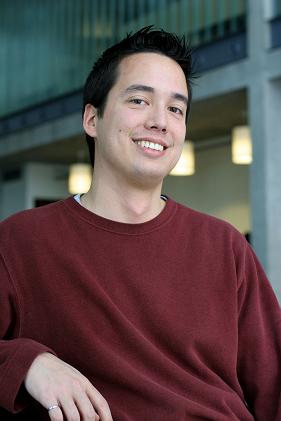
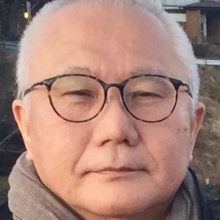
Colin Raffel , currently an Associate Professor at the University of Toronto and Associate Research Director at the Vector Institute , is a leading researcher in machine learning and natural language processing . His career spans roles at Hugging Face (Faculty Researcher), Google Brain (Senior Research Scientist), and UNC Chapel Hill (Assistant Professor). Education: PhD in Electrical Engineering (Columbia), MA in Music/Science (Stanford), BA in Mathematics (Oberlin) Key affiliations: Google Brain (2016-2020), Hugging Face (2021-present), Vector Institute (2023-present) His research focuses on language model development , attention mechanisms , efficient machine learning , and music information retrieval . Recent work explores model merging , parameter-efficient fine-tuning , and data-constrained language models . Teaching : Has instructed courses at University of Toronto and UNC Chapel Hill on Neural Networks , Deep Learning , and Information Theory . Academic service includes organizing ICLR workshops and serving as Senior Area Chair for NeurIPS and EMNLP . Notable awards : NSF CAREER (2022), Caspar Bowden Award (2023), NeurIPS Outstanding Paper (2023) Key contributions : Core developer of WT5 , Git-Theta , and mir_eval software
Dominic Thibault is an Assistant Professor at the Faculty of Music, Université de Montréal . His research-creation explores human-machine interaction in musical contexts, focusing on embodied cognition through electroacoustic compositions, audiovisual performances, and musical software development. Co-director, Laboratoire Formes·Ondes Active member, CIRMMT (Centre for Interdisciplinary Research in Music Media and Technology) Research axis leader, Expanded Musical Practice (CIRMMT) Member, Québecor Millénium entrepreneurship committee Scientific committee member, ACFAS
Olga Vechtomova is a Professor at the University of Waterloo, affiliated with the Information Systems research group and specializing in Search Engines and Natural Language Processing. Her work bridges computational creativity, multimodal systems, and AI-driven text generation. She leads projects like LyricJam , a real-time lyric generation system for live music, and explores applications in dynamic story generation, hate speech detection, and low-resource summarization. Her research emphasizes ethical AI, creative technologies, and leveraging large language models for diverse tasks. Research interests include natural language processing, machine learning, and multimodal interaction. Recent work focuses on artistic inspiration modeling, stylized text generation, and improving NLP efficiency through semi-supervised learning and distillation techniques. Her contributions span over 60 papers since 2000, with a strong emphasis on foundational NLP challenges and real-world applications. She collaborates on systems like Promptmix for model distillation and LyricJam sonic for music-audio lyric generation.
Michael Frishkopf is a Professor and Director of Graduate Studies in the Department of Music at the University of Alberta, and Director of the Canadian Centre for Ethnomusicology. He also holds an adjunct professorship at the University for Development Studies in Ghana. His academic journey includes a BSc in Mathematics from Yale University (1984), MA in Ethnomusicology from Tufts University (1989), and PhD in Music from UCLA (1999). His primary roles include teaching ethnomusicology courses (e.g., MUSIC 148, MUSIC 465) and leading research initiatives in music and global health, soundscapes, and Islamic ritual studies. Education: BSc Mathematics, Yale University (1984) MA Ethnomusicology, Tufts University (1989) PhD Music, UCLA (1999) Research interests span ethnomusicology, Sufi music, sound in Islamic rituals, music and global health, machine learning applications, and social network analysis. He founded the West African Music Ensemble (1999) and Middle Eastern Music Ensemble (2004). His work bridges disciplines including anthropology, computer science, and public health. Key projects include the Autonomous Adaptive Soundscapes initiative for ICU patients, Music for Global Human Development (promoting health in Ghana, Liberia, and Ethiopia), and Music, Sound, and Architecture in Islam . He has published over 100 works and received awards such as the 2020 Edmonton Interfaith Advocate Award and 2018 Community Connection Award. Grants include funding from SSHRC, CFI, and the Fulbright Foundation. He advises numerous collaborative projects and serves on boards like the Egyptian Center for Culture and Art. His research emphasizes participatory action research, particularly using music as a tool for social change and health promotion. Labs/Teams: Canadian Centre for Ethnomusicology (CCE), Genetic Music Collective, TransCultural Orchestra. Current projects include AI for Sound Societies and Mindful Social Listening for student mental health.
Jeff Lupker serves as an Assistant Professor at Western University's Don Wright Faculty of Music, specializing in the intersection of artificial intelligence and musical creativity. His work develops computational tools that augment human composition through deep learning algorithms and interactive systems, positioning him at the forefront of AI-driven music innovation. Lupker completed his entire academic training at Western University: PhD in Composition (2021) Master of Music in Composition (2016) Bachelor of Music in Theory and Composition (2014) His research program focuses on artificial intelligence applications for musical creation, including deep learning models for algorithmic composition, sentiment analysis of social media as compositional input, and mobile-based spatial audio systems. Lupker investigates how transformer architectures generate musical structures and how real-time web applications enable collaborative performance, emphasizing practical tools that combat writer's block while expanding composers' stylistic range through AI-assisted creativity in electroacoustic and popular music contexts. Analysis of his 2021 publications reveals a cohesive research trajectory leveraging cutting-edge AI methodologies to solve creative challenges in music. The works demonstrate how deep learning transforms composition through systems like Score-Transformer and explore mood-pattern recognition using machine learning, collectively establishing foundational work for human-AI creative collaboration that bridges music theory with big data analytics. As founder of Staccato, Lupker leads the development of an AI co-writing platform that functions as an intelligent creative partner. The system generates lyrical content from keywords and suggests musical continuations, helping composers overcome creative blocks while expanding artistic possibilities across diverse genres through accessible, user-friendly interfaces.
Dr. Philippe Pasquier is a Professor at Simon Fraser University's School of Interactive Arts and Technology, where he directs the Metacreation Lab for Creative AI. His research-creation program integrates scientific research on generative AI and machine learning with artistic practice in computer music and interactive art. Research focuses on creative AI systems for artistic tasks, including multi-track music composition (Calliope), timbre synthesis, visual synthesis (Autolume), and cross-modal generation. Applications span creative software tools, interactive installations, and audiovisual performances studied through HCI methodologies. Publications demonstrate consistent innovation in generative systems, with recent work exploring controllable music generation (MIDI-GPT), GAN-based visual synthesis, and evaluation frameworks for creative AI. Artistic works have been exhibited globally at venues including Ars Electronica, Centre Pompidou, and ZKM. Secured research funding from NSERC, SSHRC, CFI, and international agencies. Founded key academic initiatives including the International Workshop on Musical Metacreation (MUME), Movement and Computation conference (MOCO), and chaired ISEA2015. Teaches creative AI, sound design, and interdisciplinary computing approaches.
Douglas Van Nort is an Associate Professor at York University's Department of Computational Arts, School of the Arts, Media, Performance and Design (AMPD). He holds a PhD in Music Technology from McGill University and has held roles including Canada Research Chair in Digital Performance (2015-2025), Banting Fellow at Concordia University (2013-2014), and Research Associate at Rensselaer Polytechnic Institute (2008-2013). His work integrates electroacoustic music, AI-driven systems, and immersive performance environments. Education: PhD in Music Technology (McGill, 2010), MFA in Electronic Arts (Rensselaer, 2003), MA/BA in Mathematics (SUNY Potsdam, 2001). Research Interests: Telematic performance, human-machine improvisation, ecoacoustics, and Deep Listening practices. Van Nort's awards include the 2010 ICMC Best Paper Award and Canada Research Chair designation. His grants total over CAD 5M, including CFI infrastructure funding for the DisPerSion Lab. He teaches courses in electro-acoustic music, interactive media, and digital performance. His DisPerSion Lab explores distributed performance and sensorial immersion.
Dr. Mike Katchabaw is an Associate Professor in the Department of Computer Science at The University of Western Ontario. His research focuses on game design and development, including adaptive game systems, believable agents, algorithmic music composition, and networked game optimization. He holds a Ph.D. from Western (2002) and has been with the department since 2002. Teaching responsibilities include courses on open-source projects, software maintenance, game development, and game design. He is affiliated with the Digital Recreation, Entertainment, Art, and Media (DREAM) Group. Key research areas include psychosocial behavior modeling in NPCs, automated difficulty adjustment, and latency management in multiplayer games. Publications span over 30 refereed journal/conference papers, book chapters, and technical reports. Notable achievements include the Best Paper Award at GameOn 2011 and a patent for a flexible music composition engine. He has contributed to commercial games like 'To The Moon' and 'Animal Planet Vet Life' as a consultant/lead programmer.
William J. Turkel is a Professor of History at The University of Western Ontario, Canada, and a member of the Royal Society of Canada's College of New Scholars. His research focuses on computational history, science and technology studies, and disability studies. He holds a PhD from MIT (2004) and leads the History Department's Fab Lab, equipped with advanced fabrication tools. Turkel's work includes reverse-engineering historical technologies, digital exhibit design, and mentoring over 20 students. He has authored books like Spark from the Deep and The Archive of Place , and his open-source textbook Digital Research Methods with Mathematica is widely used. Awards include the Western Award for Technology-Enhanced Teaching (2021) and SSHRC funding for NiCHE (2004–14). Education: PhD, MIT (2004) Research Interests: Computational methods, big history, modular synthesis, disability studies, and astrobiology. His lab explores tangible computing, 3D printing, and historical experimentation. Articles Overview: Recent work spans digital humanities tool development, historical computing analysis, and music-pattern recognition via machine learning. Key themes include bridging computational methods with historical inquiry. Awards: Royal Society membership (2018), Western University award (2021), and SSHRC leadership (2004–14). Advising & Grants: Supervised over 20 students and postdocs, including Devon Elliott and Ian Milligan. Collaborates with Tim Hitchcock, Edward Jones-Imhotep, and others on projects like MK ULTRA analysis and exoskeleton patent studies. Labs/Teams: The History Department Fab Lab includes 3D printers, CNC tools, and electronics prototyping. His lab designs interactive exhibits and tangible artifacts to explore historical phenomena.
Adam Tindale is an Associate Professor of Human-Computer Interaction at OCAD University’s Faculty of Arts & Science, specializing in electronic musical instruments and innovative interaction design. He is renowned for his work on the E-Drumset, an instrument combining physical modeling, machine learning, and intuitive interfaces. His research bridges music technology, wearable systems, and immersive environments, emphasizing cross-disciplinary collaboration. Education: B.Mus. (Queen's University), M.M. in Music Technology (McGill University), Ph.D. in Interdisciplinary Studies (University of Victoria, focusing on Music, Computer Science, and Electrical Engineering). Research interests include: Design of digital musical instruments Wearable technology for performance VR audio interfaces Gesture-based interaction systems His recent work explores: Generative art through GANs (e.g., calligraphic Arabic scripts) Anisochronous rhythmic interfaces 3D-printed information embedding Key contributions include the JunctionBox toolkit for sound interfaces and frameworks like Flocking for web-based music.
Dr. Cheng-Zhi Anna Huang is currently a faculty member at the Massachusetts Institute of Technology (MIT) with a joint appointment between the Department of Electrical Engineering and Computer Science (EECS) and the Department of Music and Theater Arts (MTA), spanning both the College of Computing and School of Humanities, Arts, and Social Sciences. She simultaneously holds an adjunct associate professor position at the Université de Montréal's Department of Computer Science and Operations Research. Her academic background includes a PhD from Harvard University, a master's from the MIT Media Lab, and dual bachelor's degrees in music composition and computer science from the University of Southern California. Dr. Huang's research focuses on human-AI co-creation in music, with particular emphasis on: Generative AI models for music composition and performance Neural network interpretability for musical applications Interactive systems for real-time human-AI collaboration Reinforcement learning frameworks for creative expression Cross-cultural music modeling and computational musicology She pioneers novel approaches to musical interaction through machine learning, aiming to develop systems that extend how humans understand, learn, and create music. Her publication portfolio shows strong emphasis on generative models for music, particularly transformer architectures, with consistent output in top AI/ML venues since 2014. Recent work focuses on controllable music synthesis, human-AI co-creation frameworks, and performance modeling. The 14 most recent publications demonstrate progression from fundamental music representation research toward sophisticated interactive systems and evaluation frameworks. Awards and Honors: Canada CIFAR AI Chair (Mila) Outstanding Paper Award at NeurIPS Workshop CtrlGen (2021) First Prize in San Francisco Choral Artists New Voices Project (composition) Dr. Huang actively supervises graduate students, with recent master's advisees including Nithya Shikarpur (2024) working on human-AI co-creation for Hindustani music, and Yusong Wu (2023) researching controllable performance synthesis. She is currently recruiting postdoctoral researchers and PhD students for her MIT Music Technology laboratory, focusing on multi-agent reinforcement learning and human-AI interaction in musical contexts.
Gabriel Vigliensoni is an Assistant Professor in Creative Artificial Intelligence within the Department of Design and Computation Arts at Concordia University. He holds a PhD in Music Technology from McGill University and maintains active research and creative practice at the intersection of artificial intelligence, music, and human-computer interaction. His work spans academic research, artistic performance, and music production. PhD in Music Technology, McGill University Assistant Professor, Department of Design and Computation Arts, Concordia University Vigliensoni's research focuses on sound and music making through machine learning, human-computer interaction, artificial intelligence, embodied musical interaction, music information retrieval, and new interfaces for musical expression. His approach merges formal musical training with extensive experience in sound recording, music production, and computational techniques. His creative work challenges traditional notions of liveness and immediacy in digital music production through procedural composition and embodied interaction. His recent publications demonstrate a strong focus on interactive machine learning for creative applications, particularly in audio and music domains. The research trends show increasing emphasis on explainable AI for the arts, ethical considerations in AI music applications, and the development of interfaces that facilitate sustained artistic practice with machine learning systems. His work spans from theoretical foundations to practical implementations in musical interfaces. 2025-2027: Co-Applicant, New Frontiers in Research Fund—Exploration 2024–2025: PI, Petro-Canada Young Innovator Award (PCYIA) 2024–2025: Collaborator, Responsible AI UK international partnerships UKRI 2023–2025: PI, Explore and Create | Research Creation (Canada Council for the Arts) 2023–2025: PI, Faculty Research Development Program (Concordia University) 2022–2023: PI, Knowledge Mobilization Grant (FRQSC) 2020–2022: PI, Postdoctoral Research Creation (FRQSC) Vigliensoni supervises graduate students in Design (MDes), Individualized Programs (MA, MSc), and Individualized Programs (PhD). His research is supported by significant grants from Canadian funding agencies as well as international collaborations. His work bridges academic research with artistic practice, creating feedback loops between theoretical exploration and creative output. His studio practice and research involve developing interactive systems for musical expression, with notable projects including Clastic Music, Telematic Awakening, and Re•col•lec•tions. These projects often combine real-time audio processing, machine learning, and gestural interfaces to create novel musical experiences that explore the relationship between human performers and AI systems.
Steve Engels is a Teaching Professor in the Department of Computer Science at the University of Toronto. His research focuses on the intersection of artificial intelligence, machine learning, and game design. He holds a PhD in Computer Science, with a thesis on 'Design Factors for Educational Video Games.' Engels collaborates with organizations like Ubisoft La Forge on facial expression generation and works with UofT's Science Unlimited program to develop educational games for high school curricula. His projects include automatic music generation, 3D terrain generation, and augmented reality applications. He has presented at conferences such as AIIDE and the Game Developers Conference, contributing to advancements in interactive digital entertainment and educational technology. PhD in Computer Science (Thesis: Design Factors for Educational Video Games) M.Math from the University of Waterloo, supervised by Dale Schuurmans Research Interests Engels' work spans AI-driven game design, educational technology, and procedural content generation. He explores facial expression synthesis, real-time music algorithms, and accessible gaming for diverse audiences. His collaborations emphasize practical applications of machine learning in creative fields. Advising & Grants Engels mentors student research teams in game design and AI projects, though specific grants or funded initiatives are not detailed in the text. Labs & Teams Collaborates with Ubisoft La Forge, UofT's Science Unlimited, and academic conferences to advance interactive technologies and educational tools.
Ichiro Fujinaga is a Professor at McGill University's Schulich School of Music, specializing in Music Technology and Optical Music Recognition (OMR). His research focuses on digitizing and computationally analyzing historical and modern music scores, particularly through projects like the Single Interface for Music Score Searching and Analysis (SIMSSA). He leads the Distributed Digital Music Archives & Libraries Lab (DDMAL), advancing technologies for music document analysis and symbolic encoding. He holds a PhD from McGill University and has pioneered methods for automated music transcription, ancient notation decoding, and machine learning applications in musicology. His work includes developing neural network approaches for layout analysis, timbre quality assessment, and error detection in OMR systems. Key contributions include the creation of datasets for evaluating harmonic analysis, figured bass annotation, and medieval manuscript processing. Dr. Fujinaga has received significant recognition, including a Canada Research Chair (2014) and SSHRC Grant. His research bridges computer science, musicology, and digital humanities, with projects addressing challenges in musical instrument encoding, cross-cultural notation systems, and large-scale music corpus creation. Teaching and mentorship are central to his role, overseeing graduate studies in Music Technology and advising on interdisciplinary research. His lab collaborates globally to advance digital music libraries and open-access platforms for musicological inquiry.