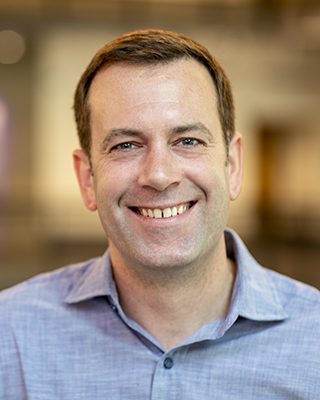
Sean Andersson is a Professor in Mechanical Engineering and Systems Engineering at the College of Engineering, Boston University, and serves as Director of the BU Robotics Lab. His research bridges systems and control theory with applications in nanotechnology , atomic force microscopy , and robotics . His work in nanobioscience focuses on single molecule tracking and high-speed imaging in atomic force and fluorescence microscopy, leveraging control theory to enhance imaging capabilities. In robotics, he develops stochastic control methods for autonomous systems operating in complex environments, emphasizing multi-agent systems , sparsely sampled data , and symbolic control frameworks . Recent publications highlight trends in receding horizon control , persistent monitoring , neural style transfer for imaging , and stochastic policy optimization . The Andersson Lab also explores compressive sensing and optimal control for sensor networks and nanoscale fluid dynamics.
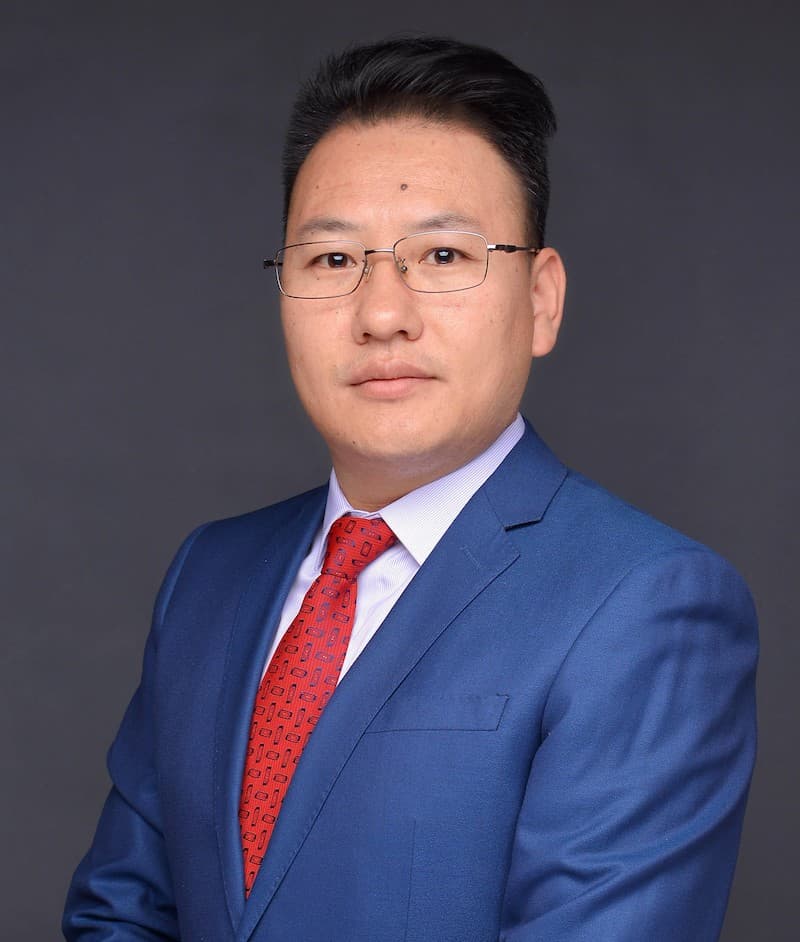
Yassine Ghannane is a Research Fellow at the Department of Computer Science , University of Copenhagen , specializing in Algorithms and Complexity . University: University of Copenhagen Department: Department of Computer Science Research Focus: Theoretical computer science, permutation-based evolutionary algorithms, computational complexity His recent work includes runtime analysis and theory development for permutation-based evolutionary algorithms, as well as module-based neural network mapping heuristics. Publications span 2022–2024 with interdisciplinary applications in machine learning and optimization. Contact: yagh@di.ku.dk | Office: Universitetsparken 1, 2100 København Ø, Denmark
Christian Igel is a Professor at the Department of Computer Science, University of Copenhagen, and serves as director of the SCIENCE AI Centre . He is also a co-lead of the Pioneer Centre for Artificial Intelligence in Denmark. His academic journey includes a Doctoral degree from Bielefeld University (2002) and a Habilitation degree from Ruhr-University Bochum (2010). Igel is a Juniorprofessor (2002–2010) and has held editorial roles at journals like KI - Künstliche Intelligenz and Artificial Intelligence Journal . Doctoral degree: Faculty of Technology, Bielefeld University, Germany (2002) Habilitation degree: Department of Electrical Engineering and Information Sciences, Ruhr-University Bochum, Germany (2010) His research spans Machine Learning , focusing on Support Vector Machines , Evolution Strategies , Reinforcement Learning , Deep Neural Networks , and PAC-Bayesian Analysis . He applies these methods to Environmental Monitoring , Medical Diagnostics , and Climate Research . Recent publications highlight work on adversarial machine learning , environmentally sustainable AI , and tree resource mapping using deep learning. His scientific awards include being a ELLIS Fellow . Igel’s software tools like Shark , woody , and Multi-Planar UNet are widely used in research and industry. Notable grants and collaborations involve projects with European Lab for Learning and Intelligent Systems (ELLIS) , SCIENCE AI Centre , and international teams in Denmark , Germany , and France . His lab leadership emphasizes open-source frameworks and reproducible research. Editorial Roles: German Journal on Artificial Intelligence , Evolutionary Computation Journal , Artificial Intelligence Journal Software Projects: Shark , woody , Multi-Planar UNet , U-Time Collaborations: SCIENCE AI Centre , Pioneer Centre for Artificial Intelligence , European Lab for Learning and Intelligent Systems
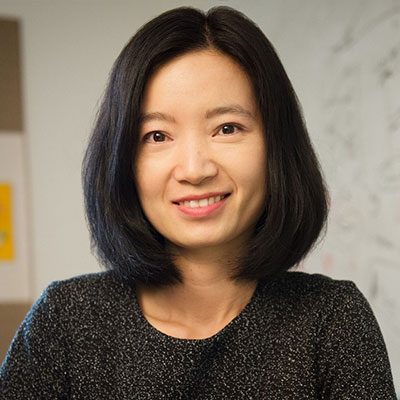
Yang P. Liu is an Assistant Professor in the Computer Science Department at Carnegie Mellon University's School of Computer Science. Previously, he was a Postdoctoral Member at the Institute for Advanced Study and earned his PhD from Stanford University under the supervision of Aaron Sidford. He completed his undergraduate studies at MIT, graduating in May 2018. His educational background includes: PhD in Computer Science, Stanford University (Advisor: Aaron Sidford) Bachelor's degree, Massachusetts Institute of Technology (graduated May 2018) Dr. Liu's research spans the intersection of mathematics and computer science, with particular focus on graph algorithms , optimization , high-dimensional geometry , and additive combinatorics . His work often develops novel algorithmic techniques that bridge theoretical insights with practical applications. He has made significant contributions to areas such as convex optimization, linear programming, and combinatorial problems. His teaching includes courses like "A Principled Approach to Optimization" (CS 15-759), which covers rigorous treatments of convex optimization topics including gradient descent, interior point methods, linear regression, linear programming, and sparsification. His extensive publication record in top-tier conferences (FOCS, STOC, SODA) demonstrates a consistent focus on developing almost-linear time algorithms for fundamental graph problems, optimization techniques, and combinatorial theorems. Recent work shows increasing emphasis on combinatorial lines, corners theorem, and k-CSP approximability, while maintaining strong connections to optimization theory and graph algorithms. Dr. Liu has received notable recognition for his work: National Defense Science and Engineering Graduate (NDSEG) Fellowship (2018-2021) Google PhD Fellowship (2022-2023) Best Paper award at FOCS 2022 for "Maximum Flow and Minimum-Cost Flow in Almost Linear Time" Best Student Paper at STOC 2021 for "Discrepancy Minimization via a Self-Balancing Walk" His research has been supported by prestigious fellowships including the NDSEG Fellowship and Google PhD Fellowship. His work on graph algorithms, optimization, and combinatorics involves collaborations with researchers across theoretical computer science and mathematics. His publications often involve co-authors from multiple institutions, suggesting active research collaborations across the field. Dr. Liu maintains an active research program with a focus on developing efficient algorithms for fundamental computational problems. His recent work continues to push the boundaries of what's computationally feasible in graph algorithms, optimization, and combinatorial mathematics, with particular emphasis on achieving almost-linear time complexity for challenging problems.
Stefano Grivet-Talocia is a Full Professor at the Department of Electronics and Telecommunications at the Polytechnic University of Turin, where he also serves as Director of the Doctoral School and President of the Doctoral School Council. He is a member of the Interdepartmental Center SmartData@PoliTO - Big Data and Data Science Laboratory, the University Committee for Research, Technology Transfer and Services to the Territory, and the Commission for the Promotion of Library, Archive and Museum Heritage. His academic career spans over two decades at Politecnico di Torino, where he has established himself as a leading researcher in electromagnetic modeling and signal integrity. Grivet-Talocia earned his Laurea degree (summa cum laude) in Electronic Engineering in 1994 and his Ph.D. in Electronic and Communication Engineering in 1998, both from the Polytechnic University of Turin. Between 1994 and 1996, he conducted research at NASA/Goddard Space Flight Center in Greenbelt, Maryland. His educational background laid the foundation for his expertise in electromagnetic modeling, wavelet analysis, and signal processing. His research focuses on behavioral modeling, electromagnetic compatibility, macromodeling, model order reduction, numerical modeling, passivity, power integrity, signal integrity, transmission lines, and wavelets . Grivet-Talocia is particularly renowned for his work on passive macromodeling of interconnect structures, development of the TOPLine technique for transmission line simulation, and pioneering contributions to passivity enforcement algorithms. He has co-authored the first book entirely dedicated to Macromodeling (2016) and developed innovative approaches to waveform relaxation and wavelet-based signal processing. His recent publications (2024-2025) demonstrate continued leadership in model order reduction, with significant contributions to data-driven modeling of linear and nonlinear systems, power integrity analysis, and electromagnetic compatibility. His work spans both theoretical advances in numerical methods and practical applications in circuit design, with strong industry relevance particularly for semiconductor and electronic design automation companies. IEEE Fellow (2018-present) Three Intel SRS Grants (2022-2024) Three IBM SUR Grant Awards (2007-2009) Best Associate Editor Award - IEEE Transactions on Components, Packaging and Manufacturing Technology (2020) Multiple Best Conference Paper Awards (2006-2020) URSI Young Scientist Awards (1999) Ranked among the "top 2% worldwide researchers" (Stanford) since 2019 Grivet-Talocia actively supervises doctoral students including Michele Cusano, Sara Paknezhad Panahi, Antonio Carlucci, and Kun Zhao. He has secured numerous research grants from competitive national calls (PRIN) and commercial contracts with industry partners including Intel, IBM, Nokia, Hitachi, Infineon, and Cadence. His technology transfer activities include co-founding the spin-off IdemWorks (2007-2016), which was acquired by CST in 2016. He also developed the autoCircuits web service for automated circuit problem generation, widely used in electrical engineering education. He leads the EMC Group (Electromagnetic Compatibility) at DET and has been instrumental in establishing the Compact Dynamical Modeling research area. His work has practical applications in high-speed electronics design, with algorithms embedded in commercial tools like IBM PowerSPICE. Grivet-Talocia maintains strong industry connections through his research projects and serves as Associate Editor for IEEE Transactions on Components, Packaging and Manufacturing Technology.
Byron Boots is the Amazon Professor of Machine Learning in the Paul G. Allen School of Computer Science and Engineering at the University of Washington, where he directs the UW Robot Learning Laboratory. He also serves as a Principal Research Scientist in the Seattle Robotics Lab at NVIDIA Research and co-chairs the IEEE Robotics and Automation Society Technical Committee on Robot Learning. Dr. Boots received his Ph.D. from the Machine Learning Department in the School of Computer Science at Carnegie Mellon University, where he was a member of the Sense, Learn, Act (SELECT) Lab co-directed by Carlos Guestrin and his advisor Geoff Gordon. Prior to joining the University of Washington faculty, he was an Assistant Professor in the School of Interactive Computing within the College of Computing at Georgia Tech, and before that, he completed a post-doc in the Robotics and State Estimation Lab directed by Dieter Fox at the University of Washington. Professor Boots' research focuses on the intersection of machine learning, artificial intelligence, and robotics, with particular emphasis on developing theory and systems that tightly integrate perception, learning, and control. His work spans computer vision, state estimation, localization and mapping, high-speed navigation, motion planning, and robotic manipulation. His group develops algorithms drawing from deep learning and neural networks, nonparametric statistics, graphical models, nonconvex optimization, quantum physics, online learning, reinforcement learning, and optimal control. The research demonstrates a strong theoretical foundation while maintaining practical relevance to real-world robotic systems. His recent publications reveal a clear trend toward integrating advanced machine learning techniques with robotics, particularly in model predictive control, motion planning, and learning-based approaches to robot control. His work shows increasing focus on developing theoretically grounded methods that can handle the complex, nonlinear dynamics of real-world robotic systems while maintaining computational efficiency. The publications span top venues including ICRA, CoRL, IROS, and NeurIPS, demonstrating broad impact across multiple subfields of robotics and AI. Finalist for Best Systems Paper at Conference on Robot Learning (CoRL-2021) Multiple papers selected for oral presentations at top robotics conferences Work recognized for theoretical contributions and practical applications in robot learning As director of the UW Robot Learning Laboratory, Boots leads a vibrant research group focused on fundamental and applied research in robot learning. The lab maintains strong collaborations with NVIDIA Research and has produced numerous high-impact publications that bridge theory and practice. Professor Boots teaches courses in autonomous robotics, machine learning, and reinforcement learning, contributing to both undergraduate and graduate education at the University of Washington.
Professor Line Roald is a faculty member in the Department of Electrical and Computer Engineering at the University of Wisconsin-Madison. Her research focuses on power system optimization, renewable energy integration, grid resilience, and wildfire risk mitigation using stochastic optimization and data-driven methods. Education : PhD (2016), MS (2012), BS (2009) from ETH Zurich Key Research Areas : Power Systems Optimization, Renewable Energy Integration, Wildfire Risk Mitigation, Stochastic Programming, Grid Decarbonization Her work addresses critical challenges in sustainable energy systems, including balancing grid efficiency and risk, optimizing electrolyzer scheduling for flexibility, and predicting cascading blackout severity using graph neural networks. She has developed frameworks for carbon intensity comparison and wildfire risk assessment in power systems. Scientific Awards : 2024 Inclusion, Equity and Diversity in Engineering Award 2024 Vilas Faculty Early Career Investigator Award 2023 IEEE Power Tech Best Student Paper Award 2021 NSF CAREER Award 2019 MTLE Fellow Professor Roald mentors graduate students and teaches courses including Introduction to Optimization and On-Line Control of Power Systems . Her publications highlight innovative approaches to grid security, carbon-efficient energy markets, and climate resilience in infrastructure systems.
Dr. Zhibao Mian is a Lecturer in the School of Computer Science at the University of Hull, UK, and previously held an Associate Professor position at Northwest Normal University. He specializes in trustworthy AI, machine learning, and intelligent maintenance systems. His research integrates AI with IoT, blockchain, and digital twins in Industry 4.0/5.0 contexts. He leads projects on predictive maintenance for offshore wind turbines and AI-driven sustainable energy solutions. Dr. Mian holds a PhD from the University of Hull and an MSc from the University of Nottingham. Research interests include AI ethics, model-based safety analysis, and RCM. He has secured grants such as the CPHC-funded study on AI in software education and oversees multiple PhD scholarships. Notable roles include Editorial Board member of the American Journal of Artificial Intelligence and Reviewer for high-impact journals/conferences like JSS and IEEE. He is a Senior Fellow of the Higher Education Academy and received the Royal Academy of Engineering's 2024 Exceptional Talent designation. Recent publications (2023-2025) focus on ordinal networks, outlier detection, Belt and Road trade analysis, and carbon emissions modeling. He actively advises PhD students on topics like UAV-based anomaly detection and predictive maintenance frameworks.
Dr. Liang Yu is an Adjunct Professor at Washington State University (WSU) within the College of Agricultural, Human, and Natural Resource Sciences (CAHNRS), Department of Biological Systems Engineering. He holds roles as a Guest Editor for the Journal of Fermentation (Energy Converter-Anaerobic Digestion), Faculty Senator for Non-Tenure Track Faculty, Anti-Hazing Advisory Committee member, and Review Committee member for undergraduate research scholarships at WSU. His research focuses on biorefinery-based industrial symbiosis and the circular economy, employing multi-scale mathematical modeling (molecular simulation, CFD, bioprocess control, machine learning) to optimize anaerobic digestion systems. His work aims to convert organic waste (animal manure, food waste) into renewable natural gas, fertilizers, and bioproducts. He has secured funding from the DOE and USDA, with over 60 peer-reviewed publications and five patents. Key research themes include hydrothermal pretreatment, ammonia recovery, microbial community dynamics, and techno-economic analysis. Recent articles emphasize anaerobic digestion innovation, biodesulfurization, and biohydrogen production. His contributions bridge environmental engineering, biotechnology, and sustainable systems design. Dr. Yu’s grants and patents reflect a commitment to applied sustainability solutions, with projects addressing agricultural waste valorization and energy recovery. Collaborative efforts drive his work, integrating computational modeling with experimental validation for scalable bioenergy systems.
Professor Yizhou Sun is affiliated with the University of California Los Angeles (UCLA) and the Henry Samueli School of Engineering and Applied Science . Her academic work focuses on Machine Learning , Artificial Intelligence , and Graph Neural Networks within the Computer Science department. Her research spans High-Level Synthesis , Causal Inference , and Computational Biology , with recent publications addressing neural network compression, language model safety, and dynamical system modeling. The trends in her recent 2025 and 2024 publications emphasize Deep Learning , Graph Theory , and Language Model Optimization , reflecting interdisciplinary applications in Biomedical Data , Hardware Design , and Physical Simulation .
Eunjung Lee serves as Assistant Professor of Business Analytics in the College of Business at Lewis University, bringing extensive industry experience from Samsung and LG alongside prior academic roles at Indiana State University. Her expertise bridges business analytics and educational technology with a pronounced focus on equity-driven research. Her educational foundation includes: Ph.D. in Information Technology Management, University of Wisconsin-Milwaukee M.B.A., Korea University B.S., Kwangwoon University Dr. Lee's research trajectory evolved from business analytics toward educational equity, with recent work emphasizing computational thinking in mathematics education, teacher preparation models, and machine learning applications for gifted identification. She investigates how digital tools transform pedagogy while addressing systemic barriers for underrepresented students. Analysis of her 2022-2025 publications reveals dominant themes in equitable gifted identification through cross-cultural validation of the HOPE rating scale, computational thinking integration in teacher training, and longitudinal studies of enrichment program impacts. Her methodology consistently combines quantitative analysis with equity-centered frameworks. No scientific awards were documented in available sources. While specific advising details remain unreported, her courses in Business Intelligence and Forecasting demonstrate applied analytics instruction. Research grants weren't specified in source materials. Collaborative structures like the Lowell Stahl Center for Entrepreneurship provide institutional context, though dedicated labs or research teams weren't explicitly referenced.
Johanna Ziegel is a Professor of Statistics at ETH Zurich, Switzerland, since 2024, and a Visiting Scientist at the Heidelberg Institute for Theoretical Studies (HITS). Previously, she held positions at the University of Bern, where she was promoted to Full Professor in 2023. Her research focuses on decision-theoretically sound methods for forecast evaluation, probabilistic forecasting, risk measures in finance, and applications in meteorology, medicine, and climate science. She is actively involved in editorial roles for journals like Bernoulli , JASA: Theory & Methods , and SIAM Journal on Financial Mathematics . Education: PhD in Stereological Analysis of Spatial Structures from ETH Zurich (2010), supervised by Paul Embrechts and Eva B. Vedel Jensen. Postdoctoral research at the University of Melbourne and Heidelberg University. Research Interests: Forecast evaluation, elicitable functionals, risk measures, isotonic regression, statistical calibration, and applications in finance, climate science, and biostatistics. Her work bridges theoretical statistics with practical challenges in uncertainty quantification and decision-making under uncertainty. Advising & Collaborations: Supervised 7 PhD students and mentored several postdocs. Collaborates with the Computational Statistics group at HITS and the Oeschger Centre for Climate Change Research. Her group explores distributional regression under order constraints and novel methods for forecast comparison. Recognition: Credit Suisse Award for Best Teaching (2022), H.I.T. Program for Academic Leadership (2021–2022). Active in professional service, including the Bernoulli Society Council and editorial boards.
Georg Martius is a Senior Research Scientist at the Max Planck Institute for Intelligent Systems in Tübingen and a full Professor at the University of Tübingen since 2023. His work focuses on autonomous learning in embodied agents, drawing inspiration from child development to create self-motivated robotic systems. Research Areas: Model-based reinforcement learning, intrinsic motivation, deep learning, haptic sensor development, and integration of combinatorial algorithms into neural networks. Affiliations: Former postdoc at IST Austria (Christoph Lampert and Gašper Tkačik groups) and Max Planck Institute for Mathematics in the Sciences (Leipzig). Contact: georg.martius@tuebingen.mpg.de Education: PhD in 2009 (Göttingen), Computer Science studies in Leipzig and Edinburgh.
Upaka Rathnayake is a Professor of Civil Engineering and Principal Investigator at the Mathematical Modelling and Intelligent Systems for Health and Environment (MISHE) research unit at Atlantic Technological University Sligo, Ireland. He has held academic and research roles globally, including in Sri Lanka, Japan, the UK, New Zealand, Australia, and Fiji. His research focuses on water resources management, hydrological modeling, climate analysis, and AI-driven solutions for environmental challenges. He holds a PhD from the University of Strathclyde and advanced certifications from Hokkaido University. Education: PhD in Optimal Management of Urban Sewer Systems (University of Strathclyde, 2013) Professional Memberships: Institution of Engineers Sri Lanka, Engineers New Zealand, International Association of Hydrological Sciences Research interests include: Hydrological modeling and climate change adaptation Multi-objective optimization and soft computing techniques Explainable AI applications in environmental systems Remote sensing and GIS for water resource management Recent articles highlight AI-driven solutions for air quality prediction, soil nutrient analysis, and flood risk assessment. Awards include the 2023 Presidential Award for Scientific Publications and multiple university excellence awards. He actively advises PhD students on projects like urban water systems optimization and climatic trends analysis. Rathnayake is an editorial board member of journals like Scientific Reports and PLoS ONE , contributing to peer review and policy-oriented research. His work bridges data-driven methods with traditional hydrological practices to address global environmental challenges.
Oded Regev is a Silver Professor at the Courant Institute of Mathematical Sciences, New York University. He has previously held positions at Tel Aviv University and École Normale Supérieure, Paris (CNRS). His research spans theoretical computer science, cryptography, quantum computation, and machine learning applications in biological discovery. Education: PhD in Computer Science, Tel Aviv University (2001) Regev is renowned for his work in lattice-based cryptography, including the introduction of the Learning With Errors (LWE) problem and Gaussian measures. He also leads research using interpretable machine learning to decode RNA splicing logic and nuclear speckle dynamics, with implications in disease and therapeutics. His recent articles focus on quantum factoring, RNA localization, and geometric lattice bounds. Scientific Awards: European Research Council (ERC) Starting Grant (2008) 2018 Gödel Prize 2019 Simons Investigator Award Best Paper Awards: STOC 2003, Eurocrypt 2006 Regev mentors students and postdocs in both theoretical computer science and computational biology. His lab has secured funding from NSF, NIH, and Additional Ventures. He co-founded the TCS+ online seminar series and serves as Associate Editor-in-Chief for Theory of Computing .