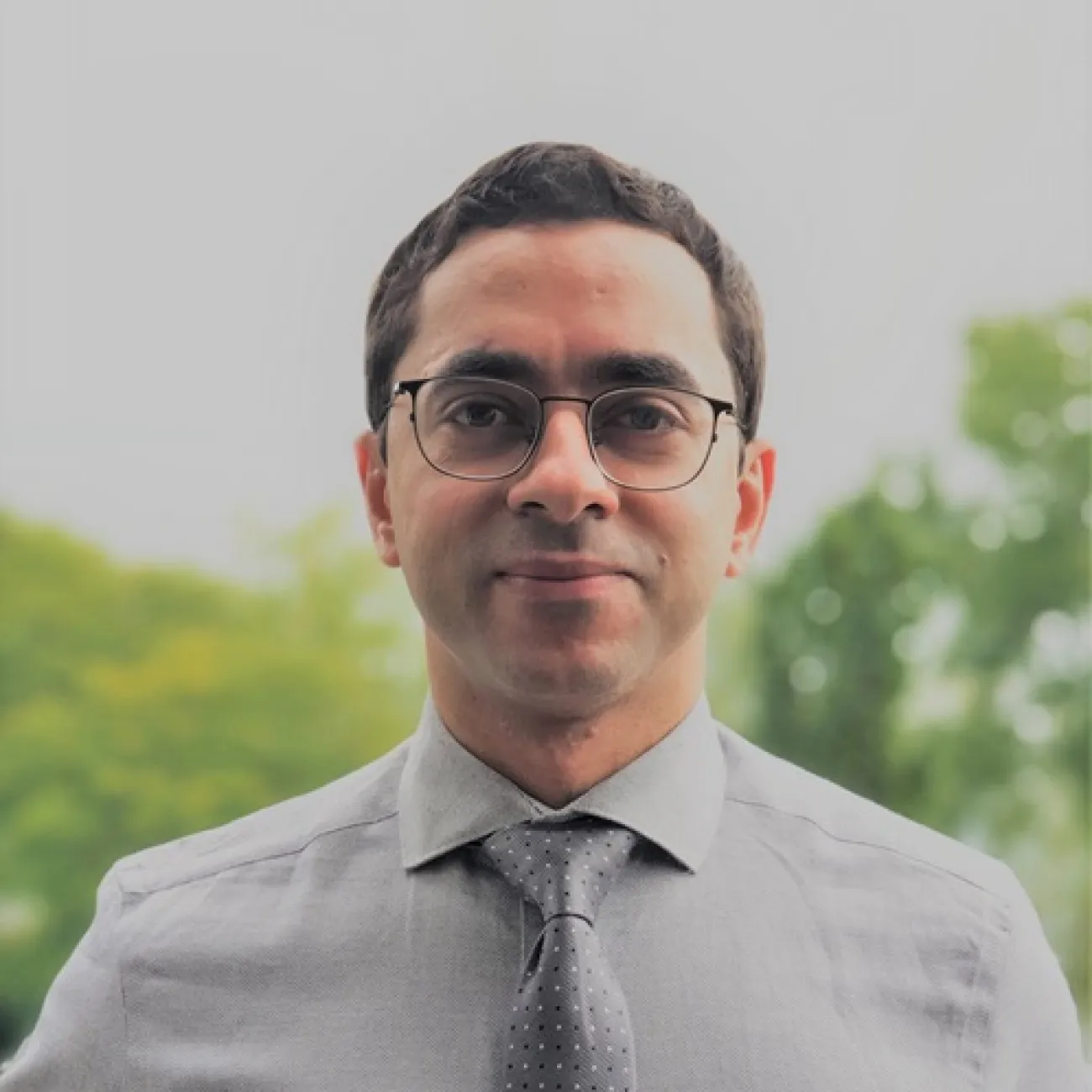
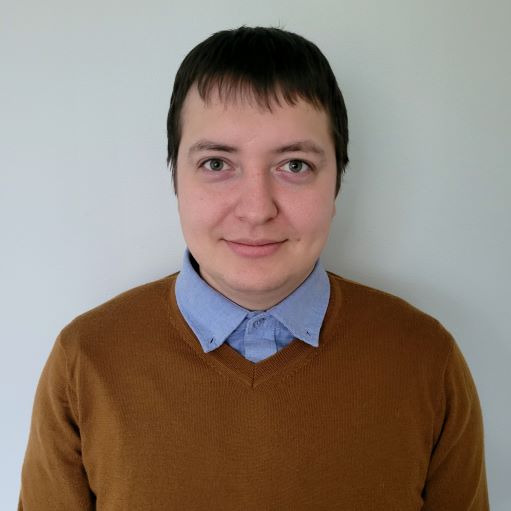
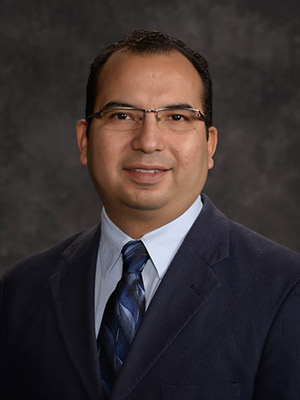
Venanzio Cichella serves as an Assistant Professor in the Department of Mechanical Engineering at the University of Iowa, specializing in advanced control systems and robotics research with applications spanning autonomous aerial vehicles, underwater systems, and soft robotics. His research portfolio prominently features Control Systems , Robotics , Autonomous Vehicles , Soft Robotics , Motion Planning , and Optimal Control . He develops theoretical frameworks for collision avoidance, coordinated path following, and motion planning, frequently employing Bernstein polynomials and Cosserat rod theory to address scalability challenges in multi-agent systems. His work on twisted and coiled artificial muscles (TCAMs) enables biomimetic soft robotic systems for underwater manipulation and rehabilitation applications. Analysis of his 2023-2025 publications reveals three dominant research threads: (1) Vision-based collision avoidance algorithms for intermittent measurement scenarios, (2) Physics-based modeling of TCAM-actuated soft robots using continuum mechanics, and (3) Bernstein polynomial-optimized trajectory generation for autonomous vehicles. These threads consistently bridge theoretical control innovations with practical implementations in UAV coordination, submarine maneuvering, and octopus-inspired robotics, demonstrating strong emphasis on environmental adaptation and computational efficiency.
Seyyed A. Hosseini is a Research Professor at the Bureau of Economic Geology (BEG), Jackson School of Geosciences, University of Texas at Austin . His work focuses on subsurface fluid dynamics with applications to geological carbon storage (CO 2 sequestration) and underground hydrogen storage . Education: Ph.D. in Petroleum Engineering (University of Tulsa, 2008) M.S. in Biotechnology (Sharif University of Technology, 2005) B.S. in Chemical Engineering (University of Isfahan, 2002) Research Interests include: Multiphase fluid flow in porous media Pressure-pulse testing for CO 2 monitoring Reservoir engineering fundamentals Machine learning for subsurface energy projects Geomechanical impacts of fluid injection Environmental risk assessment for CO 2 and hydrogen storage Article Trends reveal his expertise in developing applied methodologies for CO 2 and hydrogen storage, emphasizing machine learning integration , 3D modeling , and fault leakage detection . Recent work explores deep learning workflows and microfluidic experiments for subsurface energy systems. Grants and Funding PI on a $1.5M DOE/NETL grant (2015) to study brine extraction for CO 2 storage pressure management Collaborative Initiatives include the SMART program for machine learning in CCS and partnerships with institutions in Mississippi, Texas, and the Gulf Coast . His research extends to laboratory experimentation following BEG's facility upgrades.
Dr. Qingshi Tu is an Assistant Professor in the Department of Wood Science at the University of British Columbia (UBC) Faculty of Forestry . His research focuses on integrating industrial ecology principles with computational modeling to advance sustainable bioeconomy development. Research Pillars: System-scale sustainability modeling using process simulation, statistics, and AI Environmental/economic/social impact assessment of bioenergy and bioproducts Interactions between bioeconomy, circular economy, and climate mitigation Technical Expertise: Life Cycle Assessment (LCA) Material Flow Analysis (MFA) Techno-economic Analysis (TEA) Machine Learning for sustainability Publication Scope: Dr. Tu has published 20+ articles in top journals like Journal of Industrial Ecology , Nature Communications , and ACS Nano , covering topics from nanomaterial synthesis to climate policy frameworks. His work emphasizes system-scale modeling of bioeconomy-climate interactions. Laboratory: Leads the Sustainable Bioeconomy Research Group , developing computational tools for evaluating emerging biotechnologies.
Dr. Jed Pitera is an Adjunct Assistant Professor at the University of California, San Francisco (UCSF) Department of Pharmaceutical Chemistry and currently serves as the strategy co-lead for Accelerated Discovery in Sustainable Materials at IBM Research - Almaden. He has spent over two decades at IBM Research, applying computational tools and machine learning to materials R&D challenges. Caltech (Biology, Chemistry) University of California, San Francisco (Ph.D. in Biophysics) ETH Zurich (Postdoctoral work in computational physical chemistry) His research focuses on leveraging AI, machine learning, high-performance computing, and quantum computing for advanced materials discovery, particularly in sustainability applications such as carbon capture, energy storage, and PFAS replacement. He also works on improving the sustainability of existing materials in semiconductor manufacturing and directed self-assembly techniques. His work spans computational physical chemistry, polymer science, and AI-driven approaches to material design. His publications demonstrate a focus on AI-driven materials discovery (6 papers), directed self-assembly applications (4 papers), semiconductor manufacturing (4 papers), computational modeling (4 papers), and sustainability-focused research (5 papers). Notable trends include integrating robotics with AI for materials discovery and developing lifecycle assessment tools for sustainable design. Dr. Pitera leads the Accelerator Technologies project at IBM and contributes to the IBM Safer Materials Advisor initiative. He has collaborated with researchers across multiple institutions, including Dan Sanders, Brandi Ransom, Seiji Takeda, and Teodoro Laino.
Sheng C. Dai is an Associate Professor and group coordinator in Geosystems Engineering at the Georgia Institute of Technology, holding the Georgia Mining Association Early Career Professorship in the School of Civil and Environmental Engineering with courtesy appointments in Ocean Science and Engineering and the School of Earth and Atmospheric Sciences. Dr. Dai earned his Ph.D. from Georgia Tech in 2013 following ORISE postdoctoral fellowships at the National Energy Technology Laboratory (2013-2015). His educational background includes specialized training in geosystems engineering and energy-related subsurface processes. His research focuses on energy geotechnics and nature-inspired engineering, addressing critical challenges in energy sustainability and environmental protection through studies of geomechanics, granular dynamics, and porous media flow. Key applications include gas hydrate systems for energy recovery, waste-to-fuel conversion, and biomimetic solutions inspired by natural processes like rock-boring clams. Analysis of Dr. Dai's 2023-2025 publications reveals strong interdisciplinary integration of computational modeling (DEM, SPH), machine learning, and experimental techniques across energy geotechnics, granular material flow, and bio-inspired mechanisms. His work bridges petroleum engineering, environmental sustainability, and space exploration contexts. Dr. Dai has received numerous accolades recognizing his research, teaching, and service contributions: 2025: Early Career Researcher Award (USUCGER) 2024: Emerging Leaders Program (EVPR/Georgia Tech) 2023: Interdisciplinary Research Award and Woodruff Academic Leadership Fellows 2022: NSF Game Changer Academies and CREATE-X Faculty Fellowship 2020: NSF CAREER Award 2017: Bill Schutz Teaching Award and NETL Research Spotlight His Subsurface Processes Laboratory secures funding from DOE, NSF, NASA, and DOT for projects including $1M awards for waste-to-fuel conversion and methane clathrate research. Dr. Dai serves as Associate Editor for Journal of Geophysical Research: Solid Earth and leads ISSMGE's TC308 Energy Geotechnics Task Force while advising USGS and NETL programs. The laboratory conducts cutting-edge experimental and computational research on hydrate-bearing sediments, granular biomass flow, and bio-inspired geotechnical solutions, maintaining strong industry partnerships for real-world application of subsurface engineering innovations.
François Raymond J Cornet is a Postdoctoral Researcher in the Department of Energy Conversion and Storage and a PhD Student in the Department of Applied Mathematics and Computer Science at the Technical University of Denmark (DTU). His dual affiliation bridges energy conversion research and computational science, focusing on AI-driven molecular design. His research spans Organometallic Chemistry , Computational Chemistry , and Machine Learning , with specialization in catalyst design through diffusion models and inverse design methodologies. Key areas include metallocene chemistry, density functional theory applications, and generative modeling for chemical space exploration, targeting organometallic complexes like Vaska's complex. Cornet's publication trajectory reveals a concentrated effort in advancing equivariant diffusion models for molecular generation, particularly addressing small-data challenges in catalyst design. His work consistently integrates quantum chemistry with deep generative architectures, establishing new paradigms for inverse-design pipelines in computational chemistry. No scientific awards were documented in the source material. He recently completed the PhD project Machine learning for electronic scale inverse design of enzymatic catalysts (2021-2025) under supervisors M. N. Schmidt (primary), A. Bhowmik, and O. Winther, with examiners W. K. Boomsma and S. Olsson. Collaborators include P. Deshmukh, B. Benediktsson, and C. A. Naesseth across multiple publications. Research operations occur within DTU's interdisciplinary framework connecting the Department of Energy Conversion and Storage and Department of Applied Mathematics and Computer Science, leveraging computational infrastructure for molecular simulations and AI model training.
Martha Tsigkari serves as an Associate Professor at The Bartlett School of Architecture, University College London (UCL), where she bridges architectural practice with cutting-edge computational research. Her position situates her at the forefront of digital transformation in the built environment, with institutional affiliations spanning UCL's Faculty of the Built Environment and direct contributions to UN Sustainable Development Goals 4 (Quality Education), 11 (Sustainable Cities), and 13 (Climate Action). Her research program critically examines the integration of artificial intelligence, machine learning, and cognitive psychology into architectural design processes. Key investigations include spatial and visual connectivity analysis, XR-enhanced collaborative design environments, and AI-driven optimization of building performance. She explores how digital tools reshape creativity, professional identity, and sustainability outcomes in architecture, with particular focus on data commoditization, skills evolution, and human-AI collaboration in design workflows. Her interdisciplinary approach connects architectural theory with computational neuroscience and industrial digitalization trends. Tsigkari's publication trajectory reveals a clear evolution from computational structural analysis (2012-2017) toward AI ethics and professional transformation (2022-2024). Early work established foundations in performance-driven facades and material systems, while recent output confronts existential questions about architectural practice in the AI era. Her scholarship consistently addresses the tension between technological capability and human-centered design values, with growing emphasis on sustainable development frameworks and educational implications. Scientific Awards: No major awards are documented in the available records. Advising and Grants: While specific supervisees and funding mechanisms aren't detailed in current sources, her extensive collaborative network across 30+ publications indicates active mentorship and research leadership. Co-authorship patterns suggest involvement in multi-institutional projects addressing AECO industry digitalization, with potential ties to UK research councils and industry partnerships like RIBA. Labs and Teams: Tsigkari operates within The Bartlett's digital research ecosystem through recurring collaborations with Kosicki, Tarabishy, and Psarras. Her work manifests in experimental toolsets including Glaucon (XR design environment), HYDRA (optimization framework), and SandBOX (conceptual design system), indicating leadership in UCL's computational design labs focused on human-AI interaction and sustainable building technologies.
Dr. Ahmed Elkady is an Associate Professor in Structural Engineering at the University of Southampton's Faculty of Engineering and Physical Sciences, Department of Civil, Maritime and Environmental Engineering. His research focuses on structural performance under seismic hazards with specialization in steel and composite structures. He leads the Infrastructure Research Group and actively supervises PhD students while developing innovative computational tools for structural analysis. Elkady's research interests center on Performance-Based Earthquake Engineering, Collapse Risk and Loss Assessment of Steel and Composite Buildings, and Resilience-based design of Existing Structures. His work combines advanced numerical modeling with large-scale experimental testing to develop robust predictive models for structural behavior under extreme loading conditions. He has made significant contributions to the understanding of structural connections, particularly steel endplate and bolted connections. His recent publications demonstrate a strong trend toward integrating machine learning with traditional structural engineering methods, particularly in modeling steel connections and predicting structural behavior. The research spans both fundamental mechanics and practical applications for seismic risk assessment, with several of his 2023-2025 publications focusing on data-driven approaches to structural analysis. Raymond C Reese Research Prize (2022) Multiple Outstanding Reviewer awards from ASCE Journal of Structural Engineering (2019-2020) First Place Award in NIST-ATC Blind Prediction Contest (2018) Alexander Graham Bell graduate scholarship from NSERC Canada (2014) Multiple best presentation awards at engineering conferences (2012-2015) Elkady currently supervises three PhD students (Weiran Li, Zizhou Ding, and Aran Naserpour) and leads the EPSRC-funded project 'Seismic Resilience of Egypt's Built Environment: A GIS-Based Framework for Assessment and Mitigation.' He has also secured funding from Research England for the 'EGYGIS: GIS Mapping in Support of Egypt's Disaster Risk Management' project. His research has resulted in several open-source software tools including EaRL (Earthquake Risk, Loss & Lifecycle Assessment), FM-2D (Frame Modeler 2D), and SCRonED (Semi-Rigid Connections Experimental Database), which are widely used in the structural engineering community for performance-based earthquake engineering.
Aleksandr Zinoviev is a Senior Research Associate at the School of Engineering and Information Technology (SEIT) at UNSW Canberra, where he has been working since 2022. His research spans multiple institutions across the globe, including previous positions at Siemens Digital Industries Software in Belgium, University of Bremen and AMSIS GmbH in Germany, and Institute of Strength Physics and Materials Science of the Russian Academy of Sciences and Tomsk Polytechnic University in Russia. He has also conducted research stays at the University of Bremen (Germany) and São Paulo State University (Brazil). Dr. Zinoviev's research interests are highly interdisciplinary, focusing on metal additive manufacturing, thermodynamics of materials, computational materials science, solid mechanics, software engineering, and machine learning. He specializes in developing and applying novel knowledge-based approaches to address engineering challenges, particularly in improving materials and parts produced by advanced manufacturing, optimizing production processes, and enhancing data processing. His work bridges the gap between fundamental materials science and practical engineering applications, with a strong emphasis on computational modeling and simulation. Analysis of his recent publications (2021-2025) reveals a consistent focus on additive manufacturing process modeling, microstructure-property relationships in additively manufactured metals, and computational approaches to materials science. His research particularly emphasizes cellular automata modeling, multiscale simulation techniques, and the application of machine learning to materials processing. The publications demonstrate expertise in both experimental characterization and advanced computational methods for predicting mechanical behavior of additively manufactured components. Dr. Zinoviev actively mentors prospective PhD and Research Master's candidates, offering guidance on topics related to thermal modeling of additive manufacturing and process optimization. He has indicated that scholarships of up to $35,000 (AUD) are available for qualified candidates who achieved High Distinction in their undergraduate program and/or have completed a Masters by Research.
Professor Agba Salman is a distinguished academic at the School of Chemical, Materials and Biological Engineering , University of Sheffield, holding the Chair in Particle Technology . He serves as Director of the Diamond Pilot Plant and Course Director for MSc Pharmaceutical Engineering. His research bridges fundamental particle science with industrial applications across food, pharmaceuticals, fertilizers, and catalysts. Salman's work focuses on granulation processes, powder restructuring, and continuous manufacturing. He has pioneered methodologies linking early-stage granulation science with equipment design through computational modeling and real-time monitoring systems. Collaborations with major companies like Nestlé, AstraZeneca, and GSK demonstrate his industrial impact. Key article trends reveal expertise in: High-shear granulation for food/pharma Roll compaction optimization Sustainable granulation practices PAT implementation in continuous processing Lipid/oil migration analysis Microstructure engineering Salman has received recognition through 10 International Granulation Workshops he hosted and 18 special journal issues edited. His group's work on industrial-scale continuous manufacturing (powder-to-tablet systems) addresses critical knowledge gaps while enhancing economic efficiency across multiple sectors.
Raymundo Arróyave serves as Professor and Associate Department Head for Research in the Department of Materials Science & Engineering at Texas A&M University, holding the Chevron Professor II distinction and multiple university fellowships including Presidential Impact Fellow and Chancellor EDGES Fellow. He maintains affiliated faculty appointments in Industrial & Systems Engineering and Mechanical Engineering. Educational Background: Ph.D. in Materials Science from Massachusetts Institute of Technology M.S. in Materials Science and Engineering from Massachusetts Institute of Technology B.S. in Mechanical and Electrical Engineering from Instituto Tecnológico y de Estudios Superiores de Monterrey Research Focus: Dr. Arróyave's computational materials science research integrates atomic-scale simulations with thermodynamic and kinetic modeling to predict material behavior. His work spans phase field methods for microstructure evolution, materials informatics, ICME frameworks, and physics-based design of functional materials including lead-free alloys, high-temperature ceramics, shape memory systems, and nuclear materials. Key phenomena investigated include interfacial thermodynamics, phase transformation kinetics, and thin-film stability. Publication Trends: Analysis of his 2012-2014 publications reveals concentrated expertise in computational modeling of soldering metallurgy (particularly Pb-free systems) and shape memory alloys. His work bridges CALPHAD thermodynamic databases with phase field kinetics to predict intermetallic compound evolution in electronic joints and microstructural characteristics in Ni-Ti-Hf/Zr systems, demonstrating strong alignment with industrial applications in electronics and aerospace. Scientific Recognition: FMD Journal of Electronic Materials Best Paper Award (2014) TMS EMPMD Distinguished Service Award (2014) Mexico National System of Researchers Level II Membership (2013-2018) Texas A&M Engineering Experiment Station Young Faculty Fellow (2012) NSF CAREER Award (2010) TMS Young Leader Internship (2006) American Welding Society Graduate Fellowship (2002-2003) Research Leadership: As Associate Department Head for Research, Dr. Arróyave directs departmental research strategy while maintaining active NSF-funded projects including his CAREER award on computational thermodynamics. His collaborations span the Materials Science & Engineering department and affiliated engineering disciplines, with emphasis on translating computational models to industrial applications in electronics manufacturing and high-temperature materials. Research Ecosystem: His work operates within Texas A&M's computational materials infrastructure, leveraging university-wide resources for high-performance computing and materials characterization. Current projects focus on integrating machine learning with physics-based models for accelerated materials discovery, particularly in soldering reliability and shape memory alloy design.
Carolin Müller is a Juniorprofessor for the Theory of Electronically Excited States at the Friedrich-Alexander University Erlangen-Nuremberg since November 2023. Previously, she was a Feodor Lynen Postdoctoral Researcher at the University of Luxembourg (June 2022-October 2023) and a Postdoctoral Researcher at Friedrich Schiller University Jena (March 2021-May 2022). Dr. Müller received her B.Sc. (2016) and M.Sc. (2018) in Chemistry from Friedrich Schiller University Jena, followed by her Ph.D. (Dr. rer. nat) in 2021 from the same institution. Her doctoral research focused on "Towards Operando Spectroscopy of Supramolecular Photocatalysts – A Case Study on Ru-dppz-derived Systems" under the supervision of Prof. B. Dietzek-Ivanšić. Dr. Müller's research focuses on the theoretical understanding of photoinduced processes in molecules and materials. Her group (CPC Group) investigates electron transfer processes, isomerization reactions, and excited-state dynamics with the goal of controlling and optimizing light-driven processes for increased reactivity and efficiency. Her work combines computational chemistry, spectroscopy, and machine learning approaches, specifically utilizing methods like TD-DFT, CASSCF, molecular/quantum dynamics, and cheminformatics techniques including SVD, MCR, and global/target lifetime analysis. Her recent publications demonstrate a strong interdisciplinary approach spanning computational chemistry, spectroscopy, and machine learning. Key themes include nonadiabatic molecular dynamics, excited-state simulations, photoswitch design, photocatalysis, and the development of computational tools like KiMoPack for kinetic modeling. Her work often bridges theoretical predictions with experimental validation through close collaboration with spectroscopy research groups. Feodor Lynen Research Fellowship (Alexander von Humboldt Foundation) Thuringian Research Award 2023 for Applied Research Albert-Weller Award (German Chemical Society) Dissertation Award (Faculty of Chemistry and Earth Sciences) FCI Kekulé PhD fellowship As a Juniorprofessor, Dr. Müller leads the CPC Group at FAU, where she mentors students in computational chemistry research. She has developed expertise in combining spectroscopic techniques (resonance Raman, transient absorption, and time-resolved emission spectroscopy) with computational methods and cheminformatics approaches. She also actively contributes to the scientific community through service roles including co-organizing the ESTML 2023 Workshop and serving as an active member in the yPC organization of the German Bunsen Society. Dr. Müller is actively developing the CPC Group research program at the Computer Chemistry Center, focusing on light-induced physical processes and chemical reactions. Her group combines quantum chemistry, chemoinformatics, and experimental spectroscopy to reveal mechanisms behind photoinduced phenomena and optimize light-driven processes.
Maurits Haverkort is a Professor at the Institute for Theoretical Physics, Heidelberg University (Germany). His research focuses on quantum many-body systems , strongly correlated electrons , and X-ray spectroscopy of complex materials under strong fields. University of Cologne (PhD in Physics, 2005) University of Groningen (M.Sc. in Physics, 2002) Research Interests : He investigates orbital and magnetic properties in heavy fermion systems , actinide materials , and correlated oxides using resonant inelastic X-ray scattering (RIXS) , ARPES , and computational tools like Quanty . His work spans crystal field theory , spin-orbit coupling , and ultrafast electron dynamics . Scientific Awards & Activities : 2018 – Editorial Board Member, Physical Review Letters 2017 – Beam Time Allocation Panel, ESRF Grenoble 2016–2018 – Swedish Research Council Panel NT-4 2012–2016 – Scientific Selection Panel, Helmholtz-Zentrum Berlin Recent Publications highlight 5f electron counting , photon-modulated bonding , and precision neutrino mass experiments , reflecting his expertise in quantum materials and advanced spectroscopy .
Christoph Dellago is a full Professor of Computational Physics at the Faculty of Physics of the University of Vienna, where he has been a faculty member since 2003. He currently serves as Director of the Erwin Schrödinger Institute for Mathematics and Physics, Head of the Computational and Soft Matter Physics Group, and Project lead of EuroCC Austria - National Competence Centre for Supercomputing. Previously, he served as Dean of the Faculty of Physics (2009-2012) and Coordinator of the Doctoral College Advanced Functional Materials (DCAFM). Full Professor, Faculty of Physics, University of Vienna (2003-present) Director, Erwin Schrödinger Institute for Mathematics and Physics (2017-present) Head, Computational Physics and Soft Matter Group (2024-present) Coordinator, Doctoral College Advanced Functional Materials (DCAFM) Austrian Representative, Council of CECAM Dellago received his PhD in Physics from the University of Vienna in 1996, followed by postdoctoral research at UC Berkeley as a Schrödinger Fellow of the Austrian Science Foundation. His research focuses on developing computational methods to study rare events in condensed matter systems, particularly transition path sampling methodology for simulating nucleation, chemical reactions, and biomolecular reorganizations. He has pioneered the application of machine learning to molecular structure recognition and potential energy surfaces. Recent work examines self-assembly of nanocrystals, biopolymer folding, aqueous interfaces, phase separation in alloys, thermo-polarization, cavitation, and freezing phenomena. Analysis of Dellago's recent publications (2023-2025) reveals a strong emphasis on machine learning applications in computational physics, particularly neural network potentials for simulating water interfaces, crystal defects, and phase transitions. His work bridges traditional statistical mechanics with modern computational techniques, creating powerful tools for studying complex dynamical processes that occur on timescales far beyond conventional molecular dynamics simulations. The publications demonstrate increasing integration of machine learning with rare event sampling methods, reflecting the cutting-edge direction of computational statistical mechanics. Förderpreis der Stiftung Futura zur Förderung junger Südtiroler im Ausland (1997) The Raymond and Beverly Sackler Prize in the Physical Sciences (2005) UNIVIE Teaching Award of the University of Vienna (2014) Dellago leads an active research group with multiple PhD students and postdocs, focusing on computational statistical mechanics. His group develops trajectory-based sampling methods and machine learning approaches for molecular simulation. He has secured significant funding through EuroCC Austria and various research platforms including the Research Platform Accelerating Photoreaction Discovery and the Research Platform Erwin Schrödinger International Institute for Mathematics and Physics. His research has been supported by numerous grants enabling advanced computational infrastructure for high-performance simulations. The Dellago Group operates within the Computational and Soft Matter Physics division at the University of Vienna, with strong connections to the Research Network Data Science. The group collaborates extensively with international research institutions and maintains close ties with the Erwin Schrödinger Institute, which Dellago directs. Their research environment combines theoretical physics, computational chemistry, and machine learning expertise to tackle fundamental questions in condensed matter physics and soft matter systems.
Yuta Sugiura is an Associate Professor in the Department of Information and Computer Science at Keio University's Faculty of Science and Technology. His research focuses on innovative human-computer interaction techniques, particularly in wearable computing, tangible interfaces, and novel input methods. Previously, he worked as a postdoctoral researcher at the National Institute of Advanced Industrial Science. Dr. Sugiura's research interests span Human-Computer Interaction, Wearable Computing, Augmented Reality, Tangible User Interfaces, Gesture Recognition, Ubiquitous Computing, Haptics, and Virtual Reality. His work often explores how everyday objects and environments can become interactive surfaces, with notable projects including the iRing (intelligent ring), SenSkin (skin as interface), and EarHover (mid-air gesture recognition for hearables). He has developed numerous novel interaction techniques that leverage physical properties of materials and human physiology for input and output. His recent publications indicate a strong focus on hearable computing, medical applications of HCI, edible interfaces, and novel authentication methods. The research shows a consistent pattern of exploring unconventional interaction surfaces and leveraging subtle physical phenomena for input sensing. His work has significant implications for healthcare applications, particularly in neurological disorder screening and rehabilitation. Best Paper Award Dr. Sugiura has advised numerous students who have gone on to publish significant work in top-tier HCI venues. His research has been supported by various grants enabling the development of novel interaction techniques and systems. He maintains strong collaborations with researchers across Japan and internationally, particularly in the fields of wearable computing and medical applications of HCI. His laboratory appears to focus on lifestyle computing, developing interfaces that integrate seamlessly into daily activities. Current projects include exploring edible displays, adaptive ear interfaces, and novel authentication methods using wearable devices. Future work seems to be heading toward more medical applications of HCI, particularly in neurological assessment and rehabilitation.