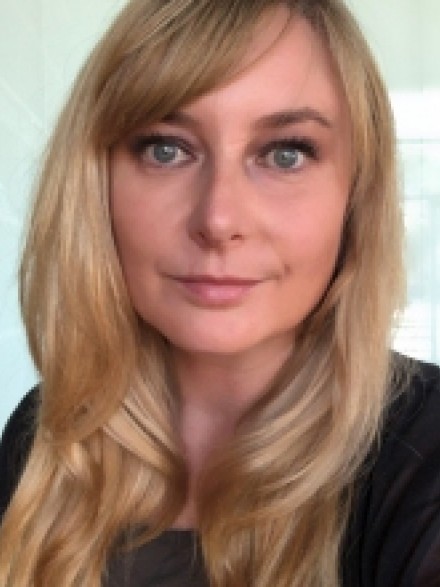
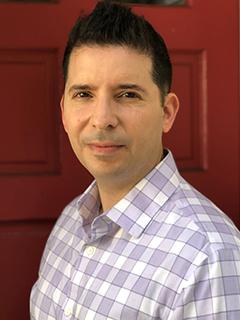
Professor Amanda Barnard is a Senior Professor of Computational Science at the ANU College of Engineering and Computer Science. She leads research in computational modeling, high-performance supercomputing, and AI applications in materials science. With a BSc (Hons) in applied physics (2000) and PhD in theoretical condensed matter physics (2003) from RMIT University, she has held prestigious roles including Distinguished Postdoctoral Fellow at Argonne National Lab (USA) and Violette & Samuel Glasstone Fellow at Oxford University (UK). Board member at BioViS (Garvan Institute), CTCMS (AIBN), Our Health in Our Hands (ANU), and NeSI (New Zealand eScience). Former Chair of the Australian National Computational Merit Allocation Scheme (NCMAS) and current Chair of the Australasian Leadership Computing Grants (ALCG). Research focuses on materials informatics, nanoinformatics, and AI-driven material discovery. Awards include the 2009 Malcolm McIntosh Physical Scientist of the Year, 2014 Feynman Prize in Nanotechnology, and 2019 AMMA Medal. Her work bridges computational science with real-world applications in energy storage, carbon removal, and hydrogen economy technologies. Collaborates with industry through ChoiceFlows Inc. and Data61 (CSIRO).
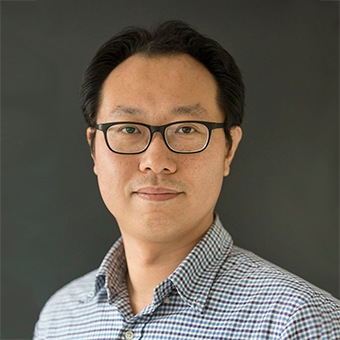
Taehwan Kim is a Senior Lecturer in the School of Civil and Environmental Engineering at UNSW since June 2016. He holds a PhD from Purdue University (USA), and BS/MS from KAIST (South Korea). His research focuses on sustainable infrastructure materials, cement chemistry, and waste utilization. He leads projects on low-carbon concrete, hempcrete, and recycling industrial wastes. Kim supervises multiple PhD students and collaborates on grants like the CRC Project with Enviropacific Services and the ARC Discovery on self-healing concrete. His work bridges fundamental material science with practical construction applications. Education: PhD in Civil Engineering, Purdue University, USA M.Sc. in Civil and Environmental Engineering, KAIST, South Korea B.Sc. in Civil and Environmental Engineering, KAIST, South Korea Research Interests: Advanced materials characterization, thermodynamics of cementitious systems, alkali-activated binders, and low-carbon material innovation. His lab explores novel composites for thermal/acoustic insulation and structural durability. Grants (2021-2025): CRC Project: Thermal treatment facility waste reuse ARC Discovery: Self-healing concrete for chloride corrosion ARC Linkage: Decarbonizing built environments with hempcrete NSW EPA: Geopolymer concrete with recycled glass Advising: Supervises 6 current PhD students (primary/joint roles) and mentors 5 alumni now in academia/industry. Active in training through courses CVEN3304 and CVEN9824.
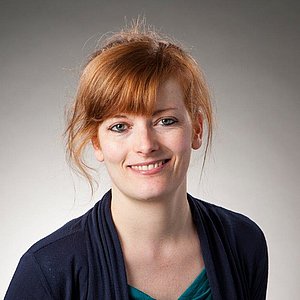
Melina Freitag is Professor for Data Assimilation at the Institute for Mathematics, University of Potsdam. Her research spans numerical linear algebra, inverse problems, and model order reduction, with applications in geophysics, image processing, and machine learning. She leads the Data Assimilation Group and contributes to the SFB 1294 Collaborative Research Center. Education : Prof. Freitag earned her Diplom in Mathematics at TU Chemnitz (2004) and PhD in Mathematical Sciences from University of Bath (2007). Research Themes : Her work focuses on Krylov subspace methods, low-rank approximations, and preconditioning for large-scale systems. She bridges classical numerical analysis with modern data assimilation, addressing challenges in: Bayesian inverse problems with unstable systems Optimized spectral sampling in X-ray imaging Physics-informed neural networks for Navier-Stokes inversion Parameter-dependent eigenvalue analysis Collaborations & Grants : She collaborates with institutions like KTH Stockholm and Arizona State University. Her group secures funding through SFB 1294 and participates in INI Cambridge networks. Leadership : Co-Chair of GAMM Activity Group on Applied Numerical Linear Algebra SIAM Activity Group on Linear Algebra Chair (2022) Teaching : Delivers courses on numerical optimization, matrix methods in data science, and inverse problems, integrating computational theory with real-world applications.
Donald W. Brenner is a Kobe Steel Distinguished Professor and Department Head in the Department of Materials Science and Engineering at North Carolina State University . He earned his B.S. and Ph.D. in Chemistry from the State University of New York (1982) and Penn State University (1987), respectively, followed by a research staff role at the U.S. Naval Research Laboratory. His career at NC State spans three decades, focusing on computational materials science and atomic-scale modeling. B.S. in Chemistry, State University of New York (1982) Ph.D. in Chemistry, Pennsylvania State University (1987) Brenner's research centers on computational materials modeling for extreme environments, particularly high entropy ceramics , tribology , and shock dynamics . His work employs density functional theory, molecular dynamics, and multi-scale simulations to study materials like diamond clusters, nanotubes, and self-assembled monolayers. Recent publications emphasize defect properties, hardness optimization, and machine-learned interatomic potentials for ternary and high-entropy systems. Scientific honors include the 2002 Feynman Prize (nanotechnology), 2013 Alcoa Foundation Award , and 2016 Alexander Quarles Holladay Medal . He is also an editor of the Handbook of Nanoscience, Engineering and Technology (CRC Press, 2002-2012). His research group develops reactive empirical bond order (REBO) potentials and explores tribochemical processes, shock-induced chemistry, and nanoscale device engineering.
Dingchang Lin is an Assistant Professor in the Department of Materials Science and Engineering at Johns Hopkins University's Whiting School of Engineering. His research focuses on developing biomolecules, materials, and electronic devices for probing and modulating biological systems, particularly the central nervous system. Education: B.S., Materials Science and Engineering, Tsinghua University (2013) Ph.D., Materials Science and Engineering, Stanford University (2018) Postdoctoral Training, Chemistry and Chemical Biology, Harvard University Lin's lab addresses technological gaps in cell biology, neuroscience, and materials science through protein engineering, novel materials design, and device engineering. His work enables cellular-level resolution and specificity in biological modulation, with clinical translation potential. Current research spans from molecular-scale materials to device-level systems. Recent grants include NIH BRAIN Initiative R21, NSF DMR, multiple JHU Discovery Awards, and the DoD AFOSR YIP Award. His group has been recognized by Nature Methods and Nature Reviews Genetics for their protein ticker tape technology. Scientific Honors: Packard Fellow for Science and Engineering (2024) NIH NIGMS MIRA Award (2022) Web of Science Highly Cited Researcher (2019–2024) MRS Graduate Student Award (2018) Ross N. Tucker Memorial Award (2017) The Lin Lab collaborates with neuroscience and biomedical research teams while actively recruiting postdocs and graduate students. Their work combines materials science innovation with biological applications, supported by over $2 million in NIH funding and multiple institutional awards.
Dr Clare Coveney is a Research Associate in the Biological Mass Spectrometry & Clinical Proteomics group at the John van Geest Cancer Research Centre, part of Nottingham Trent University's School of Science & Technology. She holds a BSc in Pharmacology and Neuroscience (2007) and a part-time PhD focused on proteomic/transcriptomic biomarker discovery in ovarian cancer from the same institution. Her career includes roles as a Research Assistant and subsequent transition to the John van Geest Centre in 2010. Her research centers on proteomics and mass spectrometry , specializing in DIA/SWATH-based quantitative profiling for biomarker discovery. She maintains the centre's mass spectrometry facility (equipped with SCIEX TripleTOF 5600+/6600 systems) and develops workflows for multidimensional proteomic data analysis. Her work spans diverse diseases, including prostate/breast cancer, melanoma, leukemia, lymphangioleiomyomatosis (LAM), Alzheimer's, COPD, and diabetes. Publications emphasize cancer biomarkers, molecular mechanisms of disease, and computational proteomics , with applications in immunotherapy, metastasis, and metabolic pathways. Research integrates omics technologies (proteomics, transcriptomics) and machine learning for clinical insights.
Dr. Supratik Kar is a Tenure-Track Assistant Professor in the Department of Chemistry at Kean University's College of Science, Mathematics and Technology . His research integrates Medicinal Chemistry , Cheminformatics , and Machine Learning for Computer-Aided Drug Design (CADD) , Risk Assessment , and Toxicity Modeling of chemicals and pharmaceuticals. Education: Ph.D. in Pharmacy (Jadavpur University, 2015), M.S. in Pharmacy (Jadavpur University, Valedictorian, 2010), B.S. in Pharmacy (Jadavpur University, Valedictorian, 2008) Previous Positions: Postdoctoral Research Associate (Jackson State University, 2015-2022), Marie-Curie Research Fellow (University of Gdańsk, 2013-2014) Dr. Kar's research focuses on developing QSAR/q-RASAR models for predicting chemical toxicity, machine learning-driven drug discovery for diseases like Nipah virus and Alzheimer's, and ecotoxicological assessments of pharmaceuticals and nanoparticles. His work bridges computational toxicology , environmental risk assessment , and medicinal chemistry . Recent publications highlight his expertise in in silico toxicity prediction for aquatic species, AI-based adverse drug reaction detection , and read-across modeling for chemical safety. He has co-authored two widely cited QSAR textbooks with Elsevier and Springer. Scientific Recognition: Kean University Presidential Excellence Award (2024), Top 2% Scientist (Stanford/Elsevier, 2020-2023), Top 0.15% Scholar (ScholaGPS, 2024) Funding: Secured $725K in USEPA Federal funds (2022-2025), $12.5K Student Partnering Faculty grant (2024), and $20K+ in internal Kean University seed funds (2022-2024)
Alex Georgescu is an Assistant Professor in the Department of Chemistry and Adjunct Professor of Physics at Indiana University Bloomington, where he joined in August 2023. His research employs computational and theoretical methods to study electronic properties of materials, collaborating extensively with experimental groups. He utilizes tools ranging from density functional theory to machine learning, focusing on quantum materials and their applications in electronics and quantum computing. Education: Ph.D., Yale University (2017) Research Focus: Dr. Georgescu investigates materials where local quantum states dictate electronic properties, leading to phenomena like magnetism and superconductivity. His interdisciplinary work bridges chemistry, physics, and materials science, with recent breakthroughs including methodologies for Jahn-Teller phase transitions, predictions of piezoelectric effects in sapphire (used in quantum computing), and ML-driven discovery of quantum materials. Awards & Fellowships: Flatiron Research Fellow (Simons Foundation, 2017-2020) American Physical Society Career Mentor Leadership & Outreach: He leads the Georgescu Lab at IU and produces educational content on his YouTube channel, simplifying complex topics in materials science for broader audiences.
Dr.-Ing. Michael Selzer is a Group Leader in Research Data Management at the Karlsruhe Institute of Technology (KIT), specifically within the Institute of Nanotechnology. He leads the Kadi4Mat project, focusing on FAIR (Findable, Accessible, Interoperable, Reusable) research data infrastructure for materials science. His work bridges computational modeling and digital research workflows. Research Interests: Michael Selzer specializes in computational materials science , with a strong emphasis on phase-field modeling for simulating microstructure evolution, fracture mechanics, and multiphase systems. His research extends to materials informatics , digital workflows , and research data management , particularly in the context of battery materials, porous media, and solid-state systems. He integrates machine learning and data science to analyze and optimize materials properties. Publication Trends: His recent publications (2023–2025) highlight a growing focus on FAIR data infrastructure (e.g., Kadi4Mat, KadiStudio), large language models in battery science (LISA), low-code simulation platforms (MUSICODE), and reproducibility in bioprinting . These reflect a strategic shift toward digitalization and automation in materials research, while maintaining a strong foundation in physics-based modeling. Scientific Contributions: Developed and advanced phase-field models for grain growth, crack propagation, and interfacial phenomena. Contributed to the development of Kadi4Mat, a research data infrastructure for materials science. Integrated machine learning and AI into materials characterization and battery research. Published extensively in journals such as Acta Materialia , Computational Materials Science , and Scientific Data . Advising and Grants: While no direct students are listed, his leadership role in Kadi4Mat suggests mentorship and team supervision. He has likely secured funding for digital infrastructure and computational materials projects, evidenced by sustained publication output and collaborative work with major institutions. His research is highly collaborative, involving teams across KIT and international partners. Labs and Teams: He leads the Research Data Management group under the Kadi4Mat initiative at KIT. This team focuses on developing digital tools for materials research, including electronic lab notebooks (KadiWeb), workflow automation (KadiStudio), and ontology-based data integration. The group operates at the intersection of computational science, data engineering, and materials discovery.
Larisa Florea is an Associate Professor in the School of Chemistry at Trinity College Dublin, where she leads an independent research group focused on advanced materials and soft robotics. She is also affiliated with the AMBER Centre, a Science Foundation Ireland research center for advanced materials and bioengineering. Her work integrates chemistry, engineering, and data science to develop next-generation responsive materials. Trinity College Dublin, School of Chemistry AMBER Centre (Advanced Materials and Bioengineering Research) Her research centers on stimuli-responsive polymers, 3D/4D printing via two-photon polymerization, microfabrication of smart actuators and sensors, and autonomous micro-vehicles. She develops materials that change shape, color, or function in response to light, temperature, chemicals, or pH, with applications in soft robotics, biomedical devices, and environmental sensing. Her recent publications reveal a strong trend in dynamic photonic structures, sugar-responsive hydrogels, and vapor-sensing microsystems. These works highlight her expertise in merging precision fabrication with intelligent material design. She frequently employs two-photon lithography to create microscale devices with sub-micron resolution, enabling applications in encryption, biosensing, and microfluidics. European Research Council Starting Grant (2018) IRC Laureate STG Award (2018) Invent Commercialisation Award, DCU (2016) Irish Research Council PhD Scholarship (2009) SFI UREKA Undergraduate Award (2008) Larisa Florea has successfully secured major grants, including an ERC Starting Grant and an IRC Laureate Award, to support her independent research. She actively mentors students and postdoctoral researchers, many of whom are co-authors on her high-impact publications. Her lab, the FloreaLab, fosters interdisciplinary collaboration and innovation in materials science. She leads a dynamic research team developing smart microstructures and soft actuators. Her lab utilizes advanced fabrication techniques such as two-photon polymerization and microfluidics to engineer responsive systems. The team collaborates with experts in data analytics, robotics, and bioengineering to push the boundaries of functional materials.
Yuan Ma is an Assistant Professor at Rice University's Department of Chemistry, holding the Kenneth S. Pitzer-Schlumberger Junior Faculty Chair and Norman Hackerman-Welch Young Investigator titles. She leads the Ma Lab, focused on developing chemical biology tools for interdisciplinary research in chemistry, biology, and biomedical applications. Her work spans RNA/protein studies, disease biomarkers, and nanomedicine for early detection and therapy. Education: B.A. in Materials Physics from Nanjing University (2012), Ph.D. in Chemistry from Shanghai Jiao Tong University (co-advised by Professors Deyue Yan, Xinyuan Zhu, and Chuan Zhang), followed by postdoctoral research at the University of Illinois at Urbana-Champaign and the University of Texas at Austin under Professor Yi Lu. Research Interests: Chemical biology tools for in situ RNA/protein analysis, glycoRNA and epigenetic RNA investigations, RNA/protein disease mechanisms, and disease early detection via biomarkers. The lab’s tools advance both fundamental knowledge and translational science. Recent achievements include developing ARPLA for glycoRNA spatial imaging, aptamer-based sensors, and targeted cancer therapies. Awards include the Provost Early Career Fellowship and Leading Edge Fellowship. The lab is affiliated with Rice’s Systems, Synthetic, and Physical Biology (SSPB) Graduate Program and the SynthX Center. Advising: Supervises graduate students (e.g., Haoyue Dong, Yingying Zhu) and postdocs (e.g., Xiangli Shao, Xinmin Zhang). Collaborates on projects like nucleolin aptamer-mediated drug release and stapled aptamers for bone diseases. Active in training future scientists through Rice’s graduate and undergraduate programs. Labs/Teams: Ma Lab at BioScience Research Collaborative (BRC), emphasizing interdisciplinary collaboration and diversity.
Claudia Zaharia is an Associate Professor at the Faculty of Mathematics and Informatics, West University of Timișoara, Romania, actively contributing to interdisciplinary research spanning ecology, statistics, and mathematics. Her work integrates field-based ecological studies with advanced computational methodologies. Her research profile features two dominant pillars: Ecological Conservation : Focused on freshwater ecosystems in the Carpathian Basin, particularly examining native crayfish species (Austropotamobius) threatened by invasive species (Faxonius limosus), habitat fragmentation, and hydrological changes. Her studies investigate headwater refuges, flash-flood impacts, and phylogeographic patterns linked to plate tectonics. Statistical & Mathematical Innovation : Pioneering applications of Additive Bayesian Networks and association rules for antimicrobial resistance analysis, alongside theoretical contributions to probabilistic metric spaces and functional equations. Recent work extends into anthropometric analysis of Romanian populations. Analysis of her 2015-2025 publications reveals a distinctive interdisciplinary trajectory where ecological field data informs statistical modeling, while mathematical rigor strengthens ecological predictions. This synergy is evident in studies connecting crayfish conservation with hydrological modeling and antimicrobial resistance patterns with network theory. No scientific awards were documented in the source materials. Information regarding graduate student mentorship, research grants, or specific laboratory affiliations was not provided in the available documentation.
Chibueze Amanchukwu serves as the Neubauer Family Assistant Professor in the Pritzker School of Molecular Engineering at the University of Chicago with a joint appointment in the Chemical Sciences and Engineering division at Argonne National Laboratory. His research program bridges sustainable energy innovation and advanced materials science. Educational background: PhD in Chemical Engineering, Massachusetts Institute of Technology (NDSEG Fellow) Postdoctoral Fellowship, Stanford University (TomKat Center for Sustainable Energy) Research Interests: Dr. Amanchukwu leads pioneering work in sustainable energy systems with emphasis on electrolyte engineering for next-generation batteries and electrocatalytic devices. His group integrates data science and machine learning algorithms with computational modeling and advanced characterization techniques to decode ion transport mechanisms and solvation-electrochemical relationships. Key focus areas include solid-state battery development, interfacial phenomena analysis, and AI-driven materials discovery for energy storage applications. Scientific Awards: NDSEG Fellowship during doctoral studies at MIT TomKat Center Postdoctoral Fellowship in Sustainable Energy at Stanford His research group leverages institutional synergies between the University of Chicago and Argonne National Laboratory, utilizing advanced facilities for materials synthesis and characterization. Current projects focus on correlating bulk electrolyte properties with interfacial electrochemical behavior through multimodal experimental-computational frameworks. While specific grant details aren't provided, his work aligns with national priorities in energy storage innovation. Operating at the intersection of molecular engineering and national laboratory resources, his team develops novel characterization methodologies to bridge molecular-scale electrolyte design with device-level energy storage performance.
Orlando Acevedo is a Professor and Director of Graduate Studies in the Chemistry Department within the College of Arts and Sciences at the University of Miami. His research focuses on computational organic and biological chemistry, with particular emphasis on solvent effects, ionic liquids, drug discovery, and machine learning applications in chemistry. Dr. Acevedo's research program develops and applies computational tools targeting organic and enzymatic catalyst design, environmentally friendly solvent design, and drug discovery. His work addresses fundamental problems in organic and medicinal chemistry, including elucidation of enzymatic reactions, controlling enantioselectivity for chiral compounds, transition structure prediction, de novo design of high-affinity inhibitors, and origins of drug resistance. His group develops improved force fields, machine learning software, and methodology to achieve quantitative success with large-scale quantum and molecular mechanical calculations. His recent publications demonstrate expertise in computational chemistry applied to diverse areas including biofuel processing, antimicrobial drug development, materials science, and viral therapeutics. His work shows a consistent pattern of using advanced computational methods to understand molecular interactions in complex systems, particularly focusing on ionic liquids and their applications in various chemical processes. Honorable Mention Award from the South Florida ACS Section Dr. Acevedo has received significant funding from the National Science Foundation for projects related to machine learning, desulfurization of fuels, protein arginine methyltransferase research, and monooxygenase mechanisms. He also collaborates with researchers at institutions including the Birla Institute of Technology (India), Houston Methodist, East Carolina University, and Utah State University on projects spanning drug discovery and enzyme mechanism elucidation. His laboratory develops open-source software tools, including Genetic Algorithm Machine Learning (GAML) for automated force field parameterization and machine learning potentials that compute energies with quantum mechanical accuracy at high speed. These tools enable his group to study unique solvent environments like ionic liquids and deep eutectic solvents, as well as apply machine learning to biological systems for drug discovery and catalysis.
Professor Woo-Tsong Lin is a distinguished faculty member in the Department of Management Information Systems at National Chengchi University's College of Commerce in Taiwan. With over three decades of academic experience, he has established himself as a leading researcher in supply chain management and information systems. His career at NCCU spans from Assistant Professor (1990-1995) to full Professor (1995-present), with additional administrative roles including Department Chair (1996-1999) and Deputy Dean of the College of Commerce (2010-2011, 2013-2015). Ph.D. in Industrial Engineering & Operations Research, University of California, Berkeley (1988-1990) M.S. in Industrial Engineering, University of California, Berkeley (1985-1988) B.S. in Industrial Engineering, Tunghai University, Taiwan (1977-1981) Professor Lin's research focuses on supply chain management, supply chain innovation, e-business, decision support systems, and software industry development and management. His work bridges theoretical frameworks with practical business applications, particularly in developing optimization models for complex supply chain problems under uncertainty. He has made significant contributions to green supply chain management, reverse logistics, and the application of emerging technologies like blockchain in supply chain contexts. His research often integrates operations research methodologies with information systems perspectives to address contemporary business challenges. Analysis of Professor Lin's recent publications reveals a strong focus on supply chain resilience, sustainability, and the application of advanced computational methods to supply chain problems. His work frequently addresses uncertainty in supply chain networks, green logistics, and the integration of new technologies like blockchain into traditional supply chain operations. There's a clear evolution in his research from foundational supply chain management topics to more complex problems involving sustainability, risk management, and emerging technologies. Distinguished Professor award from National Chengchi University (2008) Professor Lin has led numerous research projects funded by Taiwan's Ministry of Science and Technology (previously National Science Council), focusing on supply chain risk management, green closed-loop supply chains, and innovative applications of information technology in business processes. His research has practical implications for industry, particularly in manufacturing, retail, and technology sectors. While specific student advising information isn't detailed in the provided materials, his extensive publication record with various co-authors suggests active mentorship of graduate students. Professor Lin's work intersects with several research labs at NCCU, particularly those focused on E-Business, Supply Chain Management, and emerging technologies. His research on blockchain applications in supply chain management aligns with interests of the Lab for Electronic Commerce and Service Science, while his work on sustainable operations connects with the Digital Sustainable Enablement Lab.