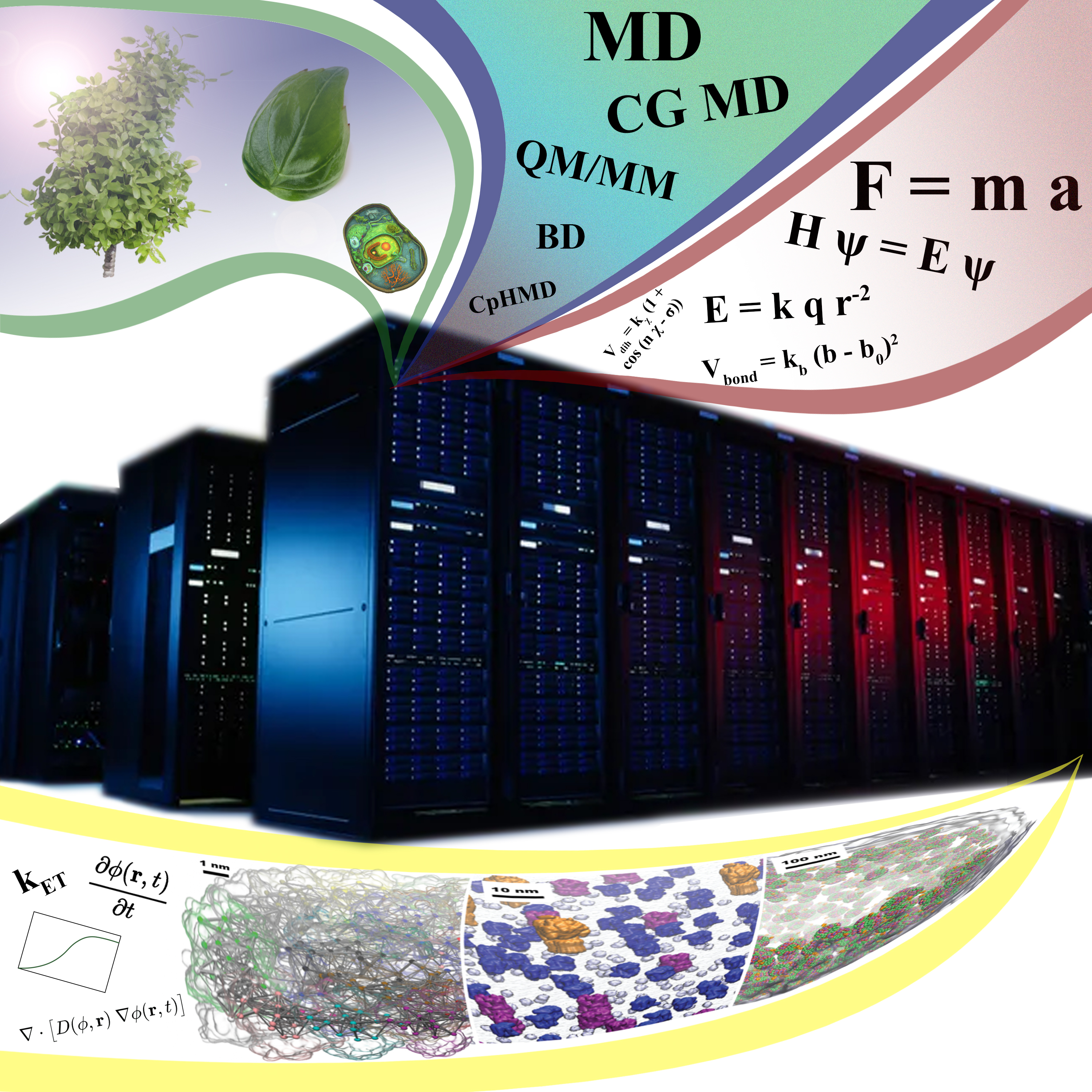
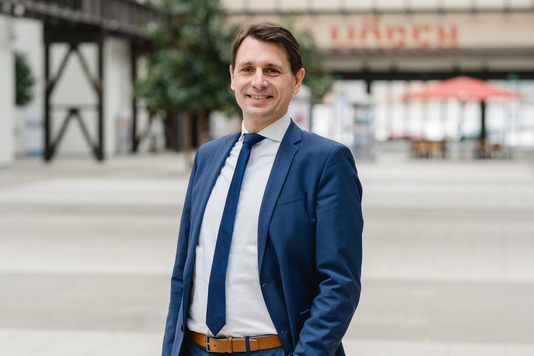
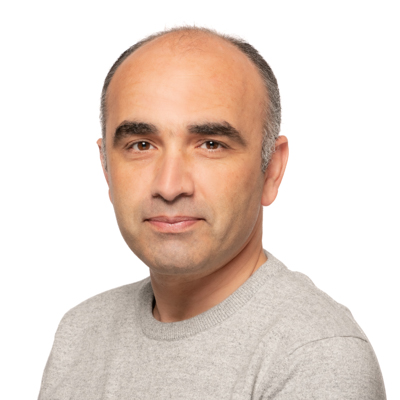
Dr. Christian Troost is a Senior Researcher and Lecturer at the Department of Land Use Economics at the University of Hohenheim . His work combines agent-based modeling and bioeconomic simulation to analyze agricultural adaptation to climate variability and resource use decisions across diverse farming systems in Germany, Chile, and Ethiopia . Education : BSc in Geography (Bochum, 2006), MSc in Agricultural Economics (Hohenheim/Wageningen, 2009), PhD in Agricultural Sciences (Hohenheim, 2014) Methodology : Specializes in uncertainty analysis , high-performance computing , and model validation protocols for complex agricultural systems Troost's research advances the MPMAS software package for integrated land system modeling. His 2025-2024 work focuses on pesticide reduction policies , hybrid intelligence systems for biodiversity-productivity tradeoffs, and agroforestry as climate adaptation in Ethiopia. Scientific Recognition : Gerhard-Fürst Prize (2015) Südwestbankpreis (2015) As an educator, he teaches farm system modeling and environmental economics at PhD, MSc, and BSc levels. His collaborative projects span DFG-funded climate change research , BMBF biodiversity initiatives , and German-Ethiopian CLIFOOD graduate programs .
Dr. Paul Lerner is a researcher at the Institute for Intelligent Systems and Robotics (ISIR), affiliated with Sorbonne University (formerly Université Pierre et Marie Curie). His work focuses on machine translation, multimodal learning, and knowledge-based visual question answering systems. Research Interests: Machine translation for scientific neologisms and inclusive French Cross-modal retrieval in visual question answering Integration of knowledge bases into multimodal systems Development of NLP datasets for emerging tasks Publications: Active in top venues like COLING, ECIR, and SIGIR since 2019, with recent 2025 work on BPE segmentation limitations in LLMs and scientific translation challenges. Projects: Creator of datasets including ViQuAE (visual QA), Bazinga! (dialogue structuring), and INCLURE (inclusive translation toolkit).
Professor Longbing Cao serves as a Professor at University of Technology Sydney (UTS) in the Faculty of Engineering and Information Technology, specifically within the Data Science Institute. He also holds the position of Distinguished Chair Professor in AI at Macquarie University and is an ARC Future Fellow (Level 3). As a pioneering researcher in AI, data science, and advanced analytics, Professor Cao founded the UTS Advanced Analytics Institute, the first data science initiative in Australia. Professor Cao's research interests span across data science fundamentals, machine/deep learning, behavior informatics, and enterprise data science applications. His work bridges the gap between theoretical research and practical implementation, focusing on non-IID learning, actionable knowledge discovery, and complex behavior modeling. His research has addressed real-world challenges in government services, finance, insurance, banking, telecommunications, transport, and e-commerce sectors. His 15 most recent publications reveal a strong trend toward addressing distributional challenges in machine learning, developing transdisciplinary AI approaches, modeling complex temporal dependencies, and advancing negative sequence analysis. His work consistently integrates theoretical foundations with practical applications, particularly in financial analytics, healthcare, and disaster resilience. Scientific Awards: Eureka Prize for Excellence in Data Science (2019) ACM Distinguished Scientist Professor Cao has made significant contributions to academic leadership and research supervision. He established world-first research degrees at UTS (Master of Analytics and PhD Thesis: Analytics), founded the IEEE Task Force on Data Science and Advanced Analytics, and served as general chair of the KDD conference in 2015 (the first edition in Australia). His funded research portfolio includes multiple ARC grants and industry collaborations focusing on complex data analytics, behavior informatics, and AI applications. He leads the Data Science Lab at UTS, which has become a prominent center for data science research in Australia. The lab focuses on developing fundamental theories and practical applications of data science, with strong industry partnerships that translate research into real-world impact. Professor Cao's leadership in establishing the annual Big Data Summit in 2012 created Australia's first platform for bridging academic research with industry and government applications.
Doug Gross serves as Professor and Chair of the Physical Therapy department within the Faculty of Rehabilitation Medicine at the University of Alberta. With over 25 years of professional experience since becoming licensed in 1997, he has established himself as a leading researcher in work disability prevention and occupational rehabilitation. His educational background includes a BSc in Physical Therapy (1997), PhD in Physical Therapy (2003), and Diploma in Work Disability Prevention Research (2009), all from the University of Alberta. Previously serving as Director of the Rehabilitation Research Centre from 2012-2024, he currently holds the position of Co-Director since July 2024 and serves as Editor-in-Chief of the Journal of Occupational Rehabilitation since 2020. Gross's research program focuses on preventing disability and improving outcomes for individuals with physical and mental health conditions through evaluation of clinical interventions, identification of recovery factors, and development of practical assessment tools. His work spans occupational rehabilitation, workers' compensation systems, return-to-work strategies, and increasingly addresses Long COVID rehabilitation challenges. Analysis of his recent publications reveals a strong emphasis on telehealth applications in occupational rehabilitation, predictive modeling for surgical triage, and innovative approaches to managing work disability in complex health conditions. His research consistently bridges clinical practice with public health implementation. Killam Laureate and McCalla Professor Recipient of Liberty Mutual Work Disability Award (2014) Multiple teaching awards including 'Great Supervisor' Award (2018) Editor-in-Chief of Journal of Occupational Rehabilitation (Impact Factor 2.5) Recipient of Outstanding Presentation Award at 2025 World Physiotherapy Congress Gross leads the Rehabilitation Research Centre which provides research consulting services, maintains specialized resources, connects investigators with qualified personnel, supports grant applications, and develops research links across the university and clinical communities. His work with the Glen Sather Sports Medicine Clinic Research Committee (2012-2020) demonstrates his commitment to translational research in sports medicine contexts.
Joonki Noh serves as Associate Professor in the Department of Banking & Finance at Case Western Reserve University's Weatherhead School of Management, where he joined in 2015 after completing his finance doctorate at Emory University. His academic journey includes dual doctoral training in finance and electrical engineering, reflecting his interdisciplinary expertise. Education PhD in Finance, Emory University (2015) PhD in Electrical Engineering, University of Michigan (2007) MA in Electrical Engineering, University of Michigan (2007) MS in Electrical Engineering, University of Michigan (2005) BS in Electrical Engineering, Seoul National University (2003) Noh's research integrates quantitative finance with computational methods, focusing on empirical asset pricing , market microstructure , and textual analysis enhanced by machine learning techniques. His work examines how linguistic patterns in corporate disclosures affect market reactions, liquidity dynamics in asset pricing, and information diffusion through industry networks. Teaching responsibilities span Investment Management and Financial Modeling in Big Data for both undergraduate and Master of Finance students. His publication record demonstrates evolving expertise from early biomedical engineering research to contemporary finance applications, with recent work leveraging natural language processing on earnings conference calls and liquidity factor modeling. This trajectory highlights his unique ability to transfer methodological rigor across disciplinary boundaries. Academic Honors Shinhan Finance Investment Best Paper Award (2022) Korea America Finance Association Young Scholar Award (2019) Financial News & KAFA Top-Journal Paper Award (2018, 2022) George J. Benston Scholar Award at Emory University (2014) Outstanding Graduate Student Instructor Award (University of Michigan, 2008) Noh actively contributes to academic governance as seminar organizer for the BAFI Department Research Series and committee member for faculty recruitment. His professional service includes editorial roles for the Asia-Pacific Association of Derivatives and conference reviewing for major finance associations. He maintains strong connections with Korean financial institutions through KAFA partnerships while presenting research at premier venues including the American Finance Association and European Finance Association meetings.
Dr. Mustafa Demir serves as an Associate Research Scientist at Arizona State University's Biodesign Center for Applied Structural Discovery and Faculty Associate in the Ira A. Fulton Schools of Engineering. His interdisciplinary work integrates cognitive science and engineering to optimize human-AI collaborative systems across healthcare, transportation, and defense domains through human-centered design principles. Education: Ph.D. in Simulation, Modeling, and Applied Cognitive Science, Arizona State University (2017) Dr. Demir's research centers on human-machine teaming dynamics, employing advanced statistical and nonlinear dynamical systems modeling. His expertise includes quantum cognitive approaches to decision-making, team cognition analysis, and machine learning applications for real-time physiological monitoring. Current projects focus on AI-powered stress management tools, curiosity-driven STEM education systems, and human-autonomy coordination in driving and command environments using eye-tracking and biometric sensing. Analysis of his 2023-2025 publications reveals methodological innovation in dynamical systems analysis (DSA Toolbox) and quantum probability modeling applied to trust calibration in autonomous vehicles, educational technology, and digital health interventions. His work consistently bridges theoretical modeling with real-world implementation in complex sociotechnical systems. Dr. Demir mentors students in cognitive engineering and applied data science while leading multi-institutional research initiatives funded by NSF, AFRL, and DARPA. His grant portfolio supports experimental work across simulated and operational environments including remotely piloted aircraft systems and urban search-and-rescue scenarios. He contributes to the Biodesign Center for Applied Structural Discovery and HLA-Inception research group, developing computational models of team interaction and adaptive AI systems for healthcare and education applications.
Hassan Shirvani is a Professor of Engineering Design and Simulation at the School of Engineering and the Built Environment, Anglia Ruskin University. He serves as Director of the Engineering Analysis Simulation and Tribology (EAST) Research Group, focusing on industry collaborations to solve engineering challenges. PhD in Mechanical Engineering, University of Bath MSc in Mechanical Engineering, University of Birmingham Member, Institute of Mechanical Engineers (IMechE) His research spans mechanical engineering, artificial intelligence, and biomedical applications, including: Thermal system optimization Machine learning in clinical decision-making Composite metal foil manufacturing Virtual reality medical training systems Flow dynamics in heat exchangers and nozzles AI-assisted diagnostics Hybrid manufacturing processes Hassan's publications reflect expertise in computational modeling, multi-physics simulations, and industrial applications. Notable areas include deep learning for suicide prediction, thermodynamic analysis of sustainable energy systems, and tribology in mechanical components.
Dr. Chetan Arora is a Senior Lecturer in Software Engineering at Deakin University's School of Information Technology, part of the Faculty of Science Engineering and Built Environment. He holds a PhD from the University of Luxembourg where he received the best PhD thesis award in the ICT domain. His research focuses on applied Artificial Intelligence in Software Engineering, with particular emphasis on Empirical Software Engineering, Requirements Engineering, and Applied Natural Language Processing. PhD in Computer Science from University of Luxembourg Masters in Software Engineering from Technische Universitat Kaiserslautern (Germany) Bachelors in Engineering (CS) from Thapar University (India) Arora's research interests center on the intersection of AI and Software Engineering, particularly how machine learning and natural language processing can enhance software development processes. His work explores requirements engineering, test automation, software trustworthiness, and human-centric software development. He investigates how large language models can be effectively deployed for tasks like test case generation, requirements analysis, and traceability. His recent publications reveal a strong focus on practical applications of AI in software engineering, with numerous studies examining the real-world implementation challenges and benefits. His publication record shows significant activity in top software engineering venues, with a notable emphasis on AI applications in software engineering processes. His recent work demonstrates expertise in retrieval-augmented generation systems, requirements-driven testing, and human-centric software development approaches. The publications collectively highlight his focus on bridging theoretical AI advancements with practical software engineering challenges. Best Ph.D. thesis award in the ICT domain at University of Luxembourg Arora actively supervises doctoral students working on cutting-edge topics including satellite communication systems, extended reality applications, and human-centered AI requirements engineering. His industry collaborations include work with Department of Defence on projects like Contextually Situated Anomaly Detection and Planning and Optimisation of Resources in Defence Satellite Communication Systems. He previously worked at SES Satellites on applied AI for IoT and Satcom, and as an FNR-PPP research fellow at the University of Luxembourg in software quality assurance. His laboratory work focuses on developing practical AI solutions for software engineering challenges, particularly in requirements engineering and test automation. Current projects involve multi-orbit satellite constellation optimization, dynamic radio resource management, and extended reality enabled human-centric requirements engineering.
Professor Yuan Miao is a distinguished academic at Victoria University (VU), serving as Professor in the College of Arts, Business, Law, Education & IT and Head of the Information Technology Program. With a PhD from Tsinghua University's Automation Department, his academic journey spans prestigious institutions including the University of Melbourne and Nanyang Technological University in Singapore before settling at VU where he has been Professor since January 2010, following his Associate Professorship from August 2004 to December 2009. Education: BSc, Shandong University, China MEng, Tsinghua University, China PhD, Tsinghua University, Automation Department, China Professor Miao's research centers on Large Language Models (LLMs) and Generative AI, where he has identified critical barriers in practical applications including limited memory length in systems like ChatGPT and Gemini, contradictory explanations, lack of local knowledge integration, and significant errors in text-data hybrid reasoning (up to 38%). His innovative solutions involve cognitive map graphs and rational intelligence models to create customized AI systems. His work spans diverse application areas including human knowledge modeling, multimodal interaction, healthcare analytics (particularly dementia detection), cybersecurity, and robotics powered by rational intelligence. Analysis of Professor Miao's recent publications reveals a strong focus on integrating LLMs with specialized knowledge domains across healthcare, cybersecurity, and social media analysis. His research consistently addresses practical limitations of current AI systems while developing novel frameworks for more reliable and context-aware applications. The interdisciplinary nature of his work is evident in publications spanning medical informatics, cybersecurity analytics, and educational technology. Scientific Recognition: Two articles in fuzzy cognitive map modeling ranked among top 10 most cited works since 2000 (Google Scholar 2000-2016) Development of adversarial dataset based on SQuAD 2.0 that reduced BERT and ELECTRA accuracy from ~90% to ORCID identifier 0000-0002-6712-3465 with 138 peer-reviewed publications Professor Miao actively supervises PhD and Master's students across diverse research topics including access control systems, healthcare analytics, cybersecurity, and social behavior analysis. His research has secured substantial funding from both industry giants (Microsoft, Amazon, Oracle, Google) and government bodies (Australia Research Council, Data61, Singapore's NRF), with recent projects including Digital Transformation for Construction Industry ($1.258 million), Western Health SharePoint Development ($68,000), and Big Data Analysis for Domestic Violence Research (US$100,000). His current grant portfolio demonstrates strong industry-academia collaboration addressing real-world challenges. Professor Miao leads research teams focused on rational intelligence systems that overcome current LLM limitations, with particular emphasis on creating practical AI solutions for healthcare, cybersecurity, and smart city applications. His work with Maribyrnong City Council on the Smart City at Footscray Park project ($850,000) exemplifies his commitment to applying advanced AI research to community-level challenges.
Matthias Stürmer serves as a Professor at Bern University of Applied Sciences (BFH) within the School of Management and Head of the Institute for Public Sector Transformation (IPST). He concurrently holds a lecturer position at the University of Bern. His professional identity centers on Swiss digital governance initiatives, with active leadership roles in @Parldigi, @DigitalImpactCH, @CH_Open, and @OpendataCH advocating for open source, open data, and transparent public sector innovation. His research program bridges legal technology and digital governance, specializing in multilingual (German/French/Italian) processing of Swiss jurisprudence. Core focus areas include developing AI systems for judicial summarization and criticality prediction, advancing digital sovereignty frameworks, and analyzing sustainable public procurement practices. He investigates the tension between open justice principles and privacy preservation in court documentation, while pioneering methods for anonymizing legal texts against re-identification threats from large language models. Stürmer's publication trajectory reveals a strategic shift toward legal AI applications since 2020, with 12 of his 15 most recent works addressing multilingual legal processing challenges. His scholarship consistently targets Swiss institutional contexts, creating specialized datasets like Multilegalpile and Lextreme while examining practical implementation barriers for open source adoption in public administration. As director of IPST at BFH, he leads institutional efforts to transform public sector services through open standards and collaborative governance models. His team develops practical frameworks for digital sovereignty implementation and sustainable ICT procurement, directly influencing Swiss federal policies on open data and public sector technology adoption.
Dr. Shahriar Kaisar is the Deputy Head of the Department of Accounting, Information Systems and Supply Chain at RMIT University, Australia. He holds a PhD from Monash University and a master's degree from the University of Saskatchewan. His research focuses on data analytics, cybersecurity, AI, health informatics, ad-hoc networks, and emerging technologies. Dr. Kaisar has held academic roles in Australia, Canada, and Bangladesh. Research Interests: His work spans generative AI in education, cyberthreat detection, health informatics, and decentralized networking. Notable projects include frameworks for cybersecurity in power grids and AI-driven decision-making systems. Teaching & Supervision: He supervises PhD students on topics like platform economy value creation and AI-driven cybersecurity. Taught courses include Digital Business Security, Practical Cybersecurity in Business, and Networking in Business. Awards: No specific awards are listed, but his work appears in top-tier journals such as Journal of Information Security and Applications and Future Generation Computer Systems . Collaborations: Active in global research networks, with a focus on interdisciplinary projects involving industry 5.0, sustainable cities (UN SDG 11), and smart infrastructure.
Lorraine Li is an Assistant Professor in the Department of Computer Science at the University of Pittsburgh, affiliated with the Interdisciplinary Science Program (ISP) and the School of Computing and Information. She holds a PhD from the University of Massachusetts Amherst (2022) and conducted postdoctoral research at AI2's Mosaic team. Her work focuses on NLP, machine learning, and socially responsible AI systems. Education: PhD in Computer Science (UMass Amherst, 2022) Research explores evaluation frameworks for commonsense knowledge, model interpretability, and ethical AI applications in domains like education and law. Key interests include probabilistic models, long-tail reasoning, and geographic robustness in LLMs. Recent publications address confirmation bias in reasoning chains (ACL 2025), geographically diverse prompting (CVPR 2024), and uncommon scenario reasoning (NAACL 2024). She co-organized the AAAI 2024 Make symposium and serves on committees for ACL, EMNLP, and NAACL. Grants: Pitt Cyber funding (2024) Lab: Pitt NLP Seminar group
Dominique Ritze is a Research Fellow at the Data and Web Science Group of the University of Mannheim. Her research focuses on ontology alignment, semantic web technologies, linked open data integration, and knowledge organization systems. She collaborates with Prof. Dr. Christian Bizer and Prof. Dr. Kai Eckert on projects like InFoLiS II, aiming to advance data integration and semantic web applications. Education: MSc Computer Science (Diplom-Informatikerin) Research Interests: Dominique’s work bridges theoretical and applied aspects of semantic web technologies. Key areas include ontology evaluation frameworks, cross-domain data integration, and the development of tools for provenance tracking and data reuse. She has contributed to methodologies for aligning knowledge organization systems (KOS) and enhancing discovery systems with linked data. Publications Trends: Her articles from 2010-2015 emphasize ontology alignment (e.g., OAEI evaluations), semantic web applications, and data integration techniques. Notable contributions include the ICE-Map visualization for KOS evaluation and the Mannheim Search Join Engine for cross-website table integration. Awards: No scientific awards explicitly listed in the provided texts. Projects & Teams: Active in the Data and Web Science Group, leading projects on web table matching and semantic data integration. Collaborates with global research networks through initiatives like the Ontology Alignment Evaluation Initiative.
Prof. Dr. Ingmar Ickerott is a faculty member at Osnabrück University of Applied Sciences, affiliated with the School of Management, Kultur und Technik (MKT, Campus Lingen) under the University management department. His academic career spans over two decades, focusing on logistics management, digitalization in supply chains, and smart technology applications like Smart Glasses and Augmented Reality . Academic Background : Diplom-Kaufmann in Business Administration (2001), Ph.D. in Economics (2006). Professional Roles : Senior Project Manager at arvato (2008–2010), Professor since 2010, Dean of MKT since 2019, Vice President for Digitalization since 2019. His research emphasizes logistics innovation , Lean Management , and digital solutions in rural healthcare . Key projects include Land.Digital (2019–2022) and LEAN 4.0 (Erasmus+, 2019–2021). Publications since 2004 cover agent-based simulation , Smart Device economics , and AR in logistics . He actively lectures on topics like Logistics 4.0 and Digital Onboarding . Projects & Grants : Land.Digital : €165,000+ (Erasmus+), 2019–2021. Dorfgemeinschaft 2.0 : €1.46M (BMBF), 2015–2021. Glasshouse : €208,557 (BMBF), 2015–2019.
Dr. Enayat Rajabi is an Associate Professor of Business Analytics at the Shannon School of Business, Cape Breton University. Holding a PhD in Information and Knowledge Engineering from the University of Alcala (Spain) and a postdoctoral fellowship from Dalhousie University, his research focuses on the intersection of Machine Learning, Knowledge Graphs, and Data Analytics. He actively applies these technologies in healthcare, smart cities, and social media crisis response contexts. Education PhD in Information and Knowledge Engineering, University of Alcala (Spain) Postdoctoral Fellowship, Dalhousie University Research Interests His work bridges Knowledge Graphs with Machine Learning, emphasizing explainability and practical applications. Key areas include: Explainable AI for clinical decision-making Knowledge Graph applications in healthcare systems Social media analytics for emergency response Smart city data integration Generative modeling for tabular data Recent Publications Trends Recent articles highlight: Explainable AI in healthcare settings Industrial breakdown prediction systems Social media influencer detection Smart city infrastructure modeling Advanced data synthesis techniques Continued focus on Knowledge Graph applications