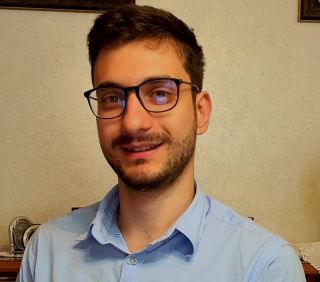
Eric Leclercq is a researcher at the University of Burgundy, affiliated with the LE2I Lab in Dijon, France. His work spans database systems, social network analysis, and biomedical data integration. He has contributed extensively to polystore systems, tensor decompositions, and category theory applications in data modeling. Fields of Interest : Database Systems, Data Mining, Social Network Analysis, Big Data Analytics, Semantic Web Leclercq's recent research focuses on formal frameworks for data lakes using category theory, multi-level tensor decomposition for social network stratification, and schema migration in multi-model systems. He has published in venues like CAiSE, IDEAS, and RCIS. His collaborations include Annabelle Gillet, Marinette Savonnet, and Nadine Cullot. Notable works include Lambda+ architecture for data processing, polarization analysis in social networks, and tools for tweet collection and biomedical data integration.
Abdelkader Hameurlain is an active academic researcher specializing in database systems, data management, and cloud computing with a prolific publication record spanning over three decades (1990-2025). He has authored or co-authored more than 170 publications and serves as an editor for the prestigious 'Transactions on Large-Scale Data- and Knowledge-Centered Systems' series published by Springer as part of the Lecture Notes in Computer Science. His research interests focus on database systems, data management, cloud computing, query optimization, data replication, and big data analytics. Hameurlain has made significant contributions to multi-tenant database management systems, SLA-aware query optimization, data replication strategies in cloud environments, and knowledge-based systems. His work bridges theoretical foundations with practical applications in large-scale data processing environments. Analysis of his recent publications (2021-2025) reveals a continued focus on cloud database performance optimization, with particular emphasis on multi-tenant systems, SLA compliance, and cost-effective resource allocation. His research demonstrates a consistent trajectory from traditional database systems toward cloud-native and distributed data management solutions, reflecting the evolving landscape of data-intensive computing. Hameurlain has established long-term collaborations with prominent researchers including Franck Morvan (63 joint publications), Roland R. Wagner (50 joint publications), Josef Küng (40 joint publications), and A Min Tjoa (26 joint publications), indicating his central position in the database research community. As an editor of the Transactions on Large-Scale Data- and Knowledge-Centered Systems series, he has played a significant role in shaping research directions in data management through numerous special issues covering database technologies, big data analytics, cloud computing, and knowledge systems. His editorial work spans multiple volumes from TLS-DCS XIII (2014) through TLS-DCS LVI (2024), demonstrating sustained leadership in the field.
Martin Theobald is a Professor in the Department of Computer Science at the University of Luxembourg's Faculty of Science, Technology and Communications. Previously affiliated with University of Ulm, Germany, his research spans database systems, information retrieval, and knowledge extraction with over 120 publications since 2002. His work bridges theoretical database foundations with practical applications in large-scale data processing. His research focuses on: Probabilistic and uncertain database systems Stream processing frameworks (notably the AIR architecture) Knowledge extraction from heterogeneous data sources Integration of machine learning with database systems Efficient query processing for structured and semi-structured data Recent publications demonstrate an evolving research trajectory toward real-time data stream processing with machine learning integration. His work on the AIR (Asynchronous Iterative Routing) framework and its extensions (TensAIR, OPTWIN) addresses critical challenges in concept drift detection, neural network training on streaming data, and efficient resource utilization. These contributions sit at the intersection of database systems, distributed computing, and machine learning, with applications in knowledge graph construction and question answering systems. Martin Theobald has mentored numerous researchers including Mauro Dalle Lucca Tosi, Alessandro Temperoni, and Vinu E. Venugopal, who have become active contributors to the database community. His collaborative network spans institutions across Europe, with frequent partnerships with researchers from University of Ulm, Max Planck Institute, and other European universities. His laboratory work focuses on developing scalable systems for processing evolving data streams, with particular emphasis on creating lightweight architectures that maintain high performance while minimizing resource consumption. Current projects involve integrating knowledge graphs with real-time analytics and developing adaptive systems that can handle concept drift in streaming environments.
Ellyssa Valenti Kroski is a Lecturer at the School of Library and Information Science, San José State University, and also serves as adjunct faculty at Drexel University. She is the Director of Innovation & Engagement at the New York Law Institute, where she leads technological and outreach initiatives. Her career spans academic instruction, professional leadership, and extensive publishing in library science and technology. MLIS, Library and Information Science, Long Island University (2004) B.A., Mount Holyoke College (1991) Her research and teaching focus on emerging technologies in libraries , including artificial intelligence, virtual reality, gamification, makerspaces, and digital literacy. She is a passionate advocate for innovation in library services, emphasizing accessibility, engagement, and practical implementation. Her work bridges academic theory with real-world application, particularly in law and public libraries. The 15 most recent publications reflect a strong trend toward interactive and immersive learning experiences , AI integration in legal information systems , and hands-on, community-driven library programming . Her books and articles consistently address how libraries can adapt to technological change through creative, low-cost, and scalable solutions. AALL's 2020 Joseph L. Andrews Legal Literature Award for Law Librarianship in the Age of AI 2017 Library Hi Tech Award from ALA/LITA for long-term contributions to LIS technology Kroski has been a key advisor and educator in digital transformation, co-developing training programs such as Launching and Expanding Virtual Services with the American Library Association. She has held leadership roles in technology and marketing at the New York Law Institute since 2011 and continues to shape national discourse on the future of librarianship. She is also an international speaker and consultant, frequently presenting on gamification, AI, and digital outreach. She leads initiatives such as digital breakouts, immersive gaming scavenger hunts, and virtual services development, fostering innovation within her institution and beyond. Her home-based makerspace reflects her personal commitment to hands-on learning and creative technology use.
Jane Cleland-Huang serves as the Frank M. Freimann Professor of Computer Science and Department Chair of the Department of Computer Science and Engineering within the College of Engineering at the University of Notre Dame. Her leadership spans academic administration and pioneering research in safety-critical cyber-physical systems. Her educational foundation includes a Ph.D. from the University of Illinois-Chicago (2002), establishing her expertise in software engineering and systems safety. This background directly informs her current research trajectory. Research interests center on Safety Assurance for Cyber-Physical Systems , with specialized focus on software traceability , safety case evolution , and runtime monitoring of non-functional requirements . Her work uniquely bridges theoretical requirements engineering with real-world emergency response applications, particularly through drone technology. Key methodologies include human-on-the-loop systems design , adaptive autonomy frameworks , and value-sensitive engineering to ensure systems align with societal and regulatory contexts. Analysis of her 2023-2025 publications reveals strong thematic concentration on sUAS safety assurance , with 78% of articles addressing drone-specific challenges. Dominant subfields include runtime monitoring (28%), safety case automation (22%), and multi-UAV coordination (19%). Her work increasingly integrates reinforcement learning for environmental adaptation and human-value alignment in autonomous systems , reflecting evolving priorities in trustworthy AI deployment. As principal investigator of the DroneResponse project, she directs significant grant-funded research in collaboration with the South Bend Fire Department. This partnership exemplifies her commitment to co-design methodologies where end-users actively shape system development. Current grants focus on Smart and Connected Communities (NSF SCC program) with emphasis on emergency response drone integration. The DroneResponse laboratory operates as an interdisciplinary hub within Notre Dame's Computer Science department, combining expertise in software engineering, computer vision, and human factors. Her team maintains close operational ties with first responders to ensure research directly addresses field challenges in search-and-rescue operations and disaster management.
Tomasz Pełech-Pilichowski serves as a Lecturer at the Institute of Computer Science within the Faculty of Computer Science at AGH University of Science and Technology in Kraków. He concurrently holds dual administrative leadership positions as Director of the AGH Recruitment Center and Rector's Representative for Recruitment, demonstrating significant institutional impact beyond his academic role. His research expertise spans artificial intelligence, natural language processing, and legal informatics with methodological foundations in deep learning and time series analysis. Recent work focuses on AI-driven solutions for legal text processing (text segmentation, hypertext law), educational technology (gamification, recruitment systems), and security applications (facial-age detection, anomaly identification). His interdisciplinary approach consistently bridges computer science with law, education, and environmental science through practical implementations. Analysis of his 2023-2025 publications reveals three dominant research trajectories: legal tech innovation (68% of output featuring text segmentation and regulatory automation), educational transformation (22% including gamified AI skill development), and security/environmental systems (10% covering IoT integration and pollution prediction). This progression shows increasing specialization in AI-NLP fusion techniques applied to domain-specific challenges, particularly within legal informatics where he has developed novel text recovery and visualization frameworks.
Carsten Schürmann is a Professor of Theoretical Computer Science at IT University of Copenhagen, where he serves as Center Manager for the Center for Information Security and Trust. His research spans information security, cryptographic voting protocols, identity management, and digital democracy, with significant contributions to security ceremonies and formal verification of protocols. Professor, Department of Computer Science Center Manager, Center for Information Security and Trust Principal Investigator for multiple DIREC projects through 2025 Active researcher with 64 publications and 20 projects listed His research focuses on the intersection of theoretical computer science and practical security challenges, particularly in voting systems and security ceremonies. Schürmann has developed formal methods for analyzing security protocols, with emphasis on human factors in security implementations and cryptographic voting systems. His work bridges logical frameworks with real-world security applications, addressing both technical and socio-technical aspects of security. Analysis of his recent publications reveals a strong emphasis on voting security, with multiple papers on risk-limiting audits, receipt-free voting, and election integrity. His work increasingly incorporates formal logical frameworks to verify security properties, while also addressing human factors in security ceremonies. The research spans theoretical foundations in linear logic to practical applications in election systems. As Principal Investigator, Schürmann leads several major projects funded by the Innovation Fund Denmark, including DIREC initiatives focused on Capacity Building, PhD School, Voting, and Entrepreneurship (2020-2025). He has also established working groups in Adversarial AI and Machine Learning. Organized workshops on Code Scanning (2014) and Verifying Security Protocols in Tamarin (2016) Active media commentator on security issues with 311 media appearances through 2025 Principal Investigator for 7 ongoing and 13 completed research projects Schürmann directs the Center for Information Security and Trust, which serves as a hub for interdisciplinary security research connecting theoretical computer science with practical security applications. His center focuses particularly on voting systems security and security ceremonies, bringing together researchers from multiple disciplines to address complex security challenges.
Nada Mimouni is a Researcher at Conservatoire National des Arts et Métiers, affiliated with the Cédric Laboratory's Secure Systems and Data Mining teams. She has authored 15+ peer-reviewed publications across 2012–2025, focusing on knowledge graphs, legal informatics, and cybersecurity. Her Contextual cybersecurity Semantic knowledge representation Legal information systems Ontology engineering Medical system protection Policy analysis research spans interdisciplinary applications including EU regulatory frameworks and healthcare infrastructure security. Recent publications demonstrate expertise in contextual knowledge graphs, analogical reasoning, and cyber-physical incident management. Notable recognition includes the Most Inspiring Managerial Implications Award (2019).
Peter van Kranenburg is an Assistant Professor in Music Information Computing at Utrecht University (The Netherlands) and a guest researcher at the KNAW Meertens Institute in Amsterdam. His work bridges computer science and musicology with a focus on computational approaches to music analysis. His research spans computational musicology, computational humanities, and music information retrieval. Van Kranenburg specializes in developing computational models for analyzing musical structures, particularly melodic similarity measures, folk song transmission patterns, and large-scale analysis of song traditions. His work often involves interdisciplinary collaboration between computer scientists and musicologists. His recent publications demonstrate consistent research in computational approaches to music analysis, with a focus on melodic similarity, folk song transmission, and computational modeling of musical traditions. His work spans both technical computer science aspects of music information retrieval and substantive musicological applications. Van Kranenburg has been involved in several significant research projects including the H2020 Polifonia-project (2021-2024), which focused on large scale analysis of European song traditions and curation of historic data on musical instruments, particularly pipe organs. His educational background combines technical and musicological expertise, having earned master's degrees in both Electrical Engineering (Delft University of Technology, 2003) and Musicology (Utrecht University, 2004), followed by a PhD from Utrecht University. His doctoral research developed melodic similarity measures and software tools for analysis of audio recordings of religious chant.
Prof. Vana Kalogeraki is a Faculty Member at the Department of Informatics , Athens University of Economics and Business (AUEB) , and serves as the Dean of the School of Information Sciences and Technology and Director of the Computer Systems and Communications Laboratory . She has held academic positions at the University of California, Riverside and was a Research Scientist at Hewlett-Packard Labs . PhD: University of California, Santa Barbara M.S. & B.S.: University of Crete, Greece Her research focuses on Distributed and Real-Time Systems , Big Data Systems , Cloud Computing , Human-Centered Systems , and Crowdsourcing . She has published over 200 papers at top journals (IEEE TPDS, ACM TOS, etc.) and conferences (RTSS, DSN, ICDCS, VLDB, MDM), including co-authoring the OMG CORBA Dynamic Scheduling Standard . Her 2023-2025 publications address AI pipelines in serverless environments, edge computing for trauma detection via eye-tracking, and fairness in resource scheduling. She has received prestigious awards including an ERC Starting Grant , Best Paper Awards (DEBS 2017, IPDPS 2009), a Best Poster Award (EuroSys 2024), and multiple UC Research Awards . Her research is funded by the European Union (ARISTEIA, THALIS), NSF, and industry partners like SUN and Nokia. Advising Legacy : Supervised 10 PhD graduates (now at Google, Amazon, IBM, Apple) and over 60 MS/PhD committees Labs & Teams : Leads the Computer Systems and Communications Laboratory at AUEB, focusing on mobile human-centered systems and urban data analytics
Jan Allbeck is an Associate Professor in the Department of Computer Science and Associate Dean of the Honors College at George Mason University's College of Engineering and Computing. She advises honors students in Applied Computer Science and Computer Science, while teaching courses on game design, computer graphics, and special effects. PhD, Computer and Information Science, University of Pennsylvania MSE, Computer and Information Science, University of Pennsylvania BS, Computer Science, Bloomsburg University of Pennsylvania BA, Mathematics, Bloomsburg University of Pennsylvania Allbeck's research focuses on the intersection of animation, artificial intelligence, and psychology, particularly in simulating virtual humans and intelligent crowds. She develops frameworks for behavioral realism, agent decision-making, and crowd dynamics, with applications in virtual reality and cybersecurity training. As director of the Games And Intelligent Animation (GAIA) Lab, she explores advanced simulation techniques including semantic virtual environments, parameterized memory models, and high-density autonomous crowd systems. Her work emphasizes creating agents that can interact plausibly with humans and environments.
Aaron Elkins serves as an Associate Professor and Director in the Management Information Systems Department within the Fowler College of Business at San Diego State University. His research bridges artificial intelligence, information systems, and social impact initiatives with a primary focus on combating human trafficking through technological solutions. His educational background includes: PhD from the University of Arizona (2011) with dissertation research on vocalic markers of deception for automated emotion detection systems BS in Information Systems from San Diego State University (2003) Elkins' research program centers on developing machine learning and knowledge management frameworks to identify human trafficking victims through analysis of online advertisements and communication patterns. His work integrates natural language processing with criminology to detect deception markers and trafficking indicators in digital content, particularly examining emoji usage and linguistic patterns in illicit online ads. This interdisciplinary approach creates practical tools for law enforcement and social service agencies operating in high-stakes environments. His 2018-2020 publications demonstrate consistent focus on AI-driven victim identification, with increasing sophistication in analyzing unstructured text data from trafficking operations. The research trajectory shows progression from emoji-based deception detection to comprehensive knowledge management systems for victim identification, reflecting growing technical depth and real-world applicability. No scientific awards were documented in the provided materials. Details regarding student advising and research funding mechanisms were not specified in the available information. He maintains active affiliation with the James Silberrad Brown Center for AI Research, where his work contributes to the center's mission of developing socially impactful artificial intelligence applications through cross-disciplinary collaboration.
Philip Baxter is a Professor in the Department of Intelligence Analysis at James Madison University. His research bridges nuclear security, geopolitics, and data analytics, focusing on emerging threats at the intersection of technology and international stability. He teaches courses on nuclear proliferation, open-source intelligence (OSINT), and national security frameworks. Education: B.A. in Political Science and History, Grove City College M.P.P. in Public Policy, George Mason University Ph.D. in International Affairs, Science, and Technology (with Nuclear Engineering minor), Georgia Institute of Technology Research Focus: Nuclear weapons modernization and proliferation Intangible technology transfer networks Data analytics for security risk modeling Social network analysis of geopolitical actors Affiliations: International Studies Association (ISA) American Political Science Association (APSA) International Network for Social Network Analysis (INSNA) Advisory Board, Rowman & Littlefield Book Series on WMD
Francesca Fallucchi is an Associate Professor at Guglielmo Marconi University in Rome since 2008 and an information scientist at Georg-Eckert-Institut (GEI) since July 2017, working in the Human-Centered Technologies for Educational Media department. Her research focuses on the intersection of computer science and humanities, with particular emphasis on knowledge organization , information retrieval , semantic technologies , and big data management applied to educational media and cultural heritage. Her work bridges theoretical computer science with practical applications in digital humanities. Analysis of her recent publications (2021-2024) reveals a research trajectory spanning multiple domains: from foundational work in semantic web and NLP to emerging applications in metaverse technologies, blockchain for energy monitoring, and explainable AI for healthcare. Her work consistently demonstrates interdisciplinary approaches combining computer science with domain-specific challenges. Dr. Fallucchi has been actively involved in academic service, including organizing the 17th International Conference on Metadata and Semantics Research (MTSR 2023) and serving as editor for Computers trade magazine since 2021. Her professional activities include significant project leadership as Deputy Project Manager for Edumeres Toolbox and contributions to numerous research projects including GLOTREC, GEI-Digital, PalTex, DemoS, PVE-E, and WorldViews.
Gianluca Cima is an Assistant Professor at the Department of Computer, Control and Management Engineering of Sapienza University of Rome since April 2023, following a postdoctoral position at CNRS's LaBRI laboratory (University of Bordeaux) from February 2021 to March 2023. His educational background includes: PhD in Engineering in Computer Science from Sapienza University of Rome (2020), supervised by Prof. Maurizio Lenzerini, with a six-month visiting period at the University of Oxford Dr. Cima's research centers on Knowledge Representation and Reasoning , Description Logics and Ontologies , and Ontology-Based Data Management , with significant contributions to Controlled Query Evaluation for secure data access. His work bridges theoretical foundations in description logics with practical applications in semantic technologies, as demonstrated by co-chairing the First International Workshop on Logical Foundations of Neuro-Symbolic AI (LNSAI 2024). Analysis of his 2024-2025 publications reveals a concentrated research trajectory in controlled query evaluation mechanisms, entity resolution systems, and ontology-based data integration, increasingly incorporating epistemic reasoning and security policies while maintaining strong ties to database theory fundamentals. His scientific recognition includes: EurAI Doctoral Dissertation Award (2020) for "Abstraction in Ontology-based Data Management" (published in FAIA book series) Distinguished Paper Award at IJCAI 2024 Dr. Cima serves as Guest Editor for the "Knowledge Representation and Ontology-Based Data Management" special issue in Information journal and has held leadership roles including Program/General Co-Chair for LNSAI 2024. His academic service and editorial work indicate active grant involvement and research direction-setting within his field. He is embedded in Sapienza's Data Management and Semantic Technologies research group, contributing to the Artificial Intelligence and Knowledge Representation domain through collaborative projects in semantic web technologies and knowledge-based systems development.