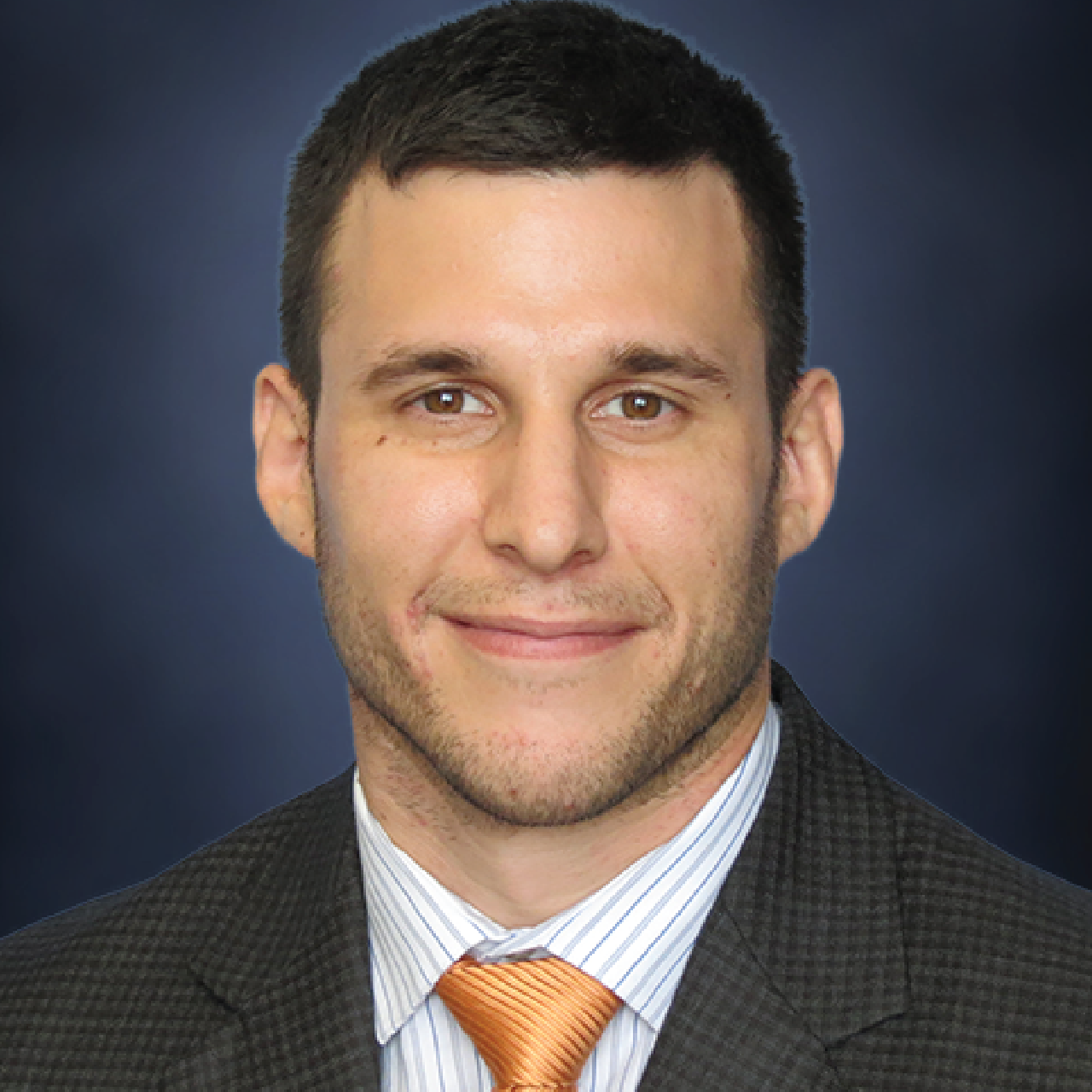
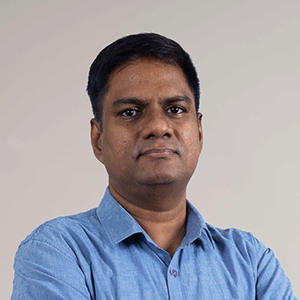
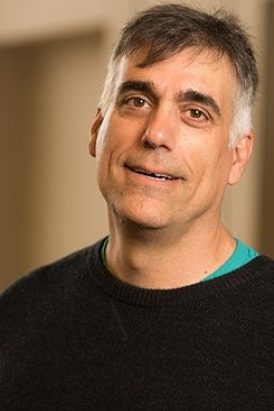
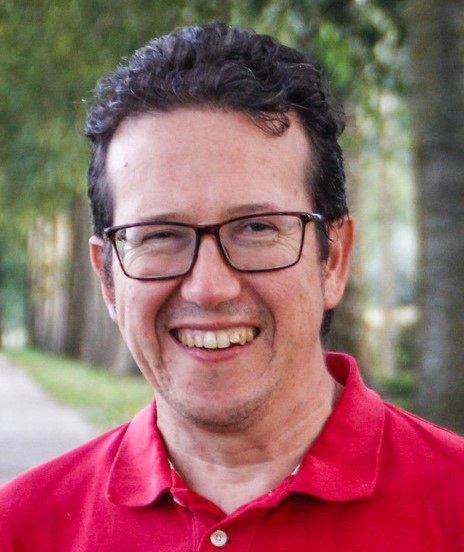
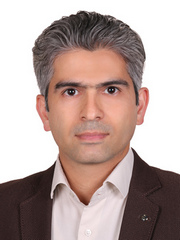
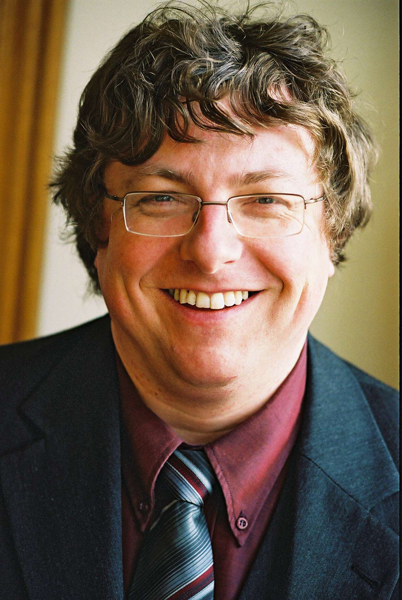
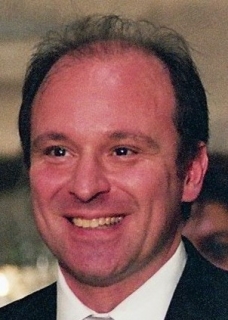
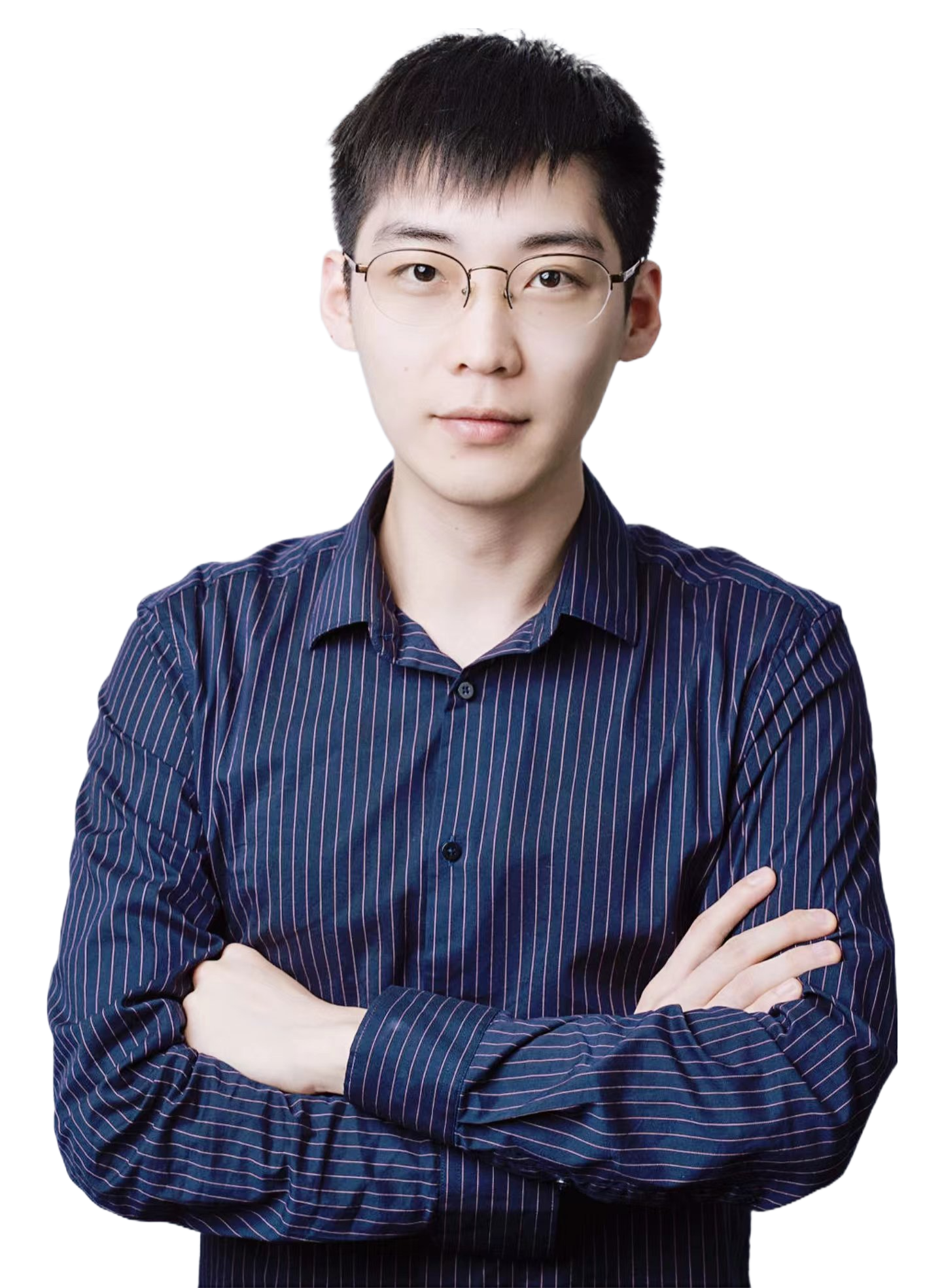
Blake N. Johnson is a Professor in the Grado Department of Industrial and Systems Engineering at Virginia Tech. He holds a B.S. (2008) from the University of Wisconsin-Madison, a Ph.D. (2013) in Chemical Engineering from Drexel University, and completed a postdoc at Princeton University (2013-2015). His research focuses on smart manufacturing, biosensing, and autonomous materials science, with notable contributions in 3D bioprinting and theory-guided machine learning for biosensor optimization. He has received prestigious awards including the NSF CAREER Award (2022) and SME Outstanding Young Manufacturing Engineer Award (2020). Key professional roles include: Professor, Virginia Tech (2025–present) Associate Professor, Virginia Tech (2022–2025) Assistant Professor, Virginia Tech (2015–2022) Research interests span biosensors, biomanufacturing, and machine learning-driven material discovery. His lab develops innovative solutions for medical diagnostics, tissue regeneration, and sustainable materials. He teaches courses such as ISE 5984 (Additive Manufacturing) and ISE 2204 (Manufacturing Processes). Notable achievements include pioneering work on 3D-printed anatomical nerve regeneration pathways and developing high-throughput platforms for hydrogel characterization. Media highlights include coverage of his NSF CAREER Award and breakthroughs in biosensor reliability.
Rajendra Prasad Sirigina is a Lecturer in the Department of Computer Science at the National University of Singapore. He holds a Ph.D. from Nanyang Technological University, Singapore (2015), an M.Tech from Indian Institute of Technology Guwahati, India (2007), and a B.Tech from GRIET, JNTU Hyderabad, India (2002). His research focuses on applying artificial intelligence to wireless networks and health diagnostics. Ph.D., Nanyang Technological University, Singapore (2015) M.Tech, Indian Institute of Technology Guwahati, India (2007) B.Tech, GRIET, JNTU Hyderabad, India (2002) His work bridges Artificial Intelligence with Wireless Communication and Health Diagnostics , emphasizing robust feature selection, signal classification, and interference management in UAV and satellite systems. Recent research includes NOMA-aided communications , hybrid-duplex architectures , and deep learning for signal processing . The 15 most recent publications highlight advancements in UAV communication systems , NOMA , hybrid-duplex technologies , and satellite network design . Key trends include optimizing spectrum efficiency, mitigating interference in aerial-ground networks, and enhancing signal reliability through machine learning and outage probability analysis.
Dr. Zhiming Zhao is an Associate Professor and Chair of the Multiscale Networked Systems (MNS) research group at the Informatics Institute (IvI), University of Amsterdam (UvA). He serves as the technical manager of the Virtual Lab and Innovation Center (VLIC) of LifeWatch ERIC, a European research infrastructure for ecology and biodiversity science. Zhao holds an IEEE Senior Member designation and is the Managing Editor of the Journal of Cloud Computing . He earned his Ph.D. in Computer Science from UvA in 2004. His research focuses on quality-critical distributed computing, data-intensive workflows, virtual research environments, and digital twins. He leads projects such as LTER-LIFE (Dutch research infrastructure for digital twins) and coordinates UvA contributions to EU initiatives like ENVRI-HUB Next , EVERSE , and BlueCloud-2026 . Zhao’s work spans technical development in EU projects (e.g., ENVRI-FAIR , ARTICONF , CLARIFY ) and leadership roles in international workshops and conferences. His team develops frameworks like NaaVRE (Jupyter-based collaborative environments) and CloudsStorm (dynamic infrastructure planning). Current research emphasizes trustworthy AI in cloud systems, federated learning, and edge-cloud resource optimization. Key achievements include over 150 peer-reviewed publications, supervision of numerous PhD students, and contributions to open science initiatives. His lab actively explores interdisciplinary applications in environmental science, medical imaging, and blockchain-based decentralized systems.
Richard Gonzalez is the Amos N. Tversky Collegiate Professor of Psychology and Statistics at the University of Michigan, with joint appointments in Statistics and Marketing. He is affiliated with the Research Center for Group Dynamics, Center for Human Growth and Development, UM Comprehensive Cancer Clinic, and Center for Computational Medicine and Bioinformatics. He leads the Biosocial Methods Collaborative at the Institute for Social Research and co-founded the Design Science Program. He earned his Ph.D. in Psychology from Stanford University in 1990, with research focusing on judgment and decision making, applied statistics, and medical decision making. His work bridges theoretical models with practical applications in healthcare technology, product design, and aging studies. His recent research emphasizes AI-driven medical diagnostics (e.g., dementia detection via Vision Transformers), caregiving dynamics, and social determinants of health. He collaborates across disciplines, integrating methods from psychology, statistics, and computational science to address complex societal challenges. His affiliations span multiple centers, reflecting a commitment to interdisciplinary research. His work on dyadic health profiles and pandemic caregiving adaptations highlights his focus on systemic and relational aspects of health.
Chris Cornelis is a full-time Professor in fuzziness and uncertainty modelling at Ghent University's Department of Applied Mathematics, Computer Science and Statistics. His research integrates fuzzy logic and rough set theory to advance machine learning methodologies for complex data analysis. Education: M.Sc. in Computer Science, Ghent University (2000) Ph.D. in Computer Science, Ghent University (2004) Research Focus: Cornelis pioneers fuzzy-rough hybrid systems for uncertainty handling in machine learning. His work spans theoretical foundations (e.g., implication operators, granular approximations) and practical applications including emotion detection, medical diagnosis, and imbalanced data classification. Key innovations include FRNN-OWA classifiers and polar encoding for missing values, demonstrating exceptional versatility in bridging abstract mathematics with real-world AI challenges. Publication Trends: Recent work (2023-2025) reveals intensified exploration of topological data analysis (Mapper-based rough sets), advanced granular computing (disjoint/adjacent fuzzy granules), and ethical AI ("No Imputation Without Representation"). His research shows consistent progression from foundational fuzzy-rough theory toward multi-disciplinary applications while maintaining mathematical rigor, particularly in Choquet integration and quantifier-based frameworks. Scientific Awards: No specific awards were documented in the provided sources. Research Support: Cornelis has secured competitive funding including FWO postdoctoral mandates, a Ramón y Cajal contract at the University of Granada, and an FWO Odysseus Type II project at Ghent University. These grants enabled foundational work in fuzzy-rough set theory and its applications to complex data problems. Research Unit: He leads research within Ghent University's Computational Web Intelligence (CWI) unit, focusing on intelligent data analysis systems that leverage fuzzy-rough methodologies for web-scale information processing.
Dr. Mahdi Jampour is a Researcher at the Centre for the Study of Manuscript Cultures (CSMC), University of Hamburg, and a member of the Cluster of Excellence ‘Understanding Written Artefacts’ (UWA). He holds a Ph.D. in Computer Science (Artificial Intelligence) from Graz University of Technology (2016), with postdoctoral research at Iran Telecommunication Research Center (ITRC) (2016–2017). He previously served as Assistant Professor at Quchan University of Technology (2017–2024) and led Project RFA05 (2022–2025) focusing on visual pattern similarity in written artefacts. Education: Ph.D. in Computer Science (Artificial Intelligence), TU Graz, Austria (2016) Postdoctoral Fellowship, ITRC, Iran (2016–2017) Assistant Professor, Quchan University of Technology (2017–2024) Research Interests: Dr. Jampour specializes in applying AI and computer vision to cultural heritage preservation, including palimpsest analysis, historical document digitization, and pattern recognition. His work integrates generative models, deep learning, and semi-supervised methods to address challenges in manuscript analysis and multispectral imaging. Publications Trends: Recent work focuses on generative AI for palimpsest deciphering, dataset creation for sports and cultural heritage analysis, and facial expression recognition surveys. His articles bridge computer science with digital humanities, emphasizing cultural artifact preservation through technological innovation. Awards: Kazemi-Ashtiani Award (2019) Chamran Award (2017) KUWI Prize (2015) Marshal Plan Fellowship (2015) Best MSc Thesis Award (2009) Advising & Grants: Led UWA’s Project RFA05 (2022–2025) and contributed to international preservation initiatives like the Timbuktu Manuscript Training Project. His research is supported by grants from the Iran National Elites Foundation and the Iranian Ministry of Science. Labs & Collaborations: Active in CSMC’s labs, including the Written Artefact Profiling Guide and Mobile Lab Container projects. Collaborates with institutions globally on digitization and cultural heritage safeguarding.
Bart De Moor is a Full Professor at the Department of Electrical Engineering, KU Leuven, Belgium, and a guest professor at the University of Siena. He leads the STADIUS research group and has supervised 85 PhD students. His roles include chairman of Health House (2016–present), member of the Board of VIB (Biotech Institute), and former Vice-Rector for International Policy (2009–2013). Education: Master Degree in Electrical Engineering (1983), KU Leuven PhD in Engineering (1988), KU Leuven Research Interests: His work spans numerical linear algebra, optimization, algebraic geometry, systems and control theory, data-driven AI, machine learning, and applications in process industry and biomedical big data. He has contributed to subspace identification, tensor decomposition, bioinformatics, and quantum computing. Publications Trends: His publications highlight subspace identification methods, tensor decomposition, bioinformatics, and biomedical data analysis. These reflect interdisciplinary advancements in control theory, quantum physics, and mathematical engineering, with applications in industrial and healthcare domains. Scientific Awards and Honors: Leslie Fox Prize (1989) Laureate of the Belgian Royal Academy of Sciences (1992) Bi-annual Siemens Award (1994) Fellow of IEEE (since 2004) Member of the Royal Academy of Belgium for Science and Arts (since 2000) Fellow of IFAC (since 2022) Commander in the Order of King Leopold I (2020) Fellow of SIAM (since 2017) FWO Excellence Award (2010) Advising and Grants: He has led a research group of 20 PhD students and postdocs, co-founded 8 spinoff companies, and secured the ERC Advanced Grant ‘Back to the roots’ (2020–2025). He also co-holds the KU Leuven Chair on healthcare systems (2018–present). Labs and Organizations: Active in the STADIUS research group (KU Leuven), he has served on boards of the Flemish Interuniversity Institute for Biotechnology (VIB), the Alamire Foundation, and the Health Tech Experience Center Health House. His spinoffs include Trendminer, Cartagenia, and Ugentec.
Dr. Christopher Chen is a Reader in Space Plasma Physics at Queen Mary University of London, holding a UKRI Future Leaders Fellowship. He is affiliated with the School of Physical and Chemical Sciences within the Department of Physics and Astronomy. Chen earned his PhD in Space Physics from Imperial College London in 2011 and has held research positions at the University of California, Berkeley and Imperial College before joining QMUL in 2017, where he progressed from Lecturer to Senior Lecturer in 2021 and then to Reader in 2022. Chen's research focuses on space plasma physics, particularly solar wind turbulence and its fundamental properties. His work bridges theoretical models, spacecraft data analysis, and laboratory experiments to understand complex plasma behavior. He is actively involved in several major space missions including Parker Solar Probe (as a member of FIELDS and SWEAP teams), Interstellar Probe mission study, and Magnetospheric Multiscale mission (as a member of the Science Working Team). His publication record shows a strong focus on solar wind turbulence, Alfvén wave interactions, and plasma dynamics in the inner heliosphere. The most recent work emphasizes forecasting techniques for solar wind parameters, laboratory experiments of wave interactions, and detailed analysis of turbulence properties using data from Parker Solar Probe. His research demonstrates a clear progression toward understanding the kinetic-scale processes that govern energy transfer in space plasmas. Royal Astronomical Society Fowler Award (2017) American Geophysical Union Macelwane Medal (2021) Conferred Fellow of the American Geophysical Union (2021) American Physical Society Landau-Spitzer Award (2022) Chen actively supervises a large research group including multiple postdoctoral researchers and PhD students, and has secured significant research funding through an STFC Ernest Rutherford Fellowship (2016-21), UKRI Future Leaders Fellowship (2022-26), and multiple STFC Consolidated Grants. His teaching responsibilities include organizing and lecturing the Astrophysical Plasmas module and supervising Masters and undergraduate research projects. He is also engaged in extensive public outreach through media interviews, public talks, and participation in science festivals.
Shuai Zhao is an Assistant Professor at the AAU Energy Department, Faculty of Engineering and Science, Aalborg University. His research focuses on applying machine learning and artificial intelligence techniques to enhance reliability and condition monitoring in power electronic systems, with specific interests in lifetime estimation, fault diagnosis, and health management of critical components like capacitors and semiconductor devices. Institution: Aalborg University School: Faculty of Engineering and Science Department: AAU Energy Email: szh@energy.aau.dk His research spans multiple domains including: Physics-informed machine learning for power converter systems Remaining useful life prediction with hybrid Bayesian deep learning Thermal transient analysis and stress emulation methods IoT-enabled monitoring schemes for semiconductor devices Neural network applications in lithium-ion battery prognostics Recent publications show a strong trend toward integrating domain-specific physics with machine learning frameworks to address real-world challenges in: Power electronics reliability under operational stress Anomaly detection in multivariate time-series data Robust fault diagnosis for railway traction systems Temperature estimation in electric vehicle motors Imbalanced data handling in diagnostic systems Capacitance degradation modeling under environmental factors Current projects demonstrate collaboration with leading institutions on: AI-assisted long-term maintenance strategies Physics-informed neural network architectures Smart agricultural monitoring systems via IoT platforms Advanced particle filter methods for life prediction
Lorenzo Farina is a Full Professor at Sapienza University of Rome's Faculty of Information Engineering, Computer Science and Statistics, specializing in Electronic and Computer Bioengineering (ING-INF/06). With over 25 years of academic leadership, he co-founded Italy's first Bioinformatics degree program and established key oncology precision medicine initiatives, maintaining active collaborations with Harvard Medical School's network medicine division. His educational background includes a cum laude Electronic Engineering degree and PhD in Systems Engineering, both from Sapienza University. These foundational studies evolved into pioneering work in positive linear systems theory, evidenced by his highly-cited Wiley textbook Positive Linear Systems: Theory and Applications (2000). Farina's research centers on network medicine – applying complex network science to molecular medicine since his 2004 breakthrough. His work spans cancer mechanisms (breast, glioblastoma, lung), drug repositioning (including COVID-19 applications), and liquid biopsy biomarker development. Current projects focus on miRNA-based network biomarkers for cancer diagnostics and immunotherapy response prediction, integrating multi-omics data through advanced computational frameworks. Analysis of his 15 most recent publications (2024-2025) reveals dominant themes: sexual dimorphism in cancer networks (MIRROR platform), immunotherapy response signatures, and critical examinations of AI's role in precision medicine. His work consistently bridges computational innovation with clinical applications, particularly in oncology diagnostics and therapeutic optimization. His scientific recognition includes: 2001 Guillemin-Cauer Award for best IEEE Transactions on Circuits and Systems article 2014 SysBio Award for annual best publication Farina actively mentors through interdisciplinary programs he established, including the Network Oncology doctoral program. His laboratory collaborations span Sapienza's Oncogenomics and Immunology Laboratories, Harvard's Channing Division of Network Medicine, and clinical departments in oncology and radiology, driving translational research from computational models to patient applications. He leads multiple research teams focused on network-based diagnostics, including the MIRROR platform for cancer disparity analysis and liquid biopsy development teams investigating circulating miRNA networks for early cancer detection across multiple malignancies.
Pedram Ramin is a Senior Researcher in the Department of Chemical and Biochemical Engineering at the Technical University of Denmark (DTU), affiliated with the PROSYS - Process and Systems Engineering Centre. His work contributes to UN Sustainable Development Goals related to clean water and sustainable cities. His research focuses on process systems engineering, particularly in wastewater treatment, bioprocess modeling, and digital twin development. Key areas include fault detection using machine learning, anaerobic digestion, industrial fermentation, and sewer system modeling. He applies data-driven techniques like Random Forest and Long Short-Term Memory networks to address challenges in imbalanced big data from wastewater systems. His recent publications highlight trends in integrating artificial intelligence with process engineering for environmental applications, especially in monitoring and optimizing wastewater and biomanufacturing systems. These works span fault diagnosis, life cycle assessment, and hybrid modeling for industrial-scale processes. Senior Researcher, DTU Chemical and Biochemical Engineering Supervisor, Mathematical modelling for digital twins of fermentation processes (2023–2026) PhD Graduate, DTU (2013–2017) He has contributed to multiple research projects and has presented at international conferences on topics such as wastewater-based epidemiology and biogas reactor optimization. While no formal scientific awards are listed, his work is widely published and cited in the field of process engineering and environmental technology. He supervises PhD students, including M. Lemperle, and collaborates extensively within DTU and with external partners. His lab environment is centered around the PROSYS research group, focusing on advanced modeling and simulation for sustainable industrial processes. Future work appears directed toward enhancing digital twins and improving wastewater monitoring through AI-driven analytics.
Jawad Ahmad is a Lecturer in the School of Computing, Engineering and the Built Environment at Edinburgh Napier University . His work is closely associated with the Centre for Cybersecurity, IoT and Cyberphysical Systems and the Centre for Distributed Computing, Networking and Security , where he contributes to cutting-edge research in secure and intelligent systems. His research interests are centered on cybersecurity , artificial intelligence , and Internet of Things (IoT) technologies. He focuses on developing advanced intrusion detection systems, privacy-preserving frameworks using federated learning and homomorphic encryption, and secure data transmission mechanisms leveraging chaos-based and quantum-inspired encryption. His interdisciplinary work extends to healthcare, smart agriculture, and environmental monitoring, demonstrating the broad applicability of his research. The analysis of his recent publications reveals a strong trend toward AI-driven security solutions, particularly using deep learning models like transformers and attention mechanisms for network intrusion detection. He also explores the integration of machine learning with blockchain and distributed ledgers for trusted threat intelligence sharing. His work consistently emphasizes real-world deployment, performance optimization, and resilience against cyber threats in industrial and healthcare settings. Funded Research Projects: Data Sharing in Highly Secure Environments (Innovate UK, £273,181) PhD Studentship on Homomorphic Encryption (6G Health Institute GmbH, £35,082) TrustShare: Privacy-Preserving Threat Intelligence Sharing (Innovate UK, £31,386) Cyber Hunt: Automated Cyberthreat Hunting (Norway Research Council, £37,500) AI Dashboard for COVID-19 Sentiment Analysis (Chief Scientists Office, £135,104) Dr Ahmad actively supervises postgraduate research, currently serving as Director of Studies for Hisham Ali and as second supervisor for other PhD candidates. He is involved in multiple collaborative research teams focusing on cybersecurity, AI, and IoT, often working with Prof Bill Buchanan and other leading researchers in the field. His research is published in high-impact journals such as IEEE Access , Frontiers in Computational Neuroscience , and Sensors , and presented at international conferences.
Yu Yao is a Lecturer in Machine Learning at the School of Computer Science, The University of Sydney. He joined in December 2023 and focuses on developing robust and interpretable machine learning systems. His research emphasizes robustness to data noise, adaptable ML systems, and disentangled representation learning. Yao holds a PhD from The University of Sydney under Professors Tongliang Liu and Dacheng Tao, followed by postdoctoral positions at Mohamed bin Zayed University of Artificial Intelligence and Carnegie Mellon University. Education: PhD in Computer Science (University of Sydney), postdoctoral research at MBZUAI and CMU. Research interests include causal inference in ML, multimodal learning, and label noise mitigation. He has published extensively in top venues like ICML, NeurIPS, and ICLR, and served as an Area Chair for AJCAI 2023, NeurIPS 2025, and ICLR 2025. Awards: Outstanding Reviewer (NeurIPS 2023, ICLR 2023), University of Sydney Research Excellence Prize (2019) Teaching: Advanced Machine Learning (USYD), Guest Lectures on noisy label learning (MBZUAI, China University of Petroleum) Service: Action Editor for TMLR, Area Chair for ICML/ICLR/NeurIPS, reviewer for top journals and conferences His lab focuses on trustworthy AI, with ongoing projects on causal mechanisms in robust learning and interpretable multimodal systems. Current advisees include PhD candidates Ruojing Dong and Jiyang Zheng (co-advised with Prof. Liu), and master's student Kai Lian.
Dr. Lydia Cui is a Senior Lecturer at La Trobe University's Department of Computer Science and Information Technology. She holds a PhD and MPhil from the University of Sydney and a Bachelor's from Harbin Institute of Technology. Her research focuses on AI-driven biomedical image analysis, machine learning, and precision oncology, with emphasis on multi-modality imaging fusion, cancer diagnosis, and graph neural networks. She actively collaborates with industry and hospitals to translate AI technologies into clinical workflows. Dr. Cui leads the Department’s Teaching & Learning and Postgraduate Course Coordination roles. She has received notable awards, including the SNMMI 2015 International Best Paper Award. Her teaching includes Data Mining, Computer Vision, and Image Processing courses. Research interests include segmentation of biomedical images, AI for disease prognosis, and integration of imaging with non-imaging biomarkers. Recent publications span top-tier journals like IEEE Transactions on Medical Imaging and conferences such as MICCAI. She supervises students in AI and biomedical informatics. Funded projects include 'Multi-modality data-driven health monitoring in Industry 4.0' with Rudder Technology.
Dr. Abdulghani A. Ahmed is a Senior Lecturer in Digital Forensics and Course Leader for MSc Cybersecurity at the School of Computer Science and Informatics, De Montfort University (DMU), UK. He is affiliated with the Cyber Technology Institute (CTI) and has a long-standing academic career since 2004, previously serving as a Senior Lecturer at University Malaysia Pahang. University: De Montfort University School: School of Computer Science and Informatics Role: Senior Lecturer, Course Leader (MSc Cybersecurity) Email: aa.ahmed@dmu.ac.uk ORCID: 0000-0001-9748-6067 Education: PhD in Network Security & Intrusion Detection Systems, Universiti Sains Malaysia (2014) MSc in Network Forensics & Identity Spoofing Investigation, Al-Neelain University (2006) BSc (Hons) in Computer Science, Sudan University of Science and Technology (2002) Dr. Ahmed’s research focuses on critical areas in cybersecurity, including digital forensics, IoT authentication, big data privacy, cloud and network security, malware analysis, incident response, and cybercrime investigation. His work integrates machine learning, bio-inspired algorithms, and proactive forensic models to enhance cyber resilience. He has led numerous research projects and published extensively in top-tier journals such as IEEE Access, Sensors, and Springer. The recent publications reflect a strong trend toward digital forensics in cloud and mobile environments, bio-inspired security frameworks, and machine learning applications in cybercrime detection. His work bridges theoretical innovation and practical deployment, particularly in real-time intrusion detection and evidence collection. Scientific Awards and Honors: Multiple Gold, Silver, and Bronze medals from international innovation exhibitions (MTE2018, Citrex, iCAN, ICE-CINNO) CENDEKIA BITARA AWARD 2016 for high-impact journal publication Nominated for Best PhD Thesis Award at USM (2015) Three-time High Impact Publication Award (2011–2013) at USM Dr. Ahmed actively supervises PhD students and has secured significant research funding as Principal Investigator from Innovate UK, COMSTECH-TWAS, and Malaysian government grants. His consultancy work includes cybercrime investigation and incident response for SysArmy Sdn Bhd and Golden Carousel Sdn. Bhd. He is a Senior Member of IEEE and IAENG, and holds professional certifications including SFHEA (UK), Cellebrite CCO, and digital forensics credentials from AccessData and Condition Zebra. He leads the Cyber Technology Institute research group at DMU, focusing on next-generation cybersecurity solutions. His projects include proactive forensic models, IoT security frameworks, and AI-driven botnet detection systems, positioning him at the forefront of applied cybersecurity research.