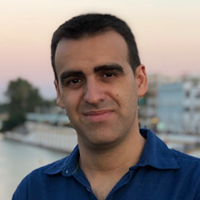
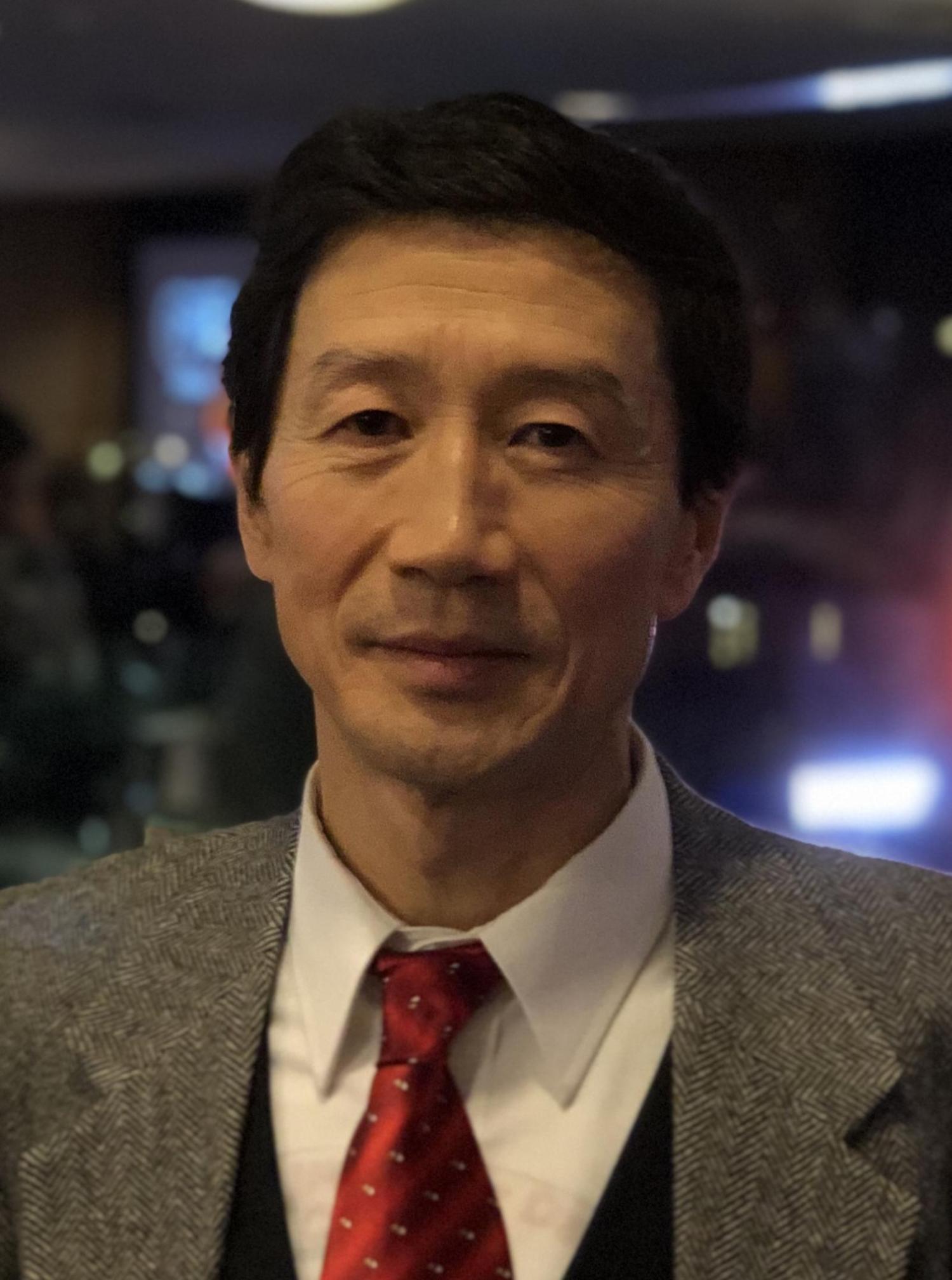
Gualberto Asencio Cortés is Associate Professor in Computer Science at Universidad Pablo de Olavide. He holds Ph.D. in Computer Science from UPO (2013) and Executive Master in Innovation from EOI (2016). Research focuses on developing advanced algorithms for: Time series forecasting in energy, agriculture, and environmental domains Feature selection methods for deep learning Explainable AI for predictive modeling Big data stream processing Developed innovative tools like FS-Studio for feature selection experimentation. Recent publications demonstrate strong focus on agricultural applications (pest forecasting, phenology prediction) and energy consumption modeling using hybrid deep learning approaches.
Andrés Manuel Chacón Maldonado is a Ph.D. student at the Data Science and Big Data Laboratory within the Computer Science Division of the Universidad Pablo de Olavide . He holds a full-time grant from the University Teaching Staff Training Program (FPU) and teaches courses in Computer Engineering and Biotechnology. Education: Bachelor's and Master's in Computer Engineering (Universidad Pablo de Olavide, 2021 and 2023). Research Focus: Advanced machine learning applied to agricultural challenges, including multimodal data integration (satellite images, meteorological records), hybrid deep learning architectures (CNNs, RNNs, Transformers), and model interpretability for actionable insights. Projects: Development of tools like FS-Studio for feature selection and studies on olive pest forecasting, phenology modeling, and earthquake prediction. Scientific Contributions: Publications in journals such as Information Fusion and Neural Computing and Applications , emphasizing practical deployment in agriculture. Collaborations: Open to partnerships in applied AI for sustainable agriculture and environmental challenges. Scientific Awards : FPU Grant for doctoral research. His work bridges theoretical advancements with real-world agricultural decision-making systems.
Robert C. Green II, Ph.D., is an Associate Professor in the Department of Computer Science at Bowling Green State University. He focuses on solving computational problems through software development and teaching. Education: B.S. in Computer Science & Applied Mathematics (2005) from Geneva College, M.S. in Computer Science with Operations Research focus (2007) from Bowling Green, and Ph.D. in Engineering (2012) from the University of Toledo. His research spans Computational Intelligence, High-Performance Computing (HPC), and Data Analytics, with interdisciplinary applications in kidney transplantation, cloud computing, and energy systems. Recent work emphasizes improving kidney transplant practices via data-driven HLA matching algorithms, simulation, and optimization. Analysis of his publications reveals key subfields: HLA-based immunogenicity modeling, predictive analytics for medical and technical systems, generative models for imbalanced datasets, and software engineering for cloud/web platforms. His work bridges computational methods with real-world challenges in healthcare and energy. Dr. Green's methodological expertise includes HPC, Monte Carlo simulations, and machine learning for reliability assessment in power systems, with a growing focus on equitable healthcare solutions.
Shlomo Berkovsky is a Professor at Macquarie University's Australian Institute of Health Innovation (AIHI), leading research in AI for health and medical informatics. He is affiliated with multiple centers including the Data Horizons Research Centre and the Hearing Research Centre. His work focuses on AI-driven healthcare solutions, medical imaging analysis, and human-AI interaction. Key research areas include recommender systems, clinical decision support, and biomedical image processing. He leads collaborative projects like the Fujitsu Macquarie AI Research Lab, exploring next-generation behavior analysis and personalized AI coaching. Notable achievements include Best Paper Awards at ACM Conferences and the NSW iAward in Education. He serves on editorial boards for journals like ACM Transactions on Interactive Intelligent Systems and Frontiers in Robotics and AI . His research portfolio spans 228 publications and 14 active projects, with recent work on medical image classification, delirium-dementia links, and AI ethics in voice assistants. Collaborative projects emphasize industry partnerships and translational healthcare technologies.
Nick Feamster is the Neubauer Professor of Computer Science at the University of Chicago and Director of Research at the Data Science Institute. He previously held full professorships at Princeton University and Georgia Tech, directing the Center for Information Technology Policy and the School of Computer Science, respectively. His research focuses on network performance, security, privacy, and equitable internet access, with applications in AI-driven systems, human-computer interaction, and policy. Key roles include leading the Network Operations and Internet Security (NOISE) Lab and co-founding the Internet Equity Initiative. Feamster holds a Ph.D. and S.B./M.Eng. from MIT (Computer Science/Electrical Engineering). Notable recognitions include the ACM Fellowship, Presidential Early Career Award (PECASE), and multiple best-paper awards. His work bridges academia and policy, collaborating with entities like the FCC and City of Chicago. The NOISE Lab develops data-driven systems for network traffic analysis, addressing human behavior insights and security challenges. Recent projects include deploying Netrics for community internet testing and analyzing encrypted DNS protocols. Feamster’s research spans machine learning for network traffic analysis, censorship circumvention (e.g., Infranet), and software-defined networking (SDN). His lab emphasizes real-world impact through open-source tools like NetML and nPrint. Personal interests include marathon running, completing iconic races like Comrades Marathon in South Africa.
Amin Kaboli is a Lecturer at the Swiss Federal Institute of Technology in Lausanne (EPFL), holding positions in the School of Mechanical and Process Engineering and the School of Computer and Communication Sciences . As Co-Director of the AI Product Management program , he specializes in teaching students to apply AI/ML principles to real-world product development. His academic roles include designing curricula that blend technical engineering with business leadership, such as courses on Sustainable Products and Production Management. He earned a Ph.D. in Manufacturing Systems & Robotics from EPFL and holds a graduate degree in Industrial Engineering. His leadership training at IMD Business School complements his engineering background, enabling him to advise Fortune 500 corporations like Philip Morris International, Nespresso, and Rolex, as well as Swiss startups. His professional experience includes roles as an executive and COO of a startup, alongside work as an executive coach (PCC-certified). Kaboli’s research interests span AI-driven innovation , supply chain optimization , and sustainability . He explores solutions for energy management in smart grids, waste reduction in construction, and fault detection in industrial machinery. His work integrates fuzzy logic, multi-criteria decision-making (MCDM), and hybrid machine learning frameworks to address complex challenges. He teaches courses such as AI Product Management (focus on practical AI/ML applications), Sustainable Products and Supply Chains (sustainability principles and logistics optimization), Production Management (cost-effective manufacturing strategies), and Continuous Improvement of Manufacturing Systems (process optimization and team leadership). No scientific awards or grants are explicitly listed. His contributions include developing frameworks for eco-city solutions and waste management strategies. Kaboli’s office is located at ME A2 408 , EPFL’s Lausanne campus, where he also engages in administrative and educational leadership roles.
Benoît Frénay is a Professor at the Faculty of Computer Science of the University of Namur (UNamur), affiliated with the Namur Digital Institute and the Research Institute in Didactic and Education. He holds a Doctor of Science in 'Uncertainty and Label Noise in Machine Learning' from Université Catholique de Louvain (2013). His research focuses on machine learning, data analysis, and their applications in domains like sign language recognition, environmental monitoring, and medical imaging. He leads major projects such as SMARTSENS (sensors and machine learning for environmental monitoring) and VAMOS (Venus atmospheric exploration). His work bridges theoretical advances with real-world applications, including healthcare, industrial anomaly detection, and open government data systems. Notable contributions include developing robust clustering algorithms, energy-efficient neural networks, and interactive visualization tools for dimensionality reduction. Education: Ph.D. in Machine Learning (2013, UCLouvain) Key Projects: SMARTSENS, VAMOS, SafeTransRNN Research Themes: Explainable AI, Computer Vision, Sign Language Processing His publications span over 127 articles, emphasizing interdisciplinary collaborations. He actively participates in conferences and workshops, contributing to the AI ethics discourse and educational outreach initiatives like School-IT for computer science education.
Xinlin Li is a Professor in the Department of Aerospace Engineering Sciences at the University of Colorado Boulder, with a dual appointment at the Laboratory for Atmospheric and Space Physics (LASP). His research spans over three decades with continuous contributions to understanding Earth's space environment through theoretical modeling, instrumentation development, and satellite data analysis. His educational background includes: BS (1982) from University of Science and Technology of China MS (1985) from Shanghai Institute of Optics and Fine Mechanics, Academia Sinica PhD (1992) from Dartmouth College Li's research focuses on magnetospheric physics , particularly the dynamics of Earth's radiation belts and space weather phenomena. His work examines energy conversion from solar wind into the magnetosphere, particle acceleration mechanisms, and development of miniaturized instruments for CubeSat platforms. Current projects include the Colorado Inner Radiation Belt Experiment (CIRBE) and Colorado Student Space Weather Experiment (CSSWE) , which investigate relativistic electron dynamics using novel instrumentation. His recent publications (2024-2025) reveal consistent focus on radiation belt electron dynamics, with emphasis on ULF wave interactions, zebra stripe phenomena, and CubeSat-based measurements. These works demonstrate increasing integration of machine learning techniques for space weather prediction and radiation belt modeling. Notable scientific awards include: Fellow of the American Geophysical Union (2021) NASA Group Achievement Awards (2013, 2008, 1998, 1995) European Space Agency Award (2006) Chinese National Science Foundation Outstanding Young Oversea Scientist (2007) Li leads instrumentation development efforts through LASP, directing CubeSat missions that provide critical data for radiation belt studies. His work bridges theoretical space physics with practical engineering solutions for space weather monitoring, with instruments like REPTile-2 enabling new observations in the inner radiation belt.
Amine Bermak is a Professor at the Department of Electrical and Electronic Engineering, Hong Kong University of Science and Technology. His research focuses on biomedical circuits, machine learning applications, and hardware security. Key contributions in CMOS sensors for bioluminescence and bacterial monitoring Pioneering work in IoT security and physical unclonable functions (PUFs) Developed edge computing frameworks for healthcare and industrial applications Significant publications in IEEE Transactions on Biomedical Circuits and Systems His recent articles highlight advancements in deepfake detection, energy-efficient ADCs, and wearable strain sensors. Collaborations span institutions in Hong Kong, Qatar, and Japan.
Xiao Wu is a researcher affiliated with multiple academic institutions, including Southwest Jiaotong University (School of Information Science and Technology), University of Michigan (Department of Electrical Engineering and Computer Science), and Chinese Academy of Sciences (Institute of Computing Technology). His work spans diverse areas such as machine learning, computer vision, remote sensing, and medical image analysis. Research interests include transformer architectures , deep learning for time series and image processing , multi-agent control systems , and industrial optimization . Recent publications focus on novel neural network designs for applications in drilling process optimization, brain-computer interfaces, and multispectral/hyperspectral image fusion. His work integrates advanced algorithms like tensor decomposition , multiscale temporal convolution , and adaptive recalibration modules to address challenges in engineering and biomedical domains. Collaborations involve institutions like Harvard University, Jiangnan University, and Hong Kong Polytechnic University.
Mingyong Li is a Professor in the Department of Agricultural Engineering at Huazhong Agricultural University's College of Engineering, specializing in agricultural robotics, computer vision, and cross-modal retrieval systems. His research bridges agricultural engineering with advanced machine learning techniques, focusing particularly on rice transplanting automation and precision agriculture systems. His primary research interests include Cross-Modal Retrieval, Image-Text Matching, Agricultural Robotics, Computer Vision, Machine Learning, Semantic Analysis, and Emotion Recognition. Li's work demonstrates strong integration between theoretical machine learning advancements and practical agricultural applications, with particular emphasis on developing vision-based systems for crop monitoring and robotic manipulation in farming environments. Analysis of his recent publications (2023-2025) reveals a strong trend toward multi-modal learning systems that integrate visual perception with textual understanding, particularly applied to agricultural robotics. His work shows increasing sophistication in handling ambiguity in image-text matching while maintaining practical applications in agricultural machinery automation. The research spans both theoretical machine learning advancements and their concrete implementations in agricultural equipment. Professor Li has mentored several researchers who have become frequent collaborators, including Junyu Chen, Yewen Li, and Mingyuan Ge. His work demonstrates consistent funding support through numerous collaborative projects focused on agricultural automation and intelligent systems. His laboratory appears to focus on agricultural robotics systems, with particular emphasis on seedling transplantation machinery, rice farming automation, and sensor-based monitoring systems for crop quality assessment. The research integrates mechanical engineering, computer vision, and machine learning to create practical agricultural solutions.
Gianluca Bontempi is a Professor in the Department of Computer Science at the Université Libre de Bruxelles (ULB), Faculty of Sciences. His research spans machine learning, time series forecasting, and big data analytics, with significant applications in credit card fraud detection, biomedical engineering, and causal inference. He leads projects on adaptive learning systems, financial cybersecurity, and high-dimensional data modeling. Research Focus: Bontempi's work integrates theoretical machine learning with real-world challenges. Key areas include: Developing dynamic factor models for multivariate time series forecasting Designing incremental learning frameworks for fraud detection in evolving data streams Advancing causal inference methods for personalized decision-making Creating interpretable AI systems for biomedical and financial applications Publication Trends: His recent articles (2019–2026) show a strong emphasis on combating concept drift in financial fraud systems, improving fairness in feature selection, and enhancing cross-domain adaptation techniques. Methodological innovations in multi-task learning and adversarial modeling are recurrent themes. Awards & Recognition: No awards explicitly mentioned in the source text. Research Infrastructure: Bontempi collaborates with interdisciplinary teams across Europe on large-scale projects involving biomedical data (TCGAbiolinks), urban mobility (traffic forecasting), and AI ethics (CLAIRE COVID-19 initiative).
Yrd. Doç. Dr. Ghazaal Sheikhi is an Assistant Professor in the Department of Artificial Intelligence Engineering at Final University, within the Faculty of Engineering. Her research focuses on machine learning applications in healthcare, biomedical engineering, and natural language processing. She holds a Ph.D. in Computer Engineering from Eastern Mediterranean University (2020), an M.Sc. in Biomedical Engineering from Amirkabir University of Technology (2007), and a B.Sc. in Biomedical Engineering from the University of Isfahan (2003). Education: Doctoral Degree in Computer Engineering, Eastern Mediterranean University, North Cyprus (2020) Master's Degree in Biomedical Engineering, Amirkabir University of Technology, Tehran, Iran (2007) Bachelor's Degree in Biomedical Engineering, University of Isfahan, Isfahan, Iran (2003) Her research interests span Machine Learning, Biomedical Engineering, and Natural Language Processing. She specializes in applying deep learning techniques to medical image analysis, developing explainable AI models for healthcare diagnostics, and enhancing fact-checking systems using NLP. Her work in biomedical data analysis focuses on feature selection methods and predictive modeling for diseases like diabetes. Additionally, she explores speech processing techniques for language-specific challenges, such as Farsi syllable segmentation using signal processing and fuzzy logic approaches. Recent contributions include breast tumor segmentation (2025), NLP-based claim detection (2023), and novel feature selection methods (2021). Earlier work addressed speech signal analysis (2011–2013) and diabetes cost analysis (2016). Scientific Awards: No awards explicitly mentioned in the provided text. Advising & Grants: Information on students or grants is not provided in the text. Administrative tasks are listed but no details are given. Labs/Teams: No specific lab affiliations or teams mentioned.
Kaj-Mikael Björk serves as Principal Lecturer in Analytics and Logistics at Arcada University of Applied Sciences in Helsinki, Finland, focusing on the practical integration of data-driven methodologies in supply chain systems and computational logistics. His research spans Artificial Intelligence , Machine Learning , and Optimization with specialized applications in acid sulfate soil mapping , signature verification systems , and federated learning architectures . Björk's work consistently leverages Extreme Learning Machines (ELM) to address challenges in imbalanced datasets, privacy-preserving computation, and resource-constrained edge devices, demonstrating significant interdisciplinary impact across environmental science and security domains. Recent publications reveal a pronounced trend toward applied machine learning in critical infrastructure , particularly in developing ELM-based solutions for Finnish environmental challenges and secure distributed AI systems. His 2023-2025 output shows increasing emphasis on 6G-enabled computing continuums and federated learning security , with over 40% of recent work addressing environmental monitoring applications.
Harshvardhan Takawale is a third-year Computer Science PhD student at the University of Maryland College Park, affiliated with the iCoSMoS Lab under Prof. Nirupam Roy. He has previously worked as a Lead Researcher at Silence Laboratories Singapore and interned at Nokia Bell Labs UK and Cambridge. Education: B.E. in Computer Science from BITS Pilani (2020), currently pursuing PhD at UMD. Research Interests: Focus on enabling acoustic and RF sensing on low-power wearable platforms, gesture/micro-motion detection for smart environments, and physics-informed ML for context-aware systems. His work bridges hardware constraints with advanced inference for ubiquitous healthcare and mobility services. Recent Publications: Contributions to wearable interfaces (Scribe), auditory attention detection on earables, and low-power acoustic event sensing highlight his expertise in multimodal systems and signal processing. Earlier works span cybersecurity (malware detection), NoC fault tolerance, and continuous authentication. Scientific Awards: Dean's Fellowship at UMD Computer Science (2022, 2023). Roles & Projects: Interned at Nokia Bell Labs on earable-based attention detection; led Silence Laboratories' projects on co-location authentication (>92% accuracy) and landmark extraction for proof-of-visit. Also served as Publicity Chair for HumanSys 2024.