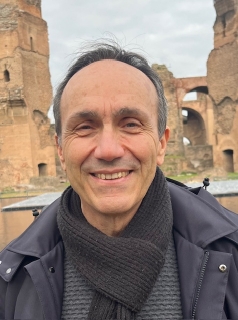
Prof. Fabio Gasparetti is a tenured Full Professor at the Department of Civil, Computer and Aeronautical Engineering of the University of Rome 3 , Italy. His academic profile spans Machine Learning , Recommender Systems , and Educational Technology , with a strong focus on Cultural Heritage digitization and Social Media analytics. He is affiliated with the university's AI Lab (a website currently under construction). Email: fabio.gasparetti@uniroma3.it Phone: 0657333212 Location: Via Vito Volterra 62, Rome Research Interests revolve around: Contextual Recommender Systems for cultural and educational domains Social Network Mining for community detection and user modeling Machine Learning Applications in aerospace engineering and e-learning Temporal Analysis of MOOC dynamics and behavioral patterns Prerequisite Modeling for educational content sequencing Cultural Ecosystems in digital pandemic contexts Recent Publications (2021-2025) demonstrate interdisciplinary synergy between Computer Science and Humanities domains, particularly in: Machine Learning for aerospace physics Multimodal LLMs in art interpretation Social data-driven cultural personalization Graph-based educational community monitoring Cross-platform museum positioning Migration discourse analysis
Ilaria Lucrezia Amerise is an Associate Professor in the Department of Economics, Statistics and Finance 'Giovanni Anania' (DESF) at the University of Calabria (UNICAL). Her research focuses on multivariate analysis, time series, nonparametric statistics, and statistical methods for complex/high-dimensional data including functional and spatial data. Editor-in-Chief of JP Journal of Biostatistics (ANVUR Area 13) Editorial Board Member of International Journal of Statistics and Systems (ANVUR Area 13) Recent research involves: Statistical preprocessing of crowdsourced data for Nigerian food prices Quantile regression with heteroskedasticity and non-crossing constraints Electricity demand forecasting via Reg-SARMA models Exchange rate prediction using simultaneous prediction intervals Time series outlier detection and smoothing techniques She contributes to academic governance through the Laboratorio Statistico Informatico (Statistical Informatics Lab) within DESF. Teaching includes undergraduate and graduate courses in Statistics, with materials available in both Italian and English.
Dr. Rino Ragno is a Full Professor at the Department of Chemistry and Pharmaceutical Technology , Sapienza University of Rome. His academic career spans decades of innovation in drug design , computational chemistry , and machine learning applications for chemical-biological systems. He teaches courses like Pharmaceutical and Toxicological Chemistry I and Computational Medicinal Chemistry , accessible via elearning.uniroma1.it. Research focuses on small molecule design , natural product analysis , and predictive modeling Developed the 3D-QSAR PORTAL for molecular modeling and drug discovery Active in essential oil characterization for antimicrobial, anticancer, and anti-inflammatory applications Recent publications emphasize machine learning classification models for essential oil activity prediction, anti-Bcl-2 cancer therapies , and AI-driven drug discovery . His lab employs multidisciplinary approaches combining experimental data with computational analysis to identify bioactive compounds and optimize drug candidates. The 3D-QSAR PORTAL, a free non-profit web platform, enables conformational analysis , molecular docking , and 3D-QSAR modeling accessible across electronic devices. Current projects include essential oil-based biocides for cultural heritage conservation and nanoemulsion formulations for drug delivery systems.
Aris Anagnostopoulos is a Professor at the Department of Computer, Control, and Management Engineering (Dipartimento di Ingegneria Informatica, Automatica, e Gestionale) at Sapienza University of Rome since April 2012. His academic journey includes a Marie-Curie fellowship at Sapienza University and a postdoctoral position at Yahoo! Research in Santa Clara, CA. His educational background includes: Ph.D. in Computer Science, Brown University, Providence, RI Sc.M. in Applied Mathematics, Brown University, Providence, RI Sc.M. in Computer Science, Brown University, Providence, RI Diploma in Computer Engineering and Informatics, University of Patras, Patras, Greece Professor Anagnostopoulos's research focuses on the design and analysis of algorithms with applications in data mining and data science. His work spans stochastic analysis of dynamic processes, social network modeling and mining, WWW algorithms, randomized and approximation algorithms, information retrieval, and information security. His research has evolved to address contemporary challenges in federated learning, knowledge graphs, and ethical AI considerations in recommendation systems. His recent publications demonstrate a strong trend toward addressing real-world applications of data science and machine learning, particularly in healthcare, social media analysis, and privacy-preserving techniques. His work shows increasing interdisciplinary collaboration, especially with medical researchers, while maintaining strong theoretical foundations in algorithm design. Among his notable scientific awards are: Google Focused Research Award (1 of 6 PIs), 1M USD Junior Fellow, School for Advanced Studies, Sapienza University of Rome Personal research grant, Swedish Research Foundation, 200K euro, 2011 (declined) Best Poster Award, 4th International Conference on Web Search and Data Mining (WSDM 2011) Marie Curie International Incoming Fellowship, 160K euro, 2010 Paris Kanellakis Fellowship, Brown University Runner Up, Best Paper Award, 14th International World Wide Web Conference 2005 (WWW 2005) Professor Anagnostopoulos serves as the academic responsible for mobility (RAM) for the Data Science master's program and has developed comprehensive teaching materials for data science education. He teaches courses including Social Networks and Online Markets, Algorithmic Methods of Data Mining, Data Mining, and Algorithm Design. His teaching approach emphasizes both theoretical foundations and practical applications, with extensive use of AWS and Python-based tools to prepare students for industry certification.
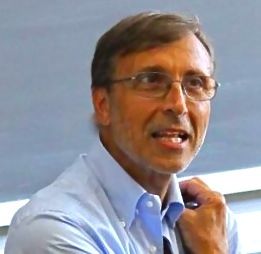
Stefano Battilotti is a Full Professor of Automatic Control at Sapienza University of Rome's Department of Computer, Control and Management Engineering (DIAG), where he has been faculty since 2005 after joining in 1992. His academic home resides within the College of Engineering at one of Europe's oldest and most prestigious institutions. Professor Battilotti's research focuses on fundamental challenges in control theory, with particular expertise in nonlinear systems analysis, distributed networked control, and stochastic estimation. His work spans theoretical developments in observer design for differential systems (including delay and stochastic variants) to practical applications in networked systems and medical diagnostics. Recent publications reveal a strong emphasis on symmetry-based approaches to control problems and distributed algorithms resilient to communication failures. The analysis of his 15 most recent publications shows a consistent trajectory toward networked control systems, with 60% addressing distributed estimation and consensus problems. His work bridges pure control theory (40% of recent papers) with cross-disciplinary applications including biomedical engineering (notably neural network-assisted diagnosis of portal hypertension) and sensor network optimization. Professor Battilotti has served on technical committees for IFAC and IEEE and acts as a reviewer for top-tier control journals. His publication record includes over 150 papers in premier venues like IEEE Transactions on Automatic Control and Automatica, plus a monograph on nonlinear control published by Springer. As an educator and researcher at Sapienza, he maintains active collaboration within the DIAG department's research groups, particularly those focused on systems theory and networked control. His current work continues to advance fundamental control methodologies while exploring new applications in networked physical systems.
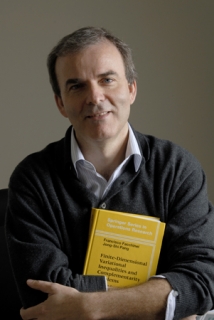
Francisco Facchinei is a Professor at Sapienza University of Rome, affiliated with the Department of Computer, Automatic and Management Engineering Antonio Ruberti within the College of Engineering. His research spans nonlinear and non-differentiable optimization, complementarity problems, variational inequalities, and game theory applications in telecommunications. His work focuses on developing algorithms for nonconvex optimization with ghost penalties, asynchronous distributed methods, and applications in healthcare and communications systems. Key Contributions: Foundational work in variational inequality theory, generalized Nash equilibrium problems, and optimization over dynamic networks. Recent Trends: Emphasis on asynchronous parallel algorithms, stochastic optimization, and non-invasive medical diagnostics via machine learning. He has held academic positions at Sapienza University since 1990, progressing from Ricercatore to Professore Ordinario. No scientific awards are explicitly mentioned in the provided texts.
Simone Lenti is an Assistant Professor (Ricercatore RTDa) at the Department of Computer, Control, and Management Engineering of Sapienza University of Rome. He is an active member of the A.WA.RE research group , which specializes in visual analytics. Lenti obtained his Ph.D. in 2021 with a dissertation on visual analytics techniques for cybersecurity. His research bridges cybersecurity , visual analytics , and human-computer interaction , focusing on: Developing computational methods for vulnerability analysis (e.g., NLP for CVE relevance, smart contract taxonomies) Designing visual tools for threat detection (e.g., attack graphs, firmware fuzzing) Enhancing interpretability in data-driven systems (e.g., partial dependence analysis, process mining) Lenti's publications (2019–2025) demonstrate a consistent focus on applying visual analytics to cybersecurity challenges , with recent expansions into bioinformatics and education. Key trends include automated vulnerability management, human-centered explainability, and scalable threat modeling. Awards: IEEE VizSec 2018 Best Paper for contributions to cybersecurity visualization. He contributes to academic infrastructure through tools like easyDeclare (declarative process modeling) and BUCEPHALUS (business-centric cybersecurity analysis), emphasizing practical applications of his research.
Maurizio Lenzerini is a Full Professor at the Department of Computer, Control and Management Engineering Antonio Ruberti , Sapienza University of Rome. He is a leading international expert in Ontology-Based Data Management , Description Logics , and Data Integration , with foundational contributions to Semantic Web technologies and service composition. ACM Fellow (2009) AAAI Fellow (2021) Peter P. Chen Award (2022) ACM Recognition of Service Award (2008) His research spans Artificial Intelligence , Database Theory , and Service-Oriented Computing , focusing on inference mechanisms, query rewriting, and knowledge graph ecosystems. He has pioneered MASTRO , a tool for ontology-based data access, and led European projects in data interoperability. Recent publications highlight advancements in knowledge graph lifecycle management , semantic classifier explanations , and quality-aware data integration . As PODS 2024 Executive Committee Chair , he shapes database theory research agendas. Teaching includes courses on Databases , Data Management , and Logic in Computer Science , with materials on SQL, ER modeling, and relational algebra.
Manuela Petti is an Assistant Professor of Biomedical Engineering at Sapienza University of Rome's Department of Computer, Control, and Management Engineering since 2019. She is affiliated with the Bioengineering and Bioinformatics Lab and the National Bioengineering Group (GNB), and serves as Associate Editor for Frontiers in Medical Engineering (Computational Medicine section). Her academic background includes a cum laude M.Sc. in Biomedical Engineering from Sapienza University of Rome (2011) and a Ph.D. from the University of Bologna (2016), with a visiting stint at Indiana University Bloomington (2015). M.Sc. Biomedical Engineering, Sapienza University of Rome (2011, cum laude) Ph.D. Biomedical Engineering, University of Bologna (2016) Dr. Petti's research pioneers network-based computational approaches for precision medicine, integrating molecular data analysis, biological network inference, and brain connectivity estimation. Her work bridges bioinformatics and biomedical engineering to develop advanced methods for cancer research (focusing on sexual dimorphism and ethnic disparities), network neuroscience, and bioelectrical signal processing, with significant applications in oncology and neurology. Analysis of her 56 Scopus-indexed publications (1282 citations, H-index 13) reveals dominant trends in network medicine for cancer diagnostics, including immunological network signatures for immunotherapy response, miRNA regulation networks for sex disparities, and multi-omics integration for biomarker discovery. Her recent work emphasizes radiomics, drug repurposing, and patient stratification through network-based approaches. As an educator, she teaches "Bioinformatics and Network Medicine" and "Digital Epidemiology and Precision Medicine" in Sapienza's Data Science MSc program, having supervised over 10 Master's theses in Data Science, Computer Science, and Bioinformatics. She actively contributes to the Bioengineering and Bioinformatics Lab at Sapienza University of Rome, where her team develops computational frameworks for translating network-based discoveries into clinical applications, particularly in cancer therapeutics and neurological disorders.
Fabrizio Silvestri is a Full Professor at Sapienza University of Rome's Department of Computer, Automatic and Management Engineering (DIAG), where he coordinates the Ph.D. program in Data Science. He leads the RSTLess research group focusing on Robust, Safe, and Transparent Deep Learning. Research interests: Artificial Intelligence, Machine Learning, Web Search, Natural Language Processing, Information Retrieval, Graph Neural Networks Research Trends from recent publications reveal: Advancements in sequential recommendation systems using topological and sheaf-based neural networks Focus on sustainable AI through eco-aware graph neural networks Counterfactual explanations for graph models and machine unlearning Security applications in dense retrieval and data poisoning defense Time series analysis for 5G network monitoring Integration of attention mechanisms and positional encoding in Transformers Scientific Achievements : ECIR 2018 Test of Time Award 3 Best Paper Awards (ECIR 2007, IEEE WI 2004, WSDM 2011 Runner-Up) Yahoo! Patent Milestone Award Recipient of Yahoo! Labs Excellence Program (LEAP) and Faculty Research Engagement Program (FREP) Finalist for ERCIM Cor Baayen Award (2005) Academic Leadership : Holds 9 industrial patents from Yahoo! and Facebook AI. Directed Facebook AI research groups combating malicious content. Ph.D. in Computer Science from University of Pisa with thesis on High-Performance Issues in Web Search Engines . Supervises thesis projects through the RSTLess group website .
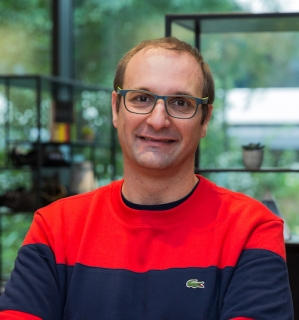
Domenico Amato is a Researcher (INFO-01/A) at the University of Palermo in the Department of Mathematics and Computer Science . He holds regular office hours on Mondays from 3:00 PM to 4:00 PM at Via Archirafi 34, Room 203, Second Floor. His research focuses on machine learning, biomedical image analysis, and data structure optimization. His recent work includes: Explainable AI for medical imaging (brain MRIs, histopathology) Graph Neural Networks in biomedical applications Development of Learned Indexes and efficient search algorithms Deep learning applications in data analysis and classification The trends in his publications show a strong emphasis on: Medical imaging analysis (gliomas, diabetic maculopathy, histopathology) Neural network interpretability and transparency Optimization of data structures through machine learning techniques Applications of AI in both healthcare and fundamental computer science
Salvatore Miccichè is a Full Professor at the University of Palermo (UNIPA) in the Department of Physics and Chemistry , affiliated with the School of Basic and Applied Sciences . He teaches courses like Complex Networks , Programming Methods for Physics , and Introduction to Complexity . His research interests span Physics , Complex Systems , and Network Science , with applications in economics, biology, and legal text analysis. Theses he supervised include topics such as: Agent-Based Models in Economics Hierarchical Clustering for Senescent Cell Detection NLP Tools for Legal Text Analysis Stochastic Computational Models for Complex Systems His work often intersects physics , informatics , and applied science , particularly in modeling complex systems across disciplines. No scientific awards or formal student lists were explicitly mentioned in the scraped data.
Andrea Molinari is a Contract Professor at the University of Trento since 1990 and at the Free University of Bozen since 2002. He also serves as a Visiting Professor at Lappeenranta University of Technology (2021-2025) and holds a Docent position in Decision Making at the same institution (2024-2029). Previously, he was an Adjunct Professor at Turku University/Abo Akademi in Finland (2007-2019). Education: 2022: Doctoral Degree - Doctor of Science (Technology), Engineering Science, Software Engineering research field from LUT - Lappeenranta University of Technology. Dissertation: "Integration Between eLearning platforms and Information Systems: a New Generation of Tools for Virtual Communities" 1988: Master Degree in Economics from Università degli Studi di Trento with grade 110/110. Thesis: "P.I.R.S. Personal Information Retrieval Systems" Professor Molinari's research focuses on the intersection of education technology and information systems. His primary areas include e-learning/m-learning systems, virtual communities and social media, semantic technologies and ontologies, data management with AI applications, and Enterprise Project Management. His work bridges theoretical computer science with practical applications in educational and organizational contexts, particularly examining how technology can enhance learning experiences and organizational efficiency. His recent publications reveal a strong emphasis on the evolution of Learning Management Systems in the AI era, integration of semantic technologies with educational platforms, and applications of serious games for professional training. There's a clear trajectory toward more sophisticated, AI-enhanced educational technologies that incorporate data analytics, personalized learning, and advanced user modeling. Scientific Awards: Winner of the "S. Ciancio" scholarship (1980, 1982, 1983) Outstanding Paper Award at the Ed-Media World Conference on Educational Technology (1995) Since 1994, Professor Molinari has supervised approximately 10 thesis projects annually across multiple institutions including the University of Trento (Economics, Engineering), University of Bolzano (Computer Science, Education), and Abo Akademy in Finland. His teaching spans numerous courses related to information systems, project management, and technology applications across various academic disciplines. He has coordinated numerous research projects, particularly in the areas of e-learning platforms, virtual communities, and semantic technologies for educational applications. Professor Molinari is actively involved with several research communities and has served on program committees for numerous international conferences including IEEE-STAR, SMARTGREENS, and the International Conference on Web-based Education. His work often involves interdisciplinary collaboration between computer scientists, educators, and domain specialists to develop innovative technology-enhanced learning solutions.