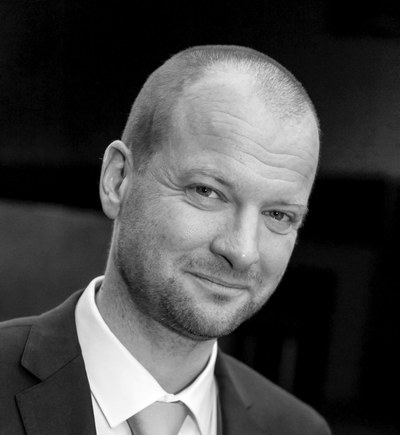
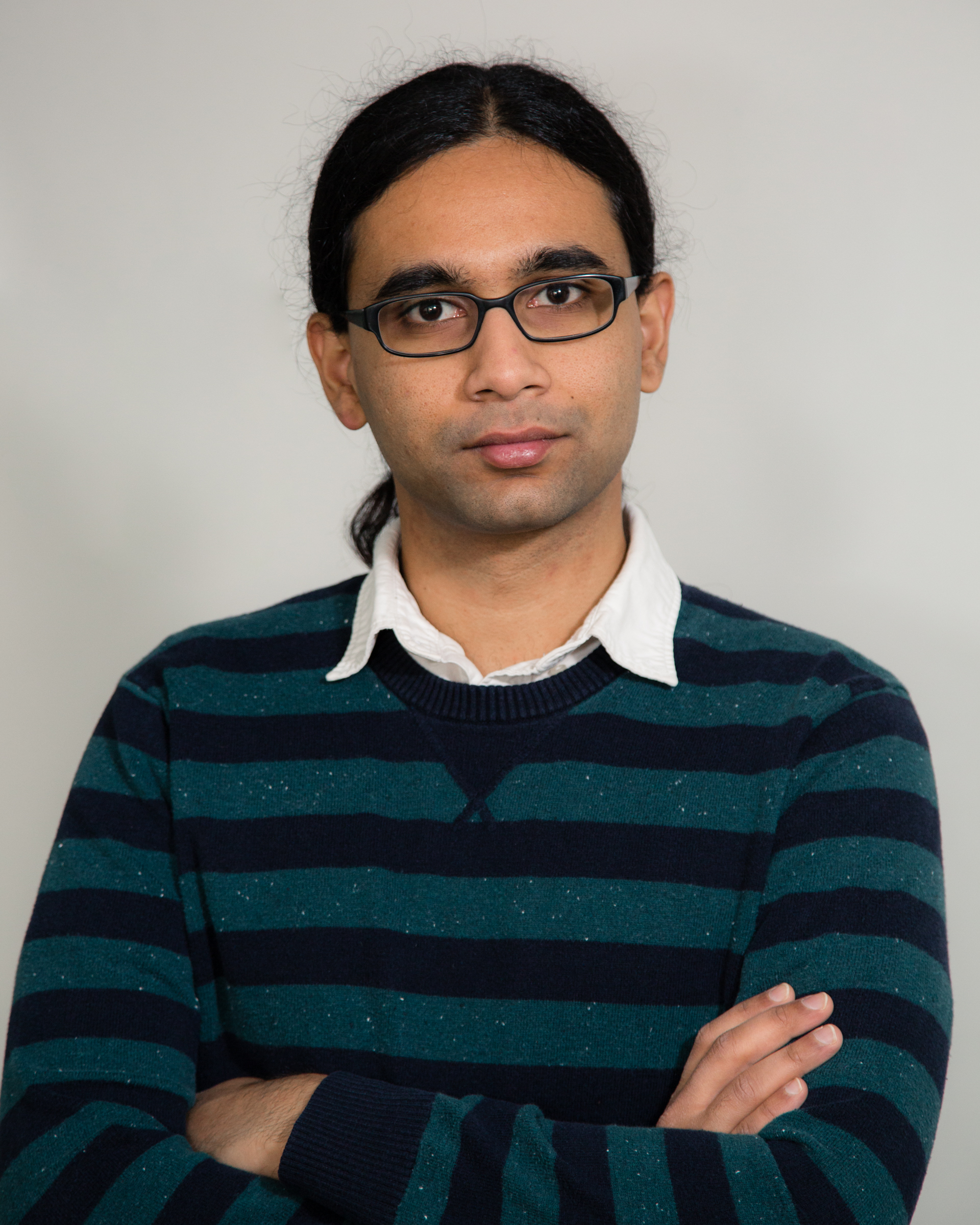
Prof. Frank Hopfgartner is a Professor at the University of Koblenz's Institute of Computer Science, Department 4. His research focuses on information retrieval, gamification in education, machine learning ethics, digital preservation, and user modeling. He leads projects involving AI-driven healthcare triage systems, bias-aware search engines, and participatory web archiving initiatives. His academic work bridges technical innovation with societal impact, addressing challenges in pandemic response systems, generational engagement in education, and ethical AI development. Key areas of contribution include lifelog data retrieval, knowledge graph alignment, and misinformation analysis during crises. Notable ongoing projects include: FAIR clustering algorithms for ethical machine learning Privacy-preserving email archive exploration Design of gamified IR systems for Gen Z learners He advises external doctoral student Dr. Matthias Lohr and collaborates extensively on international evaluation frameworks for information systems (e.g., NTCIR, CLEF). His research group maintains strong ties with institutions like National Museums Liverpool and NHS data networks.
Prof. Dr. Patrick Delfmann is a University Professor at the Department of Computer Science (FB4) of the University of Koblenz, leading the Process Science research group. His roles include Research Dean of the Department and chairman of the Institute for Business and Administrative Information Systems. He holds a Dr. rer. pol. from the University of Münster (2006) and has held academic positions since 2002, including senior academic councillor roles and acting professorships before his current position since 2017. His research focuses on technological aspects of business process management, including process mining, predictive process monitoring, and ontology-based process engineering. Current projects include AI-DPA (funded by Rhineland-Palatinate) and DFG-funded MIB (declarative process models). Methodological foundations include algorithmic graph theory, computational linguistics, and quantum machine learning. Key achievements include the 2024 Best Paper Award at ICPM’s PODS4H workshop for process-oriented cancer data analysis. He advises on interdisciplinary theses requiring strong algorithmic and modeling skills, and collaborates with industry partners to ensure practical applicability of research outcomes. Education: PhD in Business Administration (2006), University of Münster; earlier roles as research assistant (2001–2013). Grants: DFG MIB Project (2023–), RLP AI-DPA Research College (2023–). Labs/Teams: Process Science Group develops tools like declare-js and ProPoneRe, focusing on predictive modeling and process compliance.
Prof. Dr. Christian Thies is a Professor at Reutlingen University's Faculty of Informatics, specializing in Medical Information Systems. He co-founded the Medizinisch-Technische Informatik (Medical Technical Informatics) bachelor's program and contributes to the Human-Centered Computing master's program. His research focuses on telemedicine infrastructure, medical imaging systems, and clinical data integration, particularly through projects like the aRTeMIS framework and the bwHealthApp platform. He is a key member of the Computerassistierte Medizin (CAmed) research group at Reutlingen Research Institute. Education & Career: Thies has held roles at ixmid GmbH (2009-2012), Forschungszentrum Jülich (2006-2008), and RWTH Aachen University (2001-2006), focusing on medical software development, image processing, and clinical systems. His career spans over 25 years in healthcare IT, including freelance software development since 1996. Research Focus: His work combines clinical informatics with technological innovation, emphasizing interoperability in healthcare systems, telemedicine implementation, and personalized medicine platforms. Notable projects include the TeleDerm teledermatology trial and infrastructure for practice-based research networks (e.g., FoPraNet-BW). Articles Trends: Recent publications emphasize telehealth infrastructure, clinical trial methodologies, and wearable health monitoring systems. Earlier work concentrated on medical image retrieval algorithms and hierarchical data processing frameworks. Grants & Labs: Active in developing lab infrastructure such as the Ambient Assisting Lab and Future Mobility Lab. No specific grant details listed, but his projects indicate sustained institutional and collaborative funding.
Thomas Kalinowski is a Professor at the University of Rostock, affiliated with the Faculty of Mathematics and Natural Sciences and the Institute of Mathematics's Optimization group. He teaches courses like 'Mathematics 2 for ET and INF - Linear Algebra' and 'Mathematical Foundations of Machine Learning.' Email: thomas.kalinowski@uni-rostock.de His research focuses on mathematical methods for multi-agent systems, funded by the European Regional Development Fund (ERDF) from 2025 to 2027. He works in optimization, network theory, and applied mathematics, with teaching responsibilities bridging linear algebra and machine learning. He is involved in projects related to the analysis and optimization of multi-agent systems, indicating expertise in mathematical modeling of complex networks and algorithmic game theory. Current affiliations include the Optimization research group at the Institute of Mathematics, University of Rostock.
Steffen Koch is a Senior Lecturer at the Institute for Visualization and Interactive Systems (VIS), University of Stuttgart. His work bridges visualization, virtual reality, and digital humanities, focusing on tools for analyzing text, spatiotemporal data, and cultural datasets. He collaborates extensively with institutions like the Visualisierungsinstitut der Universität Stuttgart and IEEE. Research Interests : Visualization techniques, virtual/augmented reality applications, digital humanities, text analytics, and human-in-the-loop systems. Key Publications : 2024 ChoreoVis (dance formation analysis), 2024 ViSCitR (hotel review comparison), 2023 Animated Transitions (small-scale visualization design), 2021 Sparse Spherical K-Means (document clustering), and 2016 VA 2 (evaluation methodology). Techniques Developed : Triangulation of eye-tracking and interaction data, pyramid tag maps for document exploration, multifocus navigation in text analysis, and real-time social media monitoring tools. His recent work trends emphasize human-centric visualization , combining machine learning with interactive interfaces for complex tasks in cultural analysis, social media monitoring, and temporal data exploration. While no explicit awards are listed, his prolific output in top venues like IEEE Transactions and Computer Graphics Forum indicates recognition in visualization and digital humanities communities. He frequently collaborates with Thomas Ertl, Johannes Knittel, and Markus John, spanning applications from religious history to cinematic storytelling.
Prof. Dr. Michaela Geierhos holds the Chair of Data Science at the CODE Research Institute, Faculty of Computer Science, Bundeswehr University Munich. Her research bridges computational linguistics and computer science, focusing on semantic information processing and practical applications like cyber threat intelligence and trustworthy AI in law enforcement. Roles: Technical Director at CODE Research Institute (2021–present), Professor of Data Science (2020–present) Collaborations: Partnerships with military, industry, and public sectors; projects include disinformation detection, deepfake identification, and AI for cybersecurity. Her work emphasizes addressing dataset contamination in NLP, developing adjusted evaluation metrics, and exploring biases in healthcare data. She leads research into synthetic data generation, quantum NLP, and privacy-preserving AI. Recent articles focus on contestable AI systems, NER evaluation frameworks, and ethical considerations in language models. Scientific awards include the Best Paper Award at AI4HMO (NATO STO) in 2021. Grants: Directed projects like VIKING (trustworthy AI), KiTIE (technology transfer), and KIMONO (campaign monitoring). Education: Supervised doctoral students, including external candidate Philipp J. Rösch (2025), and contributed to interdisciplinary teaching combining theory and practice.
Prof. Eirini Ntoutsi is a Professor of Open Source Intelligence at the CODE Research Institute for Cybersecurity and Smart Data , Bundeswehr University Munich . She leads the Artificial Intelligence & Machine Learning (AIML) research group , focusing on adaptive learning, responsible AI, and generative AI. Research Interests: Developing intelligent algorithms for real-world data challenges, addressing fairness-aware machine learning, explainable AI, and generative models. Projects: Co-leads the EU-funded MAMMOth (Multimodal AI for Trustworthy Human-Centric Applications) and STELAR (Spatio-Temporal Linked Data for Agri-food) initiatives. Applications: Deploying AI solutions in education, social networks, banking, agriculture, manufacturing, and engineering. Key Contributions: Developed the MMM-Fair open-source toolkit for fairness analysis with no-code interface. Actively contributes to conferences like ECML PKDD , FAccT , IJCNN , and WWW .
Prof. Dr. Stefan Pickl is a full Professor of Operations Research at Universität der Bundeswehr München, where he leads the Chair of Operations Research and the Core Competence Center COMTESSA. His research integrates operations research, risk management, and complex systems optimization, with applications in critical infrastructure resilience, disaster reduction, and network security. Education includes a diploma in Mathematics and Philosophy from TU Darmstadt (1993), a doctorate (1998), and habilitation (2005) from TU Darmstadt and Universität zu Köln. He was an ERASMUS scholar at EPFL Lausanne. Research focuses on: Optimization of stochastic systems and game-theoretic frameworks for decision support. Risk analysis in transportation security (e.g., BMBF projects RIKOV and REHSTRAIN). Resilience modeling for critical infrastructure against hybrid threats. His recent publications emphasize stochastic positional games, humanitarian logistics, and ethical infrastructure challenges, reflecting interdisciplinary collaboration across computer science, engineering, and social sciences. Awards include three Best Paper Awards (CASYS 2003, 2005, 2007) and the Acquisition Research Symposium Award (2013). He secured significant grants for projects like RIKOV (terrorism risk in rail transport) and REHSTRAIN (high-speed train resilience). Leads the COMTESSA research team with 15+ members, including junior professors, scientists, and engineers. Collaborates with international centers like MUNICH AEROSPACE, CENETIX-NPS, and CODE.
Mukund Raghothaman is a researcher at the University of Southern California , focusing on the intersection of programming languages, software engineering, and automated reasoning. He leverages techniques from machine learning and formal methods to develop tools for program synthesis, verification, and static analysis that improve software quality and developer productivity. Key research areas: Semantic Regular Expressions , Subspecifications , Bayesian Program Reasoning , Datalog Synthesis Contributed to foundational frameworks like SyGuS and Bingo/Drake for probabilistic static analysis Active in program committee roles for conferences like POPL , PLDI , and SPLASH Scientific contributions include: Distinguished Artifact Award ( ICSE 2022 ) Distinguished Paper Award ( PLDI 2019 ) His recent work explores LLM integration for invariant generation, network configuration explanations, and function name synthesis to enhance program understanding.
Mayur Naik is the Misra Family Professor in the Department of Computer and Information Science at the University of Pennsylvania’s School of Engineering and Applied Science. His research lies at the intersection of programming languages and artificial intelligence, with a current focus on neurosymbolic programming, trustworthy AI for healthcare, and AI-enabled software engineering tools. Education & Career: Ph.D. in Computer Science, Stanford University (2008) – advisor Alex Aiken M.S. in Computer Science, Purdue University (2003) – advisor Jens Palsberg B.E. in Computer Science, BITS Pilani (1999) Former faculty at Georgia Institute of Technology and researcher at Intel Labs, Berkeley Research Interests: Naik’s group develops languages, algorithms, and compilers for neurosymbolic programming, an emerging paradigm that unites symbolic reasoning with data-driven learning. Their flagship system is the open-source Scallop language and toolchain, applied to computer vision, cybersecurity, medicine, and bioinformatics. He also investigates AI-assisted programming tools that boost productivity and software quality by marrying traditional program analysis with modern machine learning. Recent Highlights: In 2024 he was named Misra Family Professor; his former student Elizabeth Dinella received the 2025 ACM SIGSOFT Outstanding Dissertation Award; his team released IRIS , an LLM-assisted static analysis framework for security vulnerabilities, and published the first comprehensive book on Neurosymbolic Programming in Scallop . Teaching: He regularly teaches CIS 5470 (Software Analysis) every Fall and CIS 5500 (Database Systems) every Spring, both of which are also delivered in Penn’s MCIT Online and Georgia Tech’s OMSCS programs. Advising & Service: Naik has graduated 8 Ph.D. students and mentored numerous postdocs and undergraduates; many alumni now hold faculty or research positions worldwide. He has served on organizing, program, and steering committees for premier venues such as PLDI, POPL, OOPSLA, SPLASH, ESEC/FSE, ISSTA, SAS, and others.
Gagandeep Singh is a tenure-track Assistant Professor in the Department of Computer Science at the University of Illinois Urbana-Champaign (UIUC), with affiliations at VMware Research. His research focuses on integrating Machine Learning , Formal Methods , and Systems to build intelligent systems with formal safety guarantees. Programming Languages Formal Methods Artificial Intelligence Machine Learning Systems His publications (e.g., PRIMA , Incremental Verification of Neural Networks ) emphasize scalable neural network certification, abstract interpretation, and automatic differentiation. Work includes domain-specific languages for verification and convex hull approximations to improve precision. Scientific recognition includes the NEAT (Notable Experience Track Artifact) award for ConstraintFlow . He has served on program committees and as session chairs for conferences like PLDI, POPL, and SPLASH. He has no listed advisees or grants in the provided texts but maintains an active role in research leadership through committee memberships and invited talks.
Xukai Zou is an active researcher in Cybersecurity , Federated Learning , and Privacy-Preserving Authentication . His work spans multiple institutions and focuses on secure e-voting systems, biometric authentication, and robust machine learning frameworks. Key Research Areas : Federated Learning, Network Security, Biometric Authentication, Privacy-Preserving Techniques Collaborations : Frequently works with Feng Li, Agnideven Sundar, and Qin Hu Recent Trends include applying Deep Learning to Network Intrusion Detection , developing Decentralized Federated Learning for Non-IID Data , and creating Interactive Cybersecurity Curricula inspired by E-Voting technology. Notable Contributions in Group Communication security and Key Management date back to the early 2000s, showing sustained expertise in cryptographic protocols and distributed security solutions.
Professor Marc Goerigk holds the Chair of Business Decisions and Data Science at the Faculty of Economics, University of Passau, a position he has held since 2023. He previously held academic positions at TU Kaiserslautern, Lancaster University Management School, and the University of Siegen. He earned his doctorate in applied mathematics from the University of Göttingen and is recognized as a leading researcher in robust optimization. PhD in Applied Mathematics, University of Göttingen Research and teaching at TU Kaiserslautern, Lancaster University, University of Siegen His research centers on robust combinatorial optimization, focusing on decision-making under uncertainty. He develops mathematical models and algorithms that yield solutions resilient to data uncertainties, with applications in traffic, logistics, and corporate planning. He emphasizes abstract problem structures over specific instances, seeking generalizable optimization frameworks. His work bridges operations research, data science, and algorithm design, aiming to enhance decision robustness in complex systems. The recent publications highlight a strong trend in robust optimization, particularly in multi-stage and recoverable models, data-driven scenario generation, and interpretable optimization. His work increasingly integrates machine learning concepts with classical optimization, especially in explainability and preference modeling. Applications span scheduling, routing, project management, and logistics, demonstrating both theoretical depth and practical relevance. Scientific Awards: Most research-intensive business professor under 40 in the German-speaking world (WirtschaftsWoche, 2024) Professor Goerigk leads a research group focused on optimization under uncertainty. He supervises doctoral and master's students in seminars on optimization and data science. He teaches courses such as Decision Making Under Uncertainty, Combinatorial Optimization, and Artificial Intelligence and Optimization. His work is supported by ongoing research in robust modeling and algorithm development, with future directions likely involving deeper integration of AI and optimization for real-world decision support systems. No specific grants are mentioned, but his prolific output suggests active funding. He leads the Chair of Business Decisions and Data Science at the University of Passau, where his team works on theoretical and applied aspects of robust optimization, scenario modeling, and decision support systems.
Professor Wolfgang Reif serves as Director of the Institute for Software & Systems Engineering at the University of Augsburg's Faculty of Applied Computer Science. His research spans multiple domains where formal methods meet practical engineering applications, particularly in software engineering, robotics, and self-organizing systems. Prof. Reif's research interests focus on applying formal verification techniques to complex systems engineering challenges. His work bridges theoretical computer science with practical applications in robotics, manufacturing, and autonomous systems. He has developed approaches for verification of concurrent systems, self-organizing production cells, and human-robot collaboration frameworks. His research demonstrates a consistent pattern of translating theoretical formal methods into practical engineering solutions for real-world problems. The recent publications reveal a strong trend toward integrating artificial intelligence with traditional engineering domains. His team has been particularly active in applying machine learning techniques to robotics, manufacturing processes, and verification problems. The publications show increasing focus on practical implementations of self-organizing systems, with applications in drone swarms, production automation, and composite material manufacturing. The work consistently demonstrates how formal verification can be applied to increasingly complex systems involving AI components. Prof. Reif leads a substantial research group with numerous PhD students and collaborators. His team operates within the Institute for Software & Systems Engineering, where they maintain active collaborations with both academic and industrial partners. The research environment supports work across multiple domains including formal verification, robotics, manufacturing systems, and AI applications. The team has developed several notable frameworks including PROTEASE for swarm robotics, SensorClouds for multi-modal sensor processing, and various verification tools built around the KIV system.
Prof. Dr.-Ing. Tobias Meisen is Professor of Technologies and Management of Digital Transformation at the University of Wuppertal, where he leads cutting-edge research in industrial artificial intelligence and digital transformation. He serves as spokesperson of the Interdisciplinary Center for Machine Learning and Data Analytics (IZMD) and chairs the board of SIKoM, a research institute focused on information, communication, and media technologies. He is also a member of the scientific advisory board of the Center for Advanced Internet Studies (CAIS) and contributes as an expert to the parliamentary commission on Artificial Intelligence in North Rhine-Westphalia. Research Interests: His work centers on developing robust, adaptive AI systems for industrial applications, particularly in environments with distributed, heterogeneous, or incomplete data. Key areas include Deep and Machine Learning , Deep Reinforcement Learning , Explainable and Transparent AI , and Knowledge Graphs for semantic interoperability. He emphasizes human-machine collaboration and trustworthy AI in industrial contexts. Recent Research Trends: His 2025 publications reveal a strong focus on transformer and recurrent architectures for motion prediction and radar-based perception in autonomous systems, AI-driven industrial process optimization using GANs, and novel applications of decision transformers in combinatorial optimization. His interdisciplinary work spans AI, manufacturing, sustainability, and data modeling. Scientific Awards: Best Paper Award Young Researcher Award (Germany's Excellence Initiative) Advising and Grants: Prof. Meisen actively mentors researchers, as evidenced by his co-authorship with numerous junior researchers. He leads and participates in national and international R&D projects with both academic and industry partners, securing funding for initiatives at the intersection of AI, digital transformation, and industrial engineering. Labs and Teams: He leads the Interdisciplinary Center for Machine Learning and Data Analytics (IZMD) and chairs the board of SIKoM, fostering collaborative research in AI, data analytics, and information systems. These platforms support interdisciplinary projects bridging computer science, engineering, and social sciences.