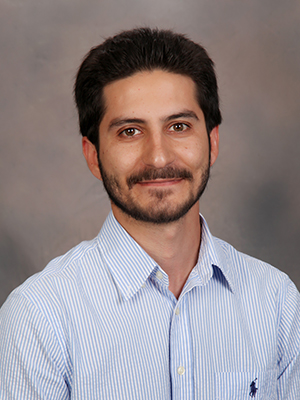
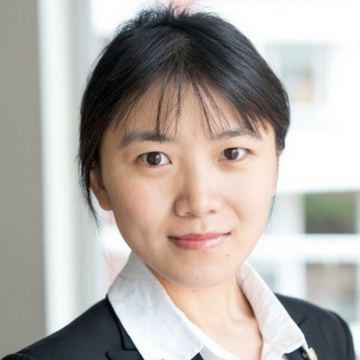
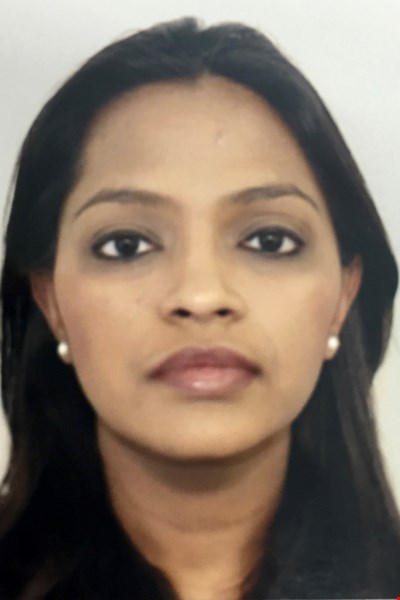
Min Chen is a Professor of Scientific Visualization at the University of Oxford, affiliated with the Department of Engineering Science and Pembroke College. He holds fellowships from the British Computer Society, European Computer Graphics Association, and Learned Society of Wales. His career spans over three decades, with previous roles at Swansea University (1984–2011) and current leadership in visualization research. His research focuses on visualization theory, video visualization, visual analytics, and interdisciplinary applications in fields like epidemiology and cybersecurity. He has authored over 200 publications and led projects such as RAMPVIS during the COVID-19 pandemic. Key roles include editor-in-chief of Computer Graphics Forum and associate editor of IEEE Transactions on Visualization and Computer Graphics. Education: BSc and PhD in relevant fields (details not explicitly stated in texts). Awards include the VGTC Visualization Lifetime Achievement Award (2024). His work emphasizes the theoretical underpinnings of visualization and practical tools for data intelligence.
Prof. Tan Yap Peng is a Professor and Chair of the School of Electrical & Electronic Engineering at Nanyang Technological University (NTU), Singapore. He holds the President's Chair in Electrical and Electronic Engineering and serves as Associate Vice President (Lifelong Learning – Postgraduate Programmes by Coursework). His research focuses on multimedia analysis, computer vision, machine learning, and data analytics. He earned his B.S. from National Taiwan University and M.A./Ph.D. from Princeton University. He has led major initiatives including the INFINITUS Infocomm Research Centre and contributed to IEEE technical committees. His over 200 publications span image/video processing, neural network robustness, and cross-modal systems. Awards include IEEE Fellow status. Education: B.S. Electrical Engineering (NTU), M.A./Ph.D. (Princeton) Research interests emphasize interactive digital media, content-based analysis, and AI-driven solutions for visual and signal processing. His work addresses challenges in adversarial attacks, video generation, and low-light image enhancement. He has held editorial roles at IEEE Transactions and EURASIP journals. Conference leadership includes chairs for ICME and ICIP. His contributions bridge academia and industry through collaborative research networks.
Dr. Wenbin Li is a Senior Lecturer (Associate Professor) in Robotics at the University of Bath's Department of Computer Science. He leads the Pering Laboratory (Perceptual Intelligence Laboratory), affiliated with the AI & Machine Learning and Visual Computing groups. Previously, he held postdoctoral positions at Imperial College London (2016-2018) and UCL (2014-2016), and earned his PhD from the University of Bath in 2013, with earlier degrees from Imperial College London (MSc, 2009) and Xidian University (B.Eng, 2008). His research focuses on unified autonomous systems, including multi-sensory localization/mapping, dynamic motion capture, and uncontrolled scene understanding with applications in manufacturing and professional capture. Key areas include Robotics, Computer Vision, Graphics, and Machine Learning. He actively supervises doctoral students in these fields and has funded PhD openings. Dr. Li has been involved in major initiatives such as the My World - Strength in Places Fund (2021–2027), SLAM with Reinforcement Learning (2022–2023), and the CAMERA MC2 Award (2019–2023). His work aligns with UN Sustainable Development Goals, particularly in advancing technology for societal benefit. Recent publications emphasize aerial robotics, autonomous systems, and computer vision applications, including UAV package delivery reviews, Bayesian optimization for balloon station-keeping, and generative models for intrinsic image decomposition.
Jefersson Alex dos Santos is an Assistant Professor (Lecturer) in Computer Vision at the University of Sheffield, UK. Previously, he served as an Associate Professor at Universidade Federal de Minas Gerais (UFMG), Brazil (2013–2022). He holds a PhD in Computer Science from the University of Campinas (Unicamp) and the University of Cergy-Pontoise, France (2013). His research focuses on remote sensing image processing, computer vision, and machine learning, with applications in geospatial data analysis and medical imaging. He is an IEEE Senior Member and serves as an Associate Editor for IEEE Geoscience and Remote Sensing Letters and Co-Chair of the ISPRS Working Group for AI/ML in Geospatial Data. Education: PhD in Computer Science: University of Campinas (Unicamp) & University of Cergy-Pontoise, 2013 Master's in Computer Science: Unicamp, 2009 Bachelor's in Computer Science: University of Mato Grosso do Sul (UEMS), 2006 Research Interests: Remote sensing image processing, computer vision, machine learning, and geospatial data analysis. His work emphasizes interdisciplinary research, including applications in environmental monitoring, medical imaging, and digital forensics. Grants & Awards: CNPq Productivity Research Scholarship (2016–2022) Serrapilheira Institute Research Grant (2021) Labs & Teams: Founder of the Laboratory of Pattern Recognition and Earth Observation (PATREO) at UFMG's Department of Computer Science.
Giuseppe Vinci is an Assistant Professor at the Department of Applied and Computational Mathematics and Statistics (ACMS) at the University of Notre Dame, within the College of Science. His research focuses on probabilistic graphical models, particularly in neuroscience and genomics applications. He holds a Ph.D. in Statistics from Carnegie Mellon University (2017), and completed postdoctoral research and lecturing at Rice University (2017–2020). Vinci’s expertise spans astrostatistics, forensic science, and geometric data analysis. Education: Ph.D. in Statistics, Carnegie Mellon University (2017) M.Sc. in Statistics, Carnegie Mellon University (2013) M.Sc. in Economics and Social Sciences, Bocconi University (2012) B.Sc. in Economics, University of Catania (2009) Research Interests: High-dimensional statistical theory of graphical models, matrix completion, astrostatistics, neuroscience, genomics, forensic science, and geometric data analysis. His work addresses challenges in neuronal functional connectivity, genomic networks, and climate science. Awards: NeuroNex Postdoctoral Trainee (NSF) Rice Academy Postdoctoral Fellow Three-minute thesis competition (Top-10, Carnegie Mellon University) Advising & Grants: Vinci mentors multiple Ph.D., MSc, and undergraduate students in projects spanning forensic statistics, genomics, and astrostatistics. He has secured funding for undergraduate research programs and participated in NIH-funded interdisciplinary training. Labs/Teams: Involved in collaborative projects with institutions like Baylor College of Medicine and Rice University, focusing on neurotheory and statistical methods in neuroscience.
Nima Kalantari is an Assistant Professor in the Department of Computer Science & Engineering at Texas A&M University. He previously held a postdoctoral position at UC San Diego under Ravi Ramamoorthi. His academic journey includes a Ph.D. from UC Santa Barbara (ECE), an M.S. and B.S. from Amirkabir University of Technology (Electrical Engineering). His research focuses on computer graphics, computational photography, rendering, and deep learning, with emphasis on machine learning techniques for image synthesis and material generation. Education: Ph.D., Electrical and Computer Engineering, University of California, Santa Barbara, 2015 M.S., Electrical Engineering, Amirkabir University of Technology, 2009 B.S., Electrical Engineering, Amirkabir University of Technology, 2007 Research Interests: Kalantari's work bridges computer graphics and deep learning, particularly in computational photography, rendering, and view synthesis. Recent projects include 3D relightable face generation, sparse view synthesis with Gaussians, and physics-guided neural networks for fluid dynamics. Awards: 2024 Frontiers of Science Award (SIGGRAPH 2019) TEES Young Faculty Fellow Award (2024) Best Master Thesis Award, IEEE Iran Section (2010) Advising & Labs: Active mentor for 8 current Ph.D./M.S. students and advisor to alumni including Xilong Zhou (Postdoc at MPI for Informatics). His team focuses on projects like PanoDreamer (3D panorama synthesis) and PhotoMat (material generation from flash photos).
Daniel Kowal is an Associate Professor in the Department of Statistics and Data Science at Cornell University, effective July 2024. Previously, he served as the Dobelman Chair Assistant Professor at Rice University. His research focuses on Bayesian methodology for complex dependent data, including functional, time series, and spatial datasets, with applications in environmental health, epidemiology, finance, and astronomy. He develops scalable algorithms for high-dimensional data and interpretable uncertainty quantification. His work has been recognized with the Blackwell-Rosenbluth Award (2021) and ARO Young Investigator Award (2020). Education: Ph.D. in Statistics (Cornell University), M.S. in Statistics (Cornell University), B.A. in Mathematics (Washington University in St. Louis). Research interests include Bayesian models for prediction/inference, decision theory, discrete data analysis, and scalable approximations. Key areas of application: environmental health policy, wearable devices, economics, biomedical engineering, and astronomy. Recent grants include NSF-funded projects on adaptive dependent data models and Army Research Office initiatives on Bayesian approximations. He has supervised multiple Ph.D. students, including Yunan Gao, Thomas Sun, and Brian King. His software contributions include R packages like countSTAR, SeBR, and lmabc for Bayesian regression and data synthesis. Awards include Lindley Prize Honorable Mention (2024), Arnold Zellner Thesis Award (2018), and numerous student paper awards from ASA sections.
Mingli Chen is an Associate Professor of Economics at the University of Warwick’s Department of Economics. She holds affiliations including Turing Fellow at the Alan Turing Institute, External Fellow at the Centre for Panel Data Analysis (University of York), and Warwick-China Coordinator. Her research focuses on econometrics, machine learning, time series analysis, financial econometrics, and empirical industrial organization. She has served as an Associate Editor for the Journal of Econometrics since 2024 and organized workshops on data science and network analysis. Education: Ph.D. in Economics from Boston University (2015), B.A. in Information and Computing Science from Shanghai University (2009). She has held visiting positions at Stanford University, UC Berkeley, and the Federal Reserve Bank of Boston. Research Interests include high-dimensional econometrics, panel data models, social networks, quantile regression, and the integration of AI with econometrics. Key publications cover topics like quantile graphical models for systemic risk, latent panel quantile regression in asset pricing, and sparse β-models for network analysis. Awards include the International Partnerships Fund (2023), Turing PDRA Award (2020), and Co-Winner of the LABOUR Prize (2017). She advises Ph.D. students at Warwick and Cambridge, with placements at leading institutions like the University of Tokyo. Grants include leadership in UK-China partnerships and the Turing Institute. Teaching focuses on advanced econometrics at the Ph.D. level, including causal inference and machine learning. She co-organizes workshops and serves on conference committees, emphasizing data science and policy applications.
Andrea Rotnitzky is a Professor and Chair of Biostatistics at the University of Washington. Born in Argentina with Jewish heritage, she values both Argentine culture and Jewish traditions. She joined UW in 2022 after a global recruitment, attracted by its collaborative research environment and partnerships with institutions like the Fred Hutchinson Cancer Center. Her work focuses on causal inference, missing data analysis, and semiparametric methods to address public health challenges. Rotnitzky holds a Licenciate in Mathematics from the Universidad de Buenos Aires (1982) and a PhD in Statistics from UC Berkeley (1988). Her research emphasizes developing statistically efficient tools to estimate intervention effects from observational or imperfect experimental data. Key areas include causal graphical models, longitudinal data analysis, and survival analysis. Her recent work highlights include articles on efficient adjustment sets in causal inference, debiased regression methods, and applications to post-COVID-19 symptom studies. Awards include IMS Fellowship (2025) and a $1M Rousseeuw Prize (2023) for statistical contributions. She prioritizes mentoring students and translating statistical innovations into real-world health solutions.
Helmut Hlavacs is a Professor at the Faculty of Computer Science, leading the Research Group on Education, Didactics, and Entertainment Computing. His expertise spans serious games, game design, virtual reality, and health informatics. He has contributed to over 218 publications since 2005, focusing on topics like hedonic experiences in gaming, VR applications in therapy, and AI-driven behavior trees. His work intersects technology, education, and healthcare, with notable projects such as Conquer Catharsis (VR anxiety treatment) and PhyLab (VR physics experiments). Hlavacs has secured research funding for initiatives like Programmieren lernen durch Computerspielentwicklung and Dig-Equality FF , emphasizing digital equity and education. In 2019, he won the Best Poster Award at IFIP for his work on health data from serious games. Research Interests: Serious Games for health and education Virtual Reality applications in therapy and learning Game design methodologies and AI-driven NPC behavior Psychological impacts of gaming and digital consumption Procedural content generation for games Key Projects: Programmieren lernen durch Computerspielentwicklung (2008): Game-based learning for programming skills Dig-Equality FF (2020-2021): Digital competence promotion for equity TP1 PRECIOUS (2013-2016): VR conferencing and stress management Grants and Advising: Hlavacs has advised on projects involving AI in military command systems, VR therapy for anxiety disorders, and participatory design of social media literacy tools. He collaborates internationally on topics like gamification for behavior change and multicultural health interventions. Labs/Teams: His research group focuses on Serious Storytelling and Entertainment Computing , developing tools like the Prototypical game framework and InvisibleSound for blind musicians. Current work includes FiGHT (a web-based tool for eating disorder communication) and OutSmart! (a serious game for social media literacy).
Justin Solomon is an Associate Professor in the Department of Electrical Engineering & Computer Science at Massachusetts Institute of Technology, where he serves as Principal Investigator of the Geometric Data Processing Group. He maintains dual affiliations with the Computer Science and Artificial Intelligence Laboratory (CSAIL) and the MIT Center for Computational Science and Engineering (CCSE), reflecting his interdisciplinary research bridging theoretical mathematics with practical applications in graphics and machine learning. His research interests center around geometric data processing, computational geometry, and optimal transport theory, with significant contributions to computer graphics, machine learning, and computer vision. Solomon's work spans fundamental mathematical theory to practical implementations, particularly in shape analysis, 3D reconstruction, and geometric deep learning. His research demonstrates consistent innovation in developing algorithms that bridge discrete and continuous geometry with applications in graphics, vision, and AI. The publication trends reveal Solomon's evolving research trajectory from foundational work in geometry processing toward increasing integration with modern machine learning techniques. His recent work shows strong emphasis on diffusion models, geometric deep learning, and applications of optimal transport in AI, with significant contributions to SIGGRAPH, NeurIPS, and ICML proceedings. The research demonstrates both mathematical rigor and practical impact, with applications spanning character animation, 3D reconstruction, and generative AI. Amazon Research Award (2017) for Large-Scale Geometrically-Structured Sampling Amazon Research Award (2023) for Lightweight Algorithms for Generative AI Ben Wegbreit Prize for Best Undergraduate Honors Thesis Firestone Medal for Excellence in Undergraduate Research Boothe Prize for Excellence in Writing 2nd place, SGP best paper awards (2010) Solomon has secured substantial research funding through awards like the Amazon Research Awards and maintains active collaborations across academia and industry. His group has produced numerous influential publications with students and collaborators, contributing significantly to both theoretical foundations and practical implementations in geometric data analysis. His textbook "Numerical Algorithms" demonstrates his commitment to education alongside research. As Principal Investigator of the Geometric Data Processing Group, Solomon leads a research team focused on developing mathematical foundations for analyzing and processing geometric data. The group maintains strong connections with both theoretical mathematics and practical applications, working at the intersection of computer graphics, machine learning, and computational geometry. Their work has significant implications for fields ranging from computer animation to medical imaging and scientific computing.
Dan Steinberg is a senior research scientist and team leader of the Decisions & Statistical Learning team at CSIRO Data61 in Canberra, Australia. His expertise lies in probabilistic machine learning, variational inference, Bayesian deep learning, causal inference, and their application to domains spanning synthetic biology, geospatial analytics, and algorithmic fairness. Education PhD in Computer Vision / Machine Learning (2013) – University of Sydney, Australian Centre for Field Robotics Bachelor of Engineering (Mechatronics, First-Class Honours) – University of Sydney (2008) Bachelor of Commerce (Finance) – University of Sydney (2008) Research Interests Steinberg’s core research agenda revolves around building scalable probabilistic models that can learn efficiently from limited or noisy data and provide principled uncertainty estimates. Key themes include: Variational Inference & Bayesian Deep Learning: developing lightweight yet powerful algorithms for approximate posterior inference in complex models (e.g., Aboleth, Revrand). Active Learning & Experimental Design: creating methods that decide which experiments or measurements will maximise information gain, with recent focus on in-silico protein engineering via Variational Search Distributions (VSD). Causal Inference: leveraging machine-learning tools to perform robust observational causal studies for evidence-based policy, including work on youth well-being and academic outcomes. Algorithmic Fairness: translating normative notions of equity into quantifiable objectives for regression-based decision systems. Large-scale Spatial Analytics: Landshark—an open-source TensorFlow toolkit for supervised learning on massive geospatial raster datasets. Notable Software & Tools Aboleth: A minimal-overhead TensorFlow framework for Bayesian deep learning. Landshark: Command-line tools for large-scale spatial inference. Revrand: Scalable Bayesian generalised linear models with non-conjugate likelihoods. libcluster: Extensible C++ library for hierarchical Bayesian clustering. Scientific Awards Oral Presentation Award – ICML 2025 Workshop on Scaling up Intervention Models (SIMS) Oral Presentation Award – NeurIPS 2024 Workshop on Bayesian Decision-making and Uncertainty (BDU) Oral Presentation Award – NeurIPS 2023 Workshop on Adaptive Experimental Design and Active Learning Spotlight Paper Award – NeurIPS 2014 (Extended and Unscented Gaussian Processes) Research Team & Collaborations As Team Leader – Decisions & Statistical Learning at CSIRO Data61, Steinberg directs a multi-disciplinary group that partners with government agencies (e.g., Jobs and Skills Australia, Australian Institute of Health and Welfare) and industry to deploy machine-learning solutions at scale. He has previously held roles as Principal Researcher at Gradient Institute (2019-2023), Senior Research Engineer at CSIRO Data61 (2016-2019), Researcher at NICTA (2013-2016), and Research Associate at the University of Sydney (2012-2013).
Piotr Gmytrasiewicz is an Associate Professor at the Department of Computer Science, University of Illinois at Chicago (UIC). He leads the Multiagent Systems Group within the Artificial Intelligence Laboratory at UIC. His research focuses on rationality in artificial agents , particularly in environments with multiple interacting agents. Key areas include Interactive Decision-Making Bayesian Modeling for Agent Communication Recursive Belief Frameworks Time Pressure and Computational Trade-offs Evolution of Agent Communication Languages Dynamic Resource Allocation His recent work examines the rationality of insincere communication and methods to discount potentially insincere information. Past projects include modeling emotions in agent design and developing decision-theoretic approaches to game theory. He has secured funding from prestigious institutions such as the National Science Foundation (NSF) , Office of Naval Research (ONR) , and DARPA . Current and past projects emphasize Automated Linguistic Competence Evolution Emergent Communication Protocols Scalable Multiagent Learning Strategic Coordination under Uncertainty He earned his Ph.D. from the University of Michigan, Ann Arbor (1992) and has previously collaborated with the Department of Computer Science and Engineering (CSE) at the University of Texas at Arlington on DARPA-funded research.
Bhaswar B. Bhattacharya is an Associate Professor of Statistics and Data Science at The Wharton School of the University of Pennsylvania, with a secondary appointment in the Department of Mathematics. His research spans several interconnected areas at the intersection of statistics, probability, and computational geometry. Dr. Bhattacharya received his Ph.D. in Statistics from Stanford University in 2016 under the supervision of Persi Diaconis. Prior to that, he earned both his Bachelor of Statistics (2009) and Master of Statistics (2011) from the Indian Statistical Institute in Kolkata. His research interests focus on three main pillars: nonparametric statistics (including distribution-free inference, nearest-neighbor methods, and inference on networks), combinatorial probability (covering counting problems in random graphs, random colorings, and graph limit theories), and discrete and computational geometry (including facility location problems, Voronoi games, and geometric Ramsey problems). His work often bridges theoretical developments with practical applications in network analysis, statistical learning, and geometric optimization. Recent publications demonstrate a strong trajectory in developing distribution-free methods for network analysis, with significant contributions to understanding fluctuations in graphon-based random graphs and developing optimal tests for inhomogeneous random graph models. His work also shows increasing focus on higher-order network structures through hypergraph models and applications to real-world problems like vaccination site optimization. NSF Career Award (2021-2026) Alfred P. Sloan Research Fellowship (2021) Probability Dissertation Award, Stanford University (2016) Sabyasachi Roy Memorial Gold Medal for best master's thesis, Indian Statistical Institute (2009-2011) Dr. Bhattacharya teaches advanced courses in mathematical statistics at both undergraduate and graduate levels at Wharton. His research program involves collaborations across multiple institutions and disciplines, with recent work applying statistical methods to public health challenges such as optimizing vaccination site locations. He maintains active research collaborations with colleagues in statistics, computer science, and applied mathematics departments.
Dr Arthi Manohar is a Senior Lecturer in Design at Brunel University London and serves as Programme Director for the BSc Product Design degree within Brunel Design School, College of Engineering, Design and Physical Sciences. Since joining Brunel in 2018 she has led multiple undergraduate and master-level modules, championed Equality, Diversity & Inclusion, and secured significant EPSRC research funding. Education PhD Digital Product Design, University of Dundee (2017) MA Architecture and Digital Media, University of Westminster (2009) BArch Architecture, National Institute of Technology, India (2007) FHEA (Fellow of the Higher Education Academy), 2021 Research Interests Arthi’s research lies at the intersection of social design and emerging technology . She investigates participatory, inclusive and co-design approaches to Human–Computer Interaction, privacy and trust in the Internet of Things, and the application of AI to accessibility and health technologies. Her work emphasises human values, cross-cultural perspectives and ethical considerations in technology design. Recent funded projects include Trust in Home: Rethinking Interface Design in IoT (EPSRC HDI Network Plus) and From Understanding Privacy and Trust to Re-visualising TAPESTRY (EPSRC Sandpit). She collaborates across disciplines with partners such as the University of Nottingham, University of Kent, Royal Holloway and industry partners like LoomiAssist Ltd. Publications & Scholarly Service Arthi has published extensively in top-tier venues such as DRS, DIS, British HCI, Multimedia Tools & Applications, IEEE Transactions on Services Computing and CHI Workshops. Since 2020 she has served as Equality, Diversity & Inclusion Champion for the Department of Design and has held programme-committee roles for British HCI 2021, DIS 2019 and IndiaHCI 2019. PhD Supervision & Teaching She currently supervises four doctoral researchers exploring antimicrobial resistance design, stigma in assistive technology, virtual production and user engagement. At undergraduate and masters levels she leads modules on Interaction & UX Design, Digital Design Prototyping, Professional Practice and Design Communication, and has mentored over a dozen master dissertations on inclusive design, AI/AR retail experiences and speculative futures.