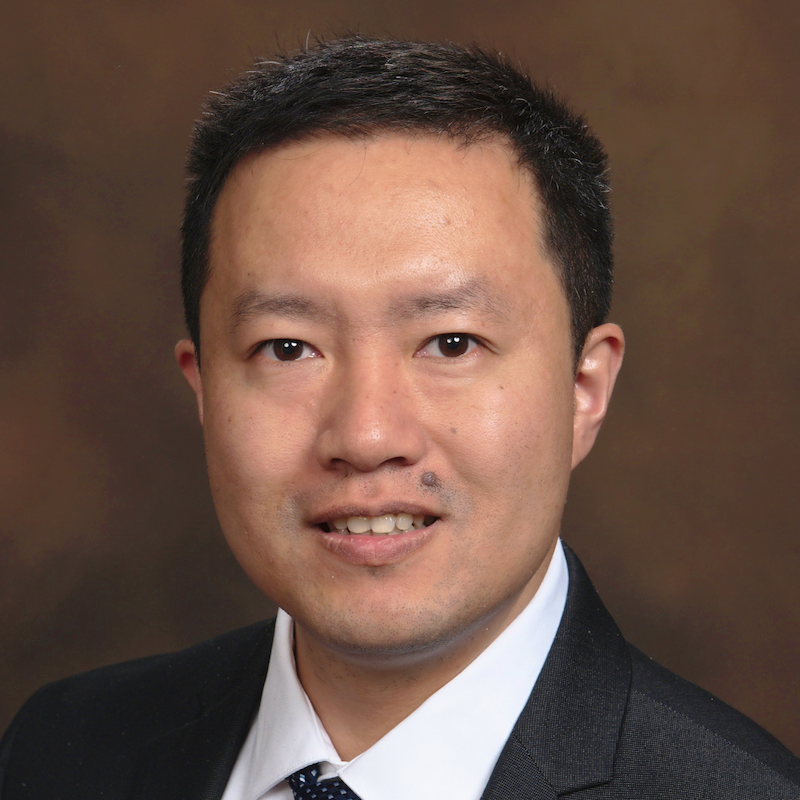
Maarten de Boer is a Professor in the Department of Mechanical Engineering at Carnegie Mellon University (CMU), with a courtesy appointment in Materials Science and Engineering. He joined CMU in 2007 after roles as a process engineer at Hewlett-Packard (1983–1991) and principal member of technical staff at Sandia National Labs (1996–2010). He holds a Ph.D. in Materials Science (University of Minnesota, 1996), an MS in Electrical Engineering (University of Colorado, 1982), and a BS in Electrical Engineering (Cornell University, 1981). His research focuses on nanomechanical behavior of materials, MEMS, and additive manufacturing. Key projects include tantalum-based thermal actuators, high-entropy alloys, and micromachine reliability. His work is funded by the DOE, NSF, NASA, and the Army Research Lab. He has authored over 90 peer-reviewed articles, holds seven US patents, and advises students in the de Boer Group. Research Themes: Micro/Nano Manufacturing, Thin Film Mechanics, Friction & Wear, MEMS Reliability Funding Sources: NSF, DOE, NASA, ARL Courses Taught: Mechanics of Materials, Material Selection, Electronics for Sensing, Thermodynamics Notable collaborations include Gianluca Piazza (NSF LEAP-HI grant), Jack Beuth, and Bryan Webler (high-entropy alloys). Media highlights include breakthroughs in tantalum MEMS and ultra-strong polymer nanofibers. His group operates advanced test facilities for in-situ environmental studies of materials.
Ameet Talwalkar is an Associate Professor in the Machine Learning Department at Carnegie Mellon University and Chief Scientist at Datadog. He holds a PhD from the Courant Institute at NYU (2010) where he received the Janet Fabri Prize for Best Thesis. His professional achievements include co-founding Determined AI (acquired by HPE), creating MLlib in Apache Spark, co-authoring the textbook 'Foundations of Machine Learning,' and spearheading the MLSys conference. Talwalkar's research focuses on fundamental challenges in machine learning systems, including distributed ML, federated learning, neural architecture search, and human-AI interaction. His work bridges theoretical foundations with practical applications across domains like computational biology, PDE solving, and code generation. Current interests include AI for science, specialized model development, and agent-based systems. His publications demonstrate strong focus on ML systems optimization, foundation model evaluation, and interpretable AI. Recent works investigate specialized foundation models, PDE-solving frameworks, code generation tools, and human-AI interaction paradigms. The research consistently targets efficiency, scalability, and practical deployment challenges. Best Paper Award at EAAMO 2023 Best Student Paper at NYAS ML Symposium 2009 Runner-up for Best Real-world Application at Socal ML Symposium 2017 Janet Fabri Prize for Best PhD Thesis (2010) Talwalkar leads the CMU MLSys Lab focused on scalable ML systems and has served as Board President for the MLSys conference series. His educational contributions include developing courses like 'Machine Learning with Large Datasets' and creating the LEAF benchmark for federated learning and NAS-Bench-360 for neural architecture search.
Brandon Lucia is a Professor in the Department of Electrical and Computer Engineering at Carnegie Mellon University's College of Engineering. He holds the Kavčić-Moura Professorship and leads the Abstract research group. As CEO and co-founder of Efficient Computer Corp., he bridges academic research with commercial applications in energy-efficient computing. Dr. Lucia received his Ph.D. in Computer Science and Engineering from the University of Washington in 2013, following an MS from the same institution in 2010 and a BS in Computer Science from Tufts University in 2007. His research focuses on the intersection of computer architecture, computer systems, and programming languages, particularly in energy-constrained environments. His primary research interests include intermittent computing, energy harvesting computers, orbital edge computing, and parallel computing systems. Lucia's work addresses fundamental challenges in creating programmable, reliable computing devices that operate without batteries by harvesting energy from their environments, with applications in sensing, medical implants, and space systems. He also investigates software systems and architectures for making parallel computing correct, reliable, and efficient in the post-Moore's Law era. Lucia's publication record shows a clear trajectory toward orbital edge computing and nanosatellite systems, with recent work focusing on computational constellations, visual navigation for satellites, and energy-efficient processing in space. His research spans both theoretical foundations of intermittent computing and practical implementations in hardware and software. 2021 Sloan Research Fellowship 2018 NSF CAREER Award 2018 ASPLOS Best Paper Award IEEE MICRO Top Picks in Computer Architecture (2009, 2010, 2016) 2015 OOPSLA Best Paper Award 2019 IEEE TCCA Young Computer Architect Award 2022 Engineering Faculty Award As an advisor, Lucia has mentored numerous graduate students including Brad Denby, Zhuo Cheng, and Kyle McCleary, many of whom have become co-authors on his significant publications. His lab developed the world's first batteryless PocketQube nanosatellite (Tartan-Artibeus-1), which was deployed to low-Earth orbit aboard the SpaceX Transporter-3 Rocket. Lucia's research has received funding from sources including NSF, DARPA, Google, and VMware, supporting both fundamental research and practical implementations of energy-harvesting computing systems.
Constantine (Costa) Samaras is the Trustee Professor of Civil and Environmental Engineering and Director of the Wilton E. Scott Institute for Energy Innovation at Carnegie Mellon University. He is also affiliated with the Department of Engineering and Public Policy and holds a courtesy appointment in the Heinz College of Information Systems and Public Policy. Director, Scott Institute for Energy Innovation Trustee Professor, Civil and Environmental Engineering Affiliated Faculty, Engineering and Public Policy Courtesy Faculty, Heinz College of Information Systems and Public Policy His research focuses on systems engineering approaches to climate resilience , clean energy transitions , and infrastructure security . Key areas include: Transportation electrification and automation Climate adaptation for infrastructure Energy policy under uncertainty AI impacts on energy systems Equity in decarbonization National security implications of energy Costa Samaras co-authored 15 recent studies spanning energy burden analysis, climate hazard indices, AI training energy optimization, and nature-based infrastructure solutions. His work emphasizes transdisciplinary collaboration between engineering, policy, and climate science. Notable scientific recognition includes being named Professor of the Year by the Pittsburgh Section of the American Society of Civil Engineers in 2018. He has led significant policy engagements including White House service (2021-2024) as Principal Assistant Director for Energy and Chief Advisor for Clean Energy Transition. Current affiliations include: Founder/Director, Center for Engineering and Resilience for Climate Adaptation Founder/Director, Power Sector Carbon Index Former Senior Researcher, RAND Corporation (2009-2014) Former Adjunct Senior Analyst, RAND Corporation (2014-2021)
Zeynep Temel is an Assistant Professor at Carnegie Mellon University's College of Engineering, jointly appointed in the Biomedical Engineering and Robotics Institute. She leads the Zoom Lab, focusing on bio-inspired compliant mechanisms for robotic systems. Current research emphasizes adaptable robots for complex environments through mechanical intelligence and embedded control . Key application areas include surgical robotics , search-and-rescue , and micromanipulation . Her work spans bio-inspired design, compliant robotics, and human-centered applications. Recent publications highlight advancements in: Swarm robotics for collaborative exploration Soft actuators using bioplastics and gelatin Dexterous manipulation via delta robot frameworks The Zoom Lab trains students in robotic fabrication and biological modeling, with members transitioning to roles in academia and industry.
Andrew Li is an Associate Professor of Operations Research at Carnegie Mellon University's Tepper School of Business since 2024, previously serving as Assistant Professor since 2018. His research bridges statistics, optimization, and machine learning with applications to healthcare operations and retail management. Current teaching: Optimization, Business Analytics Capstone, and Topics in Optimization and Statistics PhD from MIT's Operations Research Center (2018), BS in Operations Research/Applied Mathematics from Columbia University (2012) Research Focus: Dr. Li develops data-driven decision frameworks for complex systems. Key areas include: Experience-based learning models with fairness constraints (organ allocation) Anomaly detection in low-rank matrices (retail inventory accuracy) Nanoparticle-based diagnostic systems for CAD and Alzheimer's Nonstationary demand forecasting in supply chains Publication Trends: Recent work combines bandit algorithms with healthcare applications (split liver transplants, CAD detection) and retail operations (inventory accuracy). Theoretical contributions include regret-optimal policies and entrywise anomaly detection guarantees. Scientific Honors: INFORMS Nicholson Award (2018) INFORMS Pierskalla Award (2021) NSF CAREER Award (2023) Professional Leadership: Active in INFORMS and CMU committees including MBA Analytics Curriculum, Thompson Award, and ENAiBLE AI-driven retail collaborative co-founder since 2021.
Phillip B. Gibbons is a Professor in both the Computer Science Department and Electrical & Computer Engineering Department at Carnegie Mellon University. He received his Ph.D. in Computer Science from the University of California at Berkeley in 1989 and has held research positions at AT&T Bell Laboratories, Lucent Bell Laboratories, and Intel Research Pittsburgh before joining CMU's faculty. His research spans parallel computing, distributed systems, databases, computer architecture, and machine learning. Gibbons' work bridges theory and systems, with publications in top-tier conferences including SOSP, OSDI, SIGMOD, VLDB, NeurIPS, and many others across computer science and engineering disciplines. His research has been supported by significant funding from NSF, Intel, and other organizations. Gibbons has made substantial contributions to streaming algorithms, parallel computing frameworks, distributed systems security, and large-scale machine learning systems. His work on data stream algorithms with Alon, Matias, and Szegedy has been particularly influential in the field. He has served in numerous leadership roles including Editor-in-Chief of ACM Transactions on Parallel Computing (2012-2018) and on the editorial boards of Journal of the ACM and IEEE Transactions on Cloud Computing. He has also been active on program committees for major conferences in systems, databases, and theory. IEEE Fellow (2014) - For contributions to parallel computing and databases ACM Fellow (2006) - For contributions to parallel computing, databases, and sensor networks Selected for Oral Presentation at NeurIPS '13 (only 20 selected out of 1420 submissions) Co-winner of the best paper award for NSDI '06 Gibbons has advised numerous students and mentored researchers who have gone on to make significant contributions in academia and industry. His research has been supported by major grants including the $15M Intel Science and Technology Center for Cloud Computing (2011-2015) where he served as Co-PI/Co-Director. He currently leads research projects on write-efficient algorithms, big learning systems, and visual cloud systems. His laboratory work focuses on bridging theoretical computer science with practical systems implementation, particularly in the areas of parallel and distributed computing. Current research directions include adapting algorithms for emerging memory technologies and optimizing machine learning systems for large-scale deployment.
Carlos Guestrin is the Fortinet Founders Professor of Computer Science at Stanford University and serves as Director of the Stanford AI Lab (SAIL) and Senior Fellow at the Institute for Human-Centered AI (HAI). He holds dual roles as Chief Scientist at Visual Layer and Virtue AI. His research focuses on machine learning methods, explainability, fairness, and ethics of AI, alongside systems for scalable AI deployment. Education details are not explicitly provided, but his work spans foundational contributions to machine learning systems (e.g., XGBoost) and explainable AI frameworks like Anchors and LIME. He emphasizes ethical AI through projects like CheckList for model testing and Model Equality Testing for API transparency. His scientific contributions include advancing optimization techniques (AdaScale SGD, TVM compiler) and ethical benchmarks for generative AI. He has been recognized as a Member of the National Academy of Engineering for his transformative impact on AI systems and their societal applications. Guestrin leads interdisciplinary initiatives at SAIL and HAI, fostering collaboration between technical innovation and human-centered design. His work bridges theory and practice, addressing challenges in healthcare (diabetes management systems) and AI security.
Vyas Sekar is the Tan Family Professor of Electrical and Computer Engineering at Carnegie Mellon University (CMU), with a courtesy appointment in the Computer Science Department. He is affiliated with CyLab and co-directs the Future of Enterprise Security initiative. His research focuses on networking, cybersecurity, distributed systems, and IoT security, with an emphasis on data-driven approaches and network verification. Education: Ph.D. in Computer Science (2010) from CMU; B.Tech. from IIT Madras (President of India Gold Medal recipient). Professional roles include Chief Scientist at Conviva and co-founder of Rockfish Data. Research Interests: Cybersecurity, network security, software-defined networking (SDN), IoT security, DDoS defense, privacy-preserving data sharing, and network performance optimization. Recent work includes developing tools like Pigasus (FPGA-accelerated intrusion detection), Nomad (cloud side-channel mitigation), and frameworks for anomaly detection in IoT networks. Articles Trends: Recent publications address advanced threats like LLM-driven network attacks, stealthy automotive network exploits (CANDid), and optical-layer DDoS defenses. Emphasis on practical solutions (e.g., SketchPlan for telemetry, Pryde for firewall evasion detection). Awards: ACM SIGCOMM Test of Time Award (2022), IIT Madras Young Alumni Achiever Award (2022), Intel Outstanding Researcher Award (2021), and NSF CAREER Award (2016). Recognized for contributions to intrusion prevention, network security, and IoT resilience. Grants & Projects: Led NSF-funded ONSET project (optical-layer DDoS defense), CyLab's Secure IoT Initiative, and collaborations with industry partners like Intel, Facebook, and Nokia Bell Labs. Advises graduate students in cybersecurity and networking. Labs & Teams: Active contributor to CyLab, co-developer of frameworks like Lumos (hidden IoT device detection) and KalKi (IoT security platform). Engages in interdisciplinary research across CMU’s Robotics Institute and Software Engineering Institute.
Graham Neubig is an Associate Professor at the Language Technologies Institute (LTI) within Carnegie Mellon University (CMU). His research focuses on advancing artificial intelligence, particularly in natural language processing (NLP), multimodal reasoning, and large language models (LLMs). He explores topics such as AI safety, generative AI, and human-AI interaction, with an emphasis on practical applications like machine translation and web-agent systems. His work often involves developing frameworks for evaluating AI systems, such as OpenAgentSafety and BehaviorBox, which assess real-world agent performance and model behavior. Neubig's research also delves into improving LLM capabilities through reasoning analysis, hallucination detection (e.g., ZINA), and culturally aware systems (e.g., CAIRe). He has contributed to open-source projects like Pangea (a multilingual LLM) and frameworks such as Cmulab for model deployment. His recent work addresses challenges in agentic tasks, self-improving agents (Skillweaver), and benchmarking across domains like visual reasoning (VisualPuzzles) and software engineering. Notable achievements include advancing evaluation methodologies for LLMs, developing tools for ethical AI, and creating benchmark suites that test systems under realistic conditions. His lab collaborates on projects like the BrowserGym ecosystem and OpenHands platform, which aim to standardize web-agent research and AI-driven software development. Neubig's contributions span theoretical advancements and practical implementations, bridging the gap between cutting-edge research and real-world applications. He advises students such as Apurva Gandhi and actively publishes in top venues, addressing topics from instruction-following improvements to the societal impacts of AI. His work frequently emphasizes the importance of transparency, controllability, and cultural awareness in AI systems.
Nina Balcan is the Cadence Design Systems Professor of Computer Science at Carnegie Mellon University's School of Computer Science, with affiliations in both the Machine Learning Department (MLD) and Computer Science Department (CSD). She maintains her office in Gates Hillman Center (GHC) 8205 and is a prominent figure in theoretical machine learning and algorithmic game theory. Her research spans multiple critical areas in computer science, with a strong focus on the theoretical foundations of machine learning, algorithm design and analysis, and computational approaches to game theory and economics. Balcan has made significant contributions to developing principled algorithms for deep learning, learning with limited supervision, representation learning, and life-long learning. Her work uniquely bridges theoretical computer science with practical applications, particularly in the analysis of complex objects and processes, including algorithmic learning and multi-agent systems. Analysis of her recent publications reveals a strong trend toward data-driven algorithm design, with particular emphasis on learning to optimize combinatorial algorithms, revenue-maximizing mechanisms, and robust learning frameworks. Her work consistently demonstrates how theoretical guarantees can inform practical algorithm development across diverse domains from optimization to economics. Major Awards and Honors: ACM Fellow AAAI Fellow Simons Investigator 2019 ACM Grace Murray Hopper Award (awarded to the outstanding young computer professional of the year) Winner of Outstanding Student Paper Award at UAI 2024 Winner of Exemplary Artificial Intelligence Track Paper Award at ACM EC 2019 Runner Up Best Paper Award at COLT 2012 Professor Balcan has served as Program Committee Co-chair for major conferences including NeurIPS 2020, ICML 2016, and COLT 2014, demonstrating her leadership in the machine learning community. Her teaching portfolio at CMU includes foundational courses such as 10-701 Machine Learning, 10-315 Machine Learning, and 10-715 Advanced Introduction to Machine Learning, where she has mentored numerous students in both theoretical and applied aspects of the field. Her research group focuses on developing theoretically sound yet practically applicable machine learning algorithms, with particular attention to algorithm configuration, data-driven optimization, and learning in strategic environments. Current projects involve learning to improve combinatorial algorithms, designing revenue-maximizing mechanisms, and developing robust learning frameworks that can operate effectively in challenging environments.
Norman Sadeh is a Professor in the School of Computer Science at Carnegie Mellon University (CMU), where he has made significant contributions to cybersecurity, privacy, and AI research. He has co-founded and co-directed several groundbreaking graduate programs at CMU, including the Privacy Engineering Program (2012-present), the Ph.D. Program in Societal Computing (2003-2013), and the MBA track in Technology Strategy and Product Management (2005-2017). Carnegie Mellon University, School of Computer Science Software and Societal Systems Department CyLab Security and Privacy Institute Manufacturing Futures Institute Dr. Sadeh received his Ph.D. in Computer Science at CMU with a major in Artificial Intelligence and a minor in Operations Research. He holds an M.Sc. in computer science from the University of Southern California and a BS/MS degree in electrical engineering and applied physics from the Free University of Brussels (Belgium) as 'Ingénieur Civil Physicien.' Professor Sadeh's research spans cybersecurity, online privacy, Human-AI Interaction, AI governance, mobile computing, the Internet of Things, user-oriented machine learning, and language technologies. He is particularly known for his pioneering work on AI-based privacy enhancing technologies, including privacy assistants, automated privacy compliance tools, and NLP-based privacy solutions. His work has influenced the design of privacy features at major technology companies including Apple, Google, and Facebook/Meta, as well as privacy policies at regulatory agencies like the Federal Trade Commission and the California Office of the Attorney General. Analysis of his recent publications shows a strong focus on practical privacy solutions, particularly in mobile and IoT contexts, with an emphasis on making privacy more usable and understandable for end users. His work bridges technical innovation with policy implications, addressing both the technological and human aspects of privacy protection. 2018 Outstanding Entrepreneur of the Year award from the Pittsburgh Venture Capital Association Test of time award by the AAAI Conference on Web and Social Media (ICWSM) Gartner Group's Magic Quadrant leader in Security Awareness Computer-Based Training for 4 consecutive years Deloitte's Technology Fast 500 recognition for 3 consecutive years Professor Sadeh has advised numerous students, including PhD candidates like Aerin (Shikhun) Zhang, whose dissertation focused on understanding diverse privacy attitudes. His research has been funded through various grants, including NSF SaTC projects, and has resulted in technologies that protect tens of millions of users worldwide. He also founded Wombat Security Technologies, which was acquired by Proofpoint in 2018 and whose technologies are used by over 75% of Fortune 100 companies. Professor Sadeh leads several research initiatives including the Privacy Engineering Program, the Usable Privacy Policy Project, the Personalized Privacy Assistant Project, and CMU's Privacy Infrastructure for the Internet of Things. His Mobile Commerce Lab and E-Supply Chain Management Lab have produced influential research that has been commercialized by major organizations including IBM, Raytheon, Boeing, and the U.S. Army.
Aswin Sankaranarayanan is a Professor in the Department of Electrical and Computer Engineering at Carnegie Mellon University (CMU) , where he leads the Image Science Lab . His research focuses on computational photography , 3D shape estimation , and novel imaging system design . He earned his Ph.D. in Electrical and Computer Engineering (2009) from the University of Maryland and completed a postdoctoral fellowship at Rice University (2012) . Research Themes: Developing imaging systems that exploit low-dimensional signal models to overcome traditional sensing limitations Co-design of optics and processing algorithms for efficient sensing Application of non-linear signal models to high-dimensional data Advancing compressed sensing and big data processing techniques Scientific Recognition: SIGGRAPH 2023 Best Paper Award (Split-Lohmann Multifocal Displays) CVPR 2019 Best Paper Award (Fermat Paths for NLOS Reconstruction) NSF CAREER Award (2017) Dean’s Early Career Fellowship (2018-2021) Herschel Rich Invention Award (2016) Technical Contributions: His recent publications reveal expertise in non-line-of-sight shape reconstruction , VR/AR display systems , and biomedical imaging . Collaborations span institutions like University College London and University of Toronto.
David Wettergreen is a Research Professor at the Robotics Institute within Carnegie Mellon University's School of Computer Science , where he has been a faculty member since 2000. He directs the PhD Program in Robotics and holds a courtesy appointment in Mechanical Engineering. His research focuses on robotic exploration systems for extreme environments, spanning planetary surfaces, underwater caves, and terrestrial deserts. Key areas include autonomous navigation , science autonomy , multi-modal perception , and resource-cognizant planning . Field validation drives his work, with deployments in the Atacama Desert, Antarctic volcanoes, and lunar analog sites. Co-founder of Mesh Robotics LLC for off-road autonomy Former Research Fellow at Australian National University Former National Research Council Research Associate at NASA Ames Research Center His 15 most recent publications (2023-2025) demonstrate expertise in autonomous path planning , machine learning applications , terrain modeling , and science-driven exploration . Collaborations span planetary science, environmental monitoring, and space systems engineering. He has advised 17 PhD and 33 MS students , many of whom now work in space exploration or field robotics, and teaches courses in Robotics Systems Engineering . Current projects include the MoonRanger lunar micro-rover and technologies for autonomous resource mapping .
Dr. Min Xu is a Courtesy Professor in the Computational Biology Department within the School of Computer Science at Carnegie Mellon University. His research focuses on advancing computer vision and machine learning for biomedical image analysis, particularly cellular cryo-electron tomography (Cryo-ET) and automated science video analysis. He leads a lab developing cutting-edge computational tools for structural biology and medical imaging. Key research directions include: High-resolution 3D Cryo-ET image analysis AI-driven medical image segmentation Few-shot learning for cryo-EM analysis Video analysis frameworks for laboratory automation Notable contributions include the AITom toolkit for Cryo-ET analysis and pioneering work in adapting foundation models for medical imaging tasks. His work has been published in top venues like CVPR, MICCAI, and Nature-associated journals. No academic awards or grants are explicitly listed in the provided text. He maintains an active lab focused on translating computational methods into impactful biomedical research tools.