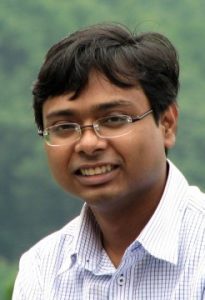
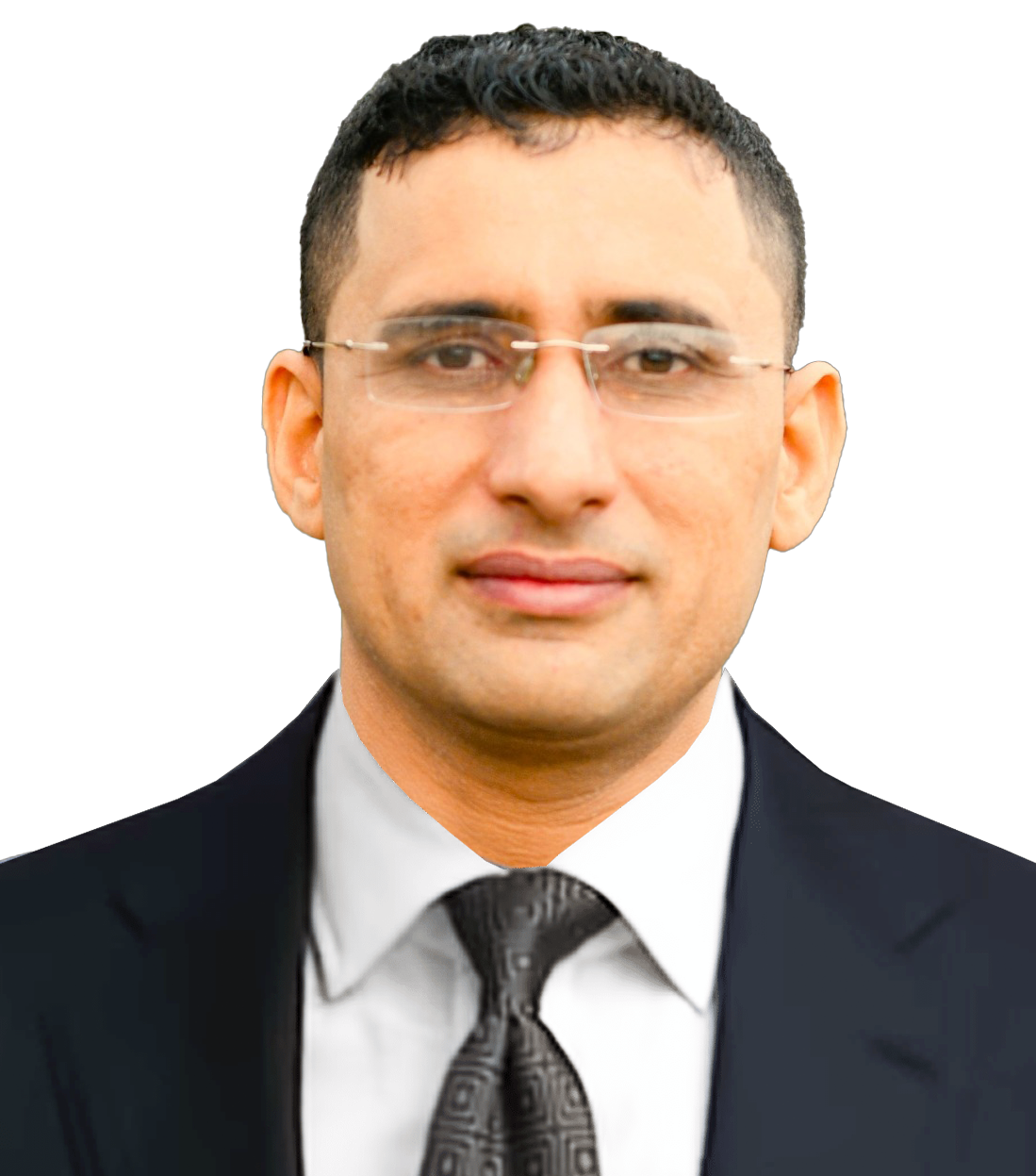
Alfredo Perez, Ph.D., is an Associate Professor and Graduate Program Chair for MS CS Education in the College of Information Science & Technology at the University of Nebraska at Omaha. He holds a doctorate and M.Sc. in Computer Science from the University of South Florida (2011, 2009) and a B.Sc. in Systems Engineering from Universidad del Norte, Barranquilla (2006). Education: Ph.D., Computer Science & Engineering, University of South Florida (2011) M.Sc., Computer Science & Engineering, University of South Florida (2009) B.Sc., Systems Engineering, Universidad del Norte, Barranquilla (2006) Dr. Perez's research focuses on privacy, mobile/ubiquitous computing, and computer science education. His recent work explores blockchain security, IoT privacy frameworks, and machine learning for malware detection. He also investigates formal modeling techniques for secure systems and wearables' facial privacy solutions. His publications reveal trends in privacy-preserving IoT architectures , blockchain applications , machine learning security , and formal verification methods . Research spans from technical implementations to societal impacts of privacy technologies. Scientific Recognition: IEEE Senior Member Member, U.S. National Academy of Inventors Dr. Perez has served on technical committees for journals/conferences like Elsevier Computer Communications and reviewed grants for the National Science Foundation. His teaching expertise covers computer programming, machine learning, and CS teacher education.
Dr. Gianluigi Tiberi is a Marie Curie Fellow at London South Bank University, affiliated with the College of Engineering, Design and Physical Sciences and the Department of Engineering. He conducts cutting-edge research at the intersection of biomedical engineering and microwave imaging, primarily focused on non-invasive cancer and stroke detection technologies. His research interests span Microwave Imaging , Biomedical Signal Processing , Deep Learning for Medical Diagnosis , and Huygens' Principle Applications in clinical settings. He plays a key role in advancing the MammoWave device, a novel microwave-based system for breast lesion detection, with applications also extending to stroke classification. The recent publications highlight a strong trend toward integrating artificial intelligence with electromagnetic imaging techniques, emphasizing safety assessment, automated lesion localization, and decision-level data fusion. His work increasingly leverages deep learning and hierarchical AI models to improve diagnostic accuracy and clinical applicability. Scientific Awards: Marie Curie Fellow Dr. Tiberi actively contributes to clinical research and data sharing, having published multiple datasets from multicentric trials. While formal advising roles are not detailed, his collaborations indicate mentorship and team leadership in large-scale biomedical projects. He is involved in research grants likely funded by the European Commission through the Marie Curie program, supporting innovation in medical imaging technologies. He is associated with the REACT Innovation Centre and the Bioscience and Bioengineering Research Centre at LSBU, where interdisciplinary teams develop next-generation healthcare devices. His work contributes directly to UN Sustainable Development Goal 3: Good Health and Well-being.
Professor Tughrul Arslan holds the Chair of Integrated Electronic Systems at the School of Engineering, University of Edinburgh . He leads the Embedded Wireless and Wearable Sensor Systems (EWireless) Group and co-founded sensewhere Ltd. and Sofant Technologies . His research spans reconfigurable architectures, low-power wireless systems, and biomedical RF sensing. Academic Background: BEng and PhD in Electronics Professional Affiliations: Senior Member IEEE, Fellow IET, Chartered Engineer His work focuses on smart wearable devices , indoor positioning systems , and AI-driven healthcare monitoring . Recent publications emphasize microwave imaging for dementia detection , edge AI accelerators , and non-invasive tremor monitoring . Key contributions include patented technologies like the Reconfigurable Instruction Cell Architecture (RICA) . Award-winning academic, he has supervised over 40 PhD students and authored 400+ peer-reviewed papers. His external roles include Chief Technology Officer at sensewhere , driving commercialization of indoor navigation solutions.
José Mairton Barros da Silva Jr. is an Assistant Professor in the Division of Computer Systems at Uppsala University, Sweden, starting April 2023. Prior to this, he was a Marie Skłodowska-Curie Postdoctoral Fellow jointly at Princeton University (Department of Electrical and Computer Engineering) and KTH Royal Institute of Technology (Division of Network and Systems Engineering). He holds a Ph.D. in Electrical Engineering and Computer Science from KTH, supervised by Carlo Fischione and Gábor Fodor, and BSc and MSc degrees in Telecommunications Engineering from the Federal University of Ceará, Brazil. Ph.D. in Electrical Engineering and Computer Science, KTH Royal Institute of Technology, 2019 MSc in Telecommunications Engineering, Federal University of Ceará, 2014 BSc in Telecommunications Engineering (with honors), Federal University of Ceará, 2012 His research lies at the intersection of wireless communications and machine learning, with a focus on federated learning, communication efficiency, full-duplex systems, millimeter-wave communications, and vehicular networks. He investigates how to optimize distributed machine learning over constrained wireless channels, leveraging techniques in signal processing, optimization, and network design to improve efficiency, fairness, and scalability. The recent publications highlight a strong trend toward integrating machine learning with wireless system design, particularly in enabling efficient federated learning over-the-air, reducing communication overhead via quantization and lazy aggregation, and enhancing full-duplex mmWave systems through low-resolution hardware and smart beamforming. His 2022 survey on Wireless for Machine Learning serves as a foundational reference in the field. He has been recognized with prestigious awards, including: Marie Skłodowska-Curie Fellowship (2022–2025) Grant from the Ericsson Research Foundation (2022) He has been actively involved in research leadership and dissemination, having served as Secretary for the Full-Duplex and Self-Interference Cancellation Emerging Technologies Initiatives (2018–2021), co-chaired workshops at IEEE GLOBECOM, and delivered tutorials on 'Wireless for Machine Learning' at major IEEE conferences (ICASSP, PIMRC, ICC, GLOBECOM). He has also taught in the KTH-Ericsson Data Science Micro Degree Program. His research has been supported by competitive grants and collaborative institutions including Ericsson, Princeton, and KTH. He contributes to open science through GitHub, where he shares code for full-duplex mmWave beamforming algorithms. He has been affiliated with research labs and teams at KTH, Princeton, GTEL (Brazil), and Rice University, working closely with leading experts in communication theory and machine learning. His future work is expected to advance intelligent, energy-efficient, and scalable wireless systems for distributed AI.
Nicolò Bellarmino is a Researcher at the Department of Control and Computer Science (DAUIN), Politecnico di Torino, where he also serves as an External Lecturer and Teaching Assistant. His work is centered on machine learning applications in electronic design automation, particularly in microcontroller performance screening and reliability assessment of deep learning hardware. His research interests include machine learning for embedded systems, feature selection, neural network testing, and reliability engineering. He employs techniques such as evolutionary algorithms, transfer learning, and fault injection to develop efficient and robust methodologies for semiconductor testing and DNN accelerator validation. The recent publications highlight a strong focus on data-efficient and automated approaches for performance prediction and reliability assessment, leveraging foundation models, unsupervised learning, and hierarchical modeling. These works span journals and top-tier conferences in computer-aided design, electronics, and machine learning. He has no listed scientific awards in the provided text. Bellarmino actively contributes to teaching in the Computer Engineering and Aerospace Engineering programs, collaborating on courses such as Systems Programming, System and Device Programming, and Future of Work. He is a member of the CAD - Electronic CAD & Reliability Group (DAUIN), contributing to cutting-edge research in EDA and hardware reliability. No grants or advising roles are mentioned.
Paolo Chiabert is a Tenured Associate Professor at the Department of Management and Production Engineering (DIGEP) of the Polytechnic of Turin . He is also a member of the CARS@PoliTO Center focusing on Automotive Research and Sustainable Mobility. His academic career spans multiple international engagements, including teaching roles at the Turin Polytechnic University in Tashkent (2013-2014). Research interests include: Enterprise Resource Planning (ERP) Industry 4.0 and 5.0 technologies Internet of Things (IoT) for smart production Lean Manufacturing methodologies Manufacturing Execution Systems (MES) Product Lifecycle Management (PLM) systems His research projects involve: CAPT'N'SEE (2021) - Additive Manufacturing for luxury industry HOME (2018-2021) - Hierarchical Open Manufacturing Europe FlexAGV (2017) - Flexible AGV systems DISLO-MAN (2016-2019) - Industry 4.0 shopfloor operations Scientific contributions focus on IoT integration , digital twin frameworks , and sustainable manufacturing , with recent works on: AI sustainability across product lifecycles One-of-a-kind production optimization IoT taxonomy for Industry 4.0 education Hybrid machine learning for aeroponic systems Knowledge reuse barriers in product development He supervises PhD students including: Temur Turgunboev - Remote multi-agent collaboration Niccolo' Giovenali - Irregular shape packing algorithms Luigi Panza - Technological innovations for sustainable manufacturing Mansur Asranov - IoT for Smart Production Ahmed Mekki Awouda - Industry 5.0 compliant IoT architectures Active in teaching at all levels, with recent courses in: Lean Manufacturing approaches Industry 4.0 production systems Production management fundamentals Graphical communication and mechanical manufacturing Industrial programming laboratory
Arturo Azcorra is a Full Professor at the University Carlos III of Madrid in the Telematics Engineering Department and serves as Director of the IMDEA Networks Institute . His career spans academic leadership and research in network architectures, communication protocols, and wireless technologies. Full Professor at Universidad Carlos III de Madrid (since 1998) Director of IMDEA Networks Institute (since 2006) Senior Member of IEEE Communications Society Research Interests: His work focuses on network architectures, communication protocols, wireless and mobile networks, peer-to-peer systems, and energy-efficient networking. Current projects include 5G network slicing, microsleep techniques for WiFi, and collaborative file distribution systems. Publications Trends: Recent articles address 5G network optimization, energy-efficient protocols, ad traffic filtering systems, and multicast video delivery mechanisms. His research combines theoretical modeling with practical implementations in real-world network environments. Scientific Awards: IEEE Communications Society Senior Member President of the Association for Telematics Academic Leadership: He has held significant administrative roles including Deputy Vice-Provost and Department Director at UC3M. Currently supervises the NETCOM Research Group and collaborates with IMDEA Networks .
Dr. Faycal Bouhafs is a Senior Lecturer at the School of Systems & Computing , UNSW Canberra . His research focuses on performance and reliability in wireless communication networks, with expertise in programmable networks, 5G/6G architectures, and IoT security. He leads initiatives in radio resource optimization and physical-layer security using software-defined approaches. Research Interests: Dr. Bouhafs investigates: Programmable wireless networks for dynamic resource allocation Beyond 5G/6G infrastructures supporting massive IoT deployments Security frameworks for cyber-physical systems and IoT ecosystems AI-driven optimization of radio access and network management Publication Focus: Recent works (2020-2025) demonstrate strong emphasis on: Software-defined wireless networking (SDWN) for spectrum sharing Physical-layer security via jamming and deep learning 6G resource optimization and IoT scalability Practical implementations using off-the-shelf equipment
Vasilis Tsouvalas is a Researcher in the Department of Mathematics and Computer Science at Eindhoven University of Technology (TU/e), affiliated with the Interconnected Resource-aware Intelligent Systems research group. His work centers on advancing federated learning architectures with emphases on communication efficiency and privacy preservation. His core research domains include: Federated Learning Data Privacy and Security Audio and Speech Recognition Systems Communication Cost Optimization Model Compression Techniques Distributed Machine Learning Analysis of his recent publications reveals a strong trajectory in solving heterogeneity challenges in federated systems, with innovative approaches to functional encryption for unlearning compliance and vision model fine-tuning. His work consistently addresses real-world constraints like communication bottlenecks and edge device limitations while maintaining model accuracy. Contact: v.tsouvalas@tue.nl Dr. Tsouvalas has supervised 2 students according to institutional records, though specific names aren't publicly listed. His research is conducted within the Interconnected Resource-aware Intelligent Systems framework at TU/e, focusing on practical implementations for resource-constrained environments.
Stefania Perri is an Associate Professor of Electronics at the Department of Mechanical, Energy and Management Engineering (University of Calabria, Italy). She holds a PhD in Electronics Engineering from the University of Reggio Calabria and has been actively involved in research and teaching since 1996. Research Interests include: Quantum-Dot Cellular Automata (QCA) - Invented an efficient QCA adder design methodology with three theorems. Image Processing - Developed memory architectures for aerospace applications and stereovision systems on FPGA. Low-Power Circuits - Designed novel SRAM cells and validated sub-threshold logic models. High-Speed Arithmetic - Holds US Patent 7,016,932 B2 for carry propagation optimization. Scientific Contributions: Over 120 publications including 58 journal papers, 48 conference proceedings, 3 patents International Collaborations with University of Rochester (USA) and Idaho State University Awards: Best Paper Awards at CENICS 2016 and CENICS 2010 Bronze Leaf Certificate at IEEE PRIME'06 Multiple Invited Paper recognitions
Dr. MARIOROSARIO PRIST serves as a Researcher at the Department of Information Engineering within the Faculty of Engineering at Marche Polytechnic University (UNIVPM) in Ancona, Italy. His institutional affiliation is maintained through the Department of Information Engineering (quota 170) at Via Brecce Bianche, 60131 Ancona, with contact details including phone 071 220 4468 and email m.prist@staff.univpm.it. Dr. PRIST's research spans cutting-edge domains in artificial intelligence applications for industrial systems, with particular emphasis on neural network implementations, digital twin architectures, and Industry 4.0 technologies. His work demonstrates strong focus on lightweight AI frameworks for edge computing , anomaly detection in manufacturing processes , and resource optimization in production environments . The research portfolio reveals consistent innovation in adapting advanced machine learning techniques to practical industrial constraints, especially for small and medium enterprises. Analysis of his publication trends indicates a strategic shift toward implementing AI solutions on resource-constrained devices and bridging edge computing with cloud infrastructure for real-time industrial monitoring. Recent work emphasizes practical applications of Echo State Networks for process control and anomaly detection, while maintaining strong connections to additive manufacturing optimization and safety monitoring systems. His research consistently addresses the challenge of making advanced AI accessible for industrial implementation without requiring extensive computational resources. Dr. PRIST's work demonstrates significant contributions to the integration of cyber-physical systems in manufacturing environments, with particular expertise in translating theoretical AI concepts into practical industrial applications that enhance production efficiency, safety, and sustainability.
Arslan Musaddiq serves as a Senior Lecturer in the Department of Computer Science and Media Technology at Linnaeus University's Faculty of Technology, Sweden. His expertise spans Internet of Things, machine learning, artificial intelligence, embedded systems, and wireless communication technologies, with a strong focus on practical applications for industry. Dr. Musaddiq holds a PhD in Information and Communication Engineering from Yeungnam University, South Korea (2021), where his research focused on applying reinforcement learning techniques to enhance IoT-based wireless communication systems. He also earned a Master's degree in Communications and Network Engineering from University Putra Malaysia (2015). His research interests concentrate on developing data-driven solutions tailored for small and medium-sized enterprises in the Linnaeus region. Dr. Musaddiq teaches courses including Computer Networks, Embedded Systems, and multiple IoT-related subjects at both bachelor's and master's levels. Dr. Musaddiq actively participates in several research initiatives including HPC for SME, IoT lab for SME 2.0, and the DigIT project, all aimed at helping companies enhance their operations through AI, IoT, and data analytics. His publication record shows a consistent focus on practical IoT applications across energy systems, transportation, environmental conservation, and healthcare sectors. Previously, he served as a Postdoctoral Research Fellow at Linnaeus University (2021-2024) and at the Information and Communication Technology Convergence Research Center at Kumoh National Institute of Technology, South Korea, where he continued his work on reinforcement learning-based resource management in IoT environments.
Shahriar Nirjon is an Associate Professor in the Department of Computer Science at the University of North Carolina at Chapel Hill. His research focuses on Embedded Intelligence, developing end-to-end systems that make resource-constrained real-time and embedded sensing systems capable of learning, adapting, and evolving. Dr. Nirjon received his Ph.D. from the University of Virginia in 2014. Before joining UNC Chapel Hill in 2015, he worked as a Research Scientist at HP Labs (2014-2015) and as a Research Intern at Microsoft Research (Summer 2013) and Deutsche Telekom Lab (Summer 2010). His primary research interest is Embedded Intelligence, with recent works broadly categorized into embedded deep learning and multi-modal sensing techniques. Applications of his research span wearables and implantables, long-term monitoring and control systems, smart home environments, and mobile health solutions. Dr. Nirjon's research bridges theoretical foundations with practical implementations, resulting in systems that have real-world impact in healthcare, safety, and everyday computing. His work has been highlighted in prominent media outlets including IEEE Spectrum, The Economist, New Scientist, and BBC. Dr. Nirjon's publication record demonstrates a strong focus on mobile computing systems, embedded sensor networks, and wireless technologies. His recent work shows increasing integration of machine learning and artificial intelligence with embedded systems, particularly in healthcare applications. There's a clear trajectory toward more sophisticated, energy-efficient systems capable of on-device intelligence, with growing emphasis on privacy-preserving techniques and real-world deployments in healthcare settings. Best Paper Award, Challenges in AI and Machine Learning for IoT (AIChallengeIoT '20) Best Presentation Award, Pervasive and Ubiquitous Computing (Ubicomp '20) Best Paper Award, Distributed Computing in Sensor Systems (DCOSS '19) Best Presentation Award, Vehicular Networking Conference App Contest (VNC '18) Best Demo Runner Up, Vehicular Networking Conference App Contest (VNC '18) Best Paper Nomination, Embedded Wireless Systems and Networks (EWSN '17) Best Demo Runner Up Award, Embedded Networked Sensor Systems (SenSys '16) Best Paper Award, Mobile Systems, Applications, and Services (MOBISYS '14) Best Paper Award, Real-Time and Embedded Technology and Applications Symposium (RTAS '12) Dr. Nirjon has advised numerous PhD students including Chong Shao (Google), Shiwei Fang (Assistant Professor at Augusta University), Tamzeed Islam (Research Staff at Amazon), Bashima Islam (Assistant Professor at Worcester Polytechnic Institute), Seulki Lee (Assistant Professor at UNIST, Korea), and Yubo Luo (Black Sesame Technologies Inc.). He currently advises Mahathir Monjur, Zhenyu Wang, and Louie Lu who are in various stages of their PhD programs. His research is supported by significant grants including an NSF CAREER award ($561K), an NSF SCH grant ($941K), and multiple other NSF-funded projects totaling over $2 million. His active projects include Audio Privacy, Pedestrian Safety, IoT Data Privacy, and HVAC Acoustic Fingerprinting. Dr. Nirjon leads research in the Embedded Intelligence Lab at UNC Chapel Hill, where his team develops cutting-edge technologies in mobile computing, embedded systems, and wireless networks. His work spans multiple domains including healthcare (mobile health systems), safety (pedestrian safety applications), and smart environments (smart homes). He collaborates with researchers across disciplines, particularly in healthcare through the Carolina Health Informatics Program (CHIP), and is actively involved in the Be-A-Maker (BeAM) network of makerspaces at UNC.
Dr. Tariq Khan is a senior researcher in the School of Computer Science and Engineering at UNSW Sydney, Australia. He joined UNSW in 2021 after holding positions at Macquarie University (PhD), COMSATS University Islamabad Pakistan (Assistant Professor), and Deakin University (Research Fellow). His primary research interests include: Computer Vision Machine Learning Image Segmentation Image Classification Medical Image Analysis Deep Neural Networks Retina Image Analysis Dr. Khan is particularly renowned for his work in retinal image analysis, where according to SciVal data from the last 5 years, he is ranked number 1 in the world for research in the topics of Retina Image, Retina Blood Vessels, and Hypertension Retinopathy. He has published over 30 papers in these fields with a field-weighted citation impact of 1.99, indicating he has been cited twice the global rate expected for his field. His research portfolio shows a strong trend toward applying deep learning techniques to medical image analysis, particularly in ophthalmology. Many of his recent publications focus on developing automated quantitative analysis methods for biomedical imaging data, with applications in hypertension detection and other industrial uses. Dr. Khan has published over 90 peer-reviewed journal and conference papers with total citations exceeding 2400+, an H-index of 32, and an i10-index of 56. Dr. Khan is actively involved in research supervision, currently guiding multiple PhD students in projects related to computer vision and medical image analysis. His laboratory work focuses on developing new computer vision and machine learning methods, particularly deep learning approaches for automated analysis of biomedical imaging data.
Jari Lietzen serves as a Postdoctoral Researcher within the Department of Information and Communications Engineering at Aalto University, Finland, actively contributing to the Communication Engineering research group. His work focuses on pioneering ultra-low-power communication solutions for next-generation wireless networks, particularly through backscatter technologies that enable battery-free device operation by harvesting ambient energy. His research spans critical domains including Backscatter Communications for Ambient IoT, Physical Layer Security mechanisms like secret key generation, Visible Light Communication integration, and Quantum-Enhanced Wireless Systems. He investigates thin-film device fabrication using additive manufacturing, polarization conversion techniques, and reconfigurable intelligent surfaces for harmonic beam steering, addressing fundamental challenges in energy efficiency and security for constrained IoT environments. Analysis of his 13 publications (2018-2024) reveals a cohesive research trajectory centered on backscatter communications evolution. Key trends include the shift from foundational quantum backscatter paradigms (2018) toward practical hardware implementations like light-controlled thin-film devices (2024) and multi-antenna integrated systems. His work consistently bridges theoretical advances in physical layer security with experimental validation, demonstrating expertise in Sub-1GHz radio systems, satellite communications security, and hybrid VLC-backscatter architectures for ambient IoT. Within Aalto University's Communication Engineering group, Lietzen collaborates extensively on experimental projects involving prototype development and link budget validation, with strong partnerships including Boxuan Xie, Kalle Ruttik, and Riku Jäntti. His research directly supports emerging 6G technologies through innovations in passive wireless infrastructure and quantum-inspired communication protocols.