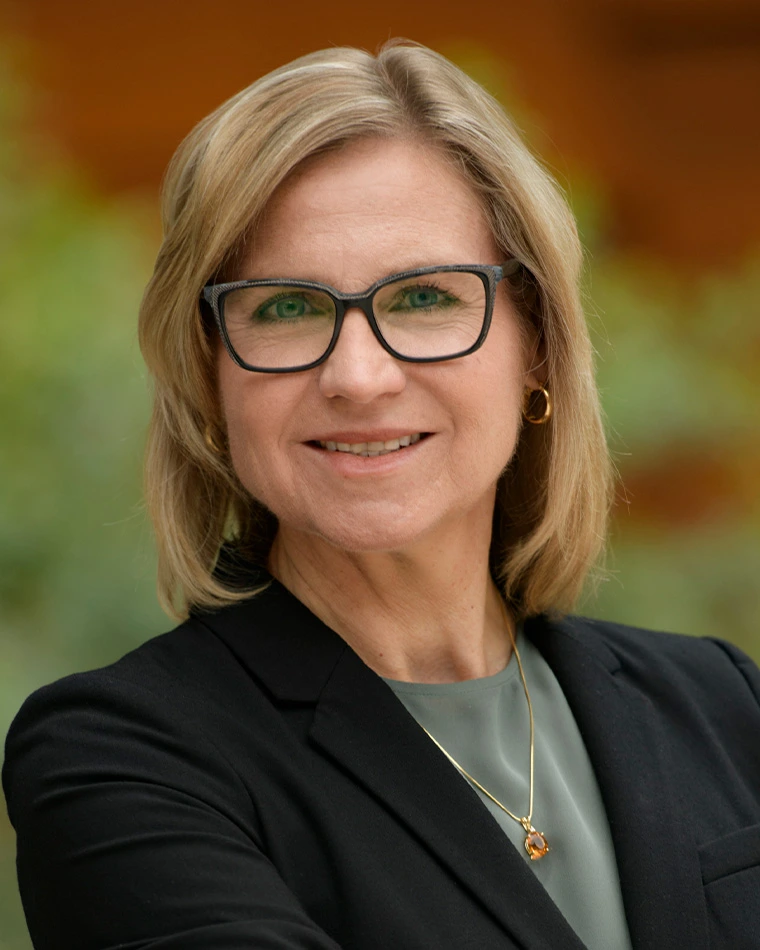
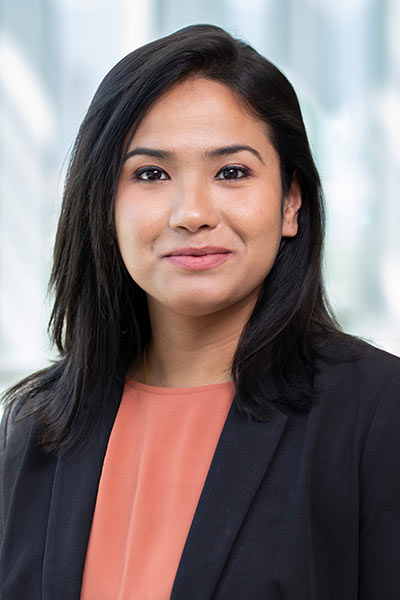
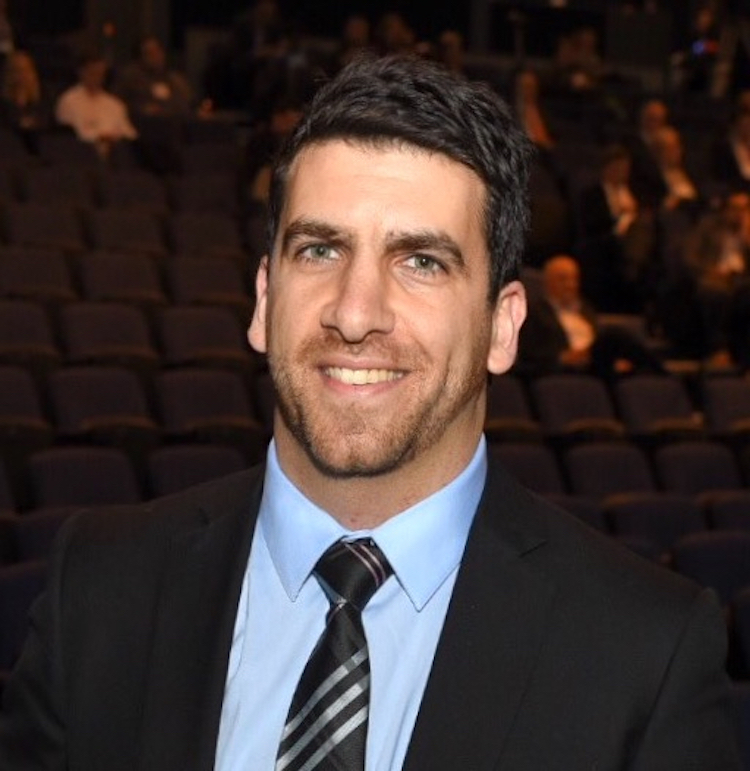
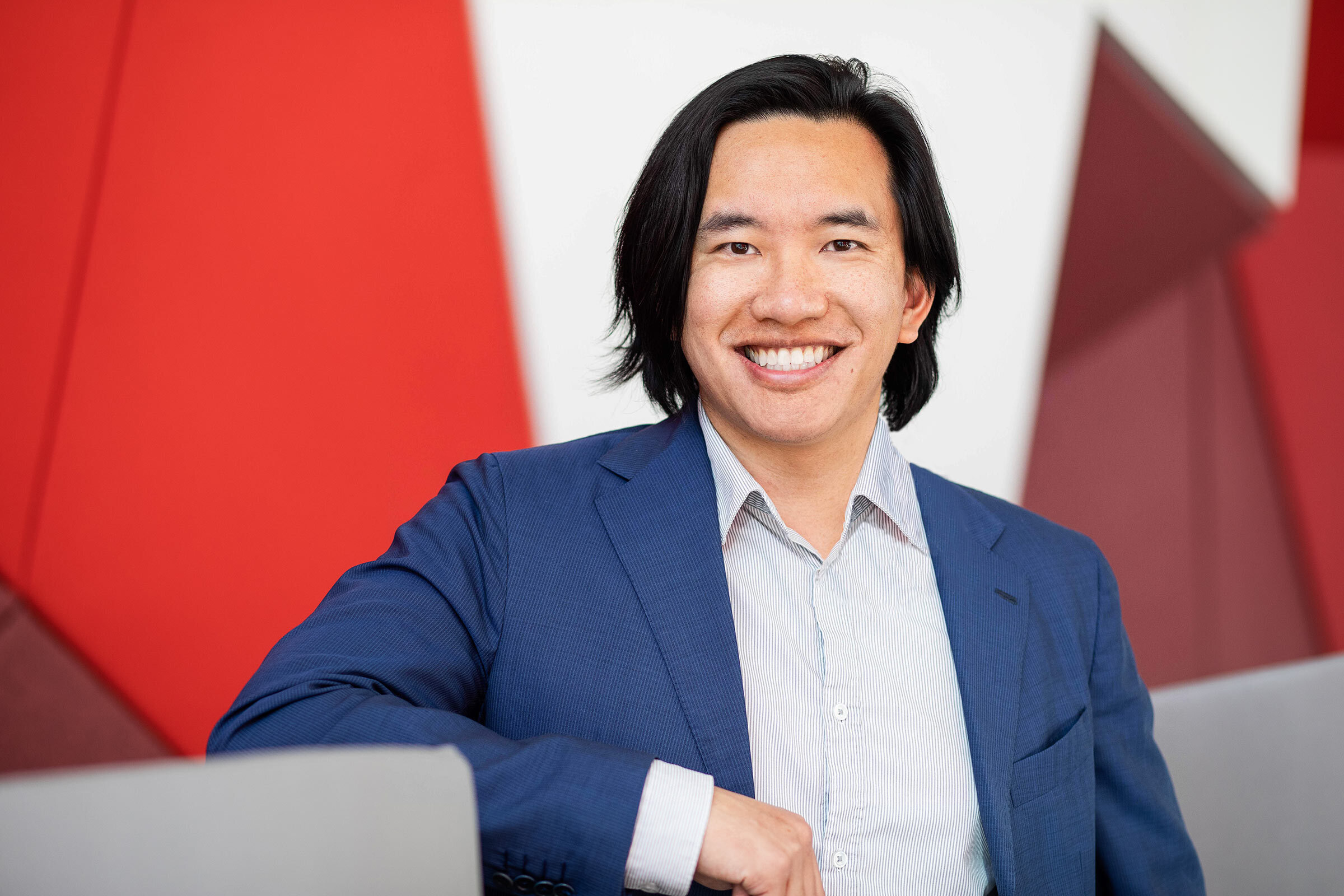
Maxime CORDY is a Research Scientist at the Interdisciplinary Centre for Security, Reliability and Trust (SnT) , University of Luxembourg, within the Security, Design and Validation group (SerVal) . He holds a PhD from the University of Namur (Belgium, 2014) and specializes in software engineering, applied artificial intelligence, and cybersecurity. His work focuses on adversarial machine learning, deep learning robustness, and model checking for critical systems. Research interests include adversarial attacks on tabular data , energy system optimization , code understanding models , and software quality assurance . Recent projects address challenges in secure AI deployment, automated test generation, and fault detection in large language models. Publications emphasize empirical studies on adversarial defenses, data augmentation for code models, and energy consumption forecasting. He contributes to tools like Daedalux (variability-aware model checking) and benchmarks like Tabularbench for adversarial robustness evaluation. Current affiliations include leadership within the SerVal group and collaborations on interdisciplinary projects such as MALETSQUE (Machine Learning Techniques for Software Quality Evaluation). His work bridges theoretical computer science with practical applications in energy systems, medical imaging, and space program design.
Dr. Adrian Owen is a Professor of Cognitive Neuroscience & Imaging at Western University's Brain and Mind Institute, holding the Canada Excellence Research Chair. His work focuses on consciousness disorders, neurodegenerative diseases, and functional neuroimaging applications. He pioneered techniques like detecting residual cognition in vegetative patients using fMRI and fNIRS. Research Focus: Owen's research bridges cognitive neuroscience and clinical practice, emphasizing disorders of consciousness, Alzheimer's/Parkinson's mechanisms, and neurorehabilitation. He develops brain-computer interfaces for communication in non-responsive patients and investigates anesthesia effects on neural connectivity. Key Contributions: Pioneered covert cognition detection in vegetative patients, advanced fNIRS applications in ICU settings, and established international clinical cohorts for consciousness assessment. His work has appeared in Nature , Science , and The Lancet . Labs/Teams: Leads the Owen Lab at Western University, collaborating with clinicians, engineers, and neuroscientists to translate neuroimaging innovations into clinical tools. Grants/Industry Links: Receives funding for interdisciplinary projects linking brain imaging, neurology, and biomedical engineering, fostering industry partnerships for neurotech development.
Jennifer Barton is a Professor at the University of Arizona in the College of Engineering, with appointments in Biomedical Engineering, Electrical and Computer Engineering, Optical Sciences, and Biosystems Engineering. She serves as the Interim Director of the BIO5 Institute and has held leadership roles such as Department Head of Biomedical Engineering and Interim Vice President for Research. BS and MS in Electrical Engineering from the University of Texas at Austin and University of California Irvine PhD in Biomedical Engineering from the University of Texas at Austin (1998) Her research in Biomedical Optics focuses on developing miniature endoscopes combining optical coherence tomography and fluorescence spectroscopy for early ovarian and colon cancer detection . She also explores light-tissue interaction and dynamic optical properties of blood , leading to novel laser therapies for skin disorders. Her publications span optical imaging device design , cancer detection , and multimodal endoscopes . Recent works emphasize machine learning integration for diagnostic accuracy and 3D printed optical components . Women of Impact Research Innovation & Impact, University of Arizona (2022) Thomas R. Brown Distinguished Chair, College of Engineering (2020) Best Campus Collaborator, Tech Launch Arizona (2019) President's Award, SPIE (2016) She mentors students in biomedical engineering and leads the Tissue Optics Lab , an interdisciplinary team building novel imaging devices for healthcare innovation.
Anis Yazidi is a Professor at Oslo Metropolitan University, affiliated with the Faculty of Technology, Art and Design and the Department of Information Technology. His research focuses on Artificial Intelligence, Machine Learning, Medical Technology, and IoT Security, with a particular emphasis on Applications of AI in Healthcare, EEG Signal Processing, and Digital Transformation. Active research projects include AI Mind (dementia diagnostics), Glycopathology in dry eyes, and Pain and mental distress analysis Completed projects: Digital hate speech analysis, AI in reproductive technology, Nano-antibiotics development His recent publications (2023-2025) demonstrate expertise in: Tsetlin Automaton algorithms for concept learning EEG classification using visibility graphs and vision transformers AI ethics frameworks for medical practice Deepfake detection methodologies Collaborative work spans institutions in Norway, Czech Republic, and international AI research communities.
Henrik Myhre Jensen is a Professor at the College of Engineering , Aarhus University, specializing in Mechanics of Materials , Solid Mechanics , and Mechanical Engineering . His research focuses on fracture mechanics, composite materials, and computational modeling of structural behaviors. Research Focus Fracture mechanics in composites and layered materials Computational modeling of kink band propagation Surface wear and coating technologies Ultrasound imaging applications in mechanical systems Notable Contributions Henrik has contributed to understanding crack propagation in cantilever beams, developed numerical methods for simulating delamination in composites, and explored buckling instabilities in solids. His recent work connects machine learning (holomorphic neural networks) to traditional fracture mechanics problems. Key Projects MAGFLY (2017-2021): Magnets for Flywheel Energy Storage InnoVacc (2009): Pressure Testing of Vacuum Chambers Simulation of composite structures (2011-2020): Micro-mechanical modeling
Professor Timothy Walsh serves as Chair of Critical Care at the University of Edinburgh's Usher Institute within the College of Medicine and Veterinary Medicine. He concurrently holds the position of Director of Innovation for NHS Lothian and Health Innovation South East Scotland, bridging academic research with clinical implementation. His dual roles position him at the forefront of critical care research and healthcare innovation in the UK. Walsh's research spans critical and perioperative care, with a programmatic approach building complex multi-center trials. His work integrates epidemiology, systematic reviews, cohort studies, and stakeholder engagement to develop pragmatic trials. Recent focus includes AI algorithm validation, sedation protocols, transfusion medicine, and sepsis management. His fingerprint reveals deep expertise in Intensive Care Medicine (100%), Intensive Care Unit operations (74%), and Critical Illness (70%), with notable contributions to sedation research (35%) and sepsis (26%). His 221 research outputs include high-impact publications in NEJM, JAMA, and The Lancet. Current projects like the SHORTER antibiotic trial and aerosolized virus quantification study demonstrate ongoing leadership in trial methodology. As Director of Innovation for NHS Lothian (2018-2024), he established data-driven innovation frameworks connecting academic and industry partners to address NHS challenges. Walsh has secured £9 million as Chief Investigator and £34 million as co-applicant from NIHR, MRC, Wellcome, and industry sources. His leadership extends to founding the NIHR critical care specialty group (2007-15) and UK critical care research group (2007-16), which remain foundational to UK critical care research infrastructure. Trustee at Chest Heart & Stroke Scotland (2021-present) Director of Research & Development for NHS Lothian (2017-2021) Chair of 19 trial steering/data safety monitoring committees Leadership in 13 ECTU trials, 9 UK trials, and multiple international studies
Ehsan Modiri is a researcher at the Department of Hydrosystem Modelling , Helmholtz Centre for Environmental Research (UFZ), Germany. His work focuses on climate change impacts on hydrological systems, drought monitoring, and environmental modeling using advanced computational frameworks. Affiliation: UFZ - Helmholtz Centre for Environmental Research Department: Hydrosystem Modelling Research Themes: Climate Change, Droughts, Hydrological Forecasting, Water Resource Management Research Interests: Modiri specializes in understanding hydrological responses to climate change, particularly in drought dynamics and soil moisture variability. His work bridges observational data with sophisticated modeling frameworks to improve predictability of water balance components under warming scenarios. Scientific Contributions: Recent publications highlight his role in developing high-resolution drought simulations, evaluating hydrological model performance, and analyzing groundwater responses to global warming. He participates in large-scale European hydrological projects and collaborates on climate-hydrology integration initiatives.
Dr. Srishti Banerji is an Assistant Professor in the Department of Civil and Environmental Engineering at Utah State University and Director of the Systems, Materials, and Structural Health (SMASH) Lab. She leads research on advanced construction materials, structural resilience under extreme loads (particularly fire), sustainable infrastructure, and structural health monitoring. Her group focuses on experimental testing, numerical simulations, and developing design solutions for civil infrastructure. Education: PhD in Civil (Structural) Engineering, Michigan State University (2021) MS in Civil (Structural) Engineering, Concordia University (2016) BS in Civil Engineering, National Institute of Technology Silchar (2013) Research Focus: Her work spans: 1) Characterization of high-performance/sustainable materials (e.g., UHPC, recycled glass pozzolan), 2) Structural behavior under fire exposure, 3) Integration of electric charging systems in concrete pavements, 4) Non-destructive testing and structural health monitoring, and 5) Retrofitting techniques for infrastructure strengthening. She employs machine learning, thermo-mechanical modeling, and full-scale experimentation. Publication Trends: Her 13+ journal articles primarily analyze fire resistance of concrete/timber structures, UHPC material properties at high temperatures, sensor-based infrastructure monitoring, and sustainable material development. Recent works increasingly incorporate machine learning and electrification concepts. Awards & Honors: Teacher of the Year (USU, 2025) ASCE ExCEEd Faculty Teaching Fellowship (2023) Top Cited Article Award, Fire and Materials Journal (2023) SHMII-11 Early Career Grant (2022) NSERC Scholarship (2015) Best Conference Paper (SEC 2016) Current Projects & Teams: She leads 5+ funded projects including fire performance of polymer concrete, self-healing concrete for bridges, and Utah-sourced UHPC development. Mentees include 3 PhD students (Abdullah Al Sarfin, Mehrnoosh Nazari, Mahmoud Ali) and alumni working on sustainable materials and additive manufacturing.
Associate Professor Abdul Ihdayhid is a Research Leader in Cardiovascular Biology at the Curtin Medical School , Curtin University, within the Faculty of Health Sciences. His work focuses on advanced cardiac imaging techniques, particularly coronary CT angiography, fractional flow reserve modeling, and AI integration in cardiovascular diagnostics. Key Research Areas: Cardiovascular imaging, artificial intelligence applications, aortic stenosis interventions, and ethical implications of AI in medicine. Recent Publications: Analysis of high-risk coronary plaque, telehealth adaptations during pandemics, and AI-driven CAC scoring innovations. Collaborations: Extensive partnerships with institutions across Australia and New Zealand on multicenter studies like the Australian-New Zealand SCAD cohort. His 2024-2025 work emphasizes machine learning for plaque quantification and ethical frameworks in AI implementation. Email: Abdul.Ihdayhid@curtin.edu.au
Neil Lawrence is the inaugural DeepMind Professor of Machine Learning at the University of Cambridge's Department of Computer Science and Technology. He also holds positions as a Senior AI Fellow at The Alan Turing Institute and a Visiting Professor of Machine Learning at the University of Sheffield. After three years as Director of Machine Learning at Amazon, Lawrence recently returned to academia, bringing extensive industry experience to his academic work. Lawrence's research focuses on the intersection of machine learning with the physical world, particularly in uncertainty quantification and end-to-end solutions for real-world applications. His work was initially inspired by deploying machine learning systems in African contexts, where comprehensive solutions are often required. His technical expertise spans over two decades in machine learning methods, with a growing interest in public understanding of machine learning, policy decisions, and data governance implications. His recent publications reveal a diverse research portfolio spanning climate science, healthcare applications, systems engineering for AI deployment, data governance, and theoretical machine learning. Lawrence's work demonstrates a consistent theme of bridging theoretical machine learning with practical applications across multiple domains, with particular attention to uncertainty quantification and the societal implications of AI systems. Lawrence serves on the board of the AISTATS conference and the ELLIS Foundation, and acts as the founding and series editor for the Proceedings of Machine Learning Research. He is also the co-host of the Talking Machines podcast, demonstrating his commitment to public engagement with machine learning concepts. At Cambridge, Lawrence teaches Advanced Data Science (Part II) and Machine Learning and the Physical World (MPhil ACS, Part III), contributing to both undergraduate and postgraduate education in computer science. His work with the Accelerate Programme for Scientific Discovery and the Data Trusts Initiative positions him at the forefront of developing frameworks for responsible and effective AI deployment in scientific and societal contexts.
Jes Frellsen is an Associate Professor at the Department of Applied Mathematics and Computer Science (DTU) since 2016. Previously, he held academic positions at the IT University of Copenhagen (2016-2019), postdoctoral roles at University of Cambridge (2013-2016) and University of Copenhagen (2011-2013). Education: PhD in Bioinformatics (2011), University of Copenhagen MSc in Bioinformatics (2007), University of Copenhagen BSc in Mathematics and Computer Science (2005), University of Copenhagen EAP Exchange at University of California, Santa Cruz (2004-2005) Research Focus Jes Frellsen specializes in statistical machine learning , particularly generative AI and deep generative models with applications in bioinformatics . His work integrates Bayesian inference , directional statistics , and Markov chain Monte Carlo methods to address challenges in macromolecular structure prediction and missing data imputation . Recent efforts explore uncertainty quantification in image segmentation and generative modeling for materials science. Advising & Collaborations He actively supervises PhD students and postdoctoral researchers in projects spanning news recommendation systems , medical imaging , and 3D structure generation . Collaborations include work with Zoubin Ghahramani (Cambridge) and Thomas Hamelryck (Copenhagen), with contributions to protein structure prediction and statistical methods in structural bioinformatics .
Dr. Sueda Saylan is an Assistant Professor at the Faculty of Engineering, Özyeğin University, since 2024. Her academic journey includes a Ph.D. in Interdisciplinary Engineering (2016) from Masdar Institute (now Khalifa University), postdoctoral research at Khalifa University (2016-2022), and an MSCA Postdoctoral Fellowship at Bilkent University (2022-2024). She has also held visiting researcher positions at MIT (2014) and the University of Tokyo (2016). Education Doctorate: Interdisciplinary Engineering, Masdar Institute of Science and Technology (2016) Master's: Microelectronic Manufacturing Engineering, Rochester Institute of Technology (2004) Bachelor's: Mechanical Engineering, Middle East Technical University (2002) Dr. Saylan's research focuses on memristive devices , photovoltaics , and light-matter interactions at micro/nanoscale . Her work bridges materials science and electronic engineering, with recent publications on memristor-based sensors, spectral filtering in silicon, and machine learning integration for biomedical diagnostics. Key trends from her 15 most recent articles (2013-2025) include: Advancing memristor technology for radiation sensing and vacuum monitoring Optimizing photovoltaic efficiency through light management and antireflection coatings Developing compact, low-power diagnostic devices for pathogen detection Exploring nanoscale electrode materials and switching mechanisms Applying Fourier transforms and interferometry in optical systems Scientific Awards Marie Skłodowska-Curie Actions (MSCA) Postdoctoral Fellowship (2022-2024) Dr. Saylan has received research support from prestigious programs and has contributed to interdisciplinary projects involving semiconductor physics, optical engineering, and biomedical diagnostics. Her collaborations span institutions like Khalifa University, MIT, and the University of Tokyo.
Timothy Menzies is a full Professor in the Department of Computer Science at North Carolina State University's College of Engineering. He serves as the director of the Irrational Research lab (mad scientists r'us) and holds editorial positions as editor-in-chief of the Automated Software Engineering journal and associate editor for IEEE Transactions on Software Engineering. With over 300 publications and more than 24,000 citations, Menzies is a globally recognized leader in software engineering research. Menzies' research focuses on developing computer systems that make optimal decisions with minimal data, specializing in artificial intelligence, intelligent agents, data sciences, analytics, and software engineering. His pioneering work in data-driven, explainable, and minimal AI for software systems has redefined defect prediction, effort estimation, and multi-objective optimization. He is particularly known for his contributions to empirical software engineering, emphasizing transparency and reproducibility. As the co-creator of the PROMISE repository, he helped establish modern empirical software engineering by demonstrating that small, interpretable AI models can outperform larger, more complex ones. Menzies' recent publications reveal several key trends in his research: a growing emphasis on ethical considerations in AI deployment, particularly in sensitive domains like legal systems; continued innovation in software analytics with a focus on hyperparameter optimization tailored specifically for software engineering tasks; exploration of causal relationships in software analytics; and development of techniques that work effectively with limited data, including landscape analysis, surrogate learning, and active learning approaches. Mining Software Repositories Foundational Contribution Award (2017) Carol Miller Graduate Lecturer Award (2016) IBM Faculty Award (2016, 2017) ACM Fellow (2025) ASE Fellow (2024) IEEE Fellow Professor Menzies has advised 24 Ph.D. students throughout his career, with recent completions including Andre Motta (April 2025) and Xueqi Yang (October 2024). His research has secured over $19 million in funding from prestigious agencies including NSF, DARPA, and NASA, as well as industry partners like Meta, Microsoft, and IBM. Current grants focus on improving machine learning model efficiency, adapting empirical software engineering methods to computational science, vulnerability detection, and software analytics at scale using transfer learning across 10,000+ GitHub projects. Menzies has developed innovative approaches to help developers navigate the challenges of AI implementation while maintaining ethical standards and practical effectiveness. As director of the Irrational Research lab, Menzies leads a team focused on creating AI tools that are not only intelligent but also fair, transparent, and trustworthy. The lab's work emphasizes practical applications of AI in software engineering while addressing the human factors involved in developer-AI collaboration. Current projects include developing methods for better fuzzing with L3harris, improving vulnerability detection through smart pruning techniques, and creating AI platforms for workforce empowerment through credential gap diagnostics.
Andy Shih is a Professor in the Department of Electrical Engineering at École de technologie supérieure (ÉTS) in Montreal, Canada. He holds a B.Eng. and M.Eng. in Electrical Engineering from McGill University and a Ph.D. in Electrical Engineering from Massachusetts Institute of Technology. His research is conducted at the LaCIME (Communications and Microelectronic Integration Laboratory), where he focuses on innovative materials and advanced manufacturing. Dr. Shih's research interests span organic semiconductor devices, microfabrication & nanofabrication, printed and flexible electronics, sustainable electronic materials, organic transistors and sensors, soft MEMS, AI-enhanced sensing, and biomedical monitoring technologies. His work bridges materials science, electrical engineering, and biomedical applications, with particular emphasis on developing smart bandages, printed sensors, and flexible electronics for healthcare monitoring. His publications reveal a strong focus on organic electronics, sensor development, and biomedical applications, with increasing integration of AI techniques for sensor enhancement and data analysis. Dr. Shih teaches courses including Electromagnetism (ELE312), Microsystem Fabrication Processes (ELE676), and Photovoltaic Solar Energy Systems (ENR889). His supervision portfolio includes numerous doctoral and master's students working on diverse projects spanning printed electronics, MEMS, sensor development, AI applications in sensing, and photovoltaic systems. His research has resulted in multiple patents related to thin-film transistors, acoustic resonators, and sensor technologies.
George Runger is a Professor at the School of Computing and Augmented Intelligence, Arizona State University. His work focuses on analytical methods for knowledge generation and data-driven organizational improvements, particularly in machine learning for large-scale data, real-time analysis, and applications to surveillance, decision support, and population health. Previously, he was a senior engineer and technical leader at IBM. Education: Ph.D. in Statistics, University of Minnesota (1982) Runger's research bridges machine learning, data mining, and statistical process control (SPC) to address challenges in manufacturing, healthcare, and semiconductor systems. His work includes developing artificial contrasts for signal detection, ensemble feature selection, and self-learning decision rules for adaptive SPC. His funded projects span NSF, DOD-NAVY-ONR, and Semiconductor Research Corporation grants, emphasizing supply chain analysis, dimensional metrology, and energy efficiency diagnostics. He has co-authored foundational texts like Applied Statistics and Probability for Engineers and Engineering Statistics . Scientific Awards: Inaugural Department Editor for Healthcare Informatics, INFORMS Transactions on Healthcare Systems Engineering Runger actively contributes to academia as a reviewer for journals like Management Science and IEEE Transactions on Knowledge and Data Engineering , and as a panel member for NSF and INFORMS workshops. He co-directs ASU's Quality and Reliability Engineering Laboratory and the Modeling and Analysis of Semiconductor Manufacturing team.