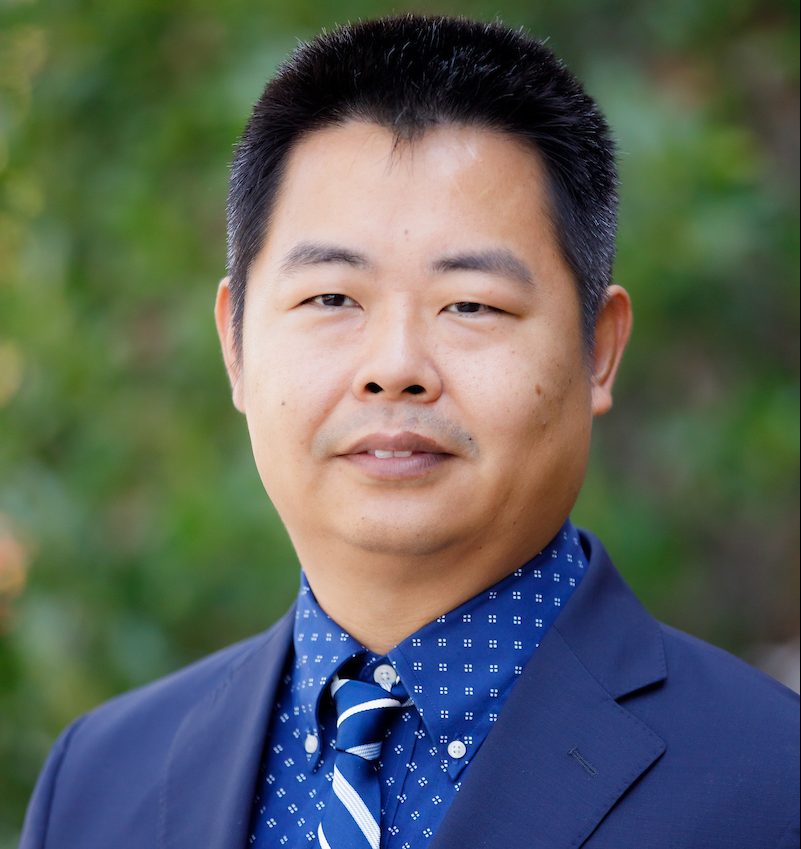
Eamonn Keogh is a Professor in the Computer Science and Engineering Department at the University of California, Riverside. His pioneering work centers on the Matrix Profile, a transformative approach to time series data mining enabling efficient solutions for motif discovery, anomaly detection, and similarity search. His algorithms (STAMP, STOMP, SCRIMP, DAMP, SCAMP) offer exact, parameter-free, and scalable solutions across domains like seismology, bioinformatics, and industrial IoT. Research areas include: Development of ultra-fast algorithms for time series joins and motif discovery at unprecedented scales (breaking the 100 million barrier) GPU acceleration for time series mining Domain-agnostic methods for semantic segmentation and anomaly detection Novel primitives like Time Series Chains, Snippets, and Consensus Motifs His work is highly cited and recognized by industry and academia, with applications ranging from NASA's Cassini mission to detecting BGP anomalies in computer networks.
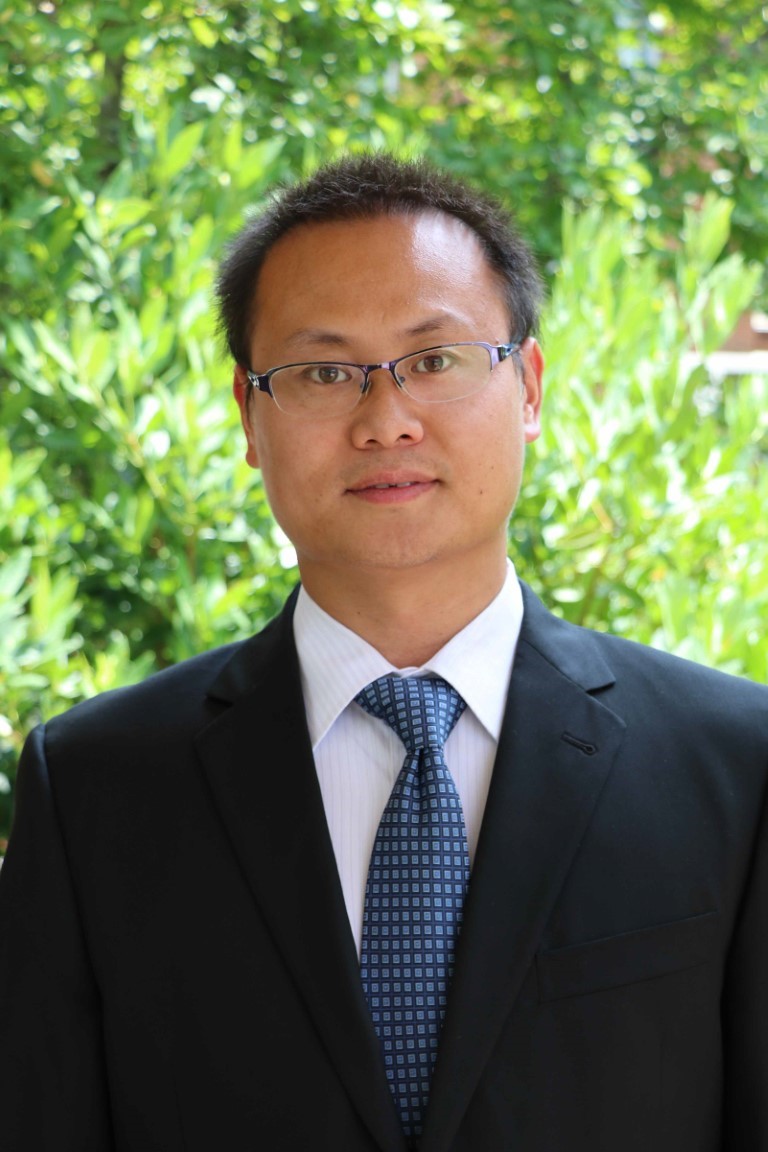
Dr. Md Manjurul Ahsan serves as a Research Assistant Professor in the Department of Industrial & Systems Engineering at the University of Oklahoma, where he develops AI-driven solutions for healthcare diagnostics and advanced manufacturing optimization. His work bridges theoretical AI advancements with practical industrial and medical applications. Education: Ph.D. in Industrial and Systems Engineering, University of Oklahoma M.S. in Industrial Engineering, Lamar University B.S. in Industrial and Production Engineering, Shahjalal University of Science and Technology Research Focus: Dr. Ahsan specializes in Artificial Intelligence with technical depth in Machine Learning , Deep Learning , and Computer Vision to solve critical challenges in healthcare diagnostics and additive manufacturing . His research emphasizes Explainable AI to enhance model trustworthiness and deployment efficiency across Cyber-Physical-Social Systems, with significant contributions to Aerospace and Defense applications. Publication Trends: Recent work (2023-2025) reveals a strategic expansion from core manufacturing applications into medical AI (diffusion models for diagnostics), cultural preservation (NLP for Dravidian languages), and geopolitical AI analysis. His publications consistently address data imbalance challenges while advancing digital twin integration in quality control systems. Scientific Recognition: GCOE Dissertation Excellence Award (2023) International Student Scholarship (2022) Outstanding Academic Achievement in Engineering (2022) IEEE IEMCON Best Paper Award (2020) Netti Vincent Boggs Engineering Excellence Award (2020) Research Leadership: As director of the Sooner Additive Manufacturing Laboratory , Dr. Ahsan leads cross-disciplinary teams developing real-time monitoring systems using FARO arms and CMM metrology. His postdoctoral work at Northwestern University (2023-2024) advanced AI deployment frameworks, resulting in 60+ peer-reviewed publications with multiple papers ranking in engineering's top 1% for citations.
Dr. Jiaqi Gong serves as Associate Professor in Computer Science and Adjunct Associate Professor in Mechanical Engineering at The University of Alabama's College of Engineering, while directing the Alabama Center for the Advancement of Artificial Intelligence. His academic foundation includes: B.S. in Engineering, China University of Geoscience (2004) Ph.D. in Engineering, Huazhong University of Science and Technology (2010) Dr. Gong's research pioneers human-AI convergence through cyber-physical systems and smart health technologies, developing mobile/wearable platforms to enhance human perceptual, cognitive, and physical capabilities. His work spans artificial intelligence, machine learning, computer vision, and IoT with applications in healthcare, environmental monitoring, and education. The Sensor-Accelerated Intelligent Learning (SAIL) laboratory he founded drives innovation in behavior change interventions, human movement modeling, and educational data mining. Recent publications reveal strong interdisciplinary trends: healthcare AI dominates with medication adherence prediction and surgical classification systems, while environmental applications feature flood-risk communication and drought analysis. His work increasingly integrates generative AI and LLMs across domains, demonstrating methodological innovation in federated learning, knowledge graphs, and explainable storytelling frameworks. Notable recognitions include: Best Student Paper Award, IEEE/ACM Connected Health Conference (2022) Best Student Paper Award, Body Sensor Networks Conference (2019) Data Challenge Win, IEEE Biomedical Health Informatics (2018) Best Paper Award, Body Area Networks Conference (2014) Best Demonstration Award, IEEE Wireless Health Conference (2014) Dr. Gong leads significant funded projects including a $2M CDC/NIOSH grant for first responder safety and $3M NSF funding for hydrologic research. As SAIL laboratory director, he mentors students in developing clinically deployed technologies for multiple sclerosis, dementia, and mental health. Future work focuses on scaling AI applications in chronic disease management and climate resilience through the Alabama AI Center. The SAIL laboratory (founded 2017) operates as a multidisciplinary hub developing wearable/mobile systems for health applications, with active collaborations across medical clinics and engineering departments for real-world deployment of behavior change interventions and movement analysis tools.
Dr. Lilong Chai serves as an Associate Professor & Engineering Specialist in the Department of Poultry Science at the University of Georgia's College of Agricultural and Environmental Sciences, with affiliate status at the UGA Institute of Integrative Precision Agriculture. His work integrates engineering principles with animal science to advance sustainable poultry production systems through climate-resilient practices and precision farming technologies. His academic foundation includes a Ph.D. in Agricultural and Bio-environmental Engineering from China Agricultural University (2005-2011), B.S. from Anhui Agricultural University (2001-2005), joint Ph.D. studies at Purdue University (2008-2010), and postdoctoral research at Iowa State University (2015-2018) and Agriculture and Agri-Food Canada (2012-2015). Dr. Chai's research program centers on precision poultry farming, climate-smart animal production, and animal welfare enhancement. He pioneers applications of deep learning, computer vision, and environmental engineering to develop real-time monitoring systems for poultry behavior, health indicators, and housing conditions. His work addresses critical industry challenges including floor egg management, footpad dermatitis detection, air quality control, and disease prevention in cage-free systems, emphasizing practical solutions that balance productivity with ethical animal husbandry. Analysis of his 2023-2025 publications reveals dominant themes in AI-driven behavioral monitoring (dustbathing, perching, foraging), thermal imaging for welfare assessment, and sustainable waste management. These studies consistently bridge agricultural engineering, veterinary science, and data analytics to create scalable precision farming tools applicable across commercial poultry operations. His scientific recognition includes 20 major awards such as: Educational Aids Blue Ribbon Award from ASABE (2024) NACAA Communications Award for Precision Poultry Farming Education (2023) Georgia Research Alliance's Georgia Greater Yield selection (2023) ASABE Outstanding Associate Editor Award (2022) Dr. Chai has secured $5 million through 40 competitive grants from USDA-NIFA, NSF, and international agencies as PI/Co-PI. He actively translates research into practice through leadership roles including Coordinator of the Georgia Precision Poultry Farming Conference, Chair of ASABE's Environmental Air Quality Committee, and reviewer for major research foundations. His extension work directly impacts industry stakeholders through annual training programs serving Georgia's poultry sector. His research infrastructure operates within UGA's Poultry Science Department and the Institute of Integrative Precision Agriculture, where he collaborates with interdisciplinary teams to develop next-generation monitoring systems integrating robotics, thermal imaging, and foundation models for real-world poultry applications.
Toby Jia-Jun Li is an Assistant Professor in the Department of Computer Science and Engineering at the University of Notre Dame, where he leads the SaNDwich Lab. He also serves as the Director of the Human-Centered Responsible AI Lab in the Lucy Family Institute for Data & Society and is a Faculty Fellow at the Institute for Educational Initiatives (IEI). Previously, he was affiliated with Carnegie Mellon University's Human-Computer Interaction Institute (HCII) and GroupLens Research. Dr. Li's research spans the intersection of Human-Computer Interaction (HCI), End-User Software Engineering, Machine Learning (ML), and Natural Language Processing (NLP), with recent work focusing on addressing societal challenges in the future of work through human-AI collaborative approaches. His work has resulted in over 40 publications at premier venues including CHI, UIST, CSCW, ACL, and ICSE, with 8 papers winning Best Paper or Honorable Mention awards. His recent publications demonstrate a strong focus on human-AI collaboration across various domains, including code understanding, privacy, accessibility, and creative tools. The work shows a trajectory toward increasingly sophisticated integration of human-centered design with AI capabilities, particularly using large language models to enhance human productivity and address societal challenges. Google Research Scholar Award recipient Recipient of Yahoo! Fellowship ($100,000/year) Best Paper Award at UIST 2020 Best Paper Honorable Mention Award at CHI 2021 Best Paper Award at CSCW 2024 Best Paper Award at CHI 2025 Dr. Li actively mentors Ph.D. students and has established collaborations with Google, Microsoft Research, IBM Research, Adobe, Verizon, and J.P. Morgan. His research has been supported by NSF, Google Research Scholar Program, AnalytiXIN Initiative, Yahoo! InMind project, and J.P. Morgan. He is currently recruiting Ph.D. students and undergraduate researchers for his SaNDwich Lab, which focuses on developing interactive systems to empower individuals to create, configure, and extend AI-powered computing systems.
Professor Michael C.L. CHAU serves as Professor and Deputy Area Head of Innovation and Information Management at The University of Hong Kong's Faculty of Business and Economics. He also holds the position of Associate Director at the HKU HKJC Centre for Suicide Research and Prevention, and serves on the HKU Senate and Court. His academic journey includes a Ph.D. in Management Information Systems from the University of Arizona and a B.Sc. in Computer Science (Information Systems) from the University of Hong Kong. Dr. Chau's research spans business analytics, artificial intelligence, web mining, fintech, smart health, and security informatics. His work focuses on applying data/text/web mining techniques to business, education, and social domains. He leads the Artificial Intelligence Research Group at HKU Business School, which has secured significant funding from the Hong Kong Research Grants Council, Food and Health Bureau, and other agencies for projects including 'The Invisible Hand in Crowdfunding' and 'Factors Moderating the Predictive Power of Social Media Sentiment on Stock Returns'. His publication portfolio includes over 150 articles in premier journals like MIS Quarterly, JMIS, and IEEE Transactions, with recent work exploring large language models, hate speech detection, and disaster-related social media analysis. His research demonstrates strong interdisciplinary connections across computer science, information systems, and business applications. INFORMS ISS Design Science Award (2020) IEEE ITSS Leadership Award in Intelligence and Security Informatics (2020) AIS Sandra Slaughter Service Award (2016) HKU Outstanding Young Researcher Award (2014) Faculty Research Postgraduate Supervision Award (2020 & 2025) Cited over 9,400 times (h-index = 47) Dr. Chau actively mentors doctoral students and has supervised numerous PhD graduates who now hold academic positions at institutions including Fudan University, Xi'an Jiaotong-Liverpool University, and the University of Maryland. His research grants portfolio demonstrates sustained funding success across diverse areas including blockchain, mental health applications, and social media analytics. The Artificial Intelligence Research Group he leads maintains strong industry connections through projects with Hong Kong Red Cross and the Hospital Authority.
Linyi Li is an Assistant Professor in the School of Computing Science at Simon Fraser University (SFU), leading the Trustworthy Artificial Intelligence (TAI) Lab. His research focuses on certifiably trustworthy deep learning systems, combining machine learning and computer security. He holds a PhD from the University of Illinois Urbana-Champaign (UIUC) and a B.Eng. from Tsinghua University. Affiliations: Simon Fraser University, TAI Lab Education: PhD in Computer Science, UIUC, 2023 B.Eng (Cum Laude), Tsinghua University, 2018 His research interests include deep learning , trustworthy machine learning , large language models , and software engineering . He emphasizes rigorous certification of robustness, fairness, and numerical reliability in AI systems. Recent work includes the InfiBench benchmark for evaluating code LLMs and advancements in neural network verification. Recent Research Trends: His publications span certified robustness, fairness guarantees, and scalable verification techniques for deep learning models. He also explores scientific evaluation of foundation models and adversarial defense mechanisms. Awards: Rising Stars in Data Science AdvML Rising Star Award Wing Kai Cheng Fellowship Finalist: Qualcomm Innovation Fellowship (2022) Winner: VNN-COMP'23 Competition (Team α, β-CROWN) Advising & Grants: As a PI, he oversees the TAI Lab's research. Though no specific grants are listed, his work is funded through competitive awards and university resources. Labs/Teams: Leads the TAI Lab at SFU, focusing on foundational and applied research in trustworthy AI.
Frede Blaabjerg is a Professor at Aalborg University (AAU Energy) , affiliated with the Faculty of Engineering and Science . Since 1998, he has pioneered power electronics research in applications such as wind turbines , photovoltaic (PV) systems , reliability engineering , and Power-2-X technologies. Education : PhD in Electrical Engineering (1995, Aalborg University) Honorary Degrees : Honoris Causa at University Politehnica Timisoara (2017) and Tallinn Technical University (2018) His research focuses on power electronics control , system optimization , and reliability for renewable energy and electric mobility . Recent work includes grid-forming converters , virtual synchronous generators , and smart EV charging systems. Key publication trends span 15+ years , with over 3,733 peer-reviewed articles and 900+ journal papers in power electronics , renewables , and energy storage . Notable book series: Control of Power Electronic Converters and Systems (4 volumes, Elsevier). Scientific Awards : 46 IEEE Prize Paper Awards 2020 IEEE Edison Medal 2019 Global Energy Prize 2014 IEEE William E. Newell Power Electronics Award Leadership Roles : Editor-in-Chief, IEEE Transactions on Power Electronics (2006–2012) Chairman, Danish Council for Research and Innovation Policy (2020–) President, IEEE Power Electronics Society (2019–2020)
Miyuki Hino is an Assistant Professor in the Department of City and Regional Planning and an Adjunct Assistant Professor in the Environment, Ecology, and Energy Program at the University of North Carolina at Chapel Hill. She holds a Ph.D. in Environment and Resources from Stanford University and a B.S. in Chemical Engineering from Yale University. Her research focuses on climate hazards, governance, and public policy , with emphasis on equitable adaptation to climate change. Key areas include sea level rise impacts, flood risk on property markets, and managed retreat strategies. She has conducted extensive work on floodplain development policies, household relocation programs, and community resilience frameworks. Dr. Hino's interdisciplinary approach integrates environmental science, urban planning, and social equity . She collaborates with academic and municipal partners, such as the Center for Urban and Regional Studies and Annapolis, MD local governments, to develop actionable solutions for climate adaptation. Her work bridges technical analyses (e.g., sensor networks, machine learning) with policy design to ensure both effectiveness and justice in climate responses. Recent projects emphasize preventing future 'trapped households' by analyzing zoning policies and market dynamics that drive risky development. She advocates for climate-smart growth strategies to balance economic needs with environmental safety, while addressing disparities in vulnerability across communities. Her research has been featured in Science Advances , Nature Climate Change , and interdisciplinary journals. She actively engages with policymakers to translate findings into practical measures, such as equitable buyout programs and floodplain management reforms.
Shu Yang is an Associate Professor of Statistics at North Carolina State University (NC State), specializing in causal inference, missing data analysis, and biostatistics. She holds a Ph.D. in Applied Mathematics and Statistics from Iowa State University and has held roles including Postdoctoral Fellow at Harvard University and Assistant Professor at NC State. Her research focuses on developing statistical methods for observational and clinical studies, particularly in healthcare and environmental applications. Education: Ph.D. in Applied Mathematics and Statistics from Iowa State University (2014) B.Sc. in Mathematics and Applied Mathematics from Beijing Normal University (2009) Research Interests: Dr. Yang’s work addresses challenges in causal inference, including longitudinal data analysis, missing data imputation, and high-dimensional statistics. She applies these methods to environmental health, cardiovascular diseases, HIV infection, and cancer research. Her team also explores spatial statistics and data integration techniques. Awards: 2025: Think, Collaborate & Do Ideation Award 2024: COPSS Emerging Leader Award, Cavell Brownie Mentoring Award 2022: University Faculty Scholar 2018: Ralph E. Powe Junior Faculty Enhancement Award Grants & Advising: She leads funded projects on causal inference methods in environmental health, sepsis detection, and marine protected areas. She advises over 20 Ph.D. students and postdocs, focusing on causal methods, data integration, and healthcare analytics.
Finlay Maguire is an Assistant Professor jointly appointed in the Faculty of Computer Science and the Department of Community Health & Epidemiology at Dalhousie University. He leads the Maguire Lab, which develops data-driven methods to address health and social crises through genomic epidemiology and interdisciplinary health data science. He is also affiliated with the Shared Hospital Laboratory, Sunnybrook Research Institute, and multiple national and international public health consortia including PHA4GE, CanCOGeN, and IRIDA. PhD: University College London / Natural History Museum (2016) MA: University of Oxford (2011) Donald Hill Family Fellowship, Dalhousie University (2021) Dr. Maguire's research focuses on two main areas: genomic epidemiology of infectious diseases and interdisciplinary health data science collaborations . His work in genomic epidemiology includes developing bioinformatics and machine learning tools to study antimicrobial resistance (AMR) and SARS-CoV-2 dynamics, often in collaboration with public health agencies. His broader health data science work addresses issues such as online radicalization, healthcare access for refugees, and autism-related language use, combining computational methods with social science. His recent publications (2023–2025) reflect a strong trend in pathogen genomics , AMR , zoonotic spillover , and computational social science . He has published on novel coronaviruses in bats, SARS-CoV-2 animal models, invasive Group A Streptococcus, and sociological analyses of incel communities. Much of this work involves tool development (e.g., ArgNorm, Pathoplexus) and data standardization (e.g., PHA4GE metadata standards). Finalist, 2024 Discovery Awards (Emerging Professional) 2023 President’s Research Excellence Award for an Emerging Investigator, Dalhousie Finalist, 2023 Discovery Awards (Emerging Professional) Funding from CIHR, NSERC, Genome Canada, SSHRC, BMGF Dr. Maguire actively mentors graduate students and postdocs, including PhD candidates in Computer Science and MSc students in Community Health & Epidemiology. He has secured major training grants such as the CIHR Health Research Training Platform and the Canadian One Health Training Program for Emerging Zoonoses. He also contributes to capacity-building initiatives like MicroResearch in Ghana and Kenya. The Maguire Lab is embedded in a rich network of collaborations, including the CARD database, Public Health Agency of Canada, Canadian Food Inspection Agency, and Sunnybrook Health Sciences Centre. The lab emphasizes open science, reproducible research, and interdisciplinary training, as seen in the development of open-source tools and participation in international consortia.
Pierre-Philippe Combes is a CNRS Research Professor and Head of Doctoral Studies in Economics at Sciences Po since 2021. He also serves as Co-Editor of the Journal of Urban Economics and Director of Graduate Programs in Economics at Sciences Po. Previously, he held positions at Aix-Marseille University (2003-2016), Boston University (2001-2003), and CERAS-École des Ponts et Chaussées (1998-2001). He holds a PhD in Economics from CREST (Paris School of Economics). Education PhD in Economics, Paris School of Economics (CREST), 1996 Habilitation à Diriger des Recherches (HDR), Aix-Marseille University, 2004 Research Interests : Urban economics and economic geography, focusing on local labor markets, housing markets, firm and household location choices, and resulting spatial disparities. His work uses machine learning for historical data recovery and examines agglomeration economies, migration externalities, and discrimination in urban contexts. Scientific Output Trends : Recent publications analyze urbanization in Sub-Saharan Africa, agglomeration economies, real income inequality in China, and historical land use through machine learning. Collaborative work spans France, China, and international institutions, addressing housing costs, peer effects in research, and urban poverty metrics. Scientific Awards : NATO Advanced Fellowship Grant (2001-2002) PhD Thesis Award - Association Française de Science Économique (AFSE) PhD Thesis Award - Association de Science Régionale de Langue Française (ASRDLF) Mention très honorable avec félicitations du jury (PhD thesis) Teaching & Editorial Roles : Teaches urban economics at Sciences Po and ENS Lyon. Serves on editorial boards of the Journal of Economic Geography , Regional Science and Urban Economics , and Journal of Urban Economics . Participates in evaluation committees for PhDs and habilitations across Europe. Policy Contributions : Advises on urban poverty measurement for the World Bank and contributes to French regional policy reports, including the Grand Paris Express project and CNIS (National Statistical Council).
Professor Hassan Rivaz is a Full Professor and Concordia University Research Chair in Medical Imaging with Deep Learning at Concordia University's Gina Cody School of Engineering and Computer Science. He holds appointments in the Department of Electrical and Computer Engineering and is cross-appointed to the Department of Computer Science & Software Engineering. Dr. Rivaz serves as the Founding Director of the IMPACT Lab and actively supervises PhD students in Electrical and Computer Engineering and Computer Science programs. Dr. Rivaz received his PhD from Johns Hopkins University in 2011, Master's degree from the University of British Columbia, and Bachelor's degree from Sharif University, followed by postdoctoral training at McGill University. His academic journey includes prestigious awards such as the NSERC Post-Doctoral Fellowship and Jeanne Timmins Costello Post-Doctoral Award. His research focuses on advancing medical image analysis through deep learning techniques, particularly in ultrasound imaging applications. Dr. Rivaz has made significant contributions to quantitative ultrasound, cancer detection, lymphedema assessment, and ultrasound elastography. His work bridges theoretical algorithm development with practical clinical applications, addressing challenges in medical image denoising, segmentation, registration, and tissue characterization. The IMPACT Lab under his direction develops innovative solutions for medical imaging problems with direct clinical relevance. Analysis of his recent publications reveals a strong emphasis on deep learning applications for ultrasound image processing, with particular focus on denoising techniques, elastography improvements, and segmentation algorithms. His work consistently addresses the challenge of working with real clinical data rather than simulated environments, contributing to more practical medical imaging solutions. Dr. Rivaz has received numerous prestigious awards including: Concordia University Research Chair in Medical Imaging with Deep Learning (2023–2028) QBIN/RBIQ Rising Star in Bio-Imaging in Quebec (2022) Concordia University Research Chair in Medical Image Analysis (2018-2023) Petro-Canada Young Innovator Award (2016–2018) He actively mentors graduate students, with many recipients of competitive scholarships including NSERC CGS, FRQNT, and FRQS awards. Dr. Rivaz serves on editorial boards for top journals including IEEE Transactions on Medical Imaging (since 2017), Medical Image Analysis (since 2025), and IEEE Transactions on Ultrasonics, Ferroelectrics and Frequency Control (since 2018). He has organized major conferences including IEEE EMBC 2020, ISBI 2021, and IEEE IUS 2023, and served as Area Chair for MICCAI from 2017 to 2024. As Founding Director of the IMPACT Lab, Dr. Rivaz leads a multidisciplinary research team focused on innovative medical imaging solutions. The lab maintains strong collaborations with hospitals and research institutions to translate imaging technologies into clinical practice. Current projects include developing AI-powered ultrasound analysis tools, quantitative imaging biomarkers for cancer diagnosis, and advanced techniques for ultrasound elastography with applications in tissue characterization and disease detection.
Abbas Milani is a tenured Professor of Mechanical Engineering at the University of British Columbia's Okanagan campus, where he holds the Tier 1 Principal's Research Chair in Sustainable & Smart Manufacturing and serves as Director of the Materials and Manufacturing Research Institute (MMRI). He also serves as Technical Director of the Composites Research Network (CRN), Lead of the Canadian-International Biocomposites Research Network, and leads multiple major initiatives including the UBC-Pacific Economic Development Canada-Advancing Circular Economy (ACE) program and the UBC-NRC IRAP National Circular Economy CtO Program. Dr. Milani's primary research focuses on advanced modeling, simulation, and multi-criteria design optimization of composite and biocomposite materials, structures, and manufacturing processes. His expertise spans Textile Composites/Biocomposites, Materials Constitutive Relations, Finite Element Modeling, Robust Inverse Methods, Material Selection for End-of-Life Design Strategies, Multiple Criteria Decision Making, and Industry 5.0 applications. His interdisciplinary research bridges mechanical engineering, sustainable materials science, and smart manufacturing technologies. Analysis of his recent publication record reveals a strong emphasis on sustainable materials development, with particular focus on biocomposites, life cycle assessment methodologies, and optimization of manufacturing processes. His work integrates computational modeling with experimental validation across diverse application areas including medical devices, sustainable packaging, and circular economy strategies. The publications demonstrate increasing integration of artificial intelligence and machine learning approaches with traditional engineering methods. 2015 UBC Okanagan Researcher of the Year Award Killam Faculty Research Award (2016) Inducted into Royal Society of Canada - College of New Scholars (2020) Gold Medal Service Contribution Award by Academics World Reviewer Contribution Award by ASM International Multiple teaching excellence awards from UBC Dr. Milani has successfully mentored over 100 students and postdoctoral fellows who have secured positions in both industry and academia. His research program has been supported by more than $15 million in funding from government and industrial organizations. He leads the NSERC CREATE in Immersive Technologies (CITech) program and co-leads the Advanced Materials and Fabrication Core Competency within the Survive and Thrive Applied Research (STAR) program, demonstrating his commitment to training the next generation of engineers and advancing applied research.
Assoc Prof Ying Chen is an Associate Professor at the National University of Singapore , affiliated with the Department of Mathematics, Asian Institute of Digital Finance (as Academic Director of PhD Program in Digital FinTech 2022–2024), Risk Management Institute (2019–2023), Department of Statistics and Data Science (2019–2023), and Department of Economics (2018–2023). She also contributes to NUS Graduate School for Integrative Sciences and Engineering since 2016. Research Interests include: AI forecasting and quantum computing for finance Nonstationary time series and functional data analysis Energy data analytics and precision medicine Network autoregression and spatial-temporal modeling Explainable AI and citation metrics Portfolio liquidation and market-making algorithms Article Trends demonstrate expertise in: Adaptive forecasting for gas flows and electricity prices Blockchain network influence detection Quantum computing applications in finance Functional autoregression with mixed predictors Credit rating fairness and explainability High-resolution implied volatility modeling Scientific Awards include: ISI Elected Member (2016–) International Statistical Institute Council (2023–2027) IASC Scientific Secretary (2017–2019, 2023–2025) Advisory roles for EU FIN-TECH and xAIM projects