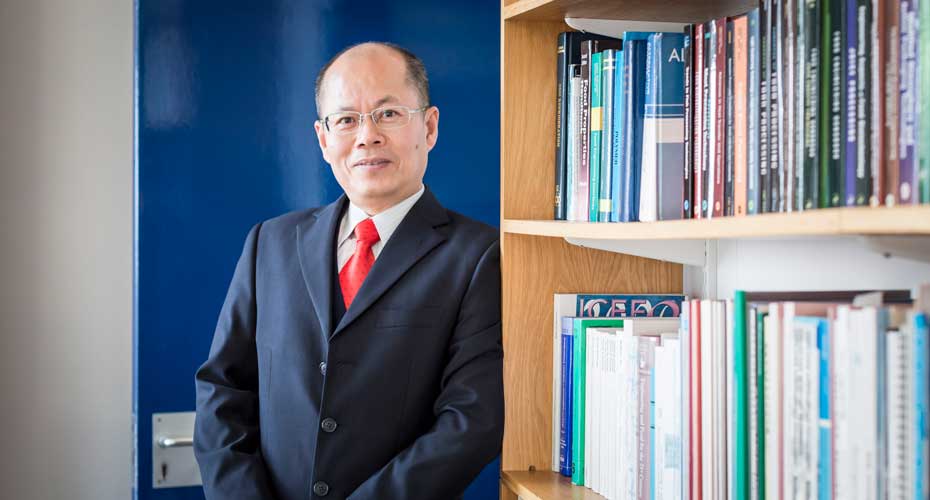
Professor Da-Wen Sun is a globally recognized authority in food and biosystems engineering at the UCD School of Biosystems & Food Engineering , University College Dublin. His research focuses on enhancing food preservation through innovative technologies like ultrasound-assisted freezing to minimize nutrient loss and structural damage in frozen foods. Key contributions: Developed ultrasound freezing methods to reduce ice crystal damage Editor of seminal texts including Handbook of Frozen Food Processing Founded the journal Food and Bioprocess Technology His work bridges computational modeling (e.g., CFD simulations , machine learning ) with industrial applications, particularly in freezing, drying, and vacuum cooling. Recent studies explore terahertz imaging for pest detection, deep eutectic solvents for moisture control, and cold plasma for allergen reduction. Scientific awards include: Frozen Food Foundation Freezing Research Award (2013) - First non-US recipient CIGR Honorary President title (2016) for leadership in agricultural engineering He leads the UCD Food Refrigeration & Computerised Food Technology group , collaborating internationally on technologies like nanosensors and green cryoprotectants to advance sustainable food systems.
Dr. Joseph Cassady serves as the South Dakota Corn Endowed Dean of the College of Agriculture, Food and Environmental Sciences at South Dakota State University (SDSU). Previously, he held the rank of Professor and Head of the Department of Animal Science at SDSU (2013–2022) and North Carolina State University (2001–2013). His research focuses on food animal genetics and genomics, particularly improving production efficiency in swine and beef cattle. Education: B.S. in Animal Science (Iowa State University, 1993), M.S. and Ph.D. in Animal Science (University of Nebraska-Lincoln, 1995 and 1999). Professional roles include past-president of the National Swine Improvement Federation and executive director of the Beef Improvement Federation (2009–2015). Research emphasizes genetic and genomic advancements to enhance livestock productivity, with notable work on heat stress mitigation, swine behavior, and genomic selection in cattle. Awards include the 2019 Harold and Barbara Bailey Award for Academic Leadership and recognition for service to the Beef Improvement Federation. Administrative responsibilities include leading the College of Agriculture, Food and Environmental Sciences, overseeing accreditation processes, and participating in industry boards such as the South Dakota Poultry Industries Association and American Angus Foundation. Key research themes span animal genomics, livestock environmental adaptation, and precision agriculture. Over 150 peer-reviewed publications address topics like swine feeding behavior, cattle genetics, and genomic tools for improving meat quality and production efficiency.
Dr Olatunji Johnson is a Lecturer in Statistics at The University of Manchester's Department of Mathematics. His research focuses on spatial and spatio-temporal statistics applied to global public health challenges, including tropical diseases like malaria and neglected tropical diseases (NTDs). He holds a PhD in Statistics and Epidemiology and has developed influential geostatistical methods and R packages (SDALGCP and MBGapp) for disease mapping and surveillance. Education: PhD in Statistics and Epidemiology (supervised by Prof. Peter Diggle). Research interests include model-based geostatistics, real-time health surveillance, and hybrid machine learning approaches for spatial data analysis. He is actively seeking PhD students interested in spatial statistics applications. Key Collaborations: Worked on projects in Kenya, Cameroon, Uganda, and Ethiopia, focusing on helminth control, air pollution impacts, and disease burden analyses. Part of the Statistical Advisory Unit and contributes to the UN Sustainable Development Goals through his work on health equity and disease elimination. Notable Projects: Developed methodologies for efficient survey design in NTD programs, air quality studies in African cities, and spatiotemporal modelling of pandemic risks. His work bridges statistical innovation with actionable public health policy.
Bruce A. Maxwell is a Teaching Professor and Assistant Director of Computing Programs at Northeastern University’s Seattle Campus, following roles as Chair of the Computer Science (CS) Department at Colby College (2013–2020) and leadership in establishing the Khoury College MS CS Align Program at the Roux Institute (2020–2022). His academic journey includes affiliations with Northeastern’s Seattle Campus and ongoing collaboration with Colby CS as a research scientist. He specializes in Computer Vision, Robotics, Computer Graphics, Game Design, and Data Analysis, with notable contributions to concussion management research through the Maine Concussion Management Initiative (MCMI), focusing on sports-related injury analysis and symptom monitoring. His research spans over two decades, with significant work in human-robot interaction, autonomous systems, and educational technology. Notable projects include developing tools for real-time shadow removal in autonomous driving contexts and analyzing cognitive outcomes in student-athletes post-concussion. Maxwell has authored over 50 peer-reviewed publications, emphasizing interdisciplinary approaches bridging computer science, sports medicine, and educational policy. Teaching innovations include integrating thematic elements (e.g., Lord of the Rings) into CS1 coursework and advocating for writing in computer science curricula. He maintains active roles in academic service, including SIGCSE conference contributions and panel discussions on gender equity in tech education. Education: Ph.D. in Robotics from Carnegie Mellon University (1996), M.Phil. in Engineering from Cambridge University (1993). Awards: Recognized for pedagogical contributions but no named awards listed in provided materials. Labs/Teams: Collaborates with the Maine Concussion Management Initiative and Khoury College’s Align Program team.
Nina Schwarz is Assistant Professor of human-environment interactions in cities at the Department of Urban and Regional Planning and Geo-Information Management, ITC—University of Twente. Holding a Diploma in Environmental Sciences (University of Lüneburg, 2003) and a PhD in Social and Economic Sciences (University of Kassel, 2007), she spent a decade as senior scientist at the Helmholtz Centre for Environmental Research – UFZ before joining ITC. Her interdisciplinary research integrates urban land-use science, ecosystem-service evaluation and advanced modelling techniques—especially agent-based models—to explore sustainable urban development under global change. Research interests revolve around three interconnected themes: (i) urban land-use change —understanding how residential, commercial and green-space dynamics co-evolve; (ii) urban ecosystem services —quantifying both supply and demand of services such as local climate regulation, recreation and biodiversity; and (iii) behavioural modelling —formalising human decision-making to simulate policy scenarios ranging from slum-upgrading to vineyard management. She actively links these themes to UN Sustainable Development Goals, notably SDG 11 (Sustainable Cities) and SDG 15 (Life on Land). Recent publications (2022-2025) reveal a methodological breadth spanning citizen-science impact assessment in Suriname, cooling effects of urban water bodies in Chinese mega-cities, European wine-growers’ adaptive behaviour, and methodological advances in upscaling and validating agent-based land-use models. Across these studies, Schwarz consistently combines empirical field data, geospatial analytics and participatory approaches to produce policy-relevant insights for cities in both the Global North and South. She has (co-)authored >80 peer-reviewed works, accumulating c. 5 900 citations and an h-index of 28 (Scopus). While specific honours are not itemised in the supplied text, her sustained citation impact and invited contributions to major conferences (e.g., iEMSs 2020, IAHR 2025) underscore scientific recognition. Schwarz frequently engages with societal stakeholders: her projects have generated open datasets on urban green-space monitoring in Paramaribo, e-learning modules for Latin-American universities, and interactive dashboards for sustainable water management. Within ITC she contributes to capacity-building programmes for emerging economies, supervises graduate researchers and maintains active collaborations across Europe, Latin America, Africa and Asia. No explicit lists of PhD students or personal grants are provided in the current corpus, but her leadership of externally funded projects (e.g., citizen-science evaluation, vineyard decision-making database) indicates ongoing acquisition of research funding.
Craig Knoblock serves as Keston Executive Director of the Information Sciences Institute (ISI) at the University of Southern California (USC), Vice Dean of the USC Viterbi School of Engineering, and Research Professor of Computer Science and Spatial Sciences. He also directs the Data Science Program and the Center on Knowledge Graphs at USC. His educational background includes a Ph.D. and M.S. in Computer Science from Carnegie Mellon University (1991, 1988) and a B.S. with honors in Computer Science from Syracuse University (1984). Knoblock's research focuses on data semantics , specializing in source modeling, schema and ontology alignment, entity and record linkage, data cleaning, Web data extraction, and knowledge graph construction. His work bridges computer science, geospatial analysis, and artificial intelligence to solve complex data integration challenges. Recent projects emphasize historical map digitization, geospatial knowledge graphs, and smart city applications. His 300+ publications demonstrate consistent contributions to knowledge graphs and geospatial data integration, with a growing emphasis on historical map analysis and urban applications. The research trajectory shows increasing interdisciplinary collaboration across computer vision, geoinformatics, and domain-specific applications. IEEE Fellow (2020) ACM Fellow (2017) AAAI Fellow (2004) Robert S. Engelmore Memorial Lecture Award (2014) Donald E. Walker Distinguished Service Award (IJCAI, 2018) Use-Inspired Research Award (USC Viterbi, 2018) As Executive Director of ISI, Knoblock oversees one of USC's premier research centers with significant federal funding. His leadership extends to directing the Center on Knowledge Graphs and the Data Science Program. While specific grant details aren't provided, his extensive publication record and leadership roles indicate substantial research funding across data integration, knowledge representation, and geospatial applications. His work bridges theoretical computer science with practical applications in historical preservation, urban planning, and resource management through collaborative projects with government agencies and industry partners. Knoblock leads the Center on Knowledge Graphs at USC, focusing on developing techniques for building and utilizing knowledge graphs across diverse domains. His team combines expertise in artificial intelligence, geospatial analysis, and data integration to tackle challenges in historical map digitization, urban applications, and resource discovery. The research group maintains strong connections with both academic and government partners through the Information Sciences Institute's extensive network.
Lyndia Wu is an Assistant Professor in the Department of Mechanical Engineering at the University of British Columbia's Faculty of Applied Science, where she holds the prestigious Canada Research Chair in Wearable Brain Injury Sensing. She leads the SimPL (Sensing in Biomechanical Processes Lab) and maintains an active research program focused on biomechanics and medical device development. Her educational background includes: B.A.Sc. from the University of Toronto M.S. from Stanford University Ph.D. from Stanford University Postdoctoral Fellowship from Stanford University Dr. Wu's research program centers on developing novel sensing and data analytics technologies to study human biomechanics in health and disease states. Her primary research areas encompass brain injury or concussion biomechanics using advanced sensing, modeling, and machine learning approaches, as well as the development of innovative sensors and algorithms for studying sleep disorders like obstructive sleep apnea. She specializes in wearable sensors for brain health monitoring, traumatic brain injury mechanisms, and AI applications in healthcare settings. Analysis of her recent publications reveals a strong focus on sports-related head impacts (particularly in soccer), EEG monitoring following impacts, and sleep monitoring after concussions. Her work demonstrates interdisciplinary collaboration across biomechanical engineering, neuroscience, and clinical medicine, with publications spanning biomechanics, neurotrauma, biomedical instrumentation, and signal processing domains. Dr. Wu has received significant recognition for her work, including: Scholar Award from the Michael Smith Foundation for Health Research (2019) Junior Faculty Teaching Award from UBC Mechanical Engineering (2022) She actively supervises graduate students in Mechanical Engineering programs (MASc and PhD) and collaborates extensively across disciplines. Dr. Wu is affiliated with multiple research centers including the Institute for Computing, Information and Cognitive Systems (ICICS), Origins of Balance Deficits and Falls, and SmarT Innovations for Technology Connected Health (STITCH), reflecting her interdisciplinary approach to solving complex biomedical challenges. As director of the SimPL lab, she leads a research team developing cutting-edge sensing solutions for biomechanical processes with particular emphasis on brain injury prevention, monitoring, and recovery assessment through innovative engineering approaches.
Maria Virvou serves as Professor and Chair of the Department of Informatics at the University of Piraeus, where she also directs the Graduate Program in Informatics and leads the Research Laboratory 'Software Technology'. She holds significant institutional leadership roles including membership in the University Senate and has chaired the Department of Informatics for multiple terms. As Editor-in-Chief of Springer book series 'Learning and Analytics in Intelligent Systems' and 'Artificial Intelligence-Enhanced Software and Systems Engineering', she maintains substantial academic influence across international scholarly platforms. Dr. Virvou earned her PhD in Computer Science and Artificial Intelligence from the University of Sussex with a scholarship from the State Scholarships Foundation, a Master of Science in Computer Science from University College London, and her undergraduate degree from the Department of Mathematics at the National and Kapodistrian University of Athens. Her educational background in both mathematics and computer science has provided a strong foundation for her interdisciplinary research approach. Professor Virvou's research spans Software Technology, Artificial Intelligence, Educational Software and Games, User Modeling, and Human-Computer Interaction. She has pioneered work in personalized interactive software systems, applying fuzzy logic and machine learning techniques to create adaptive educational environments. Her recent work demonstrates a strategic expansion into AI applications for healthcare, with significant contributions to medical diagnostics using large language models and multimodal AI systems. She has also made notable advances in smart tourism applications through personalization techniques. With over 400 publications to her name, Professor Virvou's scholarly output shows a clear progression from foundational work in user modeling toward increasingly sophisticated AI applications across multiple domains. Her publication trends reveal a strategic focus on explainable AI, multimodal systems, and practical implementations that bridge theoretical advances with real-world applications, particularly in healthcare and education sectors. Ranked #1 worldwide in 'User Modelling' publications (147,450 total publications) according to Scopus Ranked #1 worldwide in 'Educational Software' publications according to both Scopus and Microsoft Academic Search Recognized among the top 2% of most influential Artificial Intelligence scientists worldwide by Stanford University General Co-Chair at the 14th IISA Conference 2023 Invited Keynote Speaker at the 35th IEEE International Conference on Software Engineering Education and Training (CSEE&T 2023) As Director of the Research Laboratory 'Software Technology', Professor Virvou has built a robust research team focused on AI applications across multiple domains. She co-founded and co-chairs the IEEE Intelligent Information Systems and Applications international conference series, creating a significant platform for scholarly exchange. Her leadership extends to editorial roles with major academic publishers and active participation in international research collaborations that have secured substantial funding for innovative projects in AI and software engineering.
Prof. Dr. Julia Rieck is a Full Professor of Business Administration at the University of Hildesheim , leading the Department of Business Administration and Operations Research within the Faculty of Mathematics, Natural Sciences, Economics and Computer Science. As Dean of the Faculty , she oversees academic programs, quality management, and research initiatives. Her roles include academic advising for the Business Information Systems (B.Sc./M.Sc.) programs and active participation in examination boards and quality committees. Education: PhD in Political Science (Dr. rer. pol.) with summa cum laude (2008), Habilitation at Clausthal University of Technology (2014), and studies in Business Mathematics (Diploma, University of Hamburg, 2003) and Mathematics (Georg-August-University Göttingen, 2000). Research: Focuses on Operations Research , Supply Chain Management , Project Planning , and Logistics . Her work integrates mathematical modeling , machine learning , and real-world applications , particularly in disaster response , dynamic transportation , and sustainable e-commerce . Projects: Leads third-party funded initiatives like "IT für die sorgende Gesellschaft" (AI in healthcare/social sectors) and contributes to the HULLS real-lab (AI in aging societies). Collaborates with regional companies (e.g., Youco, ADITUS) and institutions (HAWK, University of Hannover). Teaching: Emphasizes practical application through case studies, industry partnerships, and the IT-Speed Dating event for student-company connections. Her courses cover project resource planning , logistics , and digital transformation . Labs & Teams: Active in the Institute of Business Administration & Business Information Systems , contributing to the KET Kompetenzwerkstatt (entrepreneurship support) and interdisciplinary teams in AI and sustainability research.
Dr. Erica C Jansen serves as Assistant Professor in the Department of Nutritional Sciences at the University of Michigan School of Public Health and holds a secondary appointment as Research Assistant Professor in Neurology. Her work bridges nutritional epidemiology and sleep science, focusing on lifespan health impacts with specialized attention to adolescent and women's health outcomes. Her educational foundation includes: PhD in Epidemiology, University of Michigan School of Public Health (2016) MPH in Epidemiology, University of Michigan School of Public Health (2014) BS in Biology, Hope College (2012) Dr. Jansen's research program centers on bidirectional sleep-nutrition interactions and their cardiometabolic consequences. Key pillars include: Early-life nutritional environments and puberty timing Objective sleep metrics (duration, timing, quality) and cardiometabolic risk Epigenetic mechanisms in sleep-diet-health pathways Toxicant exposures through dietary sources Life-stage specific analyses (adolescence, pregnancy, midlife) She primarily leverages the ELEMENT cohort—a 25+ year Mexican birth cohort—and complementary datasets like NHANES and BioCycle. Analysis of her 2021-2025 publications reveals consistent methodological approaches: Integration of actigraphy for objective sleep measurement Dietary pattern analysis over single-nutrient approaches Epigenome-wide assessments of circadian genes Focus on health disparities through socioeconomic and environmental lenses Strong emphasis on Mexican and US minority populations Her work increasingly incorporates machine learning for sleep data analysis and examines policy-relevant questions like food expenditure patterns. Current funding includes: NHLBI K01 grant (K01HL151673) examining sleep-cardiometabolic links in adolescents Gilmore Grant and MNORC Pilot funding for circadian gene methylation studies in pregnancy and midlife Dr. Jansen actively mentors through: NUTR703: Guiding MS students in thesis development and scientific communication PUBHLTH417: Teaching undergraduates to investigate sleep-nutrition interplay through hands-on research Her collaborative network spans Michigan Medicine, environmental health scientists, and international cohorts studying developmental origins of health. Her research team operates within the ELEMENT study infrastructure and partners with clinical departments to translate findings into public health interventions targeting sleep hygiene and dietary patterns for cardiometabolic risk reduction.
Nikolaus Hautsch is a full Professor at the Faculty of Economics, Institute of Statistics and Operations Research. His work focuses on econometrics, finance, and high-frequency data analysis. Research Interests : Market microstructure, volatility modeling, transaction costs, systemic risk, and machine learning applications in finance. Publication Trends (2025–2018): 2025: High-dimensional portfolio optimization, dynamic systemic risk 2024: Blockchain asset arbitrage, DeFi, polarization metrics, jump detection 2023–2022: Microstructural noise, volatility forecasting, neural networks Scientific Awards : Fellow of the Society for Financial Econometrics (2014) Projects : Artificial Intelligence in Rowing (2022–2025) Vienna Graduate School of Finance (2018–2022) Risk management of CCPs
Christos Makris is an Associate Professor in the Department of Computer Engineering and Informatics at the University of Patras, Greece. His academic career spans over two decades with significant contributions to computer science, particularly in data structures, algorithms, and information systems. He maintains active research collaborations and supervises graduate students in his areas of expertise. Dr. Makris's research spans several key areas in computer science with a strong focus on efficient data organization and processing. His work encompasses Data Structures , Information Retrieval , Data Mining , String Management and Processing Algorithms , Computational Geometry , Internet Technologies , Bioinformatics , and Multimedia Databases . His interdisciplinary approach bridges theoretical computer science with practical applications across various domains including web technologies, bioinformatics, and emergency response systems. Analysis of Dr. Makris's publication record reveals a consistent research trajectory focused on efficient algorithms for information management. His work demonstrates evolution from foundational data structure research in the 1990s to more applied work in web technologies, social media analysis, and machine learning applications in recent years. A notable pattern is his ability to adapt core algorithmic techniques to emerging application domains while maintaining theoretical rigor. Dr. Makris maintains an impressive scholarly record with over 3,000 citations, an h-index of 29, and an i10-index of 71 according to Google Scholar metrics. These indicators reflect the significant impact of his research within the computer science community. As an active faculty member, Dr. Makris maintains regular office hours on Tuesdays from 18:00-20:00 and Thursdays from 12:00-14:00. He is accessible via email at makri@ceid.upatras.gr or makri@upatras.gr for academic inquiries and student supervision.
Evan Davies is a Professor in the Civil and Environmental Engineering Department at the University of Alberta's Faculty of Engineering. He has been a Full Professor since July 2021, following his promotion from Associate Professor (2015-2021) and Assistant Professor (2009-2015) positions at the same institution. Education: Ph.D. (Civil and Environmental Engineering), The University of Western Ontario, London, Ontario (2003-2007) M.E.S. (Environment and Resource Studies), The University of Waterloo, Waterloo, Ontario with field research in China and India (2001-2003) B.A.Sc. (Systems Design Engineering), The University of Waterloo, Waterloo, Ontario, including a year-long exchange at Technical University of Hamburg-Harburg, Germany (1995-2001) Evan Davies' primary research focuses on water resources planning and management, systems thinking and modeling, and sustainable development. His work develops and applies hydrological, water use, and water quality models to understand complex feedbacks among water availability, use, and quality within their social, economic, and environmental contexts. His research spans municipal to global spatial scales and daily to decadal time scales, aiming to provide decision-makers with tools to compare structural, management, and policy alternatives for sustainable water planning. His recent projects include global and regional-scale modeling of water security and the water-energy-food nexus, irrigation reservoir management, municipal water demand projections, flood risk management, and chloramine dissipation in stormwater pipes. Recent research trends show a strong focus on: Integrated assessment modeling of water-energy-food systems Climate change impacts on water resources Machine learning applications in hydrology Water security under decarbonization scenarios Flood risk assessment and management Sustainable urban water systems Scientific Awards: Faculty of Engineering Graduate Teaching Award, University of Alberta (2020-2021) Faculty of Engineering Undergraduate Teaching Award, University of Alberta (2018-2019) Doctoral Fellowship (CGS), Natural Sciences and Engineering Research Council (2005-2007) University of Western Ontario Graduate Tuition Scholarship (2005-2007) Ontario Graduate Scholarship in Science and Technology (2004-2005) Masters/Doctoral Fellowship (PGS A/B), Natural Sciences and Engineering Research Council (2002-2004) Davies has supervised numerous graduate students working on projects related to water resources planning and management. His research has been supported by various grants, including funding from the Natural Sciences and Engineering Research Council. He collaborates extensively with researchers at the Joint Global Change Research Institute (JGCRI) in College Park, MD, and with government agencies and industry partners on water management projects across Canada, particularly in Alberta's Bow River basin. Davies leads a research group focused on water resources systems modeling, which employs system dynamics, optimization techniques, and machine learning approaches to address complex water management challenges. His team collaborates with decision-makers and stakeholders to ensure research outcomes are directly applicable to real-world water management problems.
Hailiang Chen serves as Professor in Innovation and Information Management, Assistant Dean (Taught Postgraduate), and Director of the Artificial Intelligence Research Institute at HKU Business School, The University of Hong Kong. His academic journey includes a PhD and MS from Purdue University and a BM from Tsinghua University. Doctoral Degree: Management Information Systems, Purdue University Master Degree: Economics, Purdue University Bachelor Degree: Information Management and Information Systems, Tsinghua University Professor Chen's research spans artificial intelligence, FinTech, social media analytics, and platform economics, with significant contributions to understanding how digital interactions shape financial markets and consumer behavior. His work frequently examines the intersection of technology adoption and economic outcomes, particularly in cryptocurrency markets, live-stream commerce, and venture capital decision-making. His research methodology combines large-scale data analysis with experimental designs to uncover causal relationships in digital ecosystems. His publications in elite journals like Journal of Financial Economics and Management Science demonstrate consistent impact, with multiple ESI Highly Cited Papers. Current projects include Gov-RAG for e-government services and comparative studies of AI search tools. His research has received continuous funding from Hong Kong's Research Grants Council for five consecutive years (2019-2023). Faculty Outstanding Researcher Award, HKU Business School (2022-23) INFORMS ISS Sandra A. Slaughter Early Career Award (2022) Association for Information Systems Early Career Award (2019) Three ESI Highly Cited Papers (Top 1% in field) Professor Chen actively contributes to academic service as Associate Editor for Journal of Management Information Systems and MIS Quarterly , and serves as Program Chair for the International Conference on Smart Finance. His industry collaborations include Alibaba, HSBC, and China Construction Bank, bridging academic research with real-world business applications in AI implementation and digital transformation.
James C. Davis is an Assistant Professor in the Elmore Family School of Electrical and Computer Engineering at Purdue University. He leads the Duality Lab, which focuses on the engineering of software-intensive computing systems with particular interest in how these systems fail and how those failures can be mitigated. His research takes a socio-technical approach, considering both human and technical perspectives in system engineering. Dr. Davis received his PhD in Computer Science from Virginia Tech, where he was advised by Dongyoon Lee. His research interests span empirical software engineering, security, safety, testing, and web technologies, with a strong emphasis on practical impact and measurement. He applies a socio-technical philosophy to his work, believing high-quality systems must be engineered considering both human and technical perspectives. His recent research focuses on software supply chain security, regular expression vulnerabilities (particularly ReDoS), pre-trained model security, and failure analysis in software systems. His work often involves empirical studies of real-world software systems and security practices, with a strong emphasis on practical impact and measurable results. Dr. Davis has received significant funding from the National Science Foundation, Google, Cisco, and Rolls Royce for his research. His publications appear in top-tier venues including ICSE, FSE, ASE, and USENIX Security. He has served on program committees for many major software engineering and security conferences. Among his notable achievements are being elevated to IEEE Senior Member in 2022, receiving the Ruth and Joel Spira Outstanding Teacher Award from ECE@Purdue in 2022, and multiple Best Paper and Best Poster awards. He has successfully mentored numerous PhD and Master's students, with several completing their theses on topics related to software security and engineering. Dr. Davis actively recruits graduate and undergraduate research assistants for his Duality Lab, which has produced influential work on software failure analysis, regular expression security, and machine learning supply chain security. His lab is supported by multiple federal and industry grants focused on improving the security and reliability of software systems.